Likes
Comments
Share
@BLAZED
Follow
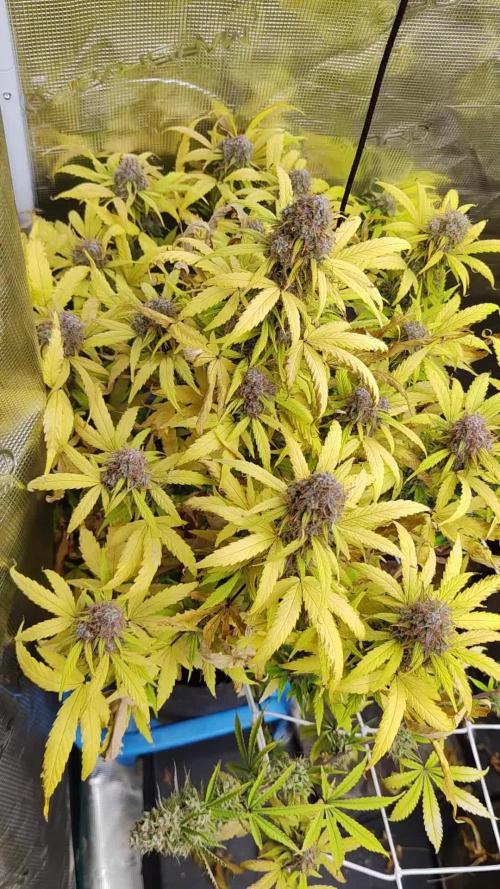
W19 (Harvest) 6-6 Last day before harvest. 7-6 Harvest day! Installed a humidifier outside the tent, set to 55% aiming for a 60% humidity inside the dry tent. 21-6 After 14 days of slow drying she is ready to be trimmed. While posting this a couple of months later i found out that i totally forgot to make pictures and video's of the trimmed buds 😅 It was a very nice daytime smoke, tasted sweet-sour. End results: 74.26 Grams of bud 57.90 Grams of small buds and trim, in the freezer for bubble hash. I have some trim and small buds saved up from different strains and i will be posting a diary of the full process making hash of them! If you are interested in me making bubble hash feel free to follow me as i will make some in the next month, this way you keep notified!
Likes
64
Share
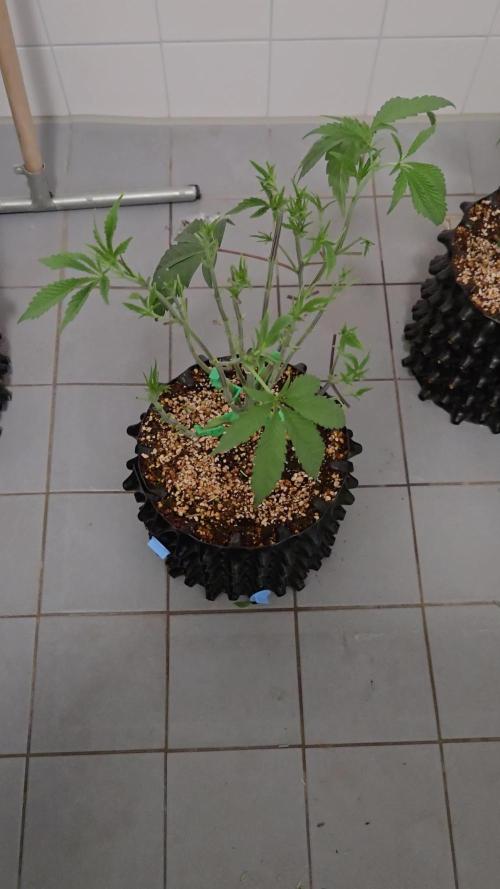
Hi everyone 🤗. Your last vegi phase has been reached :-). It developed beautifully 😀, and has become a huge bush. I am very excited to see how it will look in bloom 😅. In the coming days it will be placed in the flower chamber and can then spread out for production :-). I wish you a nice week, stay healthy 🙏🏻 and let it grow 🌱 You can buy this Strain at : https://www.barneysfarm.com Strain : Blue gelato 41 clone from mother (Barney's Farm) ☝️ Genetics: Blueberry x Thin Mint Girl Scout Cookies x Sunset Sherbert 👍 Vega lamp: 2 x Todogrow LED HLG Quantum Board 100 W ( 200 W ) 💡 Flower lamp: 2x Todogrow LED CXB3590 205 W = ( 410 W ) 💡 ☝️ Soil : Canna Terra Professional + ☝️ Fertilizer: Canna Terra Vega , Canna Terra Flores , Rizotonic, Cannazym, CANNA Boost, Pk 13/14, Canna Cal / Mag, Canna Ph - Grow, Canna Ph-Bloom ☝️🌱 Water: Osmosis water mixed with normal water (24 hours stale that the chlorine evaporates) to 0.2 EG. Add Cal / Mag to 0.4 Ec Ph with Ph - to 6.0 - 6.3 💦 💧
Likes
13
Share
Likes
7
Share
Ready for harvest in 3 days.. Going for 30 hours of darkness before bringing them down. Hoping for good smoke, buds look a bit small.🌱🎋 Oh well, better luck next time, lol..🧐
Likes
9
Share
Day 50! She is stretching, allowing me to tuck tallest tops out to the sides, exposing new budsites in the middle. Seeing one or two pistils here and there
Likes
76
Share
@Canna96
Follow
Hey now, this week went pretty good, she is stretching but not too much, she went from 28 to 34 inches, but the past couple days she seems to be slowing down with vertical growth. I started the transition today over to bloom nutrients, so I gave her half Veg and half Bloom nutes today, and I will have her all the way switched over by the end of the week. I figure I will probably get a couple more inches which would put her at 3 foot tall. I am definitely seeing pistils start to form all over her. I have been defoliating her about every other day, but I will stop this week and pretty much let her do her thing. I now have her running under a Mars Hydro 300 watt, and a Vipar Spectra 240 watt light. My planl was to fill a 4X4 with a single main-lined plant, and she has almost done that as she is touching the walls on all four sides. There are pretty many tops on her, so hopefully they turn into alot of flower but I will find out soon. I hope everyone had a nice weekend, stay safe, and Blaze On!
Likes
50
Share
@kohlrabi
Follow
I'm back! I'm sorry for taking such a long break. It wasn't planned! We had to buy weed off the street, just like old times! What a shame. We have moved and I finally have room for a new tent, this time for 3 plants! Plus matching lights. Unfortunately the exhaust is still missing, but nothing smells at the moment. So I'm waiting for the next pay cheque for that. I have Royal Queen Seeds to thank for sponsoring the seeds. I've been looking forward to trying this strain for a long time. This is my first grow using only Bio Tabs fertiliser. I've been wanting to try their range for a long time because I'm convinced it's best to use as little liquid fertiliser as possible - most of it is water and that means more weight, more transport costs and more packaging. The Just Add Water plan is also very attractive to me as I am very busy at the end of the year. So thank you for your generous sponsorship! I'm following the Just Add Water strategy as described here: https://biotabs.nl/download/biotabs-just-add-water-strategy-english.pdf?srsltid=AfmBOorA_7mskRtAlhgdfQQsUMJiwA2NEsVeEF1yRQnMUk8wb0xdv2Z0 I really liked the fact that Mycotrex is a granulate and doesn't create as much dust as other organic stimulants. As a substrate I tried the T.A. light mix - you can see a little video of it in my pictures above. I wanted an organic light mix without the peat - I know peat is great to work with, but it's also really bad for the environment, so I'd encourage everyone to try peatless mixes! Everything is now moving into the next phase, and if the plan works, there will be no work for me after next week - apart from watering. I'm so excited!
Likes
68
Share
Removed autoflower and put her in her own pot outside the tent. Foliars applied in strong blue 430nm with 4000Hz tone. 20-minute dose prior to application. In essence, you're seeing a combination of the infrared light reflected by the plant, which the camera perceives as red, and any residual visible blue light the plant reflects, which results in a purple hue. I was doing more stretching of the stems, adjusting weights, just a little too much, and it snapped almost clean. I got a little lucky in that it was still connected, wrapped her almost instantly while holding her in place with yoyo's. The core framework is now in place. If your soil has a high pH, it's not ideal; you want a pH of 6.4, 6.5, or 6.6, which is ideal. If you are over a pH of 7, you have no hydrogen on the clay colloid. If you want your pH down, add Carbon. If you keep the pH below 7, you will unlock hydrogen, a whole host of new microbes become active and begin working, the plant will now be able to make more sugar because she has microbes giving off carbon dioxide, and the carbon you added hangs onto water. Everything has electricity in it. When you get the microbes eating carbon, breathing oxygen, giving off CO2, those aerobic soil microbes will carry about 0.5V of electricity that makes up the EC. The microorganisms will take a metal-based mineral and a non-metal-based mineral with about 1000 different combinations, and they will create an organic salt! That doesn't kill them, that the plant loves, that the plant enjoys. This creates an environment that is conducive to growing its own food. Metal-based: Could include elements like iron, manganese, copper, or zinc, which are essential nutrients for plants but can exist in forms not readily accessible. Non-metal-based: Examples like calcium carbonate, phosphate, or sulfur are also important for plant growth and potentially serve as building blocks for the organic salt. Chelation in a plant medium is a chemical process where a chelating agent, a negatively charged organic compound, binds to positively charged metal ions, like iron, zinc, and manganese. This forms a stable, soluble complex that protects the micronutrient from becoming unavailable to the plant in the soil or solution. The chelate complex is then more easily absorbed by the plant's roots, preventing nutrient deficiency, improving nutrient uptake, and enhancing plant growth. Chelation is similar to how microorganisms create organic salts, as both involve using organic molecules to bind with metal ions, but chelation specifically forms ring-like structures, or chelates, while the "organic salts" of microorganisms primarily refer to metal-complexed low molecular weight organic acids like gluconic acid. Microorganisms use this process to solubilize soil phosphates by chelating cations such as iron (Fe) and calcium (Ca), increasing their availability. Added sugars stimulate soil microbial activity, but directly applying sugar, especially in viscous form, can be tricky to dilute. Adding to the soil is generally not a beneficial practice for the plant itself and is not a substitute for fertilizer. While beneficial microbes can be encouraged by the sugar, harmful ones may also be stimulated, and the added sugar is a poor source of essential plant nutrients. Sugar in soil acts as a food source for microbes, but its effects on plants vary significantly with the sugar's form and concentration: simple sugars like glucose can quickly boost microbial activity and nutrient release. But scavenge A LOT of oxygen in the process, precious oxygen. Overly high concentrations of any sugar can attract pests, cause root rot by disrupting osmotic balance, and lead to detrimental fungal growth. If you are one who likes warm tropical high rh, dead already. Beneficial, absolutely, but only to those who don't run out of oxygen. Blackstrap is mostly glucose, iirc regular molasses is mostly sucrose. Sugars, especially sucrose, act as signaling molecules that interact with plant hormones and regulate gene expression, which are critical for triggering the floral transition. When sucrose is added to the growth medium significantly influences its effect on floral transition. Probably wouldn't bother with blackstrap given its higher glucose content. Microbes in the soil consume the sugar and, in the process, draw nitrogen from the soil, which is the same nutrient the plant needs. Glucose is not an oxygen scavenger itself, but it acts as a substrate for the glucose oxidase (GOx) enzyme, effectively removing oxygen from a system. Regular molasses (powdered if you can), as soon as she flips to flower or a week before, the wrong form of sugar can delay flower, or worse. Wrong quantity, not great either. The timing of sucrose application is crucial. It was more complicated than I gave it credit for, that's for sure. When a medium's carbon-to-nitrogen (C:N) ratio reaches 24:1, it signifies an optimal balance for soil microbes to thrive, leading to efficient decomposition and nutrient cycling. At this ratio, soil microorganisms have enough nitrogen for their metabolic needs, allowing them to break down organic matter and release vital nutrients like phosphorus and zinc for plants. Exceeding this ratio results in slower decomposition and nitrogen immobilization, while a ratio below 24:1 leads to faster breakdown and excess nitrogen availability. Carbon and nitrogen are two elements in soils and are required by most biology for energy. Carbon and nitrogen occur in the soil as both organic and inorganic forms. The inorganic carbon in the soil has minimal effect on soil biochemical activity, whereas the organic forms of carbon are essential for biological activity. Inorganic carbon in the soil is primarily present as carbonates, whereas organic carbon is present in many forms, including live and dead plant materials and microorganisms; some are more labile and therefore can be easily decomposed, such as sugars, amino acids, and root exudates, while others are more recalcitrant, such as lignin, humin, and humic acids. Soil nitrogen is mostly present in organic forms (usually more than 95 % of the total soil nitrogen), but also in inorganic forms, such as nitrate and ammonium. Soil biology prefers a certain ratio of carbon to nitrogen (C:N). Amino acids make up proteins and are one of the nitrogen-containing compounds in the soil that are essential for biological energy. The C:N ratio of soil microbes is about 10:1, whereas the preferred C:N ratio of their food is 24:1 (USDA Natural Resource Conservation Service 2011). Soil bacteria (3-10:1 C:N ratio) generally have a lower C:N ratio than soil fungi (4-18:1 C:N ratio) (Hoorman & Islam 2010; Zhang and Elser 2017). It is also important to mention that the ratio of carbon to other nutrients, such as sulfur (S) and phosphorous (P) also are relevant to determine net mineralization/immobilization. For example, plant material with C:S ratio smaller than 200:1 will promote mineralization of sulfate, while C:S ratio higher than 400:1 will promote immobilization (Scherer 2001). In soil science and microbiology, the C:S ratio helps determine whether sulfur will be released (mineralized) or tied up (immobilized) by microorganisms. A carbon-to-sulfur (C:S) ratio smaller than 200:1 promotes the mineralization of sulfate, when the C:S ratio is low, it indicates that the organic matter decomposing in the soil is rich in sulfur relative to carbon. Microorganisms require both carbon and sulfur for their metabolic processes. With an excess of sulfur, microbes take what they need and release the surplus sulfur into the soil as plant-available sulfate A carbon-to-sulfur (C:S) ratio higher than 400:1 will promote the immobilization of sulfur from the soil. This occurs because when high-carbon, low-sulfur materials (like sawdust) are added to soil, microbes consume the carbon and pull sulfur from the soil to meet their nutritional needs, temporarily making it unavailable to plants. 200:1 C:S 400:1: In this range, both mineralization and immobilization can occur simultaneously, making the net availability of sulfur less predictable. This dynamic is similar to how the carbon-to-nitrogen (C:N) ratio regulates the availability of nitrogen in soil. Just as microbes need a certain amount of nitrogen to process carbon, they also require a balanced amount of sulfur. Both mineralization and immobilization are driven by the metabolic needs of the soil's microbial population. Sulfur is crucial for protein synthesis. A balanced ratio is particularly important in relation to nitrogen (N), as plants need adequate sulfur to efficiently use nitrogen. A severely imbalanced C:S ratio can hinder the efficient use of nitrogen, as seen in trials where adding nitrogen without balancing sulfur levels actually lowered crop yields. Maintaining a balanced carbon-to-sulfur (C:S) ratio is highly beneficial for plant growth, but this happens indirectly by regulating soil microbial activity. Unlike the C:N ratio, which is widely discussed for its direct effect on nutrient availability, the C:S ratio determines whether sulfur in the soil's organic matter is released (mineralized) or temporarily locked up (immobilized). Applied 3-day drought stress. Glucose will hinder oxygenation more than sucrose in a solution because glucose is consumed faster and has a higher oxygen demand, leading to a more rapid decrease in oxygen levels. When cells respire, they use oxygen to break down glucose, and this process requires more oxygen for glucose than for sucrose because sucrose must first be broken down into glucose and fructose before it can be metabolized. In a growth medium, glucose is a more immediate and universal signaling molecule for unicellular and multicellular organisms because it is directly used for energy and triggers a rapid gene expression response. In contrast, sucrose primarily acts as a signaling molecule in plants to regulate specific developmental processes by being transported or broken down, which can be a more complex and slower signaling process. Critical stuff. During wakefulness (DC electric current) life can not entangle electrons and protons. During the daytime, the light is sensed as multiple color frequencies in sunlight. Coherence requires monochromatic light. Therefore, at night, IR light dominates cell biology. This is another reason why the DC electric current disappears during the night. The coherence of water is maintained by using its density changes imparted by infrared light released from mitochondria in the absence of light. This density change can be examined by NMR analysis, and water is found to be in its icosahedral molecular form. This is the state that water should be in at night. This is when a light frequency is lowest and when the wave part of the photoelectric effect is in maximum use. 3600
Likes
6
Share
Very happy with results from superKs pro nutes techboost foliar spray gonna try nab another sample bottle could very well be adding to or replacing parts of my schedules . Cuttings transferred to 3.5 litre pots rooting nicely growing thick and fast
Processing
Likes
4
Share
So, what a difference ay, I've added rhizotonic & my 600w and WOW!!!!!! All deficiencies are GONE and I'm 1week from flower
Likes
14
Share
@RFarm21
Follow
Week 24 december - 30 december Happy Christmas.
Likes
Comments
Share
Vamos familia, actualizamos la tercera semana de crecimiento de estas Black Rainbow de Seedstockers, salieron las 3 de 3, 100% ratio éxito. Aplicamos varios productos de Agrobeta, que son increíbles para aportar una buena alimentación a las plantas. Temperatura y humedad dentro de los rangos correctos dentro de la etapa de crecimiento. La tierra utilizada es al mix top crop, por cambiar. De 3 ejemplares seleccioné los 2 mejores para completar el indoor y trasplanté directamente a macetas de 7 litros, se ven bien sanas las plantas, tienen un buen color y progresan a muy buen ritmo por el momento. Agrobeta: https://www.agrobeta.com/agrobetatiendaonline/36-abonos-canamo Hasta aquí todo, Buenos humos 💨💨💨
Likes
3
Share
Likes
12
Share
@Luke_Lee
Follow
-08.08.2024 The seventh week begins. The Mango Smile is doing great, the Skywalker is a bit small. the light intensity has been adjusted again, the values: PPFd=1200 DLi=70 both plants were watered with 1 liter of water per plant (2ml BioGrow, 2ml BioBloom, 2ml TopMax - 1L Water) -09.08.2024 Visual Control -10.08.2024 Visual Control Soll felt pretty dry, Both plants were watered with 1L water per plant (2ml BioGrow, 3ml BioBloom, 3ml TopMax - 1L Water) -11.08.2024 Visual Control The soil has settled well after a few weeks and today the pots of both plants were filled with some new fresh soil. Both plants were then watered with 500 ml of water per plant -12.08.2024 Did nothing -13.08.2024 Visual Control Soil was dry, 1L Water per Plant The Mango Smile develops yellow leaf tips. For now, just water and observe -14.08.2024 Visual Control
Likes
16
Share
Oramai non riesco a metterle più nella grow se non incanstradole una nell'altra. Questo comporta che le piante prendono luce solo sopra, sto cercando di ovviare al problema mettendole al sole ogni volta che posso. Oggi 52 giorni dalla semina è il 6 marzo 2021.
Likes
12
Share
July 23: A great week of warm sunny weather with enough rain to prevent the garden from becoming too dry. Flowers are stacking... a bit leafy but dense. Smell is coming on strong and resin developing complexity of different fragrances. CBD Crack resin smells amazing sweet, like bubblegum and roses. Small plant but amazing fragrance.
Likes
4
Share
She is such a Beauty Queen! Such a nice plant. Even that she is straight under the Lightbar she does not give a damn. ?🔥
Likes
26
Share
@Agrocann
Follow
It was a last week of flowering. Next week will post a photos of a harvest. Some conclusions from the current grow- It is looks like there was too much light. Many top leaves were too dry. Next grow will use only one 240W lamp
Likes
21
Share
Het is 23 oktober, dag 95 en de oogsttijd is aangebroken, heb haar omgehakt. Dit was een plezierige plant om te kweken, nogmaal bedankt Weedseedsexpress : 1:🏼 Zijtakken schoten de lucht in en hebben zich gevuld met dikke toppen bomvol THC. Mooi hoe de onderste tak het hoogst werd van allemaal. Ook de hoofdtop is dikker dan ik had verwacht, echt prachtig! Ik begrijp nu waarom ze Gorilla Glue is genoemd, want ze plakt behoorlijk, ik heb mijn handen grondig moeten schrobben. De geur is niet zwaar overheersend, maar normaal. Ze ruikt heerlijk limoenachtig. Als ze goed gedroogd is zal ik deze dagboek verder bewerken en de smaak en effect geven. Ik ben zeer benieuwd. Iedereen bedankt voor het volgen en liken. 6 november: de toppen zijn zo goed als droog en heb zojuist een joint gerookt. De smaak is apart , fruitig tropisch, kan de smaak niet echt plaatsen, maar wel lekker👌🏼 Ben ook zeer stoned en heb nu geen zin om van de bank af te komen😁, toch geeft het geen space effect maar meer een vrolijk effect waar je veel van gaat praten 🤭 85 gram is niet slecht en boven mijn verwachtingen. Ik heb nu alles in wreckpotten gedaan om te curen. Al met al is deze strain zeker aan te bevelen, echt een topwietje💪🏽 Much love growbuddies ❤️