


Likes
Comments
Share


@Sugarnugolia
Follow
Started to see the buds develop early at the end of last week.
This week I put my rebuild-able scrog net in. This thing will really let the room fill out nicely.

Likes
7
Share


@Wheatbread420
Follow
This Strain is something, the beans popped the radical in 5-6 hours after submerging in water . No paper towel needed here ;) ..

Likes
45
Share


@masterofsmeagol
Follow
9/3 Shook the plants off this morning and took a few pics and did a video. Let's see if it uploads. Plants are doing good. Toasted toffy is due for another plant doctor application tonight. It seems like I'm losing lots of leaves. Looking back on my other diaries I guess it's normal. BUT I could've had pest/pathogen problems then. I'm over thinking it. Toasted toffy only needs a few more weeks. It will definitely outvrun the disease. The nugs are super dense too. The plant in the 50 is loosing leaves faster than I'd like. It is also one of the furthest along. The big leaves that turn yellow look like it's a calcium/magnesium issue. The stalk and branches are all bright green and healthy looking. So are the flowers. It could be something below the soil. I couldve been overwatering but last time I waited until it drooped. It will be fine though. I'm happy with my results so far. Not my best or biggest year but I'm going to put in the work and Mae these plants produce the best quality cannabis that im able too. Also I think plant doctor may kill insects. K bicarb with dawn does too. I've found a few dead bugs like flies and pillars. Pillars actually seem to be gone. Not many moths either. Unless I see them I'm not going to treat them for it. This is that magical time where you get to watch the plant produce those beautiful flowers. Despite some small problems I'm very grateful for what I have. I've worked hard for it.
9/4 Watered everything but the sherb pie which was still heavy with leaves yellowing. It's tied for the furthest behind in flower with the seed in the 10. I treated the toasted toffy with 1/4 gallon (4tsp/gallon) of plant doctor. I avoided flowers as much as possible and tried to just get a few leaves. I used the rest on the soil. I just wanted it to absorb a little faster. That's why I sprayed the foliage. It's not 4 days it's 14 days when tje plant doctor just leaves behind a bunch of potassium and phosphorus after it's done its job. Can't be used in a 14 day interval with copper and I think that's what treats septoria best. I dontvknow if I can use that in flower. Doesn't really matter. Things are looking good. Plant Doctor and the K bicarb seem to be doing there job effectively as long as i stick to the application times. I made a short video but didn't upload. I'll try again but I may have some medical emergencies that need to be dealt with. If not I should defoliate and tie down some event horizon branches. I thought about treating the other event horizon as well. I'm not positive it has septoria but it wouldn't hurt anything to be practice. It AT LEAST has a couple suspucuous spots. I smelled a skunk as soon as I got out of my car. It can't get in my grow but I might put out traps to catch it. We'll see how it goes. Video seems to be uploading. It's at 31% so I'll wait for it. I think I've got like four or five weeks on my toasted toffy and one event horizon and the one in the 50 that I THINK is red runtz. That's good that I'll have different plants to harvest at different times. It's seeds from here on out though. It was hard to find info on some of the strains I'm growing but they all have ONE thing in common. They are EXOTIC and they are at least MODERATELY DIFFICULT to grow. AT LEAST lol. Last year I picked the right seefs and strains and it greatly helped. Still, if these are difficult strains to grow, then I'm doing a good job.
EDIT: I WAS STONED BUT IM PRETTY SURE I TREATED THE PLANT IN THE 50 WITH PLANT DOCTOR. DIDNT SPRAY BUDS. TRIED TO GET THE LEAVES THEN USED THE REST ON THE SOIL. I REMEMBER BECAUSE A STREAM ACCIDENTLY HIT A COUPLE LEAVES ON THE HUGE PLANT IN THE 10.
9/5 Sherb Pie was light and drooping. It's not to far in flower and still seemed moist yesterday with a little bit of weight. I watered it a gallon. I defoliated a little but I need to go through that plant. I have a bunch of plants that need a little work. The 50 gal seed is losing lots of leaves. I must not be feeding it enough, overwatering or maybe theres some sort of lock out. The plant looks nice and healthy. Leaves just turn yellow and die. Looked like a calcium or magnesium deficiency but i saw a septoria spot. I wouldn't think I've over feed or locked out using the small amounts of nutes I've used. It will be time to feed again soon. It's in the middle of flowering and still has leaves. I'm hoping things work out. I just have an anxiety disorder and worry too much. I'm GOING To have a great harve! I just need to keep moving forward and putting in the work.
9/6 What a fucking shitty morning. I did research on how to keep skunks out of your garden. Because I smelled it and the neighbors shot a few. Dad put traps out and it caught one. It wasn't a no spray trap so I approached it with him. Both had tarps. I kept telling him to throw it while I was distracting it bur he got a cramp and only got it over half. The half away from my garden. It's pretty far and down in a field but still. We had talked all morning about how to release it. I offered to drive their dog to take it for a walk so his alcoholic girlfriend wouldn't spiteful put the dog on its run. It wouldn't be sprayed but I made it out like it would ruin my plants. Picked dad up and got him to the bathroom. In that 30 seconds the stupid bitch grabbed the dog and brought it outside despite me YELLING "Can't you wait 5 minutes!? We've been dealing with this all morning. I heard fuck you in my head and she did it anyway. Dog ran at the skunk barking and it sprayed. Not a lot but I was fucking pissed. She's a full blown alcoholic and doesn't like me around early or the fact that my old man's 80 and house is mine. Anyway I got back and there was NO SKUNK SMELL. AT ALL! I WATERED EVERYTHING BUT SHERB PIE AND FED EVERYTHING BUT SHERB PIE. ILL FEED AND WATER THAT TOMORROW. WATERED A GALLON WITH A QUART OF FEED. Researched my strains found out they were all "difficult" to grow. One year ago to the Day I cut my first tenth planet. I got a couple close to a few weeks but the others will be later. If I can pull this off though I'll have some crazy quality! Grateful for what I have that's for sure! I doubled beastie bloom this time. We'll see how it goes.nothings uploading. I did some vids a pictures but I'll have to upload today.
9/7 I think it rained last night. I forgot to water and feed the sherb pie but I'll do it when I get back. I shook off the plants the best I could. I need to get the leaf blower out now and put it to use. Buds are swelling like crazy. GMOs are very tight flowers. Same with the event horizon. Rock hard nugs. With the gmo's I'm not worried. The were monster cropped so they have enough leaves even if some do die off. The toasted toffy only has like four weeks left. Same with the event horizon. The plant in the ten is the furthest behind but it's extremely healthy. I removed some leaves from the bottom and large fan leaves. The plant in the 50 I hope finishes before it loses all its leaves. I treated it with plant doctor and SOME people strip their plants but I don't. I'm grateful for what I've got. Won't be the biggest harvest but WHEN I make it to the finish line I will have some incredibly potent strains. I'm proud of myself to even get these to finish seeingvthe level of difficulty on cultivation. I'm trying to upload some stuff. We'll see.
9/8 Apparently it rained pretty hard last night. Took forever to go through and shake everything off and defoliate what needs it. Sherb pie is praying to the sky and almost totally purple. It's flowering so much more in the last couple days. Everything has. Even the one in the ten is stacking up! I defoliated most of what needed it and I was soaked. I noticed a branch on the middle gmo that was getting heavy and starting to break away from the trunk. It wad wobbly but I don't think there was a break un the Cambrian. I made a sling with rope (couldn't find zip ties) and I pulled it tight amd secured that branch to the tomato cage. GMO buds are hard as rocks. Everything is in overdrive. They liked that beastie bloom. I have cha ching but nothings ready for that yet I don't think. We'll the event horizon and toasted toffy might be I'll have to check. It's been beautiful today but not too hot. Lots of wind which is good. I'll upgrade supports as needed. Flowers are progressing at an amazing rate. Weather is supposed to be great the next few days. I'll keep this updated.
9/9 Had to shake the plants off. WATERED EVERYTHING BUT THE SHERB PIE WHICH WAS REALLY HEAVY. It's also lost a lot of leaves and the majority of leaves have turned purple. Toasted toffy and event horizon and red runts are pretty far into flower. I tried to take some pictures. Even the ten is blowing up! That looks like I'm going to switch to cha ching when flower gets further. Trichs are developing nicely on the ones further in flower. This year it's going to be quality over quantity. All these strains are ranked HARD to grow but have insane cannabinoid profiles and high THC %'s. So if I can keep it together for another month I'll be golden. Looking forward to it. This is the fun part. It's also the anxiety provoking part. I've learned a lot just since joining grow diaries.

Likes
19
Share

@Flavors
Follow
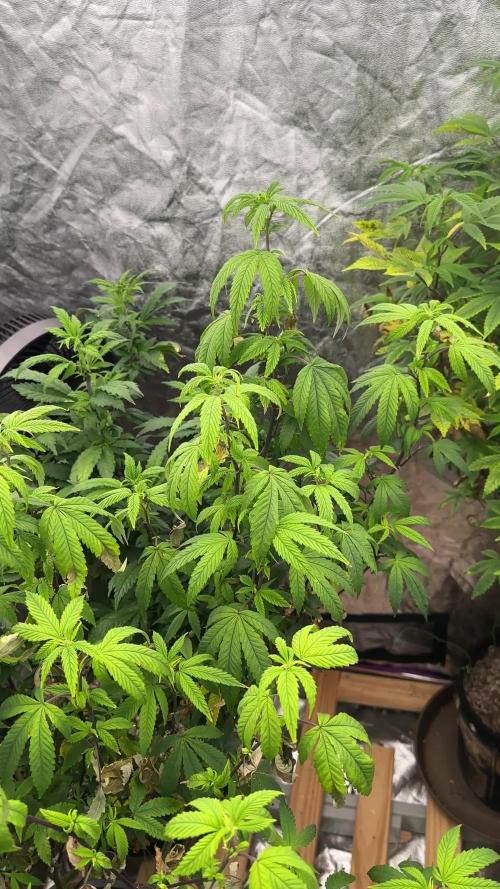
The girls are settling beautifully into flower 🌿✨ — stretch is in full swing 📈🌳 and bud sites are stacking up everywhere 👀💎. The canopy is lush and even 🍃, catching light perfectly ☀️.No signs of thrips or stress


Likes
81
Share


@m0use
Follow
SPONSORED DIARY===SPONSORED DIARY===SPONSORED DIARY
Nothing to crazy to report they are growing up well. have some pistils showing and I think it might be starting to enter flower soon.
Looked to be showing a bit of magnesium defencity so I gave them both some Epsom salts to supplement the Gaia Green and other fertilizers in the mix.
I always find gaia green needs a bit of a magnesium boost.
SPONSORED DIARY===SPONSORED DIARY===SPONSORED DIARY
This is my diary entry into the Dynomyco Show Us What You Got Contest!
#DynomycoShowUsWhatYouGot!
@DynomycoShowUsWhatYouGot!
@Dynomyco
Big Shoutout to @Dynomyco for picking me in their contest. Happy to be involved and as a user of Dynomyco I am curious to see this side by side with my own eyes. I will be honest I am a little skeptical it will show any major differences. but we will see what happens. Some disclaimers, I am still using LABS serum I made, This is also beneficial to the root mass however it's a bacteria based product and not fungal or mycorrhizae like Dynomyco.
https://growdiaries.com/giveaways/DYNOMYCO_Show_Us_What_You_Got
Processing
Likes
24
Share


@MadeInGermany
Follow
Hi everyone :-)
This week, phenotype 2 and 3 were repotted just like phenotype 1 from the Zamnesia Spring Cup in the other diary 🙏🏻.
Otherwise not much has happened this week.
I'm curious how the two with Canna Bio will compare to the monster bud mix in the spring cup diary :-).
I wish you all a nice weekend, stay healthy 🙏🏻 and let it grow 👏🏻😎

Likes
10
Share


@barlobruz
Follow
08/30/2021
- Noticing more gnats than usual. Could be overwatering, anaerobic soil conditions, or both.
- Going to set up fly traps, starve both the plant and the gnats of water for about a week.
- Will observe any stress responses due to an extended dry period.

Processing
Likes
13
Share


@Damonkey
Follow
Things progressing steadily in the tent. Smells us developing daily really stinky in there at the moment. The Apple kicking out a really pungent chem smell. The banana giving off a sharp citrus smell and the cherry a funky fruity smell.😍😍😍


Likes
20
Share


@Bruce_Leroy1
Follow
Down to the last few days til harvest. Pics never do justice. Looking forward to seeing what I yield in this test 2x2 with a 200 watt Black Dog LED.


Likes
9
Share


@BusyBeeFarmer
Follow
Transplant & Training:
The plant was transplanted and trained this week, which temporarily slowed vertical growth.
Training resulted in a beautifully even canopy, which is already taking shape and showing promise for future development.
Environmental Conditions:
Humidity remained high due to additional seedlings in the grow space.
The plant was watered twice this week, adjusting for its needs.
Growth Observations:
The plant responded excellently to the training, adapting quickly without alot of stress.
Hopes for the Future:
I’m optimistic about maintaining the even canopy. Fingers crossed for continued success! 🌱
dein-onlineheadshop.de/
Use my referral code 420Shop at checkout to get a discount on your purchase. By using this code, you also support me, as I receive a small reward for each use. Thank you for your support!

Likes
4
Share


@AustinRon
Follow
LJ 2Q24 Flower Week 4
Start of Week:
- [Sun Jul 21, 2024, LJ 2Q24 22:F:4:1]
- Plant Heights: [ 21 , in]
End of Week:
- [Sat Jul 27, 2024 LJ 2Q24 28:F:4:7]
- Plant Heights: [ 25, in]
Resin Bloom to 6 ml/gal (base)
EC 2.7 # MAX EC for Lemon Jeffery (w/ First Resin Bloom)
__
Sun Jul 21, 2024
LJ 2Q24 22:F:4:1
DEHU Water (EC 0.0) Bloom Week 4, EC 2.7, Boosted Nitrogen (+2ml/gal)

__
Mon Jul 22, 2024
LJ 2Q24 23:F:4:2


EC: 2.7, RLA Heavy Bloom Week 4 - Boosted Nitrogen (2 ml/gal)
Plant-Heights:
- 2: [ 19, in]
- 1: [ 21, in]
- 4: [ 24, in]
__
Tue Jul 23, 2024
LJ 2Q24 24:F:4:3
Coco, Ron, Coco. Switch boost to Calcium (+2 ml/gal)
Let’s boost CaMg through weekend …
- [x] Collect DeHu Water - Bleach Collection Container, Replace
- [x] Filter DeHu Water
- [x] Tidy up Grow Room
- [ ] ADD Overhead CloudRay (Oscillating Fan)
- [x] Mix 1.5 GALLONS ( Increases Ca, +2ml/gal, ~2%/17.8% - 11% Ca Boost)

__
Wed Jul 24, 2024
LJ 2Q24 25:F:4:4

__
Thu Jul 25, 2024
LJ 2Q24 26:F:4:5

__
Fri Jul 26, 2024
LJ 2Q24 27:F:4:6

Hydro Only might be the Nitrogen Load early LJ Needs . . .

I think the stretch is dome. 16” Loght distance, 90%. dimmmer. Humidity crankin.
__
Sat Jul 27, 2024
LJ 2Q24 28:F:4:7


Processing
Likes
32
Share


@Hawkbo
Follow
Everything is still alive thankfully and smells fuckin tremendous. The pictures were taken on day 49 or 50. I'll probly start flushing some of them over the next week the citradellic are lookin close. They kinda all look close even tho I expected some 70 dayers with the mostly sativa crosses but I gotta get in there and check the trichs.
Likes
6
Share


@Pandi_Weed
Follow
Vemos un hermoso avance en el trasplante, no hare ninguna poda
1 semana mas y pasaran a 5lts


Likes
80
Share


@Silky_smooth
Follow
At the start of week 10 she is doing great flowerstretch is almost over budsites are developing beautyfully
She is recovered from last weeks defo and looking healty
I think i have stretched her vegging period to the limit as far as an autoflower can go an amazing 8 week veg period i dont think i had one that went so far but not complaining if her flowerperiod is as bountyfull she’s gonna be a fat mama 🤘🤘😉😉🙌🙌
Day 66 moved her under brand new 240w quantum board that i got from enfun 420 light store

Likes
1
Share


@Zero0
Follow
A bit of (N-P-K) deficiency I added a bit of worm casting and mammoth P as well as recharge I’m gonna keep adding mammoth P every watering which is usually twice a week every 3 days.

Likes
5
Share


@Sativa763
Follow
Day 49 after switch.
very nice i would say :)
everything is getting bigger and frosty.
no complains so far.
last week watering with PK 5-8, then just water until she´s finished.
Likes
1
Share

@Kevinsgrowbox60x60
Follow
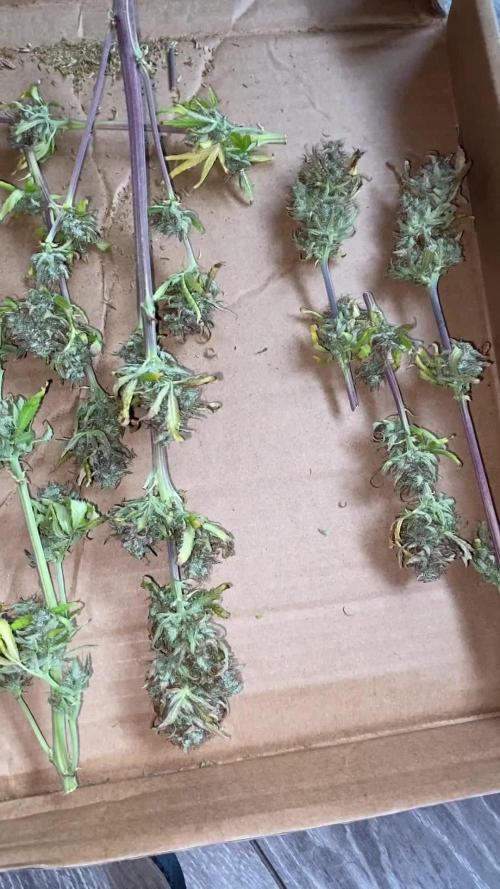
Sehr feste und harte buds die Dame hat aber erst richtig zum Ende hin performt