Likes
31
Share
@Pedrojuan
Follow
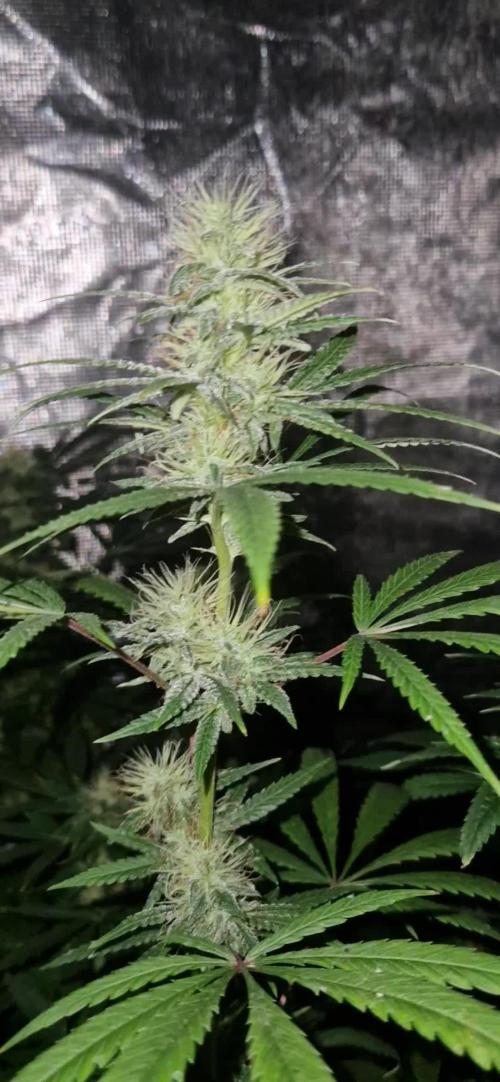
En el comienzo de esta 3a semana de vegetación, parece que la situación va mejorando, gracias a las personas que me aconsejaron bien, para no entrar en pánico... seguramente estaban estresadas y ya les paso...😂😂😂 en fin, esta semana subo el EC a 0,6, distancia de las luces a 1,2 mtr y veremos cómo procede. Tengo ganas de probar una CORTE APICAL con este cultivo y ver qué beneficios me trae; si alguien lee esto y me quiere aconsejar cuando y cómo hacerlo, soy todo oídos.
Likes
4
Share
Wow these plants took off and have not looked back! I am going to have to switch to flower in the next week or 2 or im afraid they will stretch further than my set up can handle 😆 🤣 😂 the gary payton x king louie og i ended up throwing in a 7 gallon plastic grow bag and she is getting MASSIVE the leaves on her are bigger than my hand same with the highway og #2. Used 6" metal plant anchors to anchor almost all them down to help with keeping them short and bushy ,using foop and organic inputs on the 707 headband
Likes
2
Share
@D33jW
Follow
📅 Week 5 – Day 35 / FLO 7 BOX: 50x50 - lampa 100W 🌞 Temp: 26°C 💦 RH: 62 - 64% 💥 PPFD: 700 µmol 🌬️ VPD: 1.3 Both showed their sex on the same day, so it’s looking good – they’re developing evenly. I’m watering daily with 600–800 ml (5L pots), EC between 0.8 and 1.1.
Processing
Likes
4
Share
Still have these ladies in there Solo cups will most likely pot these girls this week Finally moved these ladies over to there pots looking good for now Oh yea no nuts just yet still going with PH bal water
Likes
16
Share
@TechDCo
Follow
In the seventh week, I am preparing a detailed essay to explain my training method. I plan to increase the nutrient solution dosage to 35ml, including Warmcasts, seaweed, and a flower mix I concocted. Additionally, I will introduce 100% Gaba powder at half a teaspoon, mixed with water, to be administered at nighttime for the next two weeks. This natural chemical compound can help the plant relax and alleviate stress as it transitions into the pre-flowering stage and starts producing flowers. On the 11th of January, I completed the last defoliation procedure before the plant enters the pre-flowering stage in three days. I observed that the DLI (Daily Light Integral) reading is a bit high, and the light is positioned at the top. Therefore, I aim to adjust the light to achieve an ideal DLI range between 20-30. There is currently no CO2 supplementation in place. On the 12th of January, I eagerly await the pre-flowering stage and anticipate its onset in a few more days. It's time to initiate a 3-day mid-drying period. A notable event on the 12th of January was the arrival and easy installation of the Spectrum King Sk600. The brightness of this new light is noticeably superior compared to the Budmasters. On the 13th of January, the plants experienced the first half-day under the SK600, and everything appears to be in good condition. Furthermore, I decided to move one of the vegetative plants, "Mango Skunk," into the flower tent on the same day. Additionally, there was a rearrangement of the lights in the flower tent, with the Spectrum King SK600 and Cropmaster Pro 1000 DIY being utilized. The readings for both lights were documented as follows: DLI - 197 u/mols, PPFD (Photosynthetic Photon Flux Density) - 3000 and up at 23 inches from the canopy, PPFD 2942 at 24 inches from the canopy. I also applied blood fish and bone on topsoil and worked it in, using 2 cups of the mixture on the 14th of January. It was a relatively quiet day, and to lighten the growing mood, I took a quick video and uploaded some pictures of my dog Martina, showcasing her journey from a puppy. The bottom node leaves are significantly large, leading me to anticipate massive buds in the future. Late-night observations revealed that Pablo, a plant in the tent, may not have fully stretched to fill the available space, suggesting that it could be male. On the other hand, the forgotten haze cakes strain occupies a substantial portion of the tent, showcasing positive training outcomes. On January 15, 2024, I removed the twist ties from the cola stalks to allow for better airflow and to support the unrestricted growth of the plants. The following day, I took some photos to document the progress of the plants. It's always fascinating to visually track their development over time. Also on January 16, a plant named "Freaky Pablo" displayed unusual characteristics, signaling that it might be a male plant. To prevent any potential pollination issues, I decided to remove "Freaky Pablo" from the grow space. On the same day, I observed the presence of pre-flowers, indicating the beginning of the flowering stage. This marks an exciting phase in the growing process as the plants transition to a crucial stage of their life cycle. During this time, I made some adjustments to the positioning of the "Mango Skunk" plant, initially moving it up to the top bed and then deciding to move it back to the bottom. On January 18, I noted that the lights were turned on, marking the start of the flowering phase. This is a significant milestone in the plant's development as it shifts its focus from vegetative growth to flower production. Additionally, I relocated a plant named "Spicy Temp" to the flower tent. This move ensures that all plants in the flowering stage are in the optimal environment for the next phase of their growth. Overall, it appears that the grow operation is progressing well, and I am looking forward to witnessing how the plants continue to develop. And finally, here's a joke for you: What did one plant say to the other? "Hey bud, how's it growing?" I am not, because i am dead!
Likes
25
Share
5/29 - 6/5 Flowering Week 3 🌡️28c 💧Tap water 🌀 55% Defoliation during this week
Likes
15
Share
@MrJones
Follow
Mr. Jones Fast Buds Moby Dick ╰⊰´🌿 ╰⊰´🌿 ╰⊰´🌿 ╰⊰´🌿 ╰⊰´🌿 ╰⊰´🌿 ╰⊰´🌿 🏡Indoor - 3"x4"x8" Custom Built Grow Closet 🌾This strain likes to stretch, so a heavy training regiment will be needed. 🗓️Germenation - Soaking in Water Strait into Amended Soil. ⚱️3-Gallon Pots 📊6.4 / 6.8 PH 💧 Feeding - Gaia Green Grow / Bloom 🕷️ IPM - We will be using Green Cleaner" 1 OZ per Gallon, and CannControl from Mammoth alternating between products each month for Integrated Pest Management. 🌿╰⊰´🌿╰⊰´🌿 PLANT UPDATES 🌿╰⊰´🌿╰⊰´🌿 🗓️Saturday - 11.11.23 So last week I did some training 1 plant was topped, 1 plant was LST, and the last one, the smallest one, was left alone, I am happy with the recovery as we head into week 4, this week that most FB strains begin to stretch into flower, today I started a compost tea, see recipe below, will be feeding tomorrow. Moved the plants into my stealth closet, under 2 Vipar Spectare XS 1500s. ╰⊰´🌿 ╰⊰´🌿 ╰⊰´🌿 ╰⊰´🌿 ╰⊰´🌿 ╰⊰´🌿 ╰⊰´🌿 📝 Notes - Original Moby Dick Auto is a world-renowned Sativa-dominant giant created from two of the most popular strains ever, the White Widow and Haze cannabis strains which are known for the huge delicious aroma, huge size and yields; It’s an extremely easy-to-grow variety highly recommended for growers of all levels seeking for maximum yields with minimum effort as this strain grows up to 150cm and yields up to 650 g/m2 in 10 weeks without extra maintenance. Thanks to its 23% THC, this marvelous hybrid is all about happiness as it will melt your worries away while boosting your mood, leaving you with a big fat smile on your face and ready to get things done as soon as you take the first hit, making it an excellent choice for social scenarios and busy workdays. The Sativa effect comes hand-in-hand with a mix of lemony, piney, and woody terpenes that translate into that classic aroma every stoner loves. ╰⊰´🌿 ╰⊰´🌿 ╰⊰´🌿 ╰⊰´🌿 ╰⊰´🌿 ╰⊰´🌿 ╰⊰´🌿 Compost Tea 3 Gallons Dechlorinated H20 3 Cups Malibu Compost 2T Molasses 2 T Alfalfa Meal (DTE) 2 T Kelp Meal (DTE) 1 T Bat Guano (DTE) 1 teaspoon Rootwise Bio Elixir 1)- I used a small paint strainer to hold my composts, placing an air stone right in the bag and zip-tie it nice and tight - this allows air bubbles to really agitate the micro matter off of the compost and into your tea 2)- I like to mix in the molasses (microbe food) and start my main air stone, the dry amendments and Rootwise can be just measured in the bubbles 3) - Keep the temp of the water warm to 75F/85F - too cool and the microbes reproduce too slowly and too hot will kill them. I do not delete my teas and let the plant pots dry out slightly before feeding.
Processing
Likes
10
Share
@yaron
Follow
Week 8!After a rainy week and a half with some sunlight and alot of clouds and 20 degrees celsius the girls look like this. For the coming week we have more sun so they are going to love it. Cheers! Once again to little sunlight these past few days and it is going to rain this weekend so that's a bummer. Hopefully its getting sunnier Cheers!
Likes
3
Share
Likes
2
Share
@Cannabot
Follow
Very resisant strain,grows thick colas.This strain needs a proper veg time as they are short plants.Nutes wise it's a medium to heaver feeder.
Likes
14
Share
Final Report: Grow: The plants has grown very beautiful and healty without pests and diseases. They grown bushy and with medium height during the vegetative stage. I had try to use LST in third veg week but i did't made correctly and after that i dicided to return to grown normally without any particolar tecnique. I used a littel more fertilizer then mine usual and that made the plants grown fast without any problem. In the first two weeks of flowering stage the plants started grow taller and the number of the branches increase, in this phase i only defoliated when the fan leaves turn yellow in late stage. Form the start to the end the flowers grown dense and bigger every day and this time i waited until almost all of them were mature before harvest the plants. I changed the plants from one grow room to another(in the sixth week) when they became too high and they couldn't stay more in the smaller grow box(nothing changed in the enviroment between the two boxes). Equipment and grow box: The enviorment of grow box has been optimized every stage with the right temperature, umidity and air flow. Vegetative temp/umidity --> 23-29 °C/45-55% Flowering temp/umidity --> 20-26 °C/40-50% The air flow was created by two pc fans and one big fan. Harvest: This time i harvest a big numeber of beautifull dense buds and i just discarde only few fluffy buds in the lower branches. The result of this grow is amezing compared to my old expiriences. I harvested the flower and i made a fast curing process after i washed the crop and i let them to dry with a fan on it. After five days a take the branches which were to dry and i did the final trimmig before put all the harvest in a open jar for finishing to dry. I collected all the leaves, fluffy buds and trimming scraps in a bag and i let them dry. Later i put the bag in the freezer and when i collect and dried all the scraps from OG Kush and Dandoverde Haze i did some Ice-O-Lator hash. I used 250g of trimming stuff and i made 11.50 g of hash, I had use a set of 5 bag and i take the resin from the 160µ - 120µ - 73µ- 25µ bags. I pressed all the resin in a great block of tasty strong hash. Always better every time 😊💪 Total harvest ---> 90g only of dense buds and 11.50g of hash.
Likes
6
Share
Week 1 germination through week 1 seedling , veg Topped Training Ph water 6.0 first couple days week 1 started using Cronk Nutrient auto flower guide .
Likes
7
Share
@RizlaZA
Follow
Flushing for a little extra than usual to get some clean clean flavors. Really happy with this batch, the nugs are so dense and are oozing terpenes and trichomes. Awesome strain this one
Likes
52
Share
You don't become confident by shouting affirmations in the mirror, but by having a stack of undeniable proof that you are who you say you are, outwork your self-doubt. Nitrogen fixation is a chemical process by which molecular nitrogen (N2), which has a strong triple covalent bond, is converted into ammonia (NH3) or related nitrogenous compounds, typically in soil or aquatic systems but also in industry. The nitrogen in air is molecular dinitrogen, a relatively nonreactive molecule that is metabolically useless to all but a few microorganisms. Biological nitrogen fixation or diazotrophy is an important microbe-mediated process that converts dinitrogen (N2) gas to ammonia (NH3) using the nitrogenase protein complex (Nif).[2][3] Nitrogen fixation is essential to life because fixed inorganic nitrogen compounds are required for the biosynthesis of all nitrogen-containing organic compounds, such as amino acids and proteins, nucleoside triphosphates and nucleic acids. As part of the nitrogen cycle, it is essential for agriculture and the manufacture of fertilizer. It is also, indirectly, relevant to the manufacture of all nitrogen chemical compounds, which include some explosives, pharmaceuticals, and dyes. Nitrogen fixation is carried out naturally in soil by microorganisms termed diazotrophs that include bacteria, such as Azotobacter, and archaea. Some nitrogen-fixing bacteria have symbiotic relationships with plant groups, especially legumes.[4] Looser non-symbiotic relationships between diazotrophs and plants are often referred to as associative, as seen in nitrogen fixation on rice roots. Nitrogen fixation occurs between some termites and fungi.[5] It occurs naturally in the air by means of NOx production by lightning.[6][7] All biological reactions involving the process of nitrogen fixation are catalyzed by enzymes called nitrogenases.[8] These enzymes contain iron, often with a second metal, usually molybdenum but sometimes vanadium. Green clover (Fixation) White clover (Fixation) Red Clover. (Fixation) Yellow Clover. (Fixation, deeper roots) Sweet Thai Basil. (Terpenes) Italian Basil. (Terpenes) Chamomile.(Oil production) Borage.(Pest attraction taste) Lavender.(Pest attraction smell) Marigold(Pest attraction visual) Mycorrhizae are beneficial associations between mycorrhizal fungi and a plant’s root system. Mycorrhizal fungi spores germinate in the soil, creating filaments (hyphae) that penetrate the root cells, thus establishing a symbiotic relationship. This collaboration leads to the development of both intra-radical and extra-radical networks of filaments, enabling efficient exploration of the soil for enhanced access to nutrients and water. Consequently, these vital resources are transferred to the plant, resulting in numerous benefits for crop cultivation. Various mycorrhizal products are available in diverse formulations (powder, granular, and liquid), concentrations, and qualities. Ongoing advancements in products, technologies, and research are reshaping our understanding of mycorrhizae. Despite these positive developments, certain misconceptions persist. In the following discussion, we aim to clarify the truths and dispel the myths surrounding mycorrhizae products. MYTH #1 A HIGHER NUMBER OF MYCORRHIZAE SPECIES MEANS BETTER RESULTS. Contrary to common belief, having a higher number of mycorrhizae species in a product does not translate to better results; in fact, it often yields the opposite outcome. A plant can sustain only one association with a particular mycorrhizal fungi species. Introducing multiple species creates competition among them, which is not advantageous for the plant. The initial colonizer does not ensure the highest success; instead, it gains precedence. It is recommended to select a product with a concentrated presence of a single mycorrhizae species known for its effective performance, rather than opting for a product with multiple species at lower concentrations. MYTH #2 ECTOMYCORRHIZAE ARE EFFECTIVE FOR CANNABIS PLANTS. Although ectomycorrhizae can colonize five to ten percent of plant species, cannabis is not among them. Ectomycorrhizae do not penetrate the root cells; instead, they develop around the roots and on the exterior. For cannabis plants, it is essential to seek out endomycorrhizae. Endomycorrhizae are capable of colonizing 70% to 90% of plant species, including cannabis. Unlike ectomycorrhizae, endomycorrhizae penetrate the root cells, forming structures like arbuscules for the exchange of nutrients and water with the plant. MYTH #3 WHOLE INOCULANT (PROPAGULES) PERFORM BETTER THAN ONLY VIABLE SPORES. The propagule count specified on most mycorrhizae products indicates the presence of spores (viable and unviable), hyphae, and root fragments. However, it is crucial to note that only viable spores, those with the capacity to germinate, can successfully colonize a plant’s root system. Spores are to mycorrhizal fungi what seeds are to cannabis plants—a fundamental component enabling fungi reproduction. Consequently, even if a mycorrhizal product boasts millions of propagules, its effectiveness hinges on the presence of viable spores. Without viable spores, the product will not contribute to plant development. Therefore, the genuine value of a mycorrhizal inoculant lies in the quantity of viable spores it contains, as only viable spores can efficiently initiate symbiosis. MYTH #4 ALL METHODS OF APPLICATION YIELD IDENTICAL RESULTS. To establish the symbiosis, mycorrhizal fungi spores must be close to the plant roots. The optimal recommendation is to directly apply mycorrhizal inoculant to the roots, either in powder, granular or slurry form. This method ensures maximum proximity between the spores and the roots, facilitating a rapid establishment of symbiosis. Particularly with crops like cannabis, which have a short growing cycle, employing this technique is the most effective way to obtain optimal benefits. Alternatively, techniques such as blending the inoculant with the soil are effective, but there may be a delay in the establishment of symbiosis. This is because the roots need to grow and come into contact with the dispersed spores throughout the growing media. MYTH #5 MYCORRHIZAE CAN ONLY BE GROWN ON LIVING PLANTS. While the predominant method for commercially producing mycorrhizae involves growing them on the root systems of living plants (in vivo production), it is not the exclusive nor the optimal technique. In fact, this production approach has notable drawbacks that the “root organ culture” method just does not have (in vitro production). In vitro production occurs in meticulously controlled, aseptic laboratory conditions, allowing for the consistent generation of products that are viable, highly concentrated, species-specific, and free from pathogens. Achieving such precision and quality is impossible when relying on the cultivation of mycorrhizal fungi on plants exposed to external conditions. In conclusion, it is crucial to take all these factors into consideration when choosing the appropriate product for your crop to fully harness the wide array of benefits provided by a high-quality mycorrhizal product. STRONGER PLANT – Stress resistance. FASTER GROWTH – Improve plant structure and shorter veg time. INCREASE YIELD – Overall more biomass. IMPROVED QUALITY – Increase cannabinoids and terpenes content.