Likes
11
Share
@McShorty
Follow
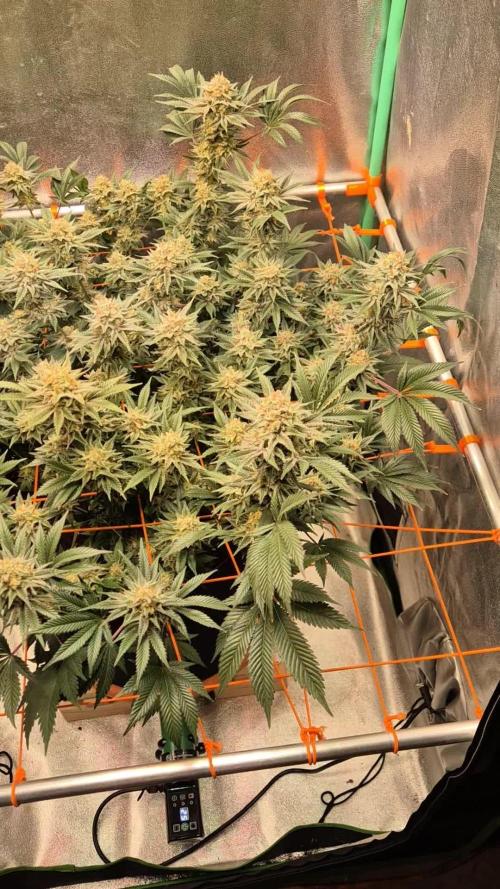
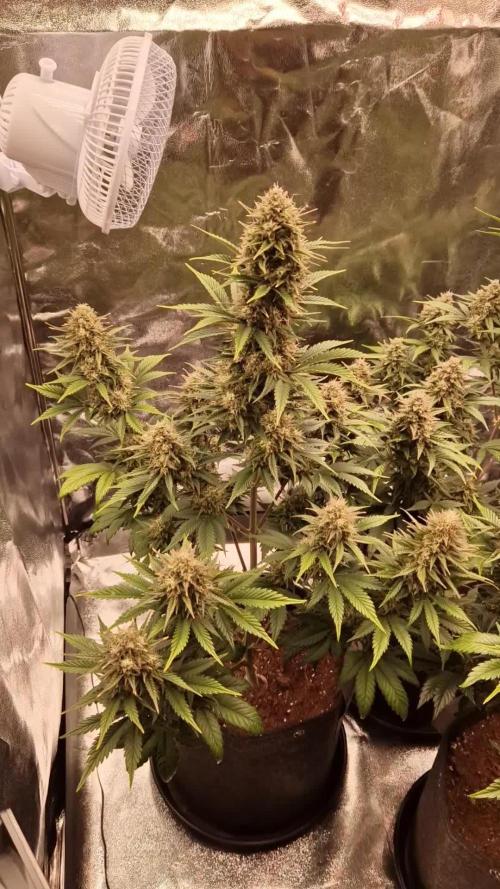
2 weeks of flowering are over and it Looks really nice:) Only Problem is the high humifity , sometimes its over 80%, so i ordered a dehumidifier which should arrive in monday, hopefully i get below 60% and i think i will do some defoliation next week
Likes
4
Share
@KhaVigga
Follow
now im start to using many kind of sugar till harvest, beer-fpj-molasses-coconut water...
Likes
11
Share
@RFarm21
Follow
10 January - 16 January 10/1- Last feed
Likes
97
Share
Gracias al equipo de Anesia Seeds y al de MarshHydro, sin ellos no sería posible esta hazaña. 💐 🍁 Purple Boost Highness es una variedad híbrida sativa dominante (70% Sativa / 30% Indica) resultante del cruce de Dankberry y Star Pebbles, dos variedades extremadamente potentes y versátiles. En un proceso de selección de varias etapas, seleccionamos plantas que tienen un valor de THCV particularmente alto y al mismo tiempo un alto contenido de THC. Terminamos desarrollando una cepa que tenía todos los rasgos que queríamos: un nivel de THCV particularmente alto combinado con un sólido nivel de THC y una abundante producción de sabrosos cogollos. Purple Boost Highness alcanza un nivel medio de THCV extremadamente alto del 5-12% y un nivel medio de THC del 28%. Esto la convierte en una cepa potente y especial que ofrece a los usuarios medicinales y recreativos muchos beneficios y un subidón excitante y versátil. El subidón tiene un componente calmante a la vez que energizante de principio a fin y lleno de claridad cerebral, motivación y concentración. El subidón comienza en la cabeza con una elevada sensación de felicidad que te envuelve por completo, transportándote a un estado de pura serenidad mental y ligereza trae. Te libera de pensamientos negativos y deja que tu mente vuele cada vez más alto. Te llenarás de dicha y desarrollarás una creatividad desenfrenada. Tu cuerpo está relajado y ligero. A medida que aumenta el subidón te vuelves extremadamente sociable y hablador hasta que los efectos cerebrales se vuelven demasiado fuertes y te pierdes en tu propia mente. Purple Boost Highness es un gran expansor sensorial: los colores, los sonidos y la música adquieren una profundidad y versatilidad totalmente nuevas. Los cogollos tienen un intenso aroma dulce y afrutado a bayas y uvas con un toque de limón. Los cogollos son extremadamente densos, grandes y cubiertos de una gruesa capa de tricomas cristalinos de color blanco dorado. 🌻 🚀 Consigue aquí tus semillas: https://anesiaseeds.com/es/product/purple-boost-highness/ 💡 Mars Hydro TS 3000, como la lámpara de cultivo LED más grande de la serie TS, ofrece suficiente cobertura para un área de 4 × 4 pies con un precio asequible y rendimientos de calidad; a cambio, se puede aplicar tanto al cultivo doméstico como al cultivo comercial. Potencia - 450w Cobertura Vegetal – 5×5 pies Cobertura de flores - 4 × 4 pies La opción abrumadora para la mayoría de los productores que la aplican en tiendas de campaña. Consigue aqui tu lámpara: https://marshydro.eu/products/mars-hydro-ts-3000-led-grow-light/ 📆 Semana 9: Finalizando la etapa de maduracion,esto va que vuela 😍, la resina esta cada vez mas presente ❄️ , los cogollos empiezan a madurar Esta semana seguirá el TS-3000 de MarshHydro al 100% y 30cm de distancia. Se estan desarrollando mejor que nunca, con una floracion mucho mas rapida, noto una gran mejoria gracias al Marshydro TS-3000. Continuo con defoliaciones Agua hasta el final
Likes
47
Share
What's in the soil? What's not in the soil would be an easier question to answer. 16-18 DLI @ the minute. +++ as she grows. Probably not recommended, but to get to where it needs to be, I need to start now. Vegetative @1400ppm 0.8–1.2 kPa 80–86°F (26.7–30°C) 65–75%, LST Day 10, Fim'd Day 11 CEC (Cation Exchange Capacity): This is a measure of a soil's ability to hold and exchange positively charged nutrients, like calcium, magnesium, and potassium. Soils with high CEC (more clay and organic matter) have more negative charges that attract and hold these essential nutrients, preventing them from leaching away. Biochar is highly efficient at increasing cation exchange capacity (CEC) compared to many other amendments. Biochar's high CEC potential stems from its negatively charged functional groups, and studies show it can increase CEC by over 90%. Amendments like compost also increase CEC but are often more prone to rapid biodegradation, which can make biochar's effect more long-lasting. biochar acts as a long-lasting Cation Exchange Capacity (CEC) enhancer because its porous, carbon-rich structure provides sites for nutrients to bind to, effectively improving nutrient retention in soil without relying on the short-term benefits of fresh organic matter like compost or manure. Biochar's stability means these benefits last much longer than those from traditional organic amendments, making it a sustainable way to improve soil fertility, water retention, and structure over time. Needs to be charged first, similar to Coco, or it will immobilize cations, but at a much higher ratio. a high cation exchange capacity (CEC) results in a high buffer protection, meaning the soil can better resist changes in pH and nutrient availability. This is because a high CEC soil has more negatively charged sites to hold onto essential positively charged nutrients, like calcium and magnesium, and to buffer against acid ions, such as hydrogen. EC (Electrical Conductivity): This measures the amount of soluble salts in the soil. High EC levels indicate a high concentration of dissolved salts and can be a sign of potential salinity issues that can harm plants. The stored cations associated with a medium's cation exchange capacity (CEC) do not directly contribute to a real-time electrical conductivity (EC) reading. A real-time EC measurement reflects only the concentration of free, dissolved salt ions in the water solution within the medium. 98% of a plants nutrients comes directly from the water solution. 2% come directly from soil particles. CEC is a mediums storage capacity for cations. These stored cations do not contribute to a mediums EC directly. Electrical Conductivity (EC) does not measure salt ions adsorbed (stored) onto a Cation Exchange Capacity (CEC) site, as EC measures the conductivity of ions in solution within a soil or water sample, not those held on soil particles. A medium releases stored cations to water by ion exchange, where a new, more desirable ion from the water solution temporarily displaces the stored cation from the medium's surface, a process also seen in plants absorbing nutrients via mass flow. For example, in water softeners, sodium ions are released from resin beads to bond with the medium's surface, displacing calcium and magnesium ions which then enter the water. This same principle applies when plants take up nutrients from the soil solution: the cations are released from the soil particles into the water in response to a concentration equilibrium, and then moved to the root surface via mass flow. An example of ion exchange within the context of Cation Exchange Capacity (CEC) is a soil particle with a negative charge attracting and holding positively charged nutrient ions, like potassium (K+) or calcium (Ca2+), and then exchanging them for other positive ions present in the soil solution. For instance, a negatively charged clay particle in soil can hold a K+ ion and later release it to a plant's roots when a different cation, such as calcium (Ca2+), is abundant and replaces the potassium. This process of holding and swapping positively charged ions is fundamental to soil fertility, as it provides plants with essential nutrients. Negative charges on soil particles: Soil particles, particularly clay and organic matter, have negatively charged surfaces due to their chemical structure. Attraction of cations: These negative charges attract and hold positively charged ions, or cations, such as: Potassium (K+) Calcium (Ca2+) Magnesium (Mg2+) Sodium (Na+) Ammonium (NH4+) Plant roots excrete hydrogen ions (H+) through the action of proton pumps embedded in the root cell membranes, which use ATP (energy) to actively transport H+ ions from inside the root cell into the surrounding soil. This process lowers the pH of the soil, which helps to make certain mineral nutrients, such as iron, more available for uptake by the plant. Mechanism of H+ Excretion Proton Pumps: Root cells contain specialized proteins called proton pumps (H+-ATPases) in their cell membranes. Active Transport: These proton pumps use energy from ATP to actively move H+ ions from the cytoplasm of the root cell into the soil, against their concentration gradient. Role in pH Regulation: This active excretion of H+ is a major way plants regulate their internal cytoplasmic pH. Nutrient Availability: The resulting decrease in soil pH makes certain essential mineral nutrients, like iron, more soluble and available for the root cells to absorb. Ion Exchange: The H+ ions also displace positively charged mineral cations from the soil particles, making them available for uptake. Iron Uptake: In response to iron deficiency stress, plants enhance H+ excretion and reductant release to lower the pH and convert Fe3+ to the more available form Fe2+. The altered pH can influence the activity and composition of beneficial microbes in the soil. The H+ gradient created by the proton pumps can also be used for other vital cell functions, such as ATP synthesis and the transport of other solutes. The hydrogen ions (H+) excreted during photosynthesis come from the splitting of water molecules. This splitting, called photolysis, occurs in Photosystem II to replace the electrons used in the light-dependent reactions. The released hydrogen ions are then pumped into the thylakoid lumen, creating a proton gradient that drives ATP synthesis. Plants release hydrogen ions (H+) from their roots into the soil, a process that occurs in conjunction with nutrient uptake and photosynthesis. These H+ ions compete with mineral cations for the negatively charged sites on soil particles, a phenomenon known as cation exchange. By displacing beneficial mineral cations, the excreted H+ ions make these nutrients available for the plant to absorb, which can also lower the soil pH and indirectly affect its Cation Exchange Capacity (CEC) by altering the pool of exchangeable cations in the soil solution. Plants use proton (H+) exudation, driven by the H+-ATPase enzyme, to release H+ ions into the soil, creating a more acidic rhizosphere, which enhances nutrient availability and influences nutrient cycling processes. This acidification mobilizes insoluble nutrients like iron (Fe) by breaking them down, while also facilitating the activity of beneficial microbes involved in the nutrient cycle. Therefore, H+ exudation is a critical plant strategy for nutrient acquisition and management, allowing plants to improve their access to essential elements from the soil. A lack of water splitting during photosynthesis can affect iron uptake because the resulting energy imbalance disrupts the plant's ability to produce ATP and NADPH, which are crucial for overall photosynthetic energy conversion and can trigger a deficiency in iron homeostasis pathways. While photosynthesis uses hydrogen ions produced from water splitting for the Calvin cycle, not to create a hydrogen gas deficiency, the overall process is sensitive to nutrient availability, and iron is essential for chloroplast function. In photosynthesis, water is split to provide electrons to replace those lost in Photosystem II, which is triggered by light absorption. These electrons then travel along a transport chain to generate ATP (energy currency) and NADPH (reducing power). Carbon Fixation: The generated ATP and NADPH are then used to convert carbon dioxide into carbohydrates in the Calvin cycle. Impaired water splitting (via water in or out) breaks the chain reaction of photosynthesis. This leads to an imbalance in ATP and NADPH levels, which disrupts the Calvin cycle and overall energy production in the plant. Plants require a sufficient supply of essential mineral elements like iron for photosynthesis. Iron is vital for chlorophyll formation and plays a crucial role in electron transport within the chloroplasts. The complex relationship between nutrient status and photosynthesis is evident when iron deficiency can be reverted by depleting other micronutrients like manganese. This highlights how nutrient homeostasis influences photosynthetic function. A lack of adequate energy and reducing power from photosynthesis, which is directly linked to water splitting, can trigger complex adaptive responses in the plant's iron uptake and distribution systems. Plants possess receptors called transceptors that can directly detect specific nutrient concentrations in the soil or within the plant's tissues. These receptors trigger signaling pathways, sometimes involving calcium influx or changes in protein complex activity, that then influence nutrient uptake by the roots. Plants use this information to make long-term adjustments, such as Increasing root biomass to explore more soil for nutrients. Modifying metabolic pathways to make better use of available resources. Adjusting the rate of nutrient transport into the roots. That's why I keep a high EC. Abundance resonates Abundance.
Likes
14
Share
@simps
Follow
Plant is amazing love it thank dinafem u guys awesome
Likes
170
Share
👉Alrighty Then👈 This plant finished out just around 90 days from seed 👉Puffed a bunch of it , and its Pungent, this plant destroyed my grow room in flower 🌼 👈 the buds are tight and smoothered in resin 👌 This is a one off cultivar from GHS in honor of Fanco👈 it's definitely not for everyone cause when i say its stanky i mean stanky ....... She destroyed the house last night smoking this stuff , there's know hiding this one period .... This was a huge surprise for me and do to its powerful stank the terps lead the way to some icky sticky stanky smoke its brutal awsome ..... Would definitely grow this one again and would recommend 😳 This one is special ..... it's definitely not for everyone ..... Persian Pie from Greenhouseseeds Full Gas from Greenhouseseeds Babba Kush from Greenhouseseeds Rainbow Melon from Fastbuds Papaya Sherbet from Fastbuds Weddingcheesecake FF From Fastbuds Purple Oreoz F1 From Seedsman Slurricane From Premium Cultivars Soil by Promix Nutrients by Cronks This was a crap ton fun 🙃 Thanks to all my growmies out there for stopping by its much appreciated 👈 👉Happy Growing👈
Likes
34
Share
Mar 15th Nutrients are updated The plants are stretching out finally I have added another 12 litre batch of nutrients today All 6 plants are using approximately 24 litres per week right now Mar 16th Did some defoliation to clean up some of the lowest bud sites (larf) Mar 17th LST training again, as the plants have started there flowering stretc Mar 20th Added another 12 litres of fresh nutes
Likes
27
Share
Buds are bulking up and getting denser, looking nice and frosty. Had to tie a few branches as they were getting top heavy. No problem though they are going strong💪. Zkittles OG is standing out and has a nice structure I would definately recommend. Few more weeks then ripen and flush.
Likes
5
Share
@AustinRon
Follow
TH 1Q2025 - Week 7 - Flower 4 
(ON Haze X Original Haze) X Northern Lights #2 “Todd’s Haze” Objective - 8 Female Plants, Topped ONCE @ Flip, 12” when topped - Modified Sea of Green Seeds Wet: 1139PM, 28.2.2025 Germinated: 2.3.2025 Flip: 21.3.2025 Harvest: 77 Days, DATE: 6.6.2025 _________________________________________ Initiate Auto-Fertigation LightDistance: [ 19.5, in] # We’re in STRETCH, ~1.5”/day! 11” Top Canopy - [ ] TM-7: [ 0.125, g] # Prep - [ ] Fertigation: [12, 12, 6] # [Primer A, Primer B, Silica Skin], Dilute to EC - [ ] Photosynthesis Plus: [ 6, ml] __ Fri Apr 18, 2025 TH 1Q25 29:F:4:1 __ Sat Apr 19, 2025 TH 1Q25 30:F:4:2 2000 Watering w/ PCAL 1660 Fertigation: [ 1, gal] RLA: [ 8.5, 4.2, 3.4] PCAL 1660: [ 2.5, ml] # Micronized Powder __ Sun Apr 20, 2025 TH 1Q25 31:F:4:3 Light Distance[TOP]: [ 11, in] # Still Stretching LightIntensity[TOP]: [ 925, µ], [ 40, mol/day] LightIntensity[Main]: [ 801, µ], [ 34.6, mol/day] We’ll Raise EC by 0.1 mS/cm/day till we’re comfortably ~ 2.4 (IFF They’re happy) … Would like to see overall GREEN both darkening & evening out . . . Defoliation - [x] Remove Fan Leaves below Node 7 # Preparation for Understory Lighting - [x] Remove Branches with TOPS bottom 25% of canopy Auto-Fertigation Today - [x] CLEAN Chiller - [x] Vinegar - [x] H202 - [x] High Throughput (Blast the interior AFTER Vinegar & H202) Initial Reservoir Fill: EC: [ 2.0, mS/cm] - [x] 4 Gallons (Dehu, RO, or Distilled) - [x] Primer A & B: [ 54, ml] - [x] Silica Skin GEN 3: [ 27, ml] - [x] Photosynthesis Plus: [ 24, ml] While configuring - Ran 2 Gallons of Feed Before UNPLUGGING. ;-} __ Mon Apr 21, 2025 TH 1Q25 32:F:4:4 - [x] Light Distance[TOP]: [ 9, in] # Still Stretching 1.5 - 2”/Day Reservoir Fill: EC: [ 2.1, mS/cm] - [x] 4 Gallons (Dehu, RO, or Distilled) - [x] Primer A & B: [ 54, ml] - [x] Silica Skin GEN 3: [ 27, ml] - [x] Photosynthesis Plus: [ 24, ml] - [x] SLF-100: [ 20, ml] We’ll take EC to 2.4 mS/cm (Relatively Heavy) IFF They’re all happy with the ‘upgrade’. ;-} Picked up 8 gallons of Distilled from HEB. Used for to refresh tank after last nights flush. Going for NO MORE than 2 Gal/Day. We’ll feed MORE than necessary to get DOWN TO Optimal delivery. Irrigation Timer is set to Every 3 Hours, 1 min flow, four times a light period. __ Tue Apr 22, 2025 TH 1Q25 33:F:4:5 Observation Vibrant, Uplifted, Rockin’ - 1250 runoff, Grew TWO MORE INCHES, Light Distance 6” 1900: Measure Runoff - Amount: [ 1250 , ml] - EC: [ 2.1, mS/cm] - [x] Harvest Dehu - [x] Refresh Reservoir - 2 Gallons - [x] EC: 2.1 - [x] Primer A & B: [ 27, ml] - [x] Silica Skin GEN 3: [ 14, ml] - [x] Photosynthesis Plus: [ 12, ml] - [x] SLF-100: [ 10, ml] __ Wed Apr 23, 2025 TH 1Q25 34:F:4:6  Plants Look GREAT!
Plants stretched 2 - 3” last night. If we don’t stop, we’ll need to supercrop the Exceptions. Cleaned MANIFOLD FILTER - Had GRANULAR feel, on top of a little slime. Will check Thursday. Doubled IRRIGATION TIME from one to two minutes x 5 Irrigations. We had negligible runoff last night. 1900: Measure Runoff - Amount: [ negligible, ml] - EC: [ ? , mS/cm] - [x] Harvest Dehu __ Thu Apr 24, 2025 TH 1Q25 35:F:4:7 - [x] Harvest Dehu - [x] Refresh Reservoir - 2 Gallons - [x] EC: 2.3 - [x] Primer A & B: [ 31, ml] - [x] Silica Skin GEN 3: [ 16, ml] - [x] Photosynthesis Plus: [ 12, ml] - [x] SLF-100: [ 10, ml]
Processing
Likes
Comments
Share
Week 5, Day 37 sprout, Day 7 bloom, Watered 1-1/2gal/ea. 5ml/gal Cal/Mag, 10ml/gal Seaweed/Fish extract. Removed some leaves. Day 38 LST. Day 40/10bloom I moved a MarsHydro Pro II Epistar 400W beside the TS-1000 and set both to 14" Installed 2 6" fans above plants to feed air and CO2. Day 41 made 3gal PH 6.3 Worm Tea; 2tbsp Molasses, 1-1/2cup Worm Castings, 1/2cup coffee chaff, 3-packs Green Tea, 4ml/gal Cal/Mag, 10ml/gal Seaweed/Fish extract, 0.5ml/gal Orca. Day41/11bloom watered 1-1/2gal/ea 1275PPM Worm Tea. Re-LST w/outrigger stakes keeping the canopy as close to the pot as possible.
Processing
Likes
20
Share
Start of week 6 of flowering. Plant 2, survived last week's heat stress and seems to be recovering well. With the new exhaust fan - vivosun 4 inch, 195cfm - my temps have not exceeded 35°c at any time I've spot checked. Hopefully no more issues or setbacks for the rest of this grow.
Likes
4
Share
​Die finale Phase der Vegetation war ereignisreich. Pünktlich zu Beginn der Woche stand für die Jelly Donutz der finale Medienwechsel an. Die Dame wurde erfolgreich aus ihrem alten Schuh in den großen 15-Liter-Stofftopf umgetopft, um dem Wurzelsystem maximalen Freiraum für den kommenden Stretch zu bieten. Die Oberfläche wurde zudem sauber abgedeckt. ​Beim Blick auf die Wachstumsstruktur im Nachhinein fiel auf: Das eigentlich geplante zweite Topping wurde schlichtweg vergessen. Dieser ausbleibende Schnitt wird das finale Wuchsmuster natürlich ein wenig beeinflussen – die Haupttriebe durften dadurch ungestört weiterziehen, anstatt sich nochmals aufzuspalten. Das tut der brutalen Optik des Humboldt-Strains jedoch absolut keinen Abbruch. Die Pflanze strotzt vor Vitalität, steht extrem stämmig im Substrat und hat den neuen Topf zügig angenommen. Zum Ende der Woche hin waren alle Parameter im grünen Bereich, sodass die Beleuchtung nun offiziell auf den Blüte-Rhythmus von 12 Stunden umgestellt wurde. Wir verabschieden uns aus einer starken Vegi und sind bereit für die ersten Blütenansätze!
Likes
12
Share
@Nientjexo
Follow
Hello there! This is my first time trying to grow Fruit spirit. I am beyond excited to try out this strain from RQS. I have learned a lot from previous grows so I hope this girl will turn out beautifull. Happy growing Xo- Nientje
Likes
22
Share
@Chucky324
Follow
Hello. I'm starting my Dos Si Dos #33 diary here. These clones have been growing in the veg tent all summer. I had stuff growing in the greenhouse all summer and it gets really hot in that cement room in the middle of summer, so I shut down that grow room till now. I got it up and running last week but I was a little embarrassed to make a diary starting last week because I had treated the clones badly and they looked rather leafless. They look much better this week, so I'll start. I would like to start playing around with making feminized seeds. So, I need some extra clones to spray to make the feminized males. I've read about it, now it's time to try. Some of these clones I take will be turned to males next year. I gave some clones to my friend Jerry for his summer crop. I was over to his house the first week in October, to take pictures of his plants. Some of the lower plants that were not getting sun anymore were just starting to show some powdery mildew on some of the big fan leaves, so he decided to cut them down. He did a real good job on growing them this year. I think he said he was going to cut the big bud off the ends of the branches and let the smaller buds fatten up, under cover, in the sun, on the deck. This is the strongest plant I grow. It gets me pretty baked with 5 or 6 tokes. It grows on the taller side, so I'll make lots of tops to slow the growth down. And it tastes like fruity ice cream!!! Yummy!!! The other plants in the room are Amnesia Lemon by Barney, Pink Kush the original clone I found 27 years ago, Nova OG by Anesia Seeds, Sweet Sensations by Sweet Seeds, The White (Whitey) by Dr Greenthumb. I will put in next week more Fat Freddie's Cat cartoons and I have some more puzzles to finish off that puzzle book. Then when that's finished, I'll put in some Fabulous Furry Freak Brothers cartoons. Man, the spiders are getting big around here. We've had 1 mm of rain in 3 months and it's very warm for this time of year, so they are getting big!!! Keep Growing Straight. Chuck.