Likes
Comments
Share
@Naujas
Follow
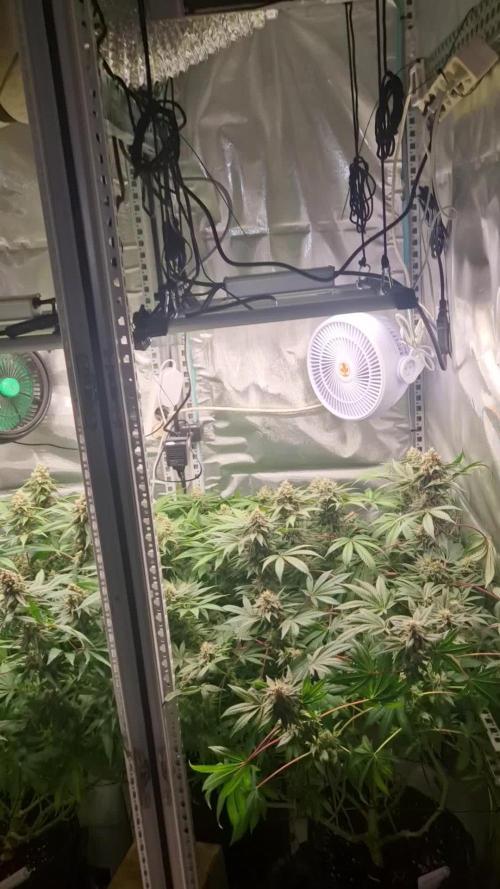
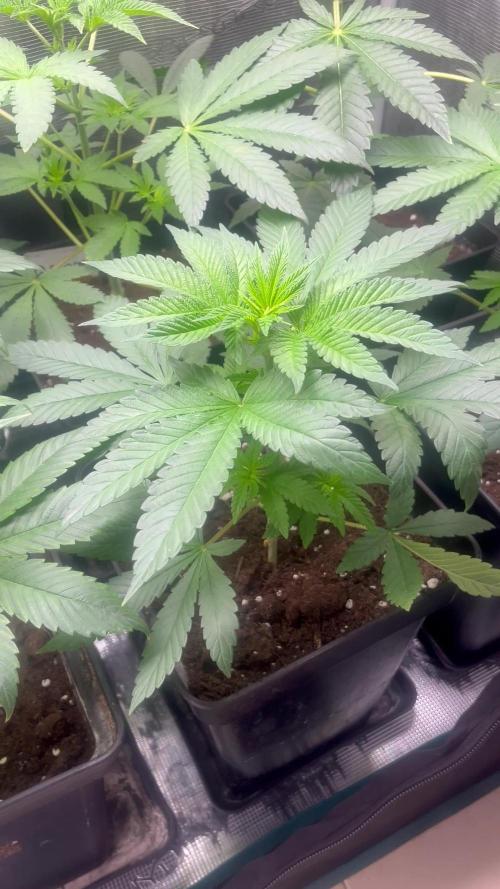
New beginning-in a suitcase :) this is my 4th growth in a suitcase :) Sweet Seeds - Cream Caramel auto:) I think it will be an interesting growth, I don't know yet if I will try to train it, or if I will have to freeze the top of the plant at the base:) I will decide everything as I go ;) , 1 day after germination it was transplanted into its final pot, because I wanted to plant it a little deeper, so that there would be more space in the future:) good luck to everyone.
Likes
4
Share
Sigo com confinaca na colheita, as plantas estão respondendo muito bem .
Likes
28
Share
@Hawkbo
Follow
Purple Lemonade , Gelato 1&2, LAK 2&3 are all just about done theyll be coming down over the weekend or early next week. T26, Pineapple Express, Mexican Airlines, LAK 1, 6 Shooter Blue Dreamatic and Cream Cookies are all on the flush but will need a few more before chop. This tent reeks up the whole block it's pretty intense skunk in the driveway right now. There will be one more update I'm guessing for most of these before the harvest update. This was the most successful autoflower crop I've had in a long time I think theres some really good quality buds on some of these. I'll put the video up now and as I go thru the pics theyll be uploaded so if your interested come back tmm for the pics. This girl stinks.
Likes
48
Share
@Mz876
Follow
And we are finally in Flower after realizing she wasn’t an auto after all and switching her to a 12/12 light cycle for the past week . We’re finally getting this show on the road lol .
Likes
80
Share
~MERINGUE by DUTCH PASSION~ Well friends, here we go on another 'canna-venture' together! The grow room has had a complete remodel and some upgrades done to it including brand spanking new 4x8 and 4x4 tents and a Trolmaster Hydro X controller along with a new Control Panel. This strain by Dutch Passion is one of my all time favorite strains that I've cultivated previously with phenomenal results so I'm looking forward to seeing what this girl has to offer when she's grown to her full potential! I'm going to things a bit different this time around. I have a brand spanking new AC Infinity 4x4 tent and was just given one of HLG's newest lights for 2022, The Blackbird! I've got this 600w monster hooked up to my Trolmaster Hydro X Controller so I've got full control over timing, dimming and Sunrise/Sunset. This beauty is going to annihilate the 4x4 for sure! 😎👍 I'm going to grow her all by herself and veg her for around 70-90 days after witch I'll install a trellis net in the tent and spread her out. Once she's recovered from her 'net training' I'll flip her to 12/12 and hang on! 🤪 It's ALWAYS been a blast for me growing strains from Dutch Passion because their genetics are extremely stable which allow me to just concentrate on the essentials: Light, Environment, Water, Nutrients and possibly a bit of LST... not complicated, just basics like keeping a constant temperature and RH in the tent at a level that gives a good VPD, watering when almost dry and maintaining proper light levels according to their stage of growth and they REWARD you with some of the most EPIC cultivars you've ever grown! 👍👍👍 ____________________________________________________________________________________________________________________________________________________________________________________________________________________________________________________________________________________________________________________________________________________________________________________________________________________________________________________ ~STRAIN INFORMATION**~ ~Unique USA genetics~ ~Very sweet aroma and fruity flavors~ ~Compact buds with one of the highest THC levels~ ~Quality of the flowers is top-notch with an amazing bag appeal~ Meringue has a very sweet aroma and fruity flavor Meringue is a hybrid indica/sativa strain with a complex fruity aroma that leans to the tangy side of the spectrum but a bit sweeter. It smells like oranges, mango and honey with some earthy, sour hints. Her aroma profile is also very pungent. Meringue is a connoisseur’s delight Meringue is a high-quality strain. She might not be the biggest overall yielder but the level of quality is definitely a reason to keep growing her again and again. Expect solid yields of stunning looking buds. Although the flowers can be a bit smaller, they are rock-hard and thus will still put down some weight on the scale. When handled well she will deliver you some of the most beautiful looking nuggets on the planet. The dark hues in the flowers and leaves makes the white layer of resin really pop out for an eye-catching bag appeal. Meringue is grown by crossing Wedding Cake x Animal Cookies. Wedding Cake, also known as Pink Cookies, is a USA cross of the famous Girl Scout Cookies and Cherry Pie. These 2 strains make for the intense sweet tangy taste of the variety. It is also noted for its extremely high THC content. Animal Cookies is another popular USA variety which is a child of the legendary GSC line and Fire OG. She is a clone-only variety that flowers in about 9 week and grows very dense and compact buds that can show some dark coloration in the flowers. This strain has a sweet and sour aroma with a strong body-effect that will suit the more experienced smoker. -The genetics used to create Meringue ensure the following characteristics- ~A sweet tangy aroma from the Wedding Cake ~The dense, compact and colored buds from the Animal Cookies ~High potency levels thanks to both the Wedding Cake and Animal Cookies genetics Meringue is top-notch variety with a high cannabinoid profile and an intensely sweet, pungent aroma. ~Meringue Effects~ Meringue is a crossing of 2 popular hybrid USA strains. She leans a bit more to the Indica side which is shown in the shorter flowering time and bud structure. The effect of the variety is quite euphoric with a powerful sense of well being and relaxation. When you smoke more during a short period of time you will be rewarded with a deep body stone which could give a couch-lock experience. Meringue feminized seeds vs Lemon Meringue strain Any fans of the USA Lemon Meringue variety will love the Dutch Passion Meringue. Both varieties share a THC rich high and a connoisseur flavor profile. However feminized seeds of the Dutch Passion Meringue are thought to produce frostier plants and a superior vaping experience. -The growth and flowering time of Meringue- We recommend a veg period of about 4-6 weeks for these feminized seeds. Meringue can have a bit of a slow start while showing some stretch during the latter part of the grow period. On the other hand, she doesn’t stretch a lot during flowering, so she can be a bit challenging to understand. Meringue can have quite an unusual growth pattern with leaves that have elongated stems and which are pointed upwards with some distance to the main stem. This requires the use of certain growing techniques, like leaf tucking, to make sure she receives sufficient light from top to bottom. Meringue stays fairly compact and within 3-4 weeks there is already a lot of resin on the flowers. After 6 weeks of flowering the buds start to show orange pistils, they seem to ripen quite fast. Luckily all plants show amazing resin production, making them very appealing to the eye. The flowering time is about 8 weeks. In combination with the recommended veg phase, it will take around 12-14 weeks from cannabis seed to harvest. The yield of the Meringue Meringue produces XL harvests of top-notch quality cannabis; between 400 and 500 grams per m2 is possible. The buds are really frosty and dense. Our expert advice: Meringue is the perfect strain for professional home growers or licensed producers looking for a variety with the highest possible resin levels. Buds are literally coated in layers of resin. We would recommend to look out for the plants which show the most hybrid leaf and plant structure. These are generally the biggest and best yielding phenotypes. Consider using a UV light during the last few weeks of flowering and notice how the trichome production goes into overdrive. If you’re looking for something truly unique with an amazing bag appeal then please look no further, Meringue is the strain you need! ~More info about Meringue Meringue isn’t the most straightforward plant to grow so she can be a bit challenging to understand. The thing that stands out the most is the slightly unusual growth pattern, therefore more leaf picking is necessary, otherwise the lower buds will not receive enough light. Because of the slightly larger internodal distance, buds don’t have the tendency to become really big, which could make her a bit more interesting for growers with higher humidity levels. There should be enough fresh air around these flowers though, because they become rock-hard. Buds are covered in trichomes, lab results showed all phenotypes were close to and above 20% THC, suited for hardcore smokers. ** Credit to Dutch Passion ____________________________________________________________________________________________________________________________________________________________________________________________________________________________________________________________________________________________________________________________________________________________________________________________________________________________________________________ ~THE SETUP~ ~Initially seed was lightly scuffed, then soaked for 3 hours in 78℉ distilled water after which it was transferred to a moist paper towel laid out in a Jiffy Pellet plastic starter tray with lid. Underneath the tray was placed a Mars Hydro Heat Mat with Controller that was set to 78℉ where it stayed until a tap root emerged. ~Planted into Jiffy Peat Pellet that was hydrated with distilled water warmed to 78℉ with a 7.0 ph. ~Once roots emerged from the Jiffy Pellet she was transferred to a 1qt plastic pot. As she grows I'll be moving her into larger pots along the way up until she's in her 10g fabric pot. ~Grown in a 10g fabric pot filled with Mother Earth 70/30 Coco/Perlite medium and fed Dutch Pro nutrients throughout the entire grow with de-chlorinated water ph'd @ 6.2-6.8. ~19/5 light cycle for vegetation, then 12/12 to flower with supplemental UVA added during the last weeks of flower. Lights are controlled by a Trolmaster Hydro X controller set for a 15min Sunrise/Sunset simulation. ~ Supplemental co2 provided throughout vegetation and flower - monitored and controlled by an AutoPilot APC8200 co2 controller. ____________________________________________________________________________________________________________________________________________________________________________________________________________________________________________________________________________________________________________________________________________________________________________________________________________________________________________________ Weekly Updates: 12/1- I soaked the seed for 3 hours in 78℉ distilled water after which it was transferred to a moist paper towel laid out in a Jiffy Pellet plastic starter tray with lid. Underneath the tray was placed a Vivosun Heat Mat with Controller that was set to 78℉. After 30 hours she had not popped open yet so I soaked another seed for 3 hours and then into a paper towel and onto the heat mat it went. 12/3- This afternoon I checked and the seed had a root that was about 1/4 to 3/8" so at 5 pm I transferred it into a Jiffy Peat Pellet that was hydrated with distilled water warmed to 78℉ with a 7.0 ph using a tine off of a plastic fork as a 'mini trowel' to make a hole in the pellet and to gently cover the tap root, leaving only the seed head slightly exposed. This method accomplishes most of the initial work the seed has to do by eliminating having to orientate itself, push it's root down and head up. By the next morning she had her cotyledon leaves opened! 12/5- Well this is Day ONE for the Dutch Passion Meringue! I'll keep her in the covered/heated Jiffy tray until I see her roots beginning to emerge from the peat pellet, then I'll transfer her gently into her 2qt plastic starter pot to begin growing. 12/7- Today when I checked her, she had roots just starting to emerge from her pellet, so tomorrow I'll transfer her into her 'starter' pot. 😎💚 Thank you for checking out my passion in life! Please visit as often as you wish and I hope you enjoy this journey as much as I know I will! Grow Strong! 💪😎🤙
Likes
18
Share
A light spectrum in the scope of 400 to 700nm induces growth and development, and UV (100–400nm) and infrared (700–800nm) light play a role in plant morphogenesis—which is essentially the process of plants developing their physical form and external structure. Optimizing Your Knowledge in the Grow Room To maximize your yield, always aim for 40 moles, or 40,000,000 μmol, per day. Here is how much PPFD is needed per second for each phase of cannabis growth to achieve the DLI of 40 moles of light per day. Seedling phase (18hr cycle): 200–300 μmol m-2 s-1 Vegetative phase (18hr cycle): 617 μmol m-2 s-1 Flowering phase (12hr cycle): 925 μmol m-2 s-1, (1500 μmol m-2 s-1 @2000ppm co2) (ballpark) When choosing grow lights for cannabis, it is essential to check the technical specifications to determine if they are strong enough to get the job done. Of course, this doesn't mean that you have to buy the most expensive lights there are. Still, it does mean that you should research each of these specifications in relation to your cannabis plants to find a grow light that will fully serve your needs. This is especially true with PPFD, as this is arguably the most insightful value for growers—it tells you exactly how much useful light your plants are absorbing at a certain distance from the grow light. With my fixed light source, as the plant develop height through stages, it will naturaslly grow into higher μmol ranges naturally dictated by its height. Look forward to filling the tent for the next grow. Last week will see increased blues. ELONGATED HYPOCOTYL5 (HY5), a bZIP-type transcription factor, acts as a master regulator that regulates various physiological and biological processes in plants such as photomorphogenesis, root growth, flavonoid biosynthesis and accumulation, nutrient acquisition, and response to abiotic stresses. HY5 is evolutionally conserved in function among various plant species. HY5 acts as a master regulator of a light-mediated transcriptional regulatory hub that directly or indirectly controls the transcription of approximately one-third of genes at the whole genome level. The transcription, protein abundance, and activity of HY5 are tightly modulated by a variety of factors through distinct regulatory mechanisms. This review primarily summarizes recent advances in HY5-mediated molecular and physiological processes and regulatory mechanisms on HY5 in the model plant Arabidopsis as well as in crops. Plants utilize light as the predominant energy source for photosynthesis. Besides, light signal acts as an essential external factor that mediates a variety of physiological and developmental processes in plants. Plants are continuously exposed to dynamically changing light signals due to the daily and seasonal alternation in natural conditions. The various light signals are perceived by at least five classes of wavelength-specific photoreceptors including phytochromes (phyA-phyE), cryptochromes (CRY1 and CRY2), phototropin (PHOT1 and PHOT2), F-box containing flavin binding proteins (ZTL, FKF1, and (LKP2), and UV-B RESISTANCE LOCUS 8 (UVR8). These photoreceptors are biologically activated by various light signals, subsequently initiating a large scale of transcriptional reprogramming at the whole genome level. Extensive genetic and biochemical studies have established that the ELONGATED HYPOCOTYL5 (HY5), a bZIP-type transcription factor, tightly controls the light-regulated transcriptional alternation. Loss of HY5 function mutant seedlings display drastically elongated hypocotyls in various light conditions, suggesting that HY5 acts downstream of multiple photoreceptors in promoting photomorphogenesis in plants. In addition to inhibiting hypocotyl growth, HY5 regulates other various physiological and developmental processes including root growth, pigment biosynthesis and accumulation, responses to various hormonal signals, and low and high temperatures. This review summarizes the recent advances and progress in HY5-regulated cellular, physiological, and developmental processes in various plant species. We also highlighted emerging insights regarding the HY5-mediated integration of multiple developmental, external, and internal signaling inputs in the regulation of plant growth. Among the genes regulated by the circadian clock, we found that the excision repair protein XPA is controlled by the biological clock, and we, therefore, asked whether the entire nucleotide excision repair oscillates with daily periodicity. XPA transcription and protein levels are at a maximum at around 5 pm and at a minimum at around 5 am. Importantly, the entire excision repair activity shows the same pattern. This led to the prediction that mice would be more sensitive to UV light when exposed at 5 am (when repair is low), compared to 5 pm (when repair is high). We proceeded to test this prediction. We irradiated two groups of mice with UV at 5 am and 5 pm, respectively, and found that the group irradiated at 5 am exhibited a 4–5 fold higher incidence of invasive skin carcinoma than the group irradiated at 5 pm. Currently, we are investigating whether this rhythmicity of excision repair exists in humans. Molecular mechanism of the mammalian circadian clock. CLOCK and BMAL1 are transcriptional activators, which form a CLOCK-BMAL1 heterodimer that binds to the E-box sequence (CACGTG) in the promoters of Cry and Per genes to activate their transcription. CRY and PER are transcriptional repressors, and after an appropriate time delay following protein synthesis and nuclear entry, they inhibit their own transcription, thus causing the rise and fall of CRY and PER levels with circa 24-hour periodicity (core clock). The core clock proteins also act on other genes that have E-boxes in their regulatory regions. As a consequence, about 30% of all genes are clock-controlled genes (CCG) in a given tissue and hence exhibit daily rhythmicity. Among these genes, the Xpa gene, which is essential for nucleotide excision repair, is also controlled by the clock. Circadian control of excision repair and photocarcinogenesis in mice. The core circadian clock machinery controls the rhythmic expression of XPA, such that XPA RNA and protein levels are at a minimum at 5 am and at a maximum at 5 pm. The entire excision repair system, therefore, exhibits the same type of daily periodicity. As a consequence, when mice are irradiated with UVB at 5 am they develop invasive skin carcinoma at about 5-fold higher frequency compared to mice irradiated at 5 pm when repair is at its maximum. The mouse in the picture belongs to the 5 am group with multiple invasive skin carcinomas at the conclusion of the experiment.
Likes
2
Share
Super excited for these to finish. The gassyness is just unreal, in flush, next week should see a ton of colors coming out
Likes
Comments
Share
comenzamos con la primera semana de vegetación de estas muchachas, hasta ahora todo bien con el proceso, trato que reciban su buena dosis de humedad gracias al Humidificador humipro 4 litros de Garden HighPro. cualquier consulta o recomendación por favor háganmela saber en los comentarios. Saludos!!
Processing
Likes
16
Share
Back to feeding for the first time since transplanting, took a good part of a week to dry out proper so I have some nasty chlorosis/necrosis to bounce back from hopefully soon now back on feeding. On the plus side the toppings are going well hope to do a second time this grow. Added a dose of microbes but since I'm running non organic feed & upon reading this: https://www.gardenmyths.com/soil-microbes-need-to-add-them-garden/ decided to send back & discontinue.
Likes
34
Share
@Dunk_Junk
Follow
Day 91 - Still going. Harvested a little bit already as shown in video.
Likes
2
Share
Been alot colder this week but humidity very high so got the dehumidifier set up. Though I would be ready to start flushing plant early next week but I think it still needs 1 or 2 or feeds before flushing. Also going to give her an extra hour of darkness 13/11
Likes
14
Share
D43/V39 - 13/05/23 - Changed water , added nutes until EC=0.9 D44/V40 - 14/05/23 - Defolation - Added water EC= 1.1 pH 6.5 D45/F01 - 15/05/23 - Start flowering. Monitoring water from maximum to above, for the week out D46/F02 - 16/05/23 - Continuing LST. Flowering stage is now clear D47/F03 - 17/05/23 - EC= 0.9, Added nutes until EC 1.1. pH 6.4 (added some drops of pH-) D48/F04 - 18/05/23 - Added water and nutes EC=1.1, pH 6.5 D49/F05 - 19/05/23 - Nothing to report
Likes
14
Share
@EXZELENS
Follow
D64: Well, as I mentioned in yesterday´s report, she has some kind of deficiency I cannot tell why, so I presume it is salt buildup - which I can see from outside the pot a little more than usual - from the heavy feeding. So in that regard I flushed her and watered until it runs with 6.2 pH water. Did a little defoliation for the last time, from now on she won´t be getting anymore training nor defoliation. I expected her to be a little bigger by now but at least the seems like a fast runner and will probably finish on the estimated time by RQS of 10-11 weeks. D65: The deficiency don´t seem to have evolved. From day to night she developed some nice purple on the leaves! D66: The defiency seems to have stopped and she has a lot of dying leaves, I think it´s natural and not related to the deficiency. D69: She is getting ready.. the thricomes are looking overall about 60-70% cloudy with some clear and amber, some more days, maybe a week and she´s done. D70: Well, last day of the week and unfortunately last day of the life of this beautiful girl. I guess she had 1 or 2 more weeks still but today I woke up and she had mold – Botrytis -. It was on the low buds, closer to the ground even tho I didn´t even water, but the problem I found out later what it was: 88% humidity during the night. Now, I trimmed her all and put to dry, which will be a problem since the humidity outside is 90% and it doesn´t stop raining in this time of the year. Let´s see how things go... keep following for the harvest week and review in a few. Thank you very much for reading my diary. Peace ✌️
Likes
24
Share
More to come!... don't even ask how I keep this tent in the 70s in the garage when it is already getting to 96 degrees outside..... short answer... "oh, this works, well it did work, maybe if I do this, that seems to help, well shit, that didn't work, uh oh, its getting hot, I got it!... and done. - temps start to climb into the 90s - " oh shit, oh shit!, Its not working anymore, I guess 90 degrees inside the tent is better than being in the 100s.... think, think, think, 😲 I got it!... annnd done👌! Its working. The temp at the time of writing this is... 73 degrees (last night it is was in the upper 80s lower 90s). So yeah, my wife is upset at the time I've been spending on it..... if only she would have let me do this inside the house like I wanted to. Meh, whatareya gonna do? 😕 There is something living in my attic... I hear it now.😒....
Likes
6
Share
@LAShugars
Follow
She’s in flower!!! So excited! I’m grateful she got stuck in preflower. Gave her time to grow into a beautiful Blueberry Lady. I think she will be worth the wait!!
Likes
4
Share
At a total of 79 days this Sangria is a beautiful one! A cross between The GOGO and Ogreberry she is super delightful, Dense resiny heavy covers trichome buds , with the smell of Gassy rotten fruit funk on the nose! She a stanky one ! Other then that she was a pretty easy grow , y’all don’t sleep on it an better get your hands on it , at @Twenty20Mendocino they got you covered
Likes
5
Share
Week 8, the last feed! Defoliated to let more air flow and light penetrate down into the lowers of the plant. Bud's are sticky, plant is covered in frost, the pics don't do it justice. For a small pot grow, she's not that far behind her big pot sister