


@kandra
Follow
Main-Lining:
Malawi mit Draht
Passion Fruit mit Schnurr
Versuch mit etwas Luftbefeuchtung aber ohne Wirkung




@SolitudeCorners
Follow
Last week of flowering (72days from the light switch) Gonna cut soon when the dirt is dry. A quite late harvest. Many buds denser more, and stem can’t longer resist.
This season so satisfy. Thank for all mentor and comment. You all are my inspiration for grows.
Feeding
23/1 Water 13.5L+Flawless 20ml ppm80 ph6.2
MDR 3L 2Lx5
Runoff
MDR 1400 /1155
Zkittle 1600/1300/1150
Pineapp 900/600
Purp 1300 /1200
Sapp 2000/1100
Dozdos 1100/1000
25/1 10.42 6L ppm9 ph6 1L per pot
3L+Flawless6ml ppm116 ph5.9 1.5/1.5 Purp, Zkittle
4.5L+ Flawless7ml ppm119 ph6 1.5/3 Sapp,MDR
Runoff
Purp 1300
Zkittle 1500/1200
Dozdos 1400
Sapp1300
Pineapp850
MDR950
27/1 runoff
Pineapp 500
Purp 900
MDR 600
Zkittle 400
Sapp 300
Dozdos 400




@Ultraviolet
Follow
2nd net is up. Early bud formations are promising. holding up to the extremes pretty well, some leaves taking minor damage, but overall, she is holding up, gave her 1 night at 50F see how she would react, stressful. Not advised as it messes with her metabolism, but I want to see if it triggers any anthocyanin response. Love to see her purp up but no signs yet. Remember, For every molecule of glucose produced during photosynthesis, a plant needs to split six molecules of water. This process provides the hydrogen needed for synthesizing glucose and other organic compounds, while oxygen is released as a byproduct.
Homework.
If Rubisco activity is impaired and it cannot properly function or regenerate its substrate, the plant's leaves are likely to turn a pale green or lime green, a condition known as chlorosis. Essentially, Rubisco activity is highly regulated and susceptible to various environmental and metabolic factors that can cause it to become inhibited, leading to an apparent failure in RuBP regeneration due to a lack of consumption.
Rubisco regeneration is intrinsically linked to nitrogen supply because Rubisco is a major sink for nitrogen in plants, typically accounting for 15% to over 25% of total leaf nitrogen. The regeneration phase itself consumes nitrogen through the synthesis of the Rubisco enzyme and associated proteins (like Rubisco activase), and overall nitrogen status heavily influences the efficiency of RuBP regeneration. RuBisCO is a very large enzyme that constitutes a significant proportion (up to 50%) of leaf soluble protein and requires large investments in nitrogen. Insufficient nitrogen supply limits the plant's ability to produce adequate amounts of RuBisCO, thereby limiting the overall capacity for photosynthesis and carbon fixation. Maintaining the optimal, slightly alkaline pH is crucial for the proper function and regeneration of Rubisco. Deviations in either direction (too high or too low) disrupt the enzyme's structure, activation state, and interaction with its substrates, leading to decreased activity and impaired RuBP regeneration. (Lime/yellowing)
Structural Component: Nitrogen is an essential building block for all proteins, and the sheer abundance of the Rubisco protein makes it the single largest storage of nitrogen in the leaf.
Synthesis and Activity: Adequate nitrogen supply is crucial for the synthesis and maintenance of sufficient Rubisco enzyme and Rubisco activase (Rca), the regulatory protein responsible for maintaining Rubisco's active state. Nitrogen deficiency leads to a decrease in the content and activity of both Rubisco and Rca, which in turn limits the maximum carboxylation rate, Vmax, and the rate of RuBP regeneration Jmax, thus reducing overall photosynthetic capacity.
Nitrogen Storage and Remobilization: Rubisco can act as a temporary nitrogen storage protein, which is degraded to remobilize nitrogen to other growing parts of the plant, especially under conditions of nitrogen deficiency or senescence.
Nitrogen Use Efficiency (NUE): The allocation of nitrogen to Rubisco is a key determinant of a plant's photosynthetic nitrogen use efficiency (PNUE). In high-nitrogen conditions, plants may accumulate a surplus of Rubisco, which may not be fully activated, leading to a lower PNUE. Optimizing the amount and activity of Rubisco relative to nitrogen availability is a target for improving crop NUE.
Photorespiration and Nitrogen Metabolism: Nitrogen metabolism is also linked to the photorespiration pathway (which competes with carboxylation at the Rubisco active site), particularly in the reassimilation of ammonia released during the process.
To increase RuBisCO regeneration, which refers to the process of forming the CO2 acceptor molecule Ribulose-1,5-bisphosphate (RuBP) during photosynthesis, the primary methods involve optimizing the levels and activity of Rubisco activase (Rca) and enhancing the performance of other Calvin-Benson-Bassham (CBB) cycle enzymes.
Biochemical and Environmental Approaches:
Optimize Rubisco Activase (Rca) activity: Rca is a crucial chaperone protein that removes inhibitory sugar phosphates, such as CA1P (2-carboxy-D-arabinitol 1-phosphate), from the Rubisco active site, thus maintaining its catalytic competence.
•Ensure optimal light conditions: Rca is light-activated via the chloroplast's redox status. Adequate light intensity ensures Rca can effectively maintain Rubisco in its active, carbamylated state.
•Maintain optimal temperature: Rca is highly temperature-sensitive and can become unstable at moderately high temperatures (e.g., above 35°C/95F° in many C3 plants), which decreases its ability to activate Rubisco. Maintaining temperatures within the optimal range for a specific plant species is important.
•Optimize Mg2+ concentration: Mg2+ is a key cofactor for both Rubisco carbamylation and Rca activity. In the light, Mg2+ concentration in the chloroplast stroma increases, promoting activation.
•Manage ATP/ADP ratio: Rca activity depends on ATP hydrolysis and is inhibited by ADP. Conditions that maintain a high ATP/ADP ratio in the chloroplast stroma favor Rca activity.
Enhance Calvin-Benson-Bassham (CBB) cycle enzyme activity: The overall rate of RuBP regeneration can be limited by other enzymes in the cycle.
•Increase SBPase activity: Sedoheptulose-1,7-bisphosphatase (SBPase) is a key regulatory enzyme in the regeneration pathway, and increasing its activity can enhance RuBP regeneration and overall photosynthesis.
•Optimize other enzymes: Overexpression of other CBB cycle enzymes such as fructose-1,6-bisphosphate aldolase (FBA) and triose phosphate isomerase (TPI) can also help to balance the metabolic flux and improve RuBP regeneration capacity.
Magnesium ions, Mg2+, are specifically required for Rubisco activation because the cation plays a critical structural and chemical role in forming the active site: A specific lysine residue in the active site must be carbamylated by a CO2 molecule to activate the enzyme. The resulting negatively charged carbamyl group then facilitates the binding of the positively charged Mg2+ion. While other divalent metal ions like Mn2+ can bind to Rubisco, they alter the enzyme's substrate specificity and lead to dramatically lower activity or a higher rate of the non-productive oxygenation reaction compared to Mg2+, making them biologically unfavorable in the context of efficient carbon fixation. The concentration of Mg2+ in the chloroplast stroma naturally increases in the light due to ion potential balancing during ATP synthesis, providing a physiological mechanism to ensure the enzyme is activated when photosynthesis is possible. At the center of the porphyrin ring, nestled within its nitrogen atoms, is a Magnesium ion (Mg2+). This magnesium ion is crucial for the function of chlorophyll, and without it, the pigment cannot effectively capture and transfer light energy.
Mg acts as a cofactor: Mg2+ binds to Rubisco after an activator CO2 molecule, forming a catalytically competent complex (Enzyme-CO2-Mg2+). High light + CO2) increases demand: Under high light (60 DLI is a very high intensity, potentially saturating) and high CO2, the plant's capacity for photosynthesis is high, and thus the demand for activated Rubisco and the necessary Mg2+ cofactor increases. Mg deficiency becomes limiting: If Mg2+ is deficient under these conditions, the higher levels of Rubisco and Rubisco activase produced cannot be fully activated, leading to lower photosynthetic rates and potential photo-oxidative damage.
Optimal range: Studies show that adequate Mg2+ application can enhance Rubisco activation and stabilize net photosynthetic rates under stress conditions, but the required concentration is specific to the experimental setup.
Monitoring is key: The most effective approach in a controlled environment is to monitor the plant's physiological responses e.g., leaf Mg2+ concentration, photosynthetic rate, Rubisco activation state, and adjust the nutrient solution/fertilizer to maintain adequate levels, rather than supplementing a fixed "extra" amount.
In practice, this means ensuring that Mg2+ is not a limiting factor in the plant's standard nutrient solution when pushing the limits with high light and CO2.
Applying Mg2+ through foliar spray is beneficial to Rubisco regeneration, particularly in alleviating the negative effects of magnesium (Mg) deficiency and high-temperature stress (HTS). While Mg can be leached from soil, within the plant it is considered a mobile nutrient, particularly in the phloem. Foliar-applied Mg is quickly absorbed by the leaves and can be translocate to other plant parts, including new growth and sink organs.
Foliar application of: NATURES VERY OWN MgSO4 @ 15.0g L-1 in a spray bottle. For those high-intensity workouts when 1 meal a day is just not enough!
Foliar sprays are often recommended as a rapid rescue measure for existing deficiencies or as a supplement during critical growth stages, when demand for Mg is high. Application in the early morning or late evening can improve absorption and prevent leaf burn. The plant was getting a little limey yellow in the centre. Shortly thereafter, she was back in business, green mostly regenerated. The starting point [of creativity] is curiosity: pondering why the default exists in the first place. We’re driven to question defaults when we experience vuja de, the opposite of déjà vu. Déjà vu occurs when we encounter something new, but it feels as if we’ve seen it before. Vuja de is the reverse—we face something familiar, but we see it with a fresh perspective that enables us to gain new insights into old problems.
Confidence is evidence... nothing more. You are confident because you have driven 10,000 times, you are confident because you have spoken 10,000 times. People think confidence is a feeling, but it's not. If you want more confidence, then you need to create evidence, take more shots, collect more data, build more experiences, take more risks; fail, confidence doesn't come first; it is the reward you get for doing the work. no one else wants to do.


@Benzels
Follow
Well its another update from down under.. and things are getting better with the Caramelo. She got badly burnt from my mistake of using too strong lime sulfur spray to treat spider mites and mold issues before they could take hold. And its kinda worked. lols...the mites are still there but reduced alot in number but I was almost ready to chop her after I saw how badly burnt all her new shoots were.
But Im glad I decided to wait a bit as she has recovered faster than expected and while im sure she still has issue at the root level from the rain drenching her for near on a week- she basically stunted after that and never showed much stretch at all when switching to flower-she grew maybe 15cms in height total after that so Im assuming some kind of root rot has her and any harvest will be a bonus. In saying that Im still not going to be suprised if she suddenly dies or gets badly infected with bud rot out of the blue as Im nursing her hard just to get her to this stage and in my experience a nursed plant may produce a yield but it will be weaker than its meant to be and reduced by around 50% of the yield you should have got. if she was indoor id have ripped her out after the sighs she was stunted presented and started over with a new plant. But out doors I dont have that luxury so I will nurse her thru and hope for the best but expect less than average results.
Zkittles though is loving life and just LOOK at her!! When you realize she was the same size as the Caramelo when the rain hit and now look at the difference- thats why i say when you see obvious signs of stunting-rip the plant if you can and start over, it may recover but if it was serious then the plant will never show its true potential and you may think those genetics are shit. Ive never grown the Caramelo before now so if i judge it on this result I will say the genetics are shit when the plant likely had root rot from 3 weeks before even switching to flower. And the BC buds hash plant is FINALLY flowering too now. For a 90% indica it sure is taking the longest to flower. I wonder if its the old school genetics at play here-This strain been around since the 70's while the ZkittleZ is a modern hybrid so maybe the newer genetics really are all they are cracked up to be. Thats why I love doing side by side grows out doors with diff genetics and see what they can really do. You should see my mates BC hashys- lmao, he said he wanted bigger plants than last year as he got "bonsai" plants from someone else. Now he has to tie down trees that are growing over his 6ft fence!! And they only just went into flower last week.
But on that note- Will update more now as things progress towards harvest. Cheers for stopping by and if your still reading this-nice work, most pple cant read shit these days so double points for making it this far.


@DedicatedJOKER
Follow
Last few days then starting flush. I didn't have as much time I was hoping this past month so I wasn't able to give them the attention they deserve but none the less they are going to turn out just fine.
Thanks for all the kind comments from everyone, much appreciated 😁


@Nvchods3
Follow
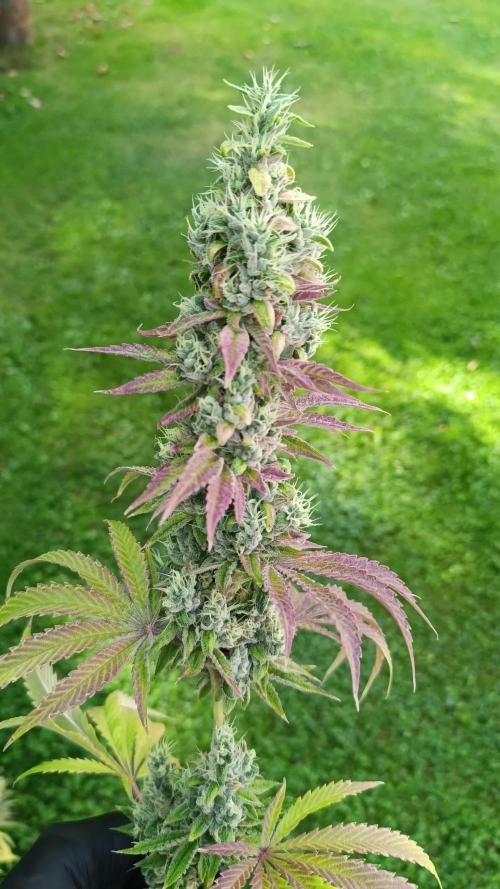
empieza la 7ta semana de floracion.
se sigue alimentando con top crop
se le realizo poda de bajos para aprovechar al maximo la luz y engorden esos bellos cogollos tan apreciados.



@JuicyFlavours
Follow
Strain From local breeder. Remember his name, you Will see more strains From him.


@Highgrade_Harvests
Follow
So week 4 is in the books. I'm really happy with how everything has been going. I've been busy and stressed these last few weeks so to see how good these girls are doing puts a smile on my face. The terpenes are strong now and everything is starting to fatten up. Won't be too long now. Follow my Instagram and YouTube for more pictures and videos! I would appreciate the support!



@GoodTimesOrganics
Follow
Hi liebe Community and Welcome Back! 💚
Woche 8 (Tag 59) im Vergleichsgrow!
Bio Tabs NL. vs. Weedefix (Stuttgart/ Germany)
Hier im Bio Tabs Grow haben wir nun nach 59 Tagen des Einpflanzens eine Höhe von 118cm erreicht.
Blütetag: 14 (BW2)
Nach der zweiten Blütewoche, lässt sich eine sehr ähnliche Performance der beiden Düngersysteme beobachten, außer dass bei der Bio Tabs NL Pflanze die Blätter nach wie vor eher etwas dunkler sind.
Außerdem hat hier im Bio Tabs NL Grow der Stretch an einem Trieb ziemlich zugelegt. Ein Trieb ist 118cm hoch, während der Rest um 110cm liegt.
Es bleibt spannend!
Diese Woche, habe ich einmal mit Wasser und 5ml Bio PK 5-8 (Ferment mit Melasse und Bananen extrakt) gegossen. So nach Angaben.
Ansonsten nur Wasser.
Und es zeichnet sich weiterhin ein stärker werdendes Aroma ab.
Die Bedingungen im Growschrank sind für den Anfang in Ordnung, auch wenn es aktuell schwül ist!
—————
🌞 Temp: 26
🌚 Temp: 18°C bis 19°C
💨 RH: 64%
VPD: 0,78 kPa
💡ppfd: 630 mpm
—————


@Lifesgarden420
Follow
Great genetics with the best nutrients always produces awesome results
Every harvest continues to get better
These ladies are healthy and happy


@Sabac
Follow
Fin de mis plantitas.
Recomiendo el banco greenhouseseeds primera Vez que cultivo ese banco y salieron excelentes...


@Justrite
Follow
Chop day , will make full detailed harvest report in the next few weeks after dry and cured .



@LSDR1
Follow
Still looking fine. Bit of a slowrt flower compared to last time I ran this strain. Quite a lot of plant for such a small space. Will need to defoliate quite a lot at some point. EC in water at 2.3, roughly stacked to 3.5-4.1 in substrate/runoff.


@Demonus
Follow
The Good:
----------------
- Conditions within the bin are stable.
The Bad:
---------------
- Noticed pistils at the top node site on the 26th day as well as a Phosphorus deficiency.
Might be the sudden change in the light schedule from 24h/d to 20h/d after germination that triggered flowering.


@Papa_T
Follow
This was my very first international trip outside of North America. This was in March 2023.
I’m off to Tenerife. Here are just a bunch of photos from that trip. I had a great time.
shorts_status_processing


@RussianGrower
Follow
Приветствую всех, кто следить за мной. Ваша поддержка очень важна для меня.
На следующий день после того как я обновил прошлую неделю дневника наступило время пересадить растения в более крупное ведро. Я покажу вам как использовать дешовые пивные стаканы для пересадки ваших растений. Вы можете посмотреть это на первом видео.
Когда я пересаживал растения я дополнительно добавил микоризу в большое ведро. Мои АК-47 показывают сативный фенотип, поэтому они были слишком высоки, поэтому я был вынужден поместить стебель растения как можно глубже и заполнить его, чтобы корни начали расти из него позже. Я также срезал первую пару непродуктивных листьев и побегов с них. Если вам интересно следить за приключениями травки в России.


@Dargaville_Dukes
Follow
Poor babies! They've definitely had a rough start. I'm fairly certain now the issue has been too much moisture in the soil. I believe there are a few factors that have had an impact:
1) Obviously, giving them too much water. In the first week I gave 90ml into their 1 litre pots over two waterings. I thought this was okay because the top soil was completely dry between waterings. Someone suggested that seedlings don't need additional water for the first 10 days so I'll try that next time
2) Feedback I've had is that my soil mix is quite heavy @ 63% soil, 25% Coco, 6 % perlite + 6% vermiculite. In future I'll increase the perlite portion to about 40%
3) Also, I just noticed that the plastic pots I'm using have very small drainage holes. I think this has caused moisture to accumulate at the bottom of the pot. Yesterday I pushed my finger all the way to the bottom of the pot and it is much wetter at the bottom than at the top.
So yeah, tough start. But they're still growing, albeit very slowly. I trust they'll survive.


@Buddering
Follow
Everything's still going great. The buds are dense. Rock hard. The smell is nice. The father had a rare floral scent, her mother was fruity. She's fruity with a bit of floral. I was hoping for an indica-leaning plant, but she seems to be slightly sativa-leaning. The fruity smell would seem to confirm that she'll be a bit on the sativa side. Just starting to fluff up. So perhaps 10 or 12 days left.


@JuanHaze_Arg
Follow
Las flores más lindas del condado son las de strawberry banana, que hermosa genética! Perdón por no cuidarla y alimentarla como correspondía
27/04 Se riega con 2.5 litros de agua + calmag + top auto. PH:5.5 EC:0.9
29/04 encontré una placa de saltahojas del mismo color que los tallos, por este motivo fue muy difícil darme cuenta. Se estaban chupando la sabia de mi planta, al menos 6 capture con mis dedos.
30/04 se riega con 2,5 L de agua + Monster Bloom 0.1g x L. PH:6.2 EC 0.8
