


Likes
Comments
Share



Likes
14
Share


@Luv2Grow
Follow
Overall, this grow took care of itself, other than the watering and feeding. She grew like a damn tree and didn’t know if she would ever stop stretching but finally did at around 32”. She took very well to LST and this was definitely the biggest auto that I’ve grown to date. All the buds are as solid as a rock, even most of the lower stuff. There were some fluffy buds in there but will end up using that with the trim and leaves to make edibles. All in all, I ended up with 665 grams of wet bud and looking forward to seeing what the final results will be. I’ll update in a week or so with finally weight and a smoke report.


Likes
Comments
Share


@Weedwithwes
Follow
Day 95 GDP harvested and starting dry process.
Day 95 for the
Tropicana cookies purple auto and northern thunderfuck auto.
Both looking great. Tropicana really starting to reek the whole tent out sweet funky arouma. Looks light it’s starting to fade out nitrogen as well 🤞
Northern is stacking up buds hopefully will continue fattening for a couple more weeks.
Soil all the flower tents look very alive and healthy. Lots of wigglers thriving under the mulch layer.

Likes
11
Share


@Someusername420
Follow
Nachdem ich ein paar Triebe aus Versehen abbrach, lies ich vergangene Woche die Pflanzen in ruhe.
Mittlerweile war alles zugewuchert, weshalb ich mich dazu entschloss, einige Blätter zu entfernen und mit etwas LST zu starten um die Pflanzen auf das kommende SCROG´ing vorzubereiten
Likes
36
Share


@JeyGanesha
Follow
Ultime settimane.siamo arrivati al finale anche con queste quasi...bella e sicuramente anche buona😜🤤😂 profilo terpenico forte intenso .un profumo delizioso...quando proverò questa strawberry 🍓 banana 🍌 vi racconterò com'è di sapore e potenza...le cime sono dure dure come una pietra
Likes
Comments
Share
@Thegrungegsx11
Follow
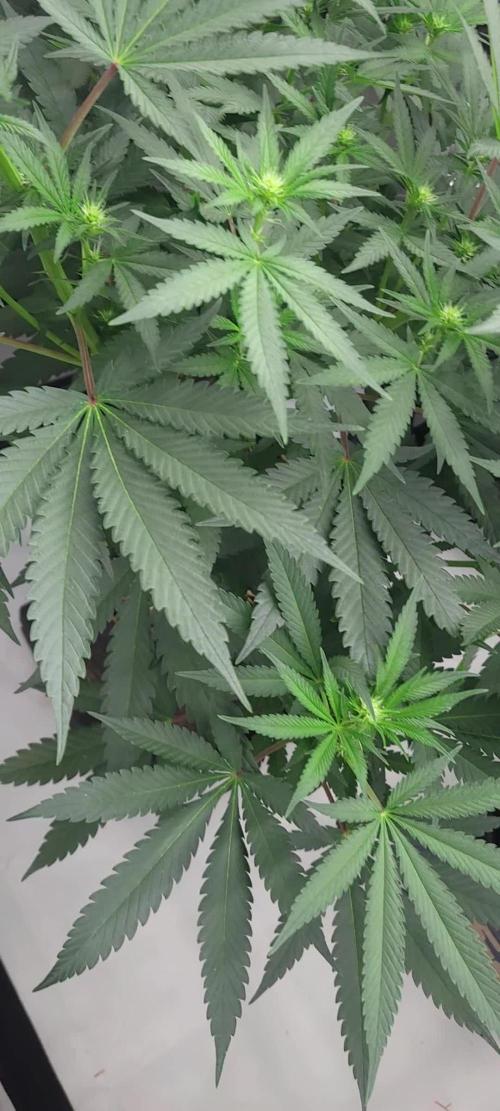
Day 10 of flower. They are both thriving and already starting on their flowers. I would have liked to of vegged them a bit longer but they were germinated 10day after other plants in the tent that were more than ready to flip. The Alien Icicle is a more squat pheno and needed a little boost.

Likes
7
Share


@Alejangrow
Follow
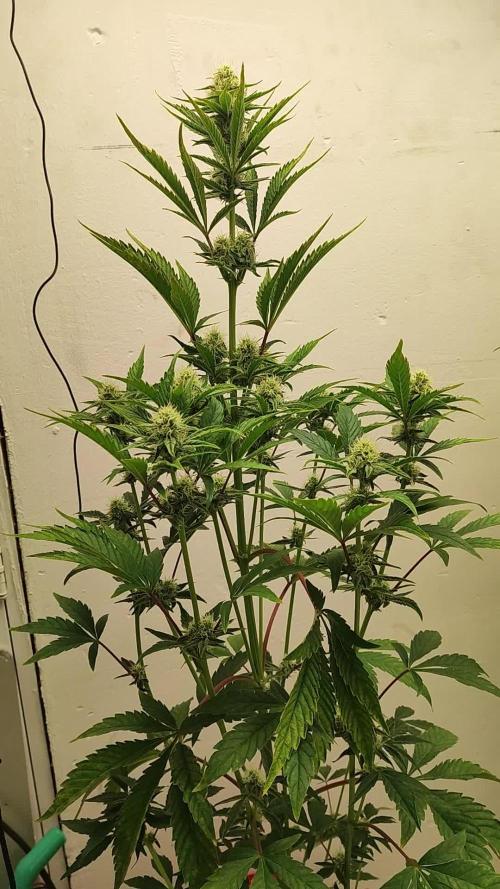
I did a little defoliation during water changes. ✂️🌊
Cutting back on the nutes now.💉
Really hoping these babies fatten up some more before the flush.🌺 🚽
I read up on flowerbomb kush onl seedsman.com says nott the highest yielding strain but I'm keeping my Hope's high on this one. 🤞😁
The top nugs look 🔥 and still 14 days before the chop.


Likes
8
Share


@Lazuli
Follow
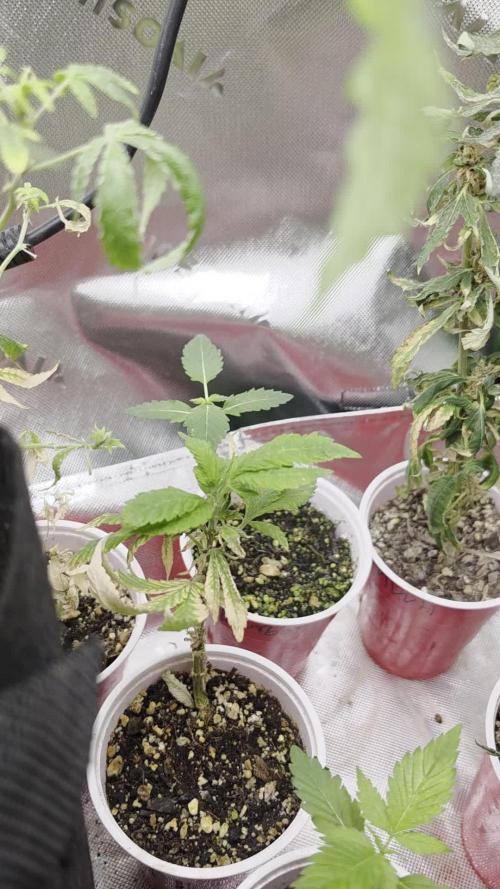
I cant even describe the smell 10/10
The buds are the most potent i ever smoked. Very strong weed with the best euphoric feeling u can imagine.
Harvested 9 weeks after the 12/12 flip.
The taste is also amazing, fruity smoke that goes in easy like air but it hits hard and very hard a few minutes later.
Im proud to be one of the first to grow this legendary strain.
Bra fcking vo Humboldt.
Grts from Europe.

Likes
147
Share


@MrJones
Follow
What can I say this was my largest single yield harvest to date - The BlackBerry OG from Emerald Triangle Seeds are worth growing and just be prepared to have a load of bud to trim, there are other strains that are east to trim than this one, it was laced with sugar leaves and took a while to trim up,, it was in the dry tent for 15 days, honestly I was worried and should have trusted my instinct and left it in longer, this may have made it easier to clean.. If you do not buy this stran and give it a try you are missing out!


Likes
Comments
Share

@Olduffybastard88
Follow
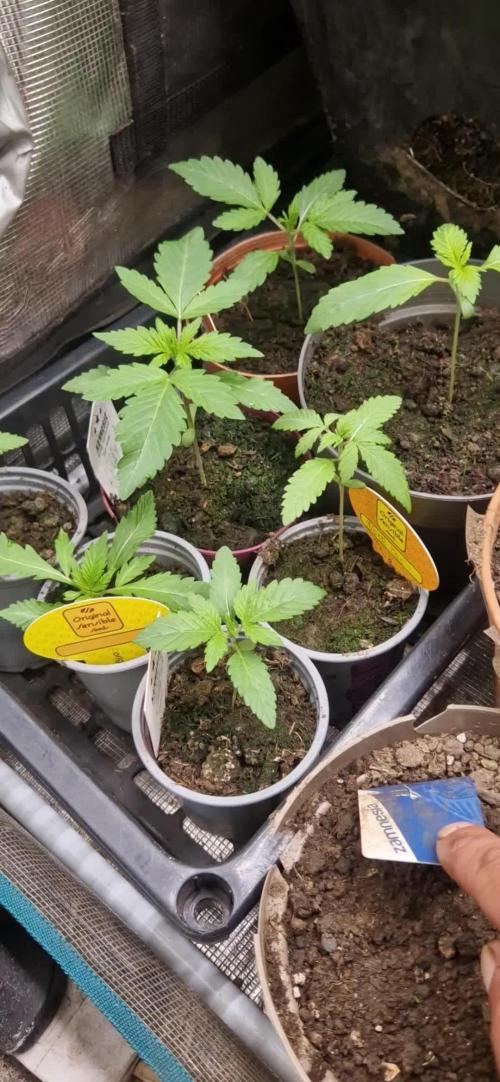
Just heading into week so notning exciting as yet but there taking off and looking healthy will be massive changes by the end of week 3 but here's my whole tent with plats at different stages

Likes
4
Share


@LittleBigTrees
Follow
I've been pulling the top fan leaves to stop the main stem growing any taller and repotted them into 4L pots, once they show roots I'll flip them over to flower.
They've all outgrown their mutations but the apple fritter has a slight varigation.

Processing
Likes
49
Share


@MadeInGermany
Follow
Hi everyone 🤗.
She is getting bushier 😅.
I decided to have them in the 11 liter pots.
Since it is getting pretty tight in the flower tent 😀.
In about 10 days there will be some space in the flower tent, then I will move it around 👍🙂.
Until then, I wish you all a nice weekend 😎 stay healthy 🙏🏻 and let it grow 🌱
You can buy this Strain at :
www.Zamnesia.com
Strain : Sour Diesel
☝️🏼😍
Genetic:
Diesel x Northern Lights
👍
Vega Lights : 2 x Todogrow Led
Quantum Board 100 W
💡
Flower Lights : 2 x Todogrow Led
Cxb 3590 COB 3500 K 205 W
💡 ☝️
Soil : Canna Terra Professional +
☝️
Nutrients : Canna Terra Vega, Canna Terra Flores, Rizotonic, Cannazym, CANNA Boost, Pk 13/14,
Canna Cal/Mag, Canna Ph - Grow,
Canna Ph - Flores
☝️ 🌱
Water:
Osmosis water mixed with normal water (24 hours stale that the chlorine evaporates) to 0.2 EG. Add Cal / Mag to 0.4 Ec Ph with Organic Ph - to 6.0
💦 💧
Likes
7
Share


@DrewbieDoobieNoobie
Follow
Welcome back all looks like the fun begins, week four is here and gone with the flowers staring to stack. It looks like my suspicion was correct and the plants needed a PK boost from flowering.
I gave them a booster on the 10th and in the timelapse you can see how they responded. The K deficiency looks like it was halted from going any further and might have reversed it a little in the leaves.
I had to add a little food after all in the mid to late flowering stage, but you have to listen to what the plants are telling you even if you think they have everything they need. live and learn.

Likes
31
Share


@Untergrownd
Follow
Week Three
im happy with the random seed, I see not much of a difference yet, they all look indica or indica-dominant. one plant is most vigorous, all but one are all growing nice. I also popped one seed of fastbuds fast flowering seeds: gorilla cookies, orange sherbert and gg4 sherbert.
Everything going nice in week three, seedlings coming along. they will need transplanting soon, but I'm still hoping to see some sex before that, so I can sort out male plants. I am also not sure if the random seed are autos or photoperiod. I still decided that I will top all plants to give the seedling a little time to catch up some more.
this week was feeding time. I feed the plants with a biotabs alternative. im not 100% sure with this, but the biovin is used as the startrex, colonize as the bactrex and the bottled nutrients are the orgatrex. two tabs in 11l / 3 gal pots. these nutrients take some time to work. I use biobizz allmix and we transplanted around one week ago. maybe that's a little bit early, but I think it will be fine. in the End of Week 3 I can't see any burns. some nice fungus formed, so I think the nutrients doing its things.
i plan to level up my LST-Skills with the random seed plants and probably don't do a lot on the fastbuds plants to even out the difference in lifetime, so that will mean I maybe get less harvest from the fastbuds plants, but that fine for me. we will see how it turns out.
thx for checking out my grow, im a first time grower, but I feel like I have earned some knowledge In the last years by educating myself, so I hope the grow is interesting for all the nicely growers here. I don't aim to do everything perfectly, at least I don't monitor everything but I do my best to keep the plants happy and in a good place to grow and flower.

Likes
12
Share


@Mule420
Follow
Added the epsom salt and calcium supplement to fix my yellowing problem and so far it’s turning it for the better!!! 😂

Likes
6
Share

@YourBro
Follow
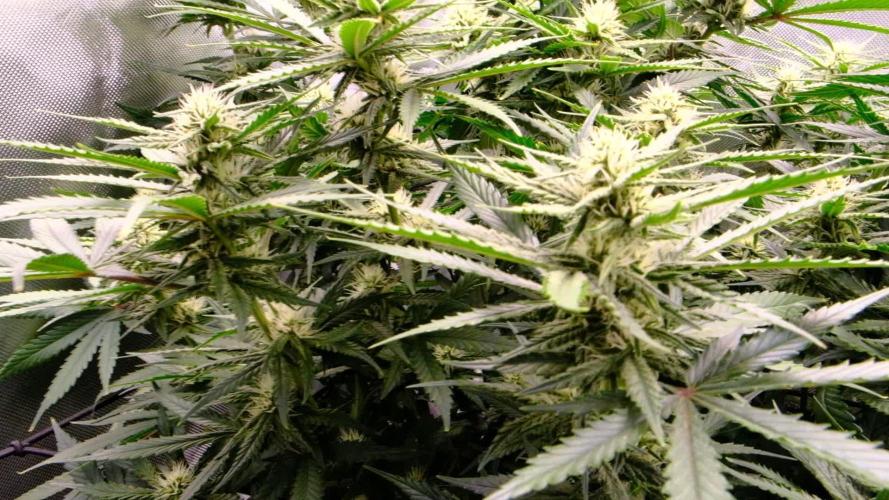
The Zkittzz has been blooming actively this week 😎💪💪 The buds have grown a lot this week and continue to grow very actively 💐
A sour-fermenting smell has appeared 🤢😌😬😀, characteristic of this sort ☘️ - Trichomes have begun to actively appear on sugar leaves and buds 👀 I increased ventilation capacity to 💯%
I had to increase the volume of the watering cup from 2 to 3 - 3.5 - 4 liters on this week 💦🙈🙈 because the baby began to eat x2 more.. 😛🍔
Likes
61
Share

@yan420
Follow
FERMAKOR BARREL MIX – BASE IN USE
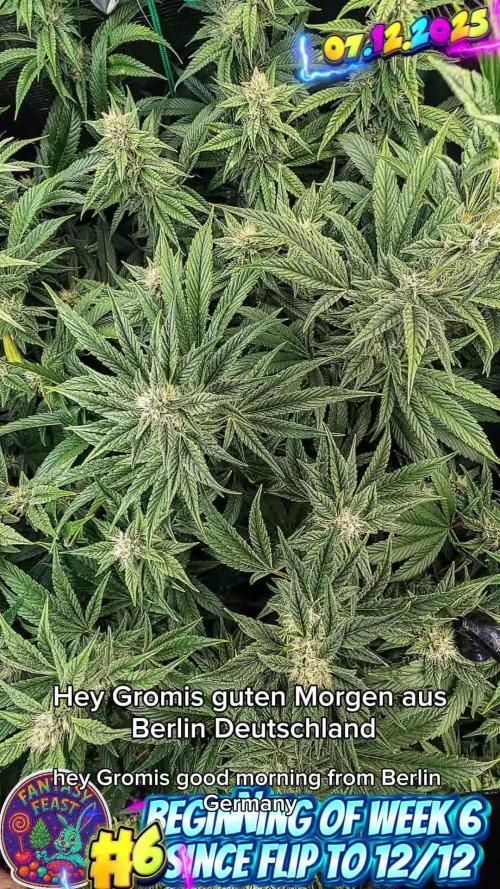
(Testing on the Fantasy Feast girl we pulled out of another diary
https://growdiaries.com/diaries/274722-grow-journal-by-yan402 )
(FERMAKOR BASE SYSTEM KOH VERSION diary
https://growdiaries.com/diaries/278391-grow-journal-by-yan402)
(Urea & Micros on the way — first week running without them)
🍶💧🍶💧🍶💧🍶💧🍶
💧 30 L Barrel – Current Working Mix
🍶💧🍶💧🍶💧🍶💧🍶
Step 1 – Calcium Nitrate (Part A)
7 L warm water (~35–40 °C) → added 45 g Calcinit, stirred until fully clear.
That’s the calcium + nitrogen backbone for the feed.
Step 2 – FERMAKOR PK Base (Part B)
15 L water in the main barrel → added 30 ml FERMAKOR PK Concentrate, mixed well.
This forms the main P + K part of the formula.
Step 3 – Combine Solutions
Slowly poured the Calcinit mix into the barrel while stirring — no reaction, still crystal clear.
That confirms the mix is stable and precipitation-free.
🌿 Step 4 – FPJ / FFJ Batch
Added 30 ml homemade FPJ (fish + veg batch) ≈ 1 ml/L.
Color shifted to a light-amber tone — looks alive and active.
🍋 Step 5 – Citric Acid Balance
Added 1 tsp citric acid after everything was blended to fine-tune pH and help chelate micros later on.
📦 Step 6 – Top Up & Check
Filled to the 30 L mark with plain water → pH tested with drops, showing yellow-green — roughly 5.8 – 6.0 range.
Nice clean look, stable smell, no residue.
💧 Current Base Ingredients (Active Mix)
Warm Water ≈ 22 L total
Calcinit 45 g → N + Ca foundation
FERMAKOR PK Base 30 ml → P + K support
Citric Acid 1 tsp → Chelation + pH balance
FPJ / Fish Emulsion 30 ml → Organic enzyme booster
Result: clean amber mix, mild and balanced.
I’ll let this version run for a week before adding anything.
👀👀👀👀👀👀
Observations and changes
👀👀👀👀👀👀
27.10.25 VW27 noticed some min burnt tips so I decreased Calcium Nitrate 45 to → 40g, decided to add two more elements micros and Epsom salts just to make sure they got everything, Fetrilon Combi 1 (Micros): 0.5 g, Epsom salts: 8 g
28.10.25 VW27 she seems devoid of any deficiencies, seems ready for the flip to 12/12
02.11.25 VW27 girl is looking good so I decided to stop making daily videos and do a standard once a week update.
09.11.25 aVW28 7 days since flip,stretch in full swing, first pistils showing, leaf color deep and healthy. Slight tip burn early week → gone after pH stabilized.
Feed stayed clear, no residue, roots clean and sweet-smelling, did what I hope is a last cleanup and pruning🎥
10.11.25 VW29 added Phosphoric acid pH down to the schedule for flowering stage.
14.11.25 FW1 FERMAKOR PK Micros 40 → 50 ml
23.11.25 FW2 got some burnt tips, observe and act accordingly in case it worsens, diluted by 25% for this week.
05.12.25 FW3 about 2 weeks ago Calcium Nitrate 35 g → 25 g, FERMAKOR PK Micros 50 ml → 60 ml
🌱💦🌱💦🌱💦🌱💦🌱💦🌱
🌿Day to day tasks & actions 🌿
🌱💦🌱💦🌱💦🌱💦🌱💦🌱
07.12.25 FW3 – Fed 5l of #1 → 2l runoff
08.12.25 FW4 – Fed 5l of #1 → 2l runoff
09.12.25 FW4 – Fed 5l of #1 → 2l runoff
10.12.25 FW4 – Fed 5l of #1 → 2l runoff
11.12.25 FW4 – Fed 5l of #1 → 2l runoff
12.12.25 FW4 – Fed 5l of #1 → 2l runoff
13.12.25 FW4 – Fed 5l of #1 → 2l runoff
14.12.25 FW4 – Fed 5l of #1 → 2l runoff
💧💦💧💦💧💦💧💦
🌱 Nutrients in 30 L #1 Veg – FERMAKOR
💧💦💧💦💧💦💧💦
Calcium Nitrate (Calcinit / Nitcal): 45 → 40 g → 35 g → 25 g
= 1.50 g/L → 1.33 g/L → 1.17 g/L → 0.83 g/L
= 207 ppm N / 253 ppm Ca → 184 / 225 → 161 / 197 → 115 / 141
PK Concentrate (FERMAKOR Base): 30 → 40 ml → 50 ml → 60 ml
= 1.00 → 1.33 ml/L → 1.67 ml/L → 2.00 ml/L
→ balanced 1:1 P:K + light micros (from extract)
Home-made FFJ/FPJ (Fish + Veg): 30 ml
= 1.00 ml/L
Epsom Salt (MgSO₄·7H₂O): 8 g
= 0.27 g/L → ~26 ppm Mg + ~35 ppm S
Fetrilon Combi 1 (Micros): 0.5 g
= 0.017 g/L
→ Fe 0.7 ppm · Mn 0.7 ppm · Zn 0.3 ppm · Cu 0.3 ppm · B 0.1 ppm · Mo 0.02 ppm
Phosphoric Acid (pH down) + Citric Acid (chelation): as needed
→ First set pH with phosphoric acid, then add a little citric only if you want extra chelation
Target pH: 5.8 – 6.0 (drop test yellow-green)
📦 TOTAL:
Liquids: 60 → 70 → 80 → 90 ml per 30 L
= 2.00 → 2.33 → 2.67 → 3.00 ml/L
Solids (CaNO₃ + Epsom + Fetrilon):
53.5 → 48.5 → 43.5 → 33.5 g per 30 L
= 1.78 → 1.62 → 1.45 → 1.12 g/L
💧💦💧💦💧💦💧💦
YouTube Link: https://youtube.com/-m8h?si=A7x4Zlr2kj-_ga31