


Likes
Comments
Share


@420DeepGrow
Follow
📆 Semana 7
La Grease Monkey está en modo bestia esta semana.
Los cogollos han seguido engordando con fuerza y cada vez se ven más densos y cubiertos de resina. Las flores principales ya empiezan a tener ese aspecto compacto y brillante que promete potencia, mientras que las hojas cercanas están totalmente salpicadas de tricomas, como si las hubieran rociado con azúcar glas.
La alimentación sigue basada en XpertNutrients, sin cambios drásticos. Solo he ajustado mínimamente las proporciones para no frenar el ritmo que lleva. El riego sigue afinado al detalle: lo justo para mantener activa la microbiota del sustrato y evitar saturaciones.
Los Adlite continúan haciendo un trabajo brutal. La penetración lumínica está ayudando a que incluso los cogollos de las zonas medias e inferiores mantengan una buena densidad. Todo el dosel está funcionando como una unidad, lo que se traduce en una floración muy equilibrada.
Las condiciones ambientales siguen bajo control: 22-25 °C de temperatura, y humedad en torno al 55%. Estoy reforzando la ventilación para prevenir cualquier susto ahora que los cogollos empiezan a cerrarse más.
El aroma se está volviendo todavía más intenso: una mezcla cremosa, dulce y con ese fondo diésel que le da el toque agresivo típico de esta genética. Los tricomas siguen lechosos en su mayoría, con alguna señal de maduración incipiente, pero aún no es momento de pensar en tijeras.
Crecimiento firme, flores con presencia y resina a punta pala…
¡Seguimos creciendo fuerte! 💪

Likes
38
Share


@Snakeking
Follow
Gz# 1 & 3 & 6 is maturing
Gz#3 is not fattening so much and sugar leaves are turning brown.maybe i chopif in next 2/3 days .
I am happy with them

Likes
2
Share


@Ultraviolet_
Follow
Wakíŋyaŋ, I am who I am, the salt of the earth.
Thunderbird is an allegory; his conflicts with other forces in nature are then an attempt to allegorize relationships observed in the natural order, such as the changing of the weather. He is essentially an attempt to represent the patterns of activity of a powerful, mysterious force in a way that can be understood simply and easily – sort of the way in which a weather map functions today.
Moving from18x60x60 = 64,800 seconds in 18 hours.
64800x860(ppfd) = 55,728,000 umol per daylight.
Into Flower
12x60x60 = 43,200 seconds in 12 hours.
43200x1145(ppfd) = 49,464,000 umol per daylight.
It's asking a lot of Rubisco regeneration to maintain 50 DLI in the 12 instead of 18. Raised the ambient CO2 to 1200 to 1500 ppm to achieve efficient gas exchange.
I don't recommend.
Adding sugar to an indoor growing medium is a highly effective way to stimulate microbial activity, which rapidly breaks down the sugars and releases CO2 through cellular respiration. You can safely capture this CO2 to fertilize indoor crops and boost photosynthesis. While this process works, the setup requires precise management to avoid common indoor growing hazards.
The plant Carbon to Nitrogen C:N ratio defines the balance between structural carbon (sugars/cellulose) and nitrogen (proteins/enzymes). It acts as a master regulator of plant health, growth, and metabolism.
Rubisco (Ribulose-1,5-bisphosphate carboxylase/oxygenase) is the engine of photosynthesis responsible for fixing atmospheric CO2 into sugars. It is intimately tied to the C:N ratio for three primary reasons. It is the Plant’s Biggest Nitrogen Sink, Drives the Carbon Side, and it is the Nitrogen Control Knob. Understanding this relationship allows you to predict how plants respond to environmental stress or fertilizer.
Rubisco acts as the primary storage sink for leaf nitrogen, accounting for up to 30% to 50% of a C3 plant's soluble protein. Deep Green Leaves signal a rich abundance of both chlorophyll and Rubisco proteins. The plant possesses the heavy enzymatic machinery required to handle 1145 PPFD. Pale or yellowing leaves indicate a nitrogen deficiency. The plant is actively breaking down its own Rubisco to salvage nitrogen for newer growth, drastically reducing its light-tolerance threshold. Subtle difference, but understanding is important in order to be able to judge when to dial light intensity up and light intensity down, when to push, and when to back off. An extra dose of magnesium is vital if a plant is going to push through the growing pains of high-intensity lighting.
Foliar application of magnesium is an excellent and rapid way to assist with Rubisco regeneration within a plant, so long as it is applied correctly.
Spray strictly in the early morning or late evening, mixing your magnesium with a little fulvic acid or chelator, but only when she gets a little limey on top.
This, for me, is the experience of growing, akin to "riding the surf" maintaining efficient Rubisco regeneration through visual identification of the shade of green. Surf a razor-thin wave when balancing light intensity, nutrient availability, and transpiration to maximize Rubisco enzyme efficiency. Keeping the Calvin cycle fully charged without tipping into nutrient toxicity, light stress, or the dreaded chlorosis requires paying close attention to the visual cues the plant provides. By monitoring these subtle shifts in color, turgor pressure, and leaf posture, you adjust your environmental controls and surf that exact razor-thin wave.
Nute recycling acts as the vital execution mechanism for autophagy, which defines senescence. Natural senescence is a genetically programmed developmental stage aimed at nutrient recycling, whereas triggered autophagy is a rapid survival response activated by environmental stress. While both processes utilize the vacuole to break down cellular material, their triggers, selectivity, and overall goals are entirely different. Cannabis plant senescence is not separate from nutrient recycling protocols; rather, nutrient recycling is the primary physiological purpose of senescence, and autophagy serves as the core switch mechanism executing both processes.
Takes about 24 to 48 hours to notice visible changes once the signals have initiated the autophagic response. Not too late at all. A little bit of fade from senescence 2 weeks from harvest is normal and genetically expected. Send the C:N 32:1 signal 1 week from harvest for the best effect in your organic grow.
Understanding what makes leaves fade is not always senescence, but also strongly linked to Rubisco regeneration. That's a whole other subject. Vital to understand the differences if you want a correct diagnosis and to transition from hobby grower to master stoner, differentiating between a true genetic fade and a decline in photosynthetic proteins.
Nitrate is nitrate, whether it oxidizes or not is not up for debate. If it's not sunk by the plant you are smoking some if not all of, it's regardless of what your feelings are on the matter. Senescence is highly critical. It is the natural end-of-life stage where the plant redirects energy to ripen flowers. Properly managed, it breaks down harsh chlorophyll, allowing the terpenes (which provide taste and aroma) to peak. Harvesting outside this window leads to an "unripe" or degraded flavor comparable to going without.
To initiate the response you seek, you can trigger it multiple ways, when growing synthetically its triggered by nutrient starvation, generally when the entire medium is flushed. This is more to do with N starvation than being entirely empty. Nonetheless. PK boosters are N starvation through maximizing P and K. (Generally only works for synthetic grows)
Because you are using organic nutes and you want to maintain the rhizosphere, what you want to do is add carbon in the form of sugars (powdered molasses). It's almost impossible to empty a medium enough when microorganisms are constantly releasing nutrients into the direct EC. Very difficult to initiate starvation responses with ammoniacal nitrogen. Manipulating the C:N ratio is the key to triggering an autophagic response and resulting nutrient recycling in the last days using organic nutes and without having to flush.
Generally not recommended for new growers. So do what you want. But if you don't trigger the plant to dump its nitrates into root zones, you will smoke nitrates as NO3- does not oxidize during the dry and cure no matter what you do or how long you dry or cure. Doesn't matter what anyone "feels" about it, how many grows they had with no fade.
"Clover steals valuable nutrients."
Crop and drop the clover come flipping to flower, its benefit comes from creating an airy and porous rootzone. I don't need to crop and drop once the plant fills the canopy, she blotches out the light, and the clovers die. This is the nitrogen the microorganisms use to convert carbon for respiration throughout the flowering stage.
Processing
Likes
21
Share


@Onlypotent420
Follow
This weeks update!
Grow tent- so I had a buddy do my res change I talked him through the whole process couldn’t make it to the grow this week. Number and everything where perfect but!. He didn’t close the valve all the way to the blue dream res tank and left the drain pump on🤦♂️🏾. So when I got there this week leaves where curling and brown thought it might be a nutrient issue. Opened the res to check it. And there was only about a gallon of water in there out of the usual seven. No major harm I was planning on doing my last defoliation to her this week anyway. But that could have been bad.
They are both receiving half strength nutes of the ripening mix GH recommends. Would have been a perfect week if not for that. No harm no foul tho. But def bout to start pushing them on the flower nutes and get back up to my 1000 ppm range buy adding extra bloom formula!
#Staykited


Likes
5
Share


@NoProbation4Weed
Follow
It has now been 7 days since switching the light schedule to 12/12.
The plants received a compost tea feeding, and the wick irrigation system is working exactly as intended. So far, it has been performing exceptionally well.

Likes
15
Share


@BruWeed
Follow
Desde el momento uno fue fácil de cultivar, no tuve ningún problema en todo su desarrolló.
Como planta supero todas mis expectativas, se encuentran densos y muy pegajosos los cocos. En algunos hay partes de color violeta/lila.
Y por ultimo recomiendo mucho cultivar esta genética por lo sencillo que fue cultivarla y sus resultados finales, todo de diez.

Likes
38
Share


@TheCannaProphet
Follow
~FastBuds Californian Snow Auto~
The iciest queen from the Golden state!
+The best from Cali.
+A superb strain bred from exceptional Californian Sativas and FastBuds Autoflowering genetics.
+Insanely resinous flowers.
+The crazy trichome production shows its potency without even smelling it.
+Just like biting an apple. The delicious mix of sweet candy and sour apples will leave you wanting more.
+Sky-high. A very euphoric and long-lasting head rush, great for social scenarios.
+Super frosty. Guess where this strain got the name from? The buds.
--------------------------------------------------------------------------------------------------------------------
The Spec's:
Taste: Sour apple, Candy, Sweet
THC: Up to 23%
CBD: < 1%
Harvest EU Indoor: 400 – 550 gr/m2
Harvest US Indoor: 1.3 – 1.8 oz/ft2
Harvest EU Outdoor: 50 – 250 gr/plant
Harvest US Outdoor: 2 – 9 oz/plant
Size: XXL
Height: 80 – 130 cm
Height US: 31 – 51 inches
Flowering: 9 – 10 weeks
Room: Indoor/Outdoor
Gender: Feminized
Genes: Sativa 70%/Indica 30%
Genetics: USA, Californian auto
Autoflowering: Yes
__________________________________________________________________________________________________________________________________________________________________________________________________________________________________________________________________________________________________________________________________________________________________________________________________________________________________________________
Strain Description:
Californian Snow Auto is the result of a cross between a Cali’ Sativa and FastBuds Autoflowering genetics. The result is a snow-capped plant with a frosty main cola, 23% THC levels, and strong sweet and sour taste and fragrance. An easy-going Sativa that’d be great for beginners.
Bud description: Frostbitten buds...These nugs will boast a rich green color that’ll be glazed in a thick layer of white crystals, showing its potency even before being smoked.
Smoke report: High as a mountain. A very heady euphoric high. Uplifting and vitalizing, this strain is ideal for anyone looking to have great conversations at a social event or for some creative writing or drawing.
Plant Appearance: Staying true to her Sativa heritage, this plant will grow tall with a large internodal spacing with plants attaining 1.3m in height. Cali' Snow develops a large main cola with some side branches, all densely frosty crystals, from the sugar leaves to the buds themselves.
*The above Strain Information/Description courtesy of FastBuds
__________________________________________________________________________________________________________________________________________________________________________________________________________________________________________________________________________________________________________________________________________________________________________________________________________________________________________________
THE SETUP:
~Planted into Jiffy Peat Pellets that were hydrated with de-chlorinated water with SuperThrive added then ph'd to 6.0 @ 80℉
~Grown 100% organic in 10g fabric pots with Mother Earth 70/30 Coco/Perlite medium amended with 2tbs/g of Down To Earth 4-4-4 / 2 cups/g of Earthworm Castings / 1tbs/g of Dr. Earth Flower Girl 3-9-4, 1tbs/g of Dr. Earth Bat Guano, 3/4 cup of Down To Earth Azomite and 1 tsp/g Down To Earth Fish Bone Meal.
~24hr light cycle during Germination / 19/5 light cycle for Vegetation and 12/12 for Flower
~Straight water ph'd @ 6.2-6.8 when needed and weekly Compost Tea's.
__________________________________________________________________________________________________________________________________________________________________________________________________________________________________________________________________________________________________________________________________________________________________________________________________________________________________________________
WEEKLY UPDATES:
9/6- Day 39 of flower and harvest time is fast approaching with her trichomes, which are now checked daily, maturing rapidly being 80% milky now with the remaining being clear.
Daily watering's continue with 1g of straight de-chlorinated water ph'd to 6.7 @74℉ and also I'm turning her pot 1/4 turn daily as well.
9/8- Well, her trichomes are right about where I like them to be and she's ready for 48hrs. in the dark before I chop and hang her to dry for 10-12 days.
I'm watering her with 1g of straight de-chlorinated water ph'd to 6.7 @74℉ and will continue to water her while she's in the dark (cannabis continues to carry on with it's growth processes even while in the dark) so that her medium doesn't completely dry out. Keeping her watered will also help to extend her drying time to that ideal 10-12 day target.
This should be some epic smoke as her buds are absolutely crystalized with trichomes and her smell is AMAZING! 😛💚
9/10- Well she's been in the dark for 24hrs. now with 24 more to go. I'm keeping temperatures in the low to mid 60's℉ and the RH @ 45%. Tomorrow is 'Chop Day'! I'll be taking some pic's of her when she comes out of the dark and during harvest...Stay tuned, this is some 🔥!
I am continuing to water while she's in the dark with 0.5g of straight de-chlorinated water ph'd to 6.8 @67℉ to keep her hydrated.
9/12- Well she's out of the dark where she spent roughly 60 hours. I kept the temp's @ 64℉ and the RH at 45%.
After I brought her out I shot a few pictures of her, then plucked off all of the shade leaves. I then cut her off at her base and hung her whole. I'll keep the RH in the room @ 50% for the first 24hrs., then raise it to 55-60% for the remainder of the drying. I have the temperatures in the Dry Room at a constant 65℉ to help preserve the terpenes.
Hopefully she'll take 10-12 days to dry to the point that she's ready to be trimmed and jarred! Stay tuned for the harvest of this phenomenal cultivar! 💚🔥
~Thanks for stopping in! Things are wrapping up and harvest is right around the corner....Stay lifted and be Blessed! 😎🙏~

Likes
3
Share


@CaptonianMoneymaker
Follow
Had rain For 2 days high humidity buds also added another wave of pistills on 1 cheese strain
Likes
12
Share


@Willy_Balls
Follow
All good. Ripening process. I think they’ll need 60-63 days.
Blue Zushi has amazing terps but the stability is very poor. 3 beans , 3 completely different phenos and completely different terpene profiles.
Have 3 more growing in nursery. But wouldn’t recommend a big run with these. But there could be a winner to be hunted.


Likes
6
Share


@Frosty905budz
Follow
Week 2 and these ladies are growing like weeds
These beauties just blow up over the last week.. Today we topped and defoliate the plants. Time will tell how long we will veg for .. I'll flip the switch when I'm happy with the canopy.
I kept the autopot system off and only water manually. I did turn on the air pump to the airdome after the 1st week.. Today I will turn on the system . I mixed a resivor with 38L of water.
Like I mentioned earlier it's my 1st time running the autopots so I dont know how much water and nutrients I will go through, but I will keep notes and be sure to post them as the week go on ...
Likes
32
Share


@Compassionate_Gardener
Follow
This cycle was all along a great pleasure. The plants developed MUCH BETTER THAN EXPECTED, the result under the Q6W-Gen. 2 LED lamps from SANlight is FANTASTIC. I have NEVER harvested more from plants of the same strain under HPS and the quality of the bud (trichomes, taste aroma) is MUCH BETTER when grown under LED, my decision is definitely made, I will continue to solemnly grow with LED-lights in the future. I harvested 2250 gram of Shiva Skunk and 3009 gram of Serious Kush, that a total amount of 5259 gram. In relation to the 3000 Watts (incl. dimmed part!) power of the LED-lights thats an AMAZING 1,753 gram per Watt.


Likes
5
Share


@Bryankush
Follow
Giorno 1 bene ragazzi dopo la prima settimana di fioritura: posso dire di essere veramente contento di come stiano crescendo e di come hanno reagito alle tecniche che ho usato su di loro, sono veramente mostruose!! Sicuramente le piante più grosse che abbia mai fatto, ora procediamo la fioritura giorno per giorno con calma e continuando a curarla e sperare in una fioritura bella ghiacciata😁
Giorno 2 annaffiata con 2,5L aperta e defogliata
Giorno 6 LST sul principale
Giorno 7 annaffiata con 2,5L di acqua

Likes
1
Share

@Sundancers
Follow
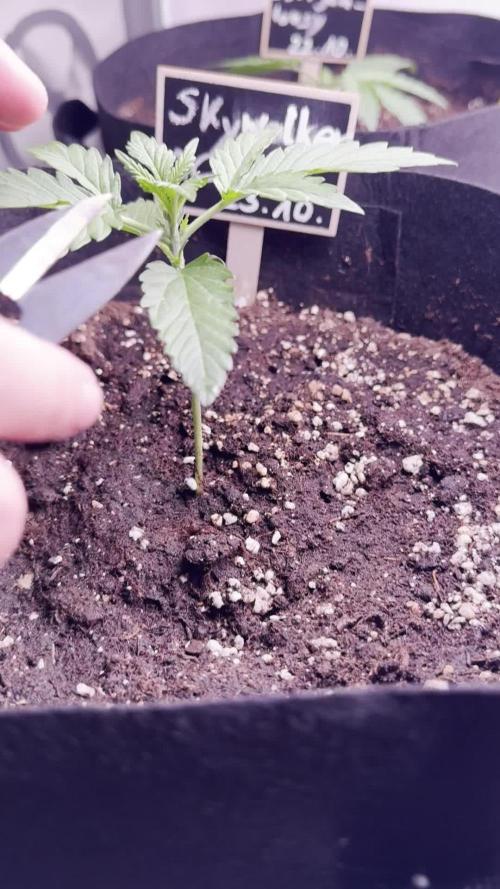
Der Skywalker ist ein kräfter Strain und wurde bereits an Tag 10 mit Topping belohnt. 😜
Processing
Likes
11
Share


@zombikush81
Follow
happy day my friends, because little space I decided to put two of the three in bloom, the 3 girls I want to grow it again for a while. Today the first day of flowering 12/12, they are beautiful full they will make many buds


Likes
4
Share


@el_cultivito
Follow
Week 15 (5/30/22 - 6/5/22) - FLOWER Week 1
Left camping for a week and came home to these lil ladies shooting past the trellis.
I pulled them down under the trellis and tried to evenly shape the canopy then defoliated and "shaved the legs"
Then flipped to flower on 6/1/22
Likes
1
Share


@Unfumadormas
Follow
Lavé raices, aprox 30 litros hasta que quedó 0.3 de ec en el sustrato, demoró 6 días en secarse la maceta, después regué durante una semana con flaweless finish (2 riegos) este fue el resultado de esta hermosa amnesia haze Autofloreciente, Su fuerte olor a café exquisito, ahora solo queda esparar secado y curado de tal.

Likes
4
Share


@pzwags420
Follow
On day 1 I changed out my reservoir, and added my bloom nutes, adjusted my light schedule to 12/12 and defoliated the plants. I adjusted the reservoirs PH to 6.1 My hope is that by flipping this cultivar earlier than my last run, I will not run out of vertical space ;).
On day 2 I adjusted my reservoirs PH down to 6.1.
On day 3 the clawing is almost completely gone. I adjusted the reservoirs PH down to 6.1.
On day 4 the reservoir's PH is at 6.1. I defoliated the plants removing anything blocking lower growth to increase light and air penetration of my mains.
On day 5 the reservoirs PH is 6.1.
On day 6 I adjusted the PH of the reservoir up from 6.0 to 6.3. I will let the PH drift between 6.1-6.3.
on day 7 the reservoirs PH is 6.2. I lowered the light intensity from 100% to 85% to give the top of my plant canopy an average PPFD of 700-1000. I plan to reduce the intensity as the plants continue to stretch to keep them in the 800-1000 PPFD range. I just got my first quantum par sensor and I'm really loving the new data it gives me to optimize my lighting.


Likes
3
Share

@praven1
Follow
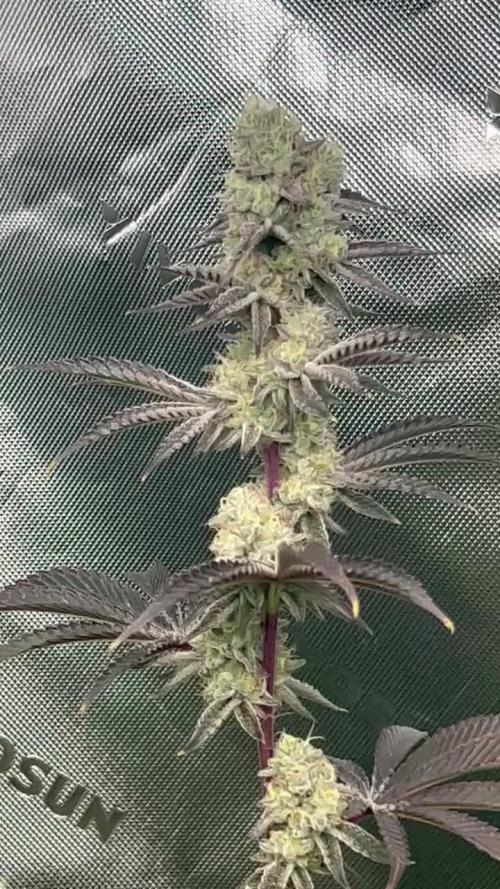
Colors of fall are filling the tent along with some lovely smells.
Black Cherry 1 smells of sour candy and gas. The sour candy is up front and then followed by a funky gas.
Black Cherry 2 smells of wild cherry medicine with a hint of wood. There's a strong wild cherry smell with a faint little bit of medicine all mixed with a small woodsy smell in the background.
Tahitian Vanilla 1 smells of an elves' bakery tucked deep in the woods. Creamy, doughy, bakery goods and Cashmere blast for this plant.
Tahitian Vanilla 2 smells of pine dumped in cream. Heavy pine smell upfront then a sweet warm creaminess comes into focus but the pine tar never leaves

