


Likes
Comments
Share


Likes
5
Share


Likes
103
Share


@ShowsWorld
Follow
Finally flushing her. Her nugs are so dense and so frosty and she smells like vanilla and coffee. I can definitely tell this is going to be one of those strains you need to smoke at night before bed. I plan on harvesting this Friday.

Likes
6
Share


@KannaGrowing
Follow
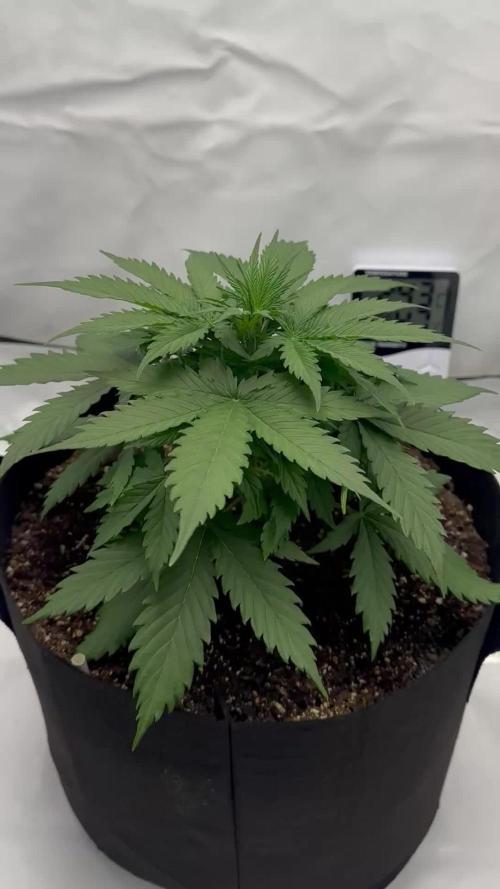
Semana de transición entre el abono para el periodo vegetativo (Bio Vega) y el abono que utilizaremos durante el periodo de floración (Bio Flores). El primero más rico en nitrógeno y el segundo, en fósforo, magnesio y potasio.
Mezclo Bio Rhizotonic + Bio Vega + Bio Flores y riego con 50 litros de agua, todo el cultivo... Alterno riegos cada tres días, unos con abono y otros con agua.
La próxima semana, elimináremos Bio Vega.



Likes
3
Share


@TheChronicThumb
Follow
The end is near, these plants are producing some heavy nugs! I had to start tieing the branches so they don't break under there own weight! I'm loving it, if you have to have a problem! This isn't such a bad one to have. Lol
Likes
9
Share


@caspersaints1
Follow
Day 15—
Topped her at the 4th node . It looked like if I waited another day the 6ths would pop out
Watered her with coco a 0.45ml coco b - 0.45ml . Calmag o.4ml katana roots 0.2ml in 1 L jar
Ph 5.96
Ppm 472
Run off 200ml atm but more just keeps coming out so might have to lower the amount of water
Ph-6.33
Ppm -156
14+18
Day16–
took off leafs from first node
Day17—
Nothing
Day18—
Watered 600ml water
Day —19
Watered with 1L water till run off
Day —20
Watered with nutes 1 L
Day 21-
Did some lst and watered
Day 21-
Did some LST, and pruning and watered
Likes
5
Share


@Lazuli
Follow
I flowered during a heatwave so lights were dimmed a half week.. other then that everything was good. Humidity was between 45-60% all way trough flower. I really love this pheno smells very blueberry
Likes
4
Share


@I_Identify_As_A_Dan
Follow
Week 7 for 9lb Hammer F2,
Have finally starter pulling them side ways. Its been raining all week not much to report. Haven't had to water anything.😂 Hoping to see what training her will do.
Likes
25
Share


@Weedbadk
Follow
Cogollos muy duros y llenos de resina su olor es muy agradable , muy feliz con los resultados y recomiendo esta variedad 💯,
Ahora a esperar 2 semanas de secado , y gracias a todos por comentar este seguimiento

Likes
5
Share


@SkunkyDog420
Follow
Hallo zusammen 🤙
Sie wächst sehr schön und macht keine Probleme
Rabattcode für den BIOTABS-Webshop https://biotabs.nl/en/shop/ GDBT420, damit erhalten Sie 15 Prozent
Likes
37
Share


@DogDoctorOfficial
Follow
Week 8 Veg Report: Mentha de Croco Mutants 🌱✨
Welcome to another exciting update in the Mentha de Croco mutant run! As always, these beauties continue to surprise and captivate with their unique growth patterns and stunning individuality. Let’s dig into the details of this week!
🌟 Growth & Development
This week marks a turning point for the girls! While their slow but steady growth continues, I decided to top a few of them. Why? Topping not only encourages bushier growth but also allows the untopped plants to catch up, creating a more balanced canopy moving forward. Each one is still showcasing those jaw-dropping unique traits that make this run feel like a gallery of natural art.
The Mentha de Croco mutants truly live up to their name, with each leaf telling its own story—some broad and serrated, others narrow and elongated, all equally breathtaking. Watching them evolve week by week is a lesson in patience and appreciation for the beauty of diversity in nature.
🌡️ Environmental Conditions
Good news on the environmental front! The room’s temperature has stabilized to a more comfortable range, with daytime temps at 22°C and RH steady at around 66%. These are near-ideal conditions for vegetative growth, helping the girls to stay happy and stress-free. The stable climate contributes to the vibrant health and vigor they display—always praying to the lights like the champions they are!
💧 Feeding & Nutritional Care
Nutritionally, we continue with the tried-and-true regimen:
• Aptus Regulator 🌟
• CalMag Boost
• Start Booster
I’ve completely transitioned to using the All-in-One Pellets, which are doing a fantastic job of delivering slow-release organic nutrition directly in the soil. The decision to stop liquid feedings with the All-in-One Liquid was the right move, and it’s clear the girls are loving the steady supply of essential nutrients right at their roots.
Additionally, I’ve been sticking to bottom-watering. Filling the trays and allowing the soil to wick up moisture not only ensures the roots get what they need but also keeps pesky gnats at bay—especially when paired with yellow sticky traps. This method has made a noticeable difference in keeping the grow area clean and pest-free!
🛠️ Cultivation Techniques: To Clone or Flip?
The big question of cloning or flipping still hangs in the air. I’m taking my time to observe and assess their progress. Each plant is so unique that I want to give them the space and time to reveal their full potential before deciding.
Let’s touch on the two potential strategies for next steps:
1. Flipping to 12/12 for a Short Period: This would allow me to determine sex quickly, but it can stress the plants slightly.
2. Cloning: Creating clones and flipping them instead is a great way to preserve the integrity of the main plants while identifying males and females without disrupting their growth cycle.
Both approaches have their merits, and I’m leaning toward cloning once they’re big enough to snip without harm.
📸 Photography Corner: Highlighting Details
This week, I brought out the cameras again—my trusty Nikon and Sony with interchangeable lenses—because, let’s face it, phone cameras just don’t do justice to the intricate beauty of these plants. Whether it’s the textures of the leaves or the play of light on the water droplets, having the right lens makes all the difference.
For close-ups, I used a macro lens, which allowed me to capture every vein and serration on those incredible mutant leaves. For a wider perspective, I switched to a standard lens to showcase their overall growth. These tools help me highlight the artistry in each plant and share it with the world.
🙌 Shoutouts & Gratitude
A heartfelt thank you to the amazing brands and communities that make this journey possible:
• Terpyz Mutant Genetics 🌱 – For these one-of-a-kind mutants that redefine what’s possible in cultivation.
• Aptus Holland 💧 – For providing the cleanest organic-mineral nutrition line that keeps the girls thriving.
• Pro Mix – For the top-notch soil that’s the perfect foundation for this grow.
• Future of Grow (FOG) 💡 – For the incredible Black Series lighting that ensures every photon counts.
• Trol Master – best controls in the market, and i have all the data to back it up .
• Grow Diaries 📖 – For giving us growers a platform to document and share our journey.
• The Community 🌍 – To everyone who follows, supports, and engages—haters and lovers alike. You all make this so much fun!
🌱 Let’s Keep Growing!
As always, the journey continues with curiosity, passion, and gratitude for the incredible process of cultivation. Stay tuned for more updates as the Mentha de Croco mutants inch closer to their next big steps.
Until then, happy growing, and remember: Every leaf has a story, every plant is a teacher, and every grower is an artist. 🌿✨
Genetics - Mentha De Croco
https://terpyz.eu/products/menta-de-croco-fern-type?_pos=1&_sid=e9237cbcb&_ss=r
DogDoctorOfficial Discount Codes @ terpyz.eu - DOCTOR 15% off
Nutrition - @aptusholland
https://aptus-holland.com/
Led Power @ F.O.G. Future Of Grow
https://www.thefuturofgrow.com/en/online-store/BLACK-SERIES-600-p489093171
Controls @ TrolMaster
https://www.trolmaster.eu/tent-x
As always thank you all for stopping by, for the love and for it all , this journey of mine wold just not be the same without you guys, the love and support is very much appreciloved and i fell honored with you all in my life
With true love comes happiness Always believe in your self and always do things expecting nothing and with an open heart , be a giver and the universe will give back to you in ways you could not even imagine so
As always, this is shared for educational purposes, aiming to spread understanding and appreciation for this plant. The journey with nature is one of discovery, creativity, and respect. Let’s celebrate it responsibly and continue to learn and grow together!
Growers Love To you All 💚

Processing
Likes
1
Share


@KingPastrulo
Follow
No big changes lately. 2 weeks after last post and seem getting thicker and I see few pistils got darker colour.
Buds not very voluminous. Yet they still grow and need few further weeks.
Likes
13
Share


@3lementa1
Follow
March 08 I left the air purifier on by accident again last night so there was a blue light overnight. The buds look good though. I taped the window up so I'm no longer having a humidity issue at night. I alternate between having the light on at 100% and 75% and recently 50% as well.
March 10 I just fed them Ph'd water with molasses. Runoff pH 6.2-6.5, ppm 200-600. I'm having trouble getting good shots of the trichromes but I'm starting to see more amber ones. Less than 5%.
Likes
11
Share

@leithsffs
Follow
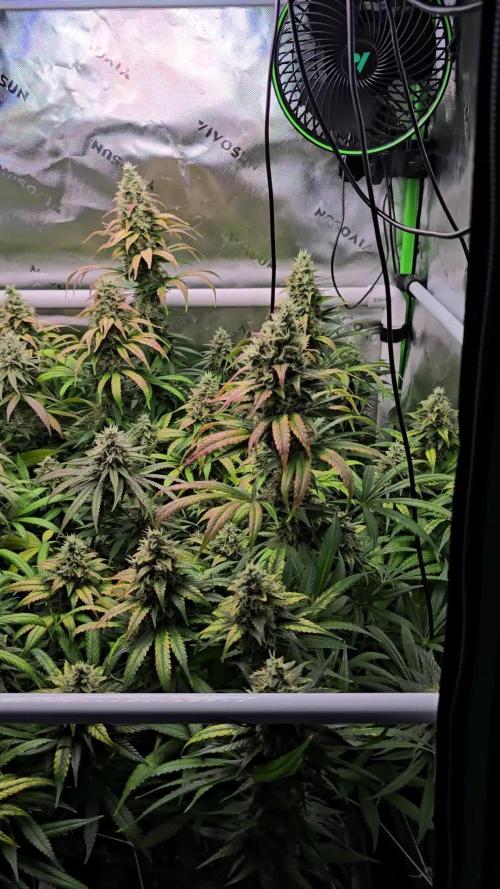
A little defoliation in the under canopy. And, a few extra big fan leaves. Nothing too much this week.
Keeping a close eye on the trichomes and I'm seeing they're only a couple of days away from the start of harvest. I'll be checking each of the stem individually, as always, before pulling.
Likes
3
Share


@Chuckwaggon420
Follow
This week has had good progress since i have introduced the canna. First dose was at half strength and next was the normal dose. And they blew up over that week. Am on vacation but will have normal updates on my diarys all soon enough!
Whole family all 7 down in florida in 3 bedroom condo!!!
Stay up everyone
Never know what the next day holds!
💚
Likes
16
Share


@OrganicPower
Follow
Week 8 flower and the Gorilla Glue #4 is swelling up nicely and looks like about a week to go, but I’ll probably wait until the Sour Diesel finishes up before I harvest her as I need to dry in this space, the lung room. Lots of frost and thick dense flowers. Very nice colours coming out and the smell is incredible! A few nanners popping out here and there, I’ve plucked a few but it’s late in flower and doubt much will develop from now until the end, if anything at all, definitely not pulling her down because of them. More than likely had the light turned up to high later in flower and was pushing them too much, and that’s why the Sour Diesel is growing a bit foxtail like. Turned the lights down now to 50% and they seem to be happy with that. Still just water through the drip and hand water once a week. Gnats suck and need to take care of them before next grow and do a better job moving forward. These TSW 2000’s from Mars Hydro are awesome and with two of them side by side are more than enough for this space. Blimburn GG#4 is turning out really good and smell is incredible but hard to describe. Thanks for the view!

Likes
2
Share


@Patillac31
Follow
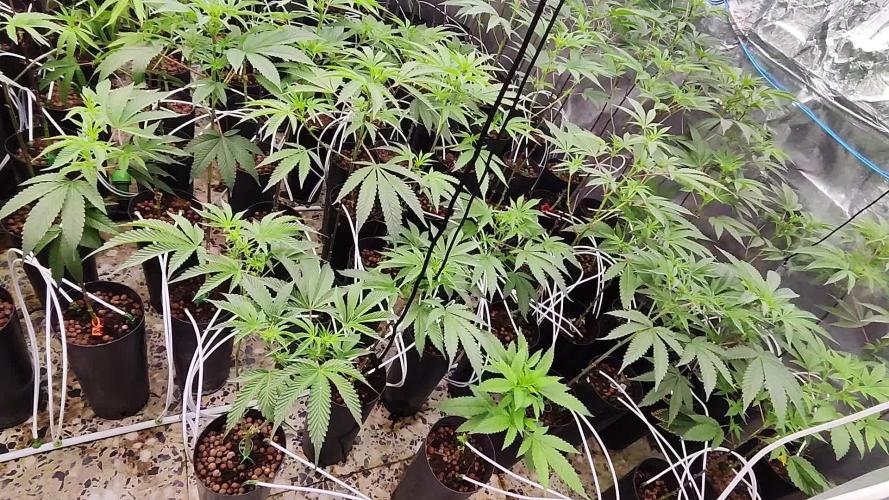
●End of day 59. Both plants are showing signs of flush. I will be watering tonight (5/13/202)and saturday (5/16/2020)will be the final watering. Plan on giving the 36hrs darkness starting the 19th or 20th and probably be harvesting on the 21st. I will be going through and giving a light defol to the girls picking off the "flushed" sugar leaves.
■Big Bud is turning on a heavy bubble gum smell and Agent Orange smells like a orange farm in Florida. Any suggestions tips or things you would like to see let me know. Happy gardening ✌️🖖🤙🌱🙏







Likes
25
Share


@SKUDUDUBAW
Follow
Tout s’est bien passé, je n’ai eu aucune carence durant tout le cycle. On odeur incroyable indescriptible. J’ajouterai les photos des buds plus tard

Likes
12
Share


@Siriuz
Follow
Starting week 14
Feeding the lady her last meal
@1900ppm bloom nutes
Day 94
( Day 3 from. Week 14)
Day 95 and Day 96
Very well, almost ready to flush again
Day 97
Growing fat and smelling so good
Full of Trichomes and resin
Day 98
End of week 14