









@MasterKush714
Follow
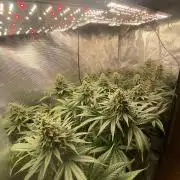
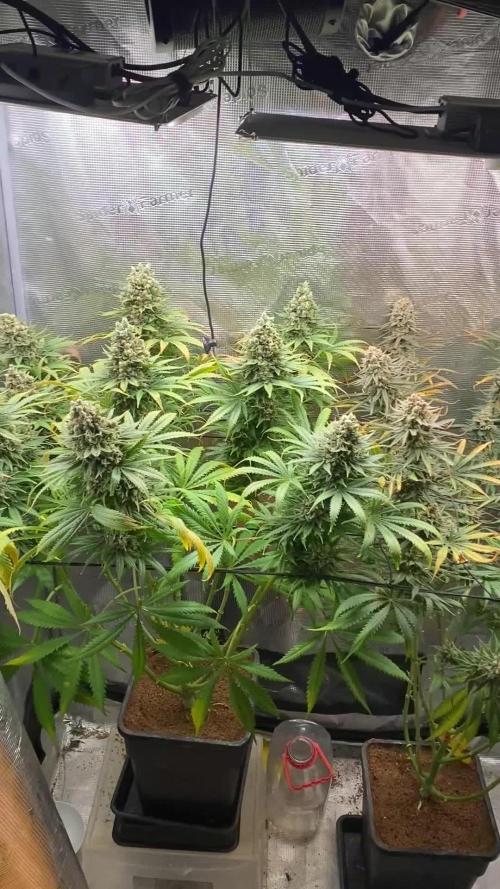
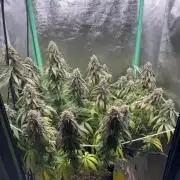
UPDATE GANG!!! SO sorry for the LAG!!! Lots going on this month in the house....
But I'm going to try to stay more consistent with the updates!!!!
SOOO the plants are doing okay they are starting to change Hues as far as color appearance
mainly I'm thinking because of the lower temps because of local weather, other then that
the girls are doing fine a lot of those whiteflies sucked a lot of sap out of the plants they started getting
crispy i hope this doesn't affect the quality of the buds, other then that I'm going to start ramping down the
nutrients ill keep you update I'm going prolly chop in 2 or 3 weeks thanks guys!!!!!!


@CannaIGrow
Follow
This plant is growing well, I transplanted them this week into 3 gallon pots from 1 gallon pots. Structure on this plant is pretty nice and visually pleasing to the eye lol.


@AlienScrOG
Follow
early cut pinepple ... bloom with some problems the low leaves fall as if in nitrogen deficiency but it does not seem possible ... could be the ph but I always measure it and it turns out 5.5-6.5 ... can you help me? in your opinion, how do things proceed? I put in bloom too early?


@XperencdGmanXG
Follow
Well, these girls are well on their way into bloom. They are really stacking it on since the addition of the worm castings. I strongly suggest everyone use worm castings in your soil mixes, even if you are using salt-based nutrients.





@Rizik86
Follow
Day 36 - Checked PPM 400. Plant is wide and bushy.
Day 37 - Plant is 28 inches tall and 10 inches from the light.
Day 38 - Plant is 29 inches tall. Root system is almost maxed out for 5 gallon bucket. Checked PPM 700. Built a new light stand/grow area. Now bigger then 4 by 4 foot area.
Day 39 - Started a new bucket of water and nutes. Added 20 mL of CalMag Micro Grow and Bloom. Added 10 mL of each additive. I didnt add the rooting additives Tarantula Piranha and Voodoo Juice. PPM is 1,600. Plant is 32 inches tall. Different looking growth forming.
Day 42 - Checked PPM 1,520. Added RO water. PPM is 640. Added 10 mL of CalMag Micro Grow and Bloom. Added 5 mL of each additive. PPM is 1,300. Plant is 34 inches tall. Noticeable bud development started.


@TOTEM
Follow
Everything good except a bit of salt buildup caused by a poor runoff over the last weeks. You can see this by looking at almost every tip of the leaves.
Last week Amazon had some problems delivering new ferts, so from day 97 to 101 I gave just 1ml/L of Bud Factor X and no Bud Candy and Sensizym at all. On day 101 I made a new nutes mix, and it’s the one you can see on GD. No more Bud Factor X because it’s very expensive and I don’t think I’ll need it for just two more weeks. I used 1ml/L of Cal Mag Xtra because I ended my Connoisseur Bloom Part A too. Lol, it’s been a problem.
I ordered some Sensi Bloom Coco A+B and another Bud Candy for the last two weeks by the way.
Flowers are now enlarging since the first day I added Overdrive. Very very good, I like this Silver Haze.


@Hempy_The_Kid
Follow
Fun little grow, but battled with WPM early on. I'm sure the flavors are buzz is similar to last grow of this strain.




@Ultraviolet_
Follow
Remember that, however you are played, or by whom, your soul is in your keeping alone. Even though those who presume to play you be kings or men of power, when you stand before God, you cannot say, 'But I was told by others to do thus,' or that virtue was not convenient at the time. This will not suffice. Remember that.
Day:18
84°F and 65% RH (VPD) for the vegetative stage. Approximately 1.15kPa(assuming leaf temperature is about 2°F cooler than the air), which falls right into the ideal vegetative sweet spot (0.8kPa to 1.2kPa). At 1.15kPa, plants can draw water and nutrients efficiently without risking stress or wilting. It keeps the leaf pores (stomata) open, allowing for ideal carbon dioxide intake and maximizing vegetative growth. VPD is determined by the leaf's temperature, not just the ambient air. Because leaves usually run 1° to 3°F cooler than room air under bright grow lights, my actual VPD will be slightly lower, closer to the 1.0kPa mark. As she transitions from vegetative growth to flowering, one can gradually lower the humidity (to around 45–60%) and drop temperatures slightly to prevent disease from settling inside dense buds when they appear.
Night:6
At 70°F and 60% relative humidity, Vapor Pressure Deficit (VPD) is 0.86 kPa. This is right on the cusp of whats optimal for the vegetative stage. During the nighttime, plants generally close their stomata and undergo cellular respiration rather than photosynthesis. Transpiration slows to a near stop, making VPD less critical at night than during the day. However, maintaining a nighttime VPD between 0.8 and 1.0 kPa is highly beneficial in that it ensures the air is dry enough to prevent powdery mildew or bud rot, but moist enough to keep the plant from undergoing unnecessary stress. This range keeps the environment comfortable for cellular processes and prevents large atmospheric swings. Keeping it all flowing.
(Not pushing them yet, these are photoperiods)
The optimal soil (root zone) temperature for cellular root respiration and nutrient uptake in cannabis is between 68F & 72F This narrow range balances biological energy production (cellular respiration) with the dissolved oxygen levels in the soil, maximizing plant growth and health. Warmer soils hold significantly less dissolved oxygen. When soil temperature exceeds 74F oxygen depletion occurs, inhibiting cellular respiration almost entirely, At 68-72F root cells generate optimal adenosine triphosphate (ATP) via respiration to power root-tip elongation and the active transport of water and nutrients.
Too Hot (Above 78F) Root respiration increases, demanding more oxygen, while the water's oxygen-carrying capacity drops. This creates a prime environment for anaerobic pathogens and Pythium (root rot).
Too Cold (Below 60F) Root metabolism and cellular respiration slow to a crawl. This severely impairs nutrient and water absorption, leading to yellowing, wilting, and phosphorus deficiencies.
A lot depends on whether it's automatic or photoperiod; with photoperiod, there is not as much of a need to push "hard" as the real countdown only begins once the flower is initiated. Automatics, on the other hand, the chronological "clock" begins ticking the moment the seed germinates. It is of critical importance that the seedling growth gets off to the races, understanding that early growth is like compound interest, which will pay off come harvest. This reality is why getting autoflowers "off to the races" early on yields such exponential benefits. The "compound interest" is directly related to the surface area of the leaves. Larger, faster-growing seedlings process more light and build bigger root networks early on, which translates into an explosion of vertical and lateral growth during their short vegetative window.
The margins for error are so thin with autoflowers; this early-stage momentum depends on several critical practices. Seedlings exposed to increased atmospheric CO2 levels early in life will develop at an increased rate. To effectively "extend" or optimize the capacity of Photosystem II (PSII) for increased photosynthetic efficiency. In standard oxygenic photosynthesis, Photosystem II (PSII) is naturally limited to the red-light spectrum, peaking at 680nm. Extending its light-harvesting capacity past 700nm into the far-red region requires bypassing the natural limits of standard chlorophyll a. Adding 730 nm (far-red) LEDs alongside standard red/blue lights has been shown to increase canopy photosynthesis by 20–30% in several crops by acting synergistically with shorter wavelengths. However, the limitation is that excessive, pure IR/Far-red light (without accompanying red light) can trigger the "shade avoidance response," causing plants to grow tall, weak, and spindly rather than robust. Utilizing infrared light (specifically the 700-750 nm far-red range) is a viable method to boost photosynthetic efficiency. It acts as a bridge to allow PSII to utilize a broader spectrum of light, breaking the traditional 700 nm barrier. UVR8-mediated signaling (often in conjunction with CRY proteins) triggers protective mechanisms that maintain the stability of the photosynthetic apparatus (including LHCII and reaction center proteins), thus ensuring that the efficiency of Photosystem II remains higher in UV-B-exposed plants compared to plants lacking this receptor. ΦPSII indictates the rate of electron transfer from water to plastoquinone, which drives the production of ATP and NADPH. There is a close link between ΦPSII and the true rate of CO2 fixation (Φ*co2).
ETR stands for Electron Transport Rate. It measures the speed at which electrons are moved through the thylakoid membranes in a plant's chloroplasts during the light-dependent reactions of photosynthesis. Infrared light (particularly Near-Infrared or NIR) improves cellular energy by interacting directly with the electron transport chain (ETC) in mitochondria. This process boosts adenosine triphosphate production, which acts as a metabolic coefficient multiplier by accelerating enzyme activity dramatically.
Extend then multiply.
Far-Red photons interact with plant photoreceptors to accelerate the plant’s biological "clock" or trigger a shade-avoidance response. Autoflowers don't use the plant's biological clock, although the IR will initiate a shade avoidance and make them stretchy. You can just add equal measures of 660nm-680nm to negate the shade avoidance effect. Replacing nights' "darkness" with a combination of IR+ and 660nm. Because autoflowers don't require a dark period to flower, many growers just blast them with light. 18/6 24/0. However, this ignores the plant's metabolic rhythms, where daytime photosynthesis (light reactions) must be perfectly balanced with nighttime carbon fixation and assimilation (Calvin cycle) to avoid bottlenecking plant development. Cellular respiration is a 24/7 process, but it can only function while the plant has the free oxidative capacity to do so. A 100% photosynthetically active leaf cannot perform cellular respiration. The viral trend of defoliation of every leaf that isn't "getting enough light" is of great detriment overall, putting 100% of the cellular respiratory "workload" and responsibility on the 0/4/6 hours of darkness in sub-optimal conditions for enzymatic activity. Photosynthesis captures nearly 100% of the initial energy as carbon, while cellular respiration is the process that unlocks 90% of that captured energy into usable ATP so the plant can use it. Respiration is considered only roughly 30% to 40% efficient. It captures enough of the potential energy in glucose to synthesize around 30 to 38 ATP molecules per glucose molecule. The remaining 60% to 70% of the energy in the sugar is not captured in ATP; instead, it naturally escapes into the environment as heat, which helps regulate plant temperature. In plants, the primary enzymes of the Electron Transport Chain (ETC) and the ATP synthase complexes are typically adapted to function optimally in warmer temperatures (roughly 77°F to 95°F, depending on the specific plant strain). As temperatures rise within this physiological range, molecular collisions increase, speeding up respiration and ATP production. The cannabis plant has a branched respiratory pathway. During heat or cold stress, plants activate Alternative Oxidase (AOX). AOX burns sugars to dissipate energy as heat rather than coupling it to ATP production. This pathway actually functions optimally at elevated temperatures to help protect the cell from the damaging build-up of Reactive Oxygen Species (ROS) during heat stress. Enzyme activity generally scales with heat; there is a strict biological limit. If canopy temperatures in a grow room exceed 104°F, the enzymes and their supporting lipid membranes lose stability. Not saying you need to go crazy, just optimize nights the same as we optimize days.
Phosphorus is the driving force behind early seedling development. It acts as the "energy hub" of the plant, directly driving cell division, robust root growth, and the creation of DNA. Without an adequate, easily accessible supply early on, the plant's overall growth potential and final yield can suffer permanently.


@Natrona
Follow
Strawberry Cadillac
W6 12/14-20
Important dates
11/9 Germination
11/25 Transplant to 1.5 gal,
12/1 Topped, Pinned and removed 2 large center leaves
12/5 Repositioned pins and removed lowest fan leaves
12/16 Topped 4 tops on each plant except Cadillac1 (first topping) and put manuka honey on the cut.
Nutrients:
12/16 1.5 ltr
Aptus Regulator 1.5ml
Aptus strtbooster 2.5ml
Flora micro 5ml/g
Flora grow 5ml/g
Grow Time 5ml/g
Plant Juice 2 TBSP/g
6.32ph, 825ppm, 60.9
12/19 Pics 1.5ltr
Aptus Regulator 1.5ml
Calmag 2.5ml/g
Recharge 2.5ml/g
5.71ph, 310ppm, 64f
The Strawberry’s received 1.5 liters 2 times on 12/13 &19.
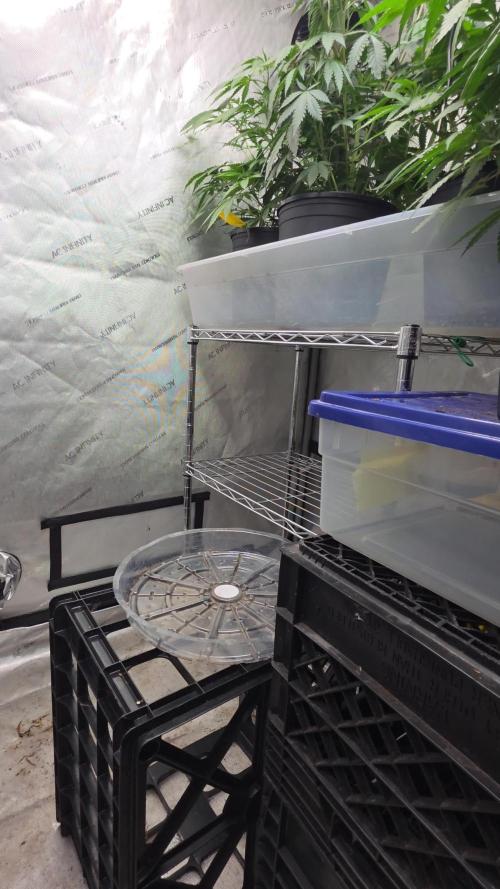
12/16 On 12/16 after harvesting Apricot Auto, I had to move Cadillac1 off the shelving unit and put her on lower crate. She is as tall as the other plants positioned on the top shelf. I topped Cadillac1 but since she is asymmetrical, I don’t think topping will create 2 tops. Time will tell.
All the girls bounced back after the topping.
Strawberry Cadillac #1 27” #2 18.5“
Strawberry Trop Cherry #1 18” #2 13”
Straw-Lectric Lemonade #1 15” #2 14
Happy Holidays
Stay green, growers love 💚🌿
💫Natrona💫
shorts_status_processing


@Kitties_and_Colas
Follow
Switched to 12/12 a few days after first shot of bloom nutes, she seems a little heat stressed but relatively happy atm...
Edit: We did manage to get the temps down


@CANNASIM
Follow
Topped N1.
Using only water, and gave a dose of compost tea i have brewed, follows the recipe:
———Basic tea with a twist #1———
20l unclorinated water, using a filter, but vitamin c powder is an option or aerating for 12 to 48h.
1 cup worm castings
1 cup bokashi
1/3 cup molasses, unsulfured organic.
2 1/2 tbsp Recharge
Brew aerating for 24h, using a Hydro air pump. EC was at 0.4 and PH a bit low but used full strength no ph adjustment.
A basic tea would be only worm castings and molasses. For a nutrient tea is possible to add kelp extract, fish emulsion, bat guano and so on, best to check the EC specially if using guanos before using full strength...
Watering schedule is more or less every other day 1 liter. Tea every third watering +-...
Next week Biobizz will enter the schedule in a discrete dosage.
For this strain i’m Running two plants, one is behind.


@xtchill
Follow
Onto week 7
Gave them a proper lst as you can see.
Think I'm going to put into flower 2morrow and see what the results are doing a 7 week veg instead of a 12 week veg.
Going to set the scrog net up and get tucking.
Looking lovely and healthy atm
Peace


@Francokc
Follow
Janita esta semana que viene esta cumpliendo su primer mes, mi primera planta 😍. Satisfecho con los resultados hasta el momento, esta semana incluso me atreví y realice el primer corte Apical... esperemos tenga una pronta recuperación...
Aprovecho de comentar que estoy cultivando con LED APOLLO 4, al inicio comencé con los 3 interruptores encendidos, fueron pasando los días y estudiando, leí sobre que la LUZ AZUL, se utiliza mas para vegetación y tiene como beneficio que acorta los nodos. Por lo tanto apague todas y deje solo encendido el interruptor de VEG, así estuve 1 semana app y hasta que finalmente llegue a un video de 60 min del mismo creador de estos LED APOLLO. En este video el personalmente recomienda tener en FASE CRECIMIENTO: VEG+FULL SPECTRUM. Al momento de iniciar FLORAZION, deberíamos encender también el interruptor de BLOOM. Por lo tanto, los 3 interruptores encendidos al mismo tiempo hasta la cosecha.👽
Srta. Nesbit fue plantada una semana después, producto de que una de sus hermanas fue degollada por el cable del humificador, el cual le cayo encima la primera semana.😪 Mónica estaba creciendo lento, al momento de sacarla de la maceta sus raíces eran pequeñas y arrugadas, quizás tenia algún problema... NOOOOOOOOOOOOOOOOOOOOOOO MONICAAAAAAAAAAAAAAAAAAAAAAAAAAAAAAAAAA!!!!!!
Lo positivo es que Srta. Nesbit va creciendo como avión y es la que se vio beneficiada de lo que aprendí en las primeras semanas con sus sisters. Incluso me atreví a ponerla en un vaso de plástico para después hacer mi primer trasplante, espero no romper el pan o comérmelo 😆 es su tercera semana, por lo tanto el trasplante viene pronto 😯