Likes
Comments
Share


@Purrple_Haze
Follow
Full Power 🌸⚡️
Here we go—flowering has officially begun! Week 7 and she's looking absolutely stunning. The training phase is now complete, and from here on out, she’s free to stretch upwards and show off. 💪🌿
I'm loving those slightly reddish tips on the new growth—adds a beautiful touch of color to her already elegant structure. No signs of stress, just a healthy, happy plant soaking in that summer energy. ☀️💨
She’s been treated well this week:
Silica every 3 days before night
Fed with CalMag, BioBizz Grow, Bloom, TopMax & Alg·A·Mic
Effective Microorganisms added 4 days ago
Followed up with a nice dose of compost tea 2 days later
She's thriving under a great mix of sun and fresh air, and it’s honestly a joy to see how well she’s developed. Everything’s balanced, and the transition into bloom feels smooth and strong.
The mystery’s starting to reveal herself—and it’s looking floral, vibrant, and full of potential. Stay tuned, the real show is just getting started! 🌞✨🌺

Likes
14
Share


@JamieKnolliver
Follow
Einige Triebe wurden nun durch reiben und drücken umgeknickt(HST) weil sie aus dem Netz rausgewachsen ist und ich unbedingt das höhenwachstum eindämmen muss, da die Pflanze noch ihren Stretch machen wird und ich sonst keinen Abstand zur Lampe bekomme.
In der ersten Woche deutliche Veränderung des Wachstumbildes, die ersten weißen Härchen sind erkennbar.
Biobizz Bloom und TopMax werden ab jetzt auch hinzugefügt.


Likes
36
Share


@Ganjagrandaddy
Follow
Day 70 from seedling and we are all done and dusted with these girls. I have taken them out of the dark place to semi trim them up for a slow dry. Hopefully , I will complete the harvest report as soon as they are done. about 10 days if I can keep them cool enough for a slow and low dry to get the best from them and use up all their chlorophyll stores. catch you at harvest Growmies.

Likes
8
Share


@Shalma_kush_420
Follow
Muy buenas mi gentee
Por aquí otra semana más con estas increíbles plantas #sherbetz de @artgenetix que vienen con una forma muy top.
Color y aroma muy marcado.
Ya hemos empezado con los azúcares e hidratos de carbono para ayudar la floración.
Riegos con fertis solo una vez por semana, el resto de riegos con solo agua regulada.
Veremos cómo siguen la semana que viene.

Likes
14
Share


@Chedderbob112
Follow
Av had a good week been busy dunno exactly wot a want tae dae hear feel like a constantly want mere paitience is the key Rome essential built in a day

Likes
18
Share


@Grower_Of_Persia
Follow
my dry and cure style is this:
4 days of hanging upside down to get water activity lower to around 0.6 in 50% humidity and 26 C temp (i know its a little high but we are in a hot summer right now and i cant get it lower even with air conditioner) and then after 4 days of drying i remove leaves and stalks, trim buds and move them to jar for the rest of their life :D . and in the first 4 days of curing i open the jar door and let hem get some fresh air in the jar for about 5 minutes and close the jar door again, after 4 days of curing like that buds are smokable but they will get better as they getting cured about 1 month.
buds are one of the hardest as fucking rocks type of buds! very dense , compact , sticky , smelly , amazing at every aspect
growing stage was 56 days and flowering stage was 75 days total (harvested tops at day 64th)
the total weight of dry buds was : (plant #1 & #3 top buds 56 G + lower buds 22 G ) 78 G + (plant #2 top buds 47 G + lower buds 18 G ) 55 G + (plant #4 top buds 120 G + lower buds 67 G ) 187 G = 367 G

Likes
17
Share


@JeyGanesha
Follow
Queste 3gorilla strawberry sono spettacolari.sanno davvero di fragola..
Likes
20
Share


@dataTwiiix
Follow
08/11: La troisième semaine de floraison commence enfin on devrait les fleurs prendre forme. J'espère que le stretch est fini car elle est assez grande et doit laisser un peu de place au autres.
08/12: la troisième semaine débute sur une note un peu amer. Certaines feuilles se détériore à une vitesse folle, ainsi que des tâches brune. Premier réflexe GHE essential et cal-mag agent de Canna ce matin. Espérons que les prochains jours seront plus cool et que cela vas arranger mon problème.
08/13: après avoir fait plus de recherche je suis enfin tombé sur un article sur le blog de pevgrow et mon problème correspond en tout point à une carence en magnésium. Je devrais voir voir des améliorations dans les 4 à 7 jours. Et bien-sûr continuer à donner du calmag. Le problème viendrai du fait que je tourne en 24/7 avec les auto's enfin c'est ce que je pense après avoir croisé les conseils et avis des "growers" de GD et certains articles.
08/14: c'est dernier jours ont été intense pour moi, lors de mon premier diaries j'avais déjà eu le même problèmes avec une purplequeen auto à l'époque je n'avais pas de calmag... enfin tous ça pour dire merci à la communauté growdiaries.com qui m'a conseillé et supporter. Maintenant cela c'est stabilisé et n'atteint aucune autre feuilles, les nouvelles feuilles sont belles et viguoireuses. Me voilà rassurer et surtout j'ai encore appris de nouvelles chose sur la cannabiculture 😎😨🤓
08/15: elle a créée une belle masse de feuilles entre temps, je vais appliquer une grosse defoliation après le prochain engraissâge histoire d'être que les carences ne sont plus d'actualités. À part cela je me contente de couper deux feuilles par jours. #46
08/16: tout est rentré dans l'ordre ouF :D - la production de trichromes à bien commencé, une légère odeur typique à la weed qu'elle que soit la variété en début de flo. se dégage de la growbox. je suis enchanté! Maintenant j'epère que le switch d'engrais càd changer "BioBizz bloom/topmax" pour "Canna PK13-14/Boost Accelerator" vas lui plaire à la jolie dame #47
08/17: apres une de nuit de réflexion: arrosage/engraisser (canna calmag (.6ml/L)/BB blom-topMax (1.2ml/L chaqu'un)/ AN BigBud-BudCandy (1ml/L chaqu'un) ce matin. J'essayerai canna pk 13 14 et boost accelerator sur mon prochain plant. #48
Likes
11
Share


@Chubbs
Follow
420 Fastbuds
BlueDream Auto
Week 7
So far so good keeping the same program. Watering 2 liters of straight well water daily as Temps are still in the high 90's so the girls are definitely starting to show that color fade more so now that they're into mid flower.
All in all happy Growing
Likes
1
Share


@AtticGrow420
Follow
The Blappleberry Haze is producing more and more thick buds that are now taking on a beautiful purple color. The smell is still very, very fruity and the trichomes look like I could harvest the plant within the next 2 weeks. I will check the trichomes again before the next watering, if they are almost ready, I will only give it water and then no water for a week.
Likes
3
Share


@PhantomzWrath
Follow
Not even sure if they’re actually in week 10 haven’t really been taking too many pictures. Really loving the gorilla cookies and how big they are vs the apricot auto in the closer left corner. All other 3 are gorilla cookies autos. Just started feeding just distilled water for now and flush them to get for hatbest
Likes
Comments
Share

@gz420G
Follow
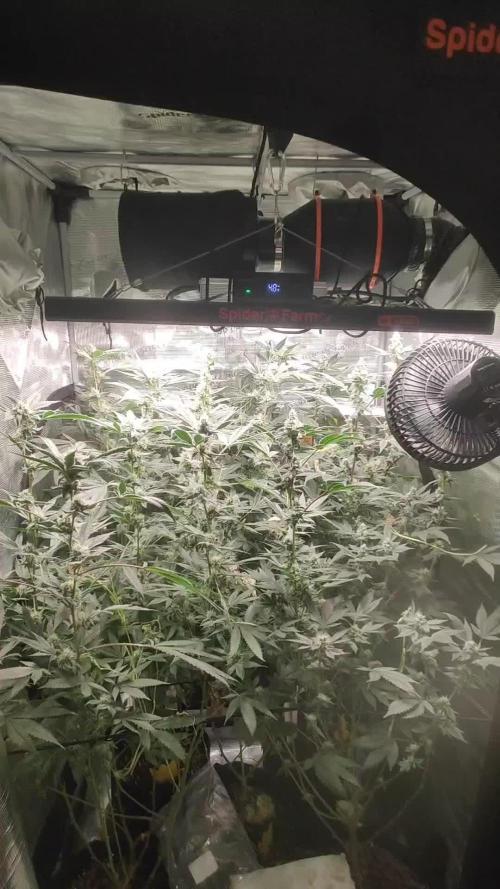
Blütewoche 7
Der Grow geht langsam in die Zielgerade. Die Capjunky zeigt sich aktuell von ihrer schönsten Seite – mit ihren dicht harzbedeckten Blättern sehen die beiden Pflanzen wunderschön aus und übertreffen die Orange Bud und die Tangerine Dream in Bezug auf Blütenstruktur und Geruch deutlich.
Ab sofort erhalten die Pflanzen nur noch pH-reguliertes Wasser.
Ausserdem kämpfe ich leider noch immer mit den Temperaturen (Schnitt 26,5 °C, Spitzen bis 28,5 °C), was für die 7. Blütewoche eigentlich zu warm ist. Ich beobachte die Blüten täglich und habe mir einen zweiten Ventilator ins Zelt gestellt um das um das Risiko für Schimmel zu minimieren.

Likes
17
Share


@Ashbash
Follow
So, had an awful week here, outside temps are rising and my plant is getting fucked up. Super low humidity and super high temps are fucking her right up. Loads of foxtailing, lost all smell, feels kinda crispy despite daily watering. Need rid of this HPS lamp but money is tight so probably just gonna pull the plug entirely. Real shame.
Likes
8
Share

@GoldenWeedGrower
Follow
📅 21/04/26
🗓️ D050 (B2 / D1)
🌡️ 1.2
💨 1300
💧 -
🥗 Added Bloom A-B, CalMag and Bud Candy. Silicate
⚗️ 1.6
🔬 5.5
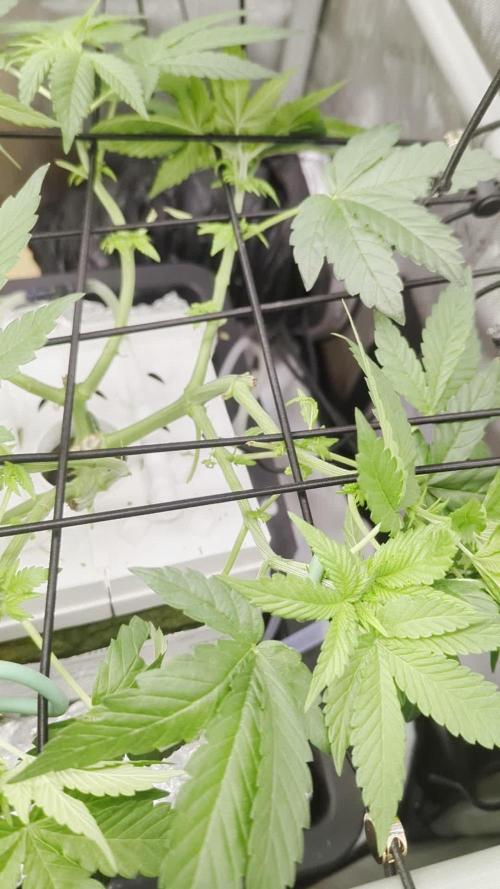
🛠️ LST
📋 pH is swinging and I'm letting do it.
📅 22/04/26
🗓️ D051 (B2 / D2)
🌡️ 1.1
💨 1300
💧 -
🥗 Added CalMag and Bud Candy
⚗️ 1.6
🔬 6.5
🛠️ LST
📋 pH is swinging again
📅 23/04/26
🗓️ D052 (B2 / D3)
🌡️ 1.1
💨 1300
💧 -
🥗 -
⚗️ 1.6
🔬 5.5
🛠️ -
📋 -
📅 24/04/26
🗓️ D053 (B2 / D4)
🌡️ 1.1
💨 1300
💧 -
🥗 -
⚗️ 1.6
🔬 5.5
🛠️ LST
📋 -
📅 25/04/26
🗓️ D054 (B2 / D5)
🌡️ 1.1
💨 1300
💧 5 L
🥗 -
⚗️ 1.2
🔬 6
🛠️ -
📋 -
📅 26/04/26
🗓️ D055 (B2 / D6)
🌡️ 1.1
💨 1300
💧 5 L
🥗 -
⚗️ 1.1
🔬 6.5
🛠️ -
📋 -
📅 27/04/26
🗓️ D056 (B2 / D7)
🌡️ 1.1
💨 1300
💧 -
🥗 Bloom A-B, CalMag, BigBud
⚗️ 1.2
🔬 6.5
🛠️ -
📋 -
=============================================================
Legend:
📅 DATE
🗓️ DAY (StageWeek / Day)
🌡️ VPD
💨 CO2
💧 WATER ADDED
🥗 FOOD ADDED
⚗️ EC
🔬PH (adjustements)
🛠️ ACTIONS
📋 NOTES
📅🗓️🌡️💨💧🥗⚗️🔬🛠️📋

Likes
8
Share


@skaterblasted
Follow
Lamp Brightness: 75% @ 26.2" - estimated 560 PAR
Feeding schedule once-a-week, all other waterings strictly water-only
IPM 4oz per gal EM5 solution foliar spray + applied directly to mulch/cover crop (before lights-out) - once a week
Feeding:
1/8 tsp per gallon yucca extract
1/8 tsp per gallon big 6 micronutrients
1/2 tsp per gallon rootwise mycrobe complete
1 tsp per gallon grower's secret organic soy hydrolysate
Day after feeding, soil is given a sst of organic fenugreek, lentils, kamut, mung, and adzuki beans
Note: mulch layer too thick, had to disturb during the week and re-apply 12 seed cover crop
for posterity, at the end of week 4 clones were taken of each plant genotype
Likes
7
Share


@Thckaos
Follow
15-05-21 Se cambia la solución y se realiza un lavado de raíces. Para bajar la conductividad de las raíces de 1.43 a 0.2 ms para que la solución nueva sea más efectiva. La solución tiene 2.23 ms y 6 PH. Se añade una pastilla de CO2.
16-05-21 PH 6.2 Conductividad 1.85 ms
17-05-21 PH 6.1 Conductividad 1.84 ms
18-05-21 Se corrige el PH 5.2 a PH 5.9 Conductividad 1.97 ms. Se rellena con agua del grifo ya que el nivel es bajo. Conductividad 0.92 ms
19-05-21 Se corrige el PH 5.6 a PH 6.1 Conductividad 0.97 ms.
20-05-21 Se corrige el PH 5.3 a PH 6.30 Conductividad 1.21 ms. Se rellena con agua del grifo ya que el nivel es bajo. Conductividad 0.74 ms
21-05-21 PH 6.10 Conductividad 0.78 ms
Likes
28
Share


@Southofheaven
Follow
Another week of slowly reaching the harvest date.
Early sugar leaves on tops are showing average 10% amber trics.
Calyxes are swelling with each day, generating dense new trics to still ripen.
Pistils are browning, about 50% now with slight new growth/foxtailing on the tops.
Its getting real smelly.. maybe time for a filter, with a space this confined its gonna be a mission fitting one on.
Fan leaves withering off, no stress.
Buds are becoming dense and are weighing the stems down
probably looking at harvesting in 2 weeks to allow new trics to go cloudy. Hoping to click over 2 oz with this plant but aslong as the smoke is smooth and potent im not worried about yeild.
Cheers boys and girls for checking in, let me know what you think, have a good day 👍


Likes
6
Share


Likes
19
Share

@Borberad
Follow
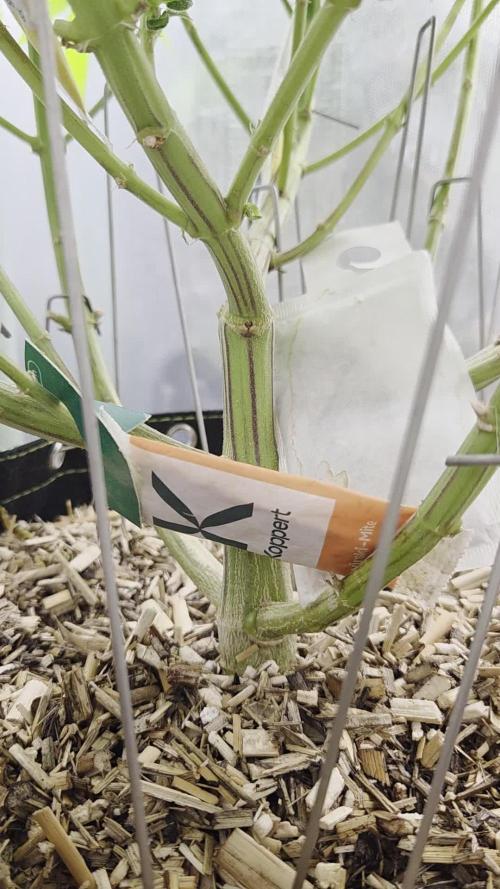
Woche 15
Die gute verliert solangsam an Farbe im Blattwerk. Es geht langsam auf den Herbst zu, wir sind gespannt mit welchen Farben sie uns überraschen will.
Tag 102
Bei genauerer Betrachtung erscheinen die Trichomköpfe schon verhältnismäßig dick.