The Grow Awards 2026 🏆
Processing
Likes
Comments
Share
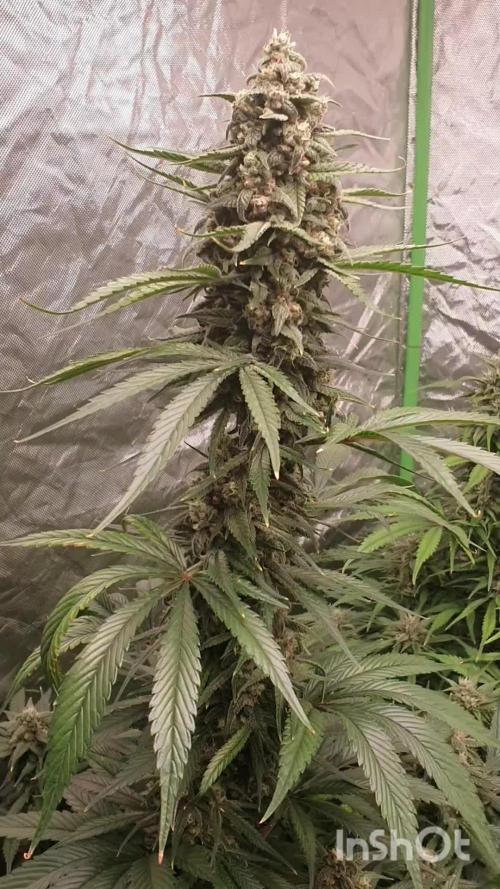
Jour42 defolliation Stretch 10 centimètres Jour47 arrosage avec de l'eau ph6.3 à laquelle j'ajoute 1ml par litre d'eau de topmax biobizz
Likes
4
Share
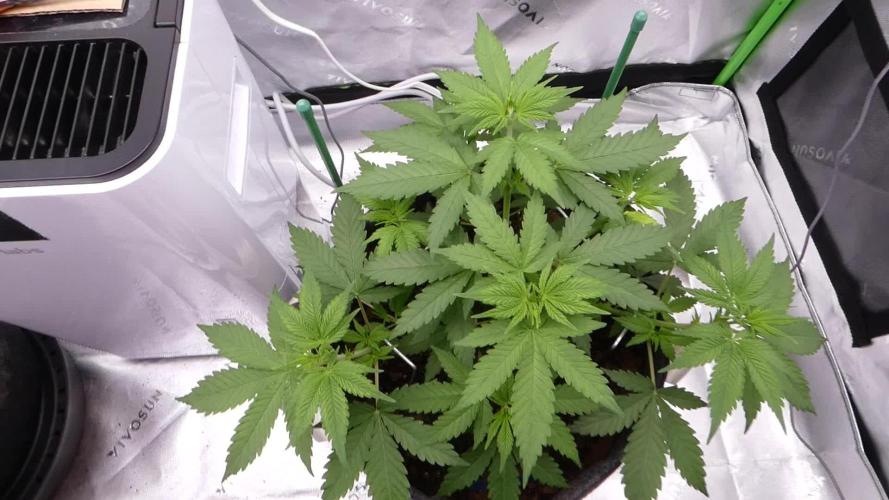
Week 2 of flower plants are growing perfect with no problems small buds starting to form struggled with heat abit but they still going strong nice and green one of them at streched more than others @growerchoice @SHOGUN COCO A 4ml/L 160ml @SHOGUN COCO B 4ml/L. 160ml @SHOGUN ACTIVE BOOST 2ml/L. 40ml @SHOGUN CAL MAG 1ml/L 20ml @SHOGUN ZENZYM 2.5ml/L. 100ml @SHOGUN KATANA ROOTS 0.2ML/ 8ML
Likes
33
Share
Chugging along. Suffered minor light burn - - no issues moving forward as the underlying cause is rectified. Another heat wave here in Cali. I will be on alert to help the controlled environment.
Likes
14
Share
6/22 looking good after I tried to spread her out more. She responded well 6/26 sexy ass plant
Likes
4
Share
@mr_smooke
Follow
Only tap water for this shiny beauty. she gonna finish in 2 weeks maybe earlier. can not wait for harvest. here is day 43f
Likes
30
Share
This was an easy to grow strain was neglected the first half of the grow during my move, in saying that it still went well no pest problems or diseases will grow again in the future hoping to get it bigger under different circumstances, definitely recommend the video was a week or so before the chop I forgot to take drying pics 😭😭🤣
Likes
12
Share
buds are now 2x as big as i started, will leave it another few days b4 i harvest. then reset the room and on to the next crop. of Ya Hemi and T fuck. then a Run of OG God Bud
Processing
Likes
17
Share
@Island
Follow
After many weeks believing that I have mites in my cultivation, I start to believe that my real problem is my soil. Apparently my soil still has decomposing material and it has affected the leaves. Waiting the flowering goes and how will plant react of it. I hope it not serious thing. My leaves problem look like excess of nutrient in soil formulation. On this week I turn lights on. Now there will be 360W full power to flowering stage.
Likes
23
Share
@Zuppler
Follow
👸🏼**Grow Report by Zuppler - Week 2 Flowering Phase** 👸🏼 Aye yo, Zuppler checkin' in with the week 2 update from the garden. We deep in this flower stage now, and the ladies are flexin' heavy. We hittin' ‘em with that monkey formula from Advanced Nutrients – you know, that real fire mix – and it’s got them lookin' strong as a pitbull on steroids, no lie. We runnin’ on straight osmosis water too, keepin’ it clean as a whistle, no extra BS in the mix. pH game locked down, always in that sweet spot, and the girls are drinkin' it up like a hot summer day down in Miami. Roots be spreadin' out nice, no signs of stress, they lovin' the setup. Buds are startin’ to stack up, slow but sure. Ain't much frost yet, but I can already tell we about to be drippin' soon. Nodes are tight like a fresh taper fade, and internodes ain’t stretchin’ too wild – just the way we like it. Them leaves stay green as a gator's hide – no burn, no spots, just straight up healthy growth. They dancin' under the lights like it’s a party, and with that 12/12 cycle locked in, the energy’s flowin’ like good vibes at a block party. Everything solid so far, no issues. Yo, we keep it patient, ‘cause this the marathon, not a sprint. Week 3 comin' up, and that’s when we expect to see them trichomes really startin’ to come through. Stay strapped in, 'cause it’s only gettin’ better from here. Zuppler out. Keep it G!
Likes
8
Share
We got roots, I had a brief PM scare but it ended up being just a salt buildup from spraying the clones with light GH nutrients.
Likes
12
Share
February 28, 2019 Update: Chugging right along in the veg tent. I sprayed the plants with Neem Oil last week and the leaves look shiny from that, but no new signs of bug damage since then. I did feed them a little Recharge also and they really responded great to that. After taking the pics I did some HST bending at the base of the stem on all plants. I didn't bend them over, just pinched real hard and wiggled the plant back and forth until I could feel the bend between my fingers. We'll see how that goes. The DinaMed's are still taller than the MediKush's but the MediKush's still have a nice tight node structure. If all goes to plan I'll have my flowering plants chopped and hanging in 2 weeks and will then be able to move these girls into the flowering room. Bonus pic at the end of the view from my bedroom window. I'd love to see my buds get that frosty!
Likes
25
Share
ANTHOCYANIN production is primarily controlled by the Cryptochrome (CR1) Photoreceptor ( !! UV and Blue Spectrums are primary drivers in the production of the pigment that replaces chlorophyll, isn't that awesome! 1. Diverse photoreceptors in plants Many civilizations, including the sun god of ancient Egypt, thought that the blessings of sunlight were the source of life. In fact, the survival of all life, including humans, is supported by the photosynthesis of plants that capture solar energy. Plants that perform photosynthesis have no means of transportation except for some algae. Therefore, it is necessary to monitor various changes in the external environment and respond appropriately to the place to survive. Among various environmental information, light is especially important information for plants that perform photosynthesis. In the process of evolution, plants acquired phytochrome, which mainly receives light in the red light region, and multiple blue light receptors, including his hytropin and phototropin, in order to sense the light environment. .. In addition to these, an ultraviolet light receptor named UVR8 was recently discovered. The latest image of the molecular structure and function of these various plant photoreceptors (Fig. 1), focusing on phytochrome and phototropin. Figure 1 Ultraviolet-visible absorption spectra of phytochrome, cryptochrome, phototropin, and UVR8. The dashed line represents each bioactive absorption spectrum. 2. Phytochrome; red-far red photoreversible molecular switch What is phytochrome? Phytochrome is a photochromic photoreceptor, and has two absorption types, a red light absorption type Pr (absorption maximum wavelength of about 665 nm) and a far-red light absorption type Pfr (730 nm). Reversible light conversion between the two by red light and far-red light, respectively(Fig. 1A, solid line and broken line). In general, Pfr is the active form that causes a physiological response. With some exceptions, phytochrome can be said to function as a photoreversible molecular switch. The background of the discovery is as follows. There are some types of plants that require light for germination (light seed germination). From that study, it was found that germination was induced by red light, the effect was inhibited by subsequent far-red light irradiation, and this could be repeated, and the existence of photoreceptors that reversibly photoconvert was predicted. In 1959, its existence was confirmed by the absorption spectrum measurement of the yellow sprout tissue, and it was named phytochrome. Why does the plant have a sensor to distinguish between such red light and far-red light? There is no big difference between the red and far-red light regions in the open-field spectrum of sunlight, but the proportion of red light is greatly reduced due to the absorption of chloroplasts in the shade of plants. Similar changes in light quality occur in the evening sunlight. Plants perceive this difference in light quality as the ratio of Pr and Pfr, recognize the light environment, and respond to it. Subsequent studies have revealed that it is responsible for various photomorphogenic reactions such as photoperiodic flowering induction, shade repellent, and deyellowing (greening). Furthermore, with the introduction of the model plant Arabidopsis thaliana (At) and the development of molecular biological analysis methods, research has progressed dramatically, and his five types of phytochromes (phyA-E) are present in Arabidopsis thaliana. all right. With the progress of the genome project, Fi’s tochrome-like photoreceptors were found in cyanobacteria, a photosynthetic prokaryotes other than plants. Furthermore, in non-photosynthetic bacteria, a homologue molecule called bacteriophytochrome photoreceptor (BphP) was found in Pseudomonas aeruginosa (Pa) and radiation-resistant bacteria (Deinococcus radiodurans, Dr). Domain structure of phytochrome molecule Phytochrome molecule can be roughly divided into N-terminal side and C-terminal side region. PAS (Per / Arndt / Sim: blue), GAF (cGMP phosphodiesterase / adenylyl cyclase / FhlA: green), PHY (phyto-chrome: purple) 3 in the N-terminal region of plant phytochrome (Fig. 2A) There are two domains and an N-terminal extension region (NTE: dark blue), and phytochromobilin (PΦB), which is one of the ring-opening tetrapyrroles, is thioether-bonded to the system stored in GAF as a chromophore. ing. PAS is a domain involved in the interaction between signal transduction-related proteins, and PHY is a phytochrome-specific domain. There are two PASs and her histidine kinase-related (HKR) domain (red) in the C-terminal region, but the histidine essential for kinase activity is not conserved. 3. Phototropin; photosynthetic efficiency optimized blue light receptor What is phototropin? Charles Darwin, who is famous for his theory of evolution, wrote in his book “The power of move-ment in plants” published in 1882 that plants bend toward blue light. Approximately 100 years later, the protein nph1 (nonphoto-tropic hypocotyl 1) encoded by one of the causative genes of Arabidopsis mutants causing phototropic abnormalities was identified as a blue photoreceptor. Later, another isotype npl1 was found and renamed phototropin 1 (phot1) and 2 (phot2), respectively. In addition to phototropism, phototropin is damaged by chloroplast photolocalization (chloroplasts move through the epidermal cells of the leaves and gather on the cell surface under appropriate light intensity for photosynthesis. As a photoreceptor for reactions such as escaping to the side of cells under dangerous strong light) and stomata (reactions that open stomata to optimize the uptake of carbon dioxide, which is the rate-determining process of photosynthetic reactions). It became clear that it worked. In this way, phototropin can be said to be a blue light receptor responsible for optimizing photosynthetic efficiency. Domain structure and LOV photoreaction of phototropin molecule Phototropin molecule has two photoreceptive domains (LOV1 and LOV2) called LOV (Light-Oxygen-Voltage sensing) on the N-terminal side, and serine / on the C-terminal side. It is a protein kinase that forms threonine kinase (STK) (Fig. 4Aa) and whose activity is regulated by light. LOV is one molecule as a chromophore, he binds FMN (flavin mononucleotide) non-covalently. The LOV forms an α/βfold, and the FMN is located on a β-sheet consisting of five antiparallel β-strands (Fig. 4B). The FMN in the ground state LOV shows the absorption spectrum of a typical oxidized flavin protein with a triplet oscillation structure and an absorption maximum wavelength of 450 nm, and is called D450 (Fig. 1C and Fig. 4E). After being excited to the singlet excited state by blue light, the FMN shifts to the triplet excited state (L660t *) due to intersystem crossing, and then the C4 (Fig. 4C) of the isoaroxazine ring of the FMN is conserved in the vicinity. It forms a transient accretionary prism with the tain (red part in Fig. 4B Eα) (S390I). When this cysteine is replaced with alanine (C / A substitution), the addition reaction does not occur. The effect of adduct formation propagates to the protein moiety, causing kinase activation (S390II). After that, the formed cysteine-flavin adduct spontaneously dissociates and returns to the original D450 (Fig. 4E, dark regression reaction). Phototropin kinase activity control mechanism by LOV2 Why does phototropin have two LOVs? Atphot1 was found as a protein that is rapidly autophosphorylated when irradiated with blue light. The effect of the above C / A substitution on this self-phosphorylation reaction and phototropism was investigated, and LOV2 is the main photomolecular switch in both self-phosphorylation and phototropism. It turns out that it functions as. After that, from experiments using artificial substrates, STK has a constitutive activity, LOV2 functions as an inhibitory domain of this activity, and the inhibition is eliminated by photoreaction, while LOV1 is kinase light. It was shown to modify the photosensitivity of the activation reaction. In addition to this, LOV1 was found to act as a dimerization site from the crystal structure and his SAXS. What kind of molecular mechanism does LOV2 use to photoregulate kinase activity? The following two modules play important roles in this intramolecular signal transduction. Figure 4 (A) Domain structure of LOV photoreceptors. a: Phototropin b: Neochrome c: FKF1 family protein d: Aureochrome (B) Crystal structure of auto barley phot1 LOV2. (C) Structure of FMN isoaroxazine ring. (D) Schematic diagram of the functional domain and module of Arabidopsis thaliana phot1. L, A’α, and Jα represent linker, A’α helix, and Jα helix, respectively. (E) LOV photoreaction. (F) Molecular structure model (mesh) of the LOV2-STK sample (black line) containing A’α of phot2 obtained based on SAXS under dark (top) and under bright (bottom). The yellow, red, and green space-filled models represent the crystal structures of LOV2-Jα, protein kinase A N-lobe, and C-robe, respectively, and black represents FMN. See the text for details. 1) Jα. LOV2 C of oat phot1-to α immediately after the terminus Rix (Jα) is present (Fig. 4D), which interacts with the β-sheet (Fig. 4B) that forms the FMN-bound scaffold of LOV2 in the dark, but unfolds and dissociates from the β-sheet with photoreaction. It was shown by NMR that it does. According to the crystal structure of LOV2-Jα, this Jα is located on the back surface of the β sheet and mainly has a hydrophobic interaction. The formation of S390II causes twisting of the isoaroxazine ring and protonation of N5 (Fig. 4C). As a result, the glutamine side chain present on his Iβ strand (Fig. 4B) in the β-sheet rotates to form a hydrogen bond with this protonated N5. Jα interacts with this his Iβ strand, and these changes are thought to cause the unfold-ing of Jα and dissociation from the β-sheet described above. Experiments such as amino acid substitution of Iβ strands revealed that kinases exhibit constitutive activity when this interaction is eliminated, and that Jα plays an important role in photoactivation of kinases. 2) A’α / Aβ gap. Recently, several results have been reported showing the involvement of amino acids near the A’α helix (Fig. 4D) located upstream of the N-terminal of LOV2 in kinase photoactivation. Therefore, he investigated the role of this A’α and its neighboring amino acids in kinase photoactivation, photoreaction, and Jα structural change for Atphot1. The LOV2-STK polypeptide (Fig. 4D, underlined in black) was used as a photocontrollable kinase for kinase activity analysis. As a result, it was found that the photoactivation of the kinase was abolished when amino acid substitution was introduced into the A’α / Aβ gap between A’α and Aβ of the LOV2 core. Interestingly, he had no effect on the structural changes in Jα examined on the peptide map due to the photoreaction of LOV2 or trypsin degradation. Therefore, the A’α / Aβ gap is considered to play an important role in intramolecular signal transduction after Jα. Structural changes detected by SAXS Structural changes of Jα have been detected by various biophysical methods other than NMR, but structural information on samples including up to STK is reported only by his results to his SAXS. Not. The SAXS measurement of the Atphot2 LOV2-STK polypeptide showed that the radius of inertia increased from 32.4 Å to 34.8 Å, and the molecular model (Fig. 4F) obtained by the ab initio modeling software GASBOR is that of LOV2 and STK. It was shown that the N lobes and C lobes lined up in tandem, and the relative position of LOV2 with respect to STK shifted by about 13 Å under light irradiation. The difference in the molecular model between the two is considered to reflect the structural changes that occur in the Jα and A’α / Aβ gaps mentioned above. Two phototropins with different photosensitivity In the phototropic reaction of Arabidopsis Arabidopsis, Arabidopsis responds to a very wide range of light intensities from 10–4 to 102 μmol photon / sec / m2. At that time, phot1 functions as an optical sensor in a wide range from low light to strong light, while phot2 reacts with light stronger than 1 μmol photon / sec / m2. What is the origin of these differences? As is well known, animal photoreceptors have a high photosensitivity due to the abundance of rhodopsin and the presence of biochemical amplification mechanisms. The exact abundance of phot1 and phot2 in vivo is unknown, but interesting results have been obtained in terms of amplification. The light intensity dependence of the photoactivation of the LOV2-STK polypeptide used in the above kinase analysis was investigated. It was found that phot1 was about 10 times more photosensitive than phot2. On the other hand, when the photochemical reactions of both were examined, it was found that the rate of the dark return reaction of phot1 was about 10 times slower than that of phot2. This result indicates that the longer the lifetime of S390II, which is in the kinase-activated state, the higher the photosensitivity of kinase activation. This correlation was further confirmed by extending the lifespan of her S390II with amino acid substitutions. This alone cannot explain the widespread differences in photosensitivity between phot1 and phot2, but it may explain some of them. Furthermore, it is necessary to investigate in detail protein modifications such as phosphorylation and the effects of phot interacting factors on photosensitivity. Other LOV photoreceptors Among fern plants and green algae, phytochrome ɾphotosensory module (PSM) on the N-terminal side and chimera photoreceptor with full-length phototropin on the C-terminal side, neochrome (Fig. There are types with 4Ab). It has been reported that some neochromes play a role in chloroplast photolocalization as a red light receiver. It is considered that fern plants have such a chimera photoreceptor in order to survive in a habitat such as undergrowth in a jungle where only red light reaches. In addition to this, plants have only one LOV domain, and three proteins involved in the degradation of photomorphogenesis-related proteins, FKF1 (Flavin-binding, Kelch repeat, F-box 1, ZTL (ZEITLUPE)), LKP2 ( There are LOV Kelch Protein2) (Fig. 4Ac) and aureochrome (Fig. 4Ad), which has a bZip domain on the N-terminal side of LOV and functions as a gene transcription factor. 4. Cryptochrome and UVR8 Cryptochrome is one of the blue photoreceptors and forms a superfamily with the DNA photoreceptor photolyase. It has FAD (flavin adenine dinucle-otide) as a chromophore and tetrahydrofolic acid, which is a condensing pigment. The ground state of FAD is considered to be the oxidized type, and the radical type (broken line in Fig. 1B) generated by blue light irradiation is considered to be the signaling state. The radical type also absorbs in the green to orange light region, and may widen the wavelength region of the plant morphogenesis reaction spectrum. Cryptochrome uses blue light to control physiological functions similar to phytochrome. It was identified as a photoreceptor from one of the causative genes of UVR8 Arabidopsis thaliana, and the chromophore is absorbed in the UVB region by a Trp triad consisting of three tryptophans (Fig. 1D). It is involved in the biosynthesis of flavonoids and anthocyanins that function as UV scavengers in plants. Conclusion It is thought that plants have acquired various photoreceptors necessary for their survival during a long evolutionary process. The photoreceptors that cover the existing far-red light to UVB mentioned here are considered to be some of them. More and more diverse photoreceptor genes are conserved in cyanobacteria and marine plankton. By examining these, it is thought that the understanding of plant photoreceptors will be further deepened.
Likes
14
Share
Flowering is really stunned in this very cold weather, still a fun thought seeing my plant still alive while all the tree already have lost their leaves. Today i chopped the remaining branches on my right maincola, the left will stay 1 to 3 more weeks, im gonna push that one with all the risk of every risk🤗 i wett trimmed the branches again and hanged them, after i took away the first drying batch from 10 days ago. I weighted that what was still hanging at 49 grams dry weight, adding up to a total of 64 grams so far... Im guessing the total amount of dry weight on this plant will be around 300 grams unfortunately... If this would have flowered lets say 1,5 month earlier( like it was fking expecter to do!!!) It would have made a kilo for sure
Likes
21
Share
@3lementa1
Follow
Lots of pistils coming out. It looks like kind of a mix of its parent strains, which makes sense. I was going to do some final defoliation this week, but the colas are all pretty well spaced out and they're growing so fast you can practically see it with the naked eye. Idk if the added stress from further defoliating the bottom will be worthwhile right now. Dec 26. I went ahead with the defoliation. This always happens, it's just scary to cut pieces off your beautiful babies when they're thriving. But this is the perfect time to do it, when they're healthy and growing strong. Whether or not it helps yield, it will still help with airflow and most importantly, it will allow me to see into the plant to catch any problems before its too late. Several of the leaves I took off were yellowing already. It was hard to take the healthy ones that had been there a long time, but it's for the best. I didn't go overboard, and I can see a lot more of the bud sites now. Things are looking great. I can't get good lighting for photos unfortunately.
Likes
10
Share
3 autoflowers which is Outlaw Amnesia, Purple Punch, and Strawberry cough are well undergoing veg stage. Since these 3 plant genetics breeded are a mix of 2-3 different strains. The grow results from this seed breeders are amazing no complaints. I am really looking forward growing single strain very soon from international seedbanks asap once i finish experimenting all of my custom breeder strains. I am having a crazy overthinking with 2 of my AK47 since they are seeds generated from a hermie AK47 autoflower. The issue is more of a thought process whether the plant will flower since these 2 of them are under 1 tent with 3 Autoflowers😂, i hope they will follow the autoflower traits and not photoperiod. If they are not flowering, i was informed to flip the light to 12-12, If this situation happens, the only possible outcome i can think of is to defoliate/shwazz them and then flip them sf2000 to 12-12 right only i harvested 3 of the Autoflowers. Officially planted these babies on Nov 9, i will log into GD diaries every Sunday. Officially added 0.5ml of BigBud per litre, a very minute ammount just to top up some P and K since 3 plants are entering preflowering soon.
Processing
Likes
15
Share
@Velk1
Follow
Root exelerator has been stoped with the other lady's being harvested these now have crazy leg room to grow ! The bears are hunting that gass and all the baby's are letting of a nice stank !
Processing
Likes
2
Share
Likes
4
Share
Es realmente impresionante ver el crecimiento que ha tenido en menos de 1 mes. Unos días más de vegetación… quizás sale alguna poda apical más, unos días y luego a florar 🌹😍👍💪🦍🦍🦍
Likes
47
Share
@S2340420
Follow
This was a good grow couple of ups and downs weather wise and the moment of devastation when seeing my fattest cola had been affected by bud rot this was a solid happy nug yesterday and today well thenpics tell a tale all other buds were fine and are drying as we speak ye win some ye lose some some are just fkin annoying
Processing
Likes
32
Share
@DeaneR
Follow
All the girls are coming along nicely. Pro-mix is furthest into flower, followed by Coco, then 50/50. The pheno in the 50/50 mix is still throwing out alot of pistils. Just ph'd water from now till the chop. Thanks for viewing, Stay tuned (up), more to come! Peace, DeaneR😎