


Likes
Comments
Share


@BenDidKnEe
Follow
The clones are doing ok. I might have the humidity to high because they haven’t had water this week, the soil is still moist from the transplant. Once the roots hit the bottoms of the pots they should spread out causing the foliage to explode. In week 8 I’ll come back and edit and tell myself I told me so. Happy growing folks

Likes
6
Share


@pzwags420
Follow
Week 5 flower is progressing well. bud sites are getting bigger with more pistils and trichs on leaves everyday. This will not be a 8 week strain I'm thinking 10 but will calibrate if necessary to get the full potential of this genetic as I can see she is a special one already!

Likes
46
Share


@Cannabeast40
Follow
Welcome back to my summer grow🙂
Everything is still in need for more, more light - more nutes - more airflow and last but not least, more ir/uv 😎
Also gaining alot of weight so that’s also great, might need to tie this one up asap😊
Hope to see you again next week 😎
-------------------------------------------------------------------------------------------------------
SpectrumX LED🔥 @medicgrow
880 Watt⚡️
2x UV/IR LED panels 💥
2.7 μmol/J🔥
Full Spectrum V1,F1,VS,FS🌈
Display with PPFD & Live spectrum
Light measurement: Apogee MQ-610 & Apogee DLI-600.
Fertiliser:
Organics Nutrients
https://www.organicsnutrients.com/en/
Green Buzz Nutrients
Discount Code: GD42025
Grants 25% with a minimum Order value at 75 Euro.
https://greenbuzzliquids.com/en/shop/

Likes
13
Share


@Lazuli
Follow
Trichomes are cloudy, i give only rainwater now the past 5 days the runoff stays around 1000ppm so shes done eating for sure, i think this will be her final week.
Buds are rockhard and smell amazing

Likes
26
Share


@KingSalomonsWeed
Follow
Ok on flower day 65 i did a prechop of sticky smelly Buds. This is the Rest for Ripening.
04.10. Its boring to wait. Just added some water.
Aphid shit on my buds (i wash),
Or using insectoxids.
Now you know why i can not use Insecticide.
Another part chop. On day 71


Likes
44
Share


@RakonGrow
Follow
Note :
+ jegliches Zubehör wird in der GermniationsWoche aufgelistet . Zeitraffer Videos folgen immer nachträglich.
+ videos werden so geschnitten das nur ein geschlossenes Zelt erscheint , ergo Fehlen paar reale Minuten (ca 1 Std) .
+ + leider ist die Halterung defekt und die Videos etwas schief . Vielleicht mach ich mich irgendwann mal daran und korrigiere das. Sorry
Day 43:
+ Höhe : 64cm
Es wächst und wächst :))
Day 44:
+ Höhe : 65cm
+ 2 Liter Flaschenwasser , kein Dünger .
+ + PH 6.5
+ Drain : PH 7.0
Höhe ist bei 63cm , das ist 3 cm mehr als die Vorgabe ausweisst :))
Day 45:
+ 66cm höhe.
+ 2 Liter Flaschenwasser
+ + Dünger für Blühte
+ + + Canna Terrar Flores (Achtung wirkt wie PH-)
+ + + Canna Boost
+ + + Cannazym
+ + + Greenhouse Feeding BioEnhancer als PH+
Jetzt säuft sie wie wilde , keine 24h und die 2Liter sind komplett wech . Mehr geht aber nicht in den Topf , ergo muss ich mir langsam mal überlegen ob ich Tropfbewässerung nutze .
Und es treten duch das nur Wasser extreme "Calzium" Probleme auf . Hihi , aber so hab ich mal das ganze auf Startsequenze gesetzt . Ich arbeite also noch daran diese Mischung aus BioBizz Light und Urgesteinmehl nach Schätzung zu meistern :)) Den Fakt ist , da ist viel zu viel Urgesteinmehl drinne , was auch die Vegiphase schon gezeigt hat.
Day 46:
+ 1.5 Liter Flaschenwasser
+ + Dünger für Blühte
+ + + Canna Terrar Flores (Achtung wirkt wie PH-)
+ + + Canna Boost
+ + + Cannazym
+ + + Greenhouse Feeding BioEnhancer als PH+
Day 47:
Draussen zu heiss , drinnen zu feucht ... Ja genau was ich nicht brauch lol ...
GoPro aus der Halterung gefallen :))
Day 48:
+ Höhe : 68cm
+ 2 Liter Flaschenwasser
+ + Dünger für Blühte
+ + + Canna Terrar Flores (Achtung wirkt wie PH-)
+ + + Canna Boost
+ + + Cannazym
+ + + Greenhouse Feeding BioEnhancer als PH+
Draussen zu heiss , drinnen naja ... Der Entfeuchter arbeitet weil ich sonst hier Tropenstimmung bekomme :)) Ein wenig Entlaubung .
Day 49:
+ Höhe : 68cm
+ 2 Liter Flaschenwasser
+ + Dünger für Blühte
+ + + Canna Terrar Flores (Achtung wirkt wie PH-)
+ + + Canna Boost
+ + + Cannazym
+ + + Greenhouse Feeding BioEnhancer als PH+
+ + + PH 5.8
+ + Drain PH 6.5
Läuft bei der Lady , sie trinkt , liebt das Licht (auch wenn die Spitze etwas zuviel bekommt , sie betet halt etwas ) , Mangelerscheinungen sind echt gering . Hat die heissen Tage (27° im Zelt bei 60%-57% ) hat sie super überstanden . Ich werde immer besser im Gießen . 75% von oben , 25% lass ich von unten aufsaugen .

Likes
5
Share


@prebiancagrower
Follow
So, I start the harvest last week, but didn't get time to post here, first were the top bud, and this week I got the rest of the plant, it is a good strategy as the lower buds could develop a little more!
Amazing growth! I am very happy with the wield, it was my 3 growth at all and my first LST! Great results!
Thank you all for the support! Now I will stop for 3 months, going to Africa for a little bit! :-)
Likes
7
Share

@FROZENGARDENER710
Follow
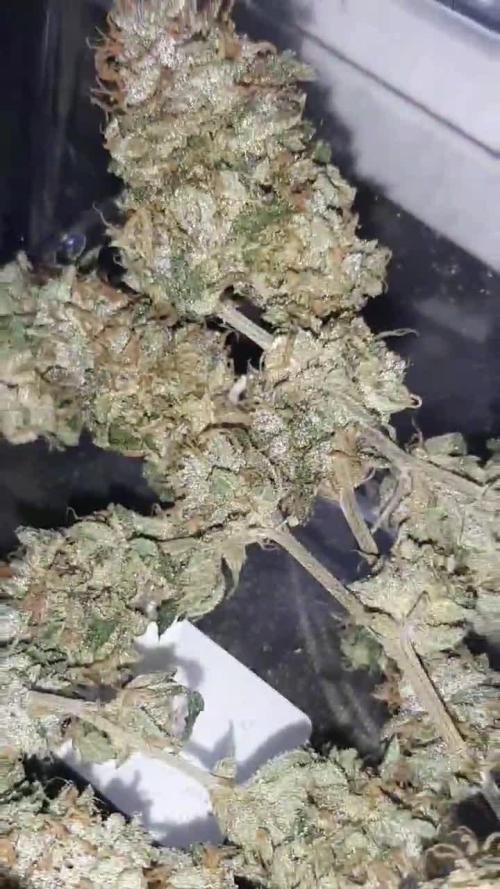
Without much to declare, organic runoff from the pots was at 200ppm, no nutrients were added in the last week, I increased air circulation, and harvested these plants on day 63 of flowering. I feel that if I wanted I could have left them longer, but one bud from one plant got infected with spider mites and I preferred to harvest everything to avoid infecting the others.

Likes
19
Share


@Comfrey
Follow
Nice week. Tropicana got healthy stuff in the last days.
On day 29 I gave her a 1:10 homemade plant manure fertilization with comfrey and nettle which takes about two weeks to see a reaction. Three days later she got her next head fertilization to protect her with field horsetree extract and a cosmic sunstorm fertilization 😉. Smelling a bit but works good with fruit trees or veggies which are sensitive for mold and killer insects. Got to bring some 🐞cause I watched some lice while sucking Tropicana juice. 🤭😅
Northern lights night was nice to watch.
Sun is shining and the Temperature during the days is up to 25 degrees.
Day 34: Tropicana slept outside for the first time. The temperature at night is over 10 degrees now, soon even more.
Likes
8
Share


@Gardengobblin
Follow
Dernière semaine de flush . 21 jour total de flush . Les couleur on encore modifier elle est juste trop belle pour les yeux . Bien givré et bien compact ces fou comme j'ai hâte de goûté
Processing
Likes
26
Share


@AsNoriu
Follow
Day 50. Girls still on water diet, one more watering, or maybe even two more left. In video tried to highlight, most N hit plants, others are more than fine, thinking to throw out all who still in veg or didn't made through canopy, its still jungle at mines ...
Nothing special, supercroped plant recovered well, think i have two new objects for HST ;)))) they fly, but stretch patern that they got from to high lights is repeated even when they reached optimal height, mistakes are bad and have long lasting consequences...
One third of flower is done i guess, only couple plants will be bigger than an ounce, but i think i have like 40 of them ;)))))))
Next time i count !
Day 54. Girls are very dry, some leaves still curled now from that, not only excess of Nitrogen...
My night shifts don't leave me time, whenever i am back - they sleep... 12 hours shift, bike, train ... no time left at all, but ..
Today they got still water , but i added 2ml of silica acid to it, ph after all - 6.6.
Thinking to defoliate them sooner or later, maybe even today ...
Next watering full feed or maybe not, if i rip all that leaves away, still valuating plants, would do it last week, but had no time ...
Likes
70
Share


@Tazard
Follow
Week 8 trimmed her pretty good to open her up. I spread branches to maximize their exposure to the hps. She has responded very well. The light burns seem to all be on the fans so they are doing their job and cooling off her flowers. Thanks again for looking!

Likes
4
Share

@Ninjabuds
Follow
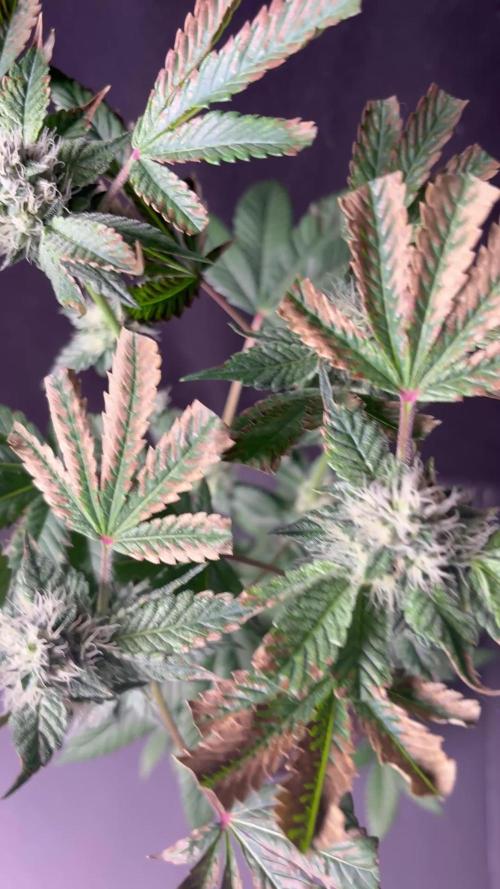
The leaves got a little burnt when experimenting with nutrients a little sad ugh

Likes
10
Share


@Fader1
Follow
On day 32, 2 of 3 kicked to flowering...the one with parasites issues from week 1,
still looks healthy and is almost as big as the others.

Likes
Comments
Share

@Ribemarti
Follow
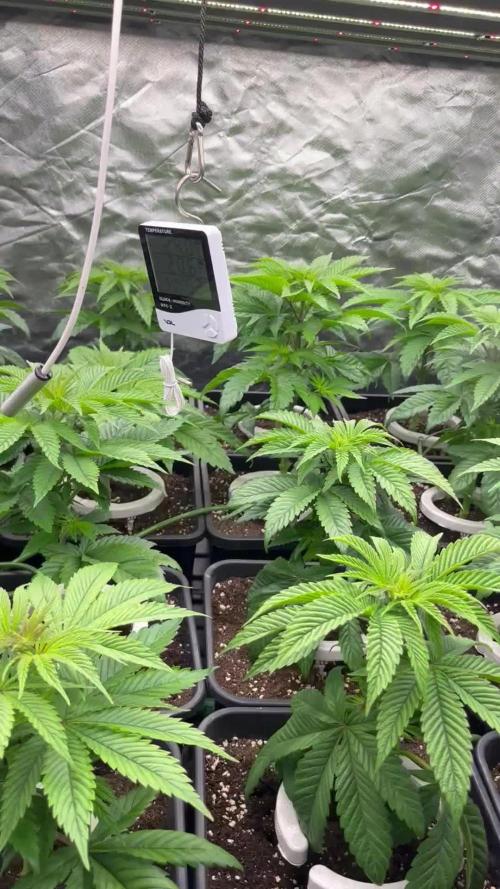
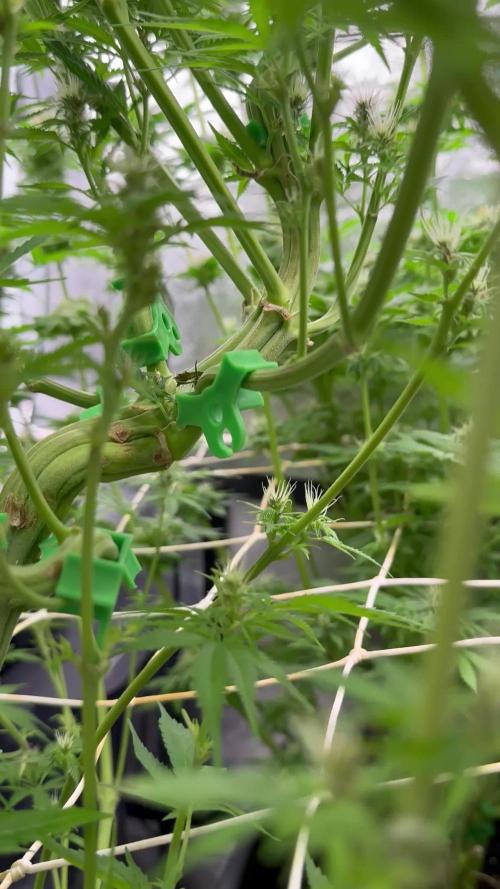
Las plantas han sido podadas y regadas ya con todos los abonos de crecimiento, van muy deprisa estas bubblegum gelato, muchas plantas ya tienen las hojas de color moradito, la E.C no pasa de 1000, ph 6,2 y temperatura de riego entre 21/23 grados es muy inportante esto ahora en invierno, proxima semana pasaremos a floración



Likes
30
Share


@SCHurricane
Follow
Day 105 - Week 15 has arrived. We are getting close to harvest. So far everything looks spectacular and the colas are getting fatter. I will provide full nutrition for another week and then start flushing.


Likes
30
Share


@Grower_Of_Persia
Follow
week intel:
we are going through slowly
stresses :
just a little E.C stress around 1.4 once a week
feeding:
i feed them 3 times this week with this order :
day 1 : i feed them heavy with silicate +base nutrients(calcium & micros + Bloom) about 700 ppm - 1.4 e.c to cause a little stress.
day 3 : i feed them low dose of Feeding Booster around 327 ppm - 0.64 e.c to let them recover a little but not fully recover still a little stress will caused.
day 5 : i feed them with low dose of Top-Max + B-52 around 255 ppm - 0.5 e.c to let them recover the stresses to get ready for another stress next week.
guide of the week :
know your plant tolerance limit of E.C stress once you saw the very very little yellowing on tips of leaves , that's the sign to don't go further , never reach that limit if you want a high quality buds, in my case tolerance is 1.4 and i'll reach to that level only once a week to cause precision stress , love your plants and have a happy growing!
Likes
5
Share


@noobiii
Follow
So far so good. Today, on 23/8, I fed her with Biobizz Grow for the first time. I think she's been growing at a decent pace even without any fertilizers, so, in order to not risk nute burn, I used a smaller dose than what BioBizz recommends.
27/8 The newer leaves seem as if they are curling up a little bit. Might be because the light is very low. So, I have raised the light a little bit. Let's see how she responds.
put on new lights that are more suitable for the veg phase.
-------------------
28/8 So I posted a question regarding a Spot that appeared on one of the leaves. By mistake I selected an answer that might not be adequate to my situation. GrowDiaries does not let you change the selected answer so I am copy-pasting the correct answer here. Bostongirl17 was right because I did spray some Neem Oil on the plant because there were mosquitoes in my room and i even saw a little spider. So it could be that a bigger droplet fell on the leaf and caused that blemish/spot.
Bostongirl17: If it’s growing with the leaf- and not at a faster rate. It’s probably just a blemish. Is it possible you splashed them with your nutrients during feeding? 🌱
----------------------