


Likes
Comments
Share


Likes
6
Share


@eldruida_lamota
Follow
Que pasa familia, vamos con la séptima semana de floración de estas Papaya sherbet feminizadas de fastbuds.
Vamos al lío, de las 3 plantas, me quede con 2 por espacio, siempre pongo alguna semilla de más por si no abriese alguna por no perder ese hueco del indoor.
También se trasplantaron a su maceta definitiva, en este caso de 7 litros, que el mismo trasplante provocó un shock, que también fue solucionado inmediatamente.
El ph se controla en 6.2 , la temperatura la tenemos entre 20/22 grados y la humedad ronda el 50%.
Las flores empezaron a formarse y progresan a buen ritmo.
Hasta aquí todo, Buenos humos 💨💨💨

Likes
9
Share


@Atom_x_Andromeda
Follow
Sprout’n Fast everyday 4th-5th node started already both plants phenos short n stocky really like these genes might make some seeds


Likes
10
Share


@Froggman
Follow
I’m still not sure about the FIM job on the LSD, and the purple haze is looking a bit runtish, but we’ll see how they go. I cut some leaves on the PH today to give the bud sites beneath them more light. All in all, they are doing well I think.

Likes
69
Share

@wolfvb
Follow
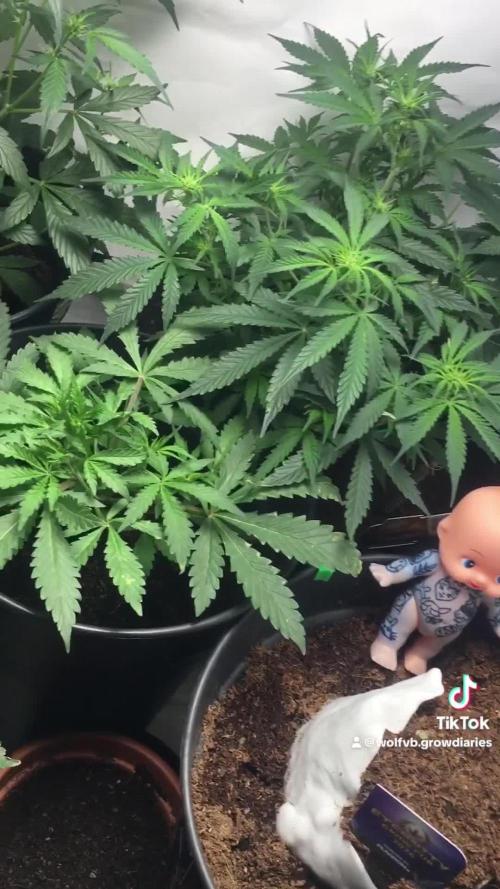
Week 5 baby! What a smooth ride this has been - these ladies are absolutely flying through veg. Gave them some cooler water today and they're vibing with it 💚 Still keeping nutrients minimal, just 1-2x weekly when they ask for it. Less is more with these girls!


Likes
32
Share


@LapsekiliTayfur
Follow
150 w dob led yanıyor daha,Kızlardan biri özürlü doğmuştu genede bunu atmak istemedim ama 1 tane yedeklerden suya attım videoda onuda aldığımı görüyorsunuz


Likes
5
Share

@Bread_n_Buds
Follow
Merry Christmas and happy holidays to everyone, and above all, a fantastic new year of growth with monsters, plants, unicorns, and all the magical beings we love.
** This week, mostly just grow tent photos, so you don't miss any updates over the holidays.
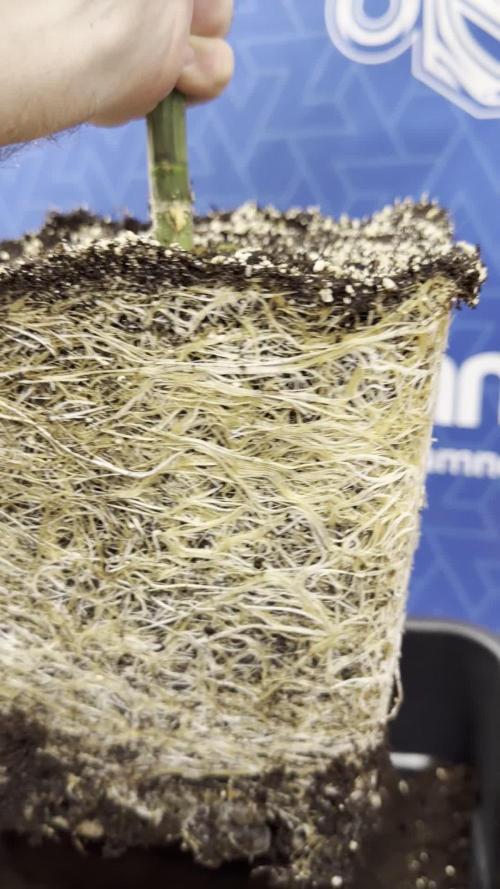
Our Tropicana Cookies #2 was transplanted from 6.5 to 20 liters into a larger pot just after I finished taking the photos, and she's already enjoying it. She was starting to feel a bit cramped, the vegetative stage is producing a lot of roots, and I could see her wanting a new home, so this time, the photoperiod-trained plants will all be in 20-liter or 15-liter Zamnesia pots.
Selected techniques - I was thinking of topping this plant repeatedly with a mainfold of 16 branches, but I think I'd like to get to 32, perhaps by trimming off any that are at risk of remaining low.
We're 100% organic and 1000% Plagron, as always.
We've chosen the recently launched Plagron Bio LightMix soil, which will allow us to get off to a smoother and more reliable start, without the sudden changes that liquid fertilizers can cause. A week is more than enough, so don't overdo it.
We're in the early stages of the vegetative stage, but we're well equipped with fertilizers and additives. We've added:
- Power Roots 1 ml/l
- Pure Zym 1 ml/l
- Silic Rock 1 ml/l
- CalMag Pro 1 ml/l
- Sugar Royal 1 ml/l
- Alga Grow 3 ml/l (Let's go easier on the topping)
Foliar spray only once a week
- Vita Race 5 ml/l
Choose your preferred style and calculate your results on the website:
www.plagron.com
Our new 720W Spider King lamp from Vanguard Hydroponics is still on its lowest setting. Visit the new Growshop area on the Zamnesia website:
Z - https://www.zamnesia.io/en/531-growshop
Our Tropicana Cookies is now in great shape, give it a try!
Z - https://www.zamnesia.io/en/10921-zamnesia-tropicana-cookies-semi.html
Z - The award-winning Girl Scout Cookies is a cannabis strain that lends itself very well to breeding projects. That's why we boldly experimented by combining its genetics with a fruity Tangie. The result is Tropicana Cookies, a fast and potent hybrid with 22% THC. This strain is highly productive, and its buds are not only rich in sweet and spicy terpenes but also covered in a layer of sticky trichomes (which facilitate the extraction of high-potency concentrates). Tropicana Cookies' genetic makeup is 60% sativa and 40% indica, a blend that produces a balanced and euphoric effect.
Although easy to grow both indoors and outdoors, Tropicana Cookies thrives outdoors in warm climates. If you have enough space and good sunlight, the plants can reach heights of 180 cm. Wait until mid-October and, in optimal conditions, you can harvest a whopping 700 g/plant. A result well worth the effort. This strain also impresses indoors, reaching heights of 150 cm and producing 500 g/m². Tropicana Cookies also stands out for its rapid flowering. After just 7-8 weeks of indoor flowering, it will be ready for harvest.
You know it, but I recommend it: here you can find so many beautiful things, essentially "the best that nature has to offer."
Z - www.zamnesia.com
Music //
www.radionula.com
+ Feng Shui Music
+ 432 Hz Frequencies


Likes
4
Share


@Mexicanasseeds
Follow
FLORACIÓN (SEMANA 4 — DÍA 31)
Proyecto: Evaluación fenotípica en planta madre multiinjertada (9 cultivares sobre patrón Jarilla Sinaloa).
Seguimiento: Se evalúa la progresión del desarrollo floral, el vigor apical, la arquitectura del dosel y el estado general del follaje, manteniendo el seguimiento de la estabilidad de los injertos y los parámetros de fertirrigación establecidos.
Diferenciación fenotípica: Conforme avanzan las semanas de floración, las diferencias morfológicas entre los cultivares se hacen cada vez más evidentes, reflejándose en la arquitectura de las ramas, la estructura de las inflorescencias y los patrones de desarrollo particulares de cada genética.
Estado: Semana 4 en seguimiento, con énfasis en la evolución floral, la expresión fenotípica y la estabilidad fisiológica de la planta madre.
Likes
151
Share


@PEAKYPLANTERS
Follow
Welcome back to all, brother gardeners!
WE WANTED TO CELEBRATE WITH YOU
OUR 3 YEARS OF AGRICULTURE ON THE PLATFORM.
GREETINGS TO THE FRIENDS OF @GROWDIARIES WHO MADE THIS POSSIBLE!
My sweet biscuits grow beautifully and today we added a containment net as their stems seem to stretch too much under the light
Best regards
LA REINA PEAKYPLANTERS
Likes
16
Share


@nurari
Follow
Неделя прошла хорошо. Одно не удачное растение думаю срублю в середине недели, очень мелкие бутоны но зато с фиолетовым оттенком. Не могу сказать что сорт стабильный так как в одинаковых условиях два растения показывают не лучший результат.
В целом думаю подержу еще 10 дней и буду собирать урожай.
Самое не удачное растение перевел на воду...
Likes
74
Share


@Mr_Maes
Follow
This week we should really see these colas blow up and start stacking really strong. The mixer of 7 hours of sun and 17 hours under my LEDs has really helped my girls grow strong. Nothing compares to good old Mother Nature.


Likes
7
Share


@El_Bottanico
Follow
Hello everyone.
This week the plant took of. She's stretched quite a bit during the last days showing her sativa dominance, buds are building up nicely.
Day 28 I topdressed with humus and compost mixed with 7-10 grams of organic mineral npk 5-10-15 to give her some extra feeding to start flowering.
She's going thirsty every two days now so I alternated water and feeding with humus tea and molasses. Watering volume about 5-6 liters.
Only training this week has been removing two or three fan leaves which were occluding the lower buds. I've been very conservative with this plant because she's not too bushy and has some internodal distance, the air circulation between

Likes
54
Share


@wheedtobeus420
Follow
Coming into true week 7. The girls are really impressing me. The buds are stacking nicely. The bloody skunk still hasn't flowered yet she look ready thou. The dark devil is really really showing off she's starting to get that purple color coming in. The leaves are starting to get crystals. The critical mass and ak is showing off and the quarter pounder is getting feathery. Started to feed sugar water to the girls in between feedings.

Likes
40
Share


@Cannabeast40
Follow
Things are still on point with this lady🤗💯💚
Stretch is about to end, lets gooo😎

Processing
Likes
10
Share


@btcywtsitw
Follow
So I definitely fucked up this week and missed some crucial water times. I passively knew in the back of my mind to but I was just having busy and stressful days.
Likes
17
Share


@Ammazzaporri
Follow
As you can see we are close to the harvest, we are wondering if is better to do first the critical and then the rest or if we better take off all the flowers togheter maybe over keeping the critical

Likes
9
Share


@Grower2021253
Follow
The pineapple auto flower was germinated at the same time as the blueberry. It took some time to catch up, I'm not sure what I did wrong but it's just now starting to show signs of future success. I had a couple other auto strains that all failed to sprout due to my negligence. Update on those, my last seeds seem to have taken when I opten to put them in my outdoor hydro setup for germination. The conditions must be better with the uv from the sun preventing over dampening from being a molds paradise. I don't have the time to watch these all day so this was my best shot.
I noticed some yellowing. Turns out my ph was off because I never calibrated my ph sensor. Fixed everything 10-Jul, hopefully she comes back to vitality soon or the yellow is just light green from the new leaves.. I diluted the nutrient solution down today but only to 1000 from being up to 1200. If nothing changes in a few days I will replace half the current reservoir supply with new ph adjusted water. I don't dechlorinate with a filter but I bubble the water for a day and hit it with uv just for good measure before adding new water.
Update, after researching, it appears this is iron deficiency. Hopefully correcting the ph is enough to prevent the yellowing from continuing. Fingers crossed. Else I need a supplement.
Update July 11, after calibrating my ph monitor and getting back in acceptable range yesterday [I have been shooting for 6.0 or just below] the leaves are becoming more dark green in color and the yellowish color is dissipating. You can see some of the lower leaves have some sort of burn. I am not sure if it is heat damage or caused by ph imbalance but I don't see this on the newer growth.

Likes
6
Share


@Rockymountainhigh
Follow
Probably a week to two weeks ahead of all of my photoperiod plants. Not producing resin yet. Growing big, I’m expecting about 3-4oz from this girl.


