


Likes
Comments
Share

@Northern_Ent
Follow
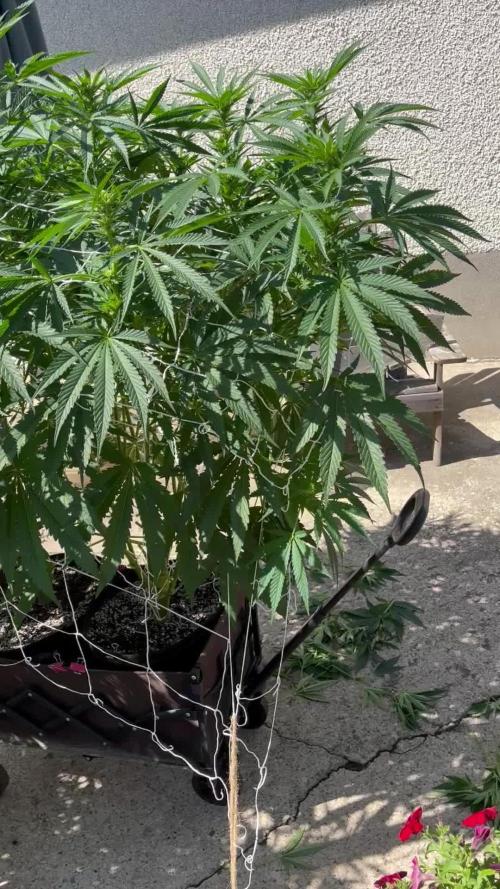
Aug 9: Mimosa Shot is doing fine. She was slower starting than her wagon partner Sunday Punch EV, but she is liking the warmer weather.
Got UV led lights from AC Infinity going today. These are designed for indoor so I can only put them out on nice weather days. Did this last year and seems to work. The UV lights make Edmonton in the fall feel more like California in the summer, or at least that’s the idea. UV is critical for trichome production so it’s a good way to boost THC percentage.
Aug 14: rainy the last few days.
Mimosa Shot likes to be a bit warmer. It was slower getting going in the spring, and now it seems to be suffering from a P deficiency. Reddish petioles, and a blueish tint to the leaves. She has received Power Bloom and barley just like the other plants, but still seemed to be lacking something. Ed Rosenthal’s Grower’s Handbook says P deficiency can be due to cold weather. Decided to try and dissolve 0.5 tsp of Power Bloom in 1 L of warm water to use as a high P foliar spray. As always, used a bit of Dr. Bronner’s Peppermint Soap as a surfactant, and apple cider vinegar to adjust pH. Power Bloom mostly dissolved but with some undissolved. Unfortunately I don’t have a working TDS or EC meter. Not sure how strong it was so just sprayed a bit on the fan leaves.

Processing
Likes
5
Share


@ladyjane
Follow
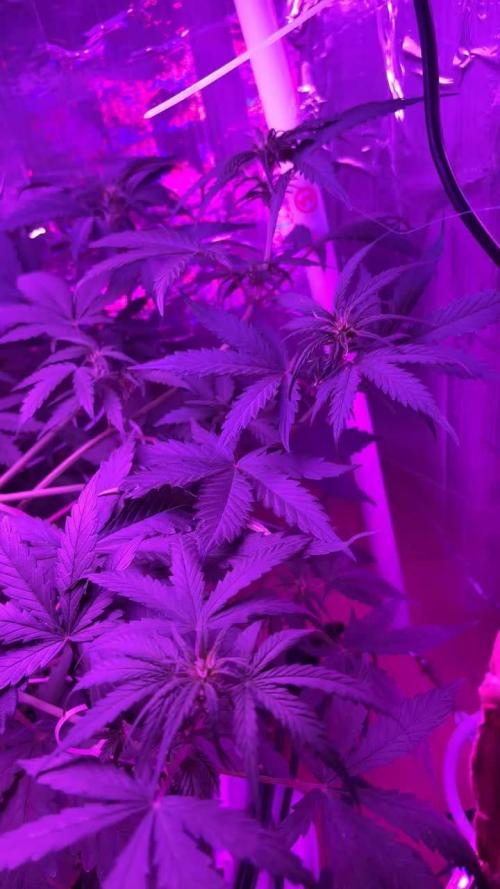
8/19 - Start of week two and so far everything is going smoothly. Just watering each day w/ RO water and organic black strap molasses.
8/21 - I think I may have two phenotypes going here. It seems I have two of the faster growing/taller pheno and one of the shorter, slower growing pheno.
8/24 - Doing a 24 hour brew of some compost tea for all my plants. I think these new seedlings will love it.
8/25 - Watered all with compost tea. They seem to be coming along nicely. No issues so far!



Likes
11
Share


@Inceptionist
Follow
I mean actually using this tent for other grow, so might as well rate it.
It's quite durable and like the shape and color of it but I like this tent less with every grow.
Doesn't has the best placement of air vents and therefore steals quite a bit of space which is supposed to be for your plants because it develops too much negative pressure.
The three squared "windows" at the bottem aren't really usable because too much light will come through. It's just gonna make your tent a hermie tent.

Likes
24
Share

@Suemchen
Follow
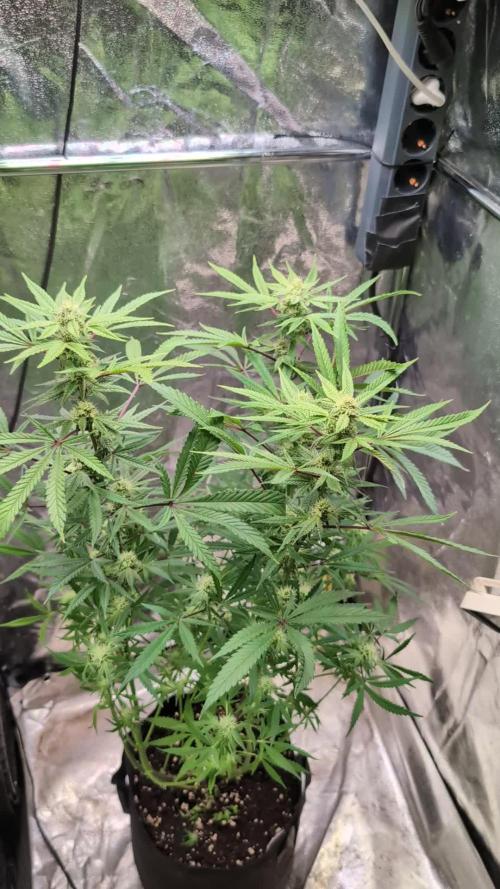
Sanlight EVO 3-60 at 80%
Day 99: looking good and watered again🌊. Watered with rain water and 1ml/l Powerzyme, 2 ml/l Hesi Boost, 1 ml/l Cal Mag, 1 ml/l Alg a mic, 1 ml/l root Juice, 0.5 ml/l Bloom Complex and 1 ml/l Green Sensation. EC at 1.8 and a pH of 6.4 .
Day 101: looking good 🤗 watered with out supplements 👌🏻 Just rain water 👍🏻
Day 102: watered again🌊. Watered with rain water and 1ml/l Powerzyme, 2 ml/l Hesi Boost, 1 ml/l Cal Mag, 1 ml/l Alg a mic, 1 ml/l root Juice, 1.5 ml/l Bloom Complex and 1 ml/l Green Sensation. EC at 1.8 and a pH of 6.4
Day 104: watered with out supplements 👌🏻 Just rain water 👍🏻 Defoliated a little and Lollipoped her to her final Form.🤗
Likes
3
Share


@bigsmoke42069
Follow
Week 5 of flower 9/6/24
After neglecting to check runoff EC, the reading was 3 and PH 4.7, it's crazy that the plant did not show any signs of damage besides one branch.
After flushing the growing medium with RO water + FloraKleen + H2O2 (PH 6.5), the runoff PH was still to high.
The problem persisted after watering with 50% dilution nutrient solution and still getting low PH readings and high EC.
The solution was to put something underneath the fabric pot, to create a gap for the runoff water to drain freely from the bottom part.
Before, the fabric pot was sitting on the plate and the runoff was draining from 2 little holes in the middle to the drain compartment.
Right after creating the gap and watering, all the readings were corrected.
Fortunately, all salt build up got washed away, and the plant showed no more problems. :)
On day 26 days of flower, the nutrient schedule was changed to fit the fifth week of flower.
Note to self: check PH and EC every 3 waterings.

Likes
4
Share

@GERGrowDesigns
Follow
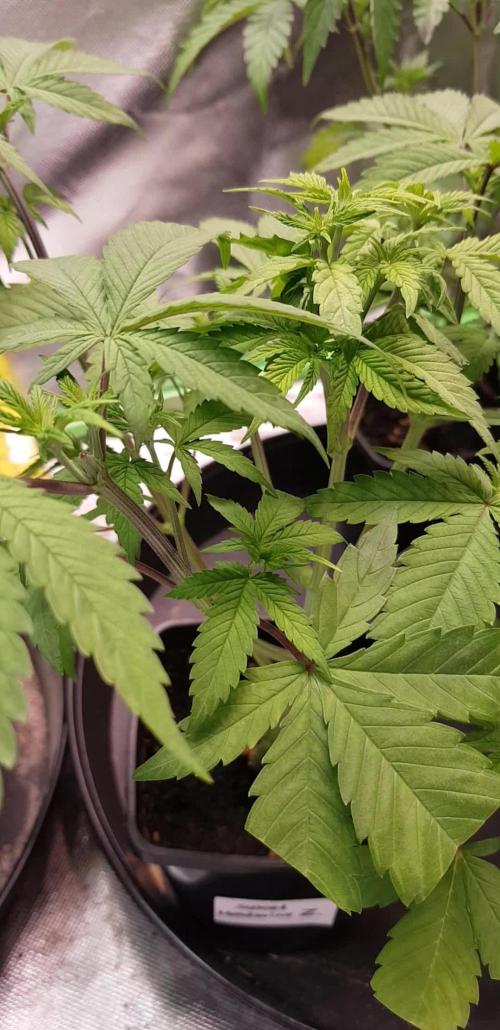
Welcome to Veg Week 4 of Sweet Seeds Sweet Mandarine Skittlez F1
I'm excited to share my grow journey with you from my
Sweet Seeds Project . It's going to be an incredible ride, full of learning, growing, and connecting with fellow growers from all around the world!
For this Project , I’ve chosen the Feminized Photo strain Sweet Mandarine Skittlez F1 :
Here’s what I’m working with:
• 🌱 Tent: 120x60x80
• 🧑🌾 Breeder Company: Sweet Seeds
• 💧 Humidity Range: 60
• ⏳ Flowering Time: 7weeks
• Strain Info: 19-24%THC
• 🌡️ Temperature: 26
• 🍵 Pot Size: 0.5l
• Nutrient Brand: Narcos
• ⚡ Lights : 600W x 2
A huge thank you to Sweet Seeds for allowing me to try my Best with this amazing collection from Photo Strains they managed to Sponsore . Big thanks for supporting the grower community worldwide! Your genetics and passion speak for themselves!
I would truly appreciate every bit of feedback, help, questions, or discussions – and of course, your likes and interactions mean the world to me as I try to stand out in this exciting competition!
Let’s grow together – and don’t forget to stop by again to see the latest updates!
Happy growing!
Stay lifted and stay curious!
Peace & Buds!

Likes
27
Share


@MrJones
Follow
OSS Cheese XXL
🔹⊱╮🔹╰⊰🔹 GROW Started 03.10.24 INFORMATION 🔹╰⊰´🔹⊱╮🔹
🌞Environment - Maintaining 80F and 65%Humidity
🌾Training - These ladies are Pruned and Defoliated and ready for flower.
⚱️2-Gallon 📊6.2 PH
💧 Feeding - Using Horti Grow 8-11-21, Bloom 5-15-26, Late Bloom 0-24-26, Cal 12-0-0
🌞Medic Grow Smart 8 760 Watts
🕷️ IPM - CannControl from Mammoth and Mosquito Bits as needed
🔹⊱╮🔹╰⊰🔹 GROW Started 03.10.24 INFORMATION 🔹╰⊰´🔹⊱╮🔹
🌞Environment - Maintaining 80F and 65%Humidity
🌾Training - The girls are recovering from last week's Pruning and Defoliation,
⚱️2-Gallon 📊6.2 PH
💧 Feeding - Using Horti Bloom and Horti Cal 12-0-0
🌞Medic Grow Smart 8 760 Watts
🕷️ IPM - CannControl from Mammoth and Mosquito Bits as needed
🔹⊱╮🔹╰⊰🔹 PLANT UPDATES 🔹╰⊰´🔹⊱╮🔹
📝 Notes - On 🗓️05.11.24, This week, we are on Auto-Pilot and just Fertigating as needed; the ladies are stacking up nicely, and the leaves have grown back not sure if it is the genetics or the new nutrients; I would like to see less and will evaluate if more defoliation will be needed.
📝Fertigation injects fertilizers into an irrigation system to supply dissolved nutrients to crops.
🗓️05.11.24 Just feeding daily, sometimes twice; today, fed with Hort-Bloom @ 2.7 GRMS Per Gal and Horti-Cal @ 2.5 GRMS Per Gal.
🗓️05.12.24 Just feeding daily, sometimes twice; today, fed with Hort-Bloom @ 2.7 GRMS Per Gal and Horti-Cal @ 2.5 GRMS Per Gal.
🗓️05.13.24 Just feeding daily, sometimes twice; today, fed with Hort-Bloom @ 2.7 GRMS Per Gal and Horti-Cal @ 2.5 GRMS Per Gal.
🗓️05.14.24 Just feeding daily, sometimes twice; today, fed with Hort-Bloom @ 2.7 GRMS Per Gal and Horti-Cal @ 2.5 GRMS Per Gal.
🗓️05.15.24 Just feeding daily, sometimes twice; today, fed with Hort-Bloom @ 2.7 GRMS Per Gal and Horti-Cal @ 2.5 GRMS Per Gal.
🗓️05.16.24 Just feeding daily, sometimes twice; today, fed with Hort-Bloom @ 2.7 GRMS Per Gal and Horti-Cal @ 2.5 GRMS Per Gal.
🗓️05.17.24 Just feeding daily, sometimes twice; today, fed with Hort-Bloom @ 2.7 GRMS Per Gal and Horti-Cal @ 2.5 GRMS Per Gal.
╰⊰🔹╰⊰´🔹⊱╮🔹╰⊰🔹╰⊰🔹STRAIN INFORMATION🔹⊱╮🔹╰⊰🔹╰⊰🔹╰⊰🔹⊱╮
Cheese XXL cannabis seeds are a unique blend of Afghan Kush x Super Skunk, producing the most pungent dank weed. Cheese XXL is the third commercially available edition released by Original Sensible using and developing these Afghan and Skunk genetics. The first release of these genetics was their Skunk Afghani. The second improved version was Stinkin' Bishop, which had an enhanced and more potent THC content and was more intense in terms of smell. The third and improved release on a similar theme is this Cheese XXL, which has a similar THC content but an enhanced heavier yield. The smoke is incredible, with an outstanding flavor of pungent skunk and spicy, extra strong mature cheese created by the dominant terpene myrcene with its earthy solid scent accompanied by caryophyllene and pinene, which combine to create a peppery acrid cheesy odor. THC levels are exceptionally high in this Cheese strain, and the effect is well-balanced, developing mental and body relaxation with a remarkable alleviation of stress and depression.
The intense solid aroma starts early in the flowering period; if you're growing Cheese XXL indoors, you'll need plenty of ventilation to disperse these babies' stinky "road kill" aroma! Cheese XXL is a cheese strain suited to indoor setups and thrives outdoors well. These feminized marijuana seeds are incredibly resistant to mold and disease and produce a substantial harvest that professional and amateur growers can quickly achieve. These Cheese weed seeds are outstanding. Break open the buds ready for use, and you'll see why the stench will make your eyes water!
Cheese XXL from Original Sensible Seeds is a great choice to break into the commercial market of growing cannabis, so if you're looking to buy something special with extreme yield, potency, and flavor, Cheese XXL cannabis seeds are simply the best choice.

Likes
35
Share


@GreenHouseLab
Follow
This is the end for this girl, another few days based on trichome then complete darkness for 48 hrs. Such a beauty to grow. Last uploaded file is a video of her sitting in the dark, really shows how her dark coated buds.
Cheers and Happy Smokes 💨 💨
Likes
41
Share


@MadeInGermany
Follow
Flowering day 30
since time change
to 12 / 12 h
Hey guys :-)
Every day when I look into the tent, the sight and the smell are a dream 💚.
They are all developing very well.
There is no tip of the leaf that looks funny at the bottom or at the top 😃.
They were watered every 2 days with 1.3 l each (nutrients see table above).
They were all checked and checked for their health.
Stay healthy 💚🙏🏻
👇🏼👇🏼👇🏼👇🏼👇🏼👇🏼👇🏼👇🏼👇🏼👇🏼👇🏼👇🏼
You can buy this Nutrients at :
https://greenbuzzliquids.com/en/shop/
With the discount code: Made_in_Germany you get a discount of 15% on all products from an order value of 100 euros.
👇🏼👇🏼👇🏼👇🏼👇🏼👇🏼👇🏼👇🏼👇🏼👇🏼👇🏼👇🏼
You can buy this strain at :
https://www.exoticseed.eu/
Water 💧 💧💧
Osmosis water mixed with normal water (24 hours stale that the chlorine evaporates) to 0.2 EC. Add Cal / Mag to 0.4 Ec Ph with Organic Ph - to 5.8 - 6.5
MadeInGermany

Likes
18
Share


@thenotillwizard
Follow
The pheno 5 has started to throw out HAZEY smell in the tropical mix.
I can smell the slightly musky/cheezy/spicy scents of the haze.
I think this is a trait that I will have to consider throughout the selection, since that haziness is certainly something we want to have when experiencing the Liberty HAZE ;)


Likes
5
Share


@Ninjabuds
Follow
The Gas Tax x Obama Runtz plant is looking really good. It's got these super pretty leaves and it's stretched a whole bunch. I think it might be my favorite plant in the tent.
The new year is off to a frosty start! We've had snow falling for what feels like forever. My kids are loving it, of course. They're building forts, having snowball fights, and turning everything into a winter wonderland. It's been a lot of fun to watch them enjoy it.
All this snow is really making me think about how quickly time flies. It feels like just yesterday we were celebrating the holidays, and now here we are knee-deep in winter. I'm looking forward to warmer weather, but for now, I'm enjoying the quiet beauty of fresh snow.
Likes
3
Share


Likes
54
Share


@Rasta_Faraev
Follow
26.09.21. У Халка очередная неделя прошла отлично, начал растягивать боковые ветви, в дальнейшем будет Top макцшки или Fim подрезка, не решил. На выходе показывает небольшое завышение ppm и снижение ph, что говорит о том, что девчонка перевела и надо бы полить водичкой с минимальным количеством удобрения. Всем удачи, жду в гости, пишите комментарии друзья, лайк это здорово, но мнение человека неоценимо👍🏿👍🏿👍🏿🌱
28.09.21 немного потренировал Халкушу, главный стебель как из железа, толстый и не тянется, через пару дней топну макушку.
30.09.21 мне очень нравится развитие Халка, потенциал у растения очень серьёзный, о чем говорит размеры листьев и толщина ствола.


Likes
1
Share


@GreenEldritchGardens
Follow
Let's see if she is worth the wait in the line of 2h + in Mary Jane Berlin 2026! This was a free sample and I took the line in the worst moment possible.
This strain by the description has everything I enjoy, cream and gas.

Likes
4
Share


@Minuteman_Organics
Follow
We have a full recovery from fungal infection. No signs of mites. All good over here!
Moving to the outdoor location this weekend. Pics to update as progress happens. 55gal of soil in 65gal pot with cover crop and mulch with blumat irrigation.


Likes
21
Share


@Eponymus29
Follow
Well the girls are in middle of 3rd week, mostly healthy leaves except for one showing a little light burning other than that they seem to be doing great, just one weird thing they get a little down every night nut also they are up every morning... is that something proper of this plants? Or should I be worried?
