The Grow Awards 2026 🏆 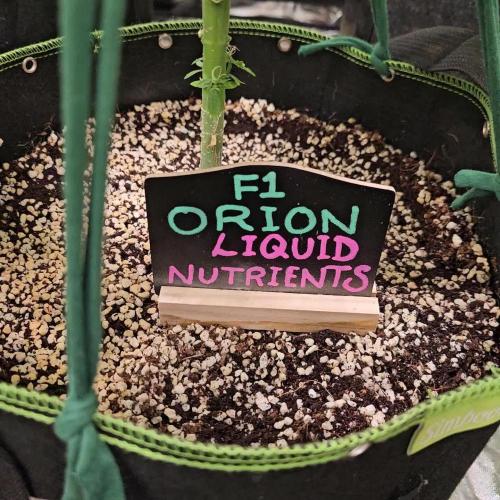






Likes
Comments
Share
@Kirsten
Follow
Orion liquid nutrients.
We are very close to being done, just checking on the trichomes.
The buds look very dense but small.
9.8.25:
I watered with 2ltrs of dechlorinated water PH'd to 6.5 with;
💜 1ml Trace
PH: 6.5
PPM: 381
13.8.25:
I watered with 2ltrs of dechlorinated water PH'd to 6.0 with;
💜 1/2 TSP Mega Crop Part A
PH: 6.0
PPM: 970
Thanks for checking out my diary! 😊💚✌️🙏🍃

Likes
45
Share
@Ultraviolet
Follow
2nd net is up. Early bud formations are promising. holding up to the extremes pretty well, some leaves taking minor damage, but overall, she is holding up, gave her 1 night at 50F see how she would react, stressful. Not advised as it messes with her metabolism, but I want to see if it triggers any anthocyanin response. Love to see her purp up but no signs yet.
My homework.
Rubisco regeneration is intrinsically linked to nitrogen supply because Rubisco is a major sink for nitrogen in plants, typically accounting for 15% to over 25% of total leaf nitrogen. The regeneration phase itself consumes nitrogen through the synthesis of the Rubisco enzyme and associated proteins (like Rubisco activase), and overall nitrogen status heavily influences the efficiency of RuBP regeneration.Structural Component: Nitrogen is an essential building block for all proteins, and the sheer abundance of the Rubisco protein makes it the single largest storage of nitrogen in the leaf.
Synthesis and Activity: Adequate nitrogen supply is crucial for the synthesis and maintenance of sufficient Rubisco enzyme and Rubisco activase (Rca), the regulatory protein responsible for maintaining Rubisco's active state. Nitrogen deficiency leads to a decrease in the content and activity of both Rubisco and Rca, which in turn limits the maximum carboxylation rate, Vmax, and the rate of RuBP regeneration Jmax, thus reducing overall photosynthetic capacity.
Nitrogen Storage and Remobilization: Rubisco can act as a temporary nitrogen storage protein, which is degraded to remobilize nitrogen to other growing parts of the plant, especially under conditions of nitrogen deficiency or senescence.
Nitrogen Use Efficiency (NUE): The allocation of nitrogen to Rubisco is a key determinant of a plant's photosynthetic nitrogen use efficiency (PNUE). In high-nitrogen conditions, plants may accumulate a surplus of Rubisco, which may not be fully activated, leading to a lower PNUE. Optimizing the amount and activity of Rubisco relative to nitrogen availability is a target for improving crop NUE.
Photorespiration and Nitrogen Metabolism: Nitrogen metabolism is also linked to the photorespiration pathway (which competes with carboxylation at the Rubisco active site), particularly in the reassimilation of ammonia released during the process.
To increase RuBisCO regeneration, which refers to the process of forming the CO2 acceptor molecule Ribulose-1,5-bisphosphate (RuBP) during photosynthesis, the primary methods involve optimizing the levels and activity of Rubisco activase (Rca) and enhancing the performance of other Calvin-Benson-Bassham (CBB) cycle enzymes.
Biochemical and Environmental Approaches:
Optimize Rubisco Activase (Rca) activity: Rca is a crucial chaperone protein that removes inhibitory sugar phosphates, such as CA1P (2-carboxy-D-arabinitol 1-phosphate), from the Rubisco active site, thus maintaining its catalytic competence.
•Ensure optimal light conditions: Rca is light-activated via the chloroplast's redox status. Adequate light intensity ensures Rca can effectively maintain Rubisco in its active, carbamylated state.
•Maintain optimal temperature: Rca is highly temperature-sensitive and can become unstable at moderately high temperatures (e.g., above 35°C/95F° in many C3 plants), which decreases its ability to activate Rubisco. Maintaining temperatures within the optimal range for a specific plant species is important.
•Optimize Mg2+ concentration: Mg2+ is a key cofactor for both Rubisco carbamylation and Rca activity. In the light, Mg2+ concentration in the chloroplast stroma increases, promoting activation.
•Manage ATP/ADP ratio: Rca activity depends on ATP hydrolysis and is inhibited by ADP. Conditions that maintain a high ATP/ADP ratio in the chloroplast stroma favor Rca activity.
Enhance Calvin-Benson-Bassham (CBB) cycle enzyme activity: The overall rate of RuBP regeneration can be limited by other enzymes in the cycle.
•Increase SBPase activity: Sedoheptulose-1,7-bisphosphatase (SBPase) is a key regulatory enzyme in the regeneration pathway, and increasing its activity can enhance RuBP regeneration and overall photosynthesis.
•Optimize other enzymes: Overexpression of other CBB cycle enzymes such as fructose-1,6-bisphosphate aldolase (FBA) and triose phosphate isomerase (TPI) can also help to balance the metabolic flux and improve RuBP regeneration capacity.
Magnesium ions, Mg2+, are specifically required for Rubisco activation because the cation plays a critical structural and chemical role in forming the active site: A specific lysine residue in the active site must be carbamylated by a CO2 molecule to activate the enzyme. The resulting negatively charged carbamyl group then facilitates the binding of the positively charged Mg2+ion. While other divalent metal ions like Mn2+ can bind to Rubisco, they alter the enzyme's substrate specificity and lead to dramatically lower activity or a higher rate of the non-productive oxygenation reaction compared to Mg2+, making them biologically unfavorable in the context of efficient carbon fixation. The concentration of Mg2+ in the chloroplast stroma naturally increases in the light due to ion potential balancing during ATP synthesis, providing a physiological mechanism to ensure the enzyme is activated when photosynthesis is possible. At the center of the porphyrin ring, nestled within its nitrogen atoms, is a Magnesium ion (Mg2+). This magnesium ion is crucial for the function of chlorophyll, and without it, the pigment cannot effectively capture and transfer light energy.
Mg acts as a cofactor: Mg2+ binds to Rubisco after an activator CO2 molecule, forming a catalytically competent complex (Enzyme-CO2-Mg2+). High light + CO2) increases demand: Under high light (60 DLI is a very high intensity, potentially saturating) and high CO2, the plant's capacity for photosynthesis is high, and thus the demand for activated Rubisco and the necessary Mg2+ cofactor increases. Mg deficiency becomes limiting: If Mg2+ is deficient under these conditions, the higher levels of Rubisco and Rubisco activase produced cannot be fully activated, leading to lower photosynthetic rates and potential photo-oxidative damage.
Optimal range: Studies show that adequate Mg2+ application can enhance Rubisco activation and stabilize net photosynthetic rates under stress conditions, but the required concentration is specific to the experimental setup.
Monitoring is key: The most effective approach in a controlled environment is to monitor the plant's physiological responses e.g., leaf Mg2+ concentration, photosynthetic rate, Rubisco activation state, and adjust the nutrient solution/fertilizer to maintain adequate levels, rather than supplementing a fixed "extra" amount.
In practice, this means ensuring that Mg2+ is not a limiting factor in the plant's standard nutrient solution when pushing the limits with high light and CO2.
Applying Mg2+ through foliar spray is beneficial to Rubisco regeneration, particularly in alleviating the negative effects of magnesium (Mg) deficiency and high-temperature stress (HTS). While Mg can be leached from soil, within the plant it is considered a mobile nutrient, particularly in the phloem. Foliar-applied Mg is quickly absorbed by the leaves and can be translocate to other plant parts, including new growth and sink organs.
Foliar application of: NATURES VERY OWN MgSO4 @ 15.0g L-1 in a spray bottle.
Foliar sprays are often recommended as a rapid rescue measure for existing deficiencies or as a supplement during critical growth stages, when demand for Mg is high. Application in the early morning or late evening can improve absorption and prevent leaf burn.
The starting point [of creativity] is curiosity: pondering why the default exists in the first place. We’re driven to question defaults when we experience vuja de, the opposite of déjà vu. Déjà vu occurs when we encounter something new, but it feels as if we’ve seen it before. Vuja de is the reverse—we face something familiar, but we see it with a fresh perspective that enables us to gain new insights into old problems. Come walk in the enchanted forest.
Likes
18
Share
@naturalmedicineman
Follow
Happy and healthy. Water only for the first three weeks.... I hope.
7/13- Plants are healthy and turning more vibrant as their roots get more established. Keeping with just plain RO water PH @ 5.8 for now. Will transplant remaining cups to 1gal pots in the AM.
7/15 -Still happy. Had their second good water. Limp in the AM and praying by noon. RO at 5.8.

Likes
12
Share
@Imperial_Weed
Follow
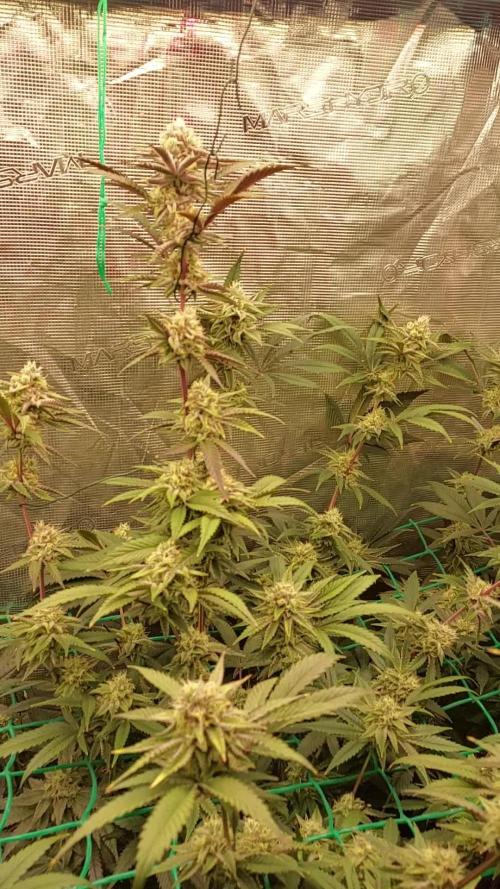
The babies 😍 have a beautiful look and colors, they seem quite filled with resin. Now the drying phase of 15 days begins after which I will complete the trimming and weigh it. By eye I can say that it will be about 100gr per plant



Likes
30
Share
@SkunkyDog
Follow
Hallo zusammen 🤙.
Sie wächst sehr schön und macht keine Probleme.
https://seedsmafia.com/de/


Likes
6
Share


Likes
27
Share
@Ganjagrandaddy
Follow
Hi Growmies
Another week of flowering behind us and 3 weeks to the finish post and fruity highs
They have all been productive in the flowering this week with plenty of nice fluffy pistils springing up daily now. They are also producing a very sweet smell when I open the tent too. A nice fruity terp indeed. They have been performing excellent from seed and with no concerns at all for their genetics, it is all about what the new additions to my feeding schedule can do. So far the results do seem to support the flower production claim with lots of fresh sites throughout the canopy, thankfully they have also not created wide spacing between the flower sets either so could hopefully become long chunky colas.
Using the viparspectra and it's great specs for just the 3 plants has also been a new thing for me to try instead of the crammed in 6 plants. No issues to report around bugs or deficiency still and with the dehumidifier on the case , hopefully no mould spores will show up either.
Until next time , be lucky and keep it green

Likes
9
Share
@GrowTerps420
Follow
for the first time I lollypoped after starting flower. lets see how it goes

Likes
Comments
Share
@DansHampf
Follow
20JUNE2025: Buds are forming well. Water them 1 liter every third day.
Likes
7
Share
@GreenQueenz420
Follow
Planted directly into soil using Roots Organic Formula 707. Fabric 5 gal pot will not be transplanting it’s in is final home. Favorite germination method is directly planting into soil and keeping soil moist.

Likes
22
Share
@bypado_farm
Follow
Day 43:
Watered each plant with 1L with nuts
1589 ppm, 3380 us/cm, 3.3 EC (purple punch and wedding cheesecake)
1563 ppm 3325 us/cm 3.3 EC (strawberry banana)
1476 ppm 3180 us/cm 3.1 EC (gorilla cookies)
I have 3 different feedings for the 10 plants
They look healthy
Day 45:
Watered each plant with 1L with nuts
1563 ppm, 3325 us/cm, 3.3 EC (purple punch, strawberry banana, wedding Cheesecake)
1286 ppm, 2765 us/cm, 2.7 EC
(gorilla cookies)
2 different feedings for the 10 plants
Day 47:
Watered each plant with 1L with nuts
1584 ppm, 3380 us/cm, 3.3 EC (purple punch, strawberry banana, wedding Cheesecake)
1481 ppm, 3180 us/cm, 3.1 EC
(gorilla cookies)
2 different feedings for the 10 plants

Likes
4
Share
@DmbTexasRanger
Follow
Good finish by cookies elephant trunk. I’m going to take on the elements and finish these outside.
I’m going to fill tents out as dry tents
Dr. Zymes as preventative and active pest control. No BT just 👁️ balled those worms


Likes
3
Share
@Joeycrack9
Follow
it wasnt a hard grow at all the organic nutes i have make it just that simple just add water and also i look for a sturdy genetic and roll with it but i can say the overall grow on all the strains in that area would have made it a real nice hues of different colors and just the 14 weeks i was on that journey it was nice and easy


Likes
6
Share
@Rockymountainhigh
Follow
Oh baby there she goes making resin. She is growing at 7000ft the sun is strong and windy. She is a beast and I hope she is going to turn red/purple.


Likes
4
Share
@oldschoolS2
Follow
Week 11 we done ..
Washing machine was fun to grow ...super easy ,always green no stress at all... both phenos really close same bud formation same smell .. pheno 1 more intense and smelly..
Pheno 1 =53gr... top weed!
Pheno 2 =57gr... also nice super cheesy!

