


Likes
Comments
Share

@Stonerapaisana
Follow
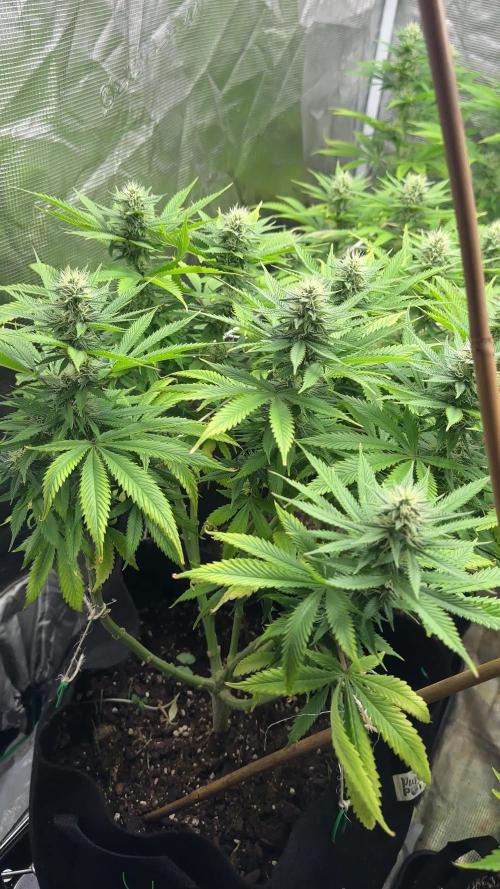
11/08/2025 - Tenho regado apenas com agua mineral com ph 6.2, para não saturar mais com nutrientes. Luz tá a 100%. Agora a ver a acontecer :D
14/08/2025 - Agua e só agua xD

Likes
22
Share

@GERGrowDesigns
Follow
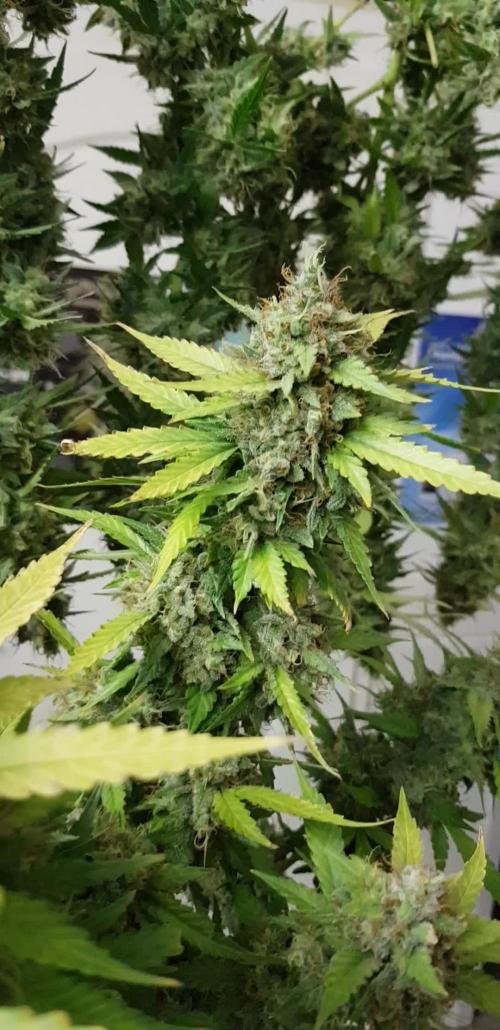
Welcome to Harvest in Flower Week 9-10 of Divine Seeds Auto Black Op1um
I'm excited to share my grow journey with you all as part of the Divine Seeds Autoflowering Competition 2025. It's going to be an incredible ride, full of learning, growing, and connecting with fellow growers from all around the world!
For this competition, I’ve chosen the Feminized Automatic strain: Auto Black Op1um
Here’s what I’m working with:
• 🌱 Tent: 120x60x80
• 🧑🌾 Breeder Company: Divine Seeds
• 💧 Humidity Range: 50
• ⏳ Flowering Time: 8W-10W
• Strain Info: 25%THC
• 🌡️ Temperature: 26
• 🍵 Pot Size: 0.5l
• Nutrient Brand: Narcos
• ⚡ Lights : 200W x 2
A huge thank you to Divine Seeds for allowing me to be a part of this amazing competition and Sponsoring the Strains. Big thanks for supporting the grower community worldwide! Your genetics and passion speak for themselves!
I would truly appreciate every bit of feedback, help, questions, or discussions – and of course, your likes and interactions mean the world to me as I try to stand out in this exciting competition!
Let’s grow together – and don’t forget to stop by again to see the latest updates!
Happy growing!
Stay lifted and stay curious!
Peace & Buds!

Likes
35
Share


@eldruida_lamota
Follow
Vamos familia que ya actualizamos la cosecha de estas Frosted Guava de Zamnesia.
Vaya flores que se han marcado repletas de tricomas, parecen escarcha y las flores se marcan aromas muy tropicales, la verdad que únicos.
Es una variedad bastante fácil de cultivar pero al tener un periodo de floración algo más largo, hay que estar pendiente de alimentarlas bien, gracias Agrobeta en mi sala es posible.
Temperaturas máximas en 24 y mínimas en 20 y una humedad estable en torno al 36%.
Las mantuve 10 semanas pero facilmente si se quedan 11 tampoco estaría mal, yo las vi bien maduras y ya tenía tricomas ambar así que les di matarile.
Os comento que tengo un descuento y para que compréis en la web de Zamnesia de un 20%, el código es ZAMMIGD2023
The discount 20% and the code is ZAMMIGD2023
https://www.zamnesia.com/
Agrobeta:
https://www.agrobeta.com/agrobetatiendaonline/36-abonos-canamo
Mars hydro:
Code discount: EL420
https://www.mars-hydro.com/
Espero que disfruteis este diario, buenos humos 💨💨💨

Likes
5
Share


@123Grow
Follow
Filling out the trellis net. Looks like another 2-3 weeks until I flip the ladies. Using SST’s, LABS and natural inputs for this grow. I have made some mistakes in the past using Organics, but have figured out HOW to use them for an entire grow. The vegetative state, I have never had a problem with. The transition into the first 3 weeks is when I have had the most issues. After a little research and testing, I finally have a basic blue print of how to feed plants in flower for 10-12 weeks now or shorter. Mark Bowell from Perfect Gardens on YouTube and Mr Canucks Grow from Canada are my largest information inputs. Final Thank you to Mr McGooz for keeping me in the know.
10-11: yes, some of the stalks are turning purple. This is not due to phosphorus, magnesium, or any deficiency. It is due to the light being too intense for the plants. I am at the max distance and running the light at 30% ( it’s a 600 watt 🤣🤣). Soooo yeah, that purple is going to stay for a bit. Purple with other leaf discoloration or senescence IS a problem, purple stems with NO leaf issues isn’t serious issue. Cant it be fixed? We are going to find out….Photosynthesis Plus will be on hand in the next 5-6 days. This permits the plant to USE more of the photons ( yes, I have carbon in my media). This should minimize the purple and allow me to UP THE WATTS 🗣️🗣️
10-14: spoke to my “guide” and we made the decision to go ahead and flower these ladies. We saw how much stretch there is to be had and realized we are currently filling the trellis by 75%. We are estimating the entire 4x4 area to be completely filled. I defoliated and pruned the smaller sites off the lower areas of the plant. Not quite lollipopping, just selectivity choosing sites to keep and bones that will get in the way.
For transition I am using a ratio of 1:1:1 on NPK’s to ease the flip. The ppm’s will be between 750-800. Once we reach early flower, we switch the NPK’s to 1:3:2 ( flower girl by Dr Earth OR Fish bone meal and langbenite). I switch each feeding between the two for 5-6 weeks. At week 7 we switch to 0:3:3 ( seabird guano and Langbeinite) at 500 ppm’s. Week 8 the same feed. Week 9 kelpseaweed/water Only ( these are 10 week cultivars). Thank you for taking the time to read.
10-16 😍😍😍 Plants are starting to show deficiencies!!! Yes, normally one freaks out 😂😂😂 The slight deficiency is a sign that I can go ahead and start: The Flowering Cycle. When using Organics, you have to use your eyes because nothing is specific. Meaning: you have to see when the amendments are running out to A: Top Dress B. Make compost teas. We are going the compost tea route for flower. I made a video showing exactly what I use. The ratio is 5-5-5 ( yes earlier we were going to use 2-2-2, but we found out there is no calcium or magnesium in the all purpose mix by Dr Earth…another reason to learn to read your plants).

Likes
12
Share


@HIAZ_urbanbudfarmer
Follow
These girls are getting close to harvest.
Calyx closed & swelling up, most of the pistills turned orange/brown & are starting to curl in. Waiting on delivery of a new 60× microscope to check the trichomes , buds are very frosty.
Have stopped feeding nutrients & have started flushing with plain ph'd water.
Then reduced watering to twice a day so there not taking in as much moisture before harvest. Probably starve them of water completely for a couple of days to bring out more moisture, & apparently THC.
A lot of smell about them. Very sticky!

Likes
37
Share


@Chunkmasta1
Follow
The cherry bomb has done well in expanding her growth after topping. I am having a ph problem again, and had to move the tent due to really cold weather. She is starting to show signs of nute burn. I have cleaned out the DWC bucket, and I am flusing her for a few days. I have put this plant through a lot of stress, and she continues to bounce back. I am very pleased with this plants Resilience.

Likes
Comments
Share

@all_about_420
Follow
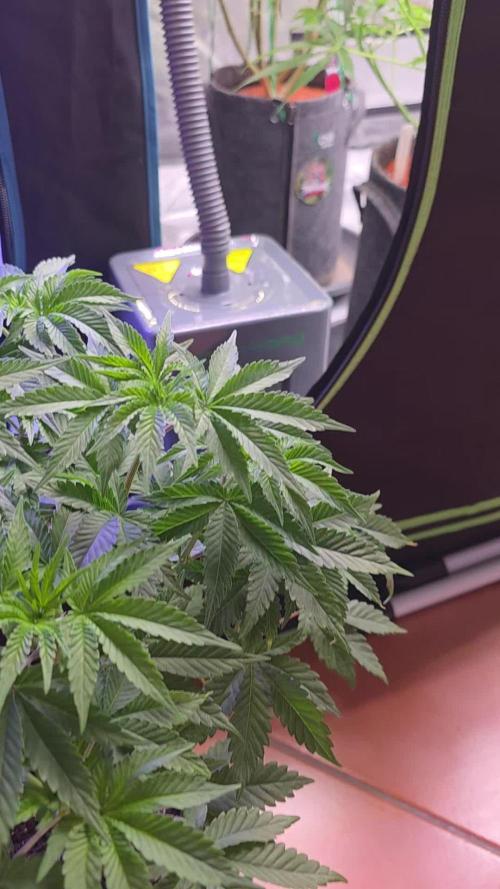
Die Booberry Cookies RBX strotzt in der sechsten Vegetationswoche nur so vor Vitalität und hat den einstigen Urlaubs-Schock vollständig hinter sich gelassen. Zu Beginn der Woche präsentierte sich die Pflanze bereits mit einer beachtlichen Blattmasse und ausgeprägten Seitentrieben, die durch das vorangegangene Training kraftvoll emporgeschossen sind. Der Stamm hat deutlich an Dicke zugenommen, und die Nährstoffaufnahme über das Advanced Nutrients Schema läuft weiterhin absolut reibungslos. Zur Mitte der Woche wurde die Schere erneut gezielt angesetzt: Das zweite Topping stand auf dem Programm. Durch das Kappen der neuen Haupttriebe wird die hormonelle Dominanz weiter aufgebrochen, um die Energie der Pflanze noch gleichmäßiger in die Breite zu verteilen. Die Struktur im 3-Liter-Stofftopf baut sich dadurch extrem buschig und homogen auf. Die Internodien bleiben kompakt, während die Verzweigung perfekt für die spätere produktive Fläche vorbereitet wird. Die Genetik reagiert hervorragend auf diese High-Stress-Maßnahme und zeigt keinerlei Ermüdungserscheinungen.

Likes
24
Share


@MrPott
Follow
Really surprised with how everyone turned out! Everyone is starting to flower but Kayla definitely got the lead in terms of pistils and bud sites. These ladies still need to be LST every other day. Looking forward to an early harvest!


Likes
16
Share


@DrLaggis
Follow
🌱 Day 50 - First Day of Week 8 🌱
Hello, Grow Friends!
My plant is doing well, and it’s amazing to see visible progress every few hours. 🌱✨ The buds are in full throttle, and I feel like the plant is now needing more water as the pots are drying out faster. 💧
Watering:
I’m still watering with 1L every two days. 💦 The dosage of BioBizz Grow and BioBizz Bloom has been increased according to the BioBizz feeding schedule. The pH of the water remains constant at 6.0. ⚖️💧
Temperature & Humidity:
Luckily, the weather in Germany is cooling down, so I no longer have to deal with temperatures of up to 30°C in the tent. 🌡️🍂 I’m expecting temperatures to settle between 18-23°C now that we’re in September, and humidity should stabilize around 50-55%. This will create perfect conditions for the upcoming drying process. 🍃✨
Plant Health:
The plant is looking good overall. 🌿 I did have some calcium and magnesium deficiency symptoms recently, but I’ve managed to get that under control with CalMag. 💪 I’m continuing to carefully remove any leaves that are noticeably blocking light to the buds and hindering photosynthesis. 🍃✂️
Vibes:
Every day, my plant still enjoys an hour of Lo-fi Jazz music. 🎶🌱 I think it helps set the perfect growing atmosphere. 🎷
🌱 Day 56 - Last Day of Week 8 🌱
Final Feeding:
Today marks the last day of the fourth flowering week and the last day I’ll be feeding the plant. 🌿💧 From now on, the plant will receive only water for the final 14 days to flush out the remaining nutrients from the soil. 🚿
As a beginner, I’m unsure if two weeks without nutrients will be enough for the plant to finish properly. There’s a part of me that worries about potentially wasting its full potential by skipping nutrient periods. 🤔🌱
However, I’ve decided to stick with the plan—after 14 days of just water, I’ll harvest the plant. ✂️🍃
Humidity & Temperature:
This week, the weather has cooled down significantly, and I no longer have to struggle with high temperatures. 🌡️🍂 The temperature ranges from 19-23°C during the day, and humidity sits between 49-56%.
I think these are ideal conditions to bring out the purple hues in the buds. 🍇✨
Defoliation & Plant Care:
I’ve finished the final defoliation and trimming of the plant this week. 🍃✂️ From now until harvest, I’ll avoid making any more changes or interventions, as I want to keep the plant stress-free and allow the bud production to progress smoothly. 🌱💪
Trichome Observation:
As a beginner, I’ve started checking the trichomes this week, but I’m finding it challenging to distinguish between clear and milky trichomes. 🔍💎 I plan to harvest when I see 90% milky and 10% amber trichomes. 🌿✨
I’ll keep you all updated next week, and don’t forget—there are new pictures every day! 📸🌱
Likes
15
Share

@jellyjelly
Follow
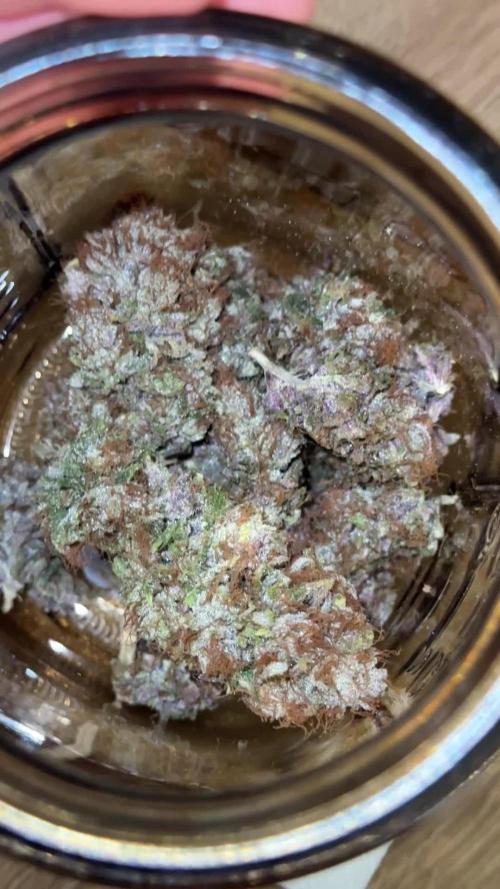
Super tropical vibes in this bunch!!
Each one has such a unique smell and flower structure. I really neglected the hell our most of these plants given the tiny 3 gallon container and arid conditions - however these plants were resilient.
Crystal Light x Pelee Sword stands out as gassy pungent strain covered in trichomes.
(Purple Haze x Malawi) x pelee sword was also very note worthy. Very citrusy/floral notes, airy bud structure but surprisingly very resinous.
Super stoked and thanks again DaDankSeed bank for the genetics and pointers!


Processing
Likes
4
Share


Likes
9
Share
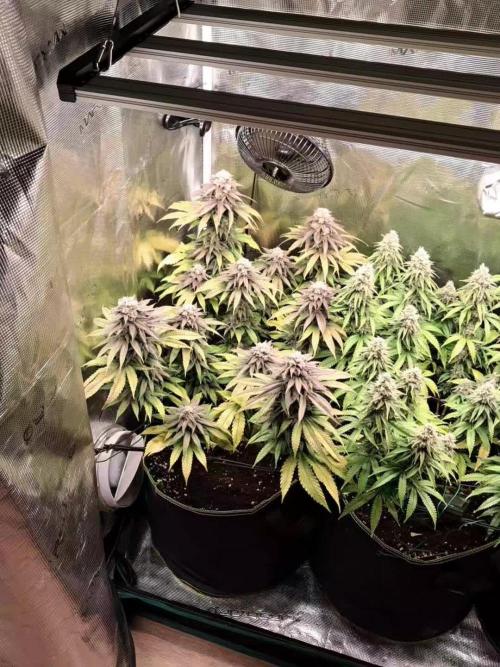

@Grow4ever
Follow
Ende Blütewoche 8.
Duft ist krass, ist mein zweiter Phäno der Pineapple Express. Der Duft ist fast identisch. Wuchs war etwas unterschiedlich, die Buds werden fetter und fetter. Zudem hat Sie eine dunkle lila/schwarze Farbe angenommen. Auch hier Ernte in circa 2 Wochen.
Likes
16
Share


@Camarao_Desperto
Follow
Day 28/06/2024 I chopped the first one, day 08/07/2024 I chopped the second one and today day 09/07/2024 I'm going to chop the other two (bigger ones)
Very satisfied with all this, just the beginning and you will also see more diaries around here!
These plants were perfect for a newbie like me, but I also learned that I'm very good at this, all the knowledge were in my head.
See yall! 😎👻👽😈
Edit: great smoking, relaxed but not much couch lock, good after a day of work, will try on days of to see, I’m fucking happy bros!!!!!

Processing
Likes
81
Share


@LockDownGrow
Follow
Last week of feed for this lady :)
Update end of week nine ,
Well the bud production this week has been absolutely crazy ,
She has now slowed right down on her feeding too , so the flush begins , she still needs too cloud up and go amber but she will have enough nutrients in her and the soil too last her until she ripens , she really has been a joy too watch grow and develop ,
I would not think twice about growing this strain ,
Likes
26
Share


@MrJones
Follow
Strawberry Pie Auto
~~~~04.20.23~~~~
Day 13 - Above Ground
🔸05.06.23 -So these girls continue to be amazing, scuffed up the soil today, and added airstones to my reservoir, even though it is just water maybe the plants will enjoy the extra oxygen!, the Medic Grow Smart 8 LED is doing very well, at 40% the plants are getting plenty of light and not showing any signs of over-stretching!
🔸05.03.23 - Just over the last 4 days these plants are just growing vigorously and healthy, first real watering today and the plants are starting to eat that Gaia Green amended soil and loving it, the Medic Grow Smart 8 LED is doing very well, at 40% the plants are getting plenty of light and not showing any signs of over-stretching!
~~~~~~~~~~~~~~~~~~
📝Strawberry Pie Auto
📝Grown By: MrJones
📝@fastbuds_official
📝Soil - ProMix HP
📝Medic Grow Smart 8 LED - SETTINGS 40% V1
📝@medicgrow420
📝@gaiagreenorganics
~~~~~~~~~~~~~~~~~~
📝 A true delight with a delicious aroma and a stunning 26% THC. This eye candy of a cultivar boasts unique colors and reeks of red berries and cookie dough that will leave your mouth watering.
~~~~~~~~~~~~~~~~~~
Processing
Likes
5
Share


@PotentiallyPotent
Follow
One of the seedlings died. Oh well. Dropped another seed in a cup of dechlorinated water today to start another one.
It's been getting significantly warmer out so hopefully that will help things along.


Processing
Likes
17
Share


@kcartel
Follow
in the passport of the variety itself, exactly 63 days of color are written, but still look transparent, I’ll wait until the end of the week;
Likes
36
Share


@Salokin
Follow
Hi growmies,
unfortunately I skipped a day checking on the reservoir and the plant must have consumed a lot more water than expected, probably due to the heat we are experiencing where I live, since I realized tip burn getting worse everywhere I checked the ec, which was close to 3 😳, topped up with RO water right away and this seems to have stopped it. Other than that I don’t think it bothered the plant too much either, as she keeps on swelling bigger and bigger. A&B fertilizer was reduced already and once, either next week or the one after I’ll start flushing, depending on the stage of ripening.