


Likes
Comments
Share


Likes
6
Share


@Cultivandomedicinanatural
Follow
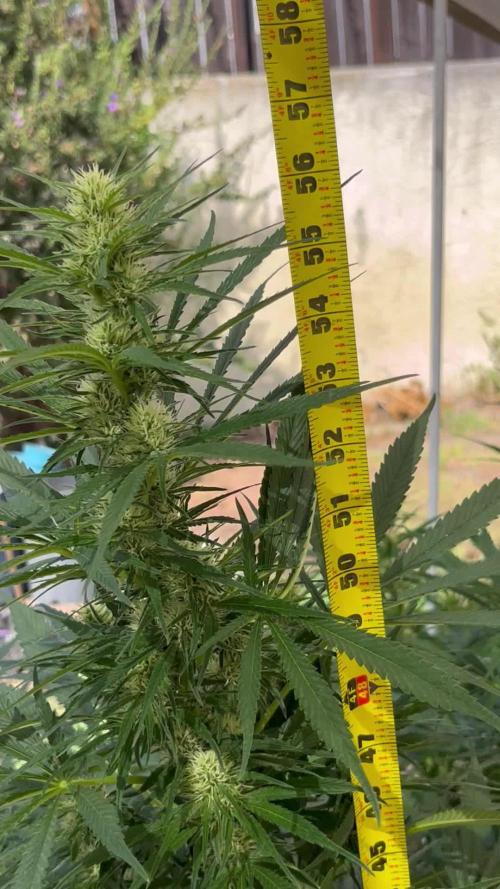
Esta es la última semana de crecimiento que le doy a las pequeñas, el último día antes de hacer el cambio de horas de luz le hago una pequeña poda de bajos ya que eso le dará más aire a la zona baja y más fuerza a la parte superior de nuestras plantas. En esta semana terminamos con una Ec de 1.6 y un ph de 5.8. Están creciendo muy rápido y con fuerza en los tallos.
Los tamaños de las pequeñas son: las red hot cookies 24 y 34 cm, las tropicanas 27 y 37 cm y la purple puch og 24 cm.

Likes
38
Share


@TheCannaProphet
Follow
*Note: The wattage listed was incorrect. I used a 360w UnitFarm LED for this grow so the gram per watt figure will be inaccurate. Thank you 😎🙏
🏆FastBuds California Snow🏆
My Setup:
Planted into Jiffy Peat Pellet that was hydrated with de-chlorinated water with SuperThrive added then ph'd to 6.0 @ 80℉ where it took 3 days for her to break ground.
Grown 100% organic in 4g fabric pot by Gronest filled with Mother Earth 70/30 Coco/Perlite medium amended with (my 'Secret Recipe): 2tbs/g of Down To Earth 4-4-4 / 2 cups/g of Earthworm Castings / 1tbs/g of Dr. Earth Flower Girl 3-9-4, 1tbs/g of Dr. Earth Bat Guano, 3/4 cup of Down To Earth Azomite and 1 tsp/g Down To Earth Fish Bone Meal.
24hr light cycle during Germination / 19/5 light cycle for the remainder of the run under UnitFarm's UF-4000 and UFS3000 LED's which I have to say just blew me away with the results they gave!!!
If you're on a budget and want a light that is about as low profile and cool running as they get you really need to check out UnitFarms lights. Believe me... I run a pair of HLG 650R's and a HLG 225 in my 4x8 so I'm no stranger to 'high end' lights but lemme tell ya, these two UnitFarm lights absolutely blowup my 4x4 and don't overheat the tent!
She received straight water ph'd @ 6.2-6.8 when needed and weekly Compost Tea's for the entire grow which is one of the beauty's of growing 100% organic, you establish a microbial colony in your medium, then feed the microbes every 3-4 weeks keeping them fat and happy... They, in turn, through their life processes take care of feeding the plant. Pretty freaking cool if I may say so, and there's no simpler way to grow IMHO.
This Cali Snow's structure was perfect didn't require me to top or LST this plant, only tucking shade leaves that were blocking light penetration. She grew tall with wide node spacing allowing for excellent light penetration making her a growers dream, low maintenance, extremely tolerant of temperatures and disease/pests ) and a healthy yield of some FANTASTIC smoke...What more could you ask for? 😍💖
All in all, this strain has made it's way onto my 'list' and you'll be seeing it run again by me for sure as she's a hard one to stay away from! I highly recommend this one... Go grab some and put a huge smile on your face too! 😁


Likes
10
Share


@Fonzo412
Follow
This will be the start of week #2 of seedling stage.
Had an issue 😢 with my blue dream plant I believe I’ve might of over watered . It looks bad hopefully it can recover. Yield may be stunted really lagging behind.
Also I have another blue dream seed so I’m thinking of starting that one fresh so I can pot into the finale medium. I didn’t want to use the cup but didn’t have enough soil at the time 🤷♂️
The strawberry 🍓 banana 🍌 auto and the power plant fem seems to be doing good 👍 so far.
All in all I’m happy 😊 with how things have been going throughout my grow .
I’ll will be feeding my plants nutrients and dropping the lights 💡 for the start of Veg next week.
Let’s goooo…
😎😏

Likes
14
Share


@Chubbs
Follow
These beauties are shaping up nice. The frost on some of them is crazy how much there is on them. They're definitely getting close, I'd say a couple within the next few days. Looking forward to harvest some to make some rosin and hash. All in all Happy
Likes
7
Share


@Brickie74
Follow
Well this is actually where i started. I had already germinated the Green Tea (Forbidden Fruit x Gelato) seed. Now i think i am caught up. I will try to post as many videos as possible. I suck at typing and with the dictation it takes longer to fix the f_ck ups than to just type what I wanted. I can just explain what I'm doing or what I've done for the week. This is my first ever grow journal so it may be all over the place....we will see.....
I have multiple grows happening at the same time....sometimes I get carried away...lol....and might have a few more than I expected to have. I will do my best to keep things up to date and current. I definitely want to start running right out of the gate and make a pretty decent journal.

Likes
9
Share


@DoctorCannas
Follow
Miei cari amici,
L'estate incalza e finalmente il tempoi permette di trasformare ad hoc. Secondo i gusti il giardino, la terrazza e i due balconi.
Un lavoro duro e intenso con i 25/30 gradi che il NW in questa settima sta proponendo e che spero vivamente durino tanto.
Travaso storico e professionale.
Vediamo ciò che l'armadio dice.
Questo travaso probabilmente ritardera di due o tre settimane il raccolto, ma andava fatto e ne varrà sicuramente la pena.
28/06
My dearest friends, comrades and farm partners.
Doc. Cannas is extremely happy to introduce you to the 5 wonders of Expert Seeds.
Still my most heartfelt congratulations for their genetics,
between photos and videos you have seen what a wonder these little girls are growing.
Today they have been introduced to LST, an art halfway between Astana yoga and BSDM.
Being their first time there was a need for love and passion.
So it was.
At the next update farmers


Likes
16
Share

@Brotanical
Follow
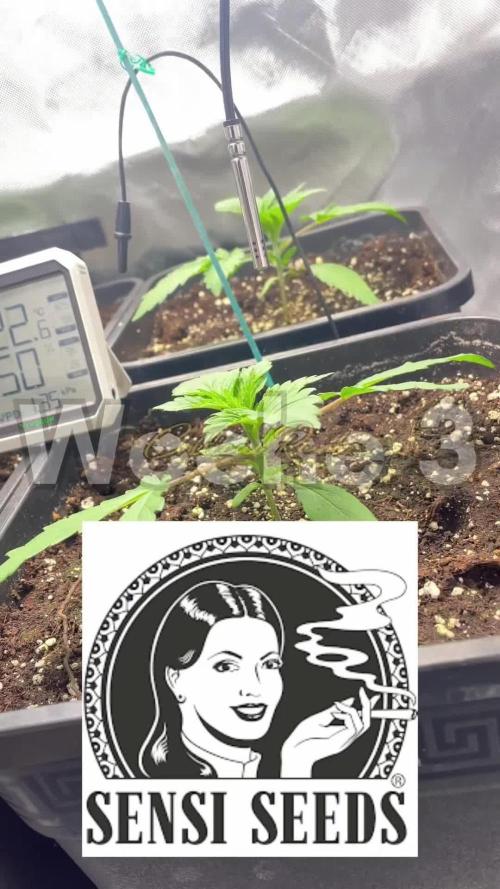
Woche 3: Zeit für ein bisschen „Head-Management“! ✂️
Willkommen in Woche 3! Meine Critical Runtz von @SensiSeeds zeigen sich von ihrer besten Seite und haben heute die erste Lektion in Sachen Höhentraining erhalten. Wir liegen bei entspannten 320 ppfd

Likes
56
Share


@Grey_Wolf
Follow
For Whom the Bell Tolls
Greenhouse Seeds The Church CBD
1 week since Germination
11th April 2020
Well she's up and away this CBD version of the Church is looking nice and Healthy .😀👌
Whilst all of my flowering girls hate this humidity we are having , the little seedlings Love it 😎
Will give her a 1/4 strength feed today of some Organic Grow nutes.
That is all for this week thanks For stopping by 👍
Likes
23
Share


@MissBudReefer
Follow
The ladies are going amazing 🤩 this week went so good for them, they are topped now and waiting for results! Next week I will transplant them and the autos will be moved from there 🌱

Likes
15
Share


@Nvchods3
Follow
Se da fin a este cultivo de 2 variedad en carpa de 80x80 por 240w.
La primera variedad ya en proceso de curado es la Green crack punch (5plantas)
tuvieron buen crecimiento, pasaron por 2 transplantes ( 3lt a 7lt)
muy rico sabor se llega a sentir los terpenos de cada cogollo.
No es todo, en este mismo espacio nos quedan aun las 4 powerFlower, las cuales estos dias se iran de corte para preparar el secado y posterior curado.
5 Green crak punch

Likes
17
Share


@Fitzwell
Follow
First off I need to thanks crop kings seeds for sending me such great seeds.
I'm so close I can taste it. The Buds are getting nice and fat, and really stinky. Doing my flush tomorrow and running 15 gallons of RO water through it.
I'm done feeding it and water only the next week then CHOP CHOP

Likes
10
Share


@Kusunokii666
Follow
Ho eseguito il topping al 4/5 internodo a seconda dell altezza delle piante per pareggiarle

Processing
Likes
17
Share


@DudeGrowsWeed
Follow
Alien vs Triangle smells insane!! I'm really looking forward to this girl finishing up. I backed down a little on the Recharge this week, but still giving twice the suggested amount. Also still giving her Mammoth P. Will start with MegaCrop (Greenleaf) nutrients later this week. 👍


Likes
32
Share


@Selkot
Follow
my best harvest to date 🙂
I got 196g dry and cured, of which 85g for the biggest one, the one with only 3 colas; no popcorn bud, and a good general density.
A nice smell, not too strong, but it lasts a long time 😏
I took the 85g of the big one + 90g of leaves (from my numerous haircuts) for a second bubble hash experiment (see vid)
this time I reached a ratio of 7.1%, so not huge, but so good and powerful 🤩
Likes
1
Share

@BluntTrauma416
Follow
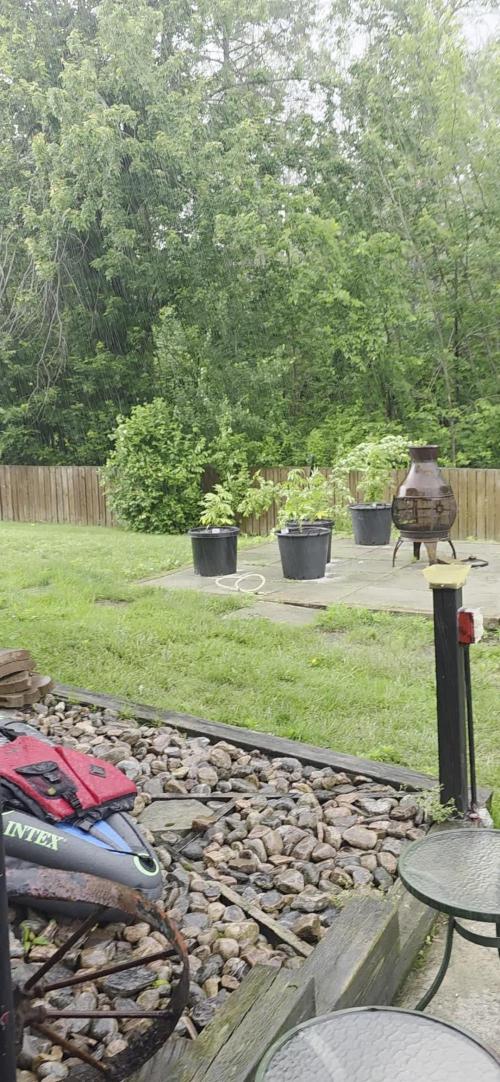
Just transplanted minutes before pics, into 15 gallon pots with promix hp and gai green all purpose 444 and 10% 20% worm castings.
Likes
35
Share


@Chedderbob112
Follow
Have been waiting to upload the results of ma swazzenger teqnique a took a chance n hopefully it pays off man juicy chronic is the strain a like it so far hope for decent harvest but hav learned a lot n am happy for the support of ma fellow growmies tips n advice knowledge is power
Likes
14
Share


@Rock_n_Roll_Randy
Follow
ONLY 3 PLANTS LEFT IN THE 8X8. LESS THAN A WEEK EVERYTHING WILL BE DONE 🤞
ALL THE PHOTOPERIODS ARE IN THE 8X8 NOW. THE STRIVE NUTRIENTS IS INSANE.. BEST FERTILIZER PRODUCTS EVER MADE. I USED IT 4 TIMES IN 13 DAYS AT FULL STRENGTH AND THERE IS NO NUTRIENT BURN AT ALL AND THEY EXPLODED. AND I HAD A FEW THAT WERE TURNING YELLOW, I THOUGHT IT WAS ROOTBOUND OR CALMAG DEFICIENCY BUT THE STRIVE NUTRIENTS BROUGHT THEM BACK AND THEY ARE SUPER HEALTHY AGAIN....
ATTENTION GROWERS:::::: YOU MUST TRY STRIVE NUTRIENTS. BY FAR THE BEST FERTILIZER PRODUCTS EVER.. I PROMISE YOU THAT AND IF YOU USE IT YOU WILL NEVER USE ANYTHING ELSE
FOR EVERYTHING MARS HYDRO VISIT:
www.mars-hydro.com
www.marshydroled.ca
PROMO CODE: rocknroll
VISIT THE ALIEXPRESS STORE:
@marshydro_aliexpress
Instagram: @marshydropenny
https://youtube.com/channel/UChU5ZWwNi-DvnO3oWVU3ceA
(NEW) STRIVE NUTRIENTS 💪
Thanks for taking the time to read and check out my diary🤜🤛
FC-E6500 LED GROW LIGHT:
FC-E6500 grow light with 3978pcs OSRAM BridgeLux Diodes & Moso Driver, market-leading PPF 2.7 µmol/J, Max 2.5g yield/watt with 30% higher Average PPE, more cost-effective when compared to same style type lights. Only consumes 650W, perfectly cover 5x5ft (personal), 4x4ft (commercial) grow space. Innovative Precise Uniform Lighting-Built-in removable bars interval & dimmability enable the exact & dynamic PPFD control over each of the plant growing stages, FC-E6500 detachable bars deliverSuperior Heat Dissipation: Real Aluminum heatsink together with 6 slim profile passive cooled bars (THINNER & LARGER surface) and detachable Meanwell Driver, create less heat. save 50% hydro than other old grow lights! Driver can be mounted remotely on the side of a grow tent/rack or on an adjacent wall to remove heat from grow space. Full Spectrum UV IR LED: With Yield Max spectrum (660nm Osram enhanced Deep Red,2800k-5000k,730-740nm IR,380-410nm UV LEDs), Average PPFD the FC-E6500 LED grow lamp enables cultivators to produce BIG FAT Dense Buds, perfect for full-cycle hydroponic, soil, grow tent/grow room.
Dimmable Commercial Grow Light: Cost-efficient, easy dimming & daisy chain With a max up to 20 lights, IP65 Waterproof, master light easily controls the rest. Perfect for commercial & home horticulture.
FC4800 LED GROW LIGHT:
GET THE MAX FROM MARS👍: Welcome one of the newest members of the Mars Hydro family🤜🤛🤘. The Mars Hydro FC 4800 480W LED Grow Light can accommodate up to a 4' x 4' area for flowering. It has OVER 2000 LED chips consisting of the best selling Samsung LM301B diodes which has a Luminous Efficacy of: 220 lm/W
0.2 W, 3 V mid power,
Osram 660nm Diodes, Infrared light and UV LIGHT👍. It boasts the incredible efficiency of 2.8 µmol/J, maximum 2.5gram yield per watt with 30% higher Average PPFD. This High-intensity spectrum is beneficial for plants at all stages - from veg to bloom, and creates Big dense Buds👍. achieve 50% higher yields & quality compared with the old lights! Only consumes 480W for 4x4ft personal grows, and 3x3ft for commerical grow. It comes with a dimmer and daisy chain function with a maximum of up to 15 lights, the master light controls the rest👍. Wide 6-bar design offers even & wide canopy coverage and can maximizes your grow space. slim 180° FOLDABLE DESIGN... YES I SAID FOLDABLE🤘🤣 , making it compact and easy to install, it's IP65 WATERPROOF and will give you no worries while growing in a humid environment and makes it a flexible high performance commercial grow light for enormous SUPER FROSTY yields.😛😛😛. MARS GETS EM FROSTY BOYS👍
AWESOME HEAT DISSIPATION: The Low energy consumption FC4800 growing light has 6 passive-cooled bars and an aluminum heat-sink a removable driver you can upgrade later or have it outside your tent. with zero noise you can save up to 50% in your electricity bill compared to HID's or HPS lights!
It also has a removable driver so you can upgrade it in the future or have it outside your grow space for better heat control in your growroom👍
UPGRADED FULL SPECTRUM: Yield Max Spectrum with enhanced red (Top-Bin Samsung 3000k-5000knm, Osram 660nm Deep Red), speed up blooming & fruiting, perfectly suited for full-cycle growing. The FC4800 LED grow lamp was born for Big Buds, perfect for commercial, grow tent, grow room, hydroponics, and all soil grows.👍
THE BEST SAMSUNG DIODES: THE FC4800 has Top Bin genuine Samsung Osram Diodes, combined with remarkable 2.8 µmol/J Efficacy, 30% higher Average PPFD, 50% less energy consumption, to maximize your yields. They give you a TRUSTED 3 years warranty 100% Satisfactory guaranteed!!!
TSW2000 LED GROW LIGHT:
INCREASE YIELD AND CROP QUALITY WITH MARS HYDRO LED GROW LIGHTS: NEWEST SMD LED technology provides the highest PAR/LUMEN output (1122umol@18") and can make you get 30% higher yield compared to OLD blurple led lights. Max 2.5g yield per wattage and achieve maximum quality and quantity, much better than traditional HPS grow systems
LOW ENERGY CONSUMPTION LED GROW LIGHT: Consuming only 300W true output with 684 LEDS! It saves up to 50% energy than other led grow lights. Perfect for 3.5x3.5ft bloom stage, 4x4ft veg stage. Over 90% light energy can be absorbed by plants, it will have higher intensity in a MARS HYDRO grow tent with diamond design mylar, or by crossing over using multiple TSW2000
HIGH EFFICIENCY FULL SPECTRUM INDOOR GROW: 3000K 5000K and IR 660nm 760nm RED, makes it close to natural light, highly engineered to provide improved growing performance for plants at all stages of growing, rapid plant response from seed to flower; Uniform and wide-beam light distribution for your plant's optimal growth
8x8 1680D GROW TENT
The MARS HYDRO 8x8 Grow Tent interior is made of a unique diamond design mylar which is highly reflective. (Other companies mylar and reflective rate is as low as 50%, and it won't provide efficient light. They use thick 1680D oxford canvas, and being double stitched, it is tear proof and perfect for locking in the light. Their grow tent keeps 100% of the light inside the tent and helps your plants absorb more light. EXTRA-THICK material means No light leaks or rips at all.👍
Strong Stable metal corner adapters and poles are the trustful supporters of the tent. It's very sturdy, neither rusting or paint flaking off. quick and easy tool-free setup. They use heavy-duty metal zippers, with double layer black lining, by far the best on the market which creates a light-proof seal.
The Easy observation windows are made by double layers of cloth. Observe the growing conditions of your plants without opening the tent and avoid disturbing your plants. The observation windows also serves to dissipate heat and ventilate the air.
The tent includes 2 removable waterproof floor trays to hold soil and water. The removable tray can be taken out to wash easily.
They guarantee the grow tents are easy to install even if you've never done something like this before. Clear Instructions and no tools needed! They also offer 30-day unconditional refunds for quality problems. Just contact their friendly 24 hours customer service 👍