


Likes
Comments
Share

@Hempface86
Follow
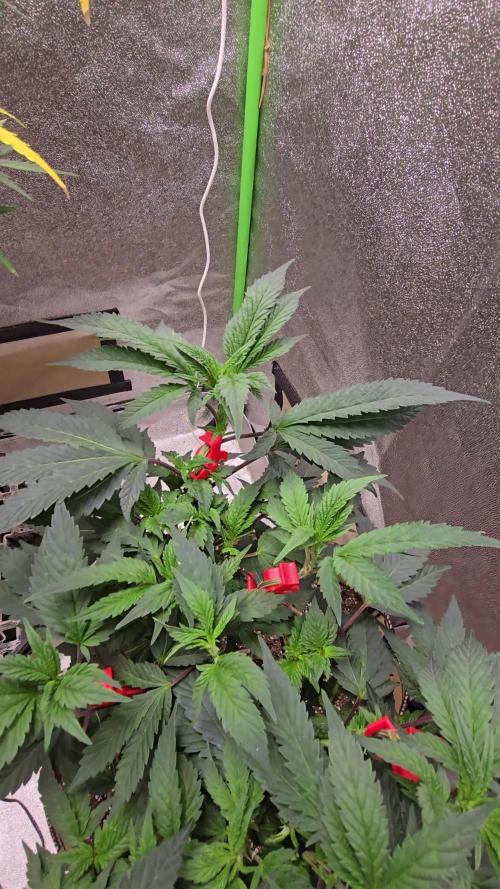
So this should be the last week of veg, as my other plant will be coming down later on today!! I will say this.I know she is definitely ready.It's been a long veg cycle, which is a testament to the growdots, which say only 4-6 weeks before you should flip... Mind you I have reported it's twice now and in both times I added fresh dots.. i just hope she doesn't become too big and overtake the 2.3x2.3x63.. i have a feeling she's going to be a good size plant... As always, big shout out and thank you @Grow4releaf.. I hope everybody's doing well.God bless and happy growing RIPCK

Likes
44
Share


@SooSan
Follow
12/12 + 74 jours
Vu qu’il y a 16 plantes mais que sur growdiaries on ne peut mettre que 8 variétés j'ai divisé en 2 diaries pour le bas de la tente
1️⃣
🏠 90x60x90
☀️ FC-E 4800 => puissance a 75%
🍁
1x Black Bomb / Philosopher Seed
2x Amnesia Lemon / PEV Seeds
1x Blueberry / PEV Seeds
1x Blueberry / 00 Seeds
1x Wappa / Paradise Seed
1x Dark Phoenix / Green House Seed
1x Quick Sherbet / Exotic Seeds
1x Mango Cream / Exotic Seeds
1x Banana Frosting / Sensi Seed
1x Hindu Kush / Sensi Seed
4x Fast Mix / Sweet Seed
📎 https://growdiaries.com/diaries/122084-grow-journal-by-soosan
📎https://growdiaries.com/diaries/124052-grow-journal-by-soosan
2️⃣
🏠 30x60x50
☀️TS1000 => puissance a 80%
🍁
Quick Sherbet - Exotic Seed = 12g
Quick Sherbet - Exotic Seed = 12g
Quick Sherbet - Exotic Seed
Quick Sherbet - Exotic Seed


Likes
26
Share


@SmokeableHobby
Follow
1/5 - Day 51 / Day 23 flower - Feeding Day
Pots were mostly dry on this day, last time they were fed was a little over a week ago on day 43 (12/28). I've done two small waterings since last feed, about a half gallon of water for each of my 5 gallons and about 8oz of water for my bonsais. My plants are drying out within about 48 hours of each small watering.
For today's feeding I went to full strength on my nutes. My solution consisted of:
- 1 gallon distilled water
- 3ml CalMag
- 3 tsp of FF Big Bloom (full dose))
- 2 tsp of FF Tiger Bloom (full dose)
- pH: 6.9
- TDS: 342ppm
- EC: .7
I gave each of my 5 gallons about a half gallon of the fertigated water each which wasn't enough to produce runoff. I gave them each about another 1/4 gallon distilled water to generate enough runoff to test. I tested the runoff of my Z52 which gave me readings of:
- pH: 6.3
-TDS: 1600ppm
-EC: 3.2
I gave about 12oz of fertigated water to each of my bonsais. My ZB2 runoff posted readings of:
- pH: 7.2
- TDS: 594ppm
- EC: 1.2
My TDS readings are definitely low compared to the FF Soil Feeding Schedule. The suggested readings for week 7 are an EC of 2.8 - 3.0 and 1960-2100ppm. Not stressing too much over the reading as the girls are looking healthy and happy. Will add another feeding in between waterings if I start to see any nutrient deficiencies but I don't see any cause to do so at the moment.
As you can see from the picture on 1/3, the super cropping I did on 1/2 didn't hurt my girls one bit. By the following day, the tops were already bending back toward the lights. This was a big relief.
****************************************************
1/7 - Day 53 / Day 25 Flower
Light watering in the morning today using pH'd dechlorinated tap water w/ 4ml of cal mag. Gave about about a 1/4 gallon to each for my 5 gallons and another 8oz each for my bonsais.
****************************************************
1/8 - Day 54 / Day 26 Flower
Noticing signs of nutrient issue on the Z51. Surprisingly, no signs of nutrient issues on the Z52 despite using the same solution and roughly the same amount of water during the feeding day on 1/5. Decided to do a heavier watering tonight, using about 3/4 gallon of pH'd dechlorinated tap water. Hoping that dilutes the soil a little bit and pushes the salts toward the bottom.
****************************************************
1/9 - Day 55 / Day 27 Flower
Nutrient issues did not appear to get any worse overnight so that is encouraging. Did some minor defoliation on my 5 gallons this morning to remove any of the smaller branches on the lower 3rd of the plant. Haven't completely removed any branches that are below the trellis. Will start pruning more regularly every other day so I don't shock the plants too much.

Likes
8
Share


@SherbGrows
Follow
Week 1 from germination!
Fastbuds - Wedding Glue
Light cycle: 18/6
Watering when dry
Light: ViparSpectra XS2000 at 50%
Everything is going well thus far! Excited to see how she grows!
See you all next week

Likes
3
Share


Likes
41
Share

@Tower84
Follow
🇩🇪 Woche 8 – Mentha de Croco (Terpyz) 🌱🔥
Diese Woche war ein großer Schritt für die beiden Mentha de Croco 🌿🚀
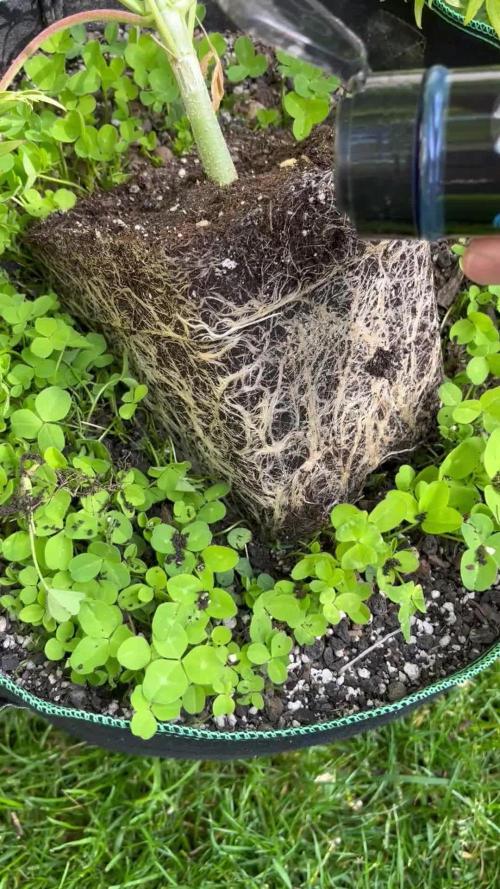
Seit Dienstag stehen beide endlich in ihren finalen 30L Endtöpfen draußen und wurden in Bio Hanferde von Sonnenerde eingepflanzt 🌍 Dazu etwas Great White von Plant success an die Wurzeln.
Beide Töpfe wurden zusätzlich mit Biofaser von Sonnenerde gemulcht, um die Feuchtigkeit besser zu halten und das Bodenleben zu unterstützen 🍂🔬 – perfekte Living Soil Bedingungen.
Die Pflanzen haben den Umzug problemlos verkraftet und sehen weiterhin topfit aus 💪💚
Mit aktuell 66 cm und 58 cm Höhe entwickeln sich beide sehr kräftig und robust. Die Blattfarbe bleibt sattgrün und insgesamt wirken die Pflanzen absolut vital ☀️🌱
Heute am Samstag gab es die erste Runde selbst angesetzten Komposttee ✨
Dafür wurde 24 Stunden lang ein Beutel mit zwei Händen Wurmhumus und etwa einem Esslöffel Kelp in einem Eimer Wasser mit Luftpumpe und Sprudelstein belüftet 🌊
Der Tee wurde anschließend pur gegossen, um das Bodenleben direkt nach dem Umtopfen zusätzlich zu aktivieren 🔥🌿
Bis jetzt läuft alles genau nach Plan und die Pflanzen scheinen sich im neuen Setup richtig wohlzufühlen 🙌🌳
⸻
🇬🇧 Week 8 – Mentha de Croco (Terpyz) 🌱🔥
This week marked a big milestone for the two Mentha de Croco plants 🌿🚀
Since Tuesday, both have been transplanted into their final 30L outdoor pots filled with Bio Hanferde by Sonnenerde and a little Bit of great white from plant success 🌍
Both pots were also mulched with Sonnenerde Biofaser to help retain moisture and support microbial life 🍂🔬 – perfect living soil conditions.
The plants handled the transplant without any issues and continue to look fantastic 💪💚
At 66 cm and 58 cm tall, both plants are growing vigorously and appear very robust. The foliage remains deep green and overall vitality is excellent ☀️🌱
Today, on Saturday, they received their first homemade compost tea ✨
The tea was brewed for 24 hours using two handfuls of worm castings and about one tablespoon of kelp in a bucket of water, continuously aerated with an air pump and air stone 🌊
It was applied undiluted to help boost soil biology after transplanting 🔥🌿
So far, everything is going exactly according to plan and the plants seem very happy in their new setup 🙌
Likes
119
Share


@DogDoctorOfficial
Follow
Greetings, fellow cultivators and stewards of the green realm! It's time to embark on the Week 4 Flower Report for the enchanting Jealousy in the Power Buds competition. The grow room has transformed into a sanctuary of blossoming beauty, and our verdant queen continues to captivate with her botanical grace.
As we venture deeper into the fourth week of flowering, Jealousy's prayerful demeanor remains steadfast. It's like a perpetual botanical meditation, where every leaf is a testament to the serene communion between plant and light. The grow room echoes with the hum of chlorophyll, and Jealousy stands as a living embodiment of lush greenery.
The flower formation is a sight to behold. Buds, adorned in trichome-laden splendor, emerge like jewels on a botanical crown. The pace at which they're developing is nothing short of remarkable—almost turbocharged. It's like witnessing a botanical sprint, where each bud races toward maturity with an urgency that adds an extra layer of excitement to our horticultural odyssey.
And now, let's talk root porn! Brace yourselves for a visual feast as we delve into the underground world of the clones. The roots, like intricate threads weaving a subterranean tapestry, tell a story of vitality and success. These clones, offspring of our majestic Jealousy, have not only taken root but have done so with a vigor that speaks volumes about the genetic prowess passed down from their botanical matriarch.
The success of these clones is a testament to the health and vitality of Jealousy herself. It's like witnessing the circle of life in a green kingdom, where each rooted clone is a promise of continuity and a nod to the resilience of the plant lineage.
As we navigate the fourth week of flowering, let's extend our gratitude to Zamnesia and Plagron, the unseen architects of our botanical masterpiece. Their contributions continue to shape the narrative of our green adventure.
A standing ovation to the Grow Diaries community – your shared experiences and boundless enthusiasm are the pillars of our collective knowledge.
To my fellow contestants and growers, may your buds swell with magnificence, and may the vibrancy of your grow rooms reflect the success of your botanical endeavors. Here's to a week of perpetual prayer, turbocharged growth, and the anticipation of a harvest that will leave us all in awe. Stay green, stay inspired, and keep cultivating those dreams!
As always, thank you all for stopping by, for the love and for it all. This journey of mine would just not be the same without you guys. The love and support are very much appreciated, and I feel honored and blessed with you all in my life !!!
With true love comes happiness. Always believe in yourself and always do things expecting nothing in return, with an open heart. Be a giver, and the universe will respond in ways you can’t even dream of .
Friendly reminder: all you see here is pure research and for educational purposes only.
Genetics - Jelousy @Zamnesia
Nutrients @Plagron
Light - @viparspectra P2000
Room size - 3x3 - 0,9x0,9

Likes
7
Share


@Jays_Not_Here_Man
Follow
Overall, the Girls are doing great. #2 is still showing some nitrogen excess, but is doing well. I’ve adjusted her feeding specifically in hopes to correct. #1 is not showing the same issue, and is motoring along. Both are stacking nicely, and are bringing on some smell now, and are sticky to the touch. I estimate about 3 weeks more, but who really knows with Autoflowers? Happy Gardening 🇨🇦❤️🌱😎💨

Likes
9
Share


@Muffinboy92
Follow
Moved them inside last week and then chopped one down. Rot was taking over quickly. Buds hadn’t fully formed underneath but the main colas and tops were ok. Bit disappointing but the weather has just been terrible where I am this autumn 😂 what can you do.


Likes
Comments
Share


@Nobody1991
Follow
It is a vigorous plant with very uniform branching, high resinous and high yield, if you grow from seed there are a few different phenos that I got, equally as good

Likes
2
Share

@Jinxed
Follow
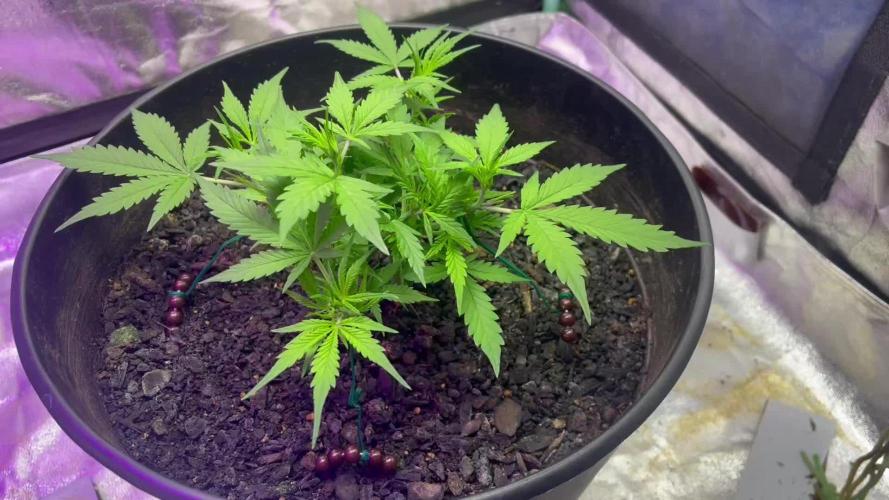
•Frostbanger is getting strong, starting to gain a scent 💨💨
•Random grows daily, but doesn’t have much of a scent
Likes
10
Share

@Mannirumpel420
Follow
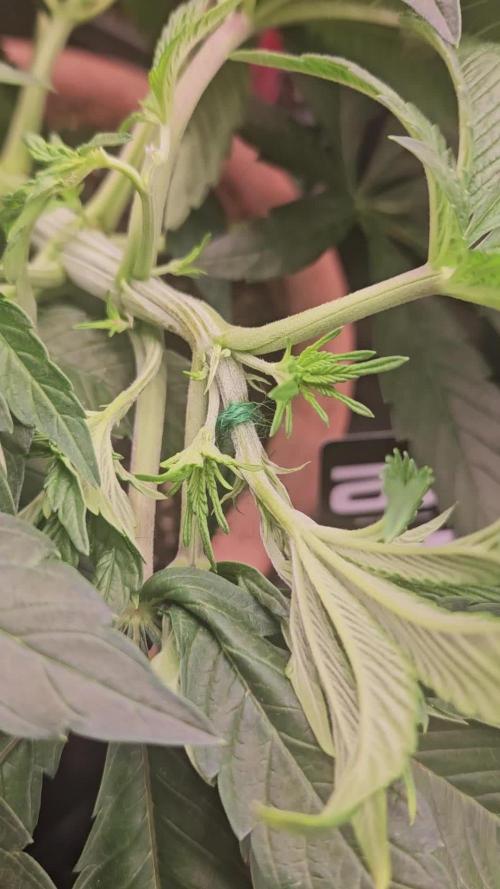
Ich nahm ein paar Stecklinge von dieser vitalen Pflanze und trainierte sie etwas,um die Fläche besser aus zu füllen.Bis jetzt bin ich von dieser Genetik wirklich überzeugt und kann kaum abwarten wie sie in der Blüte wird.
Likes
17
Share


@Fishcake
Follow
The girls got the chop last Friday having a bit of bother with humidity at 70% at 23 c but I can get it down to 60% humidity but the temps drop to around 16 c I'm also attempting to reveg the zupreme just incase its nice lol I already have a baklava reveging now will make a diary for those tomorrow


Likes
8
Share


@Squaregrouper
Follow
I use Botanicare products for part system along with Agri triple 19 food crop fertilizer that I use on edible crops and fruit trees

Processing
Likes
16
Share


@MG2009
Follow
Good week here #1 is 10" and wider,took a clone.
#2 is nice too she is 8.5" tall , both are healthy i will be flowering soon, I want both about 12" when I flower them. So maybe mid week flip? We see.
Thank you for dropping in hope you have a great day🙏
1/08/19
Mid week both one and two are females, I will try to a good picture to show her pistils.
#1 is 11.5" tall, and # 2 is 9.5" i anticipate flowering plants at start of week 8.
Likes
Comments
Share


@Cannajo
Follow
Still just watering with ph water at 6.2 , steady growth slower than the other grow I’m growing (banana cream sundae) but still thin leaves. No nutrients soil was pre amended should last it a while


Likes
41
Share


@KAPT_SAVE_Da_HOE
Follow
Forbidden Runtz is being harvested to make room for another strain. Sour Stomper has one more week then making room for another strain. I didn't supply the enough nutrients and became evident the last few weeks. I made many mistakes that I hope to dial in next run. The whole experience for a first time indoor autoflower was fun and low maintenance. I look forward to the dry product and will update as soon as is happens.

Likes
9
Share


@Growlife23
Follow
No purple yet kind of bummed out about that but we'll see what happens the buds are getting fatter so I'm happy about that nice and hard the smell is awesome can't wait to smoke this