


Likes
Comments
Share

@Ninjabuds
Follow
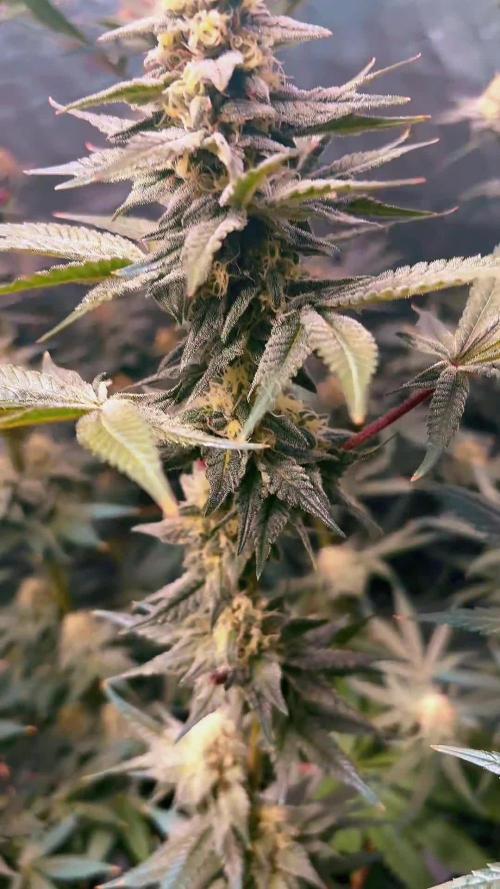
It’s day 43 of flower! All of the plants look great! I’m going to start dialing back the light intensity slowly over the next couple weeks. Harvest time is getting close

Likes
14
Share


@DaddyPrime
Follow
6/1 topped all of the mains(about 5 or 6). Shes so fucking bushy its crazy. Each main is branching out more and more at each node. Shes gonna be a huge bush by the end of summer. Also attempted to defoliate some of her more crowded areas
6/2 Shes looking super happy after a good feed yesterday. Responded super well to the topping on most of the mains. Slightly concerned its gonna make her even more thick and bushy
6/6 fed some recharge and slf100

Likes
4
Share


@best_hydro
Follow
120*60 if you have to needsecret box cause your moommy ist strictly christian👻👻👻👻

Likes
4
Share


Likes
Comments
Share

@Nony_grows
Follow
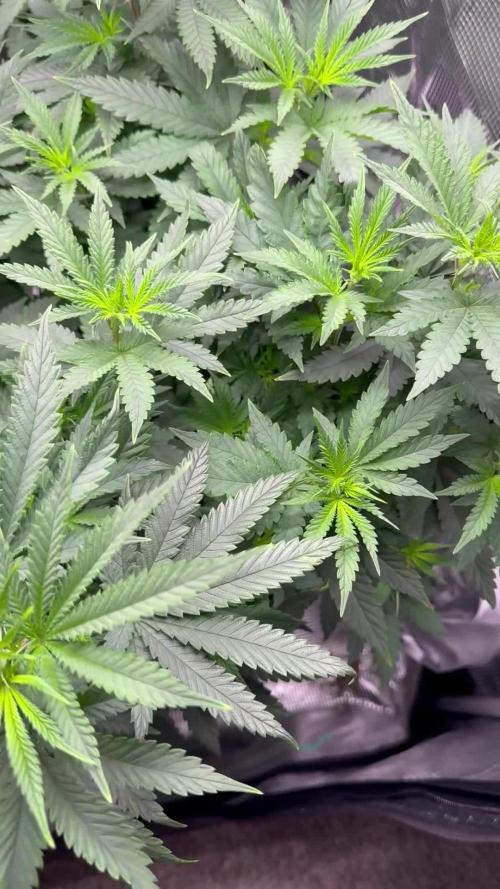
Installed a trellis net to even the canopy and to prepare for early flower stretch

Processing
Likes
7
Share


@SirBongsWorth
Follow
This phase is not veg, I am new to this site so navigation is new to me. Please note "actual" time is a week ahead of my time line. That said, nothing exciting this week. The seeds sat in water for 48 hours then planted in soil. Three days later like all my seeds I plant, they were officially seedlings. Just when I thought everything was good, some bugs had to come and ruin my day! Stay tuned for next week and my battle against thrips!
Likes
1
Share

@DogDoctorOfficial
Follow
🍮 Chem Brûlée – Pheno A
Week 6 | Building Sweet Foundations
Welcome back to another chapter of the 8×8 Adventure!
One of the greatest rewards of growing multiple phenotypes side by side is watching each one reveal her own personality.
Some race into flower.
Others take their time.
Some grow broad, powerful leaves.
Others reach for the sky with elegant spacing between every node.
Chem Brûlée Pheno A continues to prove that she's a lady who likes to do things her own way.
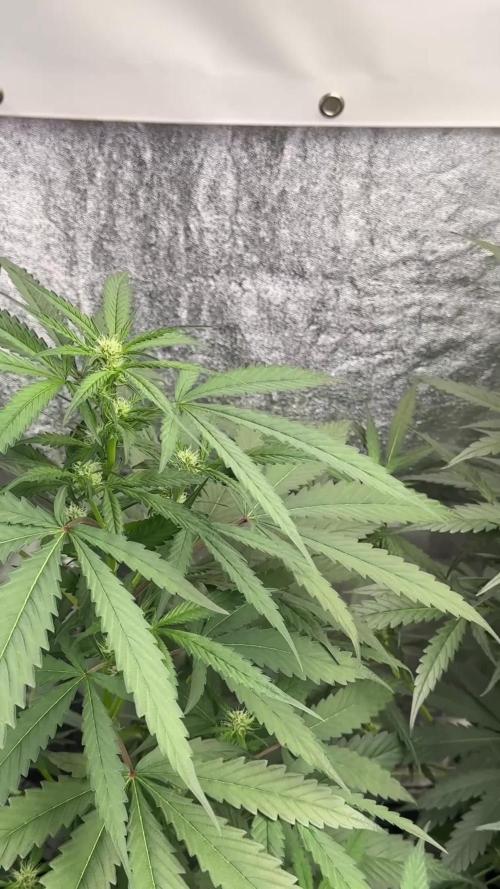
Still growing under the 12/12 From Seed method, she has now settled comfortably into early flowering. The explosive stretch is beginning to slow, and all that energy is gradually being redirected toward what matters most now...
Building flowers.
Every day her structure becomes a little more defined, and every new pistil reminds us that this beautiful lady is only just getting started.
⸻
🌼 Early Flowers Becoming Real Bud Sites
One of the biggest changes this week isn't dramatic at first glance, but it's incredibly exciting once you know what you're looking for.
Last week we celebrated the appearance of the first white pistils.
This week those tiny flowers have begun gathering together, forming the first recognizable bud sites across the entire plant.
The main cola is starting to establish itself, while every branch is producing neat little clusters that will eventually connect into long, resin-coated flowers.
It's one of my favourite stages of any grow.
Everything is still delicate and full of promise, but you can already begin to imagine what she'll look like a few weeks from now.
The blueprint has been drawn.
Now the construction begins.
⸻
🍃 Those Beautiful Giant Leaves
If there is one feature that continues stealing the spotlight, it's those incredible fan leaves.
They're still enormous.
Wide, elegant and working around the clock as natural solar panels, capturing every available photon and converting it into energy for flower production.
This week I also noticed some of the older lower leaves becoming a lighter shade of green.
I'm not concerned.
During the transition into flowering it's common for vigorous plants to increase their nutrient demand while redirecting energy toward rapid growth and bud formation.
Rather than chasing perfection, I prefer listening carefully to what the plant is telling me.
We'll continue monitoring her closely, making small adjustments only when they're truly needed.
Healthy growing is about observation, not overreaction.
And overall...
This beautiful lady still looks full of life and determination.
⸻
🌱 AutoPot Doing Its Job
Chem Brûlée Pheno A continues thriving in the AutoPot system.
By allowing the plant to decide when she drinks, the root zone remains consistently supplied without the repeated wet-and-dry cycles of traditional watering.
One of the things I appreciate most about this system is how quietly it does its work.
There's no timer deciding when the plant should eat.
The plant makes that decision herself.
As her flowers continue developing and daily water consumption increases, the AutoPot will simply keep following her rhythm.
It's a partnership more than a watering system.
⸻
🍽️ Feeding This Week
This week's nutrient program continued supporting the transition deeper into flowering while maintaining enough nutrition for the final stages of the stretch.
The feeding schedule included:
• Terra Bloom – 1.9 ml/L
• Green Sensation – 1 ml/L
• Sugar Royal – 1 ml/L
• Power Buds – 1 ml/L
• pH adjustments using Lemon Kick when required
The focus now shifts gradually away from vegetative growth and toward flower production.
As always, changes are made carefully and based on the plant's response rather than following a fixed calendar.
Every phenotype speaks a slightly different language.
Learning to understand that language is one of the most enjoyable parts of growing.
⸻
🌡️ Room Conditions
The environment remained stable throughout the week, providing ideal conditions for continued flower development.
• Day temperature: 29°C
• Night temperature: 25°C
• Relative humidity: 60%
• Nutrient solution: 22°C
• Root zone: 21°C
• CO₂: 639 ppm
With the stretch beginning to slow, humidity has started coming down compared to earlier weeks.
Lower humidity encourages healthy flower development while maintaining excellent transpiration and reducing future risks as the buds become denser.
A stable environment allows the plants to focus their energy where we want it most—building flowers.
⸻
📸 Watching the Story Unfold
This week's photographs capture a plant that is quietly entering a new chapter.
The towering fan leaves still dominate the canopy, but now they're sharing the stage with dozens of fresh flower sites emerging from every branch.
Looking back through previous weeks makes the transformation even more impressive.
What started as a young seedling has become a strong, elegant plant preparing for the busiest weeks of her life.
That's exactly why I enjoy documenting every stage.
These photos aren't just memories.
They're milestones.
⸻
🔮 Looking Ahead
Over the coming week I expect the flowers to become noticeably larger as more pistils emerge and the first signs of stacking begin.
The stretch should gradually come to an end, allowing the plant to invest more and more energy into flower production.
We'll continue watching the lighter lower leaves, making gentle adjustments if necessary while allowing the rest of the plant to keep doing what she's already doing so well.
Sometimes the healthiest gardens aren't the ones where we intervene the most.
They're the ones where we learn when to simply observe.
Chem Brûlée Pheno A seems determined to remind me of exactly that.
⸻
💚 Thank You
A huge thank you to everyone following this 8×8 Adventure.
Whether you're here to learn, compare phenotypes, improve your own garden, or simply enjoy watching these incredible plants grow, I'm truly grateful to have you along for the journey.
Special thanks to:
💚 GrowDiaries for creating a home where growers from around the world can share knowledge, experiences, successes, and lessons learned.
Zamnesia for providing the beautiful genetics that make this phenotype hunt possible.
🌱 Plagron for supplying the nutrition supporting every stage of this grow.
💡 Future of Grow LED for delivering powerful, consistent lighting throughout the entire cycle.
🌿 TrolMaster for helping maintain a stable environment day and night.
And finally...
Thank you to every grower, follower, supporter, silent reader, friend, and even those who challenge me to keep improving. Every interaction helps make these diaries far more meaningful than they would ever be on their own.
I'll see you all next week, where Chem Brûlée Pheno A will continue turning those giant leaves into the energy needed to build what already promises to be something very special.
Until then...
Growers Love and happy growing, everyone. 🌱🍮💚

Likes
39
Share


@BigDaddyK
Follow
I had to harvest plant A - Plagron 23/4/18 I will harvest plant B later , she is going the distance , this one had an 11 day flush .This is the top bud , pics to follow .Enjoy the vid people I’m starting to use technology 😜

Likes
8
Share


@Wackytabacky_420
Follow
🚨 Durbin thai/Cinderella week 6 update 🚨
🚨 week 6 of veg!! 29 days old!! 🚨
So this is a clone I received on Jan 31st. She has been transplanted from a solo cup 2 a 5 gal pot. She had 2 be topped in her second week of rooting do 2 the top frying from to much light in young clone stage. Since the topping this lady has come 2 life!! She has been defoliated 3 times and is ready 4 another go!! She spent her first month feeding just off nutrients in fox farm soil. On March 2nd I gave her her first Gaia Green trio feeding!! She has exploded with growth since!
Marshydro equipment--
Marshydro- 4x4 grow tent
Marshydro- Tsw2000
Marshydro- 6" inline exhaust fan with digital temp and humidity sensor
Marshydro- 6" carbon filter
Marshydro- 6" Black duct line
💡 Grow Sponsor💡
@marshydro_amazonled
@marshydro12
@marsnier
#marshydro
#TSW2000
Other companies in this grow-
@foxfarmsoilandfertilizer - 100% ffof
#rvagrown ,#rvagrower , #cannabisgrower , #homegrown , #hightimes , #weed4ptsd , #weed4veterans , #veterangrown , #tricomes , #ledgrown , #weedstrains , #indoorgrow , #indoorgrown , #tentgrown , #support local , #growlocal , #letsgrowrva , #weedismedicine , #420 , #veterangrower
Likes
4
Share


@MadeInGermany
Follow
Flowering day 77
since time switch
to 12/12 h.
Hey guys :-)
Finally the time has come .
The lady was harvested and hung upside down in the dry tent 😍.
Before that, she stood in the drying tent in complete darkness for 2 days and the large leaves were removed.
The small leaves stay attached during the drying process so that they protect the buds and allow them to dry more slowly and evenly :-) .
In the dry tent, the temperature is 18-19.5 degrees and the humidity is 54-58% 👍.
In this environment they are now allowed to hang for 10-14 days before they are fine-tuned and trimmed clean by hand.
then after trimming they come to ferment for 6-12 weeks in dark jars with bobeda packs 62% to keep the perfect humidity.
After a few weeks, the Boveda packs 58% are used so that they can slowly dry out :-) .
Of course there is one last update after trimming.
Until then, I wish you a lot of fun with the update.
Stay healthy and let it grow 💚🙏🏻
👇🏼👇🏼👇🏼👇🏼👇🏼👇🏼👇🏼👇🏼👇🏼👇🏼👇🏼👇🏼
You can buy this Nutrients at :
https://greenbuzzliquids.com/en/shop/
With the discount code: Made_in_Germany you get a discount of 15% on all products from an order value of 100 euros.
👇🏼👇🏼👇🏼👇🏼👇🏼👇🏼👇🏼👇🏼👇🏼👇🏼👇🏼👇🏼
You can buy this strain at :
Clearwater Seeds
Water 💧 💧💧
Osmosis water mixed with normal water (24 hours stale that the chlorine evaporates) to 0.2 EC. Add Cal / Mag to 0.4 Ec Ph with Organic Ph - to 5.8 - 6.5
MadeInGermany

Likes
17
Share


@420DeepGrow
Follow
Gracias al equipo de AnesiaSeeds, Marshydro, XpertNutrients y Trolmaster sin ellos esto no sería posible.
💐🍁 Violet Face:
Esta variedad feminizada es como un dream team de la realeza del cannabis, que mezcla la majestuosa Blue Face con las frías vibraciones de la Frozen Black Cherry. Es como el perfecto día de verano: vibraciones soleadas con una brisa fresca.
Blue Face aporta esa refinada magia Z, con notas cremosas de naranja y pastel de plátano que te harán sentir como si estuvieras en un paraíso tropical. A continuación, Frozen Black Cherry entra en escena con su aspecto escarchado y su aroma a cereza dulce y ácida que es sencillamente adictivo.
Sube el volumen porque Violet Face golpea fuerte con niveles de THC que se disparan hasta el 35%. Cada calada es un billete al paraíso, que combina los lujosos aromas de la cereza con una embriagadora mezcla de dulzura y sabor afrutado.
Violet Face no es sólo un estilo de vida relajado; también es una campeona de peso pesado, con rendimientos de 600 g/m² en interior y unos exuberantes 900 - 1200 g por planta en exterior. Esta belleza florece en 8-9 semanas, y está lista para la cosecha a finales de septiembre. Tanto si la mantienes acogedora en interior como si la extiendes bajo el cielo, Violet Face se extiende con alturas de 80-120 cm en interior y 160-200 cm en exterior.
🌻🚀 Consigue aqui tus semillas:
💡TS-3000 + TS-1000: se usaran dos de las lámparas de la serie TS de Marshydro, para cubrir todas las necesidades de las plantas durante el ciclo de cultivo, uso las dos lámparas en floracion para llegar a toda la carpa de 1.50 x 1.50 x 1.80.
https://marshydro.eu/products/mars-hydro-ts-3000-led-grow-light/
🏠 : Marshydro 1.50 x 1.50 x 1.80, carpa 100% estanca con ventanas laterales para llegar a todos los lugares durante el grow
https://marshydro.eu/products/diy-150x150x200cm-grow-tent-kit
🌬️💨 Marshydro 6inch + filtro carbon para evitar olores indeseables.
https://marshydro.eu/products/ifresh-smart-6inch-filter-kits/
💻 Trolmaster Tent-X TCS-1 como controlador de luz, optimiza tu cultivo con la última tecnología del mercado, desde donde puedes controlar todos los parametros.
https://www.trolmaster.com/Products/Details/TCS-1
🍣🍦🌴 Xpert Nutrients es una empresa especializada en la producción y comercialización de fertilizantes líquidos y tierras, que garantizan excelentes cosechas y un crecimiento activo para sus plantas durante todas las fases de cultivo.
Consigue aqui tus Nutrientes:
https://xpertnutrients.com/es/shop/
📆 Semana 6:
Esta semana ha explotado 💣, los cogollos comienzan a tomar densidad y llenarse de resina, me hubiera gustado aplicar algo mas de nutrientes en la fase vegetativa, la próxima vez será.


Likes
24
Share


@Newbiegrower420
Follow
UPDATE: Day 1 of week 14- Thursday 19th Nov!!!!
Woop woop! We’re getting close, my magnifying lense arrived and I’ve got my first real good look at the trichomes.. All looking fairly cloudy with about 10-15% ambers coming through.
So as we’re super close now I’ve now started flushing. Not doing a run off as have been using Biobizz soil & Nutes. First flush is done and girls are looking happy. One lady seems to have really heavy colas as she’s struggling to stand up straight. So I’ve staked her to keep her more upright. Think she may bring the best yield of all four girls as it stands so far.
Final couple of weeks now, I can’t believe I’ve made it this far and really can’t wait to try my first home grown bud🍃
UPDATE: Day 2 of week 14 - Friday 20th Nov:
Had to water them early as the girls were very dry after their first flush.. I on average water them every 48 hrs, but they were ready after 36. Already noticing some slight discolouration on the leaves 🍁... Glad I didn’t jump the gun and chop them this week after seeing some amber trichomes..
A bit more LST as they had stretched a little. I’m short on lamp to plant distance but noticed what looked like a little leaf burn on one of the tallest nugs. So did what I could to bring the height of them down just a little 👌
UPDATE: Day 4 of week 14 - Sun 22nd Nov:
As soon as the lights went on today, more water seemed required at around 36hrs since the last flush. The girls seem to be loving it!
Buds do seem to be fattening up a little more each day and I think one girl is slight more ahead than the others as she has mostly orange pistils compared to the other three..
Still need to see more amber trichomes on all four ladies before they’re ready!
UPDATE: Day 5 of week 14 - Monday 23rd Nov:
Small amount of LST to keep the girls as even as poss.. Defo seeing some discolouration in the fan leaves now.. All but one of the four girls have nearly completely orange pistils now which are folding back in to the buds. But Trichomes need to be a little more amber before they’re ready.. The fourth lady however is slightly behind with less orange pistils, some white ones still to turn orange and trichomes are still a mix of milky and clear on the lower buds. When I topped this one it didn’t work as well as the others so she has one really massive cola and all the others are much smaller in comparison to the other three plants..
I think we’ve got a week to 10 days left roughly till harvest.
UPDATE: Day 6 of week 14 - Tuesday 24th Nov:
Another water flush again today.. All seems well, lower small buds still need a few more amber trichomes I think.. But gonna post a question on here to make sure.. Don’t wanna get this wrong.
Sooooooo close now and I’ll be seeing 🤩🤩🤩


Likes
1
Share

@Kyledn27
Follow
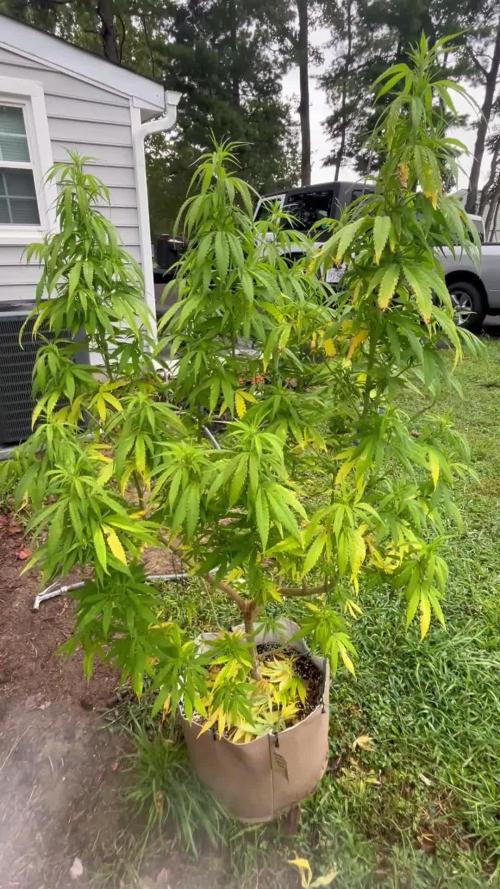
Have been slacking on keeping notes however in the past weeks I have top dressed with 1tbsp/gal of GG 284, treated her with a generous amount of growers ally crop defender 3 that got rid of 95% of the bugs on her, moved her to a spot that is not in the path of light put out by a light on a power pole, and trimmed off all of the large yellowing leaves.
After weeks of waiting she has finally shown her preflowers and will be getting one more good defoliation this weekend before flowering fully kicks in and she is focused on bud production.
All is on the up and up even though we had a slight decline in plant health and my worriness for her but it seems as though she is loving life at the moment.

Likes
79
Share


@Salokin
Follow
Hello Growmies,
Our journey with Epic Buzz by Anesia Seeds, which began with germination on the 20th of January, has quickly progressed to an exciting stage. Just three days into the seedling phase, which started on the 21st of January, the seedlings are already showing promising signs of vigorous growth and health.
Each seedling, displaying a lush green hue, stands uniformly in both color and height, indicating a healthy and robust start. Their growth over the past three days has been remarkable, reaching heights between 5.5 and 6.5 cm. This growth spurt is a clear indication of their strong developmental potential.
The transition to their next stage of growth was marked by a careful transplantation process. As soon as the first tap roots appeared at the bottom of the easy plugs, we moved them to 1-liter airpots. During this process, we treated the easy plugs with Great White, aiding in their root development. The airpots were prepared with Biobizz Light Mix, providing them with the necessary initial moisture. Since then, we've refrained from additional watering to let them settle into their new environment.
Lighting has been a key focus in their care. We've set the light intensity to a gentle 15-20%, which translates to about 150 PPFD. This level ensures that they receive enough light for growth without being overwhelmed, which is crucial at their current seedling stage.
In other exciting developments, the Tent X Controller has arrived. Although it's not yet in the same tent as our Epic Buzz seedlings, its presence is a significant addition to our setup. We've shared an unboxing video to showcase its features and setup process. The controller is now operational, tracking data efficiently. Its performance has been flawless, and any queries we've had have been promptly addressed by an incredibly responsive and helpful support team.
As we look forward, our focus remains on the seedlings as they continue to establish themselves in their new environment. The Tent X Controller, set up in a different location for now, signifies an upgrade in our overall growing setup. We will continue to closely monitor their progress, making adjustments as necessary to ensure they receive the best possible care. We're also eagerly anticipating integrating the Tent X Controller into their environment in the future.
Stay Lifted
Salokin


Likes
3
Share


@DrBud420
Follow
29.06.
Wedding Cake 1# Day 65
This plant is one of the few plants least affected by the problem, but it is certainly missing 30% of its leaf mass.
She has finally continued to grow and I hope she pulls through.
Wedding Cake 2# Day 59
This one is forever hungry and thirsty...
29.06.
The plants have finally started growing again, some have almost completely recovered, some are still recovering, and some are in critical condition.
The plants stopped growing for almost a week, maybe even that long, during those days they literally made no progress, the situation only worsened to the extent that I was sure that all but one plant would wither...
There were storms yesterday and the day before yesterday, and that's why I'm late with the update because I couldn't take a picture of them, the gusts of wind were really strong.
Watering is now more frequent and abundant, now I water them every 3rd or 4th day, everything depends on the temperature on those days, whether there is wind, how much moisture there is, etc.
The last time they were watered was before the storm and they are already thirsty today as you can see in the pictures, it will be a day and I will water them in the morning.
Today I removed their leaves again and now I can freely say that they have twice as few leaves as they should, so when it's time for defoliation, I probably won't do it at all, or at least not a lot.
The day before yesterday it was the end of the ninth week for the plants, now they are already in the tenth, but in order not to miss the ninth week, I will write it in the ninth and I will write the next update 2 days earlier, more precisely, on time.
The day before yesterday it also rained, there was a downpour for about 40 minutes, but the spray that I sprayed on the plants failed to absorb, it simply stuck to the leaf, it is greasy, you can see that in the pictures, the leaves are shining. I think the biggest problem was caused by the fact that it sticks to the leaf and when the sun is strong, the leaf simply burns.
In general, do not use the product from the last picture, it can easily kill the plants.
Most of the plants have almost recovered and are getting better, however, the rain can't stop that shit and I also tried to wash it, but it's not worth it, so there is a high probability that the problem will return when the temperatures rise again and the UV is almost extreme and that could be a problem... the temperatures have normalized again to 30 during the day, but in 4-5 days they are announcing again around 36-7..
I will copy the problem that befell the plants from the previous two diaries of other strains from a few days ago in order not to explain everything again, so whoever is interested should read it in more detail.
25.06.
the condition is medium sad... the plants have not progressed at all, why?
Well, because I'm a moron who doesn't think...
Basically, what happened.. I sprayed the plants with an organic preparation against thrips and similar pests and if there was no need for it because this is growing outside and absolutely these little things can't do anything for them except something miserable to slow down their growth, but nothing terrible... and now, I didn't even want it to slow them down miserably, so I ordered a product called "SMC Spidermite Control" I sprayed the plants overnight, the next day when I came to the site, I had something to see... which is the worst I sprayed all the plants, instead of checking on one and only then spraying the others...autos I wanted to spray all the same, luckily I only sprayed 5 of them, as if God himself told me "wait until tomorrow to see how the plants will react" and continue...I come to the site and I have something to see...all the plants, but all, some more, some less, but the leaves were massacred blue, black, purple, there were all colors, everything was there, but the least healthy leaves, as if I had sprayed them with the biggest poison, I think that even in that case they would have passed better... was it the product itself or the sun that was strong during the day (I sprayed them at night and the nights were around 18 C in the coldest part of the night, so they had time to dry, it's not that they couldn't dry, but it all stuck to sheets, it was all shining, I think they could see how bright it was from the plane, but literally... I removed almost 50% of the leaf mass from some plants, from some smaller ones... the tips that were supposed to grow and be ready for a new topping just started, so they had stopped completely for a couple of days literally... the situation is now as you can see in the pictures, there are a few leaves that appeared after spraying with that product, and it is still appearing, but very little, just, just, and this there was no point in leaving the leaves that I plucked because they were completely destroyed, I have never seen them in my life...
The site I bought it on said that the preparation was organic and completely safe, nowhere did it say that it can literally kill the plants, not even on the preparation itself... I am very sad about this, I have been spraying them with clean water every morning before sunrise since it appeared and the tops have slowly started to grow, this crap is appearing less and less, and I have no more leaves where should I remove it, I would just kill the plants... I hope they will recover (except for one plant that is in a critical condition and the automatics that were sprayed are also in a very critical condition, they are young and will hardly survive this) but if not, I have another white runtz that is not in the diary, it is a little more than 3 weeks old, so I will transplant it into 200 liters of soil, so at least something will come out... I feel very sorry for the plants, I already have enough money invested, and this is also my therapy, cultivation heals me…
I'm very angry with the people who sold it to me, and they didn't warn me about such a thing, if it's not written on the bottle itself and on the website, and I've been buying from them for years and they know what I'm growing... the product is not cheap, I paid money for something that will kill my plants, fuck... I mean, fuck money, I feel sorry for the plants, but you understand what I'm saying... I'm also angry at those who put the product on the market in the first place, and I would say all kinds of things I did it, but it's better to keep quiet... and mostly I'm angry with myself because I believed what it says and didn't check the product, like the biggest amateur...
But what's here is now, let's move on...
Today is the 57th day of the plant's life, yesterday was the end of the eighth week.
Watering is now more frequent, every 3-4 days, it depends, the heat is already high, today it was at least 40 C in the shade, the forecast says 35.
Since the last update, the plants were fed once and for the first time after transplanting, this morning most of them were fed for the second time, the next watering or two will be with clean water.
Stay High and Keep Growing!!!
Growers, please avoid this crap, the product is called " SMC Spidermite Control"
This crap seems to have been imported from Ukraine,from chernobyl directly, not from UK lol
Only Positive Vibes
Stay High and Keep Growing!!!


Likes
29
Share


@Belverde
Follow
Welcome mates
Two months have already passed since the harvest
I have only grown one plant of this Kush strain, so as always, the review may differ from the others due to the phenotype encountered
Anyway
With this I used the topping technique and a hardcore oretty defoliation ..
And I do not recommend doing it with this type of plants because it can suffer in the final yield
The flowers are pretty full of trichomes and present a very delicate sweet aroma and also in the taste...but the structure dosen't has a good appeal..
The effect it's a usual Kush, wich i really enjoy
Mind quite and body relaxed 👌
To me it's better using with a vaporizer, but it's enjoyable also in smoke
In the video i used organic rolling papers and filters by Raw and only pure dryed & cured flowers 🔥
And that's all
Maybe i cannot raccomended this one, cause my pheno as nothing to special...but i can definetly raccomended Barney's Farm because their feminuzed strains are pretty good with different terps and effects..
Thanks to everyone watched and readed 👍👍👍💪
And thanks to GD 🙏
✌️
🇮🇹
