


Likes
Comments
Share

@BettyFlores
Follow
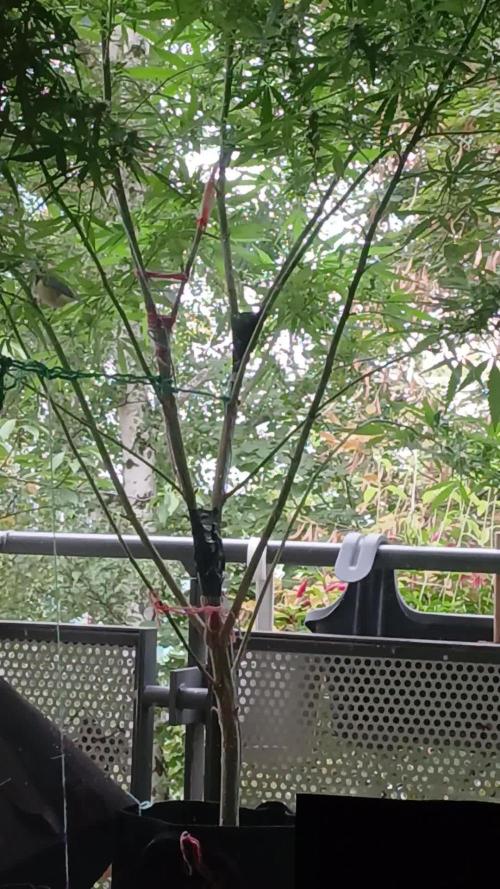
26.09.2025 Sie bekommt sehr viel Besuch und es ist immer etwas los! Der gebrochene Ast hält bisher sehr gut und die Blütenpracht ist umwerfend. Eventuell mache ich später nochmal Fotos, da es die letzten Tage durchgehend regnet. Die Vögelchen sind sooo süß 🐦

Likes
10
Share


Likes
30
Share


@420DeepGrow
Follow
Gracias al equipo de Anesia Seeds, Marshydro y XpertNutrients sin ellos esto no seria posible.
💐🍁 Captain Future:
Nuestros criadores en Anesia Seeds están siempre en busca de nuevas dimensiones en la genética del cannabis y están comprometidos a ayudar a dar forma al futuro de la cría de cannabis. Después de que nuestra Future # 1 fuera probada varias veces por encima del 37% de THC y se convirtiera en un éxito entre los dispensarios, teníamos claro que el viaje no podía terminar aquí. Después de numerosos intentos, encontramos el socio ideal para mantener o aumentar la potencia y llevar la experiencia de sabor al extremo.
Esta variedad Premium puede cultivarse tanto en interior como en exterior. En el interior, las plantas tienen un tiempo de floración de 10 a 11 semanas y deliever rendimientos de 500-600g por metro cuadrado, al aire libre una planta puede producir hasta 800g
🚀 Consigue aqui tus semillas:
https://anesiaseeds.com/es/product/captain-future/
💡FC6500: Eficiencia líder en el mercado: la lámpara de cultivo LED FC-E6500, que ostenta un estatus líder en el mercado, es una solución rentable con un PPE de 2,8 µmol/J y un rendimiento máximo de 2,5 g/vatio. Ofrece un PPF alto de 2026 umol/S y es adecuada para una cobertura de vegetación de 1,50 m x 1,50 m y una cobertura de flores de 1,20 m x 1,20 m.
Iluminación versátil y uniforme.
https://marshydro.eu/products/mars-hydro-fc-e-6500-730w-commercial-led-grow-light/?gad_source=1&gclid=Cj0KCQjw1qO0BhDwARIsANfnkv9IIrYSbmJqz8PqpJOIyWwJfp5bc3SGJgUV68USLQ4tjmXDYwoBuAsaAue3EALw_wcB
🚥 MarsHydro ADLITE UV/IR/RED:
Para lograr un crecimiento óptimo de las plantas y maximizar los rendimientos es un arte simple que depende en gran medida de las condiciones ambientales adecuadas. Reconociendo las limitaciones de la iluminación natural y las soluciones de iluminación tradicionales para satisfacer estas necesidades únicas, lanzamos ADLITE. Estas luces especiales UV, IR y roja están diseñadas para llenar áreas del espectro, proporcionando las altas longitudes de onda que las plantas necesitan para un crecimiento y desarrollo óptimos.
🚀 Consigue aqui tu Adlite:
https://marshydro.eu/collections/adlite-supplemental-lights/
🏠 : Marshydro 1.50 x 1.50 x 1.80, carpa 100% estanca con ventanas laterales para llegar a todos los lugares durante el grow
https://marshydro.eu/products/diy-150x150x200cm-grow-tent-kit
🌬️💨 Marshydro 6inch + filtro carbon para evitar olores indeseables.
https://marshydro.eu/products/ifresh-smart-6inch-filter-kits/
🍣🍦🌴 Xpert Nutrients es una empresa especializada en la producción y comercialización de fertilizantes líquidos y tierras, que garantizan excelentes cosechas y un crecimiento activo para sus plantas durante todas las fases de cultivo.
Consigue aqui tus Nutrientes:
https://xpertnutrients.com/es/shop/
📆 Semana 12:
Última semana de engorde de este precioso micrófono antes de lavar raices, el aroma es increíble y la cantidad de resina se acumula por momentos.

Likes
17
Share


@CanadianFillmore
Follow
Week 3F begins. Raised the light a bit, will see if it makes a difference with the leaves.
Bud sites are popping and looking good for their small size.
Thanks for stopping by.


Likes
6
Share

@DaedalusGrow
Follow
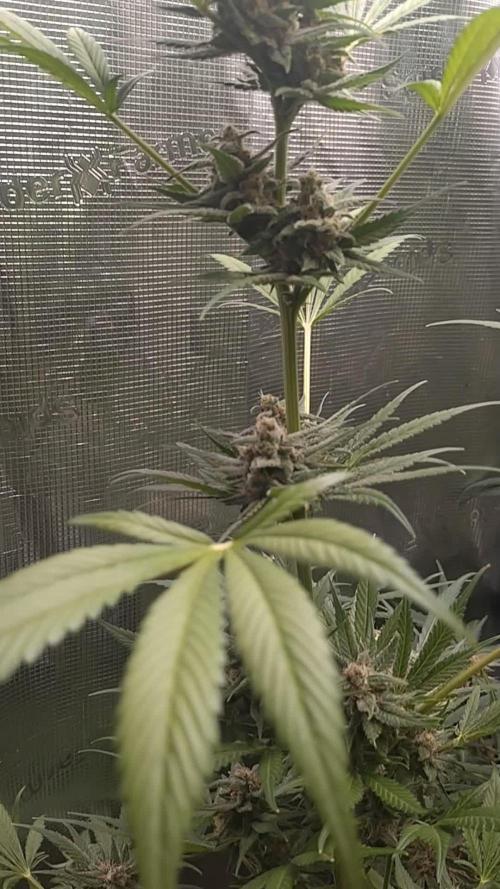
Sie ist noch in die Höhe geschossen jetzt 90cm.
Die Blüten haben sich schön Entwickelt sind dicht und Fest der Geruch hält sich in Grenzen. Richt nach Lackritz etwas Pfeffer. Die Trichome sind noch nicht ganz Reif werde sie noch ein zwei Wochen warten und dann nochmals nach schauen.
Likes
57
Share


@Roberts
Follow
Pablo Escobar is moving along, and doing some bulking. She has a citrus aroma to her as well. She has been doing great, and will be a few ounces when done. Nothing more to report at the moment. She has about 3 weeks left roughly. Thank you Spider Farmer, and Divine Seeds. 🤜🏻🤛🏻🌱❄️
Thank you grow diaries community for the 👇likes👇, follows, comments, and subscriptions on my YouTube channel👇.
Thank you Happy Growing 🌱🌱🌱
https://youtube.com/channel/UCAhN7yRzWLpcaRHhMIQ7X4g

Likes
64
Share


@SmokingTiki
Follow
Welcome to the Smoking Tiki's hut!
For this grow, I'm using some of the seeds I won at the Summer Buds contest from last year. I kept the seeds in my fridge door during one year. It worked very well because all the seeds successfully germinated after 48h! 😎 I used 3x3 seeds. I selected 2x3 seeds with the bigger root to put them in some pots. I will let them grow a bit and then select the 3 best plants to make it until the harvest.
It's the first time I grow some Fast Buds under a light and in a controlled environement, I'm really curious to see how it turns out!
My set-up:
--------------------------------------------------------------------------------------------------------------------------------------------------------------------------------------------------------------------
- Mars Hydro TSW2000 (300W).
- Tristar fan (30W)
- Greenmigo dehumidifier (155W).
- Compo Sana universal soil (2x40l)
- Timer
- Weather station + pH meter
Have a nice journey through my grow diary!

Likes
5
Share


Likes
6
Share


@Shotter
Follow
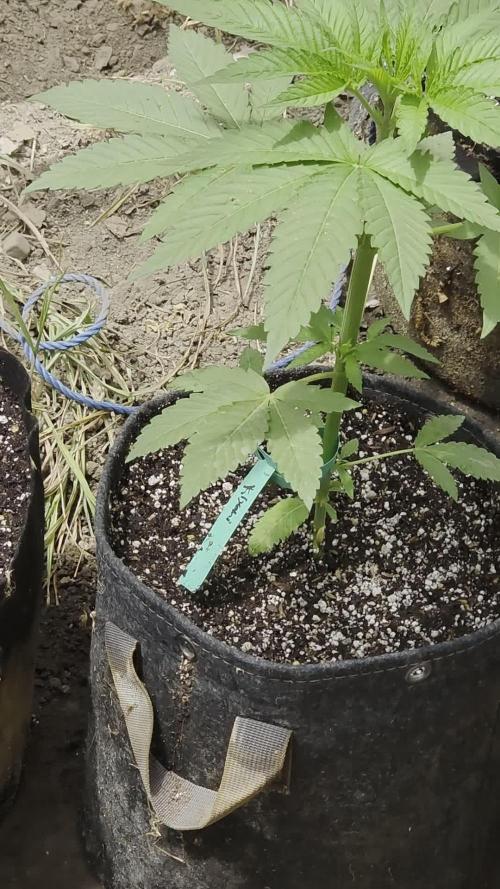
So were on day 26 of flower there looking good getting a nice smell starting to throw out trichomes
Have down loaded a thew videos of before and after removing fan leaves


Likes
6
Share


@CanarianGrow92
Follow
Week 1 flowering is just over for our melonade Runtz from Dutch Passion
The stretching is amazing, they really doubled the size or even tripled the size.
We are adding some bloom nutrients now and lets see the buds starting to appear the next weeks.

Likes
60
Share


@Cannibalgardens
Follow
This girl has been packing on some weight now and has started to get a lot of crystal forming on my sugar leaves.The long white hairs are really filling the gaps now on the internode spacing thisgirl is beautiful.smell is still very lemony ans skunky the plant smells so strong i love it these dinafem genetics are amazing.ive been feeding her same levels nutrients i might upit a bit, cant wait to harvest this beast ....


Likes
60
Share


@Professor_Chaos
Follow
Beginning of week..
I went ahead and bumped the TDS to 1000 PPM this week. I don't think I'm going to go much higher than that. Usually don't have to.. Hopefully that's not too much.. I also started adding a bloom booster from Advanced Nutrients called Kushie Kush.. It works great for all strains tho lol. So the runoff is still acting up.. But it is getting better... Slowly. I emailed General Hydroponics on the issue a few days ago and they have not gotten back to me yet... Ugh. But going in: 1000 PPM.. Runoff: 700 PPM.. That was this morning.. Still have not given her plain water yet.. Just been feeding every watering.. Not really any signs of issues right now. A couple leaves are a little yellow (literally 2).. Another couple have some spots (maybe 4 or 5 leaves).. But other than that she is happy, healthy and smelling like a fucking champion! Seriously fucking delicious.. And to think the smell is supposed to warn off predators.. Hah! Good luck with that!!! Barely 8 days of flowering and she is already stacking so fucking nicely! I can't wait to see what kinda magic this gal is gonna do! So happy and excited!!! The light sits about 18 inches from the canopy right now at 100% power. She is still stretching a little but seems like she may be done with that pretty soon.. Maybe even before this week is over. Clones didn't make it.. I think it was too cold. They all sprouted roots but just stopped and they all yellowed out like a mf'r.. Looked like shit so I took them out back Ol' Yeller style and put them out of their misery 😭.. But it's ok.. The mama needs all the focus on her right now! Lol.. Oh yeah.. I went ahead and pulled a couple of the tallest branches down.. Just a tad.. Brought the ties up a node or so on each and pulled it tight.. Spread her out a little but I was nervous of snapping one off so I didnt try to push it too much.. These branches are tough af!
Later that day..
General Hydroponics finally got back to me.. They said that I'm an idiot for using FloraKleen during transition like that.. Lol jk.. They did say that I should have NOT done that.. And that my runoff should ALWAYS be lower than it is going in due to the ppant taking up the nutrients.. But that just doesn't seem right to me.. Ive ALWAYS had my runoff higher.. Literally ALWAYS.. but without issues. They said that if the runoff PPM is higher, then there's a problem.. Maybe if I was doing frequent fertigation.. But I'm not.. And never will because that just sounds like a waste of nutrients.. But whatever.. Today I learned that FloraKleen is ONLY for pre-harveat flushing.. Or hydroponic reservoir cleaning in between nutrient changes.. But definately not the way I used it lol.. Thankfully she is still doing good 👍... Buuuut whoops lol
Mid week..
Still doing magical things! Lol.. I didn't think she was gonna fill out this tent so nicely! Trichomes are forming nicely.. The purpling is looking amazing also! Some spots on SOME leaves.. But not alot.. Not sure what that is about.. No pests.. No deficiencies as far as I can tell.. Maybe just a mutation? Nothing to worry about tho.. This girl is so fucking gorgeous! I love it!.. Back to feed, water, feed, water, etc. schedule now.. I'm hoping that 1000 PPM isnt going to be too high for her.. But if it is, I will adjust accordingly.
End of week..
Seems to me like the stretching has stopped.. So I'm going to cut out the FloraGro.. Double up on the FloraBloom and later into flower I will bump up the Kushie Kush Bloom Booster. She's doing great! Smells fucking amazing! I thought my ETHOS Early Lemon Berry R1 was gonna be the best strain ever.. Then I grew this girlie! Not just a lemony scent.. But like a very sweetened lemonade.. Incredible! Trichomes are EVERYWHERE! Such an awesome, beautiful strain! Good job FastBuds.. Can't wait to try more of your strains! Too bad you wont even acknowledge my grow journal like you do everyone elses.. But whatev.. Lol.. On to the next week!!!...
Likes
176
Share


@DevilsBud
Follow
Week 6 of flowering cookies Gelato by RQS
Hallo again brother and sister Growmies and homies . I will be making the diaries somewhat individual per strain. They're in same tent but not same strain lol . In the beginning didn't know what i was doing 🤣🤣 and had both diaries the same but from now on I will treat them as different plants/diaries 💪🏻 so this will be same as the other diary because there's nothing to talk about yet lol
Fresh new week ahead . I am excited let's do this 🤘🏻🤘🏻
Day 35 Cookies Gelato
New start of the week.
The Cookies Gelato looking mean, green and sticky as hell . Getting my better microscope in tomorrow so i can check on the progress. I had a small microscope but you have to ram that one into your eyes to see through it lol . This morning i gave them 1L water with the full range of awesome advanced Nutrients. I am very happy with these nutrients! They are perfect for me!
Come look at my other diaries! I appreciate it a lot 🤘🏻
I am running this fully marshydro
Marshydro GT 100X100X180cm tent and
Marshydro TS-1000 LED lamp
Day 36 Flowering Cookies Gelato
Cookies have good time next to the Critical's i am very excited to try this one. They don't sell in shops here but if they do, you pay 40 euro per gram and i ain't that dumb lol.
Gave the plants 1.25L 🌊 pH 6.6 and that's it I let them do their thing. Also trying out my new microscope it's definitely a learning curve to focus in with not steady hand lol . Sorry for the first blurry pics 🙈
Come look at my other diaries! I appreciate it a lot 🤘🏻
Come visit www.marshydro.eu
for your best gear and use the PROMO CODE: DEVILSBUD
And you will get a nice discount.
Day 37 Flowering Cookies Gelato
Got some leaves away that were droopy . Nothing special, made new video today so take look if you want 🤘🏻.
Come look at my other diaries! I appreciate it a lot 🤘🏻
Day 38 Flowering Cookies Gelato
The Cookies Gelato
Frosty Town in cookies gelato ally
3 big main ones going on with cookies Gelato#2 this one was topped and the cookies Gelato #1 i think was fimming and has 2 main ones and nicely grow below . Same issue with critical tho low bud structure . its definitely Going to be better to cut the top when they're done and let the lower grow continue for a week or so . Today i Gave the cookies gelato water with advanced Nutrients with pH 6.5 ppm the same as critical i forgot right now what it was lol
Day 39 Flowering Cookies Gelato
Moved the big branches more to the light and tied them to the ScrOG netting definitely more light created now 🤘🏻🤘🏻
Come look at my other diaries! I appreciate it a lot 🤘🏻
Come visit www.marshydro.eu
for your best gear and use the PROMO CODE: DEVILSBUD
And you will get a nice discount.
Day 40 Flowering Cookies Gelato
Been bizzy trying to get cookies gelato under the microscope is quite a task . The best way for me is to cut 😱😱😱 something off and lay it down. it works but still need to fine tune it a little better but amazing what you can see up close 👀 some leafes had a lot of ambers on it but the buds (not photography) are still clear so it has some way to go still.
Day 41 end of week 6 of Flowering
Week 6 is over Growmies what a wonderful week!!! Getting the microscope under control and starting to see the milkyway . But still a lot of clear trichomes so i will wait with flush this week . I think next week i can start the flush of cookies gelato 🤘🏻
I appreciate all the comments, likes, views and tips you guys are an awesome community 👍🏻👍🏻 .
Have great time growing and see you in the other week
guys and girls Growmies and homies
Come look at my other diaries! I appreciate it a lot 🤘🏻
Likes
91
Share


@Fire_Farmer
Follow
Week 2 Day 6 Flower
Super happy with this grow so far!
I've been defoliating them every couple or few days up until last night when I removed all the lower growth which didn't make it to the canopy/net and a fair amount more leaves which shaded branches.
Going into week 3 of flower I will continue to defoliate if need be but I don't think I will have to do much we will see if they stretch more growth or slow down and start flower production.
Thanks for looking in everyone
Happy Christmas
Fire Farmer 🔥👨🌾


Likes
86
Share


@Ageddd
Follow
Last feeding with Top Bud at the beggining of the week, and then 2 weeks irrigating only water
The Blueberry started yellowing leaves ..
And... look at that beautiful chemicals called chemtrails, which are sprayed from the air, penetrating directly in our lungs, plants and soils
If someone needs a proof, well, these strange chemicals look like spiderwebs but if you check it closer and you touch it you know it is not made by an animal,
( and i am even more sure when the plant has like 5 or more spiders around making webs,they are completely different ) it is like shaving gel when you touch it .
Got no more to say, better watch..( They still processing loool )
Feeding Schedule
Added Micro Vita to the soil again, to clean the roots and help the nutrients break
WATER / TOP BLOOM + TOP BUD + TOP CANDY / WATER / TOP BLOOM + TOP CANDY / WATER
Song of the week : SIRENS | Z1RENZ - Denzel Curry
Likes
13
Share

@NSABND
Follow
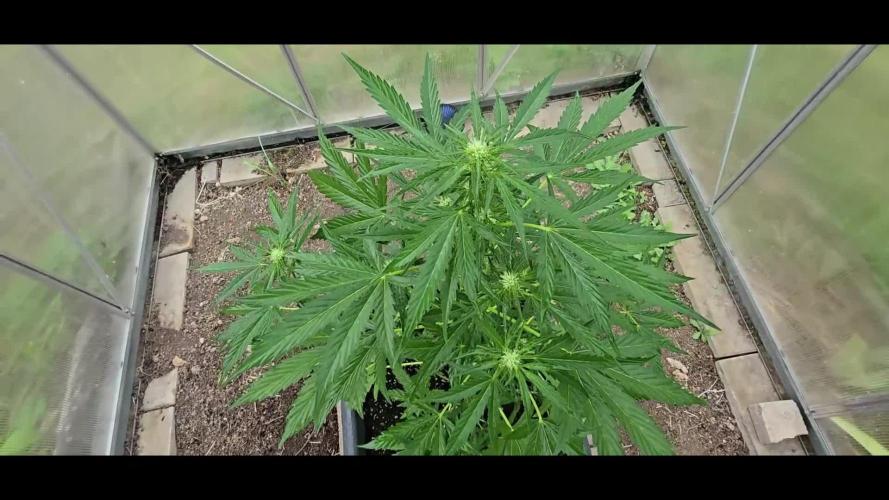
Let´s start a new week 😎👌
Day36 very sunny and warm... "Hilde 2.0" goes well 😎👍🙏
Day37 starts with massive cloudy weather but later it turns into a sunny afternoon 😏🙏
Day38 was cloudy and rainy and not so much sun around here 😳😵
Likes
12
Share


@Jays_Not_Here_Man
Follow
Week 8, and my custom fit SCROG has been installed! ❤️
At Day 50 I separated my 7 gallon girls and my 5 gallon girl. Once done, I began the very easy process of adding my “floating” SCROG. I use ratchet straps, just like the ones that come with lights to secure the four corners of the screen to the top of my tent.
This allows me to adjust the screen height as necessary when 1) first installing and 2) once the full stretch of flower has occurred, I can tweak it a bit to balance the canopy as best as possible. It’s not 100%, I still get some over achievers, but I find it useful as another option.
I like to do a major defoliation before I set the ladies in. Typically till this time, I have done almost no defoliation, just LST and some HST techniques. I adjusted the ladies placement to allow growth out all sides of the screen, set the screen height and began tucking and bending. The defoliation and bending allows light to penetrate all those side shoots that would have amounted to nothing, and they become top shoots as they grow up and form an even canopy.
I don’t like to weave, it can damage the new shoots and cause growth problems, but the goal is to get as even a coverage as you can while allowing for plant growth in all directions.
Once complete, I will give the girls about a week to recover and grow those new shoots. I like to have about 80% coverage of the screen, before I change my light cycles to flower 12/12… and if they are healthy and strong. I’ll decide this weekend if it is time ❤️👊🇨🇦😎 Happy Gardening!
