


Likes
Comments
Share

@Borberad
Follow
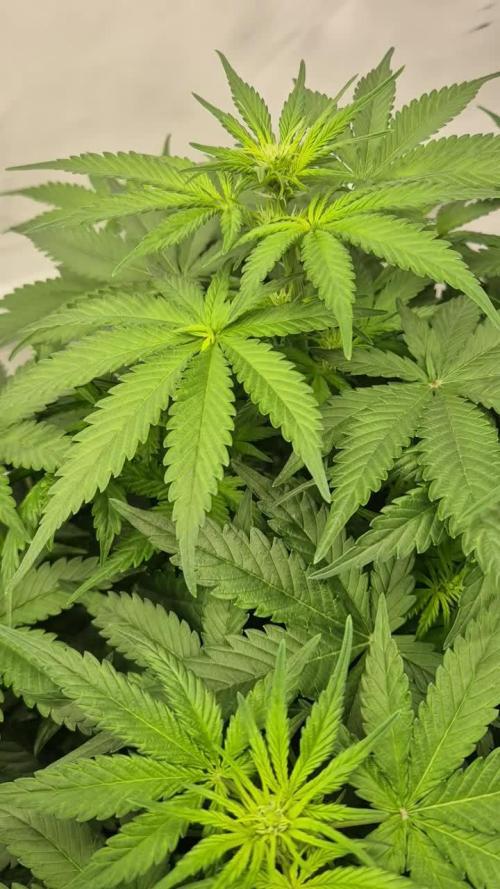
Blütewoche 2 Die Blüte kommt in Schwung.
Die Pflanze streckt sich und entwickelt Blütenstände. Der DLI wurde sukzessive auf 40-45 angehoben. Der Düngeplan bleibt unverändert.
* Zustand der Pflanze: Kräftiger Blütestretch, erste Blütenstände sichtbar.
* Wichtige Ereignisse: Anhebung des DLI.
* Düngung & Messwerte:
* Gießwasser: pH ca. 6,3. Leitwert 1,4 bis 2 S.
* Drain: Wir stellen sicher, dass der pH-Wert nicht unter 5,5 und nicht über 6,8 liegt und der Leitwert die +/- 500 S Abweichung einhält.
* Anpassungen: keine

Likes
17
Share


@Targona
Follow
10/10/2022 - 64 days since my little girl sprouted from seeds🌱
The fifth week of flowering of my Orange Sherbet 🍨🍨🍨
Nutrients:
Jungle Indabox - this week I keep serving and adding Jungle Indabox Environ X - bud stimulator 🌼🌸🌼
Advanced Nutrients - Big Bud - I canceled the bud stimulator mix and stayed with Jungle Indabox because the girls got a little burnt, the classic brown color appeared on the tips of the leaves 🍃🍂
I stuck with Bud Candy, all my girls need plenty of carbs 🍭🍭
Atami - ATA Calmag - when growing under LED lights it is recommended to use Calmag and Atami is an excellent brand
Training:
With Orange Sherbet, I didn't do as much defoliation as with BCN, it wasn't necessary, I mainly cut off the large leaves that shade the light 🍃🍃
LST: some of the strings I used to attach the twigs to the edge of the flower pot loosened, so I had to re-tie them 🌴🌴
Light: Believe - the best light of sponsor Mars Hydro TS 1000 💡💡
In general:
The girl grows like a typical sativa, has typical long and narrow sativa leaves and despite my training is the tallest of all the girls from the box 🌾🌾
The plant is strong, manages nutrients well, absorbs as needed.
The buds form along the entire length of the branches, they are dense and it is already clear that there will be many of them.
She Is in full bloom, I expect her to bloom for at least another two weeks 🏵️💮
It smells really wonderful, she revealed her typical fruity scent 🍇🍊
Thanks for the likes and you can follow me on Twitter 🐦: @ Targona666
See you soon 😍

Likes
38
Share


@gottagrowsometime
Follow
Was a difficult week, because the plant was at the very back. I got some small % of bud rot. Very small. Buds are very dense. Dripping in trichomes. Colorful, and very stinky. What a beauty.
Likes
7
Share


@JayBane
Follow
FastBuds? More like FatNugz!
What a delight this Strawberry Banana was to grow!
Smelling wonderful, trichome rich and compact buds!
Will update a harvest report once she's dried and trimmed up & ready to bottle.
Likes
10
Share


@Furfacefarmer
Follow
Time to flower so she is now the flower tent whit some pretty big sisters.


Likes
38
Share


@Silverback_Guerilla
Follow
8/10:
Seeing great growth now..lots of branching. I actually fed them yesterday, but didn't update...several have popped some pistils and pretty much the rest are about to, and I'm out of bat guano, so I went ahead and gave them Open Sesame so they'd have more P available over the next several days.
8/11:
I rearranged the garden a little. Moved all four #10's to the right side, the #4's are mostly in the middle...very branchy..the others, mostly to the left are the #2's and maybe a #3.
The big plant on the lower left is an auto, as is the runt, and the plant at lower right. The "fern-looking" plant is actually a Jacaranda Tree (blue fern tree)...it's about to get kicked out...
8/12:
I did a little training on some of the bushier #4's today. I don't have much space to work with, but I was able to do a little to encourage a race for apex dominance.
There were enough pistils on them that I decided to switch the week to "Flowering."
8/13:
I fed them today with ONE and added Open Sesame, Silica, Signal, and Sweet & Sticky.
I sprayed them all with Axiom (Harpin proteins) and Boom Boom Spray right at dark.
8/14:
BAM! They are poppin pistils left and right now...lotsa lovely little cotton tops.👍
8/15:
Day 15 since the flip to 12/12..good progress. The #2's and #10's are stacking up and stretching pretty well and the #4's just keep bushing up.

Likes
24
Share


@ThatoneAKguy
Follow
It’s Aliiiiiiive! Finally built my second matching hybrid NFT hydro system after getting the autos out of the main tent. 6” Rockwool cubes on draining racks in 8 gallon totes with an 8 gallon res. Waiting on some parts from amazon to add the second pump and feeding tubes. Hoping to veg them for 3-4 weeks before I flip the schedule. Haven’t decided if I want to scrog them yet or not.

Likes
2
Share


@Saintvicious
Follow
Flower stretch and bud sites are setting. Lots of tops from the lst. Fingers crossed.
Likes
19
Share


@CookiesAndCake
Follow
Week 11
Day 71 (15/03/2021):
No time to take pics today ✌️
Day 72 (16/03/2021):
Looking good but more and more leaves are drying up or turning yellow. But at this point there is definitely no point in stressing the girls by removing them. Although the colours definitely look nice!
Day 73 (17/03/2021)💧:
Today will be the last watering for the girls so they have a few days to take up the last bits of moisture before harvest. I can’t believe how fast this grow went but I have definitely learned a lot from it.
Day 74 (18/03/2021):
They look so nice and colourful, definitely an interesting bunch of girls :D Can’t wait for the harvest and cure
Day 75 (19/03/2021):
No time to take pics today ✌️
Day 76 (20/03/2021):
No time to take pics today but harvest day tomorrow!!!!
Day 77 (21/03/2021):
HARVEST DAY! What a great journey it has been growing these girls. They were so resilient and only started showing symptoms of deficiency in the last few weeks. They are absolutely covered in trichomes and smell very pungent. I think they will be super hard hitters! And it still amazes me how different they all are. Echo is even completely purple! Can’t wait to trim and dry these girls and will definitely make some bubble hash from all the trichomes on the leaves too 🤤 Will follow up with a review soon! (after they’ve cured for a bit)
Likes
199
Share


@CRiSPrGrow
Follow
Not bad not bad, by the looks of it she'll be a fatty but i just hope that she'll be ready at the same time as the others. What i want to know is how the bbc can predict when i want my harvest but can't predict when my fucking landlady will break in and faff about it my grow room, long story short 46 makes me 👺 anyways, boucing back from a scare nevermind mind her 46 is my focus lol oh my the things we do... enjoy ! 🚀 Induced resin production by dropping the lightschedule to 10/14 almost immediate effects were smelt, loud and clear : candy shop goodness ! this one is gonna be a sweet one ! 👊
Likes
18
Share


@Hashy
Follow
Week 9
Light cycle=12/12
Light Power=180w
Extractor controller settings
High temp= 24c
Low temp= c
Temp step=0c
High Rh= 50%
Low Rh= %
Rh step=0%
Speed max=10
Speed min=1
Smart controller settings (during lights on).
Lights on=10.01-21.59
Radiator on= below 22.0c
Radiator off= above 23.0c
Dehumidifier on= not in use
Dehumidifier off= not in use
Smart controller settings (during lights off).
Lights off=22.00-10.00
Radiator on= below 18c
Radiator off= above 19c
Dehumidifier on= not in use
Dehumidifier off= not in use
Fri 16/2/24
💧💧💧💧💧💧💧💧💧💧💧💧💧💧💧💧
Method= automatic
Feed=bloom nutes.
Neutralise=0.1ml/L
Silicon=1.0ml/L
Calmag=0.75ml/L
Terra Bloom=4.0ml/L
Sumo Boost=2.0ml/L
Roots=0.2ml/L
Easy Ph down=0.11ml/L
Ec=1.85 PH=6.4/6.6
Time start=12.00pm
Finish time=13.45pm
(11×5 minute runs with 5 minute gaps)
Total flow rate=190ml/min
Flow rate per plant=47ml/min.
Total volume made=13L(13.5L)
Total volume left=3L
Total volume used=10.5L
Volume per plant=2.6L (Est)
Runoff.
Total runoff=1.2L
Ec=2.13 PH=6.1/6.3
💧💧💧💧💧💧💧💧💧💧💧💧💧💧💧💧
#3 (Day 57)(Day 19 flower)
📋 Because this is quite a bit further away from the light then the rest of the grow she wasn't showing signs of light stress but because the others are i had to turn down the power from 180w to 170w. New DLi=35.0
Sat 17/2/24
#3 (Day 58)(Day 20 flower)
📋 H=74cm D=30cm DLI=37.0
Sun 18/2/24
#3 (Day 59)(Day 21 flower)
📋 Lowered light power again as they are showing a bit of stress from the light. Power was 170w now 160w. I'm going to have to have a think about my next grow, either I stick with this tent and hit the plants hard with light when I flip to flower to keep them small, or try and cram a slightly bigger tent in the space allocated for it. This tent is 61×76×150cm with the option to extend it to 173cm. Mine is configured to the 150cm height, but because its extendable the top 30cm is inaccessible at the best of times let alone when the plants reach a decent height. Extending this tent will be pointless because that's another 23cm of inaccessible space. Besides I only have a max head room for 160cm where the tent is.
Mon 19/2/24
#3 (Day 60)(Day 22 flower)
📋 H=75cm D=29cm DLI=37.0
Tue 20/2/24
💧💧💧💧💧💧💧💧💧💧💧💧💧💧💧💧
Method= automatic
Feed=water
Neutralise=0.1ml/L
Easy Ph down=0.01ml/L
Ec=0.2 PH=6.2/6.2
Time start=12.00pm
Finish time=13.45pm
(11×5 minute runs with 5 minute gaps)
Total flow rate=190ml/min
Flow rate per plant=47ml/min.
Total volume made=13L
Total volume left=2.4L
Total volume used=10.6L
Volume per plant=2.6L (Est)
Runoff.
Total runoff=1.25L
Ec=1.33 PH=6.4/6.4
💧💧💧💧💧💧💧💧💧💧💧💧💧💧💧💧
#3 (Day 61)(Day 23 flower)
📋
Wed 21/2/24
#3 (Day 62)(Day 24 flower)
📋
Thur 22/2/24
From today I'll have to pull out the front 2 plants to get any pictures of the back 2.
#3 (Day 63)(Day 25 flower)******
📋 H=80cm D=26cm DLI=37.0
Lowered runoff rack. Pots may be sat in runoff slightly.
Lowered light power from 160w to 150w.
H=80cm D=30m DLI=35.0
Even with the pot raised she is still quite a bit below the canopy, unlike the other plants she isn't showing any signs of light stress. She is coming along at a decent pace, maybe not quite as quick as the other 2 test strains.
Back soon.
Take it easy.
Likes
44
Share


@Zorachus
Follow
Ok, all caught up. I haven't done an update in almost 6 weeks. I've been so busy. Lots of picture updates!
First of all, there have been flashlights in my back yard, so I am going to have to start bringing them inside for the night soon. It's been on the news that kids are taking pictures and staking out plants already. Not good.
The Lost Coast Plant Therapy is still working great for the powdery mildew. The fish fertilizer is slowing the yellowing leaves, but they are still turning yellow. I think i will be ok, I am not too worried.
I am about to do my last feeding of the year after writing this. I will be giving them a heavy Gaia Green Power Bloom dose, and some bat guano.
They are smelling and looking great, and I cant believe how fast the buds are growing. I'd say 4-5 weeks to go, tops, hopefully sooner.
Likes
17
Share


@CanadianFillmore
Follow
Week 3F begins. Raised the light a bit, will see if it makes a difference with the leaves.
Bud sites are popping and looking good for their small size.
Thanks for stopping by.

Likes
Comments
Share

@Growboy89
Follow
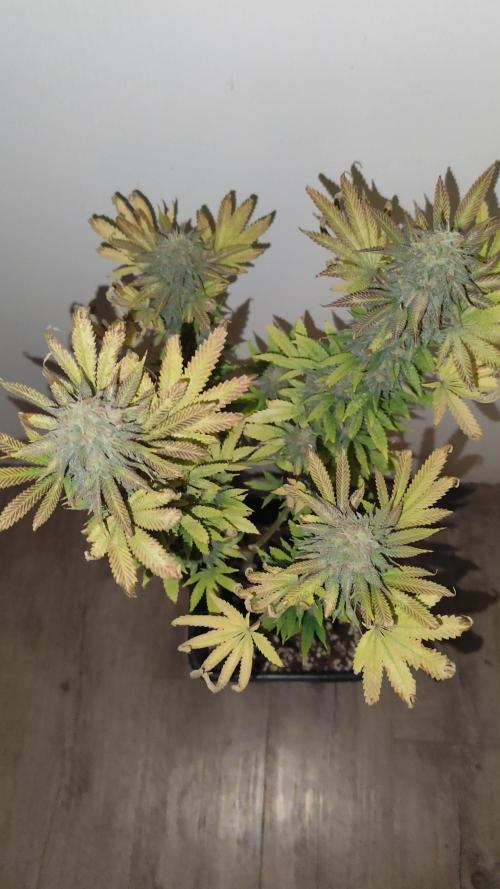
Die Blätter haben durch die Blattläuse gut gelitten. Jedoch wachsen die Blüten gut weiter und sehen auch sehr schön aus und die neuen kleinen Blätter haben wieder ein sattes Grün. Die Blattläuse waren weg, danach wieder da weil sie wohl doch nicht ganz weg waren. Florfliegenlarven sind morgen da. Ab jetzt noch ca. 5 Wochen zur Ernte.
Processing
Likes
2
Share




Likes
Comments
Share


@eldruida_lamota
Follow
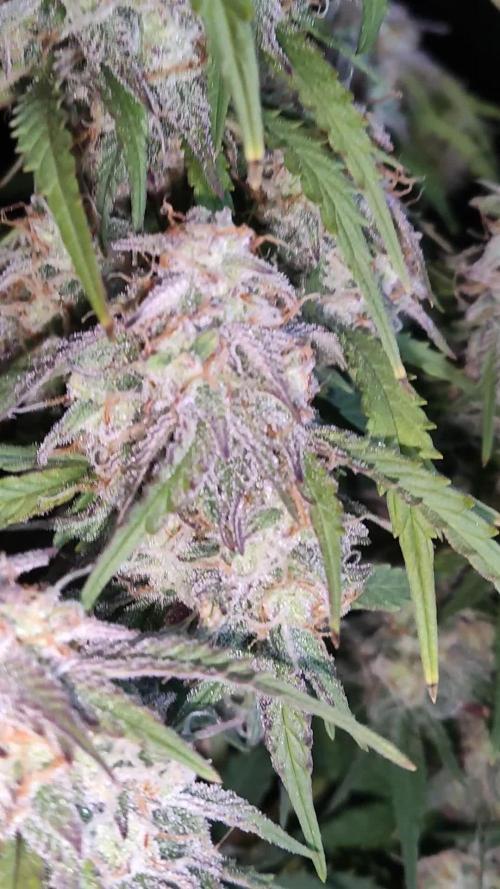
Vamos familia, actualizamos la segunda semana de floración de estas Fruit cake de Seedstockers, salieron las 3 de 3, 100% ratio éxito.
Aplicamos varios productos de Agrobeta, que son increíbles para aportar una buena alimentación a las plantas.
Temperatura y humedad dentro de los rangos correctos dentro de la etapa de floración.
La tierra utilizada es al mix top crop, por cambiar.
De 3 ejemplares seleccioné los 2 mejores para completar el indoor, también cambié el fotoperiodo a 12/12 y apliqué una buena poda de bajos, se ven bien sanas las plantas, tienen un buen color y progresan a muy buen tanto que se me fueron de altura un poco, la solución fue doblar un poco las plantas, también empezaron a formarse las flores.
Agrobeta:
https://www.agrobeta.com/agrobetatiendaonline/36-abonos-canamo
Hasta aquí todo, Buenos humos 💨💨💨

Likes
13
Share

@Roberts
Follow
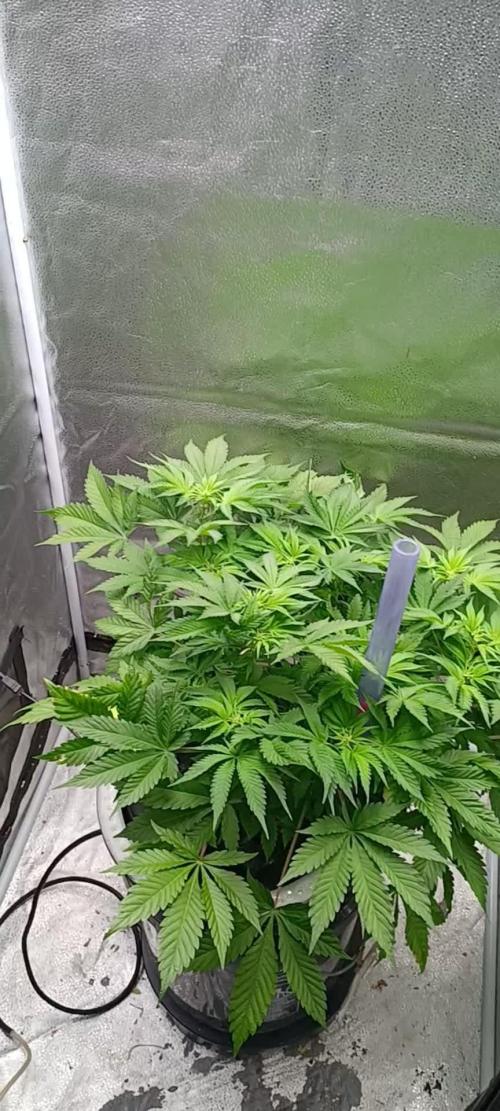
Mintz Runtz automatic is doing good. She is just first showing her first pistils. So she should begin stretching soon. Everything is looking good. I will likely do a solution change next update to a blooming mix. Thank you Spliff Seeds, Spider Farmer, and Elufah. 🤜🏻🤛🏻🌱🌱🌱
Elufah (Power by Growpros solutions) UAP1500,Die-cast radiator and featuring an optical lens design(Uniform PPFD),150W,PPE3.0μmol/J,PPFD1500umol/s/m²,Use the verified commercial-grade spectrum;Full/Epar Boost Spectrum adjustable,A very excellent grow light;
By entering the discount code, you can enjoy an additional 10% price reduction when making the purchase.
Amazon discount code:SAVEURCASH10
product Link:https://a.c1ns.cn/uap1500
Thank you grow diaries community for the 👇likes👇, follows, comments, and subscriptions on my YouTube channel👇.
❄️🌱🍻 Happy Growing 🌱🌱🌱
https://youtube.com/channel/UCAhN7yRzWLpcaRHhMIQ7X4g.

Likes
8
Share


@Kirsten
Follow
14.3.25:
FastBuds Mystery seed grow #1 🌱
We're looking good, nice, strong, and healthy seedling. She started praying after the feeding today.
I watered a couple of litres over the last week. I've been watering around the whole pot to encourage root stretching and kick-start the dry amendments and feed the Mycorrhizae.
I left the first 2 inches around the seedling until today 🌱
Today, I watered with 500mls of dechlorinated water PH'd to 6.2 with:
♡ Black strap molasses
♡ Ecothrive Biosys
18.3.25:
FastBuds Mystery seed #1 is 15 days old today.
She is 3 days ahead of my RQS Northern Lights, which I have topped or fimmed.
I planned to do this one, too, but it's not quite ready yet. Otherwise, she's looking very good.
We'll see how this week goes and hopefully get it done by the end of the week.
23.3.25:
FastBuds Mystery seed #1 is ready to be topped today. I went ahead with alcohol sterilised scissors and cut the two tiny leaves from the centre of the plant.
Everything went very well and a clean cut was made. The plant is looking great afterwards.
Thanks for checking in
✌️🌱🤞💚
Likes
48
Share


@PrairieFrostGrow
Follow
*******Week 5 - January 6 to 12, 2020
She entered flower this week. First 2/3s were transition and she was finicky at this time.....still is at the end of the week.....or at minimum certainly not on an autopilot at this point.
No issues of anything but for IPM, Friday she was sprayed with Plant Therapy by Lost Coast. Mixed at 2ml/L. Done at lights out but was a little slow and ended up spraying about 20 minutes after lights out. Things seemed fine and she had great growth over Saturday night.
The first part of the week the growth was not as vertical. By the end of the week she had shot up. Finally feel comfortable removing some leaves now and there was a slight defoliation this week. Now should have a good form to her with four tops competing for the “top spot”......no FIM either........LST works👋. Expect to see more vertical growth this week. She was 16” tall and 24” wide by weeks end. Tied her down twice this week. She has 2 main stems competing each other, of 4 or 5, but think I will let the two of them duke it out and I will keep them the same height as each other💪😎💪 This strain is supposed to have some fat buds on the AMS and given this girl will not do the same with LST, I will see how these 2 form compared to the other large branches. I still have a couple more seeds from this pack so learning a bit for the future as well.👊
First half of the week she stayed droopy on the lower 2/3’s. Might have been pushing her a bit....a little wet causing droopy and getting pretty green so she is getting the nutes😳😡😳. Dry out day on Thursday and water only on Friday. Backed off the light more and she has taken off finally over the weekend.👊 She has not liked the light at full power at 18”......lowered power and backed off to 40” for a day and she was better. Lowered down again to 28” with HLG at 50% and holding there for now. Still going to sleep about an hour and half before lights out but getting better.
We are getting close to half way👏
Little more detail:
Mon - Jan 6/20 - Day 29
- 2L water ph 5.5......finished last week a little high. Bringing pH down a bit.
- runoff water from last feed 900ppm, 6.1pH. After feed runoff 610ppm, 5.7pH
Tues - Jan 7/20 - Day 30
- dry-out day
- looking like a ball :)
Wed - Jan 8/20 - Day 31
- since nothing yesterday she was fed at 6:30am today. 900ppm with 6.0pH - 1.5L
- run-off: 700ppm, 6.0pH
- pots were light late in evening and no time next morning.....watered again late today.
- 2L in PM with 975ppm, 5.9pH.
- run-off: 650ppm, 6.0pH.
- small growth removed from lowest branches. They will be blocked anyway.
- she is certainly getting greener.
Thurs - Jan 9/20 - Day 32
- sick today.....I did nothing for her :(
- dry-out day.....pots were still okay in evening......or good enough
Fri - Jan 10/20 - Day 33
- she is standing up more today....main branches starting to take off.
- water only today......1L with 6.01pH.....kept light.....giving IPM
- Spray with Plant Therapy 12:30pm, 2ml/L (2Tbsp/gal)
- Everything is fine but I have fought thrips before and have two cats....spray them💀👻💀
Love pets like crazy but even when not allowed in the grow room I still find their hair here and there in my bud shots😇👹😇 Sticky buds love that😥😪
Sat - Jan 11/20 - Day 34
-she is pretty happy today. 4 main stems competing.
- pots were light....she is feeding well.
- gave 2L feed but DF went in at 2ml/L by mistake..... 1,000ppm, 6.05pH.
- Terpinator upped to 3ml/L from 2ml prior.
Sun - Jan 12/20 - Day 35
- Huge growth last night....leaves filling out, standing up, and node spacing growing.💪🙏😍
- Flower sites are tight together.....she will stack nicely😛👌
- focus on some supplementals with flower going.
- Added Piranha & Voodoo Juice from Advanced....their schedule is first two weeks of flower, 2ml/L
- Full 2L feed. Kept the base low. 725ppm, 5.95pH.
- Pulled out and stripped a couple more lower inner growth sites.
- measured: 16” tall x 24” wide......after tying down....strong week of growth.
Coming week is to focus on more the same.....minor changes to temp or humidity....will start cooling off evenings more and decrease humidity range to 55 - 58%.
Only three to four more full weeks feeding left......she goes quick with autos😮😮 Considering trying out a real high potassium adaptive to counter act some of the high nitrogen she looks like she experience, to help keep up bud density.......Terpinator should do the same thing though - increase the amount given closer to manufacture recommendations.
*****next run keep closer eye on light intensity.....this girl liked to ease into the increased light.