


Likes
Comments
Share

@Pot_Portraits
Follow
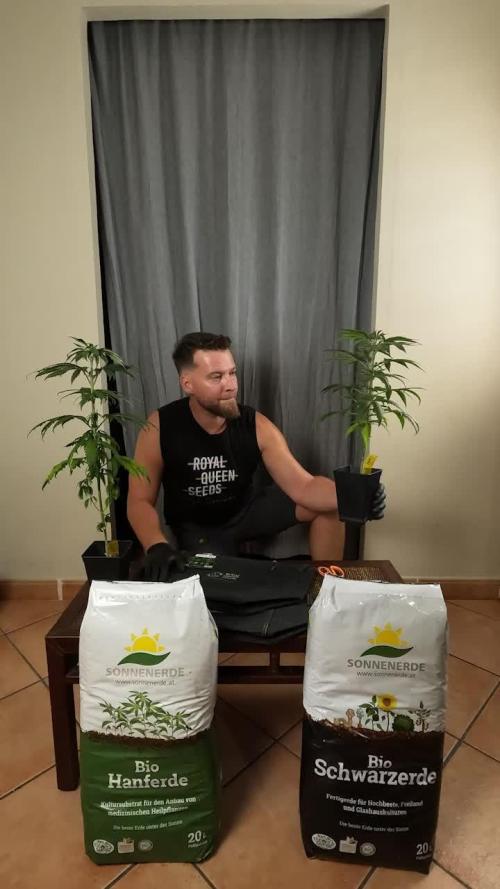
This week i transplanted to prepare for flower, watch the video and see exactly how I do it step by step.
Sonnenerde discount code POT5

Likes
10
Share

@GnarlySeedGenetics
Follow
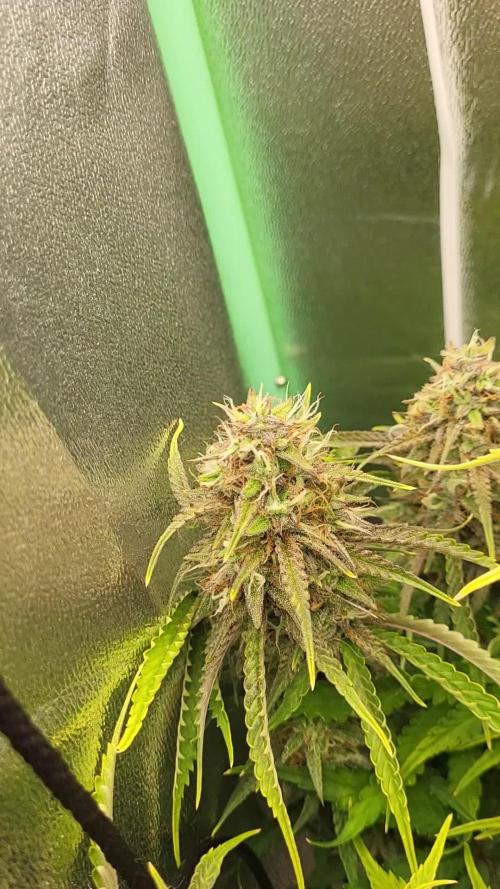
Finishing up week 10 with her last feeds and on day 70 onwards is receiving plain water until the trichomes are ready...
Aiming for about 15/20% amber and she's currently maybe 2-5% amber? The pictures with amber in were taken midway through week 10 and are off a lower sugar leaf and one of the tip buds at the time..
Shes not long off the chop now this lady 👌❤️

Likes
9
Share


@newenglandgrowers
Follow
Scratch what I said at the end of last week pests are still around just had some bug fly at me and bite/sting me on the neck now a got a welt on my neck smh, not sure what the heck it was it was some sort of black bug maybe a thrip but I honestly have no idea, did another neem oil drench on the medium only and tomorrow I'm going to use a hydrogen peroxide mixture again that way I can also use it on the tops and undersides of the leaves as well. Some of the roots started to become exposed on the top soil so I added more an inch or two coco to cover the exposed roots. Another successful week I guess the plants aren't dead so onto week 9, Week 4 of flower

Likes
7
Share

@Chucky324
Follow
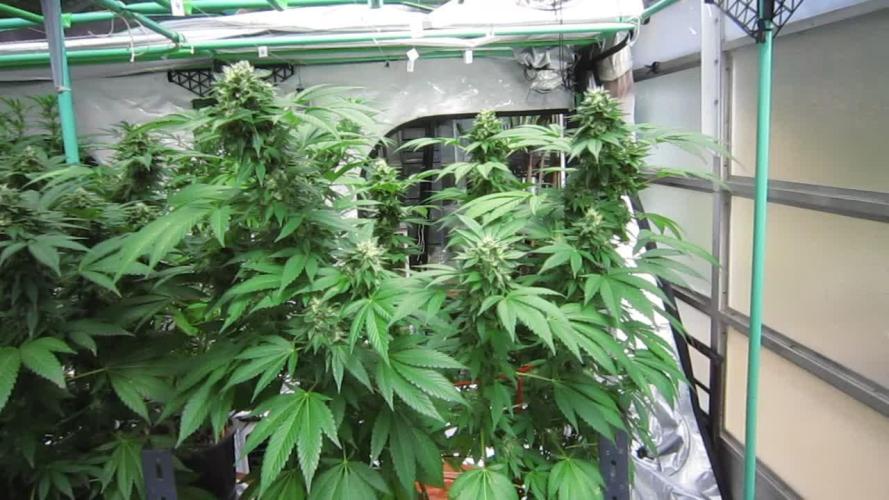
Hello. This is the end of week 7 and the beginning of week 8 of flowering for Gorilla Gelato - GG -
This is the end of week 2 and the beginning of week 3 of flowering for Sister GG.
Huge buds on the Gorilla Gelato that will get bigger with this last week of nutrient.
After touching a bud my fingers smell of musky kushy desert and some citrus in there too.
I've got some white powdery mildew on some of the other plants in here, but not on this one so far.
So I might harvest after only one week of flush... I'll see how it goes.
The Sister GG is just starting to show flowers.
I tightened up her strings that are holding down her super cropping, getting read for some stretching.
OK Be Great.
Chuck.

Likes
4
Share


@KhaVigga
Follow
-everything is on schedule and good, tried 3 times rapid of nutrient tea(just lightly bit of kelp and alfafa and aerated 24hrs) and she loves it
-i'm using a type of kale as cover crop for many benefits but i need most from it is heat fix(it's damn hot outside :D)

Likes
12
Share


@BeHappyNtoke
Follow
Week four after flipping to 12/12 still no signs of anything maybe it’s liking the cycle as a way of managing roots in the small pot still not using a crazy amount of nutes only Time will tell


Likes
13
Share


@russrahl
Follow
So I definitely remember now why I put these stupid jiffy peat moss pellet things away awhile ago. They are the worst!!! There either swamped wet or rock hard dry. Really hard to keep them in between. Lol I had to take them out of my cloning machine do to the fact they where just to wet for this stage. I usually use rock wool cubes but I ran out of them and decided to try these stupid things again. I was able to get her sprouted though and I will be moving her to a 3 gal DWC bucket as soon as I build them. For watering, I’ve just been dunking them halfway in my cloning reservoir and letting them soak up some water for a sec and pull them out. It seems to be keeping them wet but not soaked, and there good for about 24Hrs untill she is dry and needs more. I will upload some more pics later in the week once I get her in a DWC bucket. Cheers 💨

Likes
48
Share


@MadeInGermany
Follow
Info:
Unfortunately, I had to find out that my account is used for fake pages in social media.
I am only active here on growdiaries.
I am not on facebook instagram twitter etc All accounts except this one are fake.
Flowering day 76
since time change
to 12/12 h.
Hey everyone :-)
Today the Kosher Tangie Kush was harvested in the Aero System :-).
Before that, as always, she was in complete darkness for 48 hours.
After cutting it was put in the drying box where it is now at 62% humidity for the next 7-13 days before it is then put into jars with 62% boveda packs to ferment.
After the fermentation comes the last update :-).
Until then, I wish you lots of fun and stay healthy 🙏🏻
You can buy this Strain at
https://www.amsterdamgenetics.com/product/kosher-tangie-kush/
Type:
Kosher Tangie Kush
☝️🏼
Genetics:
Kosher Kush
X
Tangie
👍
Vega lamp: 2 x Todogrow LED CXB3590 COB 55 W
1 x Sanlight S2W 62 W
💡
Flower lamp : 2 x Todogrow LED CXB3590 COB 55 W
1 x Sanlight S2W 62 W
💡 ☝️
Grow Aero System : Growtool 0.8
☝️
Fertilizer:
Canna Aqua Vega A + B , Canna Aqua Flores A + B , Rizotonic, Cannazym, CANNA Boost, Pk 13/14, Canna Cal / Mag, Canna Ph - Grow, Canna Ph-Bloom
☝️🌱
Water:
Osmosis water mixed with normal water (24 hours stale that the chlorine evaporates) to 0.2 EG. Add Cal / Mag to 0.4 Ec Ph with ph- to 5.2 - 5.8
💦 💧

Likes
15
Share

@AestheticGenetix
Follow
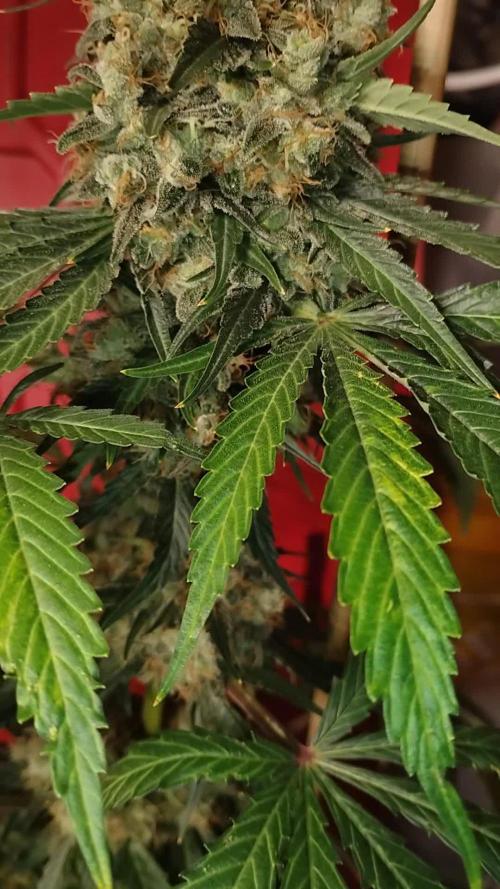
Harvested #2, #3, and #6 at day 75
Plants #7, #8 and #11 are still flowering
Plants 5 and 9 are just about drying. I was able to try some of 9 yesterday which had nice pleasant effects but I do believe it'll need some time to cure though. I heard sour and skunky strains have phenols or something that evaporate with a cure so I tried tasting her early on. Still green but that could be because she's still drying pretty
Likes
2
Share


@Grilla
Follow
Coming at you guys with my second grow here. I started late this diary, vegging is boring anyway. These guys should be done within the next week or two. I’ve honestly never smelled anything like the strawberry currently in my tent. I’ve been growing for a while and have been skeptical with the naming choices these breeders make. My last run I grew a strawberry crinkle. It didn’t have the slightest smell of sweetness. This girl is packing some unique Turpines and I can’t wait to try it.
Likes
8
Share


@Chubbs
Follow
FBA2508-week 1 of Veg
This week has been wild. Once the roots made a foundation the upper growth has been explosive the last few days. Really cool to watch and see the daily growth. I introduce calmag and grow nutrients this week starting at a 1/4 strength. All in all they've responded well showing no burn what so ever. Happy Growing
Likes
11
Share


@Paradox_1ste1
Follow
Up to now they looking pretty good and strong, even tho some of the plants are not as dense and is maybe a bit late to date with the other ones. Ill have to give them another 1 or 2 other weeks until harvest. The trichromes look preety good even tho.in the picture dosent show well. They starting to consume less water and the leaf colour is starting to fade slightly .
Likes
17
Share


@Efka710
Follow
Day 64 (Week 10 day 1) watered the girl with batboost, biogrow, biobloom, topmax, molasses, bactrex 1g/l at ph 6 ppm was somewhere 900.
Day 67 (Week 10 day 4) Took some photos. The girl is doing okay shes slow but healthy, thinking of not using bio grow just add more of the bloom fertilizer.
Day 68 (Week 10 day 5) topdressed the girl with GHE Silicate and watered with water.


Likes
12
Share


@Bassmop
Follow
2 der Ladys haben etwas Probleme, habe jetzt Calmag hinzugefügt und benutze Leitungswasser anstatt Saskia still.
Die anderen sehen alle soweit ok aus. Fasziniert bin ich ja von der Lsd-25, die schon eine schöne Cola entwickelt hat.


Likes
13
Share


@GrowerGaz
Follow
Can't keep up with defoliation once the autopots kick inn, best room upgrade ever. The Cuppa T was the biggest plant before the other four went in their autopots. Just pH water this week and a foliar feed with my KNF FAA, WCAP and LAB.
Flowering start on the 29th under the new Lumatek Attis 300w


Likes
6
Share


@Eauderay
Follow
Slowing down, packing on trichomes/resin, strong fruity skunk earthy smell so far, very sticky and looks very nice, flowers stacking in a rose like position, round and ball like.
Looks like a mini frosty rose! Only water this week.


Likes
20
Share


@mikemobes
Follow
Cream Cookies was such a fun plant to grow. It germinated extremely fast, popping out of the peat pellet at ~3 days. It takes about two weeks from germination for the plant to really get its root system to the point that it can support explosive vegetative growth. Once you're at the explosive vegetative growth stage (Week 2-5) the plant absolutely shoots up and stretches to the moon. LST works wonders to expose lower bud sites and break symmetry of the plant. FIM can be used to stop main stalk vertical growth and transition the plant to build up its already present flowering nodes. At Week 5 preflowers become apparent. The plant then experiences a second stretch and subsequent explosive bud growth. From that point the plant doesn't grow vertically but instead horizontally. Curating its fan leaves and growing to be just an absolute beast. If your phenotype sticks around in veg for just a week longer, you'll see the plant just become a behemoth. Im still working on my technique but my goal for this grow was to triple my per plant yield compared to nay last grow and I did that! I had 1 plant going and the dry bud weight is 45gs. Im extremely happy because the buds are just beautiful. Im learning so much! Im hoping my third grow I can double my yield from this grow! My phone broke so ill update with photos of the buds when I can.