


Likes
Comments
Share


Likes
34
Share


@rhodes68
Follow
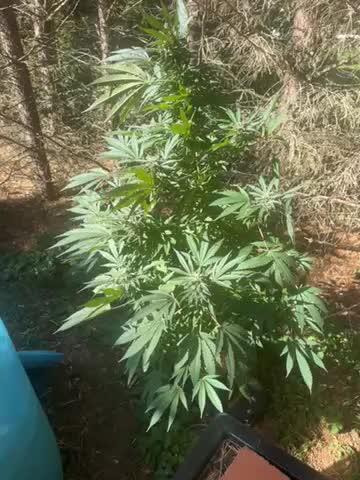
Easy harvest not a terrible amount of leaves. Drying can be difficult at times depending on weather conditions due to the density of the buds, watch close.
Dry went well

Likes
22
Share


@BruWeed
Follow
☘️08/11 - Empieza su primera semana en Etapa de Floración.
☘️Me sorprendió lo rápido que creció en altura en pocos días.
☘️Su desarrollo viene de forma correcta sin ningún tipo de inconvenientes.
☘️Estos días seguiré subiendo más imágenes de como viene su crecimiento.

Likes
31
Share


@Canna96
Follow
Hey now, I hope everyone is having a great weekend. The Strawberry Banana is doing well, I am just doing some LST every couple of days, and she is just starting to stretch. She is still feeding on silica, cal mag, and maxi grow veg nutes by GHE. She seem to be loving this Medic Grow Spectrum X, which I am now running at 70% and also running the UV/IR bars for 1 hour before lights off. I also did a light defoliation this week to allow some airflow and her to focus more energy on the upper branches.
I will continue to with LST and veg nutrients until the vertical growth stops, then I will transition her to flower nutrients, and change her lighting to the red spectrum. Not much to do this week except watch her stretch and some light LST>
Thanks for stopping by, Stay Safe and Blaze On!!! 💪
Website: https://medicgrow.com/
https://growdiaries.com/grower/medicgrowled

Likes
13
Share


@PersonalSmok3s
Follow
This girl went 110 days from germination. I harvested her on Boxing Day morning, nothing fancy, just cut at the base and hung whole.
She’ll be dried for around 10 days at 55%RH - 19*c and then put into jars for curing.
She was quite a slow grower throughout, but never gave me any trouble. She was a pleasure to grow from start to finish.
Il post an update once she’s dried and had a weeks cure 🌱💚

Likes
19
Share


@HisHope
Follow
5/31 Week 6
Finally she is no longer growing vertically. The bulking up is starting as she now has much more space and thus light at all levels of her growth.
She will continue receiving the occasional shot of PK when it looks needed.
Afraid to hope for what it looks like will happen here
6/2
Pics
She is taking over the 4x4
The more room she gets the more she seems to want, she will be alone in there soon enough.
Time of a shot of PK tonight at lights on - 2ml/gal
Nuets prob stay as is for the duration cannot see any way to improve this situation.
6/4
Now Showing : The Beast of CBD Mountain
Will she fill a 4x4 tent?
Villagers are nervous... see it now!
6/5
Light swap HID out Mars TS-2000 in
Reduced cocotek slightly to reduce nitrogen, some tips showing burn.
Water needs reduced a good bit due to new light
Likes
24
Share


@TerpTurtle
Follow
White Truffle x Red Pop by Detroit Seed Co
BuildASoil 3.0 LOYAL TO THE SOIL
Strawberry truffle | Vivosun 2x4 | Mars hydro sp3000 | 7 gallon pot
Chem 91 x Red pop | AC infinity 2x3 | AC Infinity Iongrid 24 | 5 gallon pot
Likes
149
Share


@CBD_Sweden
Follow
Hi all the happy people here in GrowDiaries.
This is my second cultivation ever and it will be fun to try a bigger space than my closet grow.
First, I'm just going to say I'm done with the construction of my new growroom.
I put some pictures on the construction here in week one.
The room is 2.14 meters by 1.7 meters and has a ceiling height of 2 meters.
It provides a floor area of 3.6 square meters.
I use a 54 Watt Lightwawe T5 for germination and 2 Pcs 400 Watt HPS lamps.
I have a channel fan that replaces the room air about 40 times an hour to get a comfortable theme in the room, the air enters a fresh air intake from the outside.
The air is purified through a carbon filter to then leave the room to the rest of the basement.
Then I use that heat to heat the rest of the basement.
I will use 8 pcs 15 liter Autopots to grow with and a 100 liter water tank that supplies the pots of water and nutrition.
I will grow completely organically in soil and will watercure my buds to get the best possible medicine for me.
But there are no cultivation rooms to be displayed here, so I continue with what is most important.
Today I have put my seeds in my moisture dome and hope the seeds have germinated within a few days.
I am very excited to see how the new growroom will work and how this Blue cheese Auto from Royal queen seeds will turn out.
Blue Cheese automatic cannabis seeds are a cross of Blueberry Automatic and Cheese Automatic that has been perfected over five years of breeding and careful selection. The result is a feminized, autoflowering strain with superior yield, flavor, and effects to either of its distinguished parent strains.
THC: 16%
CBD: Low
Yield Indoor : 325 - 375 gr/m2
Yield Outdoor: 60 - 110 gr/plant
Height Indoor: 40 - 70 cm
Height Outdoor: 60 - 110 cm
Flowering: 7 - 8 weeks
Harvest month: 9-10 weeks after planting
Genetic Background: Blueberry x Cheese x Ruderalis
Type: Sa 35% In 40% Ru 25%
Effect: Cerebral and uplifting
Climate: Mild
..............................................................................................................................................................................................................................................................................................................................................
Update 2017-08-15. All 4 seeds have germinated and planted in small pots inside the humidity dome.
I'm so glad it worked so well and now it's just hoping they'll start growing and become 4 big healthy girls :)
...............................................................................................................................................................................................................................................................................................................................................
Update 2017-08-16. I have mixed my own soil today. Its 40% sieved peat harrow H2-H4 0-30 mm, 45% sieved peat harrow H4-H6 0-30 mm. 5% sand and 10% of compost soil. And i use 15% of perilite and mix it all together.
................................................................................................................................................................................................................................................................................................................................................
Update 2017-08.20. Nr1 and 2 grow and thrive.
Number 3 just got rid of the seedpod and is folding out the sheets.
Number 4 is a bit shy and can only be seen if you look carefully into the soil.
.........................................................................................................................................................................................................................................................................................................................................
Update 2017-08-21. Nr 1 and 2 is doing well. Nr3 is trying to catch up and Nr4 is still shy.
--------------------------------------------------------------------------------------------------------------------------------------------------------------------------------------------------------
2017-08-23. Transplanted 2 girls from humidity dome and the small germinating pots to 15 liter autopots. The other 2 girls have to wait a little more before transplant to the autopots.
................................................................................................................................................................................................................................................................................................................................................................................
2017-08-27. The girls have settled in to there new home of the 15 liters autopot after a little transplant chock. Now the real week 1 starts for me and the girls.
--------------------------------------------------------------------------------------------------------------------------------------------------------------------------------------------------------
2017-08-28. New pic and movies.
---------------------------------------------------------------------------------------------------------------------------------------------------------------------------------------
2017-08-28. Nr3 is transplanted in 15 liter autopot.
-------------------------------------------------------------------------------------------------------------------------------------------------------------------------------
2017-08-29. New movie of the girls. Its no water for 3 days now for Nr1 and 2 so the roots develop more and match the plant above the soil. The temp controlled fan is awesome, its easy to set what temp you like to have in the room. Right now its 28 celcius. And humidity is 56%.
------------------------------------------------------------------------------------------------------------------------------------------------------------------------------------------
2017-08-29.
Hello to you who read my diary, I just want to say that I am pleased that you have chosen to check in with me and in my diary.
I just want to say that I do this for myself and for a steady flow of my medicine.
Everything you read and see in my diary is 100% honest and I will never distort or beautify anything here.
I document my crops so that I can learn from my mistakes and also to look back at those different crops.
I try to update with pictures every day and with text if something special has happened in the garden.
This is my strainhunt for the best medicine and the beginning of my journey with cannabis and the cultivation of it.
-----------------------------------------------------------------------------------------------------------------------------------------------------------------------
2017-08-30. Cleaned the room this morning, just vacuuming and cleaning with chlorine solution. Im testing the fan to control temp and humidity, it works great.
Added some pics with measurements and movie. Everything is looking great right now.
---------------------------------------------------------------------------------------------------------------------------------------------------------------------------
2017-08-31. New pics and videos.
---------------------------------------------------------------------------------------------------------------------------------------------------------------------------------
2017-09-01. New pics and videos. Gave each of the girls with 2 ml Alg-A-Mic, 4ml Bio-Grow, 4ml Bio-Heaven and 10 ml Formulex mixed in 2 liters of water.
I hope they like it :)
-------------------------------------------------------------------------------------------------------------------------------------------------------------------------------------------------------------------------------------------
2017-09-02. New pics and the girls liked the water and nutrients yesterday.
-------------------------------------------------------------------------------------------------------------
2017-09-03. New videos of the girls this morning. Nr1 and 3 looks great and nr 2 is looking a little funny, maby a little stressed.
Kl. 16.00. Did some defoliation on the girls. Added video.
Kl.. 23.00. New videos, defoliation and leaftucking.
-----------------------------------------------------------------------------------------------------------------
2017-09-04. Kl. 11.00. Week 3 starts. Trying to LST the girls and defoliate/leaftuck. New picks.
KL 23.00. New video.
--------------------------------------------------------------------------------------------------------------
2017-09-05. KL 08.00. Cleaned the room this morning, just vacuuming and cleaning with chlorine solution.
KL 12.00. The girls got 2 liters of water each with nutes in it, added a video.
----------------------------------------------------------------------------------------------------------------
2017-09-06. KL 08.00. The girls woke up after their beauty sleep, the leaves are always a bit down after 6 h of darkness, but they will stretch now when the HPS lamp starts.
Everything looks good and I keep trying to tuck the leaves so they get the maximum amount of light where needed. Added pics and video.
The Nr 3 girl is still a little bit behind the other 2 girls and all the 3 girls look like there 3 different pheno of the same plant.
KL 23.30. Did some LST.
----------------------------------------------------------------------------------------------------------------------
2017-09-07. Day 21 from sprouting, Nr3 is 17 days from sprouting. I have never tested PH in my grows, when growing organic in soil iv learned that it adapt PH by it self. But im curious by nature so i had to test.
Kl 10.00 Tested PH in the soil, it was 6.9 and tested my tap water and it was 6.8. Added a video of the girls, its 10 H after defoliation, LST and leaftucking. I think its looking good.
Kl 22.30. New pics.

Likes
20
Share


@Grow_for_Happiness
Follow
Harvest was on Day 80 from Seed
Second run with this strain and she more than passed expectations! I thought the buds were big last go round but holy sh*t are they ever big this time around! And just packed with crystals, seriously can't wait to try this round and compare vs last round. The switch to Autopots was a huge improvement in my grow. Plants double the size of last time and I'm betting 30-50% more yield after dry and cute. Nice not having to water every day or two, gives you more time to focus on other aspects of growing and life. Maybe partially why the better outcome, more time spent on plant maintenance vs just watering. Was pretty impressed with the diameter of the stalk vs the size of the hole water moves through. These girls were pushing a LOT of water and you can tell when you see how hollow the stalks are. Despite that they were strong as ever. Never had a branch snap or bend, and I didn't use any plant support this go around.
Was pretty impressed with trichomes production this time around as well. Buds were just packed and sticky AF while being so dense that they barely compress when squeezed. Also both plants went quite dark/purple in the end this go around where last run they were lighter like #1 was to start.
Got a couple seeds left of this strain, will be saving them for once I eventually run out of bud. Really like the taste and effects from this strain, want to keep it around long as I can since I didn't see it listed any more on the breeders page 🤔

Likes
8
Share


@mikearon
Follow
April 26th - Day 69 : Oh my god look at them.. So bushy after that defoliation. They're doing great I think.. The only concern was the laggyness of the leaves but I guess it's due to overwatering so I'll chill with water for a day or two. I started trimming the lower branches that I think aren't getting enough light. I'm trying to push the veg stage as much as I can let's see if they can take an extra few weeks.


Likes
20
Share


@SkunkyDog420
Follow
Hallo zusammen 🤙. So das war es erst mal melde mich in 10 Tagen mit Gewicht

Likes
44
Share


@Secretflower
Follow
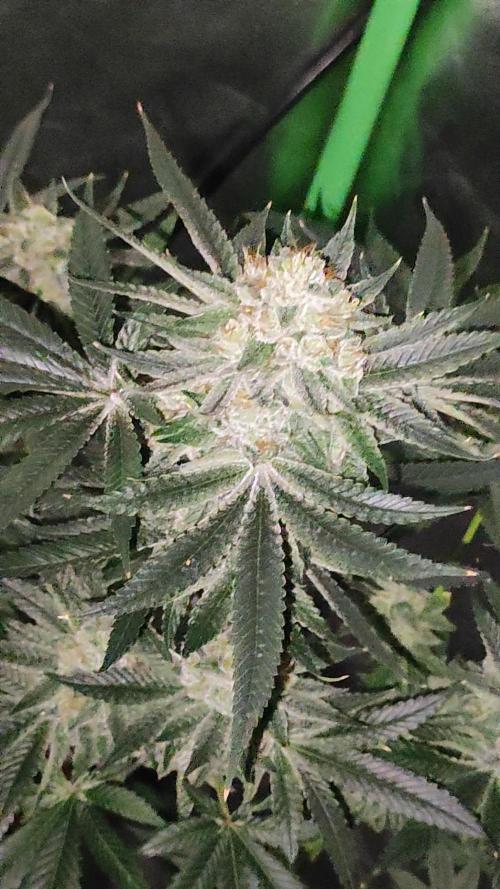
Le 20 août jour 15 pour ma Boy.
Elle se développe normalement, la semaine dernière c'est bien passé.
J'ai augmenté la dose de rootjuice à 1ml/l.
C'est tout pour l'instant.
Peace and Grow for All..😇


Likes
5
Share


@123Grow
Follow
we just finished 2 weeks are are going into the 3 week. These ladies can EAT!! 1,000 ppm’s and no issues..looks like I have to up the ppm’s for bloom phase
4 out of the 5 are doing GREAT. The 5th one is having issues and I know it’s the media I am using. I had a different brand of soil for 1 of the banana MAC’s and it freaking SUCKS!! I am amending with Iron-Tone by Espoma to get the green back and it has some cal-mag also with sulpher ( hits all suspect deficiencies).
The other 4 are in Mother Earth soil which I have had zero issues with. I will be sticking with Mother Earth for awhile.
11/6 Potassium deficiency in the banana MAC’s…kinda of a good sign. Let’s me know the plant is going into bloom phase and it’s time to change the ratios from 1:1:1 to 1:3:2. The 1:3:2 is flower girl 1 week and fish bone meal with Langbeinite the other week. I will alternate between the two for 4 weeks. Tuesday ( 11/8) will mark 3 weeks. I did defoliation and lollipoping today. This is the second one I have done ( I do the first one the week before flipping).

Likes
12
Share

@Michijardinero
Follow
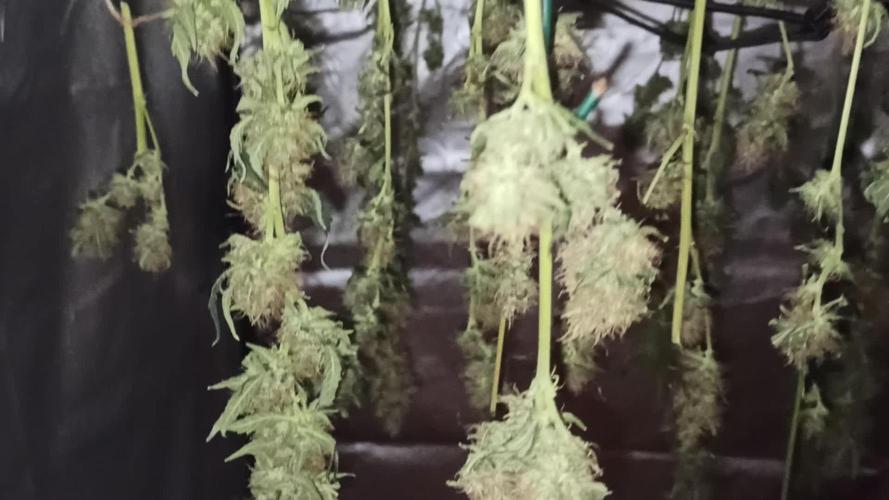
Bueno por fin la cosecha ha salido bien aun que no ha salido realmente como quería pero a pesar de eso estoy contento con muchas ganas de probarla ya


Likes
20
Share


@TenerifeCultiva
Follow
Se han estresado un poco por retrasarme en el trasplante q con el calor q ha hecho no queria estresarlas aun mas. Trasplante hecho recuperación en marcha.


Likes
89
Share


@BioBuds
Follow
So we started feeding them. just some organic growth by BAC and some Calmag. Mostly around the sides of the pots to encourage the roots and start the Microlife overall. We have used nice lukewarm water and added some sugar sirop to activate all the wee beasties.
The growth last week was phenomenal although one is going faster than the other. For this reason I changed them around, should climate on that spot have anything to do with that.
Now we are looking at other XL runts diaries, to learn from the best performers and copycat their methods to maximize yields with this setup.
We will decide if we will just LST them or give them a top... Have to be quick tho, these ladies will flower soon...
Thank you for checking my grow, hope you are successful on yours and Il be checking you out in coming days as I have a little more time.
Big hug as always and see you next week!

Likes
24
Share


@SensiMiller
Follow
25-2:
Throughout the week, I'm observing two phenomena simultaneously: a portion of the upper leaves turning a lighter green and/or appearing to have a yellowish hue.
One plant has curled leaves at the top of the plant but limited to one layer of leaves. The tips are yellowed with dark spots. Due to rapid growth, the plant flew too close to the sun and burned its wings, was my assessment. In other words, light burn.
The leaves becoming lighter are located in several layers from the top to halfway down the plant. I suspect there is a deficiency and perform a slurry test. The EC is low at 0.24 and the pH is good at 6.3. The soil is still too wet to feed, which presents a dilemma: feed with the risk of wet feet or wait a bit longer with the risk that the deficiencies become more severe?
To mitigate this, I gave foliar feeding (Terra Bloom 0.5 ml per liter) by spraying the leaves without really wetting them. I did this just after the lights were out. A day later, I first flushed the plants with a few liters of water pH 6.4 and then gave them nutrients with EC 1.3 and pH 6.4: Terra Bloom (+/- 4 ml per liter), Sugar Royal (1 ml per liter), and a tiny bit of Great White and orthosilicic acid. And hung the lights back at 30 cm. It seems to be working because I see the color coming back slightly and the yellowing has at least stopped.
Furthermore, I'm keeping the day and night temperature a bit higher at about 25 degrees Celsius during the day and around 21 at night. This is to limit the humidity at night and during the day to increase the VPD to about 1.45.
At the end of the week I see the end of the stretch and standing 87 cm tall at average.
The gas is on, and ready to go full throttle to the finish!
SensiMiller
Dr. Green Thumbs Plant Wizz GPT has the day off :)
23-2:
"At week 9, our Skunk #1 Feminised plants have shown notable progress. The journey so far has been a blend of anticipation and strategic care. This week, we observed a robust growth spurt, a testament to the nurturing they've received. The balance of water, light, and nutrients has been key. Reflecting on the journey, it's clear that each decision, from the lighting schedule to the nutrient mix, played a crucial role in their current state. Their resilience and growth are not just a result of our efforts but a dance with nature itself." Dr Green Thumbs
I can concur with my artificial assistant that the ladies are looking good and the strategy worked. However, this also required constant care, monitoring, observation, discussing the state of the plants, options, and mitigation with Dr. Green Thumbs GPT, and thinking ahead. SensiMiller
