Likes
Comments
Share

@DogDoctorOfficial
Follow
Super Silver Haze (Zamnesia Seeds) — Flower Week 7 (Recovery)
Grower: Dog Doctor
Strain: Super Silver Haze
Breeder: Zamnesia Seeds
Stage: Flower — Week 7 (recovery after localized bud rot)
Pots/Medium: 11 L fabric pots — living super soil with Aptus pellets and Plagron support
Watering: Hand watering; currently water only (see science below)
Lights: F.O.G. Black Series 600W + ThinkGrow ICL-300 (inner canopy) + Lumatek Zeus Compact Pro 465W
Control & Monitoring: TrolMaster Hydro-X/Tent-X + WCS substrate sensors
Air exchange: Dual 6” filtered exhausts + filtered intake; oscillating fans moving canopy air
Current environment (example): day ~29–31 °C, night ~24–26 °C, RH mid 50s–60s, CO₂ ~700 ppm
⸻
Quick recap — seed to the present moment
• Germination & early veg: 3/3 germinated via Cannakan; strong, even starts.
• Transplant: Into 11 L fabric pots with a super soil base inoculated with Aptus Mycor/Micro mixes and buffered for pH stability.
• Veg: Compact, steady growth; conservative feeding with Aptus starter lineup.
• Early flower: Fast flower transition, pistils and bud sites stacking quickly. Plagron trio (Power Buds, Sugar Royal, Green Sensation) + Aptus boosters used to enhance bloom development.
• Bud rot event: Localized Botrytis found inside one cola; removed quickly and thoroughly. Loss minimal. Immediate steps taken (see below).
• Recovery week (this report): Plants responding strongly — dense colas, heavy frosting, explosive aroma. We moved temporarily to water-only feed to stabilize the root zone and let the soil biology drive nutrition.
⸻
What happened and how we dealt with it
1. Detection: Small dark spot discovered deep inside a dense cola. Because rot often starts inside dense clusters, early detection is key.
2. Immediate action: Removed the affected flowers and any suspicious material. Cut generously around infected tissue to avoid leaving spores. Placed waste in sealed bags and removed from the growroom.
3. Sanitation: Cleaned tools, wiped surfaces, checked fans and filters for dust pockets, and increased canopy airflow.
4. Environment adjustments: Increased air movement across and through the canopy; checked extraction; planned AC installation to lower day temps and stabilize RH.
5. Observation & patience: Kept strict daily inspections for any new spots; let plants recover without additional heavy nutrient pushes.
Result: the loss was minimal, the rest of the canopy stayed healthy, and the plants rebounded quickly. Dense, frosty colas and an incredibly strong smell are the signs they are back on track.
⸻
Why “water only” right now — the science, explained simply
We moved to water-only feeds for a short, strategic period. That decision is conservative and backed by three practical goals:
1. Reduce salt and nutrient spikes: After stress and after tissue removal, roots can be sensitive. Water-only flushes prevent sudden EC spikes that can further stress roots. Salt buildup can inhibit water uptake (osmotic stress); clean water restores osmotic balance.
2. Let the soil biology work: You’re growing in a living super soil with Aptus pellets and biological inoculants. Microbes mineralize nutrients slowly and steadily. When plants are stressed, microbial mineralization becomes more important than high-concentration liquid feeds. Water-only gives beneficial microbes a stable environment to supply what the plant needs.
3. Avoid overstimulating lush growth: At late flower, you want carbohydrate partitioning to favor flower filling and resin production, not new vegetative pushes. Limiting NPK pulses prevents a late vegetative response and encourages the plant to allocate sugars to trichome and calyx growth.
Practical note: “Water only” does not mean nutrient-starvation. Your living soil still releases NPK and trace elements. Monitor substrate EC (WCS) and plant appearance; if deficiency signs persist for more than a week, reintroduce a light, balanced feed.
⸻
The gear doing the heavy lifting — why the ICL-300 inner canopy lights matter
• ThinkGrow ICL-300 (inner canopy lights): These deliver targeted, diffuse light deeper into the canopy. For dense sativas or hybrids that set flowers lower on the plant, inner-canopy LEDs reduce shading and encourage even bud set on lower nodes. They also reduce the need to strip leaves to reach light—so you can preserve biology and microclimate.
• F.O.G. Black Series & Lumatek: Provide high PPFD to the top canopy for strong photosynthesis and sugar production. The combination of powerful top light + targeted inner lights = even canopy carbon distribution and more uniformly fat colas.
• TrolMaster + WCS: Real-time data on substrate moisture and EC lets you water by need (you’re already using ~19–25% dryness triggers), which prevents both saturation pockets that encourage rot and drought that stresses plants.
• Airflow & filtration: Dual exhausts and oscillating fans keep air moving; carbon filters keep air clean. This is essential to lower local humidity around flowers and prevent new rot pockets.
All gear together creates a system: light for sugar, airflow for dryness, monitoring for precision, and soil biology for nutrition.
⸻
Observations this week
• Colas: Thickening, dense, frosty. Trichome production visible even with the naked eye.
• Aroma: Extremely potent — strong typical Super Silver Haze profile developing (citrus/citrus-haze + spicy/earthy back-notes), likely driven by terpene expression and warm room temps.
• Leaves: Minor spotting in places earlier; after CalMag adjustments and water-only period, new growth is healthy and vibrant.
• Root zone: Very active — roots visible through fabric, good white root color where checked.
⸻
Risks to watch and mitigation steps (practical, daily checklist)
• Risk: Secondary rot pockets — Mitigation: daily inspection, move a small headlamp into canopy to view internals, keep oscillating fans moving air between bud layers.
• Risk: High night humidity with cooler temps — Mitigation: install AC / run dehumidifier at night, maintain extraction during lights-off.
• Risk: Support failure from heavy colas — Mitigation: pre-position soft ties / netting to support colas now before they get heavy.
• Risk: Late-flower nutrient imbalance — Mitigation: watch leaf tips/edges for burn or deficiency. If signs appear, use small, dilute corrective feeds rather than heavy dosages.
⸻
What to expect in the next 1–3 weeks
• Short term (next 7 days): Continued fattening of calyxes, sustained trichome increase, aroma intensifies. Plants will drink more as flowers bulk. Keep water-only until the canopy is stable and substrate EC is within your target range.
• Mid term (weeks 2–3 from now): Major bulk phase — colas will gain weight and density. Trichomes will move from clear → cloudy (start of potency peak). Expect more resin and heavier terpene bouquet.
• Near harvest planning: Start planning drying/curing space and harvest timeline once trichome clouding reaches your target (we’ll plan this together when the time approaches). Also plan to stagger harvests if colas mature at different rates.
⸻
Short educational sidebar — why trichomes explode now (brief)
Late flower is all about sugar allocation and secondary metabolism. With high light, steady CO₂, and stable root nutrition, plants convert energy into:
• Calyx growth (mass) — the physical body of the bud
• Trichome production (resin glands) — metabolically expensive, but essential for protection and reproduction; trichomes store terpenes and cannabinoids which act as plant defense and pollinator signals in nature
The combination of your lighting, living soil biology, and current conservative feeding strategy drives both mass and resin production.
⸻
Final practical tips for the diary entry
• Post a short video walk-through of the canopy with commentary pointing to the saved areas vs. new growth — that tells the recovery story visually.
• Photograph a closeup of a supported, heavy cola to show density and resin.
• Note the date of the rot removal and actions taken in the GrowDiaries log — that makes the journal useful for other growers and for troubleshooting later runs.
• Keep a small “harvest box” ready: sanitized scissors, nets, gloves, labeled trays — you’ll want them when the time comes.
⸻
Gratitude and perspective
we acted fast, used sound horticultural judgment, and let biology and environment do their work. That combination saved the run. Super Silver Haze is responding like a champion — dense, frosty, and unapologetically aromatic. This week shows the essence of growing: attentive care + good systems = comeback.
📲 Don’t forget to Subscribe and follow me on Instagram and YouTube @DogDoctorOfficial for exclusive content, real-time updates, and behind-the-scenes magic. We’ve got so much more coming, including transplanting and all the amazing techniques that go along with it. You won’t want to miss it.
• GrowDiaries Journal: https://growdiaries.com/grower/dogdoctorofficial
• Instagram: https://www.instagram.com/dogdoctorofficial/
• YouTube: https://www.youtube.com/@dogdoctorofficial
There’s a new series blooming and it’s more than just plants. It’s about process, patience, and paying attention.
⸻
Explore the Gear that Powers My Grow
If you’re curious about the tech I’m using, check out these links:
• Genetics, gear, nutrients, and more – Zamnesia: https://www.zamnesia.com/
• Environmental control & automation – TrolMaster: https://www.trolmaster.eu/
• Advanced LED lighting – Future of Grow: https://www.futureofgrow.com/
• Root and growth nutrition – Aptus Holland: https://aptus-holland.com/
• Nutrient systems & boosters – Plagron: https://plagron.com/en/
• Soil & substrate excellence – PRO-MIX BX: https://www.pthorticulture.com/en-us/products/pro-mix-bx-mycorrhizae
• Curing and storage – Grove Bags: https://grovebags.com/
⸻
We’ve got much more coming as we move through the grow cycles. Trust me, you won’t want to miss the next steps, let’s push the boundaries of indoor horticulture together!
As always, this is shared for educational purposes, aiming to spread understanding and appreciation for this plant. Let’s celebrate it responsibly and continue to learn and grow together.
With true love comes happiness. Always believe in yourself, and always do things expecting nothing and with an open heart. Be a giver, and the universe will give back in ways you could never imagine.
💚 Growers love to all 💚

Processing
Likes
15
Share


@HisHope
Follow
7/28
Finally finished the first week now we can get busy :D
Transplanting Bea this evening Hero may take a couple of days, all moved to big tent
Transplanted Bea, gave kangaroots 10ml/g fish shit 2ml/g + nuets
Lights on hours reduced due to heat to 16
Increasing nuets to next stage
7/30
Watching Hero to see when to transplant, may only be a One gallon pot not sure she wont stunt,
7/31
Decided to put Hero in a five gallon pot, let her be all she can be, t-plant this evening.
Being forced to use Cal-Mag per the feeding schedule released by GH was hoping it would not be needed but yes can see the beginnings of def.
Thats one strike on the new nuet line.
Adding 1.5 ml/gal cal-mag on routine basis and not happy about it
Hero transplanted everybody got Kangaroots 10ml/gal and Fish Shit 2ml/gal to celebrate!
8/2
From results we are seeing have decided to go back to the cocotek, this is ok but getting problems we just did not have with the other line.


Likes
6
Share

@FumateAlgoo
Follow
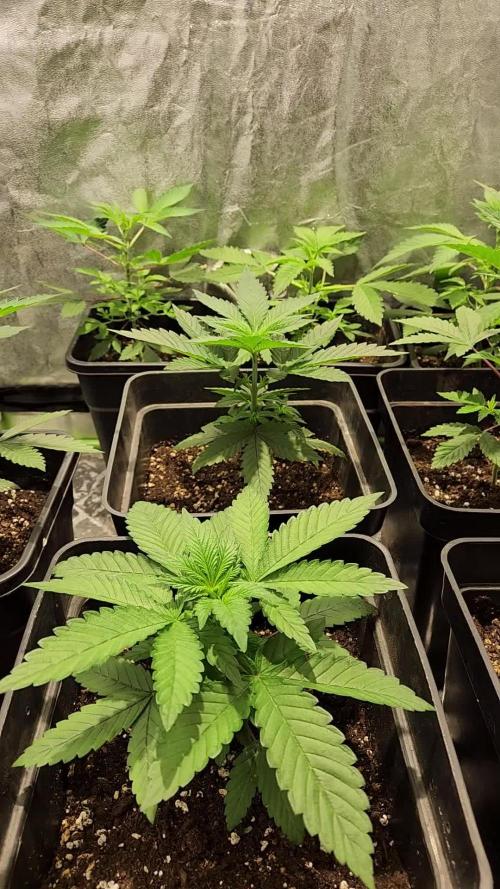
🌱 Terminando la semana 4 y las plantas se ven vigorosas 💪
Después del trasplante, las niñas se han mostrado bastante fuertes y adaptándose muy bien al cambio. Se nota que el trabajo previo dio resultado.
Detecté una pequeña carencia de nitrógeno, así que en el próximo riego voy a incorporar unos mililitros extra de Bio Grow para corregirlo. Por ahora, todo marcha excelente y las plantas están respondiendo de maravilla. 🌿
Dato útil: Unos días antes del trasplante (semana 3), a las macetas de 11 litros les apliqué al menos 1 litro de agua con una dosis mínima de Root Juice. Esto fue para preparar y humedecer el sustrato, lo que facilitó mucho el trasplante y evitó la necesidad de regar en exceso esta semana.
¡Seguimos dándole con cariño y atención al cultivo! 🌞🌱

Likes
6
Share


@Llyndonjy420
Follow
Started Some LST by pulling down the main stem on day 15 coz they were doing nice and good and took well to their feed without any issue. Come day 16 and *!SNAP!* It's Like Hearing one of your own limbs breaking and number lll lost her top from coming on 5 nodes right down to the first node, It was a sad day in the box , hearing a branch crack is the loudest sound in the grow esp if they are so young. I tried some surgery with some duct tape and left it for a couple of hours hoping it would recover but nothing and I decided to let go and clean up the top nicely, Basically grew out 5 nodes to be topped at the first by mistake and I was considering topping the Autos just for a test but it seems like my hand was forced, Be very gentle with the LST is what I've learnt from this but atleast I still have something to work with and might even consider mainlining depending on the growth. Day 17 And They Are All Recovered nicely after thier feed and the bud sites are now pushing from number l and ll (I've Marked the bags l,ll,lll)

Likes
12
Share


@TappedN
Follow
Sorry For The Delay but I was kinda busy ......Anywho on 3/19 I Changed The light Schedule form 18/6 to 12/12 To Begin My Pre-Flower Stage I Also Bent The Last Few Uneven Tops To Have A Table Top like Canopy (LST) Also Cut Off all Little Branches (Lollipopping) To Prevent Getting Any Little Pop Corn NUGs. Then ON 3/20 I Increased My Light Intensity From 25% to 50% And began giving These Girls There Flower Nutrients Listed Above .
AN Updated Video Of the Week POSTED ABOVE Video Taken About 3 Days After Making These Changes And yes The are All Showing to Be Females

Likes
44
Share


@Zorachus
Follow
Ok, all caught up. I haven't done an update in almost 6 weeks. I've been so busy. Lots of picture updates!
First of all, there have been flashlights in my back yard, so I am going to have to start bringing them inside for the night soon. It's been on the news that kids are taking pictures and staking out plants already. Not good.
The Lost Coast Plant Therapy is still working great for the powdery mildew. The fish fertilizer is slowing the yellowing leaves, but they are still turning yellow. I think i will be ok, I am not too worried.
I am about to do my last feeding of the year after writing this. I will be giving them a heavy Gaia Green Power Bloom dose, and some bat guano.
They are smelling and looking great, and I cant believe how fast the buds are growing. I'd say 4-5 weeks to go, tops, hopefully sooner.
Likes
17
Share


@FatalFarmer
Follow
Added cal-mag this week as I noticed the leaves on my GDP were turning yellow, but also seems the are a bit purple now too... I think the real issue may have been PH though as I tested the run off and it was closer to 5.5-6 vs the water which I had been trying to keep at least 6.5 but as I'm learning I need a lot more PH up now to keep it balanced with the amount of nutes. Probably should have flushed at some point to help correct the PH but I have just watered with slightly more basic solution, ~7 reducing slightly each watering to 6.5, picked up a PH pen as I'm getting low on the test liquid. The buds are getting fat and sticky, the smell is nice as well. 3 weeks left, harvest should be on 55th day of flower, the 8th
I'm estimating at least 2 ounces dry from the cheese, hoping to get at least 3 or 4 off the rest of these though. 👏 time will tell.
Stay high 😎

Likes
16
Share


@Ladyblazed
Follow
Pre flower formed, starting to smell a bit more than the last week, keeping grooowing 💚

Likes
19
Share


@RFarm21
Follow
28 Janeiro- Harvest day!! Atualização em breve.
Esta strain demorou 114 dias, mais ao menos.
Likes
8
Share


@skaterblasted
Follow
Lamp Brightness: 100% @ 12" - estimated 1000 PAR
(GMO 2 tallest plant so top of this is used for 12" light distancing)
Feeding schedule, waterings, and IPM all same
Watering volume varying up to 3/4 gallon per day
note: with crop steering in mind the water temperature will be incrementally cooler going forward
waterings intermittently requiring more volume, upward to 7% (1gal) per plant
Likes
24
Share


@TerpTurtle
Follow
Strawberry cream soda terps
Check out Detroit Seed Co
..........................................................................................................................
2x4 grown with Mars Hydro Sp3000 in Organic soil 7 gallon pots
Likes
10
Share


@TopTerp
Follow
The phenotype named "Amnesia" was harvested at day 66. She was the smaller of the two, though she was frosty like no other.
The phenotype named "Gold" is much larger in both plant and bud structure. She will go on for at least another week in hope of her frosting up some more.
The buds are equally dense, but nonetheless there is quite the variation within this 5-pack of seeds. They seem more like cousins than sisters. But I am just a newbie, and this is my first grow, so take it with a grain of salt.
Also: This week I started adding a few hours of UVB every day (just a 25w bulb for reptiles)

Likes
18
Share


@raulmoat123
Follow
Extra few more days then these girls will be coming down , happy with how everything has gone . Blue gelato and inhouse genetics are my favourite . Will update soon


Likes
125
Share


@SlowpokeFuegobud
Follow
🍊 🍋 🍮 🍭 🍊 🍋 🍮 🍭 🍊 🍋 🍮 🍭 🍊 🍋 🍮 🍭
Welcome to week 10, dear friends!! 😘
DAY 64
Watered with 2ml A+B + 2,5ml PK 💧
DAY 66
Watered with 1ml A+B+PK 💧
DAY 68
Watered with Clean Fruits 💧
No nutes from now on! 💀
Thanks, everybody!! 💚 💚 💚 Grower love!!! 😘🙏 🌱
_________________________________________________________________________________
SETUP:
80x80x180 cm Zelsius
240W Full Spectrum LED IR UV dimmable
DW240H-A6-HS
Heatsink color red
LED Chips:
512pcs SAMSUNG LM301H + 24pcs Osram 660nm + 8pcs Osram IR 730nm + 8pcs UV 385nm
Color mix: 2700K + 4000K
2,8umol/J
Driver HLG-240H-C2100B
Coverage: veg 5x3ft / flower 4x2ft
Product size: 628x205x68mm
Green Buzz Nutrients
Shouts go out to my sponsors @GreenBuzzNutrients, thanks so much for your support! ❤️
If anyone would like to try their amazing organic products, use code GD42025 for generous 25% discount (for orders of minimum 75€) ✨
https://greenbuzznutrients.com/
Mills Nutrients
Biobizz Lightmix
custom exhaust fan 320/270cm³/h
Carbon Active Granulate 240cm³/h
tab water pH 8 - EC 0,25 with Calmag to 0,5
Advanced Hydroponics pH minus Grow + Bloom to pH 6.2
🍊 🍋 🍮 🍭 🍊 🍋 🍮 🍭 🍊 🍋 🍮 🍭 🍊 🍋 🍮 🍭

Likes
97
Share


@mcflow
Follow
I don’t know why I took so long to grow a lemon haze strain, I wanted to do it forever, and it turns out to be a great decision! I love everything about it, the lovely smell, the intense green, the awesomely pleasant feeling of inhaling and the high overall! Great strain!



Likes
12
Share


@Kloud9gardenz
Follow
Don't have a lot of time these days to take pics so I'll sum things up. CO2 got outta control and the plants took tf off literally. The video is around middle of week 3, I had to flip at week 4 BC I literally ran out of room and I had to constantly defoliate.

Likes
14
Share


@UnkleSkunk
Follow
La signorina ha tirato su la cima...
Inizia un po' ad allungarsi la pulizia continua
Altri rametti sono stati sacrificati...
Qui mi è partito l embolo(questa non so se i non italiani la capiscono😁) e ne vedrete delle belle...
Likes
9
Share

@Ninjabuds
Follow
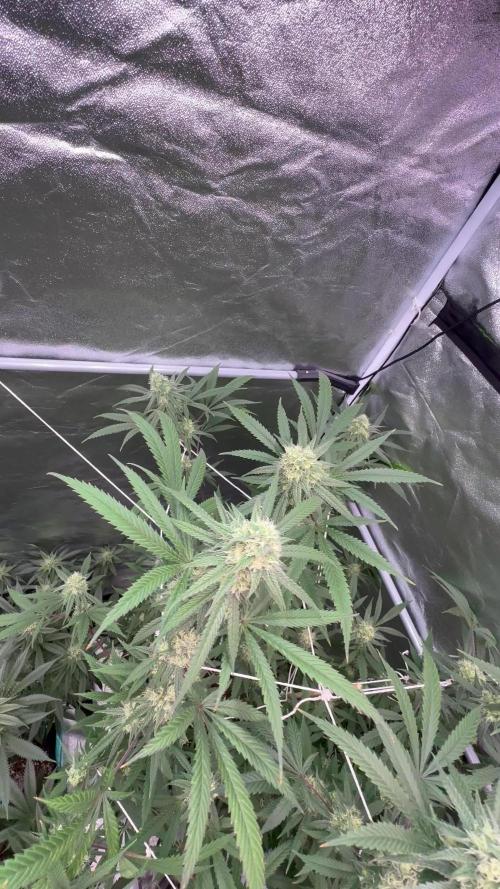
I wish I had a clone of this plant it was a best of a grower also the buds just keep gettting fatter and fatter they buds have a crazy dank smell and the structure of the buds is nice very low leaf to calex just an all around winner for sure