


Likes
Comments
Share

@Mrs_Larimar
Follow
2025-10-15 🌿
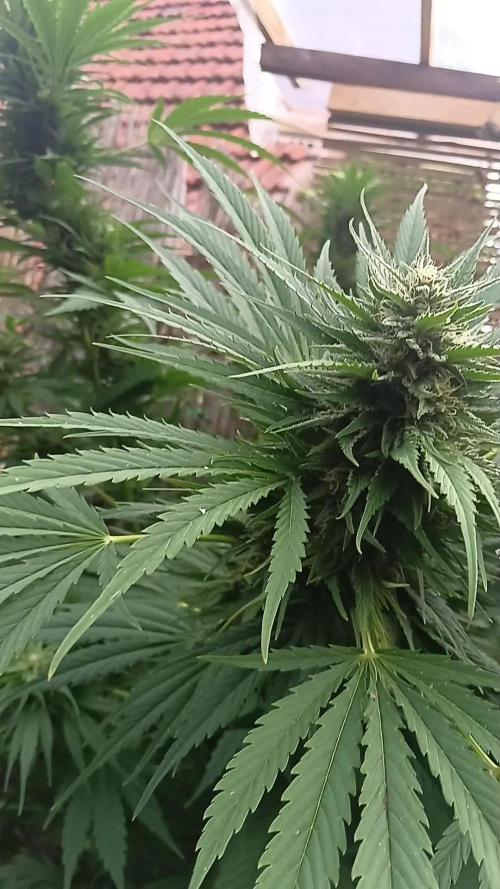
This is the first time I've grown Black Russian from Delicious Seeds, and I am positively surprised!
🤩 Great plant structure, very good bud size, easy to grow and harvest—and she's sooooooo beautiful. 💜
The season was kind of rough for the plants 🌧️❄️, but they had great conditions. T
hey were sitting in a fluffy bed of enriched soil mix, full of beneficials
like microorganisms, mycorrhizae, and microbacteria. 🍄
The soil bed is prepared in autumn the year before 🍂 and refreshed in springtime 🌱,
so the ladies can dig in deep and grow like queens. 👑
This year I added 2 SCROGS—and that was very good.
✨ They were also covered by a roof 🏠, which was very necessary this season because
it was very cold and rainy in spring and summer, with only a few weeks of lots of sun and heat. ☀️🔥
I think that's the reason all my outdoor ladies took 4 weeks longer to mature.
I was very pleased to harvest the Black Russian. 🌸✂️
There was only one spot with starting mold because the flower was peeking out of the roof.
So thank you, Delicious Seeds, for being a part here. 🙏💚 I'm sure you'll like this diary, just like I do.
Greetings,
Larimar 🌺
Strain Information: Black Russian Early Version
Genetics & Background
Black Russian Early Version results from crossing two legendary indicas with potent medicinal effects: White Russian and a splendid Black Domina mother. This is a selection of the famous "domina" phenotype - a real jewel well-known among Spain's best growers.
Growing Characteristics
Cultivation: Very easy to grow
Growth pattern: Moderate stretch during early flowering phase
Structure: Compact yet well-branched - one of the great indica yielders
Flower production: Large amounts of very dense buds
Unique trait: Very few leaves grow between buds
Aroma & Flavor Profile
Resin: Abundant, fruity-smelling with citrusy and earthy notes (likely from Afghan ancestry)
Taste: Denser than the aroma, very sweet and citrusy
Description: Like a fruit salad with lemon juice

Likes
14
Share


@TheBulldozerSicily
Follow
Inizio un nuovo ciclo come sempre in ritardo, volevo iniziare a settembre e ho ritardato di un mese. Vediamo a questo coltivo cosa viene fuori! Peace✌️

Likes
2
Share



Likes
14
Share


@BruWeed
Follow
🍀Estuvo bien en toda su etapa, no tuve ningún problema. Los resultados fueron muy buenos, se encuentra muy resinosa y con aroma a dulce.
🍀En total saque 143g de una sola planta.
🍀En total estuvo 105 días de vida desde su germinación.
🍀Recomiendo esta genética, por el momento son cocos Premium, ya quiero probarlo para saber que sabor tiene.
🍀Ahora se encuentra en etapa de secado, cuando ya estén para la etapa de curado subiré más imágenes.
🍀🇦🇷Podes seguirme en Instagram como @bruweed_arg🍀🇦🇷

Likes
11
Share


@eldruida_lamota
Follow
Que pasa familia, vamos con la tercera semana de floración de estas Gorilla cookies Auto de FastBuds.
Por el
Momento todo va bien tienen buen color y van ahí formándose esas flores.
Alimentamos nuestras plantas con Agrobeta.
Por supuesto el ph se mide en cada riego y se mantiene en 6.2 y riego en intervalos de 48h.
La temperatura está entorno al 22/24 grados y la humedad anda sobre el 50%.
Las plantas en si ya están bien sanas, tutore la rama principal para que no se fuese de madre, y así controlaré la altura.
Mars hydro:
Code discount: EL420
https://www.mars-hydro.com/
Agrobeta:
https://www.agrobeta.com/agrobetatiendaonline/36-abonos-canamo
Hasta aquí todo, Buenos humos 💨💨💨
Likes
4
Share


@L8bloomr1008
Follow
Day 28- business as usual. May top dress end of this week, not sure. But smells and trichs are setting up and no signs of deficiencies. I probably could push them more but it’s all good for now.
Day 30- ditched the trellis and did a heavier defol as the humidity would reach 73 with lights off. See if we can get some better airflow and fatter lowers.

Processing
Likes
Comments
Share


@Hexus
Follow
Days 78-84 - Been lax in updates, but I still log every week to completion. Back injury in addition to The Nineteen, Rona Style, has been a bit of a pain in the posterior. (That means ass) Plants are gigantic and sassy. Had Dangergirl come out and defoliate/lollipop the bottoms out of the girls, saving me painful labor and increasing my yields, so yay for her! Plants are happy, pompoms are getting thick, and everything looks good. Switched FF01 to flower on day 84.

Likes
26
Share


@Nistnov
Follow
Did some high stress training on the painkiller and honey cream maybe it was a bit late for that but I wanted to really make sure that they have a the space they need.
Autumn is here and it did start with a lot of rain, I'm a little worried about mold if it's raining non stop. The temperatures dropped down to 10c° in the night and humidity is high, so fingers crossed that no mold will appear.
The honey cream finally started to flower properly but she's still around 3 weeks behind the other two strains.
The painkiller is getting closer to the finish line, she still has around 2/3weeks to go though.
All plants received a lot of thining out removed some branches and leaves, lolipopping style hope this help increase the airflow and prevent mold.
Pictures made while it raining.


Likes
15
Share


@IsseyBukkake
Follow
We've made it to day 28! - 17/12/20
The girls seem to be happy and healthy today.
I won't be feeding/watering them as the pots are still heavy from yesterdays feed.
A few of the girls have started to show sex & the smell has picked up a little bit(inside the tent), so I'm hoping to see some flowering begin this week sometime.
(I've been using my iPhone as my only DSLR lens is useless for focusing on certain depths, but I hate the colour I get using the iPhone... I may be switching back to DSLR unless I can find a better camera app.)
update - day 29 (18/12/20)
Short update today.
Fed the girls today and will probably be feeding/watering every day from here on out, we'll see though.
veg growth has really taken off by now, I'm hoping to see some flowering this week.
update - day 30 (19/12/20)
I fed the girls today.
I need to find a better way to hand water, the plants are so short and bushy its a pain getting in between all the branches.
I wish i left my drip feed system up and running, I will definitely refine it and use it next run.
Update - day 31 (20/12/20)
Fed the girl's straight water today.
I'm going to purchase the pieces I need tomorrow to reconfigure my drip feed system & hopefully have it running by mid-week!
Update - day 32
I attempted to set up my drip feed system today but the plants are too thick around the base to place the halo around :(
I will have to wait until next season to set it up, oh well, I guess its hand watering for the next 5-10 weeks
Fingers crossed these girls start to flower ASAP.
I fed the girls today, everything is looking good so far.
I also moved the plants around to try to make hand watering easier, I had issues trying to water the whole pot instead of just one spot due to plants/branches being in the way.
Update - Day 34 - 23/12/20
It definitely seems ill be watering the girls every day from here on out.
All the girls look fairly happy and healthy, they're getting a bit big for the 5x5 they're in.
It looks like flowering has begun on 2 of the girls, hoping to see some more progress on the others in the next few days.
Thanks for stopping by! 🙏

Likes
2
Share


@Indicaianer
Follow
Alle 4 Pflanzen stehen im Zelt die 4 feminisierten in einem kleinen Gewächshaus, die 2 Autos im Endtopf.
Processing
Likes
4
Share


@Shoots3845
Follow
Heavy rain all week again due to freak storms, very limited sunlight.
Notice leaf mites and some sort of caterpillars eating away at them
Likes
7
Share

@eldruida_lamota
Follow
Venga familia, acabamos la séptima semana de estas gelato olandesse de DutchFem.
Última semana que alimento, a partir de hoy viene lavado y aguantar ya lo que queda , a ver si no sube mucho la temperatura, porque podría ser un problema.
Agrobeta:
https://www.agrobeta.com/agrobetatiendaonline/36-abonos-canamo
Mars hydro:
Code discount: EL420
https://www.mars-hydro.com/
Las maximas de temperatura no superan los 26 grados y las mínimas no bajan 20, así que no me puedo quejar.
Los niveles de humedad también son los correctos van entre 50%/65% de humedad relativa.
Por supuesto el Ph lo estamos dejando alrededor de 6.
Hasta aquí es todo, buenos humos 💨💨💨.

Likes
7
Share

@GANJAT
Follow
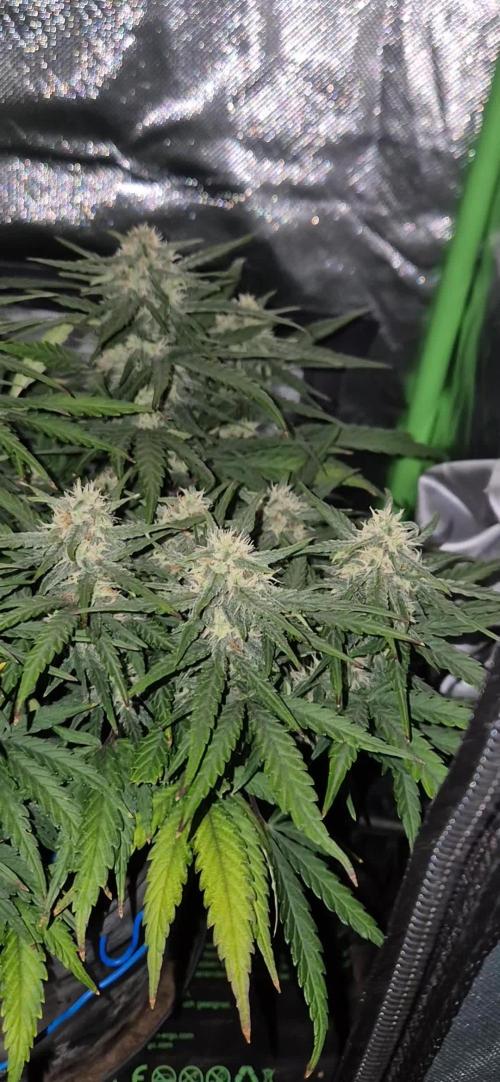
Diese Woche sind an den 3 höchst gelegenen Buds die ersten Pistillen orange geworden und ein fruchtiges/zitrusartiges Aroma entfaltet sich bereits.
Die untersten Blätter fangen unerwartet früh an sich teilweise gelb zu verfärben, was ich nicht als Nährstoffmangel deute, sondern als Zeichen für die Einleitung des Endes der Blüte.
Nach Plan sollte es jetzt noch 2 bis 4 Wochen dauern bis zur Ernte.

Processing
Likes
16
Share


@Damonkey
Follow
Things going great in here. All racing into flower and stretching nicely. Banana Daddy’s in the lead tropics after that cookies trailing at the moment

Likes
2
Share


@OGTrauma
Follow
Ok dear ones, my 10 followers needs their internet niche micro celebrity back in order to show off viced practice in weed growing stating back the basics and record everything if i go broke beyond repair and obviously confirm , if you invert mediocrity you receive mediocrity, if you invert best you receive the best, but im on the sweet spot on that one.
I used a special bac product on germination called x-seed in order to prevent damping off or lose a whole pack of seeds , these seeds are from a local bulk brand called RengoKabron and it's also my first time buying from these allegedly "premium selection" seeds, im not bragging or usig irony to expect like the specific strain from from a very aknowledged cup winning breeder bank behind it , just emphazising that the prices for bulk unit usually is 1 to 3 usa dollars, this is the last criteria and this exclusive one based on sugar black rose , mango sapphire and Karma OG as far i remember. Even if it's a little too much on the expensive side (im not throwing dirt on bulk seed brokers and by consequence banks that are only repack, but yes they have a threat, the same provider of seed told me , local competence, on even when they aren't competence by any means also the starting price of this particular strain can be comparison with local seed breeders that also can offer some exclusivity but, besides the combination of the genetic and the provider, because on stores i suffer a lot so ... , a generic bulk or most premium seed can fail and the value adds is that the person face of the bank offered guarantee and i believe in honor, something that here in my country is very hard to do because usually the sellers says WHAT PART OF COLLECTION DID YOU NOT UNDERSTAND ANYTHING BESIDES COLLECTING THEM IS ILLEGAL AS FAR NOV 2024 MF SO I BELIEVE IN YOUR WORD HOMIE, INCLUDING THAT ARE FRESH AND WILL NOT DAMP OFF IF CORRECTED PARAMETERS AND REGISTER EVERY PROCEDURE EXPLAINED THEREFORE. shoutout to rengokbron, as 28 of 30 seeds popped initially, so , they are fresh, now the vigor will be covered on the next update. stay tuned!
So my initial cash inverted on seeds is 60.000clp
Regarding to substrate, there are two, a light mix from a local substrate brand called "tanu mapu" (it means something soil in an archaic language) and the seller gave me a small bag of coco to try if it's more useful to germinate, as i will do 30 seeds with the hope that at least 1/3 survive ( i'm on my cursed era right now, when your hand decays everything it touch, a breeder phase where you must reformulate)
50lt on 7500CLP (actually that's quite cheap and quality is good on touch but it's also my first time using it too so i need to confirm that by empyric test)
i inverted 35000CLP on substrate, i will think about the space after the germination test and checking on the final survivors and the most vigorous. (thats what i love from bulk and budget banks, you can put more to select the ones you belove, but sometimes stability is missing and there is a lot fake bulk on shops that usually is regular seed on falsified bank packaging so im happy with my shopping, except if everything fails and my effort and refreshing the stash is not enough because im suffering from kush breeding erectile disfunction, and this is my second attempt throwing seeds and everything that shall fail, can fail again.
Also substrate and humidity , shall faulter, but as im using more prepared substrate and conditions, this will not fail twice in a row (i lost 20 seeds of purple punch and white shark), also , parameters will be monitored 24/7/365 and there will be automatization and more mid ranged lighting , as i'm on summer transition and heat can cause a bad interior conditions too!, like a baby inside a car.
Likes
20
Share


@Boomdrawfyah
Follow
Dia 76 desde la germinación y 48 dias después del trasplante se empieza a notar la robustez de las plantas ya miden bastante alto casi 2 M , y estan bastante ensanchadas, lo único que se puede notar la 1051 , sus ramas crecen muy rectas hacia arriba ,la white noise crece con las hojas un poco onduladas aunque no afecta a la planta. Pronto las amarraremos y ataremos con una estructura para que esten más cogidas y distribuidas las ramas y mas seguras contra viento y lluvias que empiezarán en septiembre

Likes
21
Share


@crystal_garden_0
Follow
Good week, noticed I mutant plant out of all the strains I started. These are good to go .so far plants are really healthy and happy. Just did the sort transplant from 4.5 inch pots to 5 gallon pots.
Likes
6
Share


@Myrcene_Dream
Follow
-Germinated seed in peat pellet and 3 days later sprout popped up
-Put peat pellet with sprout in a 5 gallon fabric pot containing Pro-Mix HP
-Placed into tent where temp/humidity is constant at 78F 70%
-Gave a 3tbsp top dress of Gaia Green all purpose on day 6
-Watering a bit every 3rd day or so

Likes
1
Share

@DmbTexasRanger
Follow
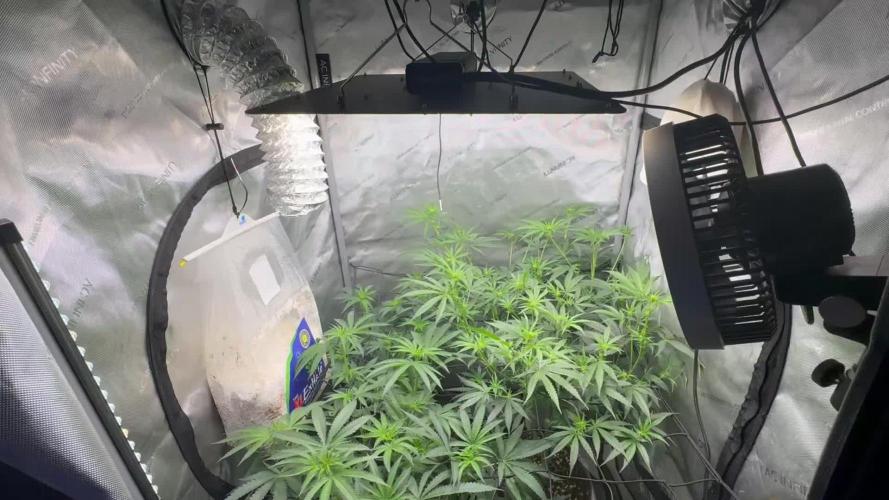
Final foliar sprays applied. Hitting the shift into the sweetest bloom cocktail I could blend


