The Grow Awards 2026 🏆 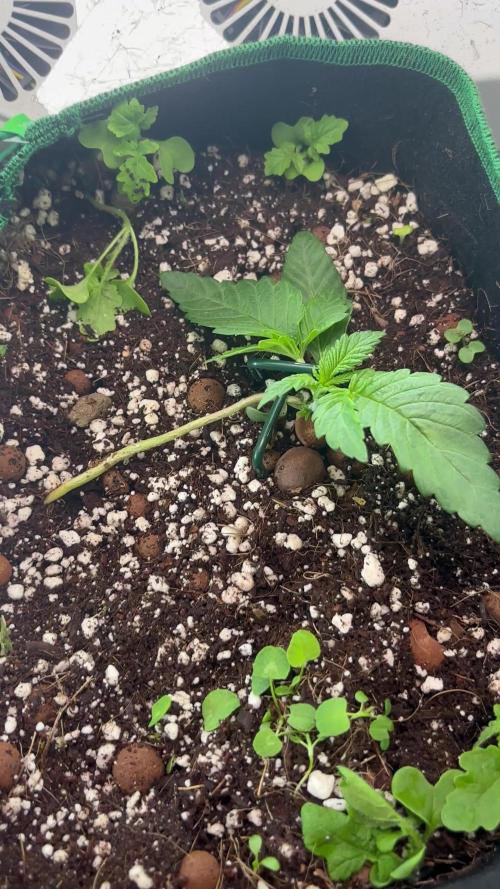












Likes
Comments
Share
@psychonaut420
Follow
The start of week 3 veg I’ve been LSTing the plant I notice development drastically every 12hrs and now just starting to spot the development of side branches and a sturdier stem and fatter leaves and new node growth I am following shogun coco nutrient schedule week by week and have just topped 2 side branches on last day of week3 the change of structure in 2 days is crazy


Likes
13
Share
@knicko
Follow
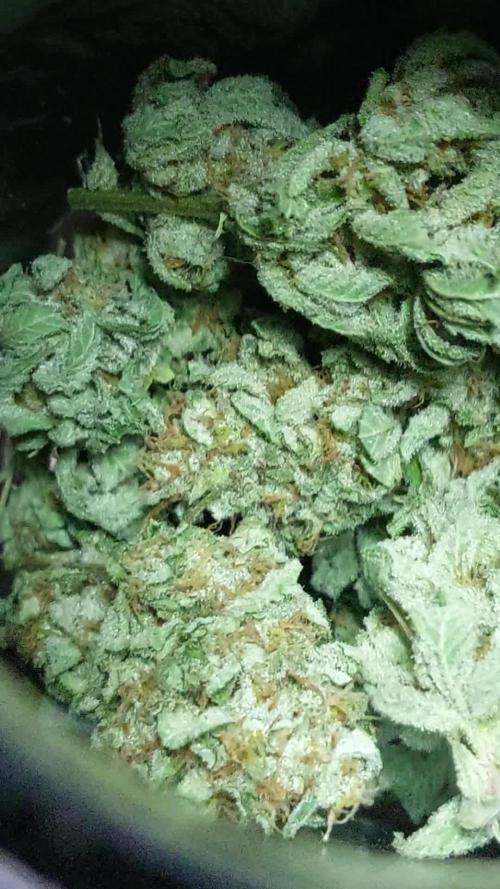
Auf der Waage im getrockneten Zustand waren es 130g somit habe ich mir den Fixkosten ein €/g von 2.55€/g das finde ich nicht schlecht


Likes
25
Share
@XperencdGmanXG
Follow
wow what a month. June was down right chilly at night up until almost fathers day. Then we go into this mini drought. The forecast is saying that we are going back to normal hopefully quickly with some more gentle rain.
Likes
1
Share
@Ninjabuds
Follow
My Soaptini plant is still on the smaller side, but it's finally starting to take off. I think it's going to stay pretty short and stocky, which will be interesting to see.
It's been a challenging week with the constant rain and ridiculously high humidity. Keeping things dry indoors has been a real struggle. Despite the weather, I managed to flip all my feminized photoperiod plants to flower this week. I'm hoping the switch will go smoothly, but with this humidity, it's going to be tough.

Likes
8
Share
@Mr_nugs_lover_David
Follow
This plant looks stunning, I love this strain, I enjoyed a lot last year, her flowers are absolutely 🔝 quality, and I love that strange sweet gasoline smell, I can't wait to transplant this lady and make her become a nice bush like I did last year, this lady has been Transplanted on day 34 since planted may 5th! Can't wait to start training this lady!

Likes
7
Share
@Nassmou
Follow
Hello,
We are at 12/12 +40, the plants are developing well, not all of them will explode right away, but I am patient.
So we have the big plant in the middle and 4 cuttings, alas there are only 3 cuttings from the biggest the other is from a Purple Bud.
They all received a dose of Terra florès, Cannazym and CannaBoost.


Likes
18
Share
@TheUndercoverGrower
Follow
I didn't bother updating the diary last week as there was nothing going on really, just finished the 1st week of flushing and another week till harvest.
Only big change going on is the hps and little viparspectra LEDs have been taken out and replaced by 2x invisible sun ISH265 quantum boards.

Likes
7
Share
@Chubbs
Follow
Hey grow fam, weekly update on these ladies. They've definitely rooted and are starting there journey upward. All are looking great and showing signs of daily growth. I started adding calmag to my feeds and will start grow nutes this week. Over all Happy
Likes
19
Share
@4Haut
Follow
Hi@all, it is the end of the fifth week, I started some low-stress training to bend the lower branches towards the light. It worked really well. Three days ago, I topped the "head". I hope she's recovering from it in the next days/week. So far, everything seems to be going well and it’s really enjoyable. 😎🌿
My only concern is the 40x40 cm tent – I think it might be a bit tight in there...
Greetings ✌️

Likes
Comments
Share
@deseed_uy
Follow
Llegó la cosecha, salió poco por factores climaticos pero muy buena calidad y exquisito a pesar del poco lavado. Muy contenta con el resultado iremos mejorando


Likes
47
Share
@Wicked_Stix
Follow
I had to kill one of my photoperiod plants because it was hermie so I decided to move the FBTO1 and FBTO13 into the room with them since I had space in there. So now they are on 12 hour light and they seem to be much happier with the environment. This will be my first time flowering autos on 12 hours so curious to see how they do.
Nutrients per gallon
.5 tsp maxigro
.25 tsp armor si
.25 tsp calimagic
.1 tsp 90/10 humic/fulvic acid


Likes
56
Share
@Ultraviolet
Follow
What's in the soil? What's not in the soil would be an easier question to answer. 16-18 DLI @ the minute. +++ as she grows.
Probably not recommended, but to get to where it needs to be, I need to start now.
Vegetative @1400ppm 0.8–1.2 kPa 80–86°F (26.7–30°C) 65–75%, LST Day 10, Fim'd Day 11
CEC (Cation Exchange Capacity):
This is a measure of a soil's ability to hold and exchange positively charged nutrients, like calcium, magnesium, and potassium. Soils with high CEC (more clay and organic matter) have more negative charges that attract and hold these essential nutrients, preventing them from leaching away.
Biochar is highly efficient at increasing cation exchange capacity (CEC) compared to many other amendments. Biochar's high CEC potential stems from its negatively charged functional groups, and studies show it can increase CEC by over 90%. Amendments like compost also increase CEC but are often more prone to rapid biodegradation, which can make biochar's effect more long-lasting. biochar acts as a long-lasting Cation Exchange Capacity (CEC) enhancer because its porous, carbon-rich structure provides sites for nutrients to bind to, effectively improving nutrient retention in soil without relying on the short-term benefits of fresh organic matter like compost or manure. Biochar's stability means these benefits last much longer than those from traditional organic amendments, making it a sustainable way to improve soil fertility, water retention, and structure over time. Needs to be charged first, similar to Coco, or it will immobilize cations, but at a much higher ratio.
a high cation exchange capacity (CEC) results in a high buffer protection, meaning the soil can better resist changes in pH and nutrient availability. This is because a high CEC soil has more negatively charged sites to hold onto essential positively charged nutrients, like calcium and magnesium, and to buffer against acid ions, such as hydrogen.
EC (Electrical Conductivity):
This measures the amount of soluble salts in the soil. High EC levels indicate a high concentration of dissolved salts and can be a sign of potential salinity issues that can harm plants.
The stored cations associated with a medium's cation exchange capacity (CEC) do not directly contribute to a real-time electrical conductivity (EC) reading. A real-time EC measurement reflects only the concentration of free, dissolved salt ions in the water solution within the medium.
98% of a plants nutrients comes directly from the water solution.
2% come directly from soil particles.
CEC is a mediums storage capacity for cations. These stored cations do not contribute to a mediums EC directly.
Electrical Conductivity (EC) does not measure salt ions adsorbed (stored) onto a Cation Exchange Capacity (CEC) site, as EC measures the conductivity of ions in solution within a soil or water sample, not those held on soil particles.
A medium releases stored cations to water by ion exchange, where a new, more desirable ion from the water solution temporarily displaces the stored cation from the medium's surface, a process also seen in plants absorbing nutrients via mass flow. For example, in water softeners, sodium ions are released from resin beads to bond with the medium's surface, displacing calcium and magnesium ions which then enter the water. This same principle applies when plants take up nutrients from the soil solution: the cations are released from the soil particles into the water in response to a concentration equilibrium, and then moved to the root surface via mass flow.
An example of ion exchange within the context of Cation Exchange Capacity (CEC) is a soil particle with a negative charge attracting and holding positively charged nutrient ions, like potassium (K+) or calcium (Ca2+), and then exchanging them for other positive ions present in the soil solution. For instance, a negatively charged clay particle in soil can hold a K+ ion and later release it to a plant's roots when a different cation, such as calcium (Ca2+), is abundant and replaces the potassium. This process of holding and swapping positively charged ions is fundamental to soil fertility, as it provides plants with essential nutrients.
Negative charges on soil particles: Soil particles, particularly clay and organic matter, have negatively charged surfaces due to their chemical structure.
Attraction of cations: These negative charges attract and hold positively charged ions, or cations, such as:
Potassium (K+)
Calcium (Ca2+)
Magnesium (Mg2+)
Sodium (Na+)
Ammonium (NH4+)
Plant roots excrete hydrogen ions (H+) through the action of proton pumps embedded in the root cell membranes, which use ATP (energy) to actively transport H+ ions from inside the root cell into the surrounding soil. This process lowers the pH of the soil, which helps to make certain mineral nutrients, such as iron, more available for uptake by the plant.
Mechanism of H+ Excretion
Proton Pumps: Root cells contain specialized proteins called proton pumps (H+-ATPases) in their cell membranes.
Active Transport: These proton pumps use energy from ATP to actively move H+ ions from the cytoplasm of the root cell into the soil, against their concentration gradient.
Role in pH Regulation: This active excretion of H+ is a major way plants regulate their internal cytoplasmic pH.
Nutrient Availability: The resulting decrease in soil pH makes certain essential mineral nutrients, like iron, more soluble and available for the root cells to absorb.
Ion Exchange: The H+ ions also displace positively charged mineral cations from the soil particles, making them available for uptake.
Iron Uptake: In response to iron deficiency stress, plants enhance H+ excretion and reductant release to lower the pH and convert Fe3+ to the more available form Fe2+. The altered pH can influence the activity and composition of beneficial microbes in the soil. The H+ gradient created by the proton pumps can also be used for other vital cell functions, such as ATP synthesis and the transport of other solutes. The hydrogen ions (H+) excreted during photosynthesis come from the splitting of water molecules. This splitting, called photolysis, occurs in Photosystem II to replace the electrons used in the light-dependent reactions. The released hydrogen ions are then pumped into the thylakoid lumen, creating a proton gradient that drives ATP synthesis.
Plants release hydrogen ions (H+) from their roots into the soil, a process that occurs in conjunction with nutrient uptake and photosynthesis. These H+ ions compete with mineral cations for the negatively charged sites on soil particles, a phenomenon known as cation exchange. By displacing beneficial mineral cations, the excreted H+ ions make these nutrients available for the plant to absorb, which can also lower the soil pH and indirectly affect its Cation Exchange Capacity (CEC) by altering the pool of exchangeable cations in the soil solution.
Plants use proton (H+) exudation, driven by the H+-ATPase enzyme, to release H+ ions into the soil, creating a more acidic rhizosphere, which enhances nutrient availability and influences nutrient cycling processes. This acidification mobilizes insoluble nutrients like iron (Fe) by breaking them down, while also facilitating the activity of beneficial microbes involved in the nutrient cycle. Therefore, H+ exudation is a critical plant strategy for nutrient acquisition and management, allowing plants to improve their access to essential elements from the soil.
A lack of water splitting during photosynthesis can affect iron uptake because the resulting energy imbalance disrupts the plant's ability to produce ATP and NADPH, which are crucial for overall photosynthetic energy conversion and can trigger a deficiency in iron homeostasis pathways. While photosynthesis uses hydrogen ions produced from water splitting for the Calvin cycle, not to create a hydrogen gas deficiency, the overall process is sensitive to nutrient availability, and iron is essential for chloroplast function.
In photosynthesis, water is split to provide electrons to replace those lost in Photosystem II, which is triggered by light absorption. These electrons then travel along a transport chain to generate ATP (energy currency) and NADPH (reducing power). Carbon Fixation: The generated ATP and NADPH are then used to convert carbon dioxide into carbohydrates in the Calvin cycle. Impaired water splitting (via water in or out) breaks the chain reaction of photosynthesis. This leads to an imbalance in ATP and NADPH levels, which disrupts the Calvin cycle and overall energy production in the plant. Plants require a sufficient supply of essential mineral elements like iron for photosynthesis. Iron is vital for chlorophyll formation and plays a crucial role in electron transport within the chloroplasts. The complex relationship between nutrient status and photosynthesis is evident when iron deficiency can be reverted by depleting other micronutrients like manganese. This highlights how nutrient homeostasis influences photosynthetic function. A lack of adequate energy and reducing power from photosynthesis, which is directly linked to water splitting, can trigger complex adaptive responses in the plant's iron uptake and distribution systems.
Plants possess receptors called transceptors that can directly detect specific nutrient concentrations in the soil or within the plant's tissues. These receptors trigger signaling pathways, sometimes involving calcium influx or changes in protein complex activity, that then influence nutrient uptake by the roots. Plants use this information to make long-term adjustments, such as Increasing root biomass to explore more soil for nutrients. Modifying metabolic pathways to make better use of available resources. Adjusting the rate of nutrient transport into the roots. That's why I keep a high EC. Abundance resonates Abundance.
Processing
Likes
61
Share
@Cariboo_OG
Follow
Grape Ape Cake !
Lineage;
Hotcakes
(Katsu Bubba Kush X Burnt Toast (from Raw Genetics)
X
Grape Ape
An Exciting New Collab from Katsu Bluebird !
Week 11, & the End of 4 weeks of flowering (30 Days of 12/12)
Welcome back to our regular scheduled programming....
Like I mentioned we are officially 30 days into our 12/12 lighting cycle.
Now taking into consideration that this is one of the first runs of this particular strain the flower period is partially undetermined, I will be guessing based on Lineage of the parents, & following her closely towards the end to ensure my desired trichome ripeness.
Katsu's HotCake's run's Approximately 8-9 Weeks
&
The Grape Ape run's slightly quicker at 7-8 Weeks
You can certainly tell the difference between all 5 plants, I'm very glad I took cuts of everything ! as plants 2 & 3 are certainly the keepers of the bunch..
plant 2 showing some very cool fall colours already (emerson effect hitting strong asf) She is already starting to purple up & smells Very Sweet. My guess is this pheno leans more to the Grape Ape side.
As far as plant 3 is concerned I can smell heavy Kush aromas emulating off her already, & based on her flowering structure I believe this pheno leans more Katsu Bubba. but we'll have to wait and see.
A Minor amount of leaf plucking this week should be noted.. It will probably be the last time I mess with them, its time to start swelling up.
It is my opinion that most of the stretch has been completed & i'm now looking at the final colas minus the couple weeks of filling out of course.
As this is the end of four weeks of flower(12/12) Their food will be increased during the next feeding, thus far i've been impressed with the ease of this strain.. I wasn't sure what to expect to be honest but I will say this I was weary of over-feeding but all of them seem to enjoy heavy feedings.
Thanks for Reading 🙌
If you have a question or a comment leave it down below otherwise,
I Hope You Check in Next Week,
Stay Safe out there & Happy Gardening
Cariboo


Likes
3
Share
@TommyBVRSA75
Follow
Como siempre y siempre en la mitad de ciclo de grow, os regalo un vídeo para que sigáis mi evolución.
Es un privilegio tener tantísimos amigos (más que seguidores tan solo)
4:20 Siempre y que el Dios Jah nos guarde siempre.
All you need is Love ( CANSerbero VIVE)...
