


Likes
Comments
Share

@Miketama
Follow
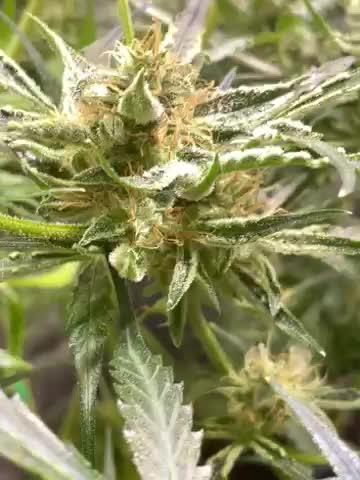
Moon Rock - Week Update 🌿
Quick update on Moon Rock! Last fertilization round at day 50 of flowering. Photo from day 54 - approximately 2 weeks until harvest!
Thanks to everyone for checking in! 🙏 Appreciate you taking a look!

Likes
38
Share


@Green_Mountains
Follow
A lot going on this week!! Feeding 3 quarts every Sunday and Wednesday at this point. I did a light defoliation on Monday and did a more thorough defoliation on Friday! I opened up a lot of bud sights and it shows in the pics from late in the week!!
I just turned the fan and carbon filter on. Temps are currently holding at 73-74F and the humidity is between 43-45%. I'm very happy with that!
I hope to keep them both happy!!
Enjoy!

Likes
4
Share


@FOGSUISSE
Follow
Its a easy strain who like food.
PH 6.2 in flowering with EC 2.2 - 2.6
Swiss light www.thefuturofgrow.com

Likes
5
Share

@Chapoguzman420
Follow
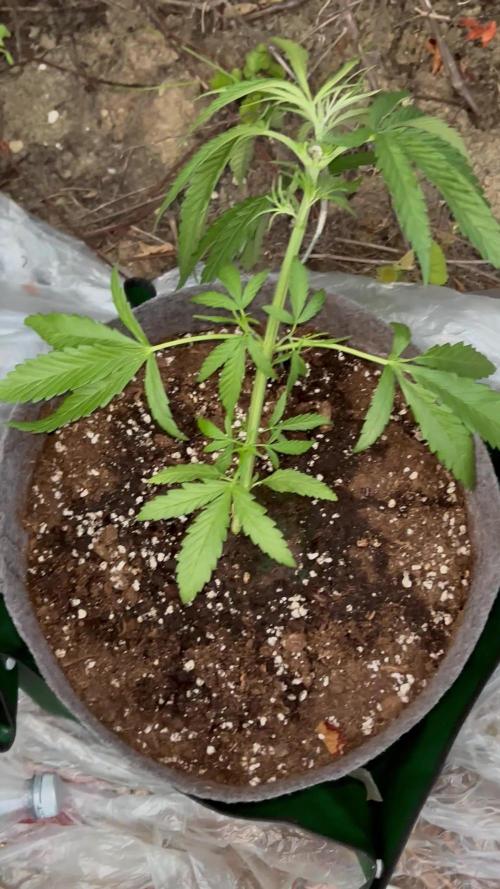
Settimana dedicata alla tecnica LST e a una leggera potatura delle foglie ombreggianti.
La pianta ha reagito in modo ottimale, senza mostrare alcun segno di stress o rallentamento.
Il ceppo mostra una crescita vigorosa e costante. 💪🏻✨

Likes
10
Share


@Aircoholic
Follow
Okay, that was it, her growth period is over. My summary is a bit of a mixed bag.
Sonnenerde: I liked how the plant grew in this living soil and am curious on the result after drying and curing. But so far, I'm happy with the experiment
Blumat: I give up - I fell like this is not the watering system for me, despite me really liking the idea and the concept of it. To be fair, I need to check the drippers, if the membrane and moving parts are spotless, to rule out reasons beyond my wrongdoing, but I'm not too hopeful. I just don't think I'll use it again. the water hoses/pipes(?) make the whole plant too immobile, not even turning the pot is possible. I'm sure it's great for certain situations, but just not for me.
Bio Tabs PK Booster+Orgatrex: This time I used a little more Orgatrex, not sure if I changed anything else, but it really made a huge difference, even bigger than in previous grows. The aroma intensified dramatically, the buds were covered in trichomes and bulked up really nicely - and all that was noticeable after a few days.
Likes
5
Share


@FourVentiFarms
Follow
So since I had the mold and bud rot problems I had to divide my schedule of harvest and divide the product as well.
- Healthy buds are ones belonging to branches where there are no signs of rot/mold.
-Mid-healthy buds are untouched by disease but still belonging to a branch where there was some disease.
-Last category are the salvaged ones, where I cut them from bigger buds that had disease or they were in some part affected.
These 3 categories each have their own drying space and where harvested in this order to prevent spreading of spores and stuff. For the salvaged buds every time I removed a part with disease I cleaned the scissors with alcohol.
I only removed the sun-leaves + penguin leaves and will be doing a dry trim for the sugar leaves later on.

Likes
44
Share


@Chedderbob112
Follow
Waiting on a full plant hang dry so will wait at least two weeks maybe three hope ma vegging station holds up n can dae tge damage the now as av said guys this is definitely not the perfect set up am not on good terms with land lord so basically squatting here lol and growing and a got caught with one in this house the land lord doesn’t even know lol 😂


Likes
4
Share


@JeyGanesha
Follow
Seconda settimana di veg...la runtz che è nata prima dell'altra sta mutando in modo strano. Non avevo mai visto spostarsi il centro apicale..sembra che si è piegata e l'apicale sta crescendo come sé fosse un ramo laterale 😂🤣🤦💪
Likes
2
Share


@Mighty_Monaco
Follow
Main plant (indoors/LED) looks great.
Frosty went almost way down, very sugary.
Pistills tuned almost completely brown.
Trichomes look not ready yet, most milky but none amberish.
The smaller one, started to get super bushy, buds are relative small.
Weather got lot warmer.
Lots of sun for number two.

Likes
11
Share


Likes
15
Share


@XperencdGmanXG
Follow
Girls started growing so fast due to the Aloe Vera Juice I had to flop them into flower early. They are just reeking of 🍋 right now smells like I'm in a lemon orchard. I think they are about done the transition. Hope they don't stretch much more.


Likes
34
Share


@420DeepGrow
Follow
La primera semana a ido bien, destacar que la próxima vez, estresaré lo mínimo posible a las plantas, ya que si quieres una cosecha rápida y saludable lo mejor creo es no estresar a las plantas, nada de los stress ni mierdas, dejarla desarrollar como si estuviera solita.
📅 Día 8: 🔹Pulverizo las hojas con Rootbastic de Atami a 0,15 ml/litro.
🔹Aparición primeras preflores.
📅 Día 9:🔹 Última pulverización con Acti Vera y Alg-A-Mic a 1 ml/litro respectivamente. A partir del día 11 no se le aplicarán más abonos vía foliar para controlar la humedad en el cuarto de cultivo y así evitar que se disparen estos niveles de humedad.
📅 Día 10🔹Última pulverización con Special THC PLUS.
📅 Día 11🔹Riego según la tabla de nutrientes y bajo la dosis de agua ya que me he pasado con el riego. Aplico 350ml e iré subiendo cuando note que no dura 24h mojado.
🔹Cambio los platos de las macetas por una bandeja de 80 x 80para así poder hacer un mejor riego y no molestar a las plantas, ha entrado justa. La pongo sobre una mesa de metal de 60 x 60 cm.
📅Día 12:🔹 Low Stress
📅 Día 13:🔹Riego según la tabla de abonos BioBizz.
📅 Día 14:🔹 Conecto el CO2 a 630 ppm para ver si estiran un poco más.
Likes
39
Share


@Weird_Jimmy
Follow
👉The daily routine of twice daily fertigation has given me a small insight as to what Phil Conners may have gone thru. There has been promising changes however that re-assure me that the plant is indeed maturing and will finish soon. The top leaves are starting to fade, and a couple of amber trichomes have been spotted! So far the amber color is light, almost yellow, and should darken up a bit by harvest time. At the rate they seem to be getting cloudy/milky I could be harvesting in as little as 3 days, but that is just wishful thinking I'm sure. I'm hoping no more than 10 more days. But I will let the plant decide...as long as there are only a few clears and the rest cloudy then I will harvest.
👉I took one small cola tip bud from an upper level, secondary branch. It weighed 30g with leaves, 10g trimmed and when dried to 20% should be 2g. I did this to be able to inspect the buds with a little more stability when using the USB scope. Those pix are the first 6 on this page.
👉Nutrient mix is the same recipe: week 11 on the General hydroponics flora series drain to waste chart. I reduced the concentration to 1ms from 1.3. The saturation level for the pot is averaging around 1lt per fertigation. I give it 2.5l at lights on, and 2L 1-2hrs before lights off. For some reason this grow session there is a persistent/prolific algea growth on the outside of the pot (cloth pot). I have the same fan setup Ive been using all year. It may be that when I didnt spray the pot off for a couple week the algea got a firm hold on the pot. I use a pressure sprayer with a H2O2 solution (1gallon water with 60ml h202) to spray off the exterior of the pot every couple days. THis keeps it at bay somewhat. After harvest I will cut open the cloth pot to see if the algea extends inside the pot any and if has affected the roots.
👉 While trichome hunting is very kewl if good pictures are taken, its very frustrating to get a decent pic due to any slight shake causes the pic to blur. When doing daily eye loop inspections I dont turn off the grow lights or fans. But when trying to get pix I turn off all the fans and both grow lights. This helps a little when trying to take pix with the USB scope.I have the small scope mounted on a tripod and that eliminate my own movement, but just trying to focus proves to be tedious because any touch causes the image to shake wildly, which results in very slow progress as I search around the plant and try for decent pix. Today I got a tube extension set for my 35mm DSLR. It turned my regular 55mm lens into a macro lens. While its not the same as a regular macro lense, its way cheaper....35$ for the tube set as opposed to 300$ for an actual macro lens. THe high resolution allows me to get sharp images with a deeper feild of focus than the scope. I still need lots of practice and need to work on lighting. I included some cropped and un-cropped macro shots done with the camera. The other macro shots are the USB scope. You can see its still got plenty of clear, lots of cloudy, and an amber here or there. The areas that I have touched have strands of resin that look almost like spider silk. SOOOOOO frosty! Santa is going to really enjoy his milk and cookies when he visits my house.

Likes
24
Share


@Basementganja
Follow
Week6 of bloom, feeding Cal-mag+Floranova Bloom, both at 1tsp/gal. Each plant receives a glug or two from a 1gallon mixture. Runoff is removed.
New Clones of different phenos have entered the arena!
Happy growing!

Likes
6
Share


@midnitrtoker
Follow
This week has been awesome. Reservoir has been lasting is pretty well these 3weeks. I filled it with 10gals and have not had to top it up. Dropped the trellis net on the girls to get her to open up more, I will be adding 1-2 more layers of trellis just in case when we flower we make sure to really spread them out. I’m really loving this Autopot 10gals has really gone a long way I just make sure to check the ph and we are good. Next week I’ll be flipping so you will get to see what she looked like before the flip. Thank you all again for watching. See you all next week.
Likes
2
Share

@M420_GROWS
Follow
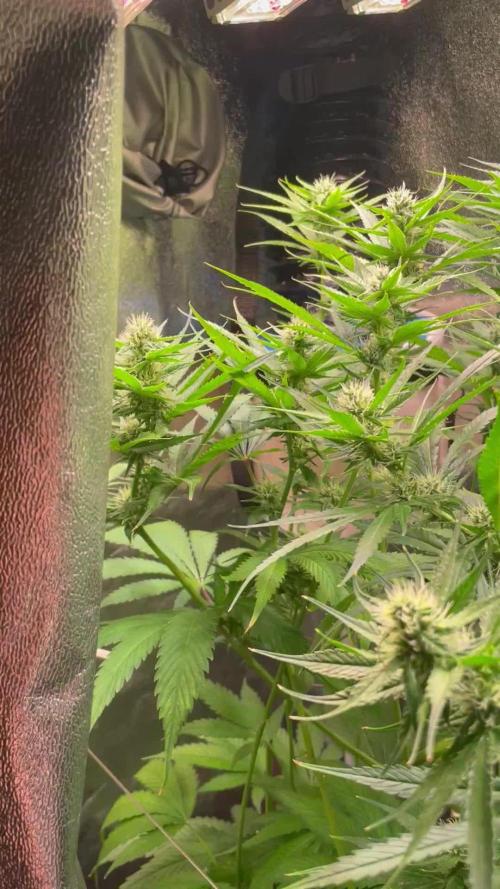
D4: it’s hot, up to +36C in tent
She’s strong
D7: lamps still dimmed 180W
Top colas only 10cm from lamps
60-100k lx

Likes
3
Share


@Autofutur
Follow
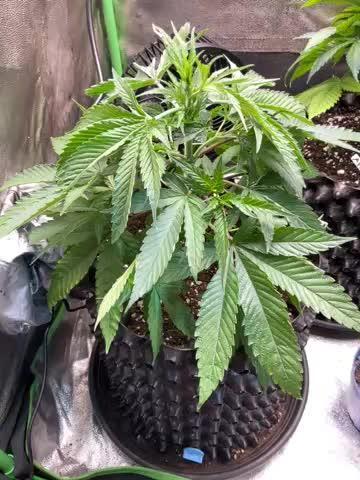
Due to winter and bad isolation in the house I struggle to keep it around 18 C at night and 22 during the day.
Not ideal for this stage but I can't do much more for now.
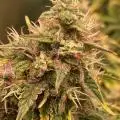
NCH is described by Memphisto as "rampant seedlings stage" I would confirm that.
Her side branches grew 2cm/1inch today... I think she is waking up


Likes
24
Share


@m0use
Follow
***Sponsored Grow*** = Medic || https://medicgrow.com || Grow = ***Sponsored Grow***
Plants still looking good from last week, the yellowing has seemed to stop spreading, still some dull green in some leaves, I think I was under feeding them, but runoff says otherwise. Noticed some more pink/purple stems on the plants and decided to increase the phosphorus content in the feed by mixing in half grow and half bloom from the nutrient lineup. I'd use the PK booster I have but its to high in K for my liking. The entire lineup is very high in K. mixing grow and bloom gives a NPK ratio of 7-7-14 then done 1:1 equal parts.
Grow=8-4-15
Bloom=6-10-14
Boost=1-15-30
Run off was a bit high for my liking but only seeing minimal signs of nutrient burn. Still watering once with feed and runoff and then later in the week with water and no/little runoff for my watering cycle.The number in the nutrient section are wrong but the EC and ratio are correct. Also impressed the roots have started popping out the bottom of the container already after only being transplanted for a week. Good root growth on these ones.
Lights doing well. The V1 spectrum is good on the medic grow mini sun-2's 240w. No issues so far, dimmed at 80%
.
Till next week.
***Sponsored Grow***
Official Website:
https://medicgrow.com/
+
https://www.emeraldtriangleseeds.co.uk/
Facebook:
https://www.facebook.com/medicgrowled
+
https://www.facebook.com/OriginalETS/
Twitter:
https://twitter.com/medicgrow
+
https://twitter.com/emeraldseeds
Instagram:
https://www.instagram.com/medicgrow420/
+
https://www.instagram.com/emeraldtriangleseeds/
YouTube:
https://www.youtube.com/channel/UCNmiY4F9z94u-8eGj7R1CSQ
Growdiaries:
https://growdiaries.com/grower/medicgrowled
https://growdiaries.com/grow-lights/medic-grow
+
https://growdiaries.com/grower/emeraldtriangleseeds
https://growdiaries.com/seedbank/emerald-triangle-seeds

Likes
11
Share


@GREENPHOENIX6262
Follow
*01/24 - Week 3 Veg - Snapped a cola when adding bend clips, All clips have been removed - Uptake in nutrient feeds - Lite LST training - Lights running 18/6 - She shot up quickly in a week and 2 days - grew 6.5 inches ( 10 Inches total )
*01/27 - Mid Week 3 Veg - Uptake in nutrient feeds - Normal LST training - Lights running 18/6 - Retied up her main cola - increase in CAL-Mag feed.