


Likes
Comments
Share

@Kushncheeseplz
Follow
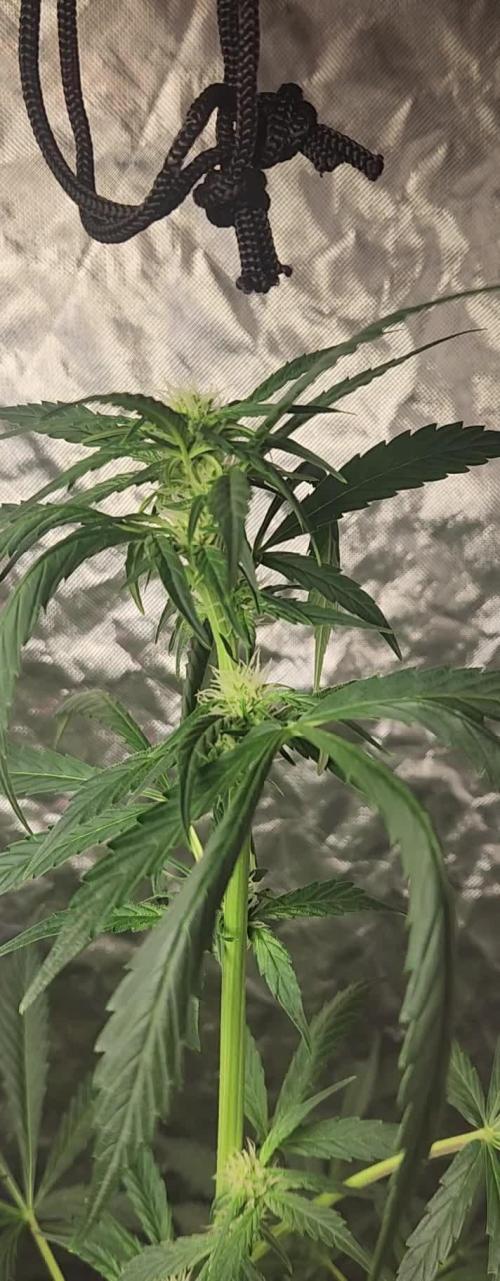
I had to change the light this week. To smaller lights because of some fan leaves was turn at the tips away from the lights

Likes
12
Share


@QueenBZA
Follow
She was big but not nearly big enough needless to say we won't be growing her again


Likes
16
Share


@Sublyme_ness
Follow
at the start of the week i was dealimg with bugs.. i gor rid of them with tje sesame and cinnamon.. cinnamon WILL burn your leaves if you leave too much on; they turn black and die... that being said im a sadist, so i then gave them a drink of stewed cucumber skins... they havent died..
ps.. forgot i gave them a distilled water feed at 2.3 early on in the week.. thought it wasn't happy. shall revert to 2 after a late week half strength 1/4 top 3/4 bottom feed at a slightly higher ph for the root dem
Buds started to get legit this week..starting to get a frosty look now but decided to trim some of the shoddy bud sites regardless of being 20 days into flowering..
im away for a week. hopefully the setup will cope.. lights set to allow for movement.. fans will be on minimal.. and removed all other bug attracting tings. its been fun


Likes
2
Share


@LittleBigTrees
Follow
Picking the odd leaf off but it's pretty much just doing its own thing other than having to feed her . She smells really nice with lots of bud sites and has some visable trichome production now .

Processing
Likes
10
Share


@GrowerGaz
Follow
Topped them this week and now trying some leaf tucking. Only elite 91 roots so far and 18/6 under the spider farmer sf1000
Likes
17
Share

@Mmc94
Follow
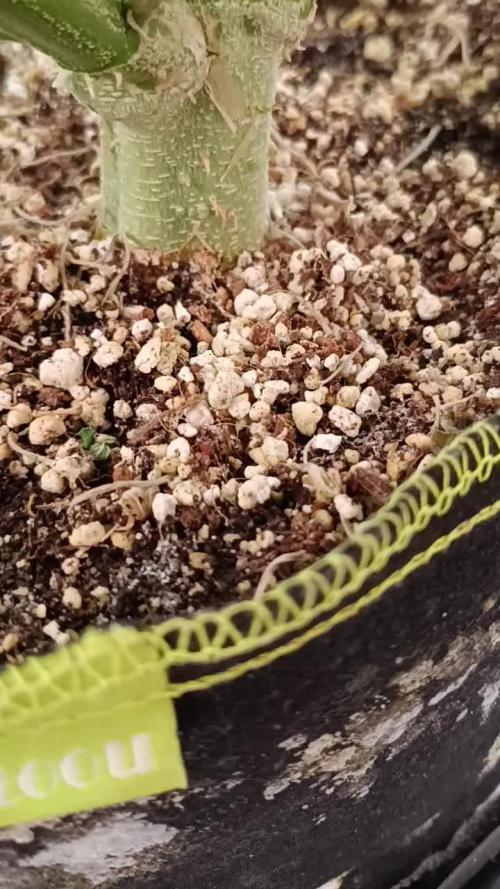
Week 15 over she was slowly fading and slowed down her intake around day 99.she was chopped today, can't wait to try her ,smells real good , hard to explain very some sort of fruit fresh clean weedy 😅she came out around 2.9 kg fresh
Day 104 chopped

Likes
4
Share


@Jaschkoo0
Follow
I gave them a few l of water with correct ph every Day sometimes every second Day.

Processing
Likes
12
Share


@chrisss
Follow
Heating Mat to keep temp in 80’s
Day15)( Week 3 Day1) No water,good Added Mushie Man
Day 16) idk if I’m right but growth seems a lil slow hopefully nothings wrong
Day 18) Added c02 yesterday night , gonna put the lights at 50 watts
Day19) Feeding stronger, keep bringing light up more as the plant grows so it’s 30 inches above the plant
Day20) GROWTH IS AMAZING , idk if it’s the co2 or it’s just getting older, prolly both either way it’s great news, moving light up more, I’ll start LST on Sunday which is day 22, cleaning fan cause of humidifier ( tap water), keep humidity in high 50s and temp above 80 , for humidity reasons I only turn on in-line fan for a couple hours some afternoons
Day 21) Fed Calmag, grow and micro to tap water(PH 6.2), added more coco to the top,will LST tmrw
Likes
9
Share

@BushDoctor740
Follow
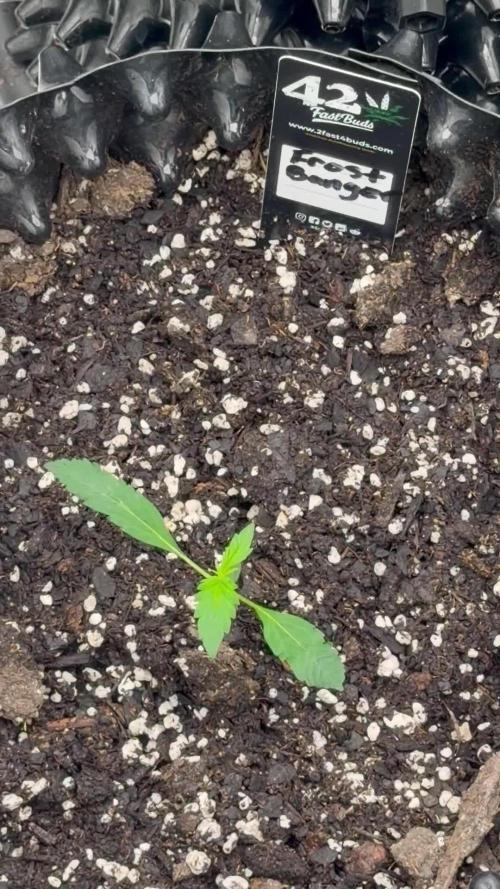
These 3 beautiful young ladies are developing nicely.Se7000 set at 30 percent power and they are loving it.I did a light feeding of 1 ml of advance nutrient line and a dose of recharge tea this week.They are off to a great start which I noticed as well on the last run of frostbanger :)
Likes
2
Share

@DogDoctorOfficial
Follow
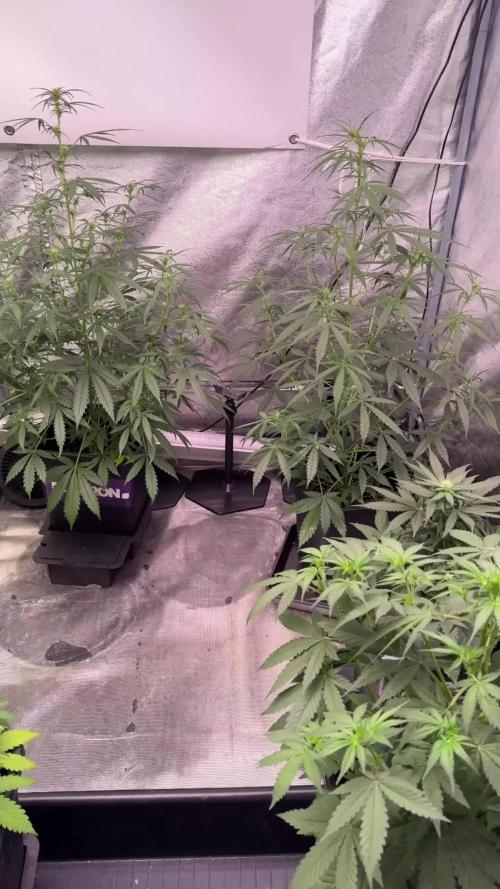
💚 Amnesia Haze Auto by Zamnesia – Pheno A
Week 5 | The Elegant Stretch Before the Storm
Welcome back to another chapter of the 8×8 Adventure!
Every week these ladies remind me why phenotype hunting is such an exciting journey.
Today’s spotlight belongs to Amnesia Haze Auto – Pheno A, a plant that’s beginning to reveal the classic characteristics many growers hope to see from an Amnesia Haze.
Tall…
Graceful…
Open…
And now officially beginning her flowering journey.
While many of her neighbours are building dense canopies, this lady has chosen elegance, creating a beautifully structured framework that should allow every future flower to enjoy plenty of light and airflow.
⸻
🌱 The 12/12 From Seed Adventure
For anyone discovering this diary for the first time, welcome!
This entire project is being grown using my favourite experiment: 12/12 From Seed.
From the day these seeds germinated, they have lived under a 12 hours on / 12 hours off lighting schedule.
The goal isn’t simply producing smaller plants.
It’s about discovering how different genetics and different phenotypes naturally express themselves under identical conditions.
Every plant shares:
• The same grow room
• The same environmental conditions
• The same lighting
• The same nutrition
• The same training philosophy
• The same care
Only the genetics decide how each individual develops.
Amnesia Haze Auto Pheno A is already showing a wonderfully classic sativa-style expression.
⸻
🌿 Stretching With Purpose
At approximately 75 cm, she’s among the taller ladies in the room and continues displaying excellent vertical growth.
Rather than producing a dense bush, she’s built long internodal spacing with beautifully stacked branches reaching confidently toward the light.
Those longer distances between nodes might look sparse now, but for flowering they’re actually a huge advantage.
Each future bud site has room to breathe.
Each branch receives excellent light penetration.
Each cola has space to develop without excessive crowding.
Sometimes less density early on creates better flowers later.
⸻
🌸 Flowering Has Officially Begun
This week marks an exciting transition.
Fresh white pistils are now appearing across every growing tip, confirming that flowering has officially begun.
Although she’s entering bloom, she’s still carrying plenty of vegetative momentum.
This is completely normal.
During this transition period the plant continues stretching while simultaneously beginning flower production.
Because of that, her feeding program still reflects both stages of growth.
She’s no longer purely vegetative.
But she’s not yet fully flowering either.
She’s standing right in the middle of one of the most important phases of her life cycle.
⸻
🍃 Gentle Leaf Tucking Instead of Heavy Defoliation
Training this week remained very gentle.
Rather than removing healthy leaves, large fan leaves were carefully tucked beneath developing branches to expose additional flowering sites.
Leaf tucking is one of my favourite techniques during this stage because it increases light penetration while allowing the plant to keep all of her valuable solar panels.
Healthy leaves continue producing energy.
Hidden branches receive more light.
The canopy stays open.
It’s a simple technique, but one that often delivers excellent results.
⸻
💧 Feeding Through the Transition
Since the room currently contains plants at slightly different stages of development, the feeding program reflects that transition.
Instead of switching immediately to a full flowering recipe, the plants are currently receiving a carefully balanced combination of vegetative and flowering nutrients.
Current nutrition includes:
• Plagron Terra Grow
• Plagron Terra Bloom
• Power Buds
• Sugar Royal
• Power Roots
• Pure Zym
• pH adjustment using pH Plus and Lemon Kick
This balanced approach allows the plants to continue supporting vigorous green growth while simultaneously providing the phosphorus, potassium, enzymes and biological support needed as flowers begin to develop.
It’s all about easing them smoothly into bloom rather than making an abrupt change.
⸻
🌡️ A Stable Environment
One advantage of documenting every phenotype separately is that each plant shares the exact same controlled environment.
Current room conditions include:
• Day temperature: 31.1°C
• Night temperature: 25°C
• Relative humidity: 72%
• Solution temperature: 21.6°C
• Root zone temperature: 21°C
• CO₂ concentration: 636 ppm
Keeping these parameters consistent allows each phenotype to express its true genetic potential without environmental fluctuations becoming part of the equation.
⸻
📸 This Week’s Gallery
The photographs this week beautifully capture the beginning of her transformation.
The full-plant portraits highlight her elegant sativa structure, with long branches and an impressive central leader dominating the canopy.
The close-up images reveal clusters of fresh white pistils emerging from nearly every node, confirming that flowering has truly begun.
One of my favourite details is the clean spacing between branches.
Rather than competing for light, every future cola has its own place to develop.
The healthy green foliage, strong stems and open architecture suggest this lady is preparing for an exciting flowering stretch over the coming weeks.
⸻
🔮 Looking Ahead
Over the next two weeks I expect this Amnesia Haze to continue stretching before gradually shifting her energy toward building flowers.
If she follows the classic Amnesia Haze profile, those long internodes should soon begin filling with elegant, elongated buds covered in bright white pistils.
The framework is already there.
Now it’s time for the flowers to write the next chapter.
I can’t wait to watch her evolve.
⸻
💚 Thank You
Thank you so much for following another chapter of this 8×8 Adventure.
Watching every phenotype develop its own personality while sharing the exact same environment continues to be one of the most rewarding parts of this project.
A huge thank you to:
💚 GrowDiaries for providing an incredible platform where growers from around the world can learn, inspire one another, and document every stage of their journeys.
Zamnesia for providing the genetics that make this phenotype hunt possible.
🌱 Plagron for supplying the nutrition supporting these plants from seed to harvest.
💡 Future of Grow LED for delivering the consistent light powering every day of this grow.
🌿 TrolMaster for helping maintain a stable environment where each phenotype can express its full genetic potential.
And finally, Growers Love and thank you to everyone following these diaries, leaving comments, sharing knowledge and joining me on this adventure.
Every plant has its own story, and Amnesia Haze Auto Pheno A is only just beginning to tell hers. The stretch is underway, the first flowers are forming, and the best is still to come. 💚🌿
Processing
Likes
3
Share


@I_roll_my_own_420
Follow
All looking soo good and frosty. Smell is fantastic. Buds are tough and strong. Flashing will come soon.

Likes
6
Share

@deseed_uy
Follow
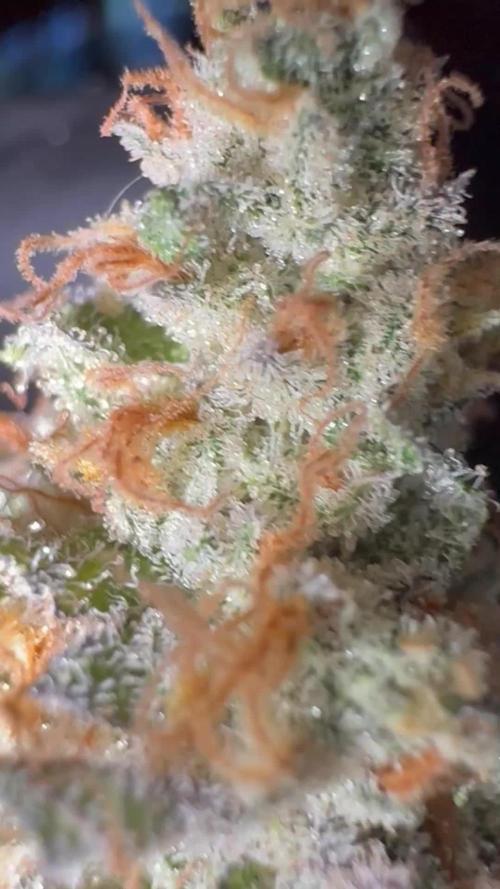
Una locura los resultados de esta genetica, mucha resina, muy densos realmente son una roca.


Likes
21
Share


@Growhouse_MLT
Follow
Fast Buds Run
Light at 75% and will stay like this for the coming week. Scrog net will also be installed this week.
09/04/24 - 2L RO Water with Cal Mag Xtra per plant.
11/04/24 - 3L RO Water only per plant.
14/04/24 - 3L RO Water with Nutes per plant.
Notes :
08/04/24 - Scrog net was installed, will continue to adjust branches this coming week.
11/04/24 - Was seeing leaves a little bit on the dark side so fed only plain water 6.5ph, next feeding will be with nutes again. Re-arranged scrog net a bit more to open up the canopy a little bit more.
Overall plants looking happy and all of them have now gone into the pre-flowering stage.
14/04/24 - Plants are doing really well in the pre-flowering stage and are really streching now. One last strech befor they go into full flower.
Likes
7
Share


@NCgrower252
Follow
The A. Gold plants is measuring: 17 inches and received pH balanced water and nutrients/ approximately 34 oz per plant.
We’re also trying to keep the humidity down. Normally the Dehumidifier helps a lot but it’s hard to keep down when it’s about to rain outside, hence why this week’s humidity is 81 degrees. Any tips would be helpful.

Likes
1
Share


@dm4ccy
Follow
Upped amount I was watering due to complaints from a friends but reducing how frequently it gets waters leaving it for 2/3 days rather as every 24h nonetheless growth is looking great

Likes
6
Share


@RandomStreetMerchant
Follow
Yo, I aim to impress with this grow! I’ll be giving it my all. The nutes I’ll be using will be organic Gaia green 4-4-4, they’re guano 0-9-0, and can’t forget the bloom 2-8-4. This girl will be a beast.
These seeds were given to me from @Premium_Cultivars for the competition they are running here on GrowDiaries!
I wish everyone the best of luck and may the best growers win! (We are all winners, we already be growing some of this fire 🔥)
Started off with 48hrs in glass of water then went to 24+ hrs in paper towel it popped and has a tail so put it in some soil!

Likes
2
Share
@DogDoctorOfficial
Follow
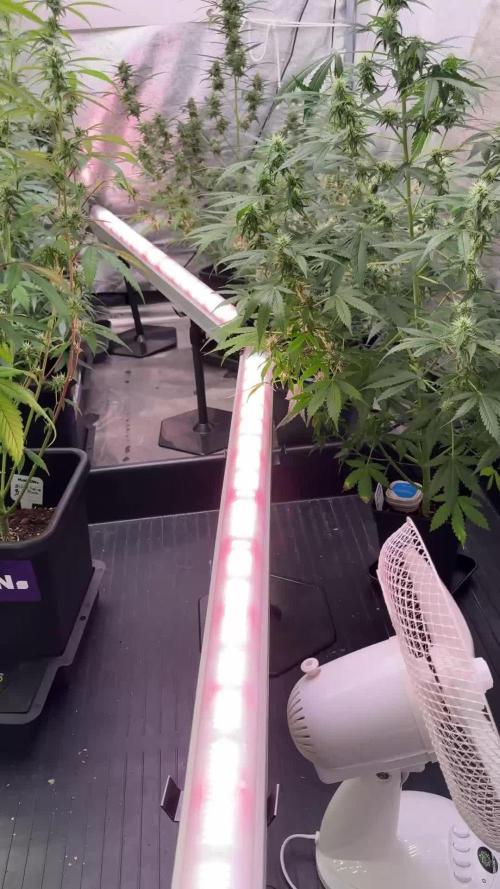
🌸 Week 9 – Opening the Door for the Flowers
Blueberry Muffin has always had an interesting personality in this tent.
She's not the tallest plant.
She's not the largest plant.
But she's been quietly building herself into a compact flowering machine.
And that's exactly why I decided that a little selective defoliation was appropriate this week.
We're not trying to strip her.
We're not trying to make her naked.
We're simply opening some space.
A few leaves here.
A little overlap there.
Removing foliage that is no longer helping the structure we're trying to maintain.
The goal is simple:
More breathing room.
Better light movement.
Better airflow.
Less unnecessary congestion.
And when you have twelve different plants sharing the same room, sometimes opening one plant slightly also helps the environment around her.
That's the beauty of working with the whole garden rather than looking at each plant in isolation.
✂️ Defoliation – It's About Purpose, Not Punishment
I've talked about this before, but this week is a perfect opportunity to repeat it.
Defoliation isn't about removing leaves because leaves are somehow "bad."
They're not.
Healthy leaves are incredibly valuable.
They're photosynthetic organs.
They're producing the energy the plant uses to grow and develop.
So when I remove a leaf, I want to have a reason.
Maybe it's heavily overlapping another leaf.
Maybe it's sitting inside an increasingly congested section of the canopy.
Maybe it's shading a developing flower while contributing relatively little to the structure.
Maybe removing it creates a much better pathway for air.
And sometimes...
it's simply part of cleaning the plant.
That's the approach we're taking with Blueberry Muffin.
Selective. Intentional. Moderate.
We're not trying to win a defoliation competition.
We're trying to create a healthier, more manageable flowering plant.
💨 Airflow Becomes More Important as Flowers Develop
This is where the timing becomes particularly interesting.
As the plant gets deeper into flower, the canopy naturally becomes more complicated.
Flowers get larger.
Leaves overlap.
Branches carry more biomass.
And spaces that were wide open earlier in the grow can gradually become pockets of dense vegetation.
That's not automatically a problem.
But it's something worth managing.
One of the reasons I wanted to open Blueberry Muffin a little more this week was simply to maintain air movement through the plant.
Good airflow doesn't mean blasting the flowers with a hurricane.
It means avoiding stagnant pockets of humid air trapped inside dense vegetation.
And as we move further into flowering, that's increasingly important.
Because nobody wants to discover a problem after flowers have already become dense.
Prevention is much easier than trying to fix a problem later.
💧 Helping the Room Breathe
There's another interesting side effect to opening the canopy.
The plants are collectively producing and moving a lot of moisture through transpiration.
When twelve plants are sharing a relatively enclosed environment, the canopy itself becomes a major part of the room's microclimate.
Opening congested areas gives moving air more pathways through the plants.
That can help reduce pockets of trapped humidity around the foliage.
And when the canopy breathes better, the whole room benefits.
Again, this isn't about expecting defoliation to magically control room humidity.
The ventilation system is still doing the heavy lifting.
But good canopy management can make the environment easier to manage.
And that's exactly what we're looking for.
💡 Every Photon Has Somewhere to Go
Blueberry Muffin is also at an interesting size.
She's approximately 75 cm tall.
That's not a huge plant.
And because she's relatively compact, I want to make sure the available light isn't unnecessarily intercepted by layers of foliage sitting on top of other foliage.
Yes, she has support from the under-canopy and inner-canopy lighting strategy.
And that's fantastic.
But additional lighting doesn't mean we should deliberately create unnecessary barriers between the light and the flowers.
If we can open a section naturally and allow more photons to travel through the canopy, why not?
We're not trying to expose every square centimetre of the plant.
We're simply making the canopy a little more efficient.
Sometimes the best lighting upgrade is simply...
removing something that doesn't need to be in the way.
🌸 The Flowers Are Taking Over Now
And this is where the photographs become particularly exciting.
The flowers are becoming increasingly obvious throughout the plant.
The white pistils are still doing a lot of the visual talking, but the individual flowering sites are gaining structure and substance.
She's moving away from that early-flower appearance where everything is basically a collection of little pistil-covered points.
Now we're beginning to see the plant building actual floral mass.
The branches are carrying their flowers with confidence.
The canopy has become more compact.
And the whole plant feels like she's entering another chapter.
This is the stage where I stop being interested in how much she's going to stretch...
and become much more interested in how much she's going to stack.
? The Blueberry Muffin Personality
One thing I really appreciate about this phenotype is how different she looks when compared with some of the other genetics in the tent.
She's not trying to dominate.
She isn't the tallest.
She doesn't have the most dramatic structure.
But she's developing her own little architecture.
And that's what this entire 8×8 Adventure is about.
Twelve genetics.
One room.
One general environment.
And twelve completely different answers.
Blueberry Muffin's answer seems to be:
"Give me some time."
And now she's starting to show us why.
💚 Nutrition – Staying the Course
There's no reason to reinvent the feeding programme this week.
We're keeping nutrition essentially unchanged.
Current feeding remains:
Terra Bloom — 2.2 ml/L
Pure Zym — 1 ml/L
Power Buds — 1 ml/L
Sugar Royal — 1 ml/L
pH Plus / Lemon Kick — as required
The plant continues receiving the same flowering nutrition rather than reacting to every small visual change with another adjustment.
That's important.
We made a structural intervention this week.
We don't need to simultaneously start changing everything else.
One change at a time makes the plant much easier to read.
🌡️ The Room Has Changed
And this week we do have a small but interesting environmental change.
The daytime temperature remains around:
29°C
But the night temperature is now approximately:
26°C
Last week we were around 25.6°C, so the difference isn't dramatic, but the overall night temperature is slightly warmer.
That means our day/night temperature differential is now smaller.
We're also sitting around:
RH: 60%
Solution temperature: 25°C
Root-zone/substrate temperature: 25°C
CO₂: ~693 ppm
Light schedule: 12/12
Watering: ~1.3 L per plant / 24h
Container: 15 L
And I actually like observing these little changes.
The room doesn't have to remain frozen in time.
What matters is understanding what changed and watching how the plants respond.
At this stage, with flowers getting denser, keeping the canopy open and maintaining good air movement becomes even more valuable.
🌙 Day vs Night – The Difference Matters
One of the things I enjoy about documenting these numbers is that they tell us more than a single temperature reading.
We're running approximately:
29°C during the day → 26°C at night.
That's only about a 3°C difference.
Earlier in the run, the difference was a little larger.
As the room changes, so does the relationship between temperature, humidity, transpiration and plant development.
And this is why I don't like looking at temperature or humidity as isolated numbers.
The plant doesn't experience "29°C."
It experiences:
temperature + humidity + light + airflow + root-zone conditions + CO₂ + time of day.
Everything interacts.
And right now, I'm happy with what the room is showing us.
We're watching it.
We're measuring it.
And we're adjusting when necessary rather than reacting to every little fluctuation.
🔬 One More Reason I Like This Defoliation
There's something else happening here that I think is easy to overlook.
Cleaning the plant isn't only about what remains.
It's also about what we can see afterward.
Once some of the unnecessary foliage is removed, I can see the flowering structure much more clearly.
I can see which branches are developing strongly.
I can see where flowers are stacking.
I can see where the canopy remains dense.
And I can see what might need attention later.
In other words...
defoliation also improves observation.
And for this project, observation is half the fun.
🔮 Looking Ahead
From here, I want to keep things relatively simple.
No unnecessary training.
No dramatic interventions.
No chasing numbers just because they're numbers.
We'll continue watching the flowers develop, monitoring the canopy and paying attention to how she responds to the cleanup.
The next stage should increasingly be about:
🌸 flower stacking
🌸 calyx development
🌸 increasing resin production
🌸 increasing flower density
🌸 maintaining airflow
🌸 keeping the environment stable
The framework is already there.
Now we're entering the part of the journey where patience becomes more important than intervention.
We've done our job.
Now...
let Blueberry Muffin do hers.
💭 Final Thoughts – Making Space for What's Coming
I think this week is a really good example of how I like to grow.
We didn't defoliate because someone told us:
"Week 9 means defoliation."
We did it because the plant changed.
She's becoming more compact.
She's developing more flowers.
The canopy is getting denser.
She isn't a particularly tall plant, so making the available photons work efficiently matters.
And with twelve plants sharing the same room, keeping air moving through the garden matters too.
So we opened her up.
Not dramatically.
Not aggressively.
Just enough.
And now she looks cleaner, more open and easier to read.
That's what I wanted.
Not a naked plant.
A better-organised plant.
And honestly...
she looks fantastic.
Blueberry Muffin may not have started this journey as the plant that immediately grabbed everyone's attention.
But she's slowly becoming one of those phenotypes where you look back at the earlier photographs and think:
"Oh... now I see what she was doing."
She's been building toward this.
And now she's starting to show it.
?🌸🔥
🙏 Thank You
A huge thank you once again to Zamnesia for giving us the opportunity to explore these genetics, Plagron for supporting the garden throughout the journey, Future of Grow for providing the light that powers this experiment, Lumiflora for bringing additional light into the inner and lower canopy, TrolMaster for helping maintain environmental stability, and of course everyone following this 8×8 Adventure on GrowDiaries.
Every week gives us another little lesson.
Sometimes it's about nutrition.
Sometimes it's about environment.
Sometimes it's about genetics.
And sometimes...
it's simply about knowing when to take a few leaves away and give the plant a little more room to breathe.
Blueberry Muffin is entering another chapter now.
The canopy is open.
The flowers are developing.
The room is stable.
And there's still plenty of story left to write.
Until next week...
Growers Love and happy growing! 🌱💚?
Likes
21
Share


@TheStrainAlchemist
Follow
The time has come, here we are into the first couple of days of flowering, slightly upset because I can’t look at them during the day and their light cycle runs at night but I have to get used to, I used to spend hours staring at them.
My Gf told me to get for a second into the feeling of the plants and imagine this human look at me for hours 🤣🤣 I have to admit that would be slightly creepy and they don’t know yet that I’ll chop them down and smoke ☠️
Enjoy fellow growers ☮️✌️🏼😎

Likes
20
Share


@HisHope
Follow
10/13 Day 8 of veg and she is looking really good. Included is a close picture of some new growth that came up over night! Rock it doll!
10/15 10/15 First watering since transplant a week ago ... Fish Sh!T 1tsp / Cal-Mag 1tsp per gal @ 6.1 ph for 0.5 gal
She looks like she likes it :)
10/16 Krisabel seems to just love the watering! Growing right before my eyes! over night she went from a bit over 2 to pushing 4 inches! Can't wait to see how she shows.