


Likes
Comments
Share

@JolliGrowz27
Follow
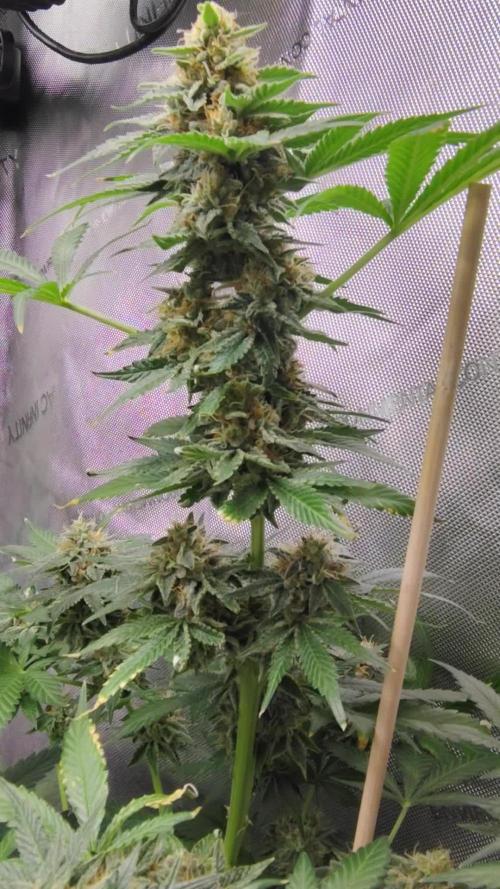
No feeds this week and I will not feed again. I will only water her. I will most likely be harvesting Pheno 3 next weekend. Pheno 2 I will give her 2 weeks. I have clones that are flowering already outside. The short days outdoors have switched the ladies into flower about a week ago or more. They will go in the tent for another run of Gorilla Gas. I have also started 5 regular seeds of NO TRAINING WHEELS by TERP FI3ND. THE COUGH BX X LUCKY CHARMS. These plants have no fruit, candy, or citrus terps. Straight gas and spicy skunk terps. Pheno 1 got locked out so I have harvested early. I cut and trimmed all the non-sugar leaf off and cut the buds out manually. I placed all of this flower in freezer bags and will be saving Pheno 3 as well for a bubble hash run. All the flower is in the freezer now. I think the cold outside will help a lot with the frozen hash process.

Likes
8
Share


@Piro420
Follow
Finally the stretched stopped.
Cut about 10 tops bent about 20 with 90s. Still right in the lights. They are looking very happy even though they are so close to the light ( thanks to high c02 levels most likely.)
Another week or 2 before I cut the temps and co2 levels down.
Been trimming all leaves below light line.
Stinky and brutally sticky I feel like Clark griswold with pine sap when ever I am bending the tops and such..
I think even with them being in the lights I will still get a few pounds of premium flower to smoke :)
Likes
11
Share


@MadeInGermany
Follow
Info:
Unfortunately, I had to find out that my account is used for fake pages in social media.
I am only active here on growdiaries.
I am not on facebook instagram twitter etc All accounts except this one are fake.
Have fun with the update.
Flowering day 61
since time change
to 12/12 h.
Hey everyone ☺️.
Today the time has finally come and the last week of flowering has begun 😍.
She looks beautiful and her buds smell very tasty 👍.
The trichomes are 70% milky and 30% amber.
The lady comes in complete darkness for 48 hours before the harvest.
Of course, as always, there will be a small interim update of the harvest before the last major update.
Until then, I wish you all a lot of fun and stay healthy 👍🙏🏻
You can buy This Strain at :
www.Zamnesia.com
☝️🏼☝️🏼☝️🏼☝️🏼☝️🏼☝️🏼
Strain
Gelato clone from mother (Zamnesia )
☝️
Genetics: Wedding Cake x Gelato x Gelato 33
Vega lamp:
2 x Todogrow Led
Quantum Board 100 W
💡
Bloom Lamp :
2 x Todogrow Led
Cxb 3590 COB 3500 K 205W
💡💡☝️🏼
Soil :
Canna Coco Professional +
☝️🏼
Fertilizer:
Green House Powder Feeding
☝️🏼🌱
Water:
Osmosis water mixed with normal water (24 hours stale that the chlorine evaporates) to 0.2 EC. Add Cal / Mag to 0.4 Ec Ph with Organic Ph - to 5.5 - 5.8 .

Likes
293
Share


@Ju_Bps
Follow
Hello growmies 👩🌾👨🌾🌲🌲,
👋 No more burning this week, using nutes again.
Buds start to bump and are more and more frosty ❄️❄️
💪 Will do a big defoliation next week ✂️✂️
💧 Give water each 2/3 day
2 l Water Only
2 l Water + Bloom + Green Sensation + Sugar Royal (3 + 1 + 1 ml/l)
PH @6
💡Mars Hydro - FC 3000
50% 13 cm
Mars Hydro Fan kit
Setting 8
Have a good week and see you next week 👋
Thanks community for follow, likes, comments, always a pleasure 👩🌾👨🌾❤️🌲
Mars Hydro - Smart FC3000 300W Samsung LM301B LED Grow Light💡💡
https://www.mars-hydro.com/fc-3000-samsung-lm301b-led-grow-light
Mars Hydro - 6 Inch Inline Fan And Carbon Filter Combo With Thermostat Controller 💨💨
https://www.mars-hydro.com/6-inch-inline-duct-fan-and-carbon-filter-combo-with-thermostat-controller
Fast Buds - Gorilla Cookies FF🌲🌲
https://2fast4buds.com/us/seeds/gorilla-cookies-fast-flowering

Likes
1
Share


@GreenLupinCWB
Follow
Super Mobydick, saindo do vegetativo e entrando na primeira semana de floração,muito grande e robusta,será uma planta com flores grandes e gordas.
SUPER MOBY DICK - LATITUD SUR SEEDS.
Likes
5
Share

@Growbody
Follow
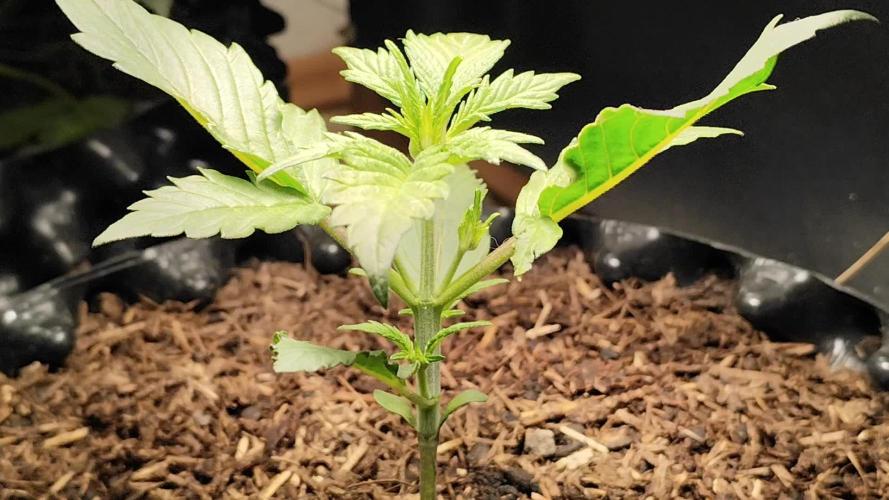
Herzlich Willkommen zu meinem neuen Grow mit der Frostbanger Auto F3 von 2Fast4Buds. Die "Eltern" sind (GG4 Auto F6 x Bruce Banner Auto F5) x Sour Diesel Auto F5 und das ergibt eine F3 feminisierte dreifache Polyhybrid Autoflower. Klingt schonmal heftig. Der Strain ist beim Autoflowerworldcup 2025 zur stärksten Autoflower gewählt worden. Mit dem Versprechen, süsse, cremige Aromen zu produzieren, muss ich diese Pflanze testen.
Die 20 Liter AirPots 7th gen., die Sonnenerde Bio Hanferde, BioBizz Wurmhumus, Sonnenerde Bio Faser, BIONOVA x zamnesia MonsterBud Mix Living Soil, zamnesias SmartStart und Plagrons Seedbooster Plus werden bei diesem Grow wieder verwendet.
Tag 21: Die Frostbanger Auto F3 von 2Fast4Buds hat schon schöne Seitentriebe entwickelt.
Tag 23: 1,0 Liter Wasser.
Tag 24: Das Stämmchen ist sehr fest, deshalb vorsichtig etwas LST angewendet.
Tag 25: Die Große bekommt 1,0 Liter Wasser.
Tag 26: Nochmal vorsichtig LST. Sie bekommt jetzt schon Blüten.
Tag 28: 1,0 Liter Wasser. Sie wächst rund 2 cm am Tag.
Schön, dass du dich für meinen Grow interessierst. Freut mich, wenn du wieder reinschaust 👋😎
Processing
Likes
4
Share


@UK420hydrogrow
Follow
Had a bit of a bad week with the girls in flower tent also had few issues with the ph @6.3 been to high causing a few problems had to defoliate all affected leaves hopefully they will bounce back

Likes
7
Share

@MadeInGermany
Follow
Day 27
since the time change to 12/12 hrs.
Hey everyone 😃.
This week the lady has developed very well 👍.
Their stretch is very nice and the buds are starting to develop really well 😊.
There aren't any problems, and I'm really excited to see what she'll do until next week 😍.
Until then, I wish you all a lot of fun with this update, stay healthy 🙏🏻 and let it grow 🍀🌱
You can buy this Strain at
https://thecaliconnection.com/original-sour-diesel.html
You can buy this Nutrients at
https://greenbuzzliquids.com/
Type:
Original Sour Diesel ( Clone )
☝️🏼
Genetics:
Fem seeds- Original Sour Diesel to Original Sour Diesel BX3 RVSD Male
Reg seeds- Original Sour Diesel x Original Sour Diesel BX3 Male
👍
Vega lamp:
2 x Todogrow Led
Quantum Board 100 W
💡
Bloom Lamp :
2 x Todogrow Led
Cxb 3590 COB 3500 K 205W
💡💡☝️🏼
Soil :
Canna Coco Professional +
☝️🏼
Fertilizer:
Green Buzz Liquids :
Organic Grow Liquid
Organic Bloom Liquid
Organic more PK
More Roots
Fast Buds
Humic Acid Plus
Growzyme Big Fruits
Clean Fruits
Cal / Mag
Organic Ph - Pulver
☝️🏼🌱
Water:
Osmosis water mixed with normal water (24 hours stale that the chlorine evaporates) to 0.2 - 0.4 EC. Add Cal / Mag 2 ml per l water every 2 waterings . Ph with Organic Ph - Pulver to 5.8 .

Likes
7
Share


@Bud_Bunny
Follow
So we are coming into the final week(s). Super frosty. The fan leaves are dripping with tricholmes and so are the buds. Smells amazing like citrus.

Likes
18
Share


@Silverback_Guerilla
Follow
10/23:
Fed today with one, signal, sweet & sticky, silica, beastie bloomz, and a little ca/mg.
10/27:
Fed today with one, signal, sweet & sticky, silica, beastie bloomz, kangaroots, and humic acid.
Lowered the lights to no more than a foot from any cola..most are 7-9" away.

Likes
3
Share


@Cupboardgrowuk
Follow
blueberryz as harvest this weekend. Limoncello be coming down next weekend cannot wait

Likes
6
Share


@sa2_gr
Follow
Hey ! I was away from home this week, so i only have pictures of the Day 20 of 12/12.
Have a deficience of N. Added some biogrow ans started the pk booster.
See ya next week ✌️

Likes
6
Share


@w00tGrow
Follow
So here comes the flowering, in a week after switching to 12-12. Plant looks healthy and good, gave it a bit of calimagic and bit of big bud early, also changed bulb from HPS white to Sodium Yellow for flowerig.

Likes
6
Share


@Broffel
Follow
Day 18 and transplanting the Girls to a 15l airpot, and yes girl nr3 is still there but far behind nr 1&2 see video.
The end of the week and the girls are doing great
Likes
9
Share


@Not_a_tutorial1990
Follow
Been a good week, did a few upgrades to get tent as automated as possible and it's been going great now that I can make changes anywhere instead of rushing home or asking for help to turn off or adjust 😆
Is it possible to start getting foxtail mid flower? Ending 4th week now. Bubble gum ice cream showing signs.
Lights are about 36" away from canopy and dimmed to 75% [photontek 600w pro] Very powerful, been tempting to lower to 50% as it gets pretty warm. I have 8" blowing out and a 6" blowing in the tent to keep positive pressure and constant air flow.
Let me know what you guys think, any comment or feedback is appreciated and welcomed.
Happy growing🌴🌴


Likes
14
Share


@nonick123
Follow
Día 15 (27/01) Ha reaccionado bien al trasplante. A ver como se desarrolla en los siguientes días!
Día 16 (28/01) Muestra un buen desarrollo con las primeras ramas formándose
Día 17 (29/01) Subo a DLI 40
Muestra un color verde estupendo 😍
Día 18 (30/01) Tras subir el DLI la temperatura en el indoor ha subido a de 22ºC a 26 ºC, de modo que va a acelerar las necesidades hídricas
Se sigue desarrollando estupendamente 😁
Día 19 (31/01) Seguimos a buen ritmo
Creo que debería haber regado este día... (Visto como estaba de seca al día siguiente...)
Día 20 (01/02) Elimino las ramas más inferiores (1er nudo) que siempre suelen quedar débiles en el stretch
Riego con 350 ml H2O RO
Día 21 (02/02) Empieza a estirarse! 😍
Está sedienta! Riego con 350 ml H2O
En una semana a floración!
Khalifa Genetics - https://khalifagenetics.com/product/lemon-blanco-v3/
💦 BioTabs 15% DISCOUNT code "GDBT420" biotabs.nl/en/shop/ @biotabs_official
🌱Substrate PRO-MIX HP BACILLUS + MYCORRHIZAE @promixmitch @promixgrowers_unfiltered
💡2 x Mars Hydro FC1500 EVO Led Grow Light (2024 NEW FC 1500-EVO Samsung LM301H 150W LED) - https://marshydro.eu/products/fc1500-evo-led-grow-lights/ - https://www.amazon.de/dp/B0CSSGN5D8?ref=myi_title_dp

Likes
12
Share

@DomForester
Follow
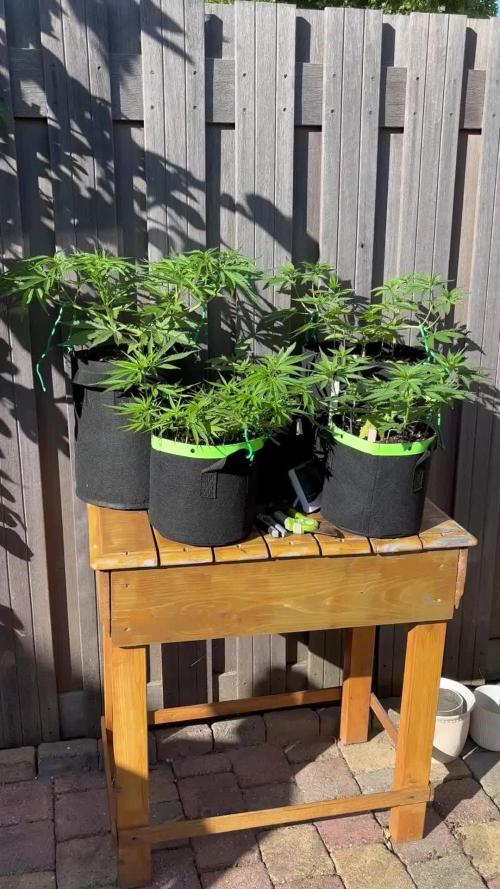
Been another warm, dry, and sunny week and my garden corner is getting greener every day!
Lamin HC (topped Casamance Sativa) drank up a liter a day and badly needed a larger pot. Came out clean! Dusted new soil with Great White. Showed zero stress and pushed new growth immediately the morning after.
Lamin J (LST’d Casamance Sativa) is starting to dry up quicker and quicker too and will get a larger pot later this week.
Rocky’s structure is looking like an absolute dream. My working theory is that I accidentally brought this one outdoors exactly at the right time after first topping to get an extra stretch between nodes at new tops. I’ll go nuts if they it turns out male… When am I supposed to start seeing signs?
Prince’s LST’d but un-topped tops are looking stunning with tons of nodes stacked closely on top of each other.
Jimi (the smallest topped Purple) took a while to get back ob track after quite a bit of topping.

Likes
5
Share


@TheGreenGroomer
Follow
Grow Diary – Week 6, Day 1 of Flowering
Boom, today marks Week 6, Day 1 of flower and things are moving along nicely. Buds are stacking and the aromas are straight-up explosive — seriously, it’s getting loud in the tent. PPMs are holding steady around 1000 and I'm dialing in pH to 5.8 every time, no exceptions.
The only gripe I’ve got is how dense and crowded the plant has become. I got a bit greedy during training, went for too many shoots packed too close together. Now there’s a ton of foliage and the lower bud sites just aren’t getting the light they need. I’m in there every single day at lights-on, doing leaf tucking and rearranging to get better light penetration to those lower sites and hopefully avoid a bunch of larf.
Lesson learned for next round: focus on strong main shoots only, less is more. But with the way things are going, I’m still optimistic I’ll pull at least 7 oz of solid, dank bud. Whatever ends up on the fluffier side will go to canna butter, nothing wasted!
Airflow’s solid. Got three fans in action one low, one mid, and one up top keeping everything circulating. Humidity’s on the drier side, which is intentional to help prevent mold, powdery mildew, or pests, especially with how tight the canopy is. Gotta stay ahead of the game.
Plant might be a little wild right now but overall we’re on track. Fingers crossed for a strong yield. Let’s go.

Likes
1
Share


@Cannerd
Follow
How ya doing mates?? Awesome week last week - all photos and logs have been added so be sure to check it out! This week is going great so far! I've switched to an early vegetative state nutrient system. As you'll see in the daily logs early this week, this bumps up the micro and grow nutes, and keeps the bloom at 0.6ml/gal. A quick note about last week - I'm unable to update the measurements, but please note that those nutrient amounts are measured in ml/gal, NOT ml/l.
Anyhow, this week I'm just waiting to get my order of diatomaceous earth so that I can make up another batch of soil. I'm still debating between topping this week before repotting or letting them take root in the new pots first. Decisions decisions lol. I think at the very least I'll clean up some of the lower growth to make sure the energy is being spent at the right places. I've been switching back and forth between just LST and mainlining in the past - but I think I really like the ease and cleanliness of mainlining. The draw back is the recovery time they take in the process haha.
UPDATE:
The D.E. has come in, and I repotted the girls this week. I mixed in about 1.5-2 cups D.E. for the whole pot, as well as some Bat Guano and Kelp Meal for micro and macro nutrients to use on dry cycles.
I've also included some photos of the mother plant to give an idea of what's to come! I've just started to flower it, which is the first time for this strain - so I'm pumped!
Day 15:
M.C. 01-21 After reviewing the last set of photos from last week, I figured I'd play it safe and dimmed the light back down to 25% strength. The mother plant is almost ready for flower, and I'm down some tents so she'll be taking this one over shortly. These photos were taken shortly after the lights went off, and they look quite happy! You can see some of the side branch developement in today's photo for MC-01. The pots are fairly dry now, and I've decided to move to the next stage in the nutrient regime. This kicks up the Micro and Grow nutes, while maintaining the Bloom amounts.
M.C. 02-21 A nice top photo for MC-02, you can really see the lighter green in this photo. Not to worry though, as these will darken back to a vibrant green as long as I give her what she needs shortly! The pots are fairly dry now, and I've decided to move to the next stage in the nutrient regime. This kicks up the Micro and Grow nutes, while maintaining the Bloom amounts.
M.C. 03-21 Look at that little leaf poking out from the 2nd node! Some slight yellowing you can see too, but again, not to worry. The new mix should rectify that. I've decided to move to the next stage in the nutrient regime. This kicks up the Micro and Grow nutes, while maintaining the Bloom amounts.
Day 16:
M.C. 01-21 Today is the day - for the mother! I've cleared out some space and moved plants around. So back out to the grow room these girls go! MC-01 seems much better today with the reduction in light. The 5th node is almost flattened out and the 6th coming through still. Most notably though, you can really see the work she's put into the side branches! The branches at nodes 2 and 3 are starting to produce more leaves - great sign! The new growth at the top is also a nice dark green. Added 500ml water to the tray.
M.C. 02-21 MC-02 seems to have liked the adjustment of light as well. She's got nice dark green growth at the top, and the little branches at the 2nd node seem to have a full leaf! Added 500ml water to the tray.
M.C. 03-21 The photo from today is cool, because you can see how close MC-01 & 03 are, even though there's almost a full node difference. MC-03 is stretch out a bit to compete with her sister for the light haha. She's also put some more effort into the side branches that you can see. Added 500 ml water to the tray.
Day 17:
M.C. 01-21 I figured a video would be the best way to illustrate the changes today! They've been back in the grow room under the Veg dedicated light for a day now and seem to be loving it! MC-01 has its' 5th node out, splitting the 6th node, and I can JUST see the 7th node coming in. I don't think they'll get too much more height, as you can see that the side branches are starting to stretch now! She's definitely going to be well tangled in the roots by the end of the week when I hope to repot her.
M.C. 02-21 MC-02 is doing great despite the difference in height! You'll notice the side branches stretching out at nodes 2 & 3. The pots are also still fairly wet at their center, so I'll hold off on water most likely. At least this clone will have time to root more while we wait for the supplies!
M.C. 03-21 MC-03 also has great side branching! If you take a look at the group photo from today, you'll see that both MC-01 & 03 are practically the same height, but MC-03 snuck in there by the stretch haha.
Day 18:
M.C. 01-21 My order of D.E. came in last night, perfect timing! As you can see, her roots have fully reached the bottom, and have started to migrate upwards with the water that's absorbed. The soil was a little dry for my liking, which made things a little difficult/dusty but still no mishaps! Watered around the root-zone before covering with more soil to keep the gnats down.
M.C. 02-21 Not quite as much lateral root growth as MC-01, but still plenty enough for a repotting! Her soil was a little dry as well. Ideally I should have given them a light misting from the top of the soil and let is drip down to keep the dusty bits together haha.
M.C. 03-21 Nice and thick root growth, no issues with repotting, and strong stalk. The extra spacing in the nodes may prove to be helpful during the training phase.
Day 19:
M.C. 01-21 Some nice top shots today as they slowly get acclimated to their new homes. Once I see them push out a new node, I'll probably top them. This is to make sure that they're taking to the new pot without causing any extra stress before they can take it. Today I watered them with an early veg nutrient. I like to stay cautious with nutrient boosts since they're in soil - not to mention the added nutrients from the repotting.
M.C. 02-21 Top shots for the girls today. Not much change, but also no immediate signs of shock either, so I'll take it.
M.C. 03-21 You can't really see it in this angled shot, but the small branch at the second node is coming along nicely! I think the girls are happy that they each have their own tray not haha.
Day 20:
M.C. 01-21 Definitely noticing some slow changes to the top nodes when comparing the pictures from the previous day. The leaves are slowly starting to separate, and I'm not noticing too much yellowing yet which is good. Watered with 500ml water to keep water migrating upwards to meet the roots.
M.C. 02-21 Not noticing much change in this girl today, but that's okay. She's most likely focusing on the root developement instead which I can't complain about! Watered from the bottom.
M.C. 03-21 Maybe seeing some separation in the top leaves, however more notably are the small branches at the 2nd node that you can see better here. Still a bit of stretching with them as they get longer. I might even keep them on for clones later on. Watered from the bottom.
Day 21:
M.C. 01-21 Looks like she gained some distance last night, as the top node is now above the fan leaves, unlike 2 days ago. I'm really getting eager to top them, as I don't want them to waste too much time and energy growing tissue that I'll just end up cutting off. I'll be bumping the nutrients up starting next week to keep the progress going, moving to a mid-veg stage shortly. I'm going to let things dry up tonight for a fresh boost of water tomorrow to give it a dry cycle as the pot is still a bit heavy.
M.C. 02-21 MC-02 really worked hard last night it seems, as she almost completely flatted out her top leaves! I think she's ready for a topping, but I'll let her benefit from the headstart and let the other two catch up and root before. dry cycle for her tonight as well.
M.C. 03-21 MC-03 was busy last night too and is now slowly flattening out the top node as well! Maybe tonight they'll have enough progress to go topless afterall haha. Dry cycle in prep for watering tomorrow.


Likes
1
Share

@AsNoriu
Follow
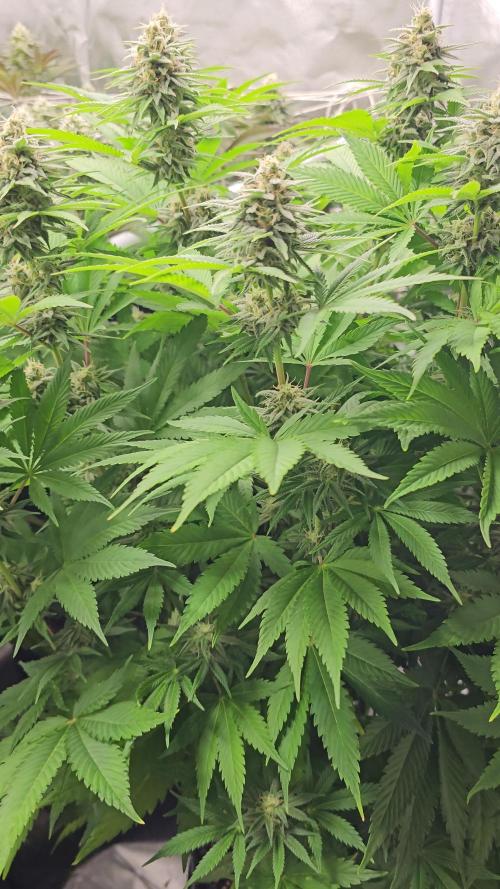
Day 78. Humidity keeps very high, all fans on max, extraction exhaust is on 70%.
Day 83. Found maybe WPM on one plant, so now all air movement on max of all maxes ;))))
Happy Growing !!!