Likes
Comments
Share
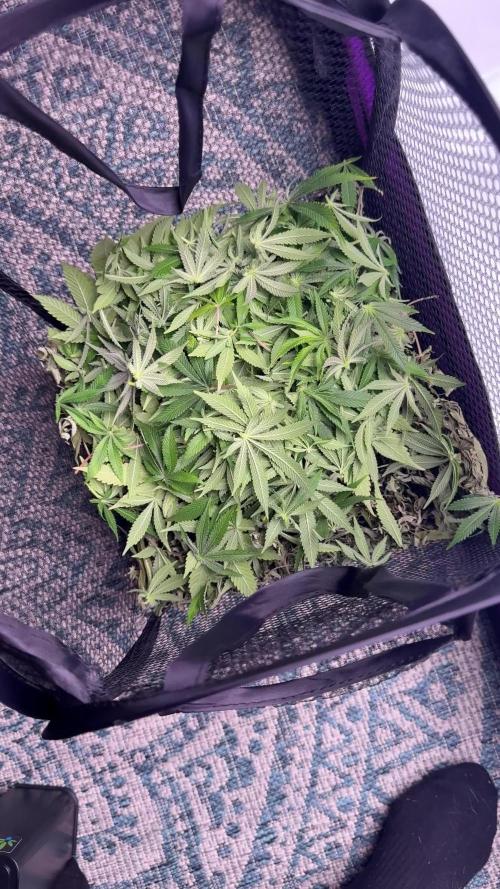
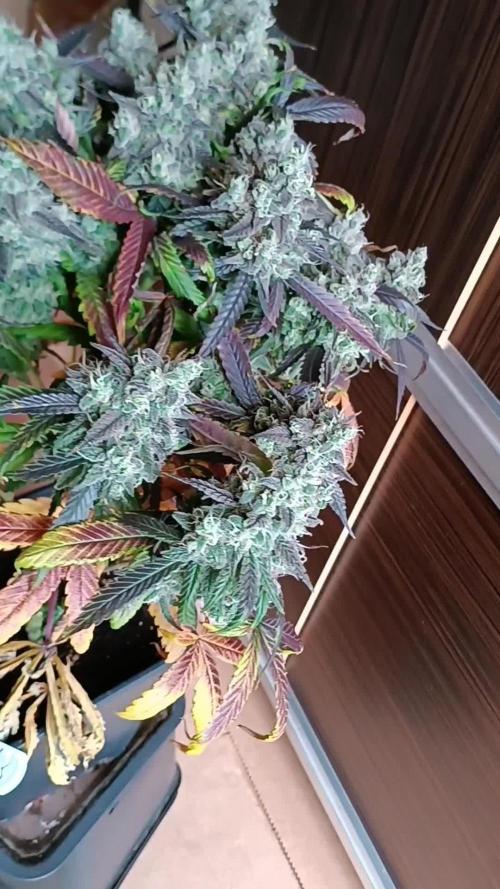
This week marks the final phase of flowering for both strains, and it’s been an incredible run. The colas are fully swollen, trichomes are mostly cloudy with around 10–15% amber, and the terpene intensity is off the charts. Every movement near the canopy releases that unmistakable scent — fruity, spicy, and heavy with resin. 24K Gold is showing her signature golden hues now. The buds are compact, sticky, and sparkling with trichomes. Pistils have mostly turned orange and curled in tightly, showing clear maturity. Gelato 33 looks equally stunning — thick, frost-covered buds with a creamy-sweet scent and purple undertones emerging under the lights. Her structure remained open enough to prevent mold despite the high density. Both plants handled the last nutrient increase (8 ml/L Canna Coco A+B) perfectly — no signs of stress or nutrient burn. From here, they’re transitioning into the flushing phase, allowing the remaining nutrients to fade out for a cleaner, smoother finish. Environmental conditions: • 🌡️ Temperature: 25.0–25.3 °C • 💧 Humidity: 52–53 % • 🌫️ VPD: 1.3–1.34 kPa • 💨 Airflow: Steady and dry for the final days This week’s update also includes defoliation and trimming before drying — the canopy has opened up nicely, and the buds are ready for harvest. The next entry will focus on flushing, fade, and drying results.
Likes
47
Share
What's in the soil? What's not in the soil would be an easier question to answer. 16-18 DLI @ the minute. +++ as she grows. Probably not recommended, but to get to where it needs to be, I need to start now. Vegetative @1400ppm 0.8–1.2 kPa 80–86°F (26.7–30°C) 65–75%, LST Day 10, Fim'd Day 11 CEC (Cation Exchange Capacity): This is a measure of a soil's ability to hold and exchange positively charged nutrients, like calcium, magnesium, and potassium. Soils with high CEC (more clay and organic matter) have more negative charges that attract and hold these essential nutrients, preventing them from leaching away. Biochar is highly efficient at increasing cation exchange capacity (CEC) compared to many other amendments. Biochar's high CEC potential stems from its negatively charged functional groups, and studies show it can increase CEC by over 90%. Amendments like compost also increase CEC but are often more prone to rapid biodegradation, which can make biochar's effect more long-lasting. biochar acts as a long-lasting Cation Exchange Capacity (CEC) enhancer because its porous, carbon-rich structure provides sites for nutrients to bind to, effectively improving nutrient retention in soil without relying on the short-term benefits of fresh organic matter like compost or manure. Biochar's stability means these benefits last much longer than those from traditional organic amendments, making it a sustainable way to improve soil fertility, water retention, and structure over time. Needs to be charged first, similar to Coco, or it will immobilize cations, but at a much higher ratio. a high cation exchange capacity (CEC) results in a high buffer protection, meaning the soil can better resist changes in pH and nutrient availability. This is because a high CEC soil has more negatively charged sites to hold onto essential positively charged nutrients, like calcium and magnesium, and to buffer against acid ions, such as hydrogen. EC (Electrical Conductivity): This measures the amount of soluble salts in the soil. High EC levels indicate a high concentration of dissolved salts and can be a sign of potential salinity issues that can harm plants. The stored cations associated with a medium's cation exchange capacity (CEC) do not directly contribute to a real-time electrical conductivity (EC) reading. A real-time EC measurement reflects only the concentration of free, dissolved salt ions in the water solution within the medium. 98% of a plants nutrients comes directly from the water solution. 2% come directly from soil particles. CEC is a mediums storage capacity for cations. These stored cations do not contribute to a mediums EC directly. Electrical Conductivity (EC) does not measure salt ions adsorbed (stored) onto a Cation Exchange Capacity (CEC) site, as EC measures the conductivity of ions in solution within a soil or water sample, not those held on soil particles. A medium releases stored cations to water by ion exchange, where a new, more desirable ion from the water solution temporarily displaces the stored cation from the medium's surface, a process also seen in plants absorbing nutrients via mass flow. For example, in water softeners, sodium ions are released from resin beads to bond with the medium's surface, displacing calcium and magnesium ions which then enter the water. This same principle applies when plants take up nutrients from the soil solution: the cations are released from the soil particles into the water in response to a concentration equilibrium, and then moved to the root surface via mass flow. An example of ion exchange within the context of Cation Exchange Capacity (CEC) is a soil particle with a negative charge attracting and holding positively charged nutrient ions, like potassium (K+) or calcium (Ca2+), and then exchanging them for other positive ions present in the soil solution. For instance, a negatively charged clay particle in soil can hold a K+ ion and later release it to a plant's roots when a different cation, such as calcium (Ca2+), is abundant and replaces the potassium. This process of holding and swapping positively charged ions is fundamental to soil fertility, as it provides plants with essential nutrients. Negative charges on soil particles: Soil particles, particularly clay and organic matter, have negatively charged surfaces due to their chemical structure. Attraction of cations: These negative charges attract and hold positively charged ions, or cations, such as: Potassium (K+) Calcium (Ca2+) Magnesium (Mg2+) Sodium (Na+) Ammonium (NH4+) Plant roots excrete hydrogen ions (H+) through the action of proton pumps embedded in the root cell membranes, which use ATP (energy) to actively transport H+ ions from inside the root cell into the surrounding soil. This process lowers the pH of the soil, which helps to make certain mineral nutrients, such as iron, more available for uptake by the plant. Mechanism of H+ Excretion Proton Pumps: Root cells contain specialized proteins called proton pumps (H+-ATPases) in their cell membranes. Active Transport: These proton pumps use energy from ATP to actively move H+ ions from the cytoplasm of the root cell into the soil, against their concentration gradient. Role in pH Regulation: This active excretion of H+ is a major way plants regulate their internal cytoplasmic pH. Nutrient Availability: The resulting decrease in soil pH makes certain essential mineral nutrients, like iron, more soluble and available for the root cells to absorb. Ion Exchange: The H+ ions also displace positively charged mineral cations from the soil particles, making them available for uptake. Iron Uptake: In response to iron deficiency stress, plants enhance H+ excretion and reductant release to lower the pH and convert Fe3+ to the more available form Fe2+. The altered pH can influence the activity and composition of beneficial microbes in the soil. The H+ gradient created by the proton pumps can also be used for other vital cell functions, such as ATP synthesis and the transport of other solutes. The hydrogen ions (H+) excreted during photosynthesis come from the splitting of water molecules. This splitting, called photolysis, occurs in Photosystem II to replace the electrons used in the light-dependent reactions. The released hydrogen ions are then pumped into the thylakoid lumen, creating a proton gradient that drives ATP synthesis. Plants release hydrogen ions (H+) from their roots into the soil, a process that occurs in conjunction with nutrient uptake and photosynthesis. These H+ ions compete with mineral cations for the negatively charged sites on soil particles, a phenomenon known as cation exchange. By displacing beneficial mineral cations, the excreted H+ ions make these nutrients available for the plant to absorb, which can also lower the soil pH and indirectly affect its Cation Exchange Capacity (CEC) by altering the pool of exchangeable cations in the soil solution. Plants use proton (H+) exudation, driven by the H+-ATPase enzyme, to release H+ ions into the soil, creating a more acidic rhizosphere, which enhances nutrient availability and influences nutrient cycling processes. This acidification mobilizes insoluble nutrients like iron (Fe) by breaking them down, while also facilitating the activity of beneficial microbes involved in the nutrient cycle. Therefore, H+ exudation is a critical plant strategy for nutrient acquisition and management, allowing plants to improve their access to essential elements from the soil. A lack of water splitting during photosynthesis can affect iron uptake because the resulting energy imbalance disrupts the plant's ability to produce ATP and NADPH, which are crucial for overall photosynthetic energy conversion and can trigger a deficiency in iron homeostasis pathways. While photosynthesis uses hydrogen ions produced from water splitting for the Calvin cycle, not to create a hydrogen gas deficiency, the overall process is sensitive to nutrient availability, and iron is essential for chloroplast function. In photosynthesis, water is split to provide electrons to replace those lost in Photosystem II, which is triggered by light absorption. These electrons then travel along a transport chain to generate ATP (energy currency) and NADPH (reducing power). Carbon Fixation: The generated ATP and NADPH are then used to convert carbon dioxide into carbohydrates in the Calvin cycle. Impaired water splitting (via water in or out) breaks the chain reaction of photosynthesis. This leads to an imbalance in ATP and NADPH levels, which disrupts the Calvin cycle and overall energy production in the plant. Plants require a sufficient supply of essential mineral elements like iron for photosynthesis. Iron is vital for chlorophyll formation and plays a crucial role in electron transport within the chloroplasts. The complex relationship between nutrient status and photosynthesis is evident when iron deficiency can be reverted by depleting other micronutrients like manganese. This highlights how nutrient homeostasis influences photosynthetic function. A lack of adequate energy and reducing power from photosynthesis, which is directly linked to water splitting, can trigger complex adaptive responses in the plant's iron uptake and distribution systems. Plants possess receptors called transceptors that can directly detect specific nutrient concentrations in the soil or within the plant's tissues. These receptors trigger signaling pathways, sometimes involving calcium influx or changes in protein complex activity, that then influence nutrient uptake by the roots. Plants use this information to make long-term adjustments, such as Increasing root biomass to explore more soil for nutrients. Modifying metabolic pathways to make better use of available resources. Adjusting the rate of nutrient transport into the roots. That's why I keep a high EC. Abundance resonates Abundance.
Likes
3
Share
6. Woche Das letzte Topping ist ein paar Tage her, denke diese Woche macht sie noch Veg und wechselt in ner Woche in den Stretch. Gab gerade nochmal bisschen Dünger. Ich habe den Green Sensation von Plagron erstmal wieder rausgenommen, da der ja speziell für die Bloom ist und ich nicht will, dass der jetzt irgendwas im Wachstum blockiert 😊
Likes
11
Share
Good week this girl is doing well, varied coloration, the buds are compact, the trichomes are creating color, I can go further until the harvest window to avoid loss of yield.
Likes
10
Share
Likes
1
Share
Creciendo bastante bien Talvez yo no sé cómo hacer el lst pero está aguantando bastante bien está nena En un semana creció bastante!!! Estoy contento Me está aguantando Ok Sábado No sé si el lst ayuda al crecimiento pero siento que va a avanzando mucho... No tengo ni idea de que estoy haciendo ni estaba preparado para hacer amarres Ni tengo idea de cómo lo voy a hacer... Pero realmente quería experimentar ya que veo que todos lo hacen aún que me da miedo romper la planta o estresar la y tampoco se que cortar!!! 😔
Processing
Likes
17
Share
Likes
6
Share
Getting fat. Minor powdery mildew, starting night dehumidifier this week. Still aiming for 3 lbs dry bud. Ww x gdp from last years seed project.
Likes
55
Share
@w33dhawk
Follow
02.03.21 Anfang der 7 vegi Woche habe heute wieder einmal alles runter gebogen was ging und entblättert hab ja noch knapp 4 Wochen Zeit bis ich den Zyklus wechsle das scrog netz is bis jetzt nur zur Zierde drauf um abzuschätzen wie viel platz ich noch habe um das ganze rechtzeitig ein zu weben und trotzdem noch genug Luft zwischen Topf und netzt zu bekommen
Likes
10
Share
Día 81 y no puedo estar más ansioso porque ya ha llegado el tan anhelado día de la cosecha 🤩, esta hermosa planta excelente un aroma dulce, cremoso y un poco ácido como frutillas. Luego de la sesión de fotos se cortará por ramas y será colgada en la tienda de cultivo con ambiente controlado. Volveré en unos días luego del secado para dar una reseña sobre el sabor y aroma de esta belleza. Como siempre agradecer a FastBuds por tan buenas semillas. BUENOS HUMOS 👽
Likes
7
Share
@Andres
Follow
My dog ​​took off the ground of the floor. When I was traveling, she survived because her roots were not visible. she is now in strees. I Think soo I hope she recovers
Processing
Likes
15
Share
Finishing out week 5 of flower and continuing my daily treatment for PM. Using Athena Mildew Control, an organic reactive treatment spray that you can use on the entire plant up to harvest. Realizing PM is systemic and is like herpes...it never goes away! All you can do is spot treat on a daily basis, the outward symptom of PM, which is the white patches/spots. Treating primarily Mimosa, but also parts of the Bling as well. Napali Pink - As usual, is impervious to this type of PM and is thriving, with huge fat buds that still continue to get fatter and tighter by the day. They haven't even fully swollen up yet either. If the smoke is great, which I am sure it will be, this is a strain that I highly recommend growing. It has excellent branching structure with upward growth with very little help. Takes nutrients well and not too fussy or needy with any of variations of NPK or micros. I would say based on the looks of the buds and trichs, she will be a last to finish, but well worth the wait, as I have so. Many. Fat. Ass. Buds!! Mimosa - such an amazing daytime strain that I would loove to always keep on hand, as this strain is on of my All Time Favorites! However, with such prized buds and terp profile, she is vulnerable to PM. She has had it the worst, and always continue to spot treat it daily. She is gaining this cool hue of purple along the outer edges of the leaves, as well as what I thought was PM, but surprisingly turned out to be a shit ton of trichs! Buds are fattening up nicely and think she will be the 2nd to finish out of the bunch. If I could grow her again, I will, but will be sure and do a preventative treatment for PM during her entire life cycle. The Bling - she has been a trip growing, as she is very viney and lanky, but her branches firm up nice and strong. Practiced some Kushman Chiropractic on some of the stems with success. Had to spot spray, but not as bad as Mimosa's PM. Since I defoliated all leaves covering bud sites, along with huge fans, the buds have actually grown in height and girth! This one never ceases to amaze as she has come back from a bad HST. She is so heavy with trichs, it looks like it snowed on the buds. I am hoping to get a good yield but between the three ladies, she will come in last for that. Used bamboo stakes to secure all branches/bud heads; used zip tie and paracord to secure to bamboo. Now every single bud gets light! Also testing out a Diminishing Light Schedule and now down to 11 hrs of daylight this week. Will continue to reduce by 1/2 hr each week until I hit 9 hrs of daylight. I will hold at that. Otherwise, patiently waiting for harvest!
Likes
38
Share
I've been pulling fan leaves this week . 1. To slow the top down . 2. To encourage side branch growth. 3. So they can remain in very small pots in a small space until I have space to let them grow properly.
Processing
Likes
61
Share
Welcome to Week 10, & 21 days into flower ! Feeling pretty under the weather today, not only because i seem to have picked up a head cold..( I've already been tested for covid.. negative..) Pretty annoyed that no matter how much i interact on this site, try to build friendships that benefit both of us reading each others work.. none will even visit my diary, but what is the point in crying about it.., BUT at the same point, why bother writing.. none reads it lol Enjoy your fucking Week. ill see none next week
Likes
10
Share
Buenas Farmers! Otra semana más y pasaremos a Flora, esperando a ver si podemos obtener nuevo equipo de @todoGrowled para llevar el verano más llevadero... Después de recuperase de las Plagas empieza coger buen color esto.🍁
Likes
209
Share
@BioBuds
Follow
They are going slow but steady. Holding back on watering to help fight the gnats. They were with too many last week. Some yellow points because of an 'on the limit' foliar feed. Nothing to worry about. Still very lush greens. I'm thinking the main reason for their slower growth, is the fan that is on high. My mission from the start s to get thick stalks and branches, to facilitate larger buds. Also, I'm pushing the SP 3000 to its max for the age of my plants, they don't have to reach for the light, resulting in shorter, bushier plants. I don't mind, I think the flowering stretch will make up for that and fill the tent. Still very happy with the SP-3000 from Mars Hydro, a much more constant and manageable climate in the tent, a dream to work with. I made a thank you video for @MarsHydroLED, of course, to also show off my music. I'm thinking one or two more weeks before resetting the light schedule for flowering. I'm already late and if another week will deliver bigger and more buds, I will give them what they need. For those living in Europe, wanting to try super soil, see my recipe in the images. Thank you for following and your likes and support! It really keeps me motivated. Big Hug Bud