


Likes
Comments
Share


@CadillacGreen_420
Follow
The leaves have started shifting to a lighter shade of green, while some are showing beautiful pinkish-purple hues. The buds are still on the lean side, but I’m hoping for a bit more bulk and density over the next few days. 😀🤞
The flowering progresses smoothly and peacefully. Apollo’s fragrance now unfolds in all its elegance — a truly delightful scent that fills the air, while my mind tries to unravel the delicate pleasures that make up this exquisite creation.
The scent of Apollo F1 is a triumph of fruity sweetness, dominated by notes reminiscent of gummy bears and red fruit syrup, balanced by a subtle floral and creamy undertone. The aroma is dense, sugary, and enveloping — a symphony of fruity esters and terpenes that evoke the irresistible allure of an artisanal candy shop.
Let’s surf in this little sea of green !🏄♂️

Likes
295
Share


@Ju_Bps
Follow
Hello growmies 👩🌾👨🌾🌲🌲,
👋 Plant double size in 1 week, and buds coming along 🦔🦔
Drink more and more water and look never enough 😅
💡 I up a bit the supply of lamp each days, now 50%, don't up much.
💪 I continued a bit the training, Removed some leaves.
💧 Give water each 2/3 day
1.25 l Water + Roots + Ez
1.5 l Water + Roots + Bloom + Sugar Royal
1.5 l Water + Roots + Bloom
PH @6
RQS - Easy Bloom Booster Tabs
1 tabs/5 l
RQS - Easy Grow Booster Tabs
1 tabs/5 l
RQS - Easy Micronutrients Plus
1 tabs/5 l (1 watering each 10 days.)
💡Mars Hydro - FC 3000
50% 49 cm.
Mars Hydro Fan kit
Setting 6
Have a good week and see you next week 👋
Thanks community for follow, likes, comments, always a pleasure 👩🌾👨🌾❤️🌲
Mars Hydro - Smart FC3000 300W Samsung LM301B LED Grow Light💡💡
https://www.mars-hydro.com/fc-3000-samsung-lm301b-led-grow-light
Mars Hydro - 6 Inch Inline Fan And Carbon Filter Combo With Thermostat Controller 💨💨
https://www.mars-hydro.com/6-inch-inline-duct-fan-and-carbon-filter-combo-with-thermostat-controller
RQS - Titan F1🌲🌲
https://www.royalqueenseeds.com/f1-hybrid-cannabis-seeds/624-titan-f1.html
Likes
67
Share


@Natrona
Follow
Week 6 2/9-15
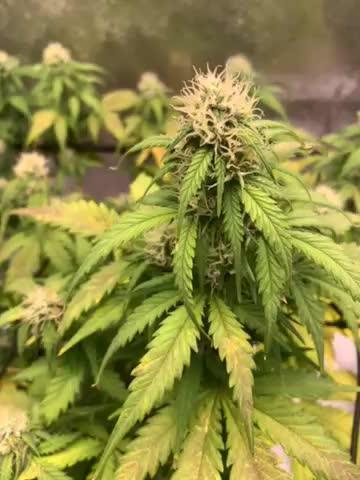
Runtz Auto in full flower, the cute puffy white buds are starting the stack. On 2/13 I did major defoliation on Runtz. I removed all large fan leaves and any leaves shading bud sites. Initially, I thought this would be my last defoliation, however I have heard that 1) they continue to grow new leaves until day 20 of flower and 2) there must be enough foliage on the plant to photosynthesize energy. Well, I hope I left enough leaves for energy to keep bulking up the buds. She is still stretching and now 21inches. This is the end of week 2 flower. This should have been an indication Not to defoliate severely.
Oh darn. My AC Infinity controller is set to flower. I add 2 gallons of water to the T700 humidifier daily to keep the VPD in line.
2/9 & 11 4 gal fed 2 liter each nutrients added at ½ of recommended amount. Making 4 gallons since I have 2 pots of carrots and a Dill in the back.
Bloom Juice 45ml
Plant Juice 75 ml
Royal Rush 15 ml
Power bud 15ml
Green sensation 7.5ml
Recharge 2.5ml/gal
4 ml
Cal Mag
5
Ppm 333
Ph 7.02
Temp 66
2/13 5 gal
Bloom Juice 60ml
Plant Juice 60 ml
Royal Rush 20 ml
Power bud 20ml
Green sensation 10ml
Recharge 2.5ml/gal
4 ml
Cal Mag
25
Ppm 538
Ph 6.6
Temp 66
Your likes and comments are appreciated. Thanks for stopping by.
Growers love 💚🌿
💫Natrona💫



Likes
11
Share


@TheBulldozerSicily
Follow
Settimana 12
Lunedì 12/12/2022
8 lt demineralizzata 800ml rubinetto ec 305
Aggiungiamo 20 ml APT 9 ml enzimi ¾ cucchiaino silicate 8 g megabud 4 ml calmagpro
ottendo Ec 2096 Ph 6.2
Martedi 13/12/2022
8 lt demineralizzata 800ml rubinetto ec 305
Aggiungiamo 20 ml APT 9 ml enzimi ¾ cucchiaino silicate 8 g megabud
ottendo Ec 1844 Ph 6.3
Giovedi 15/12/2022
15 lt acqua demineralizzata Aggiungo 30 ml Flaschclean (ec 179) 1 lt per pianta.
Domenica 18/12 raccogliamo.

Likes
4
Share


@Drtomb
Follow
Week 4 now and on full out cruise control. Nothing to report as the plants are doing great. Replaced a carbon filter causing heat issues due to it being plugged.

Processing
Likes
23
Share


@GrowGuy97
Follow
Finally starting to see little bud sights! Will post more pics soon
Likes
13
Share


@Robeeriegenetics
Follow
First week of flowering in the bag, trying out a new deep voice in my videos does it sound sexy? Let me know in the comments. seeing a little bit of stress on the leaves, but nothing major. The new developing growth is green so everything seems to be going well. I’m gonna give it another week and then I’ll defoliate. So far so good. having a little trouble reversing the wrath rock, candy icy cuts. but I’m not worried. I have backups of the mothers and I have backups of those backups so I’ll definitely still be able to take another shot after seeing the results from this grow ….
Processing
Likes
7
Share


@DazeDreamer420
Follow
So far things just seem to continue to get worse. Will continue to monitor. Suspecting my flush wasn't fully effective.
I flushed it again with another 8L of distilled water with some Flawless Finish to help remove slat buildup. The last 2L I mix in half a tablespoon of organic backstrap molasses.
the next day the soil was almost completely dry so she must have been really thirsty or the flush was successful. Will continue to monitor and probably give the next feeding at 25% strength just to ensure it has nutrients in the soil I don't think that could possibly hurt anything and at least it has something than nothing after this whole flushing process this week, top leaves are looking a little yellow so probably needing some Nutrients.
Feed 2L of Nutrients mixed at 25% strength. The pot was bone dry after a day. She must have been thirsty, has been really hot and humid the past few days but tent temps are stayed the same mostly. Hope that the flush was successful and it's now just able to drink up what it needs and will stop showing signs of deficiencies.
Gave her a haircut, removed some sucker leaves and some small ugly looking ones that were affected from the last week of issues.
FIM'd the rest of the outter branch nodes, ones I did last week already split in to two new nodes
Have solved my soil pH issue, up from 5.27ph last week to 6.33ph now. And run off of 420ppm now from 1870ppm. Learned I need to be more careful with the feedings and make sure I'm using straight water in-between to prevent salt build up again.
Overall the plant has a nice structure to her. Depending how next week goes I may flip into from after next week or the week after if she still needs a little more time.
Considering it did grow its first month with only 2 Amazon basic LEDs. I started off slow, also I have a 4ft tall tent so I don't want her getting too tall before I flip into flower

Processing
Likes
13
Share


@Bloom_Room_By_Jared
Follow
4/9: Frost really coming in and she’s getting funky
4/10: I opened her up a little with HST and bamboo stick tie-downs to hit the center, fed her going to check in again in 2 days to see the progress.
4/12: My spreading her open I did a few days ago actually did help the center out and will pay off in the long run. She’s getting sticky and the calyxes are swelling up. The buds haven’t really fattened up in the last few days just got bigger length wise.
4/13: I might have fucked around and made her herm on me....I gonna wait and see what happens the next few days/weeks

Likes
2
Share

@birdmountain
Follow
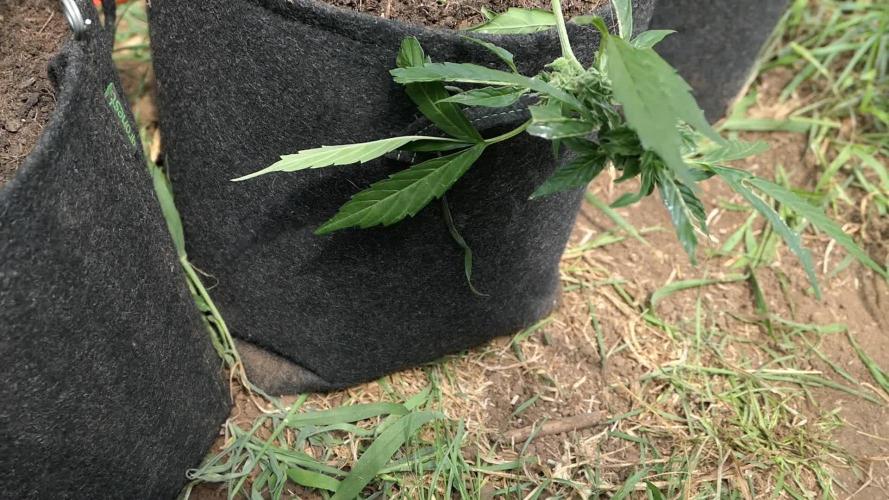
Dieser Strain überrascht mich, er zeigte bisher keinen Schimmelbefall, im Gegensatz zu den anderen Autoflowers. Aber soeben doch beim fotografieren eine kleine Stelle entdeckt und entfernt. Die Buds wirken fest und harzig, der Duft ist stark geworden. Damit es so bleibt, steht auch sie im Direktwind des Venitlators du die Wasserversorgung wurde minimiert.
Wenn sie es bis zur Ernte in ca. zwei Wochen schafft, ist eine gute Ernte für Outdoor zu erwarten. Aber bis dahin kann noch viel passieren.
Vielen Dank für euren Besuch!

Likes
31
Share


@Cheeba_Inu
Follow
December 29 day 15, growth is fine, I will likely top the plant later in the week. Roots are developed enough to remove humidity dome, although I am still running a humidifier.
December 30, day 16, topped the Malasana cookies and removed growth at the first node. I am not mainlining as I don't think it would give me an even canopy across the 8sqft growing area this plant will take up. The topping won't give the same symmetry, but with a bit of training I will end up with an even, wide canopy. I removed the branches from the first node as I would have to end up removing a lot of that growth. In my experience those first branches never fill in as much anyways.
December 31 day 17, recovery from topping going well. Put the humidity dome back on to keep the VPD at around .8kPa.
January 2 day 19, despite the large pot causing a bit of overwatering leaf droop the Malasana cookies continues to recover well. I am done with the humidity dome after waffling back and forth quite a bit. I posted an image in more natural light to so that the leaves are a healthy green. Just that edge curling that will work itself out when the plant grows into its big container.
January 4 day 21, growth is taking off as it should at this age. Its still going to be a long veg to get an 8sqft flowering size. Recovery from the topping is good, and new leaves are healthier with less clawing. I applied LST with plant ties to get growth to head toward my plant training frame (atlas plant trainer).


Likes
Comments
Share


@Nillenium
Follow
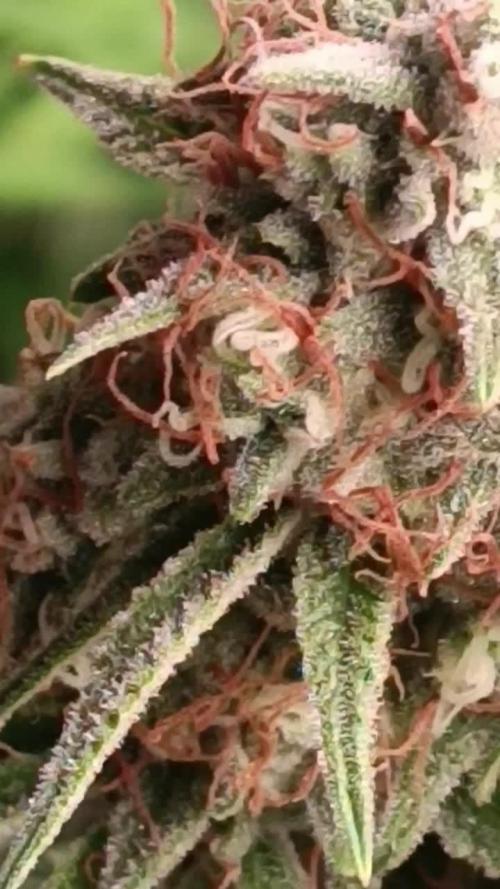
In dieser Woche hat die Pflanze das komplette Zelt ordentlich ausgefüllt und hat sich auch ganz gut gestreckt.
Am Ende der Woche habe ich ihr ein bischen die Beine rasiert um eine bessere Luftzirkulation zu gewährleisten.
Einen schluck Bio PK 5-8 hat sie an dem Tag auch noch bekommen.
Likes
14
Share


@Kakui
Follow
Exotic Genetix: Event Horizon (x3) y Toasted Toffee(x3).
Thug pug Genetics: Peanut Butter sunset(x3).
Una ves sean transplantadas a su macetero definitivo(5 litros) se comenzará con riego automático, drip to waste, y protocolo Crop Steering.
20 Octubre(15:30): 9 semillas en remojo, solución de 2 partes de agua de ósmosis + 1 parte de peróxido de hidrógeno 3%, 5.8pH, 0.6EC, 28°C~30°C. Antes ser puestas a remojar se lijaron las semillas para favorecer la absorción del agua.
21:30: puestas en toalla de papel con la misma agua de remojo, dentro de un contenedor de vidrio hermético y sobre una alfombra de calor a 28°C~30°C, para aumentar la actividad metabólica.
21 Octubre: Pre carga del coco, con solución de nutrientes Athena en 2.0EC y 5.7pH, saturación hasta lograr drenaje, el drenaje fue de 1.5EC y 5.6pH.
21:50: Todas las semillas presentan radicula de distintos tamaños(1cm aprox) son inmediatamente pasadas al sustrato.
22 Octubre: 21:10, se aprecian todas ya brotando, se mantiene el ambiente en 26°C~28°C y 70%+ de humedad.
23 Octubre: 9/9 semillas brotadas, se ven algunos Cotiledones.
24 Octubre: (9:30)8/9 cotiledones abiertos, altura entre 3cm~5cm, etapa de plantula iniciada.
Toffee n3 se atrofió por mala manipulación, espero que crezca aunque sea lento, si no, tendré que seguir solo con 8 plantas.
25 Octubre: Toffee n3 está viva!!! Estuve a punto de quitarla, y está mañana apareció sin su capucha, cotiledones afuera. Yujuuuu!!
26 Octubre: hoy tuvieron su primer riego con nutrientes Athena, 2.0EC y 5.8pH. Se regó hasta alcanzar drenaje, el drenaje fue de 1.9EC y 5.7pH.
27 Octubre: Se desarrollan a buen ritmo, algunas han estirado más que otras, alturas entre 4cm~7cm.
31 Octubre: Segundo riego, 120ml casa una, 2.0EC y 5.8pH, runoff de 2.3EC y 5.7pH.
2 Noviembre: Creciendo a buen ritmo, alturas entre 5cm y 9cm.
4 Noviembre: Riego 180ml cada una, 2.0EC y 5.8pH, runoff 2.8EC y 5.8pH, desde ahora se regarán más seguido, removí las primeras hojas, solo por comodidad para regar, de igual manera los primeros nodos y esas hojas se terminan podando pronto.
8 Noviembre: Riego 2.0EC, 5.8pH, 240ml cada una para aumentar el runoff, valores de runoff de 3.0EC y 6.0pH. Alturas entre 9cm y 14cm.


Likes
14
Share


@Hempy_The_Kid
Follow
05/18/22 changed nutrient water PH 6.20 TDS 870 now on bloom nutrients. Will give foliar feeding tonight at lights out.
05/19/22 PH 6.13 TDS 890 gave LST to even canopy and get some airflow.
05/20/22 PH 6.19 TDS 878
05/21/22 PH 5.95 TDS 906
05/22/22 PH 6.15 TDS 750
05/23/22 PH 5.95 TDS 780
05/24/22 PH 5.90 TDS 850

Likes
Comments
Share


