


Likes
Comments
Share
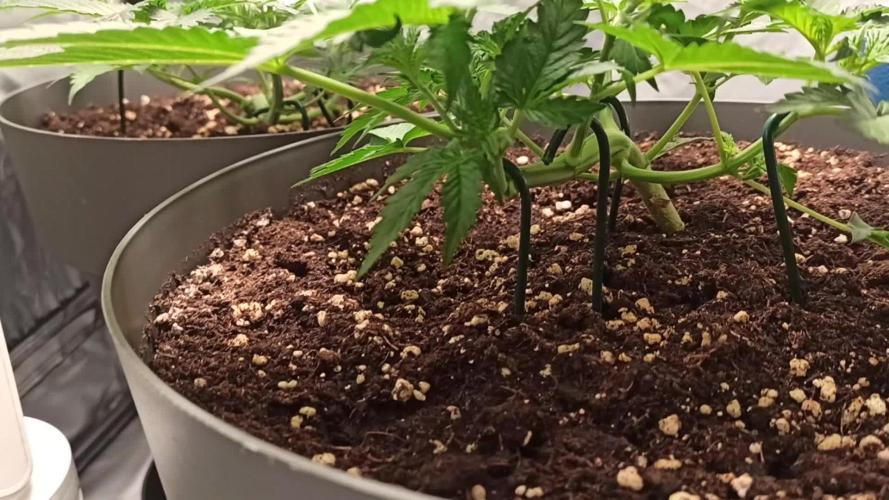

@Michijardinero
Follow
Muy buenas familia está semana van tirando muy bien una de ellas ya está empezando a mostras sus cogollos ala otra todavía le quedan unos días tengo dudas en cuando empezar a echarle engorda cogollos al ser auto floreciente y en teoría en 60- 65 días estria lista no se cuñado ponerlo o si ponerle si alguien me echa una mano encantado 😁en una semanita nos estamos viendo buenos humos familia paz

Likes
41
Share


@MadeInGermany
Follow
Hey guys here's another update of the Blueberry :-)
All 4 are going to be beautiful and are growing great.
Next week I will make a clone of each one and put it directly in the flowering chamber to find out which ones are male and which ones are female 😊.
After that, the clones are disposed of 👍.
The males are then taken to another breeding room where they can flower later to collect the pollen :-) .
If a female stays, the run will be continued in the diary here.
Of course all clones are taken extra and im Vegi tent held :-) .
Was watered every 2 days with 0.8 l each (for sewing materials see table above)
It was cleaned and everything checked. Have fun and stay healthy 🙏🏻💚
👇🏼👇🏼👇🏼👇🏼👇🏼👇🏼👇🏼👇🏼👇🏼👇🏼👇🏼👇🏼
You can buy this Nutrients at :
https://greenbuzzliquids.com/en/shop/
With the discount code: Made_in_Germany you get a discount of 15% on all products from an order value of 100 euros.
👇🏼👇🏼👇🏼👇🏼👇🏼👇🏼👇🏼👇🏼👇🏼👇🏼👇🏼👇🏼
You can buy this strain at :
DJ Short
Water 💧 💧💧
Osmosis water mixed with normal water (24 hours stale that the chlorine evaporates) to 0.2 EC. Add Cal / Mag to 0.4 Ec Ph with Organic Ph - to 5.8 - 6.4
MadeInGermany


Processing
Likes
73
Share


@Fibro_Witch
Follow
Blue Shark is looking fab! Still a darker green than everyone else.
There are 2 videos this week, one where I explain how my plan for a tomato roof using materials I already had didn't work out, and the 2nd being about the rogue who grew in my pea bed (whom I affectionately call "Rogue One") who has been raised almost exclusively on my homemade compost.
I had people who were concerned last year when I made my own compost tea from the compost in my pile. People were concerned about bacteria, nutrient profile, etc. I feel like a lot of people get really regimented in their feeding, and they sort of forget that these are plants and they can adapt. They take what they need if it's available.
I moved away from using mineral salts this year because you have to be careful with so many of these fertilizers so that you don't burn the plant, you have to flush it so you don't get a harsh smoke, mineral salts causing lockout, etc.
If you stick with products that are natural you don't really have to worry about nute burn. You don't have to flush for an extended period of time before harvest. You don't have salts building up in the soil that are detrimental that you have to periodically flush and then add beneficial microbes back in.
There is another way.
Likes
34
Share


@Hexus
Follow
Week 3 - Day 15 - She's still looking good, and starting to take off! PHing a little every day and watching her water carefully for signs of algae/cyanobacteria. Things are still looking good, so I think I may have this DWC thing under *some* sort control.

Likes
1
Share

@Danger_Mouse
Follow
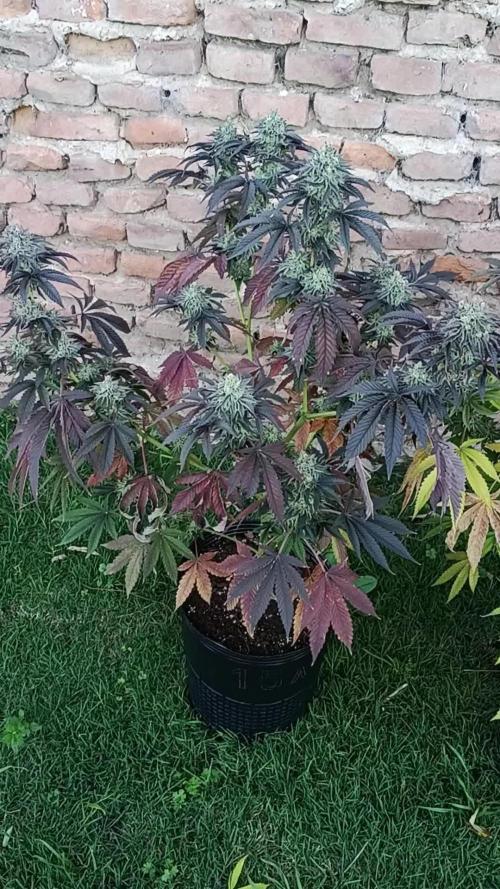
Plantas super faciles de cultivar y muy resistente a Botritis (las 3 Radical Juice fueron las unicas que no tuvieron ni el mas minimo sintoma a pesar de que 6ta y 7ma semana de floración fueron dias de muchisima humedad ambiente). Hare la reseña final cuando este secos los cogollos. El olor en verde recuerda un poco a Tangilope, Clementine, NYC Diesel.


Likes
12
Share


@Alice_in_Wonderland
Follow
This is a big week for the plants - planning on switching them into veg next week, so all nutrients, topping and mainlining should be completed this week.
All nutrients stay the same and lights still at 60cm from the plants. I noted some stress on Chong’s leaves last week and so I also adjusted the water to 7l instead of 10l.
Topped the plants on the first node of the mainline again and gentle LST.
Day 32 update - Chong has lost a mainline stem. During the changing of the PH controller, one of the lines were pulled too tight and snapped off an entire stem. Going to try save the other half of the mainline and split it into 4 main cola’s.

Likes
23
Share


@M_J_KllrAutoSystems
Follow
These girls I’m sure are going to be my new #1 and possibly #2 for harvest’s
(DAY4) fill water
Likes
52
Share


@SlowpokeFuegobud
Follow
🍮 🤤 ❤️ 🍮 🤤 ❤️ 🍮 🤤 ❤️ 🍮 🤤 ❤️ 🍮 🤤 ❤️
DAY 51
Watered with molasses 💧 🍬 1 tsp on 2 L water
DAY 53
Watered with 0.5ml/L Grow + 3ml/L Bloom + Enzym+ 💧
DAY 56
Watered with 1ml/L Grow + 4ml/L Bloom 💧
🌱 🙏 Grower love!!!
_________________________________________________________________________
https://hypnoseeds.com/product/cream-brulee-auto/
Cream Brulee Auto
Description
We love our Cream Brulee and wanted to create an even more special variety so everyone could harvest it faster. Introducing Cream Brulee Auto! After a meticulous process of crossing our exemplary variety with our autoflowering genetics of the highest quality; it is ready to shine and captivate all grow spaces. Equally to lovely feminized Indica-leaning sister, Cream Brulee Auto will take over your heart. You’ll want to keep it in constant rotation. In just about 8 weeks it goes from being a seed to a bountiful harvest of sweet and creamy cannabis from the irresistible dessert we know and love.
Appearance and Grow Tips
While Cream Brulee Auto has the same quality and potency as its feminized cannabis predecessor, what stands out is its speed to finish and enormous dense colas. These magical cannabis seeds take around 8 weeks from seed to harvest and can produce up to 500 grams (per plant) of pure happiness. Indica lovers won’t be able to look away, their growth speed will put anyone in a trance!
Make sure to provide this variety with at least 18 hours of light throughout the entire grow and decent pot size, around 3 gallons minimum, so it can grow to its full potential. Due to its ultra-fast autoflowering genetics, we recommend planting the previously germinated seed directly into the final pot to avoid stressing or damaging the roots. LST is always a good idea to increase performance and control any height problems you want to avoid.
Administer nutrients at 1⁄4 of the recommended dose and then gradually increased as the plant grows and reacts. With optimal conditions and treatment, this strain will bless you with beautiful buds of up to 19% THC.
Flavor and aroma
Thanks to its special lineage, Cream Brulee Auto is absolutely packed with the same delicious flavors and aromas. Its autoflowering magic makes it even easier and quicker to grab your delicious dessert cannabis buds. Notes of cream, caramel, together with vanilla, buttered nuts, and coffee will leave stunned even the most experimental cannabis connoisseur.
Effects
After the first delicious puff, you will be in a dream state, deeply relaxed and pleasantly euphoric. Its calming effect makes it better to consume it at night to help you sleep. Similarly, during the day if you are looking for a half-conscious state Cream Brulee Auto will keep you upbeat and happy.
😍
________________________________________________________________________________
SETUP:
° Mars Hydro TS1000 Version 2022
https://www.mars-hydro.com/all-products/ts-1000-led-grow-light
Thanks @coco!! ❤️
° Zelsius 60x60 cm (2x2ft)
° 2x 5W Fans
° PrimaKlima EC 125 400/240cm³/h exhaust fan & Carbon Active Granulate 240cm³/h
° Biobizz Grow + Bloom
° tap water EC 0,26uS upgraded to EC 0,5 with PlantMagic MagneCal - pH 8, nutrient solution downgraded to pH 6,5 with Advanced Hydroponics Minus Bloom
° BioEnhancer every 2 weeks instead of feeding
° from week 4 in the same container Aptus Enzym+ once a week
° Organic tomato soil + perlite
🍮

Likes
5
Share


@Ninjabuds
Follow
These pound cake auto seeds are 100 off rip.
I put the seeds in some paper towels on nov29, then put them in the pro-mix potting soil on dec2. Now it's dec4. Only 5 whole days sense. I put the seeds in paper towels, and they have already been born into this world. Thanks, fastbuds, for the seeds. Ever since I saw the seed drop with the pound cake auto, I have had my eye on this strain. I have really wanted to grow a plant with giant giant huge nugs, and I have yet to do so. I have high hope for these guy. I'm only allowed 12 plant and have 10 plants in other other tent. So I will be tossing one of them later 2day. I plan on only bringing one if them to flower. This is my 1st real auto grow so I'm testing the waters in a spare 2x2 tent with my spider farmer 100 board light the newer one with the evo leds.
Thanks for reading

Likes
58
Share


@Rap_a_cap
Follow
Good weather here.
Almost total defoliation and stop watering on Sunday.
Cropped on Tuesday night. I'm more than satisfied. A lot of stuff. Perfectly ripen. It's a sin to cut her, she's really a beauty. Top cola apart there are another 12 big bus and 2 dozen of minor fat branches. After 24h of drying and deep wet trim the weight is 1335 grams (2.94 lbs) of top rock solid buds as this plants don't produce popcorns. So it's legit to expect 600 grams of premium weed.
See you in 2/3 week for the harvest report, drying will take more time than Royal Gorilla as buds are Biggerrr
Smoking preview
Folks, I just rolled a couple spliffs of a dried and cured sample bud for 11 days. Two of friends of mine couldn't tell if it was weed or hash, I'm not joking. Strong and fast high.


Likes
4
Share


@mr_smooke
Follow
Only tap water for this shiny beauty. she gonna finish in 2 weeks maybe earlier. can not wait for harvest. here is day 43f

Processing
Likes
14
Share


@Finsfan
Follow
Strong smell and bulk to the colas. 70/30 orange:white hairs. Lots of milky trich's when looking thru a scope. Not many amber, if any, do I know we close. Thinking I'll harvest next weekend based on today.

Likes
6
Share

@Allybearx3
Follow
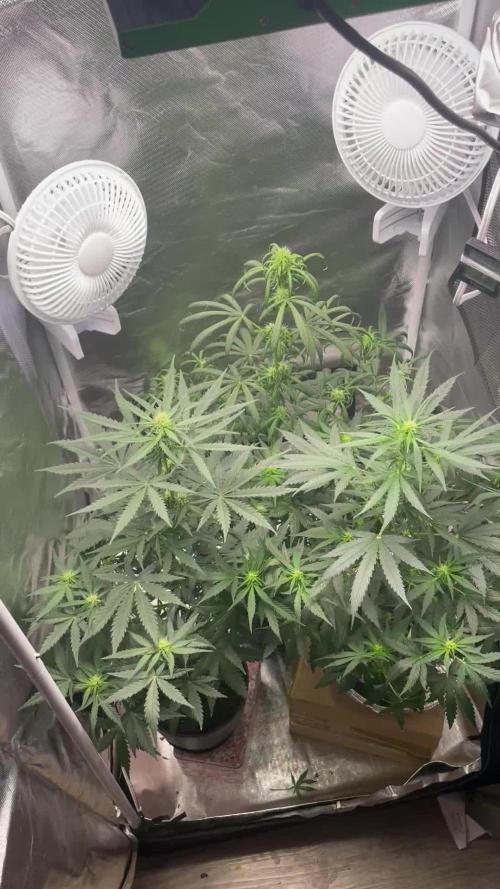
Second week of flowering and I accidentally over watered/feed one of my girls 😩 she’s in the process of recovering but she’s looking so sad and i feel so bad 😩😩 other than that the other two are still thriving bud sites are getting so much white hairs, stretched has seemed to stopped so hopefully the bud sites start to chunk up
Likes
35
Share


@bioaccessory
Follow
Hello colleagues!
As for an autoflower, the cycle did not take much time and brought good results for me. Thanks to GanjaFarmerSeeds for the opportunity to test a new strain, also thanks to everyone who came and commented on this diary 🙏
See you soon😀👍


Processing
Likes
43
Share


@Master_weeda
Follow
Bonjour à tous les padawans et maîtres jedis
Jour98 grosse defoliation et léger arrosage
Jour101 arrosage avec 2, 5 litres d'eau ph6.3


Likes
5
Share


@Pureleelove
Follow
This was an amazing experience for my first grow. Was super unsure of what I was going to yield, but I think 27 grams is a realistic harvest and Im looking forward to see if I can get bit larger of a yield on the next run. I want to try main-lining, see for better energy distribution and more equal bud growth. Also investment into a proper reflector and possibly enclosed space.
Note- I trimmed my plant the night before harvest morning. I removed than fan leaves to start, and then proceeded to trim the plant. I pulled out a lot of the leaves with no frost by hand. The sugar leaves had so much crystal on it I thought I would leave the smaller ones on the bud. I gave it a light trim, and used all the trim to make Isopropyl Alcahol (99%) based extract. Got about 1 gram from the run. I also had a nice little ball of finger charas from the trimming.
I harvested it in the morning at about 04:30 am before the light cycle triggered at 7am. She hung and dried for about a week, where I then chopped her into buds. She cured for 2 weeks before i started smoking.
Ask anything you want to know! Or if I can be more clear on any areas of the grow!
One Love!

Likes
31
Share


@valiotoro
Follow
Beautiful buds super sticky✂️
Delicious smell something new to me!
Cant Wait the curing to taste this beauty