Likes
Comments
Share
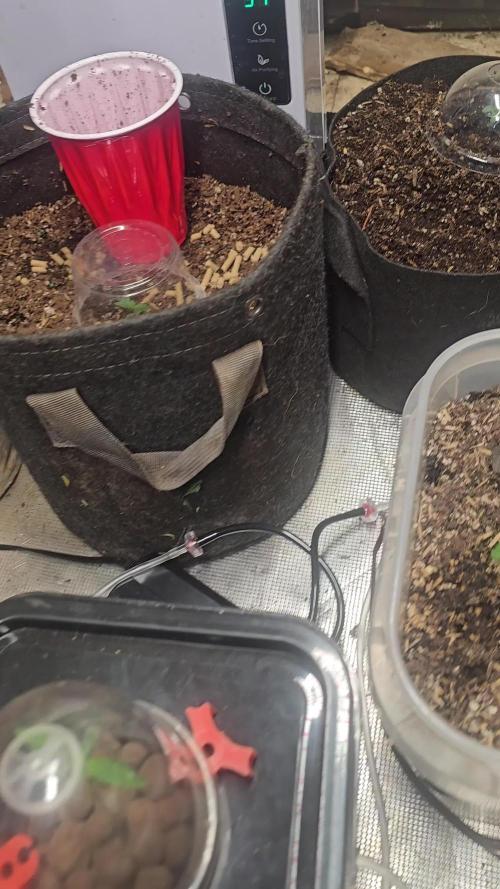
Diese Woche wurde nach und nach getoppt über 3 Tage hinweg. Sobald die ersten Triebe des 4ten Paares entwickelt waren, habe ich das Unterste paar Triebe + Blätter und die Keimblätter entfernt. Pro Pflanze möchte ich diesmal mit 6 Haupttrieben arbeiten. Nachdem ich mit allen fertig war und die Wunden 1 Tag geheilt waren, habe ich wieder B-52 mit Break Thru zusammen eingesetzt um Stress zu minimieren und den Wachstum zu fördern. Ab jetzt fange ich auch an alle 3 Tage mit 10-15% Drain zu gießen. Fürs nächste Mal ist auf jeden Fall vorgemerkt, dass als erstes umgetopft wird in den Endtopf bevor ich Toppe, um Zeit zu sparen. Wir sind in vegi Woche 4 und werden die 5te zur Erholung nach dem umtopfen brauchen und ich muss noch ins Netz einarbeiten. Das lief nicht ganz wie geplant, aber die Pflanzen sind alle zu 100% gesund. Die Green poison F1 scheinen mehr Probleme mit den thripsen zu haben als die anderen. Ich denke das liegt an den schwach vorhandenen Geruch. Alle anderen sind bisher Geruchslos. Ich arbeite auch noch ohne Filter.
Likes
5
Share
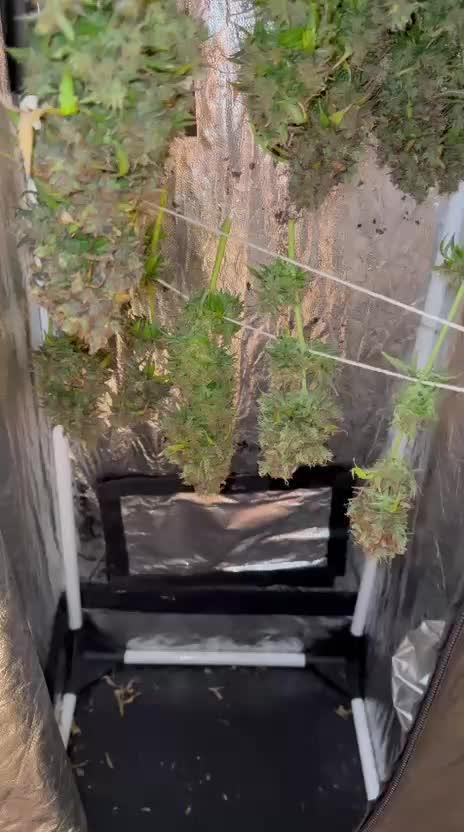
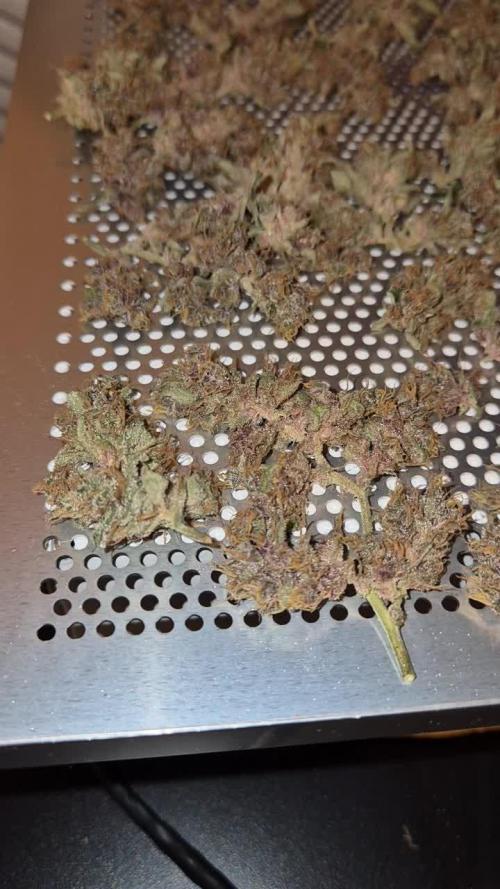
Tester #32 her sister got the axe a few days ago. This one being #2 still growing strong. Fading away so beautiful few more days until she gets the axe as well. Really easy to grow no issues at all during the entire grow. The last photos are of the first one that got the axe ^_^ really frosty and smells so damn good. Nice finishing update on 5/24. #2 getting the axe tomorrow so excited smells so fucking good. #1 is leaving the dryer today to be final trimmed and jar for curing. Should have smoke report within the week or so ^_^.
Processing
Likes
12
Share
hotter this week over here 100 plus sometimes a 97 98 started feeding low nutrient mix cloned last week when you guys said to just tryn to keep them cool......any tips during this stage??
Likes
45
Share
@AsNoriu
Follow
New week, seems ok for first morning, will do heavy feed on day 52. I already gave away one plant ( strawberry cough photo ) now one of fast diesels still stucked in pre-flower, would love to return to 18/6 regime, just dont want any reveg or hermie. Still lost. Fingers crossed ;) Day 53 Morning, leaves a bit down after night, everything looking not bad, thinking to defoliate two midle babies. Had a big mistake on day 52, they where down, i stayed for one night out and was late with watering for a day, they looked totaly down, like my mobile, thats why no photos, never seen any plant so bad in my hole life... But they are ok now, quess it was on the verge, but damadge was done 100 % Day 53 evening. I wouldnt be me if i wont be searching ways to screw up the crop ;))) After many hesitations i decided to do very light defoliation. And ..... They hated it. Lets give couple days, but 2 huge stresses in 3 days dont give me and girls joy for sure .... In that rush forgot to make third Fast diesel photo, but i quess she didnt made mind to flower, took like 5 leaves down and left her for a bit,very annoying , she will be a big delay at the end or very early harvest, both ways waste of time.... Plus had to reduce light to 15.5 of day, maybe those 30 min will force her ... All 3 Fast Diesels are very mag hungry, fed them with epsom salt extra. Day 54 . Fast Diesel 3 went to 24 hours darkness prison with a heater ;))) hope that will teach her a lesson ! Others got feed with silicic acid, they drink, thats a good sign tho ! Fast Diesel 3 was a day behind from all, even 5 leaves was too much. But its a good time for me to give last trick i can, before downgrading day hours even more. Day 54 Evening. Girls are praying again, silica always boost them to hapiness ;) Day 56. Girls are growing, looks like last Fast Diesel starts to make buds from preflower, but a lot of pistils going brown, so either its heat, which i will check today or its hermie ;))) Could be wind damage, i will check all options today, returned from work, made short shitty video and thats all ;) End of week.
Likes
16
Share
Vamos familia, actualizamos la tercera semana de floración de estas Panty Punch de Seedstockers, salieron 3, que van creciendo a buen ritmo aunque marquen una pequeña deficiencia ya estoy solucionandola, veremos cómo progresan. Empezamos añadiendo varios productos de la gama de Agrobeta para la Floración. Temperatura y humedad dentro de los rangos correctos. Vamos viendo cómo avanzan estas próximas semanas. Agrobeta: https://www.agrobeta.com/agrobetatiendaonline/36-abonos-canamo Hasta aquí todo, Buenos humos 💨💨💨
Likes
4
Share
🍑 Passion Fruitz by Zamnesia – Week 9 | The Girl Who Refuses to Hurry Welcome back to another chapter of the 8×8 Adventure! 🌱💚 At this point, I think we can officially stop pretending that Passion Fruitz is going to hurry up. She's not. 😂🍑 We're now at week 9 from seed, and this girl has been showing signs of flowering for roughly three weeks. Three weeks. And somehow, when I look at her, I get the feeling she's still thinking about whether she really wants to commit to the idea. She's giving us the same message she's been giving us for weeks: “I'm getting there. Relax.” And honestly? I've learned to listen. Because while Passion Fruitz may be incredibly slow compared with the rest of the tent, she's certainly not doing nothing. She's building. She's growing. She's staying beautiful. And she's giving us another fascinating example of just how differently genetics can behave when they're given the same environment. 🐌 The Slowest Girl in the Room If you've been following this phenotype from the beginning, you already know her reputation. Passion Fruitz is slow. Not a little slow. Not slightly behind. We're talking about a plant that seems to have completely rejected the concept of rushing. 😂 The other plants around her have moved further into flowering, while Passion Fruitz continues to take her time. We're now several weeks into seeing those first signs of flower development, and the transition is still remarkably gradual. But here's the important part: She doesn't look unhappy. She doesn't look weak. She doesn't look like she's struggling. She's simply on her own schedule. And that distinction matters. Because this is exactly what makes a phenotype hunt so interesting. 🌱 Slow Doesn't Mean She's Standing Still Although her flowering transition has been painfully slow, the plant itself has continued developing beautifully. She's around 72 cm, with a compact, powerful structure and some absolutely beautiful foliage. And those leaves... Wow. They're big. They're beautifully formed. They're carrying that lush green colour that makes this girl so enjoyable to photograph. When I look at her, I don't see a plant that has stopped growing. I see a plant that has spent a lot of time investing in her structure. Strong branches. A dense framework. Large fan leaves. Healthy new growth. She's been building the machine. She's just taking her time deciding when to turn that machine completely toward flowers. 🍑 Three Weeks of "Almost There" This is probably the funniest part of her story right now. We've watched her start showing signs of flowering. Then we watched her continue showing signs of flowering. And now we're watching her... continue showing signs of flowering. 😂😂😂 At this point I'm starting to wonder whether Passion Fruitz has invented her own flowering stage. Maybe this is Passion Fruitz Extended Pre-Flower. But jokes aside, this is actually a fascinating observation. Under the same overall environmental strategy as the rest of the room, she's expressing a very different developmental rhythm. And that's precisely the kind of thing I wanted this project to reveal. The plants don't read the diary. They don't look at the calendar. They don't care what week everyone else is in. They follow their genetics. And this girl apparently has a very long internal calendar. 🍃 The Green I Love One thing I absolutely don't have any complaints about is her foliage. She continues to look beautiful. The colour is strong. The leaves are large. The structure is healthy. And the new growth continues looking vibrant. This is another reason I'm not interested in trying to force her into somebody else's timeline. If the plant is healthy and continuing to develop, then there is value in simply observing. I don't need to make her flower faster just because the plants beside her are further ahead. The entire point is to see what she wants to do. And Passion Fruitz is making that lesson very easy. 🌿 A Structure Worth Looking At The more I photograph this girl, the more I appreciate her architecture. She's not a giant plant. She's not trying to reach the ceiling. But she's compact, sturdy and beautifully built. The large fan leaves give her an almost tropical appearance, while the branching structure underneath shows just how much development has happened before the flowering phase really got moving. There is something quite satisfying about seeing a plant like this. She's essentially saying: “I may be late, but when I arrive, I'll have something to show you.” And now I'm genuinely curious whether that's exactly what she's planning. 📸 Back to the Studio This week I decided Passion Fruitz deserved another trip to the studio. And I'm glad I did. Sometimes when you're looking at plants inside the tent, surrounded by lights, equipment and twenty-plus other plants, it's easy to overlook the individual beauty of one phenotype. Put her on her own... and suddenly you notice everything. The size of those leaves. The colour. The spacing. The branching. The little details in the new growth. The personality of the plant itself. That's one of the reasons I enjoy photography so much during this project. The camera forces me to slow down. And with Passion Fruitz... apparently we're already very good at slowing down. 😂📸🍑 💡 Same Room. Very Different Story. The 8×8 Adventure continues to prove one thing over and over again: Genetics matter. We're giving these plants the same general environment. The same lighting philosophy. The same irrigation system. The same shared reservoir. The same overall cultivation strategy. Yet Passion Fruitz has chosen a completely different timeline. Some phenotypes race into flowering. Some stretch aggressively. Some build flowers almost immediately. And Passion Fruitz? She takes her time. That's not necessarily a disadvantage. It's simply her story. And we're here to document it rather than rewrite it. 💧 Feeding & Consistency The room continues following the same flowering nutrition strategy: 🌱 Plagron Terra Bloom – 2.2 ml/L 🌱 Power Buds – 1 ml/L 🌱 Green Sensation – 1 ml/L 🌱 Sugar Royal – 1 ml/L ⚗️ Lemon Kick / pH Plus as required The solution remains around EC 2.0 mS/cm, with pH around 6.0. The important thing with a phenotype like Passion Fruitz is resisting the temptation to chase her timeline with unnecessary changes. She's slow. We've established that. 😂 But she's healthy. She's growing. She's developing. So consistency remains the approach. Give her the same foundation. Watch what she does with it. And let the genetics speak. 🌡️ Environment The room remains stable: 🌡️ Day temperature: 29°C 🌙 Night temperature: 25°C 💧 Relative humidity: 60% ⚗️ pH: 6.0 ⚡ EC/TDS: approximately 2.0 mS/cm 💦 Solution temperature: 25°C 🌱 Substrate temperature: 26°C 💨 CO₂: 636 ppm 💧 Watering: approximately 1.3 L/plant/24h ? Pot size: 15 L 💡 Light schedule: 12/12 Nothing dramatic has changed. And that consistency gives us an even better opportunity to observe just how differently this phenotype behaves. 💡 Lighting the Slow Girl The lighting strategy continues to be particularly interesting with Passion Fruitz. The overhead lighting provides the main source, while the additional lighting deeper in the canopy helps us observe what happens beyond the top layer. Her structure gives us plenty of foliage to work with, and as flowering continues to develop, I'm curious to see how those sites respond throughout the plant. Again, there is no rush. We're simply watching. And documenting. And waiting. Patiently. Very patiently. 😂🍑 🔍 What I'm Watching Now At this point, my biggest question is incredibly simple: How long is Passion Fruitz actually going to take? We're entering week 9 from seed. We've been watching flowering signs for around three weeks. And she's still moving at her own wonderfully frustrating pace. But here's the thing... I'm no longer annoyed by it. I'm fascinated. Because eventually, she will have to reveal where this story is going. Will she suddenly accelerate? Will the flower sites begin developing more rapidly? Will she remain the slowest girl in the room all the way through? I honestly don't know. And that's exactly why I'm enjoying her. 🍑 Beauty Doesn't Have a Schedule Sometimes we get so focused on timelines that we forget to look at the plant itself. Passion Fruitz may be behind the others in flowering development. But look at her. She's beautiful. Beautiful colour. Beautiful leaves. Beautiful structure. Healthy growth. And a phenotype that has already given us a completely different story from almost everything else in the room. She's not late. She's just writing a different calendar. And I'm perfectly happy to keep turning the pages. 🔮 Looking Ahead So what happens next? Honestly... we wait. 😂 I want to see whether this slow transition finally begins accelerating. I want to see the flowering sites become more defined. I want to see whether her impressive structure translates into equally impressive flower development once she finally decides to commit. And most importantly, I want to continue documenting her exactly as she is. No forcing. No unnecessary intervention. No trying to make Passion Fruitz become another phenotype. She's Passion Fruitz. And apparently, Passion Fruitz takes her sweet time. 💚 The Girl Who Makes Us Wait There are plants in this project that make you excited because they're explosive. There are plants that impress you because they're enormous. There are plants that surprise you with their colours or aromas. And then there's this girl. She makes you wait. And wait. And wait. 😂🍑 But every time I look at her, I find another detail worth appreciating. The leaves. The structure. The colour. The development. The potential. And that little question sitting in the back of my mind: “What happens when this girl finally decides it's time?” That's what I'm waiting for. 🙏 Thank You Another week. Another chapter. And another reminder that plants don't care about our schedules. Passion Fruitz continues to be the slowest girl in the room, and at this point, I think she's earned the title permanently. 😂🍑 But slow doesn't mean uninteresting. Quite the opposite. She's giving us one of the most unique stories in the entire 8×8 Adventure. A huge thank you to: 💚 GrowDiaries — for providing the platform where we can document these journeys, learn from one another and share the results. 🍑 Zamnesia — for the Passion Fruitz genetics that gave us this wonderfully patient phenotype. 🌱 Plagron — for the nutrition supporting the garden throughout the cycle. 💡 Future of Grow LED — for providing the lighting powering the room. 🌡️ TrolMaster — for helping maintain a stable environment. ✨ LumiFlora — for the additional lighting helping us explore development deeper into the canopy. And of course, thank you to everyone following the 8×8 Adventure. Whether you're here every week, dropping a comment, asking questions, sharing your own experience, or simply watching quietly... thank you. This project wouldn't be the same without you. Passion Fruitz... Week 9 from seed. Still slow. Still beautiful. Still green. Still building. Still taking her time. And still making us wonder: “Girl... when are you actually going to flower?” 😂🍑 But that's okay. We're not going anywhere. We'll wait. Because maybe the slowest girl in the room has simply been saving her story for later. And when she finally decides to tell it... I want to be there with the camera ready. 📸🍑💚 Growers Love, my friends, and happy growing! 🌱💚
Likes
5
Share
🗓️ Week 6 complete – 2nd week of flowering The second week of bloom is in the books – so far, nothing unusual or problematic. Seriotica continues to grow healthy and evenly alongside the others 🌸 I’m currently feeding at least 50% of the AN schedule, but since they’re clearly taking it well, I’ll increase to 75% next watering. 💧 Watering setup: 6L per plant every 3 days Input EC: 1.3 Drain EC – Seriotica: 0.92 They're taking up nutrients nicely – no signs of deficiencies at this stage. 📏 Height – Seriotica: 60 cm Stretch seems to be settling down gradually – everything looks under control 👍
Likes
134
Share
@BigDaddyK
Follow
Well she has definitely recovered, the frost is starting to appear.... Day 64 - Tuesday 18/12/18 - Added 3 litres of water, 6ml A+B - ph is stable. Day 65 - Wednesday - changed reservoir for fresh solution Day 66 - Thursday - added 1 litre of water , smells lovely Day 67 - Friday - added 2 litres of water and 6 ml A+B Day 68 - Saturday- added 2 litres of water and 6 ml A+B Day 69 - Sunday - added 2 litres of water and 6 ml A+B Day 70 - Monday - added 2.5 litres of water and 2 ml A+B Looks very frosty ,smell s very strong lemon
Likes
9
Share
Learning a ton as I go. Started low stress training using rubberized wire poked down into the soil. Spent a lot of time just tucking the fan leaves down. I'm an idiot when it comes to watering. I dont think I'm getting enough down to the bottom of the pot, but dont want to over water. I'll just continue with what I'm doing.
Likes
16
Share
11-05 Looking great, smelling great, and a putting on the weight like a good girl! I think I'll hit them(or maybe just one) with a light dose of powder Kool Bloom this week to prepare for the full dose the 7th and 8th week of bloom. 11-08 So I believe I messed up 😣😕😔. At some point when I was writing down my recipe for my feedings so I didn't forget, I accidentally wrote the wrong number down for the Jack's Hydro, I put a 16 when it should've been a 12,and I just realized it a few days ago. That would account for the some of the minor issues I've been seeing. I should have seen it sooner! All I can do now is feed them right, and hope it doesn't have any negative effects. 11-11 Going into week 7 of flower and things are great. The 2 girls are coming along nice, smell great and looking through a magnifier are almost done, about a week or so left.
Likes
7
Share
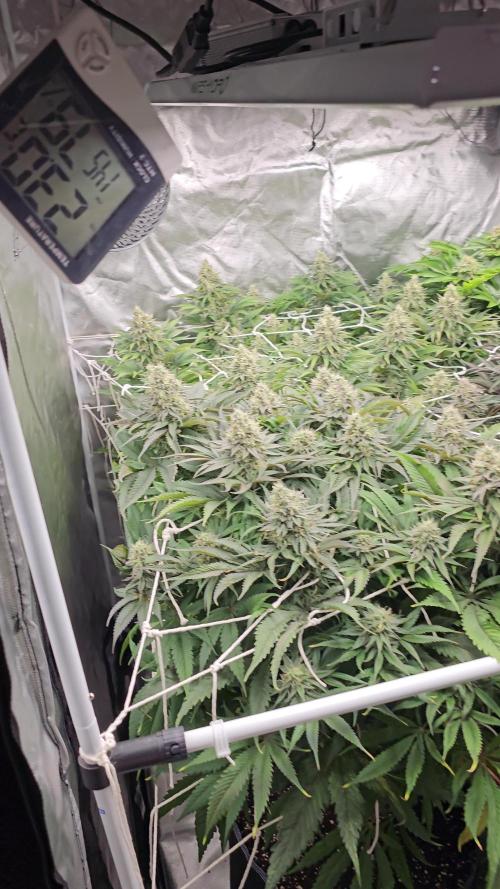
Hello growers. Week 3 of 12/12, we have around 25-30 sites developing. She needs around 1.5L of water a day now (run off is giving me 1000ppm) . The soil is testing 6.5 so happy days. I took two clones for the smaller sites that didnt reach canopy level last week and they have been in a dome for a week looking healthy. Hopefully they root this week and I'll move them into some smaller pots to run this girl back in my other tents asap.
Likes
Comments
Share
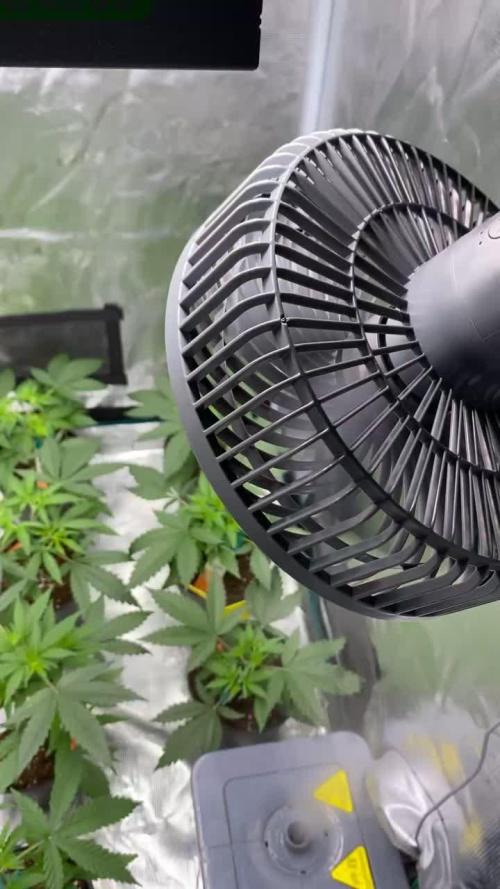
These were a big few weeks the buds realy stacking on. Starting to look nice and get some smell. Water still 6.5 and using the spiderco drip system. Phtontek still at 75%
Likes
55
Share
What's in the soil? What's not in the soil would be an easier question to answer. 16-18 DLI @ the minute. +++ as she grows. Probably not recommended, but to get to where it needs to be, I need to start now. Vegetative @1400ppm 0.8–1.2 kPa 80–86°F (26.7–30°C) 65–75%, LST Day 10, Fim'd Day 11 CEC (Cation Exchange Capacity): This is a measure of a soil's ability to hold and exchange positively charged nutrients, like calcium, magnesium, and potassium. Soils with high CEC (more clay and organic matter) have more negative charges that attract and hold these essential nutrients, preventing them from leaching away. Biochar is highly efficient at increasing cation exchange capacity (CEC) compared to many other amendments. Biochar's high CEC potential stems from its negatively charged functional groups, and studies show it can increase CEC by over 90%. Amendments like compost also increase CEC but are often more prone to rapid biodegradation, which can make biochar's effect more long-lasting. biochar acts as a long-lasting Cation Exchange Capacity (CEC) enhancer because its porous, carbon-rich structure provides sites for nutrients to bind to, effectively improving nutrient retention in soil without relying on the short-term benefits of fresh organic matter like compost or manure. Biochar's stability means these benefits last much longer than those from traditional organic amendments, making it a sustainable way to improve soil fertility, water retention, and structure over time. Needs to be charged first, similar to Coco, or it will immobilize cations, but at a much higher ratio. a high cation exchange capacity (CEC) results in a high buffer protection, meaning the soil can better resist changes in pH and nutrient availability. This is because a high CEC soil has more negatively charged sites to hold onto essential positively charged nutrients, like calcium and magnesium, and to buffer against acid ions, such as hydrogen. EC (Electrical Conductivity): This measures the amount of soluble salts in the soil. High EC levels indicate a high concentration of dissolved salts and can be a sign of potential salinity issues that can harm plants. The stored cations associated with a medium's cation exchange capacity (CEC) do not directly contribute to a real-time electrical conductivity (EC) reading. A real-time EC measurement reflects only the concentration of free, dissolved salt ions in the water solution within the medium. 98% of a plants nutrients comes directly from the water solution. 2% come directly from soil particles. CEC is a mediums storage capacity for cations. These stored cations do not contribute to a mediums EC directly. Electrical Conductivity (EC) does not measure salt ions adsorbed (stored) onto a Cation Exchange Capacity (CEC) site, as EC measures the conductivity of ions in solution within a soil or water sample, not those held on soil particles. A medium releases stored cations to water by ion exchange, where a new, more desirable ion from the water solution temporarily displaces the stored cation from the medium's surface, a process also seen in plants absorbing nutrients via mass flow. For example, in water softeners, sodium ions are released from resin beads to bond with the medium's surface, displacing calcium and magnesium ions which then enter the water. This same principle applies when plants take up nutrients from the soil solution: the cations are released from the soil particles into the water in response to a concentration equilibrium, and then moved to the root surface via mass flow. An example of ion exchange within the context of Cation Exchange Capacity (CEC) is a soil particle with a negative charge attracting and holding positively charged nutrient ions, like potassium (K+) or calcium (Ca2+), and then exchanging them for other positive ions present in the soil solution. For instance, a negatively charged clay particle in soil can hold a K+ ion and later release it to a plant's roots when a different cation, such as calcium (Ca2+), is abundant and replaces the potassium. This process of holding and swapping positively charged ions is fundamental to soil fertility, as it provides plants with essential nutrients. Negative charges on soil particles: Soil particles, particularly clay and organic matter, have negatively charged surfaces due to their chemical structure. Attraction of cations: These negative charges attract and hold positively charged ions, or cations, such as: Potassium (K+) Calcium (Ca2+) Magnesium (Mg2+) Sodium (Na+) Ammonium (NH4+) Plant roots excrete hydrogen ions (H+) through the action of proton pumps embedded in the root cell membranes, which use ATP (energy) to actively transport H+ ions from inside the root cell into the surrounding soil. This process lowers the pH of the soil, which helps to make certain mineral nutrients, such as iron, more available for uptake by the plant. Mechanism of H+ Excretion Proton Pumps: Root cells contain specialized proteins called proton pumps (H+-ATPases) in their cell membranes. Active Transport: These proton pumps use energy from ATP to actively move H+ ions from the cytoplasm of the root cell into the soil, against their concentration gradient. Role in pH Regulation: This active excretion of H+ is a major way plants regulate their internal cytoplasmic pH. Nutrient Availability: The resulting decrease in soil pH makes certain essential mineral nutrients, like iron, more soluble and available for the root cells to absorb. Ion Exchange: The H+ ions also displace positively charged mineral cations from the soil particles, making them available for uptake. Iron Uptake: In response to iron deficiency stress, plants enhance H+ excretion and reductant release to lower the pH and convert Fe3+ to the more available form Fe2+. The altered pH can influence the activity and composition of beneficial microbes in the soil. The H+ gradient created by the proton pumps can also be used for other vital cell functions, such as ATP synthesis and the transport of other solutes. The hydrogen ions (H+) excreted during photosynthesis come from the splitting of water molecules. This splitting, called photolysis, occurs in Photosystem II to replace the electrons used in the light-dependent reactions. The released hydrogen ions are then pumped into the thylakoid lumen, creating a proton gradient that drives ATP synthesis. Plants release hydrogen ions (H+) from their roots into the soil, a process that occurs in conjunction with nutrient uptake and photosynthesis. These H+ ions compete with mineral cations for the negatively charged sites on soil particles, a phenomenon known as cation exchange. By displacing beneficial mineral cations, the excreted H+ ions make these nutrients available for the plant to absorb, which can also lower the soil pH and indirectly affect its Cation Exchange Capacity (CEC) by altering the pool of exchangeable cations in the soil solution. Plants use proton (H+) exudation, driven by the H+-ATPase enzyme, to release H+ ions into the soil, creating a more acidic rhizosphere, which enhances nutrient availability and influences nutrient cycling processes. This acidification mobilizes insoluble nutrients like iron (Fe) by breaking them down, while also facilitating the activity of beneficial microbes involved in the nutrient cycle. Therefore, H+ exudation is a critical plant strategy for nutrient acquisition and management, allowing plants to improve their access to essential elements from the soil. A lack of water splitting during photosynthesis can affect iron uptake because the resulting energy imbalance disrupts the plant's ability to produce ATP and NADPH, which are crucial for overall photosynthetic energy conversion and can trigger a deficiency in iron homeostasis pathways. While photosynthesis uses hydrogen ions produced from water splitting for the Calvin cycle, not to create a hydrogen gas deficiency, the overall process is sensitive to nutrient availability, and iron is essential for chloroplast function. In photosynthesis, water is split to provide electrons to replace those lost in Photosystem II, which is triggered by light absorption. These electrons then travel along a transport chain to generate ATP (energy currency) and NADPH (reducing power). Carbon Fixation: The generated ATP and NADPH are then used to convert carbon dioxide into carbohydrates in the Calvin cycle. Impaired water splitting (via water in or out) breaks the chain reaction of photosynthesis. This leads to an imbalance in ATP and NADPH levels, which disrupts the Calvin cycle and overall energy production in the plant. Plants require a sufficient supply of essential mineral elements like iron for photosynthesis. Iron is vital for chlorophyll formation and plays a crucial role in electron transport within the chloroplasts. The complex relationship between nutrient status and photosynthesis is evident when iron deficiency can be reverted by depleting other micronutrients like manganese. This highlights how nutrient homeostasis influences photosynthetic function. A lack of adequate energy and reducing power from photosynthesis, which is directly linked to water splitting, can trigger complex adaptive responses in the plant's iron uptake and distribution systems. Plants possess receptors called transceptors that can directly detect specific nutrient concentrations in the soil or within the plant's tissues. These receptors trigger signaling pathways, sometimes involving calcium influx or changes in protein complex activity, that then influence nutrient uptake by the roots. Plants use this information to make long-term adjustments, such as Increasing root biomass to explore more soil for nutrients. Modifying metabolic pathways to make better use of available resources. Adjusting the rate of nutrient transport into the roots. That's why I keep a high EC. Abundance resonates Abundance.
Likes
18
Share
@emanresU
Follow
Edit from 16th May. Ok, so... I got Fungus Gnats... I vacuum cleaned my plant my accident... Overwatered first 2 plants... This is not like riding bicycle, I had to re-learn few things. But we going strong! The biggest plant (Fat Banana week #4) growing big and strong, every 2 hours I can notice some changes, she seems to like the environment (32C and ~40% Humidity), soil stays wet for weeks literally. I have to buy bottom feeders and keep the top soil dry bone to prevent Fungus Gnats having sex in wet soil. I have switched to 600W now and I put my lamp around 30cm higher then before. I have a net for Sea Of Green hanging and waiting but Im not sure If Im gonna use it or If I'm gonna "lollipop" these plants just because there is so many of them now there. I didn't "top" because I believe that main cola produce some banger THC content and terps, so I want to focus on all main colas and just tackle the side ones. Edit from 17th May. It looks like Fungus Gnats don't like 24h light. I can see larvas trying to eat the roots (fuck you you fucking.... FuckYouGnat). But I don't see adults flying around. 4x yellow tape helps as well for sure. I ordered some Nematodes, they should be here next week. Until then I'm fighting manually. I placed a decoy on most of the pots. I'm hoping to attract larvas to the decoy instead of baby roots of my plants. They already eat one of my seedling before it even fully open the shell, so I think there are not so many of them to attack all plants at once. I feel like I'm having more and more control over them everyday. Moving the dry soil to the sides also helps a bit with killing larvas. Just uncover the wet parts with larvas and blast them with all the watts you have. So far 2 big plants looks good and healthy, some praying leafs every now and then. I think I'm gonna leave the lights for 24/7 until I'm gonna be sure these FuckYouGnats are gone. Edit form 18th May. Nematodes arrived, I mixed 1 pack in 2L and watered all 8 pots. I have 1 pack left that I'm planning to use next week or after 2 weeks. Lady Banana is showing her sex. I was worried that it looks like hermie but I think it's just Calyx in very early stage. She also looks "wilt", I guess from all that dry period, she got some water today with nematodes, I'll check on her tomorrow. Vacuum Cleaner Surviver going strong! I believe she would even survive a house fire!
Likes
21
Share
Doing great Smells amazing Stripped more blocking bud sites
Processing
Likes
5
Share
Wow I had my led way to close at 22" should have been 34" but live and learn . They were also a little river watered but I've fixed those issues and given the girl fresh water then a nutrient feed and foiler spray. Very excited to see what next week bring in living the genetics resilient already is great ..besides that not much to say but have a great week canna family ...
Likes
2
Share
Sooo, about three and a half weeks have passed since the last update - she should be around week 3.5 of flowering by now, and goddamn, I’m stunned, bro. I had some medical PM a few months ago, and the smell already reminds me so much of it. It’s also the stickiest stuff I’ve grown so far, and she’s not even halfway through flowering yet.
Likes
7
Share
This jack orange is such a beautiful plant for real, the flowers are going to be absolutely awesome, she's producing some trichomes so far just like the rest of the plants on day 23 of flower and the smell is citric but veeery sweet, I'm very excited about this one, this is my first time working with her, hope to taste amazing tasty flowrs. Stay tuned everybody!! Let's keep on working and growing!! ❤️💚💛👨‍🌾
Likes
1
Share
Smooth trim and harvest, very time-consuming. I think we spent over 8 days working on the autos. Now I can rest until early September.
Likes
20
Share
Start of week 4, day 22. The girls grew tremendously during the last week, very nice branch growth, internodes and overall plant size. No trimming this feeding, just removed 2-3 dying leaves from the lowest branches. One of the girls is clearly shorter than the others, I think I will keep her in veg after this week and flip the other two to flower.
Likes
3
Share
The plant is doing well overall this week! 💪 To handle a few fungus gnats that started showing up, I introduced nematodes into the soil and placed some yellow sticky traps, seems to be keeping things under control so far. She's growing quite tall now, definitely stretching up nicely, but not really filling out much in width. A true lemony skyscraper in the tent!😂💚