


Likes
Comments
Share
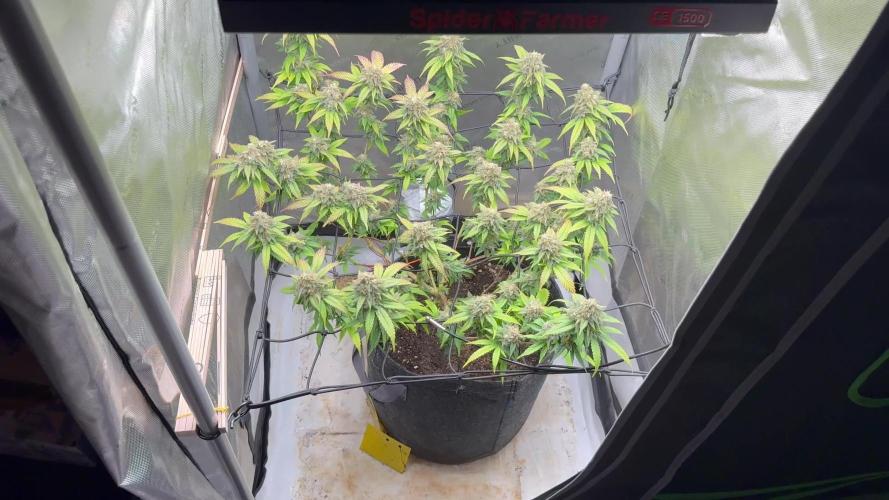


Likes
2
Share

@eldruida_lamota
Follow
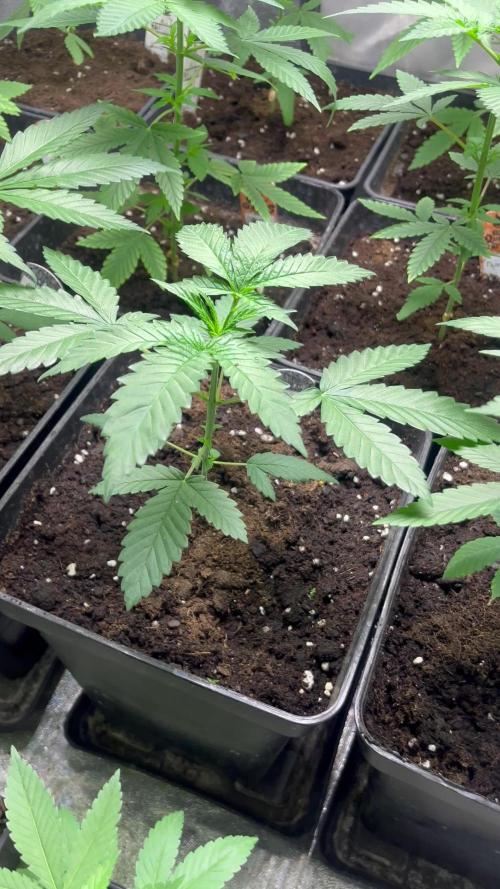
Vamos familia, actualizamos la quinta semana de vida de estas Gelato44 de RoyalQueenSeeds.
La temperatura que estuvo entre los 24-26 grados y humedad dentro de los rangos correctos.
Todavía estamos en el ciclo 16 horas luz, 8 oscuridad, estiraron bien y ensancharon bastante también, el color es verde sano.
Se nota que los nutrientes de la marca Agrobeta hacen sus funciones.
También realicé una poda de bajos que yo si las veo necesarias para explotar después la flor.
- os dejo por aquí un CÓDIGO: Eldruida ,descuento para la tienda de MARS HYDRO.
https://www.mars-hydro.com
Hasta aquí todo, Buenos humos 💨💨💨

Likes
21
Share


@Fullmeltalchemist
Follow
6.13 F73 -
Started chopping and pre-washing late Thursday into the early Friday morning.
Three buckets - 1) 1/2c lemon juice, 1/2c Baking Soda 2) water 3) water - seems to have worked really well, buds are very clean and the the water definitely had a bunch of fiber and dust. They drip dried for an hour or so before being moved into the dry tent which has been between 60-70F and 50-60rh
Took down most of the ScrOG Passion Berry and Deadstar from drying and froze. Gonna wash some tonight to see if it pulls well.
The last five plants have been in dark since monday morning, so will cut, wash and hang tomorrow.
6.19 F80 -


Likes
34
Share


@MadeInGermany
Follow
Info:
Unfortunately, I had to find out that my account is used for fake pages in social media.
I am only active here on growdiaries.
I am not on facebook instagram twitter etc All accounts except this one are fake.
Have fun with the Update 😃.
Flowering day 56
since the time
change to 12/12 h.
Hi everyone :-)
The day before yesterday was rinsed ☺️.
The next 5-10 days will be harvested as the trichomes are 80% milky and 20% amber.
Of course, as always, before the harvest update comes a normal update 👍.
As always, the tent was cleaned this week and all containers refilled.
Stay healthy 🙏🏻👍
You can buy this Strain at :
https://www.exoticseed.eu/
Type:
Quick Sherbet
☝️🏼
Genetics:
75% Indica / 25% Sativa
Sunset Sherbet X Black Lemon
👍
Vega lamp:
2 x Todogrow Led
Quantum Board 100 W
💡
Bloom Lamp :
2 x Todogrow Led
Cxb 3590 COB 3500 K 205W
💡💡☝️🏼
Soil :
Canna Coco Professional +
☝️🏼
Fertilizer:
Green House Powder Feeding
☝️🏼🌱
Water:
Osmosis water mixed with normal water (24 hours stale that the chlorine evaporates) to 0.2 EC. Add Cal / Mag to 0.4 Ec Ph with Organic Ph - to 5.5 - 5.8

Likes
1
Share


@Hustle786
Follow
Hopefully Lemon 🍋 Should Be Fire
One 🍋 Plant Is Very Small HopeFully It Gives Big Bud
420💨💨💨


Likes
4
Share
@eldruida_lamota
Follow
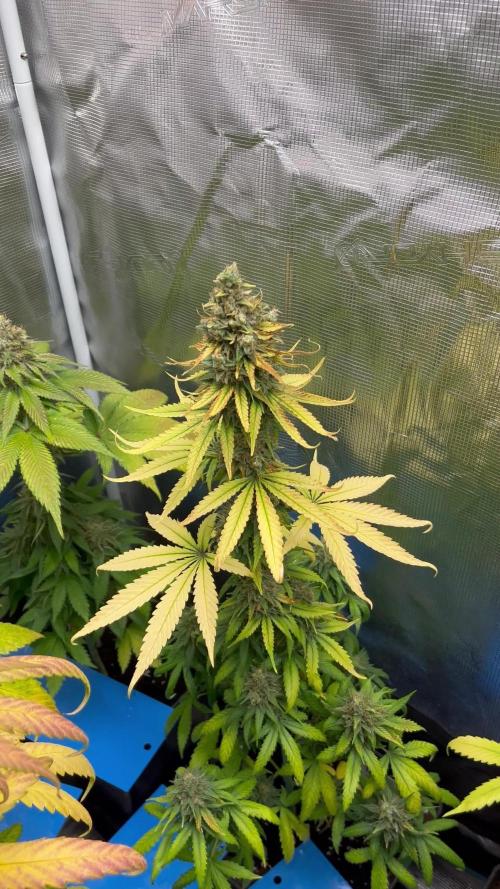
Vamos familia, actualizamos la séptima semana de floración de estas Terp & Tonic de Seedstockers.
La temperatura que estuvo entre los 24-25 grados y humedad dentro de los rangos correctos.
En cuanto a las plantas pues estas últimas semanas cogimos un poco de trips y pues ahí ando combatiendo con planchas pegajosas de color azul, estiraron bien y ensancharon bastante también.
Las flores se están llenas de tricomas y van hinchando, aún con la plaga, por el momento todo correcto.
Hasta aquí todo lo de esta semana , ya será la última semana ,buenos humos.
- os dejo por aquí un CÓDIGO: Eldruida
Descuento para la tienda de MARS HYDRO.
https://www.mars-hydro.com
Hasta aquí todo, Buenos humos 💨💨💨

Likes
24
Share

@BLAZED
Follow
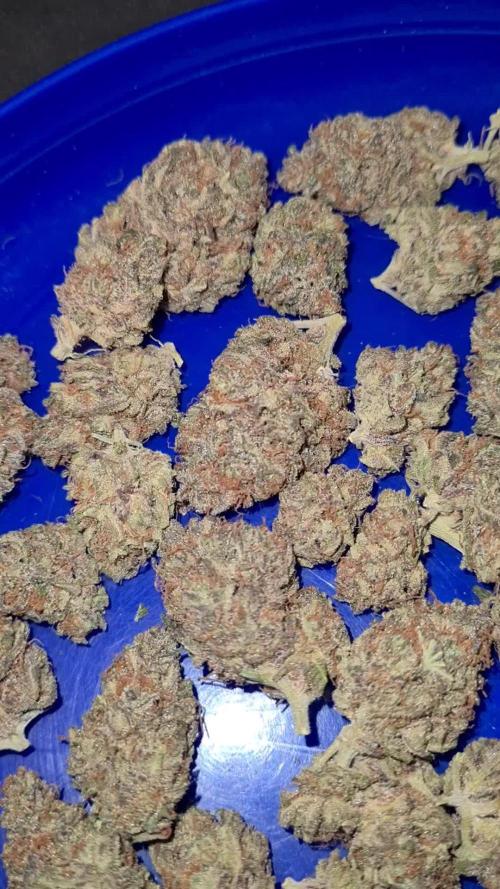
Average conditions 12 days dry period:
Temps: 20.2 to 22.4 degrees
Humidity: 57.4% to 61.7%
Results:
White Widow #1: Buds: 82 grams. Trim: 36.04 grams.
White Widow #2: Buds: 87 grams. Trim: 34.54 grams.
Total gram per watt: 2.22
Thanks for following this journey! See you in the next one!
(Will add smoke report soon)

Likes
75
Share


@Kitties_and_Colas
Follow
~_~_~_~_~_~_~_~_~_~_~_~_~_~_~_~_~_~_~_~_~_~_~_~_~_~_~_~_~_~_~_~_~_~_~_~_~_~_~_~_~_~_~_~_~_~_~_~_~_~_~_~_~_~_~_~_~_~_~_~_~_~_~_~_~_~_~_~_~_~_~_~_~_~_~_~_~_~_~_~_~_~_~_
TIMBER!! 🌱✂️🐱...
We have 4 dry boxes packed like the one pictured.. there has to be close to 2lbs here!! Berry terpenes have invaded every floor of the house!! it's sooo heavenly 🙌.. we oven dried a small sample and she's potent, we'll update a smoke report and rough weight in about a week..thanks for dropping by and happy harvests everyone!!❤️🌱
⚡Mars Hydro/FC-E6500⚡ Specifications ⚙️:
650 watt, full spectrum design, removable (and adjustable) light bars and driver 🔌
Diodes: BridgeLux chips (3978 count)
Veg Coverage: 6x6 ft 🌱
Flowering Coverage: 5x5 ft 🌼
High-Efficiency
PPFD: 1200umol/m²/s ☢️
-IP65 waterproof ratings, tolerant to high humidity grow environments 💦 ..
-Can be daisy-chained together and all controlled from a single light! 💡~💡~💡~💡~💡
~_~_~_~_~_~_~_~_~_~_~_~_~_~_~_~_~_~_~_~_~_~_~_~_~_~_~_~_~_~_~_~_~_~_~_~_~_~_~_~_~_~_~_~_~_~_~_~_~_~_~_~_~_~_~_~_~_~_~_~_~_~_~_~_~_~_~_~_~_~_~_~_~_~_~_~_~_~_~_~_~_~_~_


Likes
6
Share

@Jardin33ro
Follow
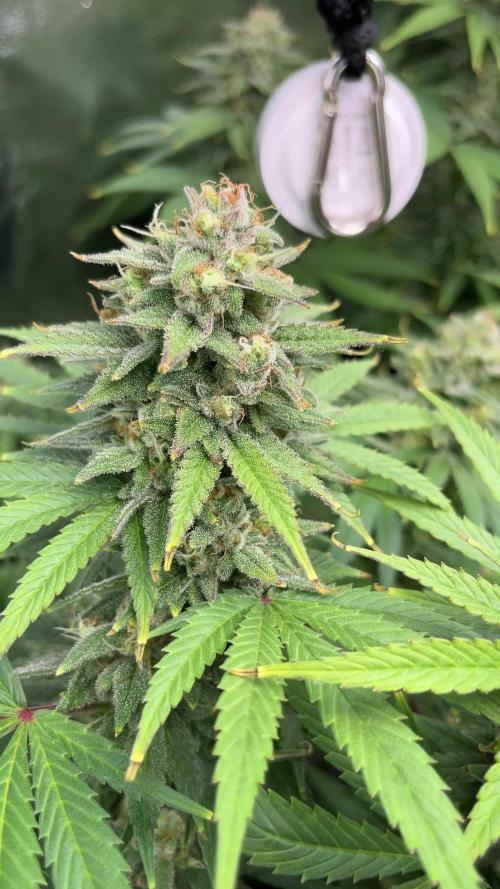
Esta Lemon ya esta engordando bastante en esta semana. Es muy sensible a la EC entonces le estoy dando 1.0 de electroconductividad. Con un ph de 6.3 tratamos de que la planta se alimente bien de NPK y micronutrientes. En estas fechas lo mas complicado es la humedad, y mantenerse en los valores fuera de peligro por moho. Hay que estar atentos
Likes
59
Share


@Insaniac_0
Follow
Week 6 of flower - At the end of this week I defoliated down to mostly bud and sugar leaves for the final stretch.
I fed them normal with no HP2. Feed this week was 1.25 gallons two times with about 4 days between. 750ppm total before add-ins. I used 750ppm Bloom concentrate mix (recipe week 5). However, I also added 1ml/gal of CaliMagic (General Hydroponics 1-0-0) to all feeds. PH balance this week was 6.3.
Next week I will add the HP2 back again while reducing the nutes for flush.


Likes
12
Share


@Smokeallot
Follow
Ok. I just moved my whole grow set up around. I just gave these girls a good feed and bent them over once yesterday. Now they are going to take off. I’m going to split these six plants between 2 tents for a test run on some equipment to see what runs best 🌱✌️
Stay tuned
Processing
Likes
4
Share


@GaliforniaWeeds
Follow
Día 21/9/20 día 15 de floración
Buenas hermanos, hoy añadimos un nuevo producto de la gama Cyco. Cyco kleanse que se encargará de eliminar exceso de sales en el sustrato si los hubiera. Una nueva ayuda para lograr una gran floración en estas nenas.
Día 23 /9/20 día 17 de floración
Buenas. Todo avanza correctamente, las temperaturas siguen bajando y ya están entre 22 y 24 grados,casi lo ideal. Por otro lado seguíos manteniendo la ec a 1,3 aprox aunque en breve la aumentaremos y el ph sigue entre 6 y 6,2. Las nenas se están portando como campeonas y afrontan muy bien la floración aunque tb ayuda tener las luminarias trabajando al 100%, 1030w en total.deja tu like y síguenos si te gusta el diario!!
Día 25/9/20 día 19 de floración
Amanece un nuevo día y las peques estas radiantes. Las hojas se multiplican día a día por lo que en breve habré que hacer una nueva defoliación. Sus pequeñas flores crecen día a día a un ritmo muy rápido y al mismo tiempo su aroma se multiplica. Es cuanto a la alimentación seguimos sin cambios y la temperatura y humedad se mantienen como en los días anteriores.
Día 27/9/20 día 21 de floración
Hoy nos ha tocado hacer una nueva defoliación para permitir El Paso de la luz. También aprovechamos para vaciar el tanque de nutrientes y hacer una limpieza, después volvemos a preparar la solución con 1.45 de ec y 6 de ph. Las temperaturas se mantienen entre 22 y 24 grados. Si todo sigue así en breve veremos un buen engorde de nuestras flores, no te lo pierdas!

Likes
11
Share


@CocoLogic
Follow
August 23th: (F6)
Fertigation once a day with same recipe (1150 EC 6.1 PH) watered until 10-20% run-off
August 24th: (F7)
Fertigation once a day with same recipe (1150 EC 6.1 PH) watered until 10-20% run-off
August 25th: (F8)
Fertigation once a day with same recipe (1150 EC 6.2 PH) watered until 10-20% run-off
August 26th: (F9)
Fertigation once a day with same recipe (1150 EC 6.2 PH) watered until 10-20% run-off
August 27th: (F10)
Fertigation once a day with same recipe (1150 EC 6.2 PH) watered until 10-20% run-off
August 28th: (F11)
Fertigation once a day with same recipe (1150 EC 6.2 PH) watered until 10-20% run-off
August 29th: (F12)
Fertigation once a day with same recipe (1150 EC 6.2 PH) watered until 10-20% run-off
Supercropped the 4 taller branches on the PE2 as a test and to get them at same level
Note: The Tut height is at the EXTREME limit had to remove the tray to gain 2 inch, will have to get the light at the roof of the tent and hope it will do it, first run of my life in 48 inch height space will learn from it for the next runs! :)


Likes
21
Share


@gottagrowsometime
Follow
Welcome to my Runtz Auto Diary sponsored by Zamneisa and Spider-Farmer co2 ran for whole fattening period.
Days 1-21 early week 7 missing. HST"ed some of her.17th/may 7th/June Power Buds really helped build lots of tight stigmata.
Sorry about missing wk 7 and half of 8. Colas are getting big loving the light. Developing lovely fade around the leafs the past 2 weeks. Drinks like a fish. 2L a day easy on her last 10-14 days. Doing really well.
7th/June foxtailing is happening as you can see. She's very sticky and is still pushing. There's nothing I can do about the heat. Nothing. All I can do is lower the light intensity that now. Its been set at 90%.⁰
Am dealing with crazy temps like 35c on ave can go up to 39c. Am finding it hard to keep the stomata vents going. Seedlings are pushing through. I do see signs of stress. Possible foxtailing coming. Not much I can do with the temp. Stomatas are been kept open with fan power. I've 4 running nonstop. 1 full Osc one and 3 others that blow parts of the plant but its more designed to keep the co2 in the middle of the tent. It's taken me 2 weeks to find thy optimal way to manipulate co2 movement. If you don't have the fans right. You are just wasting money. I've seen s 50-30% increase in rate of just seedling growth that I prove. From 55ish strains that 95% ran from 9-10 Days the rare long one. But, I'm seen seedlings turn into vegging plants in an average of 6 days. Some as early as 4.5-7.5 days. Most are 6. And then they're flying through veg too.
HST & defoliation
HST was done early pre flower the nodes actually split and fell over. Mended itself up. Tbh, there is no real benefit to HST'in autos. I've done it many times now. The nodes that were HST"ed didn't vary much if at all. The whole plants buds are hard. Foxtailing like a bitch. But comes with the environment growing indoors in summer with co2 with 35c temp on average, power buds was used as soon as I seen stigmata and until pre fower ended.
SE5000 light used for co2 growing. Doing a great job. Helps to have a great sensor. This spectrum is great. Even with high temps that should have vents closed if using say 1 spectrum but, this light is able to keep the plants eating with high temps. Has gave all my plants great fade. Next wk. I'll higher the light and lower it and start focusing on the crop this light was issued for. But, its done a great job at finishing my crop.
Thanks to my sponsor from Zamneisa. Hopefully i can do your strains better justice next time if there is. I'm happy with the bud, as its an auto that spent a lot of her life under the SF-1000 before the SE5000 2 wks ago like to thank "Bella" for that upgrade. That allowed me to finish a few of my girls while setting my flying youngsters at a distance. I love everything about it.
Much appreciation to all who stopped by to view, like &/R comment. Look forward to seen your work.
COUPONS
Marshydro.eu/ww "ggs" 3%
Zamneisa "GROWITGD" 20% ww
Spiderfarmer.eu/ww "ggst" 3%

Likes
44
Share


@Jays_Not_Here_Man
Follow
The colours are popping! I’ve started to taper off the nutrients, I don’t typically “flush” the plants, but rather taper nutrients down until I have been able to give straight phd water for the last 3-4 feeds, making sure to water until I get about 5-10% runoff. I’ve tried both methods , the other being that I pour like 10 gallons of water through the plant, and I can’t tell the difference with my smoke, still clean and very tasty. I did a small defoliation at the end of the week, and added a support pole for the 1 lady in the far back, she was already starting to lean… just a couple of weeks to go !

Likes
19
Share


@GodZilla_Owner
Follow
Week 8 – Day 59 (BT35)
RedPure#4 has stopped stretching and remains steady at 40 cm 📏
She’s now clearly maturing – buds are dense and swelling nicely 🌸🍇
According to the breeder info, she should be done by the end of this week 🕔
Overall, it wasn’t a perfect run, but she’s getting there!
💧 I’m currently using diluted osmotic water, but the drain pH remains stubbornly low – between 5.6 and 5.8.
Canna pH+ didn’t work well with Advanced Nutrients, so I’ll be switching back to BioBizz pH+, which helped in a previous grow to raise the pH more reliably 🔧


