The Grow Awards 2026 🏆 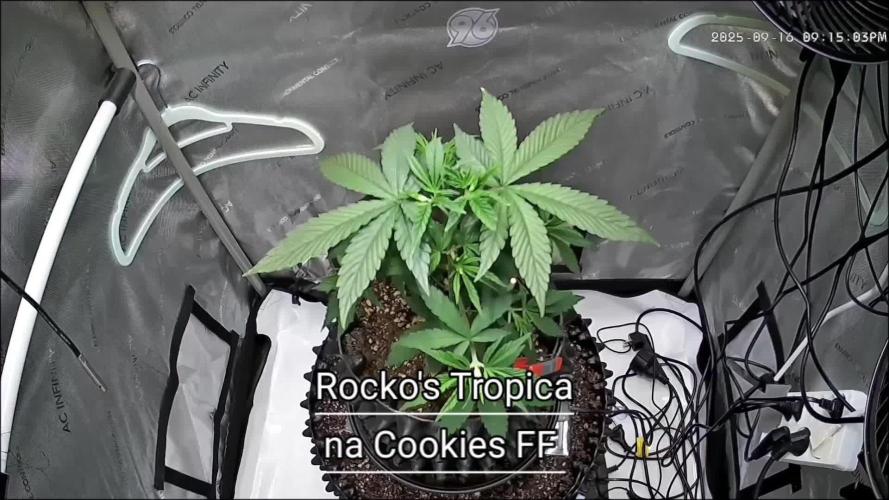









Likes
Comments
Share
@RockoCalenberg
Follow
Sie macht sich weiterhin gut und hat ordentlich Durst, ca.10l alle 2 Tage.
Leider habe ich an manchen Trieben Zwitter Zeichen in Form von einzelnen Bananen entdeckt und mit einer Pinzette entfernt. Irgendwas gefällt der Dame nicht, hatte noch nie Zwitter Probleme 🤔


Likes
24
Share
@TheIceCreamParlour
Follow
All in all a great genetic. Grew into insane colas. The photos above are of only half the total yeild as I have 8oz bagged up and sealed. After a weeks curing it has improved but not enough to really blow me away. I'll be back to seek my revenge in the future but for now its goodbye.
Likes
11
Share
@burnercorona
Follow
Trying some new nutes now and compared to the mother plant I think I notice a difference lol. She's getting frosty and showing off some nice colors.

Likes
41
Share
@Santica_Garden
Follow
So we have reached the end of Week 6 from and I am flipping the the ladies to flower. I have uploaded a video along with pictures..... Hope it plays.
Stay Safe guys and Happy Growing, any questions just ask away 👍🏾💚

Likes
16
Share
@DonKrika
Follow
Plants growing extremely well, the only problem I think I'm having is too many nutrients. Plant A is showing some strange signs. a few big fan leaves are becoming "crispy" I can see a bit of nutrient burn, but a minimal amount
I finally set up the drip system this week.
I started LST this week, I bent both plants pretty hard, they are almost parallel to the soil. On plant A I did super cropping by mistake, I was tieing a branch and I put too much force on the bend, but palnt didn't seem afected at all by this.
DAY 29 - Nutes
PH - 5.96
Solution Temp - 21.5
PPM-1600
Watering Volume per plant - 4L
DAY 32 - Water
PH - 6
Solution Temp - 21.2
PPM-560
Watering Volume per plant - 4L
Next week I will add the second ligh to the tent

Likes
5
Share
@AUTOBUDDHA
Follow
Very good week! First two space mangos got the chop.
Still have 3 more to go. One of which will definitely be chopped this week, the other two, may be next week before they finish up.
These girls smell like fruit loops! Amazing frosting, and density. Very much looking forward to the dried and cured product!! Straight PH water. Not a flush per say, but juat water. No more nutes for these pretty ladies.
Loving the fade!

Likes
45
Share
@Ultraviolet
Follow
2nd net is up. Early bud formations are promising. holding up to the extremes pretty well, some leaves taking minor damage, but overall, she is holding up, gave her 1 night at 50F see how she would react, stressful. Not advised as it messes with her metabolism, but I want to see if it triggers any anthocyanin response. Love to see her purp up but no signs yet.
My homework.
Rubisco regeneration is intrinsically linked to nitrogen supply because Rubisco is a major sink for nitrogen in plants, typically accounting for 15% to over 25% of total leaf nitrogen. The regeneration phase itself consumes nitrogen through the synthesis of the Rubisco enzyme and associated proteins (like Rubisco activase), and overall nitrogen status heavily influences the efficiency of RuBP regeneration.Structural Component: Nitrogen is an essential building block for all proteins, and the sheer abundance of the Rubisco protein makes it the single largest storage of nitrogen in the leaf.
Synthesis and Activity: Adequate nitrogen supply is crucial for the synthesis and maintenance of sufficient Rubisco enzyme and Rubisco activase (Rca), the regulatory protein responsible for maintaining Rubisco's active state. Nitrogen deficiency leads to a decrease in the content and activity of both Rubisco and Rca, which in turn limits the maximum carboxylation rate, Vmax, and the rate of RuBP regeneration Jmax, thus reducing overall photosynthetic capacity.
Nitrogen Storage and Remobilization: Rubisco can act as a temporary nitrogen storage protein, which is degraded to remobilize nitrogen to other growing parts of the plant, especially under conditions of nitrogen deficiency or senescence.
Nitrogen Use Efficiency (NUE): The allocation of nitrogen to Rubisco is a key determinant of a plant's photosynthetic nitrogen use efficiency (PNUE). In high-nitrogen conditions, plants may accumulate a surplus of Rubisco, which may not be fully activated, leading to a lower PNUE. Optimizing the amount and activity of Rubisco relative to nitrogen availability is a target for improving crop NUE.
Photorespiration and Nitrogen Metabolism: Nitrogen metabolism is also linked to the photorespiration pathway (which competes with carboxylation at the Rubisco active site), particularly in the reassimilation of ammonia released during the process.
To increase RuBisCO regeneration, which refers to the process of forming the CO2 acceptor molecule Ribulose-1,5-bisphosphate (RuBP) during photosynthesis, the primary methods involve optimizing the levels and activity of Rubisco activase (Rca) and enhancing the performance of other Calvin-Benson-Bassham (CBB) cycle enzymes.
Biochemical and Environmental Approaches:
Optimize Rubisco Activase (Rca) activity: Rca is a crucial chaperone protein that removes inhibitory sugar phosphates, such as CA1P (2-carboxy-D-arabinitol 1-phosphate), from the Rubisco active site, thus maintaining its catalytic competence.
•Ensure optimal light conditions: Rca is light-activated via the chloroplast's redox status. Adequate light intensity ensures Rca can effectively maintain Rubisco in its active, carbamylated state.
•Maintain optimal temperature: Rca is highly temperature-sensitive and can become unstable at moderately high temperatures (e.g., above 35°C/95F° in many C3 plants), which decreases its ability to activate Rubisco. Maintaining temperatures within the optimal range for a specific plant species is important.
•Optimize Mg2+ concentration: Mg2+ is a key cofactor for both Rubisco carbamylation and Rca activity. In the light, Mg2+ concentration in the chloroplast stroma increases, promoting activation.
•Manage ATP/ADP ratio: Rca activity depends on ATP hydrolysis and is inhibited by ADP. Conditions that maintain a high ATP/ADP ratio in the chloroplast stroma favor Rca activity.
Enhance Calvin-Benson-Bassham (CBB) cycle enzyme activity: The overall rate of RuBP regeneration can be limited by other enzymes in the cycle.
•Increase SBPase activity: Sedoheptulose-1,7-bisphosphatase (SBPase) is a key regulatory enzyme in the regeneration pathway, and increasing its activity can enhance RuBP regeneration and overall photosynthesis.
•Optimize other enzymes: Overexpression of other CBB cycle enzymes such as fructose-1,6-bisphosphate aldolase (FBA) and triose phosphate isomerase (TPI) can also help to balance the metabolic flux and improve RuBP regeneration capacity.
Magnesium ions, Mg2+, are specifically required for Rubisco activation because the cation plays a critical structural and chemical role in forming the active site: A specific lysine residue in the active site must be carbamylated by a CO2 molecule to activate the enzyme. The resulting negatively charged carbamyl group then facilitates the binding of the positively charged Mg2+ion. While other divalent metal ions like Mn2+ can bind to Rubisco, they alter the enzyme's substrate specificity and lead to dramatically lower activity or a higher rate of the non-productive oxygenation reaction compared to Mg2+, making them biologically unfavorable in the context of efficient carbon fixation. The concentration of Mg2+ in the chloroplast stroma naturally increases in the light due to ion potential balancing during ATP synthesis, providing a physiological mechanism to ensure the enzyme is activated when photosynthesis is possible. At the center of the porphyrin ring, nestled within its nitrogen atoms, is a Magnesium ion (Mg2+). This magnesium ion is crucial for the function of chlorophyll, and without it, the pigment cannot effectively capture and transfer light energy.
Mg acts as a cofactor: Mg2+ binds to Rubisco after an activator CO2 molecule, forming a catalytically competent complex (Enzyme-CO2-Mg2+). High light + CO2) increases demand: Under high light (60 DLI is a very high intensity, potentially saturating) and high CO2, the plant's capacity for photosynthesis is high, and thus the demand for activated Rubisco and the necessary Mg2+ cofactor increases. Mg deficiency becomes limiting: If Mg2+ is deficient under these conditions, the higher levels of Rubisco and Rubisco activase produced cannot be fully activated, leading to lower photosynthetic rates and potential photo-oxidative damage.
Optimal range: Studies show that adequate Mg2+ application can enhance Rubisco activation and stabilize net photosynthetic rates under stress conditions, but the required concentration is specific to the experimental setup.
Monitoring is key: The most effective approach in a controlled environment is to monitor the plant's physiological responses e.g., leaf Mg2+ concentration, photosynthetic rate, Rubisco activation state, and adjust the nutrient solution/fertilizer to maintain adequate levels, rather than supplementing a fixed "extra" amount.
In practice, this means ensuring that Mg2+ is not a limiting factor in the plant's standard nutrient solution when pushing the limits with high light and CO2.
Applying Mg2+ through foliar spray is beneficial to Rubisco regeneration, particularly in alleviating the negative effects of magnesium (Mg) deficiency and high-temperature stress (HTS). While Mg can be leached from soil, within the plant it is considered a mobile nutrient, particularly in the phloem. Foliar-applied Mg is quickly absorbed by the leaves and can be translocate to other plant parts, including new growth and sink organs.
Foliar application of: NATURES VERY OWN MgSO4 @ 15.0g L-1 in a spray bottle.
Foliar sprays are often recommended as a rapid rescue measure for existing deficiencies or as a supplement during critical growth stages, when demand for Mg is high. Application in the early morning or late evening can improve absorption and prevent leaf burn.
The starting point [of creativity] is curiosity: pondering why the default exists in the first place. We’re driven to question defaults when we experience vuja de, the opposite of déjà vu. Déjà vu occurs when we encounter something new, but it feels as if we’ve seen it before. Vuja de is the reverse—we face something familiar, but we see it with a fresh perspective that enables us to gain new insights into old problems. Come walk in the enchanted forest.
Likes
6
Share
@justloveweed
Follow
Hello guys.I m in 4th week with this beauty and she looks fine.I was expecting to get more height this week and I think that she flowers too early.I hope I m wrong 😟


Likes
13
Share
@TheMightyHermit
Follow
Unfortunate Week...
Honey cream had a couple of "budrot" spots forming due to droplets of water dripping into the flower and not drying (99%humidity nights)...
Thankfully those buds were cut down and she doesn't seem to be producing any more "budrot"..
Apart from that, the smell is amazing on her.
Power Flower is going nicely too, but seems to not have too much smell...

Likes
21
Share
@puffin_ganja
Follow
Feed still the same but upped to 4L every 2-3 days depending on the plant. Fruit punch aromas starting to come out. Will do a defoliation soon.

Likes
21
Share
@Indicate
Follow
Another week under the belt and I’m not sure how much longer to leave these two. Starting to smell a bit more like weed but still waiting on the clear to opaque transition. All I want for Christmas….


Likes
4
Share
@efectocanario
Follow
comenzamos la primera semana de floracion, y junto con el formamos el primer super cropping en las fotos principales podemos apreciar el momento en que hacemos el super cropping y podemos comparar con la siguiente foto es al otro dia cuando sale el sol y vemos como las hojas enseguida se posicionan para absorver todo los rayos solares posibles! tambien comenzamos con las bases de floracion y durante las 2 primeras semanas de flora agregamos voodo juice y bud ignitor

Likes
37
Share
@iMpulsive_Grow
Follow
Day 50!
Finally it’s here!!!!! Flowering stage!!!!! 🤗🙏🏼🙏🏼🌱🌱🌱 👌🏼
Day 51! You can see them starting to expand faster again
Day 52!
You can definitely smell it now
Day 53!
Checked her height, and in three days she grew 2 “
Day 54!
Just fed them again. ( they are starting to consume a lot)
Day 55!
22”
Day 56!
Man they are eating so much!!! It’s crazy how fast my soil is drying up now. I’ll measure again tomorrow and see how much expansion they did in the first week of flowering 🤗🙏🏼🌱
Day 57!
This concludes week 8 💯

Likes
12
Share
@BeHappyNtoke
Follow
This week has went by ok beach ball is growing well new growth has come in pretty well the other plant is not happy with the pot slow growing plant


Likes
8
Share


Likes
8
Share
@Organic473
Follow
No water for past 5 days and she continue to swell…I will harvest in the next 48HRS. She will be placed in the dark.
Likes
14
Share
@nonick123
Follow
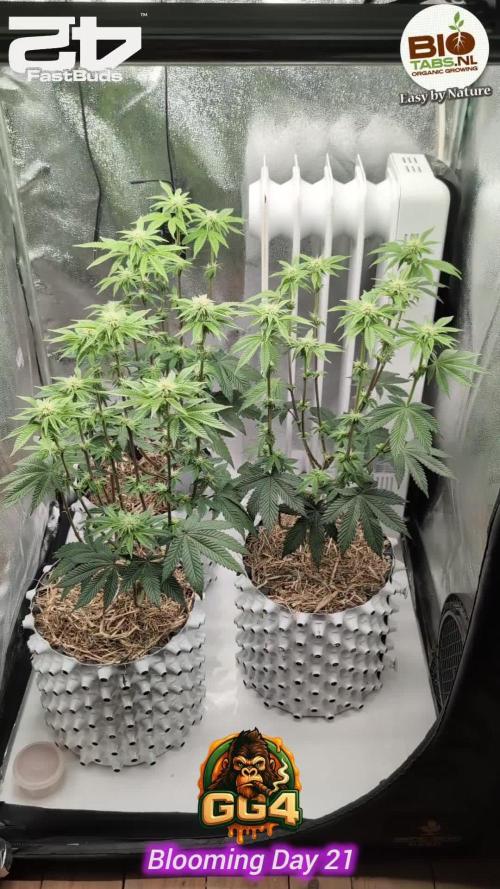
Día 50 / 15 (17/11) N/A
Día 51 / 16 (18/11) N/A
Día 52 / 17 (19/11) N/A
Día 53 / 18 (20/11) N/A
Día 54 / 19 (21/11) N/A
Día 55 / 20 (22/11) Preparación del PK Booster Compost Tea by BIOTABS!
Día 56 / 21 (23/11) Riego cada planta con 0,5 litros de PK Booster Compost Tea by BIOTABS! 💪 🚀 🎉
🚀 FastBuds 15% DISCOUNT code "NONICK" fastbuds.com
💦 Nutrients BioTabs 15% DISCOUNT code "GDBT420" biotabs.nl/en/shop/
🌱Substrate PRO-MIX HP BACILLUS + MYCORRHIZAE - www.pthorticulture.com/en-us/products/pro-mix-hp-biofungicide-plus-mycorrhizae