


Likes
Comments
Share

@Thegreenoracle420
Follow
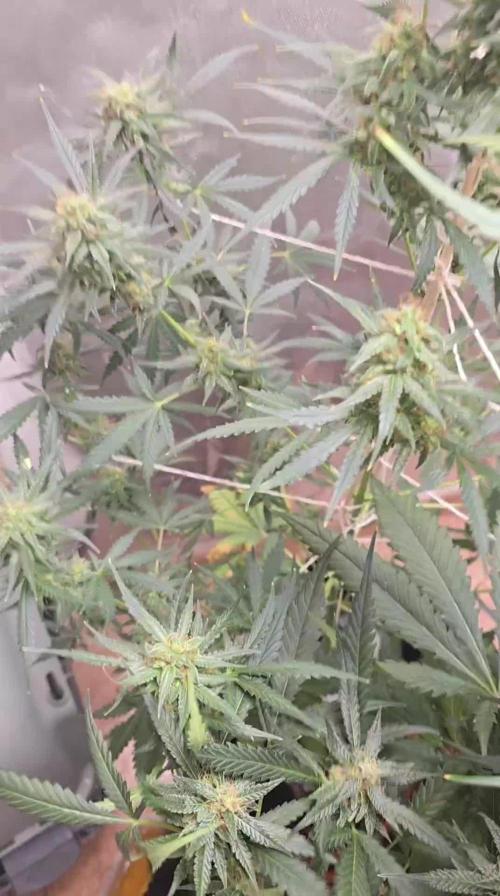
On week 11 now. Soon harvest. Sorry in still lesrning this oage /diaries to make all correct

Likes
30
Share


@Roberts
Follow
Watermelon auto is growing great under the Medic Grow mini Sun-2, in the Gen 1:11 organo mineral nutrition. She has started to shoot her pre flower pistils. She is starting to stretch. Every thing is looking really good at the moment. Thank you Medic Grow, Gen1:11, and RQS. 🤜🏻🤛🏻🌱🌱🌱
Thank you grow diaries community for the 👇likes👇, follows, comments, and subscriptions on my YouTube channel👇. ❄️🌱🍻
Happy Growing 🌱🌱🌱
https://youtube.com/channel/UCAhN7yRzWLpcaRHhMIQ7X4g

Likes
52
Share


@Ultraviolet
Follow
Once again she passes my expectations, late to the show with trichome production. I'm surprised there is purple on the bud, maybe Purpinator does work. I thought I could see hints under the grow lights and thought my eyes were deceiving me, I was just being hopeful. But nah 2 of the 3(under the UV) have developed a beautiful tone of purple. I was never going to bother with a deep freeze but maybe the whole bud will change given conditions, that would be something, fingers crossed. 🤔 was a little skeptical that reducing temps humidity would change density, but it does, buds are solid something I've not been able to achieve before.
Rule of thumb is never to surpass 60% RH in the flowering phase and try to progressively reduce it down to 40% in the last 2–3 weeks before harvest. The plant will react as it seeks to protect its flowers, responding by producing denser buds and a higher concentration of resin. Cannabis plants are sensitive to sudden temperature changes, especially in the flowering stage. Extreme heat or cold can impact bud density and overall yields. In nature as a defense mechanism from cold, the plant sensing sudden dips in temperature will attempt to remove the pockets of air within the bud, it achieves this by compacting itself in doing so to better protect itself from cold snaps which are normally indicators in nature that worse weather is on the way.
Terpene levels are the highest just before the sun comes out. Ideally, you want as many terpenes present in your plants as possible when you harvest. Cannabis plants soak up the sun during the day and produce resin and other goodies at night. The plant is at its emptiest from "harvest undesirables" so to speak right before the lights on. Boiling cannabis roots during harvesting slows down the drying process. When you boil cannabis roots, it shocks the plant, closing the stomata on the leaves. This prevents massive moisture loss through the leaves, leaving only the floral clusters actively losing moisture at a reduced pace. I've always run a strict 60/60 and it took almost twice as long to dry to a snap than previous grows where I didn't boil for what it's worth.
Chlorophyll is good for the plant but not for you. When you harvest the buds, even after you flush them, if you flush them, they’re still filled with chlorophyll. Freshly cut buds are greener than dried buds because they still contain loads of chlorophyll. However, when rushed through the drying process, the buds dry but retain some chlorophyll, and when you smoke it, you will taste it. Chlorophyll-filled buds are smokable, but they aren’t clean. Slow drying gives the buds enough time and favorable conditions to lose the chlorophyll and sugars, giving you a smoother smoke. How the plant disposes of the chlorophyll and sugars by a process of chemically breaking them down and attaching the decomposed matter once small enough to water molecules which then evaporate back into the ether. Time must be given to the process to break down the chlorophyll and sugars. Think of it like optimizing the environment for decay.
All the nutrients it could ever need are in abundance, it eats nutrients based on its demand for growth, which is dictated primarily by available light.
Plant growth and geographic distribution (where the plant can grow) are greatly affected by the environment. If any environmental factor is less than ideal, it limits a plant's growth and/or distribution. For example, only plants adapted to limited amounts of water can live in deserts. Either directly or indirectly, most plant problems are caused by environmental stress. In some cases, poor environmental conditions (e.g., too little water) damage a plant directly. In other cases, environmental stress weakens a plant and makes it more susceptible to disease or insect attack. Environmental factors that affect plant growth include light, temperature, water, humidity, and nutrition. It's important to understand how these factors affect plant growth and development. With a basic understanding of these factors, you may be able to manipulate plants to meet your needs, whether for increased leaf, flower, or fruit production. By recognizing the roles of these factors, you'll also be better able to diagnose plant problems caused by environmental stress.
Water and humidity
*Most growing plants contain about 90 percent water. Water plays many roles in plants. It is:*
A primary component in photosynthesis and respiration
Responsible for turgor pressure in cells (Like the air in an inflated balloon, water is responsible for the fullness and firmness of plant tissue. Turgor is needed to maintain cell shape and ensure cell growth.)
A solvent for minerals and carbohydrates moving through the plant
Responsible for cooling leaves as it evaporates from leaf tissue during transpiration
A regulator of stomatal opening and closing, thus controlling transpiration and, to some degree, photosynthesis
The source of pressure to move roots through the soil
The medium in which most biochemical reactions take place
Relative humidity is the ratio of water vapor in the air to the amount of water the air could hold at the current temperature and pressure. Warm air can hold more water vapor than cold air. Relative humidity (RH) is expressed by the following equation:
RH = water in air ÷ water air could hold (at constant temperature and pressure)
The relative humidity is given as a percent. For example, if a pound of air at 75°F could hold 4 grams of water vapor, and there are only 3 grams of water in the air, then the relative humidity (RH) is:
3 ÷ 4 = 0.75 = 75%
Water vapor moves from an area of high relative humidity to one of low relative humidity. The greater the difference in humidity, the faster water moves. This factor is important because the rate of water movement directly affects a plant's transpiration rate.
The relative humidity in the air spaces between leaf cells approaches 100 percent. When a stoma opens, water vapor inside the leaf rushes out into the surrounding air (Figure 2), and a bubble of high humidity forms around the stoma. By saturating this small area of air, the bubble reduces the difference in relative humidity between the air spaces within the leaf and the air adjacent to the leaf. As a result, transpiration slows down.
If the wind blows the humidity bubble away, however, transpiration increases. Thus, transpiration usually is at its peak on hot, dry, windy days. On the other hand, transpiration generally is quite slow when temperatures are cool, humidity is high, and there is no wind.
Hot, dry conditions generally occur during the summer, which partially explains why plants wilt quickly in the summer. If a constant supply of water is not available to be absorbed by the roots and moved to the leaves, turgor pressure is lost and leaves go limp.
Plant Nutrition
Plant nutrition often is confused with fertilization. Plant nutrition refers to a plant's need for and use of basic chemical elements. Fertilization is the term used when these materials are added to the environment around a plant. A lot must happen before a chemical element in a fertilizer can be used by a plant.
Plants need 17 elements for normal growth. Three of them--carbon, hydrogen, and oxygen--are found in air and water. The rest are found in the soil.
Six soil elements are called macronutrients because they are used in relatively large amounts by plants. They are nitrogen, potassium, magnesium, calcium, phosphorus, and sulfur.
Eight other soil elements are used in much smaller amounts and are called micronutrients or trace elements. They are iron, zinc, molybdenum, manganese, boron, copper, cobalt, and chlorine. They make up less than 1% of total but are none the less vital.
Most of the nutrients a plant needs are dissolved in water and then absorbed by its roots. In fact, 98 percent are absorbed from the soil-water solution, and only about 2 percent are actually extracted from soil particles.
Fertilizers
Fertilizers are materials containing plant nutrients that are added to the environment around a plant. Generally, they are added to the water or soil, but some can be sprayed on leaves. This method is called foliar fertilization. It should be done carefully with a dilute solution because a high fertilizer concentration can injure leaf cells. The nutrient, however, does need to pass through the thin layer of wax (cutin) on the leaf surface.
It is to be noted applying a immobile nutrient via foliar application it will remain immobile within the leaf it was absorbed through.
Fertilizers are not plant food! Plants produce their own food from water, carbon dioxide, and solar energy through photosynthesis. This food (sugars and carbohydrates) is combined with plant nutrients to produce proteins, enzymes, vitamins, and other elements essential to growth.
Nutrient absorption
Anything that reduces or stops sugar production in leaves can lower nutrient absorption. Thus, if a plant is under stress because of low light or extreme temperatures, nutrient deficiency may develop.
A plant's developmental stage or rate of growth also may affect the amount of nutrients absorbed. Many plants have a rest (dormant) period during part of the year. During this time, few nutrients are absorbed. Plants also may absorb different nutrients as flower buds begin to develop than they do during periods of rapid vegetative growth.
432 Hz is said to be mathematically consistent with the patterns of the universe. Studies reveal that 432 Hz tuning vibrates with the universe’s golden mean PHI and unifies the properties of light, time, space, matter, gravity and magnetism with biology, the DNA code and consciousness. When our atoms and DNA start to resonate in harmony with the spiraling pattern of nature, our sense of connection to nature is said to be magnified.
Another interesting factor to consider is that the A=432 Hz tuning correlates with the color spectrum while the A=440 Hz is off.
Audiophiles have also stated that A = 432 Hz music seems to be non-local and can fill an entire room, whereas A=440 Hz can be perceived as directional or linear in sound propagation.
Once you adopt the idea that sound (or vibration in general) can have an equalizing and harmonizing effect (as well as a disturbing effect), the science of harmony can be applied to bring greater harmony into ones life or a tune to specific energies. There is a form of absolute and of relative harmony. Absolute harmony can for example be determined by the tuning of an instrument. The ancients tuned their instruments at an A of 432 Hz instead of 440 Hz - and for a good reason. There are plenty of music examples on the internet that you can listen to in order to establish the difference for yourself. Attuning the instrument to 432 Hz results in a more relaxing sound, while 440 Hz slightly tenses up to body. This is because 440 Hz is out of tune with both macro and micro cosmos. On the contrary, 432 Hz is in tune. To give an example of how this is manifested micro cosmically: our breath (0,3 Hz) and our pulse (1,2 Hz) relate to the frequency of the lower octave of an A of 432 Hz (108 Hz) as 1:360 and 1:90.
It is interesting to note that 432 Hz was the standard pitch of many old instruments, and that it was only recently (19th and 20th century) the standard pitch was increased. This was done in order to be able to play for bigger audiences. Bigger audiences (more bodies) absorb more of the lower frequencies, so the higher pitch was more likely to “cut through”. One of the oldest instruments of the world is the bell ensemble of Yi Zeng (dated 423 BC), tuned to a standard F4 of 345 Hz which gives an A= 432 Hz. The frequency of 345 Hz is that of the platonic year! Similarly many old organs are tuned in an A=432 as well; for example: St. Peter’s Capella Gregoriana, St. Peter’s Capella Giulia, S. Maria Maggiore in Rome.
Maria Renold’s book “Intervals Scales Tones and the Concert Pitch C=128 Hz” claims conclusive evidence that 440 Hz and raising concert pitch above scientific “C” Prime=128 Hz (Concert A=432 Hz) disassociates the connection of consciousness to the body and creates anti-social conditions in humanity.
The difference between concert pitch A=440 Hz and Concert A=432 Hz is only 8 cycles per second, but it is a perceptible difference of awareness in the human consciousness experience of the dream we share called existence.

Likes
30
Share


@XperencdGmanXG
Follow
wow! this girl also took the fish shit i gave her last week and turned it into huge buds! I am going to do this every year from now onwards. No visible PWM either, just like the others. Will go out to the pot patch mid week after this leftover weather from hurricane Fiona clears to see how they fared in the high humidity and low temps.


Likes
16
Share


@OrganicPower
Follow
Week 8 flower and the Gorilla Glue #4 is swelling up nicely and looks like about a week to go, but I’ll probably wait until the Sour Diesel finishes up before I harvest her as I need to dry in this space, the lung room. Lots of frost and thick dense flowers. Very nice colours coming out and the smell is incredible! A few nanners popping out here and there, I’ve plucked a few but it’s late in flower and doubt much will develop from now until the end, if anything at all, definitely not pulling her down because of them. More than likely had the light turned up to high later in flower and was pushing them too much, and that’s why the Sour Diesel is growing a bit foxtail like. Turned the lights down now to 50% and they seem to be happy with that. Still just water through the drip and hand water once a week. Gnats suck and need to take care of them before next grow and do a better job moving forward. These TSW 2000’s from Mars Hydro are awesome and with two of them side by side are more than enough for this space. Blimburn GG#4 is turning out really good and smell is incredible but hard to describe. Thanks for the view!


Likes
29
Share


@Lazuli
Follow
The pistils are still white
Shes very fat now and i think 2 weeks before harvest, i feed less now at 400ppm and starting ripen feed when half of her pustils turned brown
August 18 (mid this week)
I flushed her completely and fed ripen untill runoff got in the 200ppm.
Now she is ready to finish
Harvest will be at august 28th

Likes
11
Share


@TheMadHasher
Follow
The ladies bud growth is starting to take off! Got Some nute burn but honestly they’ve still been growing just fine. Candyland is undoubtedly the mother of all three! She is budding so beautifully! The smell is starting to get stronger and stronger everyday. cant wait to see these beauties ripe! Until next time Happy growing!


Likes
18
Share


@GlyoFE
Follow
Friday 1st December 2023
So today marks the start of week 2! Both plants are growing every day, everything seems to be going well so far! The TS600 *should* be arriving this weekend so that will be a nice upgrade. I've started with nutes today, introduced CalMag, Biobizz Grow and Canna Rhizotonic whilst following all feeding advice I can find online. Got my PH Pen calibrated properly today, after mixing my first batch of feed the PH was 8.7! I'm glad I took the time to review those readings as I'm sure this would've been very bad for the plants. Brought the PH down to 6.5 on the nose and gave both plants a good watering, won't give them anymore for a few days and see how they respond over the next few hours. Fingers crossed!
Any advice on watering, feeding and nutrients would be greatly appreciated 🙂
Saturday 2nd December
The post man must've hated me today! Lots of stuff delivered for the tent and I've installed it all, up and running! Gone for a 4 inch inlibe fan with carbon filter exhausting out the top of the tent, completely invisible from the outside, almost silent and feels like good airflow. My Mars Hydro TS600 also arrived, so hooray for no more purple photos! The light intensity is a huge increase over the amazon special in the tent prior to this, but it's done well so far so I'll stash it away as an emergency backup unit. The TS600 seems to be a perfect fit in the 80x80 tent, it's exceptionally light and wickedly bright. Here's to hoping the plants benefit from a few conscious upgrades 😊
No watering today as media still damp, plants looking healthy and pushing out more leaves every time I check them. Hopefully we are doing well so far!
Sunday 3rd December
Plants are continuing to grow well, I do think the new light has made a good difference to them! Have made a point of swapping the pots left to right and rotating the plants to make sure they get even light coverage. Using the extractor and carbon filter now as the plants have started to give off an aroma. Going well and nothing seems to be struggling, I'll keep doing what I'm doing and follow my feed schedules. See you tomorrow!
Monday 4th December
Plants looking great again. After doing research decided to go up to my 11L pots in plenty of time to prevent as much stress as possible. Surrounded the old fabric pots with coir, surgically removed the old 7L pot with a razor blade and lifted it out ever so carefully. Went super smoothly, the roots are nowhere near the outer edges of the 7L pots anyway so they just slid out with minimal disturbance to the plants or the substrate around them. I hope this was successful as I took extra care and followed some good guidance. Lightly watered to encourage the roots to their new home, fingers crossed they hardly noticed what happened and have minimal stress as a result, but I'm expecting growth to slow as a result and I'll take it nice and steady from here.
Tuesday 5th December
Checked the plants at 7am before work and they looked very sorry for themselves. Droopy and exhausted looking, I spent the whole day at work convinced I'd come home to two dead plants from transplant shock. Instead I've come home to two ladies that have stretched their legs and grown even more! Super relieved, let's see how they go this next few days with more space to root in to 😁
Wednesday 7th December
Plants are doing great! Spreading out and growing really well, the soil was bone dry when I checked them at 7pm so I mixed a fresh batch of nutrients up and gave them a steady watering. Lots of new leaf development, I'm really happy so far 🙂
Thursday 8th December
Came home from work to lots more growth, as a first time grower it's absolutely amazing just how fast these things grow! They don't seem to be struggling at all and I'm being really careful watering them.
I have also introduced a cheap 2L humidifier for the tent, running it on low to see how it affects the overall humidity as it keeps dipping low. It's winter here so really dry with central heating.
I guess we keep going as we have been and see what week 3 brings us!
Processing
Likes
11
Share


@Newbie5648
Follow
Moved to cuboard. Add foil to box and placed my custom pot inside with fan running 24/7. Wakyme 600w grow light bought with both veg and flower lighting on at 2.5-3ft.
20hrs on 4 off.
Hairs growing. Top half looking healthy.
Lower half has yellow spotting on leaves.
Increased grow nutes.
See more yellow spots and bleaching on lower leaves.
Day 48
Water drainage from growing pot ph 6.5. Watering with nutes ph is 6.7 to6.8.
375ml watered.
Likes
9
Share


@MrGreen92
Follow
Chopped down and trimmed 2 of my plants today at the end of their 2 week flush, will cut down the last plant next week and put my harvest weight up for the 2 plants worth of dried bud.
Took about 4 hours to trim the 2 and I'm happy with the results, not sure how much is there but I'd rather weight til it's dry before I weigh it.
There was also some strange looking new growth at the base of one of the plants, quite a few shoots with flowers so went through it and got about 30 good looking seeds out of it bit weird in my opinion but fair enough.. gonna carry these with me in a tin and plant them wherever I see a good spot outdoors and see what happens 😋
Hung them up today to dry as I didn't realize they would eventually go flat and take ages to dry if left in the trays 🙄🙄 should be alright now hopefully 🤞
The bud are nice and dry now after 5 days hung up, gonna leave them up another day as I've got some bovida 62 packs coming tomorrow that I'm gonna put in the jars 😊 gonna chop down the rest of the last plant tomorrow as well then hang that up to dry.

Likes
25
Share

@Momentum
Follow
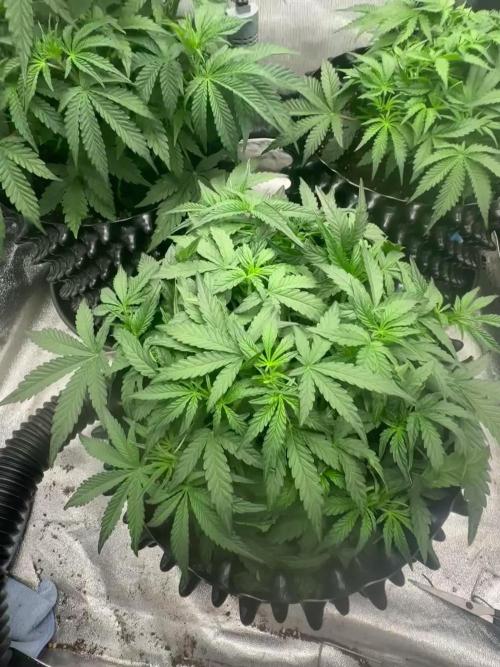
wir sind raus aus dem großen stretch, es geht sich wunderschön aus. sie duftet ganz stark und erfüllt morgens das ganze wohnzimmer. freu mich schon.

Likes
Comments
Share

@senya_pf75175
Follow
have nothing to say. Mephisto are perfect, and I adore them!!!


Likes
1
Share


@Seldom_Seen
Follow
(Harvested on day 74) Small enough buds and not very dense by the looks of it. Leaves covered in crystals so didn’t trim buds.
Left hanging for only 3 days and then clipped off buds and put them in drying mesh to speed up the drying a bit. Rome is 20 degrees with humidity at 50%
Jarred 10 days later. Buds seem damp on the inside but I think it’s just because they are super sticky.


Likes
18
Share


@Cultivandomedicinanatural
Follow
Es una variedad fácil de cultivar y muy agradecida, el peso que pongo arriba no es en mojado si no en seco. He sacado una media de 42,3 g por planta. También tanta cantidad es debido a que son muchas plantas para un metro cuadrado, pero se que el foco, los buenos nutrientes y la magnífica cepa como es green poison de sweet seeds ha hecho la mayoría del trabajo. La plantaría más veces, además cuando había alguna deficiencia corregía bastante rápido asique muy satisfecho con el resultado y más que satisfecho con todo lo elegido desde semilla hasta nutrientes y focos. Una planta de lujo para poder desconectar de los días duros y con un sabor exquisito. Buenos humos familia! espero que os guste este primer diario!