




Likes
28
Share

@PhinolaGreen
Follow
Harvest
Es ist soweit, heute habe ich die Cherry Cola RF3 Auto von Fastbuds an Tag 67 geerntet. Für meinen Geschmack ist die rdy und deswegen hängt die jetzt zum Trocknen 😌
Update:
Sie hat 20,3g abgeworfen, nicht besonders viel aber es gab dafür ordentlich Schnitt für Butter, bin also soweit zufrieden. Vllt wär's mehr geworden, wenn ich sie noch bisschen hätte stehen lassen aber für mein Geschmack war die fertig.
Für mein erstes Mal Mainlining im Airpot lief es auch gar nicht schlecht, habe viel gelernt und werde Cherry Cola RF3 Auto von Fastbuds sicherlich in den nächsten Wochen nomma machen, zum Beispiel Outdoor vor meinem Fenster 🤭
Sie riecht angenehm nach roten Früchten, gar nicht mal gassy, eher minty und süß. Ich lass sie jetzt noch bisschen nach trocknen und dann kommt sie in ein Apotheken Jar und wird für 4-6 Wochen gecured 😌 Ich mache nomma ein Smokebericht die nächsten Wochen, also gerne dran bleiben 😀
Update 24 Tage nach dem Cut:
Das Bouquet von roten Früchten hat deutlich zugenommen, es lässt sich anhand der Säure auf reife, frische rote Johannisbeeren und ein zisch von der vorherig beschriebenen Mint smell mit drin und mit etwas Fantasie entwickelt sich das wirklich in die Richtung Coke mit roten Früchten 😍
Geschmack im Vapo ist frisch, saftig und hat was von Ice Bonbons im Abgang. Die Wirkung ist Klar, Strong, Entspannend, Beruhigend und langanhaltend, also denke 28-29% so von der Wirkung.
Ist fjedenfall spannend, den Cure Prozess zu beobachten 😊

Processing
Likes
7
Share


@thephalanx420
Follow
Welcome to my FastBuds GSC grow-off diary! I plan on growing 2 seeds from the same package - one using a 950ml Gatorade bottle dwc system, and the other sharing a 64L reservior DWC. I'll grow them both while trying to be as simiar in techique as i can, but i'm more interested in how the 950ml does, so might not be super picky about doing things exactly the same, heh.
I'm making this all up as I go!
Enjoy the ride!
Week 0
======
Day 0.1 - 2 seeds in water for 24hrs
Day 0.2- 2 Seeds in wet paper towel, in a plastic bag for 24-48hrs until taproot is out
Day 0.3 - 24hrs later - one seed has sprouted a tail
Day 0.4 - 2nd seed sprouted tail; put both seeds into rockwool
Day 0.5 - 1st seed sprouted from rockwool
Day 0.6 - 1st seed doing well, 2nd seed no change
Day 0.7 - Checked 2nd seed and hasn't budged, so it's a dud. Started a new seed (had 3 GSC, so all good!)
Day 0.8 - 1st seed into the 1L DWC bottle!
Day 0.10 - 3rd seed germinated - into rockwool to sprout.
DWC Prototype
-----------------
- 950ml Gatorade Bottle
- 2x small air stones
- 1/2" overflow tube where i want the water level to be
- Nutrient top-feed line
The reservoir below is 19L (~15L of solution) with a small 80gph water pump on lowest setting, which will be on a timer for 15 mins every 3 hours (at first - we'll see how that goes).
The water pumps nutrient solution up to the Gatorade bottle and the overflow goes back down into the reservoir.
Likes
23
Share


@MadeInGermany
Follow
Hey everyone 🤗.
This week you really put your energy into your growth 👍.
They look beautiful, thanks also to the nutrients in Green Buzz Liquids 😍👌.
Next week she will be moved to the flower tent 👍.
I wish you lots of fun with the update, stay healthy and let it grow 😎
You can buy this Strain at
https://thecaliconnection.com/seeds/girls-scout-cookies-34.html
You can buy the fertilizer at
https://www.greenbuzzliquids.com/
Type:
Girls Scout Cookies
☝️🏼
Genetics:
GSC Tint Mint
👍
Vega lamp:
2 x Todogrow Led
Quantum Board 100 W
💡
Bloom Lamp :
2 x Todogrow Led
Cxb 3590 COB 3500 K 205W
💡💡☝️🏼
Soil :
Canna Coco Professional +
☝️🏼
Fertilizer:
Green Buzz Liquids :
Organic Grow Liquid
Organic Bloom Liquid
Organic more PK
More Roots
Fast Buds
Humic Acid Plus
Growzyme Big Fruits
Clean Fruits
Cal / Mag
Organic Ph - Pulver
☝️🏼🌱
Water:
Osmosis water mixed with normal water (24 hours stale that the chlorine evaporates) to 0.2 - 0.4 EC. Add Cal / Mag 2 ml per l water every 2 waterings . Ph with Organic Ph - Pulver to 5.8 .

Processing
Likes
12
Share


@Therbalist
Follow
Thought I over did the rhino skin had dots on the leave bit I thing it's calcium or magnesium related so calmag xtra every nutrient feed now.

Likes
17
Share


@The_Projexx
Follow
Very fun strain to grow. Easy to train and love to get big. We had 2 different expressions on the plants and both where very pleasing. Both plants grew vigorously and provided me with just over 3/4 pound of dry medicine!


Likes
26
Share


@Reyden
Follow
LSD-25 deve essere una genetica bellissima dai tratti viola a predominanza indica ma che è capace di portarti con la testa molto in alto! Già da adesso il colore del gambo risulta più scuro più rosso delle sorellastre, questo dice molto del suo tratto genetico…voglio vedere come si svilupperà, non penso di fare dei particolari allenamenti alle piante ma solo una potatura delle foglie e forse qualche piegatura ma steremo a vedere…grazie @Fast_Buds per queste bellissime genetiche 💯
Likes
8
Share


@AustinRon
Follow
Week 6 - Bolt 3 (Flower Week 3)
Sangria - by Twenty20 Mendocino
4Q 2022
Veg Week 4: Wednesday 01 February - Tuesday 07 February 2023
Start of Veg - 1 Node
Start of Week: [ 2022-02-08, SA20 43:B3:6:1]
End of Week:
[ 2023-02-14, SA20 49:B3:6:7]
HeightWeekStart: [ 10.5, in]
HeightWeekEnd: [ TBD, in]
Start Date: 28.12.2022 # Seeds Wet
Harvest Window: 17 - 27 March 2023, 79 - 89 Days
EnvironmentGermination
- LightDistance: [ 14.5, in]
- LightStrength: [934, 505, µmol/m2/s]
- Temp: [ 79, 85, °F]
- RH: [ 73, pct]
- HumidifierTrigger: [ 66, %]
Fertigation
(BioAg, Mammoth-P)
- [x] R&R/Recalibrate BluMat’s at next IDEAL pot moisture
Wednesday 08 February 2023
SA20 43:B3:6:1
- Added 1 Pt surface watering. Pot significantly lighter. No bottom heft.
- High Humidity and low temps have been a challenge this week, trying to keep VPD above 0.80 kPa
- Looking less droopy, but not uproariously happy, yet.
__________________________
Wednesday 08 February 2023
SA20 43:B3:6:1

1056 02.08.2023
- Added 1 Pt surface watering. Pot significantly lighter. No bottom heft.
- High Humidity and low temps have been a challenge this week, trying to keep VPD above 0.80 kPa
- Looking less droopy, but not uproariously happy, yet.
- Foliar: [ CalMag Fuel, 20, ml, gal], [ Lush Green, 5 ml, gal], [ Photosynthesis Plus, 6, ml, gal]
- What a Day! Humidity over the charts.
- Looking REAL Droopy. Mixed up 1 Pt w/ Ful-Power, SLF-100, PhotoSynthesis Plus. Top sprayed in pot.
- Pot has weight but no unbalanced heft.
- Calibrated BluMat, Drip/Stop, + 2pts on Carrot
And 5 hours later

1554 02.08.2023
__________________________
Thursday 09 February 2023
SA20 44:B3:6:2
- Plants aren’t praying, SLOWLY coming out of Droop.Look A little more lift than yesterday.
- 0928 Raised humidifier 1 F to 63%
- 1407
“
“
64%
- VPD 1.1+, want to be in the 1.0 range
Friday 10 February 2023
SA30 45:B3:
Saturday 11 February 2023
SA20 46:B3:6:4
- HumidifierTrigger: 66%, up
Sunday 12 February 2023
SA20 47:B3:6:5
- HumidifierTrigger: 71.5%, up
- Temp < 85 F
Monday 13 February 2023
SA20 48:B3:6:6
Tuesday 14 February 2023
SA20 49:B3:6:7


_____________________
Next week (Nominal Flower 4)
Wednesday 15 February 2023
SA20 50:F:7:1

Likes
13
Share

@Gewaltmann
Follow
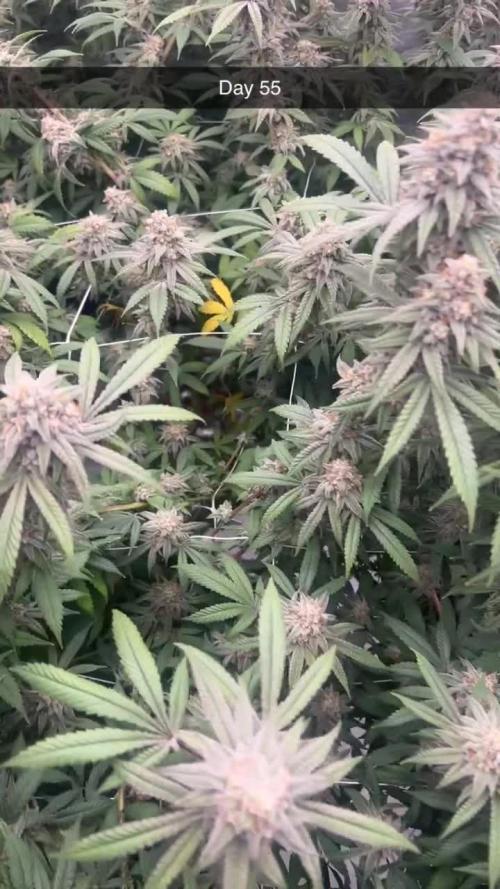
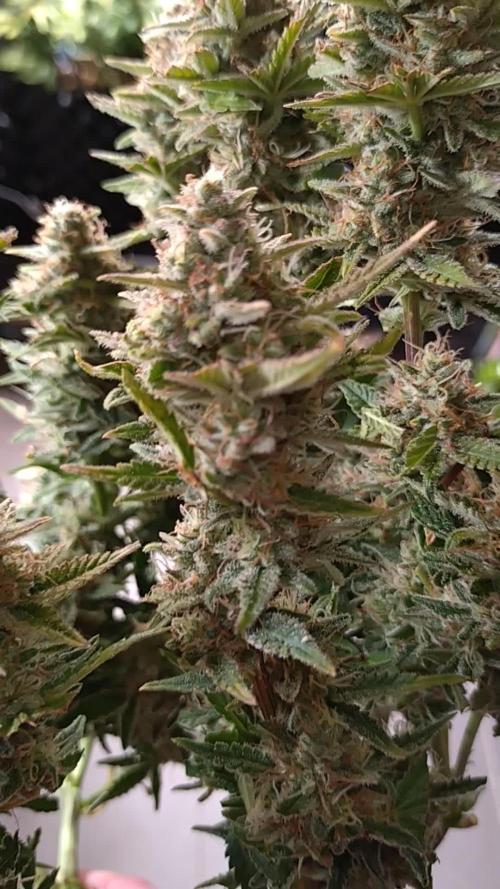
Das sieht nach einem richtig massiven Blütenteppich aus! Die Fotos zeigen deutlich, dass du die Fläche perfekt ausgenutzt hast. Dass die Tropicana Cookies (TC) schon "Frost" (Trichome) bildet und sich verfärbt, ist ein super Zeichen für die Genetik – die wird optisch ein echtes Highlight.
Hier ist meine Analyse zu deinem aktuellen Stand und dem "Nackig-Machen":
1. Die Diagnose: CC zickt, TC glänzt
* CC Überdüngung: Dass du die Bremse ziehst und nur Wasser gibst, ist genau richtig. Die CC scheint einen langsameren Stoffwechsel zu haben oder sensibler auf den PK-Schub zu reagieren. Die dunklen, glänzenden Blätter und leicht verbrannten Spitzen bestätigen: Die hat genug im Speicher.
* CalMag-Schäden: Die alten Flecken werden nicht mehr verschwinden, aber solange der Neuwuchs (die "Zuckerblätter" an den Buds) gesund bleibt, ist das nur ein optischer Makel aus der Vergangenheit.
* Stretch-Ende: Wenn der Stretch durch ist, ist das die perfekte Nachricht. Jetzt wird die Energie zu 100% in die Masseproduktion gesteckt.
2. Das große Lollipoppen & Entlauben
Da der Stretch beendet ist und die Blütenbildung bei allen (besonders der TC) voll im Gange ist, ist JETZT (dieses Wochenende) der ideale Zeitpunkt. - Morgen
Warum jetzt?
* Die Pflanzen verbrauchen unter dem Netz unnötig Energie für Blätter und Mini-Triebe, die niemals Licht sehen werden.
* Du verbesserst die Luftzirkulation radikal – das ist dein wichtigster Schutz gegen Schimmel und die letzte Versicherung gegen ein Comeback der Spinnmilben.
So gehen wir vor:
* Unten nackig machen: Alles, was sich im unteren Drittel (oder sogar bis zur Hälfte, wenn es unter dem Netz im Schatten liegt) befindet, kommt weg. Alle kleinen Seitentriebe, die es nicht durch das Netz geschafft haben ("Popcorn-Buds"), müssen weichen.
* Große Sonnensegel: Oben im Netz entfernst du nur die Blätter, die direkt eine darunter liegende Blüte beschatten.
* Radikalität: Trau dich ruhig. Wenn du fertig bist, sollte man von oben durch das Netz wieder den Boden sehen können und der Stammbereich sollte komplett frei sein.
3. Fahrplan für die nächste Woche
* Licht: Bleib bei den 60%. Das ist ein guter Wert für den aktuellen Zustand, besonders da die CC gerade etwas Stress zeigt. Erst wenn sie sich gefangen hat, gehen wir auf 70%.
* Nährstoffe: Sonntag nur Wasser (wie du sagtest). Das hilft, die Salze im Medium der CC etwas zu mobilisieren und den "Durst" der TC zu stillen.
* PK 13/14: Ich würde den nächsten Sonntag (in 9 Tagen) anpeilen. Wenn die Buds dann anschwellen, brauchen sie den Phosphor-Schub am dringendsten.
4. Spinnmilben-Wachsamkeit
Da du jetzt lollipoppst, hast du die perfekte Gelegenheit, die Stämme und Blattunterseiten noch einmal ganz genau zu inspizieren. Ohne das "Unterholz" haben die Milben kaum noch Rückzugsorte.

Likes
14
Share


@artems
Follow
Successfully harvested Wapanga, unveiling a vibrant candy aroma and densely packed buds. Being my maiden experience with a Californian strain, the cultivation journey was thoroughly enjoyable. The plant has been carefully hung to dry, and the anticipation of tasting the fruits of this labor is palpable. Excitement lingers in the air as the drying process unfolds, promising a flavorful and aromatic experience upon consumption. Wapanga has undoubtedly left a positive impression, and I eagerly look forward to savoring the results of this rewarding cultivation endeavor. 🌿🍬

Likes
76
Share

@yan402
Follow
🌸🍊✨🍭🌸🍊✨🍭🌸🍊✨🍭🌸
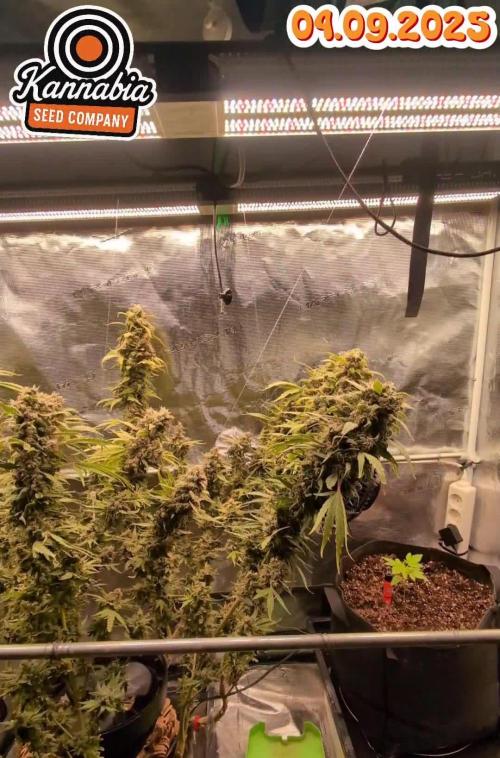
Back at it with Kannabia — huge thanks for the NEW EXCLUSIVE Upcoming Kannabia's seed Launch 🙏🍨🍊
Grateful for the trust and for everyone following along, I’ll run her clean and showcase what she can do.
Dessert-party goals: berry–citrus sherbet terps, creamy finish, tight stacks, easy trim, zero drama.
Veg 24/0, clean manifold + LST, flip on a happy, even canopy.
Coco’s fresh, seed goes in now. 🚀
🌸🍊✨🍭🌸🍊✨🍭🌸🍊✨🍭🌸
💭❗💭❗💭❗💭❗💭❗💭❗💭
❗Events & thoughts worth noting❗
💭❗💭❗💭❗💭❗💭❗💭❗💭
10.08.25 GW1 Sowed seed, soaked starter pot with #1
12.08.25 GW1 Seed popped hip hip hurray
28.08.25 VW2 Stopped using GreenBuzzBloom, took it out of the schedule.
01.09.25 VW3 TriPartMicro 10→30ml, TriPart bloom 10→30ml
🌱💦🌱💦🌱💦🌱💦🌱💦🌱
🌿 Day to day tasks & actions 🌿
🌱💦🌱💦🌱💦🌱💦🌱💦🌱
04.09.25 VW3 – Fed 0.1l of #1 → no runoff
(*RUNOFF reused for tomato plants)
🍶💧🍶💧🍶💧🍶💧🍶
💧 Nutrients in 30L #1
🍶💧🍶💧🍶💧🍶💧🍶
💧 TriPart Micro:
10ml
= 0.33ml/L
🍶 TriPart Grow:
0ml
= 0.00ml/L
💧 TriPart Bloom:
10ml
= 0.33ml/L
💧 Cal-Mag:
60ml
= 2.00ml/L
🍶 Home-made FFJ/FPJ (new batch):
30ml
= 1.00ml/L
💧 pH Down:
Citric acid (BuxXtrade) — adjust to ~pH 6.0
📦 TOTAL:
120ml per 30L
🔬 4.00ml/L
🍶💧🍶💧🍶💧🍶💧🍶
⚙️✂️⚙️✂️⚙️✂️⚙️✂️⚙️
✂️ Tools & equipment ✂️
⚙️✂️⚙️✂️⚙️✂️⚙️✂️⚙️
✂️ 2× MarsHydro SP3000
⚙️ MarsHydro 150mm ACF Ventilator
✂️ Trotec dehumidifier (big unit)
⚙️ Mini no-name dehumidifier
✂️ Kebab skewers (LST – stainless)
⚙️ Wire + roast skewers (LST assist)
✂️ Scissors (HST)
⚙️ Vacuum (for spills & cleanup)
✂️⚙️✂️⚙️✂️⚙️⚙️✂️⚙️✂️⚙️✂️⚙️
---
🍊🍧🌬️🍬🍊🍧🌬️🍬🍊🍧🌬️🍬 Mystery seed (Kannabia Seeds) — NEW EXCLUSIVE
🍊🍧🌬️🍬🍊🍧🌬️🍬🍊🍧🌬️🍬
Species: Hybrid (GF / swift-flowering line)
Genetics: TBA (breeder sheet pending)
THC: TBA
Effect: Euphoric, relaxed, creative (target profile)
Flavor: Berry–citrus sherbet, sweet candy, creamy finish
Flowering (indoors): ~6–7 weeks target (GF)
Resistance: High (aim: no drama)
Indoor yield: TBA
Outdoor yield: TBA
Structure: TBA
Notes: Brand-new exclusive from Kannabia’s GF line — I’ll update specs when the breeder card drops. Goal is rich sherbet terps (berry–citrus + cream), low leaf-to-calyx, easy trim. Stage harvest stays on the table if tops finish early.
Likes
23
Share


@DeepRootsGrowTrees
Follow
MATARO BLUE by KANNABIA
WEEK #20 Overall
Week #6 Flower
This week was another good for this lady she's doing good her buds have a good aroma about them.
Kannabia.com
MATARO BLUE

Processing
Likes
17
Share


@ILoVeThiSpLaNt
Follow
Day 35 da seme. Sweet zkittlez portata outdoor vediamo se resiste agli insetti 😊

Likes
10
Share


@TiRobotProds
Follow
Forte odeur de fruits exotique se dégage de ces dames, elle sont bien givré etle rinçage a commencé.
Likes
3
Share


@luisantas2009
Follow
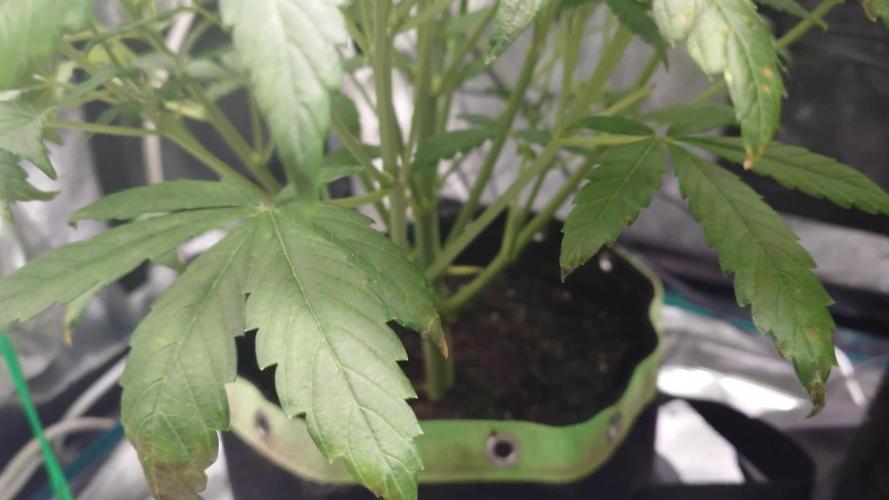
Help me please i have feed with calmag micro nutrientes, pk the PH feeding is 6.2 and i can't reverte the situation i don't understand!



Likes
86
Share


@Tropicannibis_Todd
Follow
ALRIGHTY THEN
REMINDER I DO 2 UPDATES PER WEEK 👉WEEKLYROUNDUP👈 👉MIDWEEKLY UPDATE👈 Unless there's nothing to update
At this very moment , hint of Grape Crush Soda smells 😛 Which is awsome
49 days into flowering
We just hit week 10 and all is well , for the most part , I'm sure I'd be further ahead if it wasn't for the cal/Mag issues early in its development 😃 .......
👉 Baby Sister Plant #2 Is 8 weeks and coming along great 👈
rain water to be used entire growth👍 👉 NutriNPK NUTRIENTS IS USED FOR FEEDINGS 👈
Lights being readjusted and chart updated .........👍
I GOT MULTIPLE DIARIES ON THE GO 😱 please check them out 😎
👉IF ANYONE IS LOOKING FOR A PLACE TO HANGOUT VIA GROWDIARIES AND TALK GROWING AND JUST CHILL AND WHATEVER .....👈
👉I CREATED GROWDIARIES DISCORD SERVER !!!!!!!!!!!👈
LINK IS 👉
https://discord.gg/zQmTHkbejs
AND SEE HOW IT PLAYS OUT !!!!!!!
Likes
29
Share

@BettyFlores
Follow
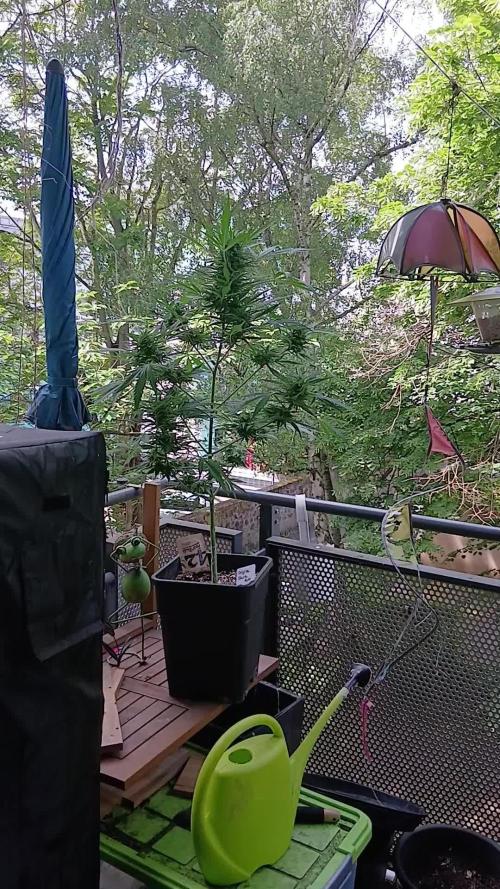
21.05.2026 Bald kann ich sie ernten. Zumindest sind die Trichome recht reif und in ein paar Tagen könnte es soweit sein. Sie riecht wirklich sehr stark und die gesamte Nachbarschaft darf daran teilhaben. Dieser pure skunkige Geruch ist einfach nur göttlich. Auch mit den Temperaturen geht es aufwärts und ich freue mich schon jetzt auf den nächsten FastBuds-Run.
Happy growing 🌸 💜
Likes
5
Share


@Bluethum94
Follow
Transplanted and separated into a 4x8 and 5x5 started to get deficiencies I think either cal or mag maybe even a little of both I flushed the soil in case ph was off in the soil then a couple had nitrogen deficiency so I gave them a tea last night will see how they look tonight when I’m off work once they are healthy I’ll flip to flower