

Likes
1
Share
@Trinidad
Follow
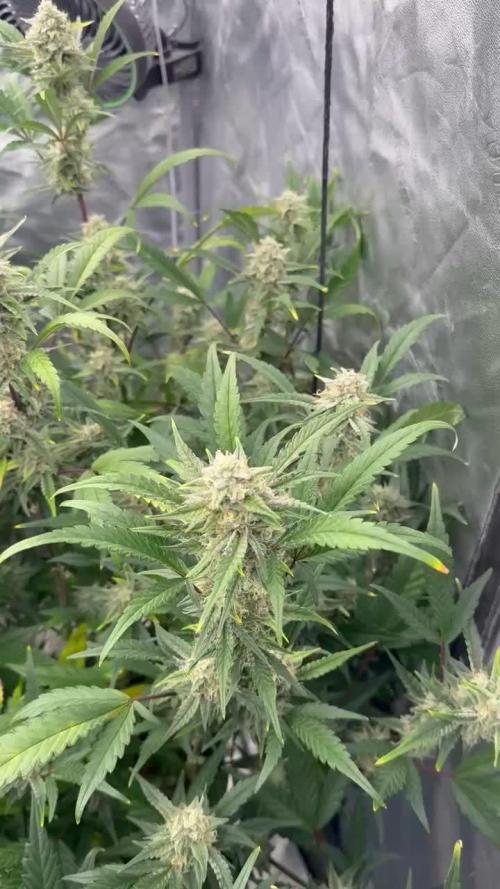
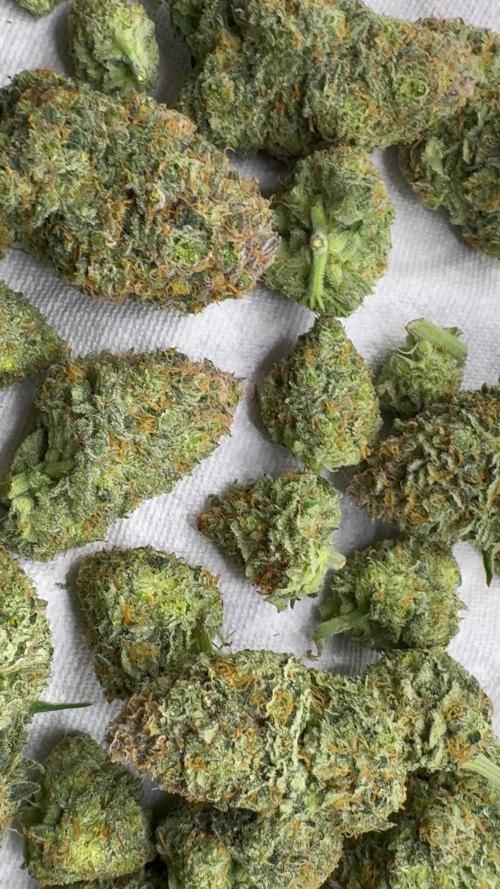
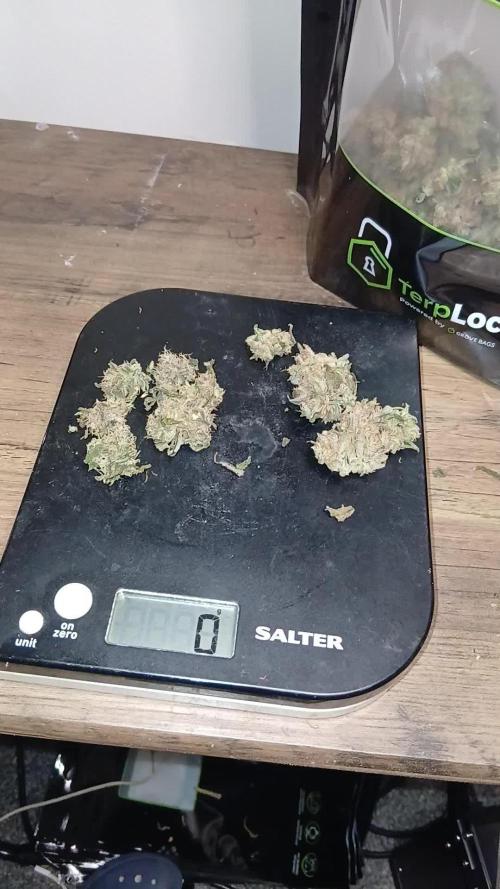
2 different Frostbangers plants. Same grow. 1 came in at 52g and the other at 6. Easy grow and easy trim

Likes
15
Share


@Ctsbestsmoke
Follow
So I just transplanted them into one gallon pots before they go into the growace aircube. The one that the helmet took off some of the leaf is starting to actually wanna live and still growing she’s a little runt as you see in the pictures but I have faith in her. I think they will sit in these pots for a week then into the ebb and flow system. Can’t wait to see what that system has to offer once I know I will have a 10% off link for anyone who’s interested in buying one. Until next week happy growing. So glad I got a garden back man it was driving me insane not having any plants!
Likes
7
Share


@Perpinator140
Follow
This was my first ever grow ive done and I think I did great achieving 3.75 oz in a dr90
Processing
Likes
1
Share


@Esebees
Follow
Cambiamos de fotoperiodo y las plantas rápido han pegado el cambio y ya sacan los primeros pelitos


Likes
8
Share


@SherbGrows
Follow
Fast Buds
Wedding Glue Auto
Day 25 from sprout
Light: ViparSpectra XS2000 dialed in at 75%
Watering top and bottom every other day to every 2 days
Growing in Natures Living Soil Autoflower mix with happy frog.
I will honestly say I am very pleased that this wedding glue is starting to take off! It did take it this long to build its root system but I am happy. I think it may take this girl another week to 2 weeks to enter pre flower. Because she is the "runt" of the 4 plants in my 4x4 I will probably give minimal training for this run.
See you all next week! Happy Growing!
Likes
11
Share

@Borberad
Follow
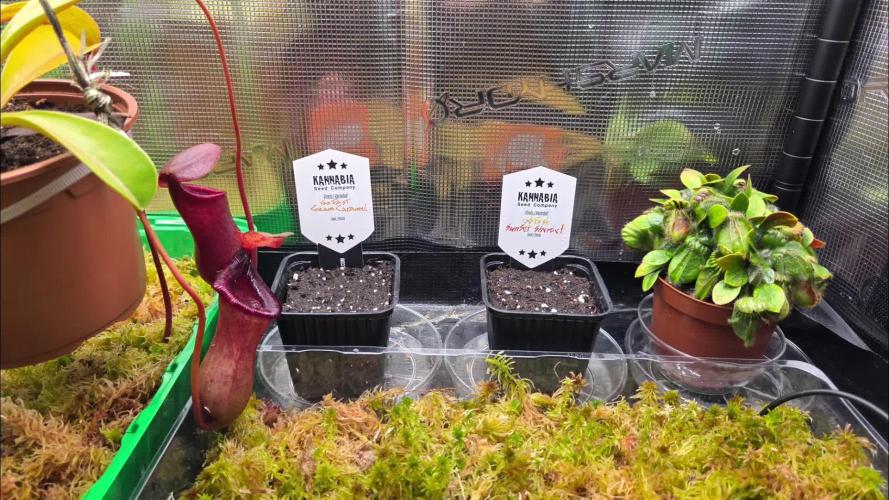
🌅🍨Bereitet euch auf eine weitere tiefgreifende und farbenfrohe Untersuchung des pflanzlichen Wachstums vor. Dieses mal Sunset Sherbet Go Fast, gesponsort von den geschätzten Züchtern von Kannabia Seeds. Unsere bewährte Methodik der fast täglichen Bilddokumentation und sporadischen Videoanalysen wird auch bei diesem Exemplar, fest verwurzelt in unserer einheitlichen Haussubstratmischung zum Einsatz kommen. Wir werden Zeuge der Entwicklung einer Pflanze, deren Name bereits eine optische wie geschmackliche Abenddämmerung und damit ihre – sagen wir mal – 'exotische Anziehungskraft' verspricht. Verfolgt mit uns, wie sich dieses 'tropische Sorbet' entfaltet und welche farbenprächtigen Herausforderungen uns Borberads bei seiner Kultivierung erwarten.
Sortenbeschreibung: Kannabia Seeds Sunset Sherbet Go Fast
Genetik: Sunset Sherbet Go Fast entstammt einer hochkarätigen Erblinie, die die Genetik von Sunset Sherbet (Girl Scout Cookies x Pink Panties) mit einer ausgewählten OG Kush Auto vereint. Diese genetische Meisterleistung resultiert in einem 70%igen Indica-Hybriden, der extrem beschleunigt blüht und dennoch das komplexe Terpenprofil seiner prominenten US-amerikanischen Wurzeln bewahrt.
Größe: Hier erwarten wir ein handliches Wachstum. Indoor bleibt die Sunset Sherbet Go Fast in der Regel bei äußerst kompakten 80 Zentimetern, was sie zu einer idealen und platzsparenden Kandidatin für unser Set-up macht.
Farbe: Die Farbpalette ist ein hypnotisierender Mix. Während der Blüte entwickelt sie eine dichte Struktur in intensivem Perlmutgrün, das im späten Stadium von wunderschönen violetten Tönen und tief orangefarbenen Stempeln durchzogen wird – ein Anblick, der voll und ganz an den namensgebenden Sonnenuntergang erinnert.
Geschmack: Das Profil ist eine tropisch-fruchtige Explosion aus Mandarine und Waldbeeren, gebettet auf eine cremige Sorbet-Basis. Beim Ausatmen offenbaren sich oft noch feine, minzige und dezent würzige Nuancen.
Eigenarten: Mit einer rekordverdächtigen Blütephase von nur 49 bis 52 Tagen macht sie ihrem "Go Fast"-Titel alle Ehre. Trotz ihrer Schnelligkeit liefert sie einen THC-Gehalt von bis zu 22 %. Die Wirkung gilt als perfekt ausbalanciert: Ein mentaler, euphorischer Auftrieb, der sanft von einer tiefen körperlichen Entspannung geerdet wird, ohne zu beschweren.
Rechtlicher Hinweis:
"Abschließend sei wie immer angemerkt, dass dieses Growtagebuch die dokumentarische Begleitung eines privaten und legalen Anbauvorhabens im Rahmen der jeweils gültigen Gesetze darstellt.
Tag 1
Entgegen unserer gewohnten Vorgehensweise nutzen wir kein Tauchbad mit 1% H202 zum Quellen der Samen sondern lassen den Samen vollständig im von Kannabia freundlicherweise zur Verfügung gestellten Sproutly Keimen.
Tag 2
Nach 36h wurden der Sproutly das erste Mal geöffnet und zeigte gekeimte Samen mit ca 5mm langer, weißer und gesunder Wurzel.
Also rein in die Vorbereiteten und zuvor temperierten Anzuchttöpfe, anstelle der in letzter Zeit üblichen Easyplugs.
Tag3
Warten
Tag 4
91 Stunden nach dem Start des Quellen waren die kleinen Keimlinge dann schon ohne Helmchen ins Licht gewachsen.
Tag 5
Die Keimblätter sind entfaltet und die ersten echten Blattpaare öffnen sich. Ein gelungener Start...🌱
Tag 6
Zack, da steht sie! Evt. sogar schon etwas zu lang. Sie wird daher etwas näher ans Licht gesetzt.
Tag 7
Sie lässt nicht auf sich warten.

Likes
67
Share


@Natrona
Follow
2025 Plagron / Zamnesia Eternity Grow
Week 7 / Flower week 3
2/16-22
Runtz is in full bloom, the buds are puffing out with many white pistols. Trichomes are just starting to form. She is still adding leaves so I probably should not have taken off so much last week. This may have been stressful.
There are some brown tips showing and some spots. She has nutrient issues too, just not as bad as Blue Cheese 1. Took pictures and moved the girls around in the tent. I also moved the carrots to the other tent with the veggie seedlings because Love Potion is getting so big,
2/17 &19 &21 5 gal fed 2 liter each nutrients added at ½ of recommended amount
Bloom Juice 60 ml
Royal Rush 16 ml
Power bud 16ml
Green sensation
16 ml
Cal Mag
15ml
Ppm 683
Ph 6.5
Temp 65
Your likes and comments are appreciated. Thanks for stopping by.
Growers love 💚🌿
💫Natrona💫


Likes
13
Share


@J_diaz420
Follow
Primera semana de floración y a medida que crecen los brotes los voy pasando bajo la malla tratando de dejar los brazos más altos en las orillas, se ha regado foliarmente con delta 9 el cual se dio en dosis baja al sustrato al comenzar fotoperiodo de floración.
Likes
20
Share


@UDAAC
Follow
Well welcome to week one flower !
I am so grateful she seems happy starting to get the system balanced I’m running rdwc two five gallon buckets with a 3” flex line connecting the base to base
With ball valves to control the water height in grow bucket 320gph sub pump in the Reservoir bucket then to water chiller back to grow bucket large enough dependable oxygen pump for grow and reservoir water oxygenation I also alternate Southern Ag GFF and Hydro guard let’s go!
Likes
4
Share


@KirbyFarm
Follow
The girls recovered the same day as the topping last week. They have more than doubled in height and gain nodes quickly. Accidentally was giving wrong dose of nutes last week and corrected it this week. These strains are very hardy so far
Likes
Comments
Share

Likes
3
Share


@Grow_Bro_NL
Follow
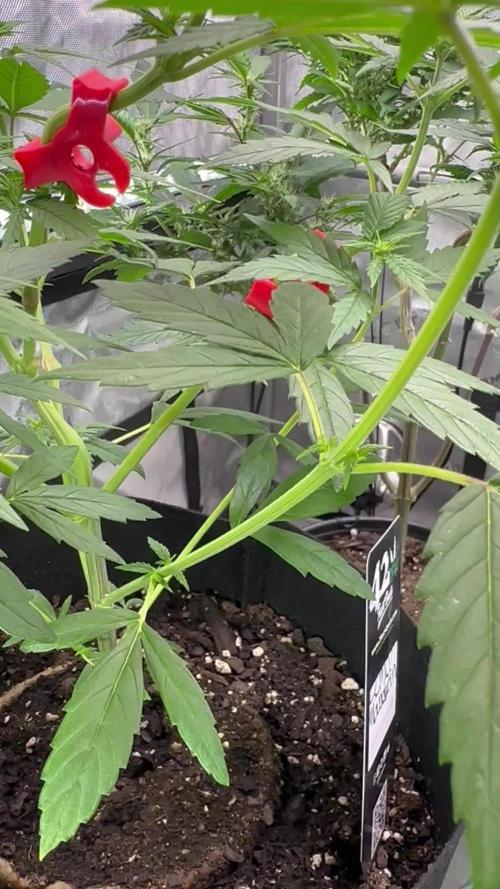
This week they really exploded and all new growth is lush and green so they seemed to have settled very well after the composttea.
The grape&cream #1 & #2 are starting to catch up to #3 as ive been bending and topping #3 a little more.
Due to the blumats keeping their soil moist ive just put in about 200ml of composttea in each pot.
All cuttings have rooted so far with just some pokon run of the mill cloning powder so thats a good thing to keep in mind.
As we head into week 4 ive seen the possibility to do some defoliation and supercropping to try to get a bit of an even canopy.
Keep you posted!

Likes
5
Share


@cookingwithninja
Follow
Plants are currently drying
2+ months later. And next project au79

Processing
Likes
15
Share


@Dico29
Follow
Buds are getting bigger, still raining and very humid, but smells too.

Likes
7
Share


@Breezybombaf
Follow
Things are really looking up this week! This girls are growing FAST! And my problems are seemingly balancing out.
What I did to remedy last weeks issue was let them dry out 3 days, then watered with 6.0 ph dechlorinated water. 2 days after I amended with 4-4-4, 2-8-4, and a bit of mycorhize and have been using 6.0 ph water to bring my soil ph down from almost 7.
Today on day 28 I saw first flowering on 2 of the 3 girls 😇
So I have turned my lights up to 100% and pulled them back a few inches so the girls can adjust to the light.
I'm stoked with Fastbuds and eager to get to harvest!
Thanks for dropping by and God bless.
Likes
5
Share


@eldruida_lamota
Follow
Que pasa familia, vamos con la quinta semana de floración de estas Papaya Zoap F1 de Sweetseeds.
Vamos al lío, me quede con 3 por espacio, siempre pongo alguna semilla de más por si no abriese alguna por no perder ese hueco del indoor.
También se trasplantaron a su maceta definitiva, en este caso de 7 litros.
Y también superaron el shock por el trasplante se recuperaron 100%.
El ph se controla en 6.2 , la temperatura la tenemos entre 20/22 grados y la humedad ronda el 50%.
El fotoperiodo esta a 12/12 para floración. Las jodidas estiraron bastante, y es algo que no me gusta de todas las F1, que cultive hasta ahora.
El olor que desprende es muy peculiar es muy dulce y empalagoso, a mi parecer, no pinta nada mal.
Hasta aquí todo, Buenos humos 💨💨💨