




Likes
55
Share


@Ultraviolet
Follow
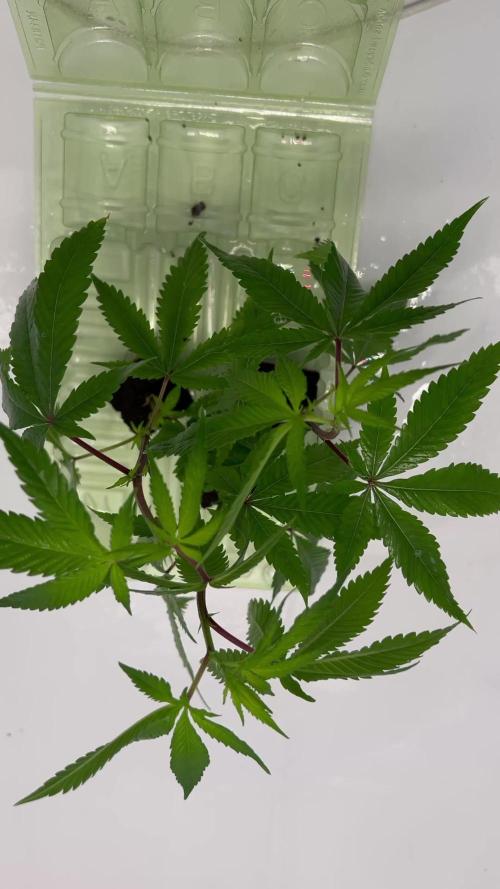
What's in the soil? What's not in the soil would be an easier question to answer. 16-18 DLI @ the minute. +++ as she grows.
Probably not recommended, but to get to where it needs to be, I need to start now.
Vegetative @1400ppm 0.8–1.2 kPa 80–86°F (26.7–30°C) 65–75%, LST Day 10, Fim'd Day 11
CEC (Cation Exchange Capacity):
This is a measure of a soil's ability to hold and exchange positively charged nutrients, like calcium, magnesium, and potassium. Soils with high CEC (more clay and organic matter) have more negative charges that attract and hold these essential nutrients, preventing them from leaching away.
Biochar is highly efficient at increasing cation exchange capacity (CEC) compared to many other amendments. Biochar's high CEC potential stems from its negatively charged functional groups, and studies show it can increase CEC by over 90%. Amendments like compost also increase CEC but are often more prone to rapid biodegradation, which can make biochar's effect more long-lasting. biochar acts as a long-lasting Cation Exchange Capacity (CEC) enhancer because its porous, carbon-rich structure provides sites for nutrients to bind to, effectively improving nutrient retention in soil without relying on the short-term benefits of fresh organic matter like compost or manure. Biochar's stability means these benefits last much longer than those from traditional organic amendments, making it a sustainable way to improve soil fertility, water retention, and structure over time. Needs to be charged first, similar to Coco, or it will immobilize cations, but at a much higher ratio.
a high cation exchange capacity (CEC) results in a high buffer protection, meaning the soil can better resist changes in pH and nutrient availability. This is because a high CEC soil has more negatively charged sites to hold onto essential positively charged nutrients, like calcium and magnesium, and to buffer against acid ions, such as hydrogen.
EC (Electrical Conductivity):
This measures the amount of soluble salts in the soil. High EC levels indicate a high concentration of dissolved salts and can be a sign of potential salinity issues that can harm plants.
The stored cations associated with a medium's cation exchange capacity (CEC) do not directly contribute to a real-time electrical conductivity (EC) reading. A real-time EC measurement reflects only the concentration of free, dissolved salt ions in the water solution within the medium.
98% of a plants nutrients comes directly from the water solution.
2% come directly from soil particles.
CEC is a mediums storage capacity for cations. These stored cations do not contribute to a mediums EC directly.
Electrical Conductivity (EC) does not measure salt ions adsorbed (stored) onto a Cation Exchange Capacity (CEC) site, as EC measures the conductivity of ions in solution within a soil or water sample, not those held on soil particles.
A medium releases stored cations to water by ion exchange, where a new, more desirable ion from the water solution temporarily displaces the stored cation from the medium's surface, a process also seen in plants absorbing nutrients via mass flow. For example, in water softeners, sodium ions are released from resin beads to bond with the medium's surface, displacing calcium and magnesium ions which then enter the water. This same principle applies when plants take up nutrients from the soil solution: the cations are released from the soil particles into the water in response to a concentration equilibrium, and then moved to the root surface via mass flow.
An example of ion exchange within the context of Cation Exchange Capacity (CEC) is a soil particle with a negative charge attracting and holding positively charged nutrient ions, like potassium (K+) or calcium (Ca2+), and then exchanging them for other positive ions present in the soil solution. For instance, a negatively charged clay particle in soil can hold a K+ ion and later release it to a plant's roots when a different cation, such as calcium (Ca2+), is abundant and replaces the potassium. This process of holding and swapping positively charged ions is fundamental to soil fertility, as it provides plants with essential nutrients.
Negative charges on soil particles: Soil particles, particularly clay and organic matter, have negatively charged surfaces due to their chemical structure.
Attraction of cations: These negative charges attract and hold positively charged ions, or cations, such as:
Potassium (K+)
Calcium (Ca2+)
Magnesium (Mg2+)
Sodium (Na+)
Ammonium (NH4+)
Plant roots excrete hydrogen ions (H+) through the action of proton pumps embedded in the root cell membranes, which use ATP (energy) to actively transport H+ ions from inside the root cell into the surrounding soil. This process lowers the pH of the soil, which helps to make certain mineral nutrients, such as iron, more available for uptake by the plant.
Mechanism of H+ Excretion
Proton Pumps: Root cells contain specialized proteins called proton pumps (H+-ATPases) in their cell membranes.
Active Transport: These proton pumps use energy from ATP to actively move H+ ions from the cytoplasm of the root cell into the soil, against their concentration gradient.
Role in pH Regulation: This active excretion of H+ is a major way plants regulate their internal cytoplasmic pH.
Nutrient Availability: The resulting decrease in soil pH makes certain essential mineral nutrients, like iron, more soluble and available for the root cells to absorb.
Ion Exchange: The H+ ions also displace positively charged mineral cations from the soil particles, making them available for uptake.
Iron Uptake: In response to iron deficiency stress, plants enhance H+ excretion and reductant release to lower the pH and convert Fe3+ to the more available form Fe2+. The altered pH can influence the activity and composition of beneficial microbes in the soil. The H+ gradient created by the proton pumps can also be used for other vital cell functions, such as ATP synthesis and the transport of other solutes. The hydrogen ions (H+) excreted during photosynthesis come from the splitting of water molecules. This splitting, called photolysis, occurs in Photosystem II to replace the electrons used in the light-dependent reactions. The released hydrogen ions are then pumped into the thylakoid lumen, creating a proton gradient that drives ATP synthesis.
Plants release hydrogen ions (H+) from their roots into the soil, a process that occurs in conjunction with nutrient uptake and photosynthesis. These H+ ions compete with mineral cations for the negatively charged sites on soil particles, a phenomenon known as cation exchange. By displacing beneficial mineral cations, the excreted H+ ions make these nutrients available for the plant to absorb, which can also lower the soil pH and indirectly affect its Cation Exchange Capacity (CEC) by altering the pool of exchangeable cations in the soil solution.
Plants use proton (H+) exudation, driven by the H+-ATPase enzyme, to release H+ ions into the soil, creating a more acidic rhizosphere, which enhances nutrient availability and influences nutrient cycling processes. This acidification mobilizes insoluble nutrients like iron (Fe) by breaking them down, while also facilitating the activity of beneficial microbes involved in the nutrient cycle. Therefore, H+ exudation is a critical plant strategy for nutrient acquisition and management, allowing plants to improve their access to essential elements from the soil.
A lack of water splitting during photosynthesis can affect iron uptake because the resulting energy imbalance disrupts the plant's ability to produce ATP and NADPH, which are crucial for overall photosynthetic energy conversion and can trigger a deficiency in iron homeostasis pathways. While photosynthesis uses hydrogen ions produced from water splitting for the Calvin cycle, not to create a hydrogen gas deficiency, the overall process is sensitive to nutrient availability, and iron is essential for chloroplast function.
In photosynthesis, water is split to provide electrons to replace those lost in Photosystem II, which is triggered by light absorption. These electrons then travel along a transport chain to generate ATP (energy currency) and NADPH (reducing power). Carbon Fixation: The generated ATP and NADPH are then used to convert carbon dioxide into carbohydrates in the Calvin cycle. Impaired water splitting (via water in or out) breaks the chain reaction of photosynthesis. This leads to an imbalance in ATP and NADPH levels, which disrupts the Calvin cycle and overall energy production in the plant. Plants require a sufficient supply of essential mineral elements like iron for photosynthesis. Iron is vital for chlorophyll formation and plays a crucial role in electron transport within the chloroplasts. The complex relationship between nutrient status and photosynthesis is evident when iron deficiency can be reverted by depleting other micronutrients like manganese. This highlights how nutrient homeostasis influences photosynthetic function. A lack of adequate energy and reducing power from photosynthesis, which is directly linked to water splitting, can trigger complex adaptive responses in the plant's iron uptake and distribution systems.
Plants possess receptors called transceptors that can directly detect specific nutrient concentrations in the soil or within the plant's tissues. These receptors trigger signaling pathways, sometimes involving calcium influx or changes in protein complex activity, that then influence nutrient uptake by the roots. Plants use this information to make long-term adjustments, such as Increasing root biomass to explore more soil for nutrients. Modifying metabolic pathways to make better use of available resources. Adjusting the rate of nutrient transport into the roots. That's why I keep a high EC. Abundance resonates Abundance.


Likes
4
Share


@Ogbangbang2981
Follow
my our door girl not filling out as I thought she would I really thought I'd get bigger and healthier plant on the outside instead I got the opposite lesson learned. The mist didn't do what I thought it would so had to pollinate with a Male pink kush plant seeds forming nicely . plant still lovely I'm in love with colors.

Processing
Likes
4
Share


Likes
8
Share

@Francuzzo
Follow
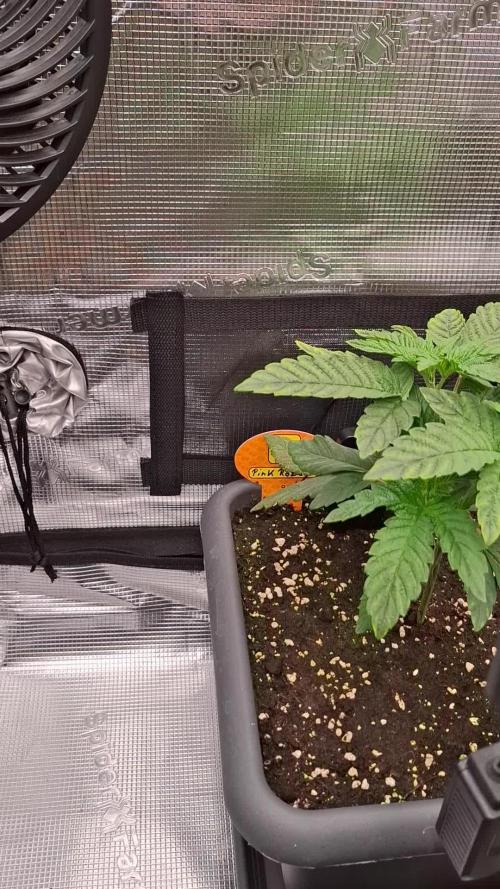
Und wir starten in die vegi hinein !!!!
Das zweite Blätter paar ist ausgebildet und das dritte wächst schon heraus, also ist es zeit den ppfd von 220 (keimling/Sämling) langsam nach oben zu schrauben.
Es geht nun auf 350ppfd rauf und wird täglich um 50 gesteigert , bis die 500 erreicht erreicht werden, und dann nur noch minimale Anpassungen nach oben oder unten.


Likes
19
Share


@Comfrey
Follow
Day 64
🌤️🌥️☁️☁️ 11-19 degrees and the humidity is around 65%. I started into the tenth week with an intense check of the main buds. Some of the trichomes are milky but the most are still clear. Maybe I‘m wrong. Some days ago I could spot some amber trichomes but the flowers expanded and it‘s not possible to find anymore amber ones. Watered 500ml pure rainwater.
Day 65
🌤️☁️🌥️☁️ Today Tropicana needs a rest. She just want to sit and do nothing except waiting for sunshine warming her heart. In the evening she asked for water, potting soil lost enough weight. 600ml with 60ml light fermented flower and herb tee. ~100 ml drainage with PH 6,2. In the main flower it was possible to find a small amount of amber trichomes.
Day 66
🌤️⛅️🌤️🌤️ 10-21 degrees, humidity 45-65%. This morning I understood, that Tropicana was not thirsty yesterday, she need to breath oxygen with her roots to feel happy. The beautiful smell is way not so intense since last night. I missed the strong smell when I opened the door to our balcony in the early morning. So no watering yesterday would be better. And my banana peel tee is not free of nitrogen, same with the herb and flower tee. Less is more will be written in my diary in the next days (weeks). Watching Trichome TV: I see more amber and I see that she needs more time after all this stress which I made for her. She told me that she is not only sick of water, she told me, that she hate to be moved all the time, too. Every move from A to B she would loose tiny roots and this would stress her a lot. When I checked the moisture I spotted too many of this root fly castings. Their mamas and papas had their orgie about a week ago and now they are eating the mulch layer roots as if there will be no morning. This is not Tropicanas day. But the sun is shining and tomorrow will be another day. Hopefully with a nose full of this tasty fruity and woody citrus smell.
Day 67
🌧️☁️☁️☁️ 13-19 degrees, humidity 42-80%. This morning the smell was more intensive like yesterday but still not like before. The leafs show the first signs of fading and I‘m very nervous. This night will fall a lot of rain for several hours. But a part of our balcony is canopied, so Tropicana will be a little bit protected by me this night. I don‘t want to make another mistake, so I use this possibility. Anyway the plants are always wet after a strong rain, it‘s just a little canopy, but not soaked with water.
Day 68
🌧️☁️⛅️🌤️ 15-21 degrees and the humidity is 74-85%. Tropicana feels better. The smell this morning was much more intensive then the days before.
Day 69
⛅️🌤️🌥️☁️ 15-22 degrees, humidity 46-89%. Tropicanas flowers are swelling and while she is maturing her smell is getting more intense and complex. Right now mandarin and an earthy woody smell, sometimes even a bit sour like a mixture of pineapple and lime juice. It‘s possible to find new colors in the flowers. There’s purple and pink, orange and ocher brown appeared. Tropicanas main flower looks like the harvest time is near, but the trichomes are still clear and just started to get milky. Anyway she is incredible fast, especially if to remember the extrem conditions with minimal temperature around ten degrees in the early mornings.
Day 70
🌧️☁️☁️🌧️ 17-23 degrees, humidity 63-94%. In the next days we will have humid thunderstorm weather. There is even a warning for huge hailstones for tomorrow. So there is a risk of damage and mold because of high humidity. I will have an eye on this. Tropicana looks healthy, so I‘m not worrying too much anymore.
Processing
Likes
5
Share


@AlbasDiary
Follow
Buenas tardes jardineros!!!
Hoy actualizo las preciosas la rica, que como podeis observar están preciosas y verdonas.
Sigo informándome todo lo que puedo sobre cultivos de interior para tener el máximo control posible sobre esta cosecha de florecientes.
De momento ni rastro de plagas, he notado como unas crecen un poco más rápidas que otras, pero la diferencia es mínima y no estoy haciendo distinciones entre ambas.
Espero que tengaís un gran día y que a pesar de estos tiempos de incertidumbre y encierro, al menos podemos disfrutar de un gran pasatiempo como es la jardinería.
Nos vemos para la semana.
MUY BUENOS HUMOS😍

Likes
8
Share


@Easty2022
Follow
Done a good bit of trimming this week ready just so she's ready for the next step. Anyone who has any tips pass them on all welcome 🙏

Likes
57
Share


@Roberts
Follow
Pablo Escobar is moving along, and doing some bulking. She has a citrus aroma to her as well. She has been doing great, and will be a few ounces when done. Nothing more to report at the moment. She has about 3 weeks left roughly. Thank you Spider Farmer, and Divine Seeds. 🤜🏻🤛🏻🌱❄️
Thank you grow diaries community for the 👇likes👇, follows, comments, and subscriptions on my YouTube channel👇.
Thank you Happy Growing 🌱🌱🌱
https://youtube.com/channel/UCAhN7yRzWLpcaRHhMIQ7X4g

Likes
43
Share


@GODSGIFT_2005_JM
Follow
🍼Greenhouse Feeding BioGrow & Bio Enhancer
⛺️MARSHYDRO
The ⛺️ has a small door 🚪 on the sides which is useful for mid section groom room work. 🤩
☀️ MARSHYDRO FC 3000 LED 300W
☀️Also special thanks to VIPERSPECTRA P2000 (200W) & XS2000(240w) LED growlights
🌱 FastBuds 420
Likes
2
Share


@TheBudWhisperer
Follow
2nd week of transition in the books and development has been advanced and remains very vigorous.
Had to pull out one more plant that was showing balls and we’re now down to a total of 6 plants of the original 10. Regardless the scrog net has filled in substantially while the canopy remains airy and light in terms of overall foliage space. The mains have been tied to the net over 2 or 3 rounds of bending and training to allow the lower side branches opportunity to catch up to the same rough height.
No deficiencies and we’ve now apparently found the sweet spot for nutrient ratios. Everything remains on point and we’re mostly on auto pilot to the finish now. Alls good!
Likes
3
Share


@CalGonJim
Follow
3/19 230pm I just got the three new ones and I’m really excited to start them. I’ll be using Cannakan for germination 3pm That was easy all done.
3/20 12am almost ready. 2am poured out the water put in new distilled water below the notch and we are good to go. Set at 88 for 78 target.
130 pm I got the dirt work finished. It’s the part that I hate the most. I try to keep it as clean as I can. They are ready to go. I’ll be putting them in the dirt in a little bit.👍👍👍
3/21 1am..... going to see if they woke up.. I put the dirt in without much mess. The dirt is clean and easy to work with. I poured CAREFULLY in lines in both directions of a red party cup of Rapid Start and pH 6.5 each💦. nothing yet, but gnats...
3/22 Surgery was a success times 3!!!! All delivered happy and healthy!!!!!
3/23 12 am looking great!!!
Likes
107
Share


@Afterglow
Follow
Вначале недели пришлось 8 основных колл согнуть вбок, чтобы они не убежали сильно вверх. Это привело к тому, что этажи ниже вырвались вперед и теперь у меня получился какой-то огромный забор из колл. По сути у меня получился SoG без использования сетки, а только лишь с помощью подвязок. Мало того, растишка стала наращивать зеленую массу и заняла все свободное пространство бокса. Если честно, я сам в небольшом ахуе. Я знал что у меня будет супер-скоростной гров, но чтобы еще и такой массивный - даже не представлял. Мало того, шишки начали расти прямо из листьев. 😂
Мы абсолютно здоровы. Специально сфотографировал кончик старого листика. Ни единого намека на дефицит или профицит веществ.
Увеличил дозу до 850 PPM, в дренаже такой же. Перешел на чистое Bloom питание с добавкой Bud Ignitor. Вообще я прям очень рад этим удобрениями. Растет на нах прям отлично, за PH не смотрю. Одни из причин - лень пойти купить батарейки. С другой стороны TDS показывает постоянный PPM, поэтому уверен, что PH нормальный. Ну и сами листья об этом говорят.
Как станет теплее на улице, вытащю бокс на балкон, потому что чувствую, что с таким большим урожаем не справится ни один фильтр, хотя у меня их два. Недавно отключился свет и буквально за пару часов вся квартира наполнилась ароматом.
Вот такие вот дела...
Спасибо что заглянули!

Processing
Likes
14
Share


@Fre_84
Follow
The three plants are doing well. Fat Banana with topping has recovered strongly and continues to grow. Fat Banana without topping is unstoppable.
A little defoliation applied. Northern Light is now a bonsai! :D
Northern Light - Bloom status - 24/25 cm 08/17 * 08/21 30 cm * 08/24 36,5 cm * 08/27 40 cm
Fat Banana with Topping - Bloom status: 15 cm 08/17 * 08/21 - 22 cm * 08/24 27,5 cm * 08/27 32 cm
Fat Banana no topping Bloom status: 20 cm 08/17 * 08/21 - 30 cm * 08/24 - 35,5 cm (small defoliation) * 08/27 40,5 cm

Likes
29
Share


@Naujas
Follow
great, everything is going really smoothly, @Zamnesia Runtz auto, copes perfectly with leaf spot and LST, started to bloom, so I think it will soon stop growing upwards, and I won't have to hurt it anymore :) @Plagron This is the first time I've used nutritional fertilizers, but I already understand that it definitely won't be the last :) good luck to everyone :).


