


Likes
Comments
Share


@TheGrowHouse
Follow
Starting to fill out nice now, slowed down on the feed now about every 2 days the coco dries out.
Smell is strong!

Likes
56
Share


@Prilyfe13
Follow
March 1, 2024 Day 15
Lots to do today. I added nutrients, changed the watering schedule, increased the light intensity, adjusted the light power level and readjusted the height. I've also changed the environment slightly.
Starting with watering and nutrients. As I said last week, I changed the watering schedule from 250 ml daily to 500 ml pHed to 6.0 every other day. It's the same amount of water, but a different application. It should help keep the soil moist from top to bottom slowly. 2 more of these 500 ml waterings should put the containers to runoff and then I stop and install the bottom feed systems.
Moving on to nutrients. I've started them in their regimen for the veg stage. 2 ml/ gallon of each of the Advanced Nutrients 3 part base solution plus 2 ml/gal Advanced Nutrients Sensi Cal/Mag Xtra. That will be added every other watering. And the Recharge will be added at the start of every week.
Next is the lighting changes.
Increased light power from 30% to 40%
Light height is now 28"
DLI: 22.7 mol/m²/d
PAR: 350 ppfd
This in turn brings me to the last change of the environment.
The temp will stay roughly the same between 76° and 77° for the whole of the veg stage with the RH hovering between 60% and 62%. I'm also going to try to increase the night temp to 70° and turn off the humidifier to keep the RH at 60% during lights out.
That's all for today.
Grow System Environment:
Temp: 73.3°
RH: 60.3%
VPD: 1.09 kPa
March 2, 2024
Today I'm having a debate with myself. The containers aren't heavy enough for the plants ages. So I'm thinking maybe 250 ml one day and 500 ml the next. And so on until the containers are moist enough. So 250 ml today at some point. And because they are starting to show signs of nitrogen deficiency now, I think I'll have to keep the nutrients in for the rest of the week. Next week, when the pots are full, I'll then switch to feed every other watering.
Lighting is looking spot on. They are reaching slightly and look perfect. Next week, I think I'll increase the light power up to 60%. There should be plenty of foliage to capture all the light. I'll also be starting training by the end of this week and into next week. Whenever they get tall enough to touch the side of the containers, is when I'll start training. I have air circulation, but not blowing directly on the plants yet. Hopefully that keeps the stalk malleable so I can comfortably be d them down as needed. I may also top them. I have discovered that a topped plant for me means a huge harvest. Every plant I have ever accidentally topped or mangled has provided wonderful yields. I had a Zkittlez that gave me 6.5 oz, a 6 oz Skywalker and the best so far, a Gorilla Cookies that yielded 21.5 oz! That being said, I feel like it's in my best interest to top them and go from there. However, I won't be topping right away. I find that the breaks happen during training when there's a good amount of branches. It's accidental, but still works wonders. We shall see how things go over the next 2 weeks. That should be it for veg, 2 more weeks.
Finally, the nutrient regimen. Because the plants are suffering a small amount of nitrogen deficiency, I may increase the dose to 3 ml/gal instead of the 2 ml/gal. I'm also thinking about doubling the dose of Cal/Mag. The deficiency isn't bad, but I'm not 💯 certain what the deficiency is. Nitrogen or Cal/Mag. One of the three or maybe an iron issue. That should be fixed with the nutrients.
Update: I decided to water in 250 ml after all. I didn't water at the base though. I feel that is crucial in not overwatering the young plants. When I water the 500 ml tomorrow, I'll water the base. It seems to be working. Also, I am wondering if I should do a foliar spray with the nutrients just to help speed up the nitrogen intake. I'll have to research if I should or not.
Grow System Environment:
Temp: 74.1°
RH: 60.9%
VPD: 1.10 kPa
March 3, 2024
Both plants are now showing signs of nitrogen deficiency. I'm not surprised, but still, I need to fix it. So I increased the dose from 2 ml to 3 ml for the whole regimen except for the Recharge. That stayed the same.
They got their 500 ml watering today as scheduled. The bases were also watered. Hopefully with the nitrogen coming in, they don't stunt.
The soil moisture is about half way down the container. today's watering may bring it down to 75% of the container. I'll have to check later on after the soil has time to absorb. Technically it should drop in a few hours from the 43% it is now to about 35%. That's how I know the lower soil has absorbed the water. Tomorrow I'll do another 250 ml without watering at the base. This seems to be working quite well. I think I'll be good by the end of the week for watering. The basins will be installed next week I think. The plants should be big enough for the bottom feed system by then.
Other than the nitrogen deficiency, they are beautiful and growing very nicely. I did notice that A is a tiny bit smaller than B and the leaves are a slightly different shape. Different phenome maybe? I'll find out.
I had to raise the light up an inch as well. I'm trying to keep the DLI at 22.7 mol/m²/d for the next day or two. I will most likely increase the power to 50% tomorrow and mess with the distance. That way, when I transition to 60% next week and increase the DLI, it should go smoothly.
The environment is spot on and has been for a couple of days now. Let's hope for less wonky weather for the next few weeks. The temp is hovering around 77° during the day and 70° during lights out. The RH is staying strong at 61% day and night. Very happy with that. I did increase it to 62% yesterday to keep the temp in check. Worked like a charm.
Grow System Environment:
Temp: 75.5°
RH: 62.1%
VPD: 1.11 kPa
March 4, 2024
I have found my differences between the the plants.
BPP A is slower to grow and has thinner leaves. I feel like this may be a sativa leaning phenome. It makes sense. Sativa's take longer and they have thinner leaves. But because this strain is a hybrid, the leaves aren't as thin. She only has one set of leaves and the first node hasn't opened up yet. Could be stunted or as I'm thinking, but it's still slower. Either way, I'm going to keep an eye on this one. If it's a stunt or a dwarf, I'm not keeping it. I'll toss it and make room for the other plants in the tent.
BPP B is further along with fatter leaves and already on its second node. I can already see the branches popping out. So things are moving along nicely. However, I feel like she isn't growing as fast as she can and that's definitely my fault for not adding nitrogen a bit earlier than I did. She still has beautiful green leaves. And looks super healthy. Beautiful stalk. Nice and thick.
They got their 250 ml watering today without watering the base. I guess I could just say that the 250 ml never gets watered on the base. Anyway, they still need more water. If the 500 ml doesn't do it tomorrow, I'll do another 500 ml the next day. And the day after as well. I really want a bit of runoff before I install the basins.
Both plants are slightly leaning in toward the center of the light. That tells me I need to either rotate or raise the light and increase the power. But I think I'll have to increase the footprint so the outside of the plants get the light they need. Also, when the basins gets installed, the plants will spread out to their own quadrant. Frankly, I'd really like the bar style light from AC Infinity. The board style is too concentrated in the center. Anyway, I'll hold off on the installation for next week. I may rotate later today to get the plants to stand straight up.
I may increase the Grow base for tomorrow's watering. I'd like to get more nitrogen in the plants earlier rather than later. Plus I'm pretty sure I won't be able to poison them with any toxicities. They are definitely low on everything. It should fix soon, but I need growth now. So I may do the additional grow base afterall.
One thing I would happily like to mention is the environment. This is the first grow I've ever done that has had a super level environment. Very little variation from day and a from night. RH stays basically the same from day to night at around 61% and 62%. The day and night temps are also spot on. Day time temp is around 77° and 78° with night temp being around 69° and 70°. It's perfect.
I increased the light intensity to 450 ppfd today. I increased the light power up to 50% and moved the light up a bit to compensate. As mentioned before, this should help fix the lean the plants have. I may also turn my supplemental lighting on and bring it to the top of the canopy. I might be able to decrease the power level on the main light and save some money on the electric bill.
DLI: 27.2 mol/m²/d
PAR: 420 ppfd (completely on purpose 🤣)
Power: 50%
That's all for now. A bit to do today
Grow System Environment:
Temp: 76.0°
RH: 61.7%
VPD: 1.15 kPa
March 5, 2024
Both plants are looking really nice. However, I'm still a bit concerned with Banana PP A. She's still not opening her second set of leaves.
On the other hand, Banana PP B is looking great.
They are both getting close to the edge of their containers. Right on que. In 2 days, they should be big enough to install the basins. Hopefully the roots will be close to the bottom where the wicks can work their magic.
I watered in 500 ml today. I decided that I needed to increase the nutrients as we are coming to the end of week 2. So now I have all nutrients at 4 ml/gal except the Recharge of course. I may increase that for next week.
I'm not sure that I've caught up to the nitrogen issue.
I had to move the light up a half inch today. Not much, but I'm keeping the PAR at 420 ppfd until next week.
The environment is spot on for the week so far. 78° and 60.5% humidity for the day so far. As for last night, temp at 70.7° and 62.5% humidity.
Grow System Environment:
Temp: 76.1°
RH: 61.9%
VPD: 1.14 kPa
March 6, 2024
Good day today. Saw some major movements today. Lots of growth overnight and beautiful looking plants.
They each got 450 ml of water today. I watered at the base anyway as I need the soil to be moist ASAP.
I didn't mess with the lighting today. I'll check tomorrow to see if it needs to be lifted.
As always, the environment looks great. Nearly spot on. Today is a bit warmer out and the temp is around 78° in the tent. Nothing I can't fix in a snap.
Grow System Environment:
Temp: 75.9°
RH: 61.7%
VPD: 1.15 kPa
March 21, 2024
Both ladies got their watering today. I increased the base grow nutrient to 8 ml for this watering. I also spaced out the waterings. I did 250 ml then waited an hour and added the other 250 ml. I also increased the Recharge to half a teaspoon from a quarter a teaspoon.
Lighting is still fine. I'll be increasing the power and intensity tomorrow.
So each plant is showing slight signs of nitrogen deficiency. It didn't get too far along, but still has a slight deficiency. The colors are nice and green still. I'd also like to note that Banana PPA is still a little bit behind. Not much, but still a bit. She's still the same height as the other one, so that's good.
Environment is looks great as usual. No issues and definitely staying in my range. Tomorrow I'll be dropping the RH down to 58% but keeping the temp around 77° for the week.
I'd also like to note that both plants have been rotating all on their own. It's intriguing how they are doing that. I'll have to start rotating in a couple weeks when they get bigger. Unless I have to run a net, then no rotation obviously. Still super interesting.
Grow System Environment:
Temp: 75.5°
RH: 61.5%
VPD: 1.13 kPa

Likes
327
Share


@FoTwenny
Follow
9/1 Update:
Welcome back to my garden! Thanks for following me on this 16 strain photoperiod SOG grow adventure!
If you're just joining us. We have 18 photoperiod seedlings in the tent. 16 of them will go into 12"X12" square pots in a 4x4 sea of green. I plan to top once just above the third node. I will also allow the 2 shoots from the second node to grow with the top two to form 4 main colas.
The Gorilla x Cookies sprouted 8/26! STILL nothing from Jenny Kush.
Weak-sauce!
The garden is happy and healthy! I am going to transplant this upcoming weekend into 6" x 6" square pots so they have room to stretch their legs and build a nice foundation before going into bloom. With Jenny seemingly out if the running, we have 17 seedlings and 2 of them are regular seeds. Hopefully at least one of the two will be female. I am going to say both will be little ladies! If we have an extra female she will veg a bit longer to go on the other side of the 4'x8' bloom tent. That's all I have to report today!
Thanks for stopping by my garden!
Please check out my other diaries & give me a follow!
Happy growing my friends! ☺️🌱
Peace, ☮️
Love, 💚
and Frosty Nugs! ❄️🌲
- Fo' Twenny


Likes
14
Share


@Godsgrower316
Follow
I love this strain cant wait till she finished. Never done it by crop king before. Not to familiar with there genetics. Heard there pretty good and have some dank.

Likes
20
Share

@Tower84
Follow
🇩🇪 Wochenkommentar – Mentha de Croco (Terpyz) 🌱🔥
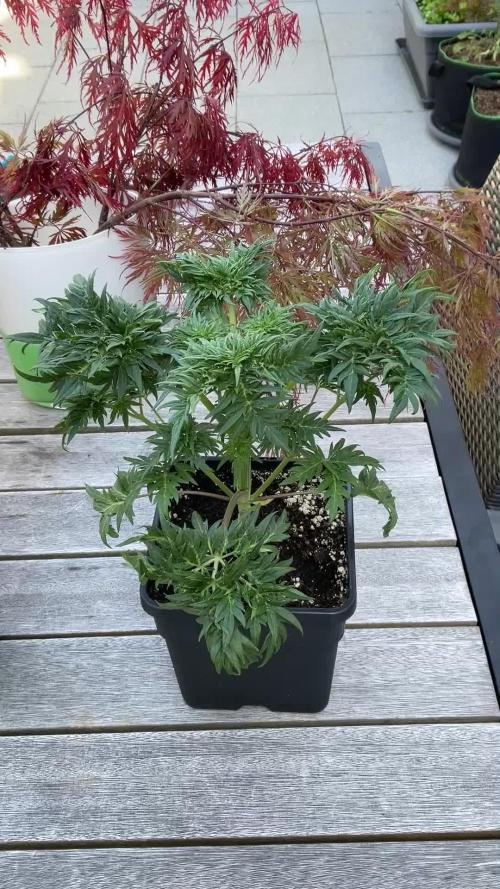
Die beiden Mentha de Croco Ladies legen diese Woche richtig schön los! Mit ca. 30 cm Höhe zeigen sie ein kompaktes, buschiges Wachstum und wirken rundum topfit 💪🌿
Das Blattwerk ist sattgrün, dicht und absolut gesund – keine Mängel, keine Schädlinge in Sicht 👀✨
Tagsüber dürfen sie draußen Sonne tanken ☀️🌬️, was ihnen sichtlich gut bekommt. Die natürliche Umgebung sorgt für kräftigere Strukturen und stabile Entwicklung – keine Stressanzeichen, nur pure Vitalität 🚀
Insgesamt: super robuster Zustand, sauberes Wachstum und ordentlich Power im System 🔋🌱
Wenn das so weitergeht, kannst du dich bald auf noch mehr Verzweigung und richtig buschige Pflanzen freuen 🌳🔥
---
🇬🇧 Weekly Comment – Mentha de Croco (Terpyz) 🌱🔥
The two Mentha de Croco ladies are really taking off this week! At around 30 cm tall, they show compact, bushy growth and look incredibly healthy 💪🌿
Foliage is lush green, dense, and spotless – no deficiencies, no pests in sight 👀✨
They’re spending their days outside soaking up the sun ☀️🌬️, which clearly benefits them. The natural conditions help build stronger structure and resilience – zero stress, just pure vitality 🚀
Overall: very robust plants, clean growth, and lots of energy in the system 🔋🌱
If they keep this pace, expect even more branching and a nice bushy structure in the coming weeks

Likes
8
Share


@AutoCrazy
Follow
This girl is really starting to thicken up! She smells so damn good!!! The buds have loads of trichomes. The buds almost look as good as ones grown indoor.
🤞 the weather stays nice. Although I built her a shelter that I can put poly over 😏
😎🍿

Likes
3
Share

@sellem
Follow
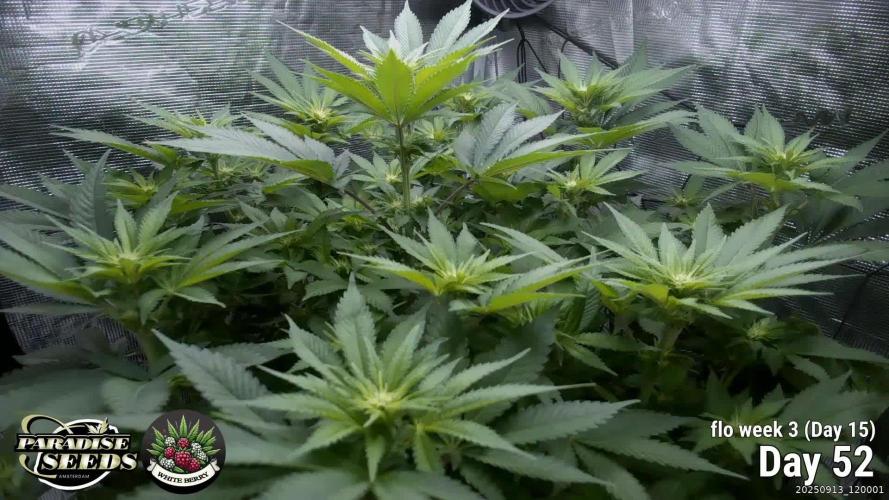
One more heavy defoliation to close out the end of week 3. shes really starting to bud up now, and the tent gets filled with that sweet, sweet smell. Shes looking healthy and showing speedy progress. Watering stays 6L, around 6PH, 5ml/L Bloom and 1ml/L Green sensation started with the last watering.


Likes
1
Share


@AtticGrow420
Follow
Wet Weight: 542,76g ~543g (19,145oz)
Dry Weight: 90g
Dry Stems: 35,42g
Dry Trim: 27,23g
Wet Wight to Dry bud factor: 0,1657 = 16,57%
Iam fine with the result but i know i can do it better.

Likes
9
Share


@GrowerGaz
Follow
Day 24 , showed sex day 21, the plant has doubled in size over night and the stem is already twice as thick as the four in soil. Water change tomorrow and you ppm to 600

Likes
216
Share


@Ju_Bps
Follow
For this grow I've used,
For the growth
1 Mars Hydro TS1000 (150 W)
2 fan 15w
1 extractor 150mm 350m3/h
1 carbon filter 150mm
1 Hydro Shoot 60x60x140
1 timer
11l geotextile pot
20 Hours On, 4 hours off light
For the soil I've used plagron light mix + batmix in the down
For the blooming
1 Mars Hydro FC300 (300W)@75%
2 fan 15w
Extractor + Filter 150mm
1 Mammoth lite 60 box
1 timer
11l pot
20/04
After harvest,
I've put the stuff in a room with 1 fan 15w
Thanks for all my friends!
And again thanks @Fast_Buds , and Mars Hydro, @Coco_Pan2022 ❤️❤️❤️
Likes
65
Share


@MadeInGermany
Follow
Flowering day 87
since time change
to 12/12 h.
Hey guys :-)
The Grinspoon blooms and blooms 😂
She keeps getting new pistils but the trichomes are starting to turn milky :-) .
I think it can be harvested in the next 14-20 days 👍.
Would even be a faster phenotype this time :-)
The last one had 136 days.
Was poured 3 times with 1 l each (groundwater see description at the bottom)
Everything was made clean.
Fresh osmosis water is applied and the plants are sprayed and checked.
Stay healthy 💚🙏🏻
👇🏼👇🏼👇🏼👇🏼👇🏼👇🏼👇🏼👇🏼👇🏼👇🏼👇🏼👇🏼
You can buy this Nutrients at :
https://greenbuzzliquids.com/en/shop/
With the discount code: Made_in_Germany you get a discount of 15% on all products from an order value of 100 euros.
👇🏼👇🏼👇🏼👇🏼👇🏼👇🏼👇🏼👇🏼👇🏼👇🏼👇🏼👇🏼
You can buy this strain at :
https://www.barneysfarm.com/dr-grinspoon-5
Water 💧 💧💧
Osmosis water mixed with normal water (24 hours stale that the chlorine evaporates) to 0.2 EC. Add Cal / Mag to 0.4 Ec Ph with Organic Ph - to 5.8 - 6.5
MadeInGermany


Likes
27
Share


@adam_pawloski87
Follow
Let’s Go day 29!! This week went real nice ! Girls are staying very healthy and building up nicely and even started showing signs of female sex which is super great ! We started doing a little bit of leaf tuck training method on em , nothing to big as like I said I want these girls just to do there thang an grow more on naturally side! My Air temp and Humidity have been on point all week, staying from 70-75 degrees throughout the day and humidity staying around 58-61% humidity , my girls are loving that summer an 75 feeling !! Can’t wait to see what we do this week ! Hopefully you all enjoy, and are ready for another great productive week ! Peace love an positive vibes to y’all Cheers 😶🌫️💨💨💨💨🤙🏻Happy Grows✌️🏻Week 4 let’s get it !
Likes
6
Share


@Gardengobblin
Follow
Toujours un bonheur de cultivé les semence fastbuds. La gorilla skittles est ma strain préférer et elle ne semble pas vouloir me décevoir encore cette fois
Likes
42
Share


@Theia
Follow
A great week. Nothing at all to do except enjoy them. Lots of growth, been on a 12/12 for a week now and showing signs of preflower.
Great plant to grow I recommend her to begginer like myself🤪. She is easy if you get her environment right.
Thanks for stopping by.
Grow well 🌿🌱🌿
Stay safe😷😷

Processing
Likes
26
Share


@eldruida_lamota
Follow
Buenas tarde familia, actualizamos el diario de las skunk de Zambezaseeds, y es que estoy tan sorprendido , es una cepa que produce flores muy muy compactas, sigue floreciendo con lo cual sigo regándolas solo agua ajustando el ph a 6,5 .
Temperatura y humedad dentro de los parámetros, 1/3 anda algo sobre fertilizada de las últimas semanas las 2/3 están como la seda , aún así todo pinta fenómeno tengo muchas ganas de cosechar y probar esta variedad y ya queda menos , pasen buen finde semana fumetillas.

Likes
13
Share


@eecc_photo
Follow
Hello people...
So heres the new strains Gellato 41 by SEEDSTOCKERS.
New setup with Heavengrowlights 320w, lets see hoy they do.
left a couple of timelapses for the germination process
cheers feel free to coment

Likes
20
Share


@EvilGrower
Follow
First off, I hope all who visit this journal watch the timelapse. I'm very happy with how it turned out. The GSC is in the foreground. Comparing the beginning to the end shows just how dramatically my plant has grown in the past week.
This plant now has a photo-period neighbor! I have changed the light schedule back to 18-6 to accommodate. Her chronicles will be in a separate journal.
Towards the end of week two, I noticed the leaves were forming brown spots that I took as a sign of calcium deficiency. To treat this, I used a gallon of (hard) tap water, adding calcium to the reservoir. Luckily this seems to have done the trick! The spots have been absent on all subsequent leaf growth. Sometime in the middle of this week, I had to re balance the pH from ~7 to ~6. Perhaps this pH fluctuation came from the tap water transfusion.
In an effort to raise the RH in the tent, I've repetitively spilled a small amount of water on the floor of the tent. Doing this keeps the RH around 45-50%. I've made some other small changes to my grow setup as shown in the pictures.
Prior to this week, I'd thought my plant was hopelessly behind developmentally compared to other user's because I'd compare their week two plants to mine. Luckily, this week has seen some growth! It's crazy how fast they shoot off after their first three-fingered leaves form. The first "real" set of leaves to grow in (not three-fingered yet), seemed to take forever to grow into their full size while not much else (besides the roots) seemed to grow. This week's three-pointed leaves have practically fully formed already. Alongside them, are the beginnings of yet more leaves!
I'm not certain what I will do this next week. I may start LSTing this plant, though I'm not sure when exactly I should do this. My original plan for my plants was to implement a screen of green using a trellis. I have sense realized this may not be the best approach while using a DWC, because water changed would be made much more difficult. Have any of you DWC growers experiment with this? Is it worthwhile?
I will likely not replace the water for another week, though that's not set in stone.
I appreciate any advise regarding the training techniques I mentioned, water switch outs and anything else that may be relevant to this grow. I will more than likely ask a few designated questions. To those who take the time to answer, thank you!

Likes
93
Share


@Ferenc
Follow
Plants started growing very fast. 20 hours light a day and 140 ml water for 2 plants so 35 ml each plant. (70ml -35ml one plant- morning, and 70ml -35ml one plant evening). From Monday I will start giving 200ml water 100ml in the morning and then the rest in the evening. Ventilation almost 24 hours, They are getting bushy and the color looks healthy green. I am excited. Purple Punch ( the right one) does not have the smell but the Gelato Cookie D'ohpe started smelling from the 3rd week, it is not strong, it is smooth, enjoyable. I still use trigger spray but I stopped triggering directly on the plant to avoid any fungee or toxicity, I just keep the soil moist. I surrounded them with kitchen foil around the lamp to have a more effective light. It reflects the light and the light goes everywhere. This step has been done because I have only the 60w LED each plant so I try to provide the maximum strength this way, and by keeping close distance also. The lamp is not hot so it ain't gonna burn the plant I had checked it before. I just purchased today a 600w LED because these plants look so good so I wanna provide the best circumstances for them. 4th-week 4th day I a just waiting for my delivery my 600 W grow LED light will come. From today I started watering with 50ml each plant 2 times a day so all together 200ml a day. Plus I always use trigger spray for the soil to be kept wet. They are looking better and better. Nice color and bushy appearance. Wonderful. I realized some holes on the Gelato Cookie D'ohpe's leaf but there is no insect I was checking. I do not really know the reason for that. Tonight I will set up the new 600 W LED so I am changing the current 120W. Big Step forward! It is not that easy that I thought, the lamp is great but the temperature raised up a lot, so needed to buy a fan also and the humidity went down. It is not easy to find the proper solution to be acceptable, good temperature and humidity at the same time. So I decided to program a 6/2 schedule, so 6 hours light on and the fan always with 15 min more, and 2 hours off so I do provide 18 hours light and 6 hours darkness but it is divided. The plants can rest after every six hours and use the energy they received. Last day of the 4th week, LST has been done with the Gelato Cookie D'ohpe, both are growing rapidly, let's see what the 5th week brings! End of he week Gelato Cookie D'ohpe is 25cm, Purple Punch is 20cm😇

Likes
8
Share

