Likes
Comments
Share

@GREENPHOENIX6262
Follow
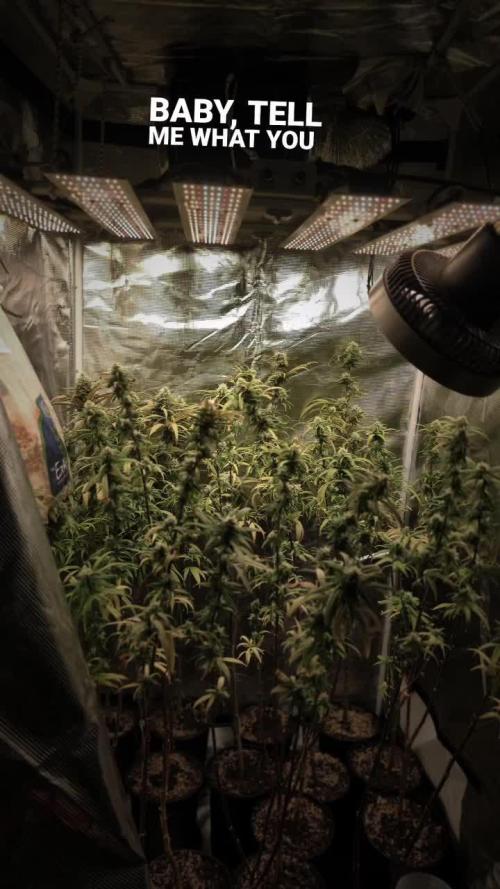
12/21 - Swapping lights tonight - running the QB3000 Sunraise (300w) FULL SPEC - adding 11 more plants into my 3x3 bringing the total to 17 clones - micro dosing will proceed as normal 😎😎😎😎😎😎
12/24 - Light swap completed - running the Sunraise QB3000 (300w) - added 11 more to the tent - they suffered a nad nute burn - currently trouble shooting the burn - running consistent humidity.
12/29 - So far the sick ones are are bouncing back - the original six are coming among nicely - trichomes are setting in - heavier feeds until harvest 😎😎😎😎😎😎😎

Processing
Likes
2
Share


Likes
4
Share


@Ieiogrow94
Follow
Eccoci di nuovo qui!!!
Super eccitato per questa nuova collab con Sweet Seeds, team davvero al top, che mi ha dato l’opportunità di testare questa nuova genetica e di condividere i progressi con tutti voi!!!
Come sempre partiamo nei bicchieri per poi travasare.. Questa volta verrà svolto tutto sotto la Lumatek Zeus 465 ProC, mi aspetto molto da questo ciclo!!
Purtroppo ho perso i file delle scorse settimane e dovrò reiniziare il report da ora scusate per il disagio
Grazie a tutti per il supporto ❤️🍀🔥

Likes
5
Share

@PurpleBeen
Follow
Week 5 / flowering
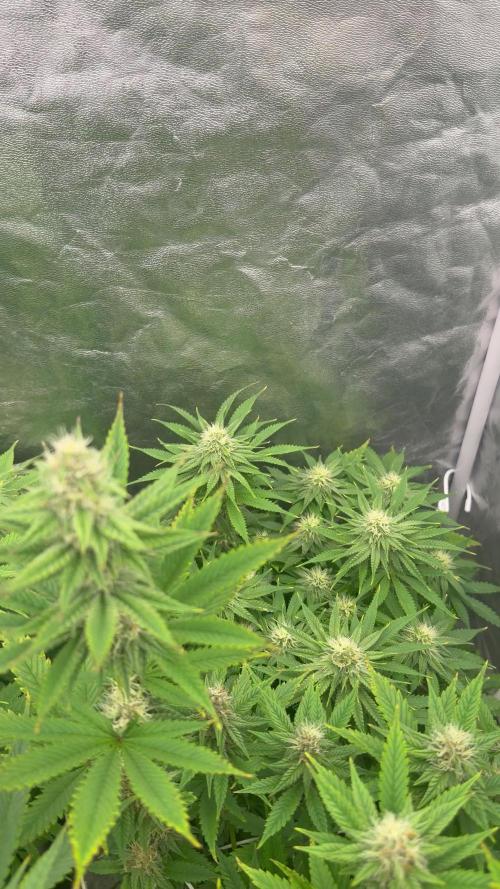
Everything is looking good. The nutrient burn/overfeeding issue seems to be behind me, although a few marks are still visible and don’t seem to be spreading. I’ll gradually start increasing the feed again. Runoff is reading 500 ppm. The buds are stacking up nicely, and the trichome development is looking great as well.
Repotting : 23/04/2026
12/12 swtich:15/04/2026
Middle: Strawberry Lemonade 16-20l x2
Background : Amnesia Lemon :11l x2
Front : Cherry Mc Muffin 7l / Oreoz : 11l
Topping : 01/05/2026
Light : 50-60cm / 100% dimmer
24-26 degrees / 30-40 % hygro
22-24 degrees
Watering is light at this stage — around 1l5;2,5l;3l depend pot size ( 1. watering humic ; 2. if plants show excess signs(1) if not, 3. watering with fertilizers flower )700-1000 ppm calmag 1/2 watering


Likes
4
Share


@the_big_pink_place
Follow
Just starting here, these seeds were above ground on Jan 20/22. Just starting my first week of veg now after main lining and structuring the plants the way I want, I'm doing the full veg/flower in these 1.5 Gallon pots. These were regular seeds and I know for sure there's one male , which I'm cool with as long as he turns out to be a stud of a plant , I'll keep his pollen and if I get a few seeds , if not he's gone. I don't mind it's just me smoking and last time I left the male I had maybe 20 seeds per female in all of the buds. This strain last time I grew it tasted like Durban poison with a cocoa/coffee hint it was delicious in the morning. Plants are 24 days old today.
Likes
23
Share


@555ABKY555
Follow
the past few weeks the girl scouts have been irrigated and fertilized but the little land used has made them dwarf, I performed lollipopping due to a redness that appeared on the leaves of one in particular now it is the most luxuriant. the skunk has really grown up in the background and the little shade has earned it its luxuriance


Processing
Likes
10
Share


@VovaFarms
Follow
Report on week 3 of veg: I lower the RH to 50-55% while the RM stays relatively on the higher range: 27-29C daytime and 18-22 at night. I had nice visual on the 6th node of BB3, Larry Bird and Gelato plants and few cm. to avoid any eventual stem splitting, so i topped them. I guess the Gorilla will be ready for topping by tomorrow. Unfortunately i have to work with hard water so i have to keep constant eye on the water's EC. For this reason and from personal experience i wont increase the nutrients dosage any time before flowering. The high percentage of worm castings is doing wonders and help me a lot with the substrate's maintance. I did some runoff water measurements and end up with the following values: Gorilla had 2.75EC and 6.5pH, Gelato got 2.70/6.6, Larry 2.85/6.7 and BB 2.20/6.9. Substrate pH is 7.0. Once again, I have to say that Sunmaster's Dual Spectrum HPS are indeed super powerful lamps. I added another clip-fan to ensure a nice breeze around the plants. I will follow the general rule of thumb and give the plants 10-14 days to recover from the HST. Once i week i spray the plants with foliar iron-based nutrient solution👊 (Plagron Vita Race). It boosts the photosynthesis, plus it washes and cleans the leaves. P.s. only the Larry Bird is topped on the pictures. I topped other two today, but i didnt want to switch-off the lights in order to take pictures. Peace!
Likes
23
Share

@Weedinho
Follow
Looking good !
Moby Dick is looking more normal now... I think the problem of the wrinkled leaves was just plain old simple overwatering.
Critical looks totally amazing. Cant believe I raised that one.
The northern lights looks kind of like it was mainlined and it’s growing more in the form of a bush. If it manages to stretch a few inches before starting to flower it may produce good results.


Likes
11
Share


@blasterw32
Follow
Two watering and 1 feeding this week. They received their last dose of Flora Micro (3ml/ gal) and higher doses of Bloom (10ml/gal)
I've also defoliated them for the last time
-------------
CBD will be ready for harvest sooner, probably ~5 days. Thus, she'll receive only water this week
Moby Dick still 10~14 days, so she'll receive more heavy nuts this week
Gorilla Glue needs 7-10 days, so she'll also receive more heavy nuts.
It'll be difficult to harvest them in different batches due to space constrains, so I'll probably chop them next week (in 6 days)


Likes
23
Share


@SonomaSungrown
Follow
There are simply beautiful plants.
Starting to see signs of flowering now... especially with the Pineapple Meatball.
I have noticed some yellowing of 5-10 lower leaves on the FM and CB, but none on the pineapple meatball.
I top dressed everything a week ago and also did another top dressing of crab meal and neem seed meal (about 3/4 cup of each on each plant).
Should be plenty of Nitrogen in there if the plants need a bit of a boost.
I've also caught just a few adult aphids sniffing around the chem brulee plant.
My brussels sprouts are nearby, and I'm battling aphids heavily with them.
IPM
Sprayed with Canncontrol (basically thyme oil) and top dressed with neem seed meal.


Likes
19
Share

@Ieiogrow94
Follow
Tutto ok settimana prossima defogliazione per dare luce ai palchi sottostanti 🔥🔥🌲
Likes
15
Share


@UDUDUDUDU
Follow
Planted de seed, usually I'll do a hard germanation, but I want this plant to just be natural.
When de sun set, pot & seed goes inside, dey come out for sunshine when it' is warm & bright enough.

Likes
Comments
Share

@Yaadmanlabs
Follow
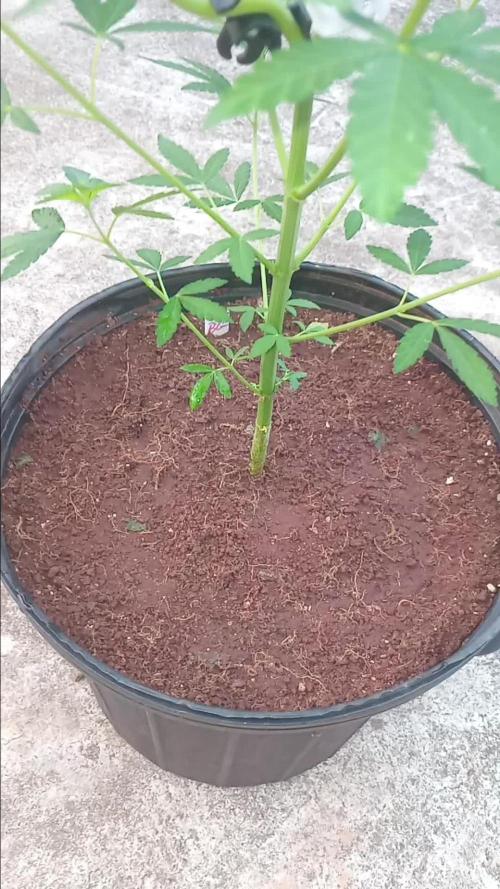
Unfortunately I made a mistake in uploading for this plant i missed about 2 weeks but shes looking beautiful

Likes
4
Share


@Hommero75
Follow
The 2nd week was great for the plants. Specially Banana Purple Punch and Forbidden Runtz
They stretched and grow without no problem. I'm excited for week 3. I LST them, I did some defoliation and they got fed with Goldleaf feterlizer and I added mycos chum and cal-mag to the mix. Let see how they do.


Likes
23
Share


@HideAndFly420
Follow
Day 71👋🌱
I started flushing some days befor. I think I’ve got 20 days left but this lady eat a lot of feeding this last weeks so I give some more flushing. Buds looks full of all
What they needs also if now they need to get fat and fat. :) let’s see what’s happen.
Giving ph controlled water at 6.2/6.5, I check TDS to water owerflowing from pot, bringing it to 50ppm from 400.
Now I’ll start checking trichomes every three days, I’d like a 60% white and 40% amber
Day 72👋🌱🌱
Hi all growers, how is going? 😊
I'm at my first real flush for this Orange, i gave 10 lt of ph controled water and was checking ppm from water coming out. i gave water unitl it reach 400 ppm, my water is 200 ppm, i hope i'll bring it to 50 ppm for next flush in 3 days.
i think bud are going to bloom nice this last days befgore harvest, i can feel it :D
Day 74👋🌱🌱🌱🌱
Soil is already quiet dry, smell is increasing rapidly. Today I’ll give another e 1 lt of water and Sunday I’ll do another flush. I think will go up to 90 days. Bud will get fatter and fatter🏆.
Maybe I could have fertilise two times more, but anyway I’d not a big problem, I’ve been feeding them a lot since the beginning so a more long flush won’t be a problem at all.
Can’t wait to the harvest.
Day 77 🌱🌱🌱🌱🌱🌱🌱
Just posting some trichome pictures, waiting to some changement before publishing some new pic of the lady.
Keep washing it with ph controleed water that looks always cleaner, i think i'll be cutting the most high bud some days before the rest of the plant.
Can't wait anymore
Let’se go! ❤️🌱
Any suggestion is really welcome :)😋🌱🌱
Likes
Comments
Share


@Ogbangbang2981
Follow
she's smaller than my other Ak48 but she strong and healthy and bent up love her flowers coming in nice I give same feeding as my fortune cookies autoflower and my ak48 autoflower fortune cookies and ak48 are 6 days apart video is of the trio when its lively out I give umm natural sunlight at night since there autoflower I give umm my led light. did I mention I'm from the Caribbean.
Likes
13
Share


@MarilizeLegaguana
Follow
Día 69, 21 de flor.
Foto 1 pre-peluquero
Foto 2 y 3 post-peluquero
Vídeo #MerryBerry
Así va la cosa chavalitris!
Se llevan el último arreglo ya en flor, a ver si las engañamos y engordan más de la cuenta
Toca riego en todas menos Gorila, que va unos días más lenta, y aún no tiene esa sed.
Favoritas de momento:
La #MerryBerry 3 huele muy muy diferente. No la he acabado y creo que ya quiero repetirla 😅 Cultivo fácil, estructura, mucha resina.
También top la #BlueberryMuffins 1 apuntando buena estructura, producción y resina!
La #weddingcake 2 y 3 mejoraron tras la apical y en Stretch juntaron nudo, 2 con con más resina.
La #ChocolateMintOg 1 solo es porra principal, pero parece tirar bien de resina.
La #Gorilla está por ver, pero también tiene un olor peculiar desde hace semanas.


Likes
18
Share

@LittleBigTrees
Follow
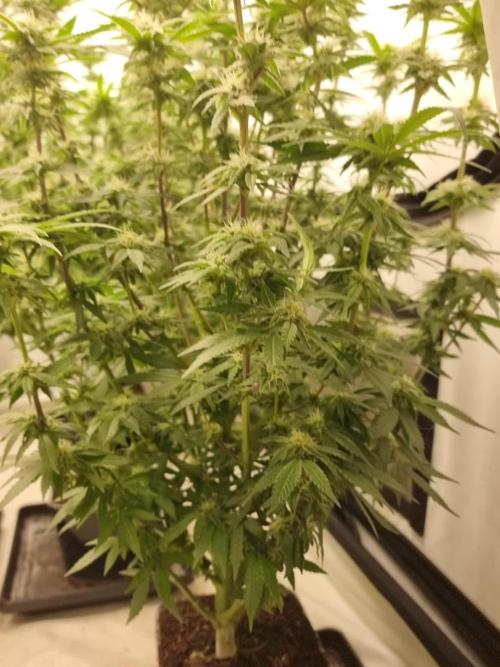
Feeding full strength at lights on and off with about 20% run off.
Defoliated a few fan leaves as the stems purple.
They are filling in well now with almost every leaf/bud covered in trichomes.