


Likes
Comments
Share

@LST420
Follow
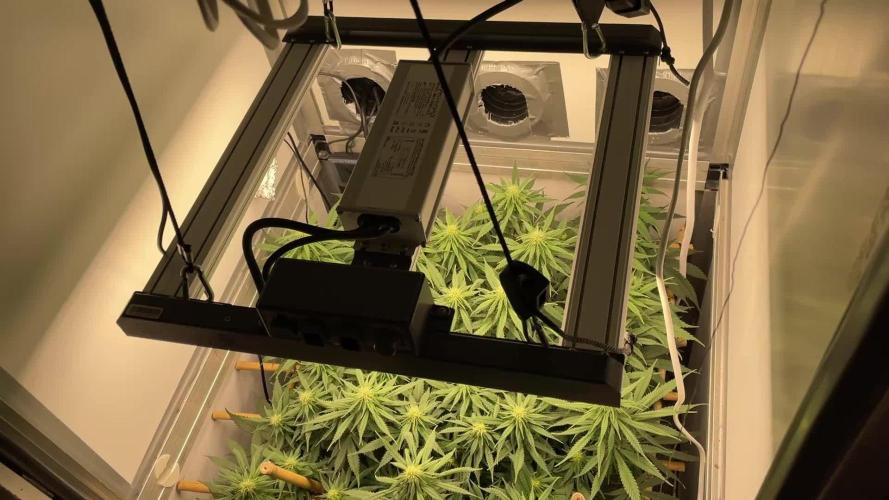
Week 11 Since a few days the plant's main terpenes have started to develop. I think it reminds me of the soft drink Fernandes Red Grape I drank many years ago

Likes
145
Share


@Salokin
Follow
Hello Growmies,
The final chapter of this incredible journey has unfolded, and it's time to share the bountiful harvest and reflections on the entire cultivation process. Trimming the plant was a joy, and with gentle fingers, I removed all the large fan leaves. The precision in this process revealed the true beauty of the buds, setting the stage for a smooth harvest. With care and gratitude, the plant was chopped, and the buds were hung to dry. The anticipation for what lies ahead only adds to the sense of accomplishment. The wet weight, excluding fan leaves, stands at an impressive 782 grams. The buds are massive, a testament to the efficacy of the nutrients used, particularly the Power Buds. The name seems apt, as the result is a collection of sticky, dense buds with subtle lemon notes and sweet pungent undertones. In the final moments, the plant unveiled some delightful purple hues. While I wish I could have allowed them to intensify further, it's a reminder that each grow is a learning experience. In hindsight, a slightly longer fading period would have accentuated those beautiful colors. We live and learn, and that's the essence of this journey.
A heartfelt thank you to Plagron and Zamnesia for hosting this amazing contest. The quality of the products and the support throughout the journey have been invaluable.
As this chapter concludes, I'm left with a sense of fulfillment and gratitude for the collective experience we've shared. The plant's growth, from seed to harvest, has been a testament to the art and science of cultivation.
Feel free to check out my other adventures in my bigger environments, until then...happy growing!
Stay Lifted
Salokin

Likes
19
Share


@Mattyice
Follow
Hasn't grown much taller but bud sites have been forming all over the place for a week now. It's now to the point where you can see all the various spots on camera. I'm so stoked I think I'm gonna get a decent yield on my first grow. 60+ grams but I don't want to get too bold. What a journey it's been so far I can wait to see how fat my flowers get any tips as to getting fat flowers?
Likes
27
Share


@Ganjagrandaddy
Follow
DAY 56 SINCE FLIP:These girls are really trying to impress now they are so close the finish line. Theyballnhave their own unique look and smell and will be a very welcome addition to the stash box.
Wedding cake is an top buddingnbeasty of a lady with some sweet , biscuit smelling and looking trichromes covering her swelling buds. She has burst open with a so many new pistils in the last 2 days that have given her main canopy a great appeal now. Each main has doubled in girth due to this and I think at least another full week for her is in order.
Black Ghost O.g has pushed and pushed to get herself noticed with success. Her few buds at the surface are sweet ish smelling with a hint of a spice too. The lower parts are way too light starved to have been developed well but this was due to their poor start. Still pushing trichromes onto.the covered surfaces. She sont yield high but her smoke will.make up for it I feel.
Gorilla Glue #4 is my secret favourite. She is so dusty withbtrichs and looks dangerous up close. She is clumped together from her needing so much support and I keep finding random arms on the lower portion of the plant that need bringing up again. She feels so tacky to touch and has a potent sweetness mixed with a spicey tang. I think she will be coming out any day now.
Be well folks


Likes
107
Share


@Tropicannibis_Todd
Follow
ALRIGHTY THEN GROWMIES 😎
REMINDER I DO 2 UPDATES PER WEEK 👉WEEKLYROUNDUP👈👉MIDWEEKLY UPDATE👈
We just hit week 8 and all is well , have to admit she's just killing it super happy with how shes coming along 😃 .......
👉currently having a Cal/Mag , pH issue but hoped I worked it on the last feeding 👈
I'm still training her with LST and it's looking good 👌 And she's filling out the pot perfectly👌 Lots of tops 👈
, rain water to be used entire growth
Lights being readjusted and chart updated .........👍
I GOT MULTIPLE DIARIES ON THE GO 😱 please check them out 😎
THANKS FOR TAKING THE TIME TO GO OVER MY DIARIES 👍
👉IF ANYONE IS LOOKING FOR A PLACE TO HANGOUT VIA GROWDIARIES AND TALK GROWING AND JUST CHILL AND WHATEVER .....👈
👉I CREATED GROWDIARIES DISCORD SERVER !!!!!!!!!!!👈
LINK IS 👉
https://discord.gg/zQmTHkbejs
AND SEE HOW IT PLAYS OUT !!!!!!!

Likes
73
Share


@Rwein93
Follow
Ciao ragazzi e bentornati qui, in una nuova pagina di questo diario.😉
Le sorelle Mimorange 🍊 sono diventate sicuramente le mie preferite nella tenda.😍
Sia per per l odore che per l aspetto dei buds, si stanno ingrassando parecchio e i peli spessi sono diventati gialli. Mentre l odore è dolce di mandarino.🔝
La crescita si è fermata e ora sta dedicando tutto alle cole! Intanto continuo ad aprire i rami per arieggiare le zone e illuminarle meglio.👍
Eh niente ragazzi! È rimasto ben poco da dire, aspettiamo che i fiori si maturano per bene😋
Grazie a tutti per aver guardato e restate sintonizzati per nuovi aggiornamenti!🙏
Buona settimana e felice crescita 🌱 🌱🌱

Likes
45
Share


@Kitties_and_Colas
Follow
~_~_~_~_~_~_~_~_~_~_~_~_~_~_~_~_~_~_~_~_~_~_~_~_~_~_~_~_~_~_~_~_~_~_~_~_~_~_~_~_~_~_~_~_~_~_~_~_~_~_~_~_~_~_~_~_~_~_~_~_~_~_~_~_~_~_~_~_~_~_~_~_~_~_~_~_~_~_~_~_~_~_~_
We planted 5 seeds, our goal is 2 plants of this strain for this 4x4 (all extra plants will live out in the 5x5)..we're using a brand new light for this grow, the Solux350 by Hortibloom! 💡🌱(https://hortibloom.com/products/solux-350-led-grow-light)...
This tiny fixture emits a ton of light for its size..we have 20 seedlings under her, hung at the recommended 24inches and at 25% power..I'm really excited to see what this light is capable of! Thanks for dropping by and happy harvests everyone!! ❤️💡🌱😽💨
⚡Hortibloom/Solux 350⚡
Specifications ⚙️:
Diodes: Samsung LM281 Pro / Osram DR (1,440 total)💡
Driver: Inventronics 350 watt🔌
PPF: 1015 μmol/s ☢️
PPE: 2.9 µmol/j 〰️〰️
Lifespan: 50k+ hrs ⌛
Weight: 14.3lbs lbs (6.5kg)
Veg Coverage: 5 x 5 ft 🌱
Flowering Coverage: 4 x 4 ft 🌼
-The Solux 350 uses an aluminum heatsink (no fan) for quiet operation 👂⬇️
-IP65 waterproof ratings, tolerant to high humidity grow environments 💦 ..
-Many units may be daisy-chained via RJ14 and dimmed from a single controller 💡~💡~💡~💡~💡
~_~_~_~_~_~_~_~_~_~_~_~_~_~_~_~_~_~_~_~_~_~_~_~_~_~_~_~_~_~_~_~_~_~_~_~_~_~_~_~_~_~_~_~_~_~_~_~_~_~_~_~_~_~_~_~_~_~_~_~_~_~_~_~_~_~_~_~_~_~_~_~_~_~_~_~_~_~_~_~_~_~_
~_~_~_~_~_~_~_~_~_~_~_~_~_~_~_~_~_~_~_~_~_~_~_~_~_~_~_~_~_~_~_~_~_~_~_~_~_~_~_~_~_~_~_~_~_~_~_~_~_~_~_~_~_~_~_~_~_~_~_~_~_~_~_~_~_~_~_~_~_~_~_~_~_~_~_~_~_~_~_~_~_~_~

Processing
Likes
10
Share


@STAYINGONMYMAINCBATORUNTWO
Follow
I am officially in flush now and they have started to fatten right up! The smell is incredible so strong smells like bud fuel ahahah can not wait for the end result and taste these beauties!

Likes
21
Share


@Gilgamesh15
Follow
Il "super cloner" aeroponico, svolge il suo compito eccellentemente!!!!
Sviluppo vegetativo e radicazione esplosivi!!!
I fertilizzanti"Advanced Nutrients" si confermano i migliori (la spesa vale l'impresa).
Il controllo totale dei parametri di coltivazione, si confermano vincenti!
I cloni sono pronti per essere trasferiti nell'impianto RDWC di crescita vegetativa e fioritura.

Likes
2
Share


@The_Doctor_Green
Follow
Esta semana regue solamente con agua, estuve un poco vago para preparar los nutrientes asi y todo la planta viene creciendo bien, a algunas ramas las he doblado para redireccionarlas.
Buen 2025 amigos!!👏👏👏👏🤞🤞🤞🤞🎊🎊🎊🎊
Likes
16
Share

@Bncgrower
Follow
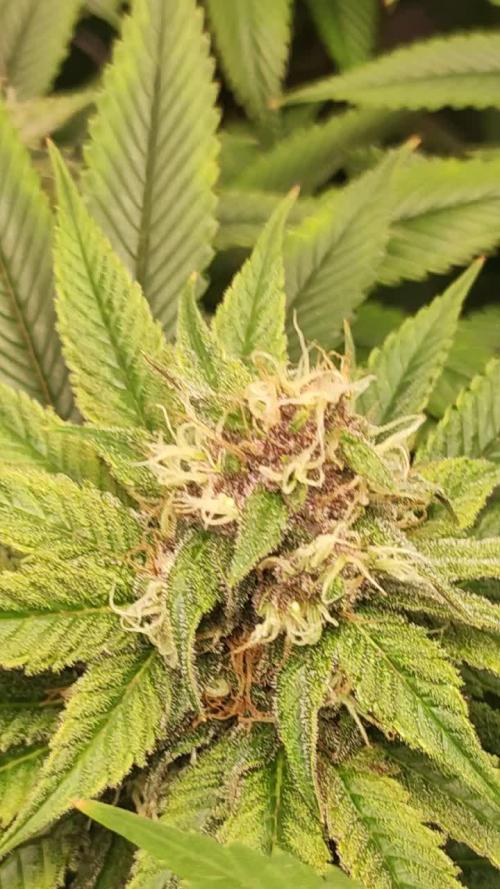
Following the plan, we've reached the end of week 12. Apparently, everything is fine with this girl and all the others, nothing to worry about. This girl in particular already has a very pleasant smell, excellent bud structure, and beautiful color. Looking forward to the next few weeks! ✌️🌱🌿🍁
Happy growing, everyone!

Likes
4
Share


Likes
3
Share

@Ninjabuds
Follow
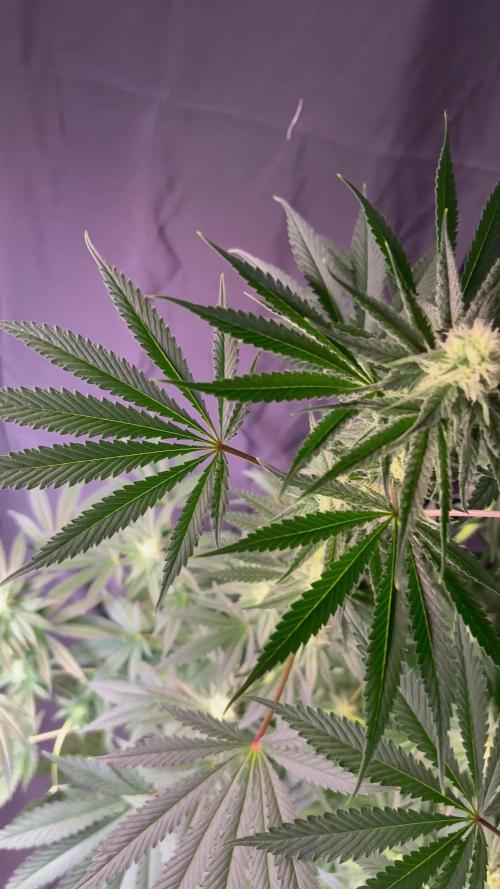
When I was moving the plants around to take photos this plant brushed across my face and the smell of it is crazy. The plant smell just like frost loops the cereal and then when u rub it on your fingers it has a strong gmo smell. I never smelt a plant like this I can’t wait to smoke it this is gonna be gas on a different level

Likes
21
Share

@DogDoctorOfficial
Follow
Before starting this harvest chapter, I want to apologize once again for not uploading everything directly into the official harvest and smoke review tabs.
GrowDiaries has been struggling a little with very large uploads lately, and with the amount of photos, videos and information involved in this Ghost Train Haze harvest, I decided to split everything into multiple parts to make sure nothing gets lost or broken during upload.
And honestly… this plant deserves the full story.
So welcome to Part 1 of the Ghost Train Haze harvest. 🌱✨
Before talking about harvest itself, let’s do a quick recap of how we even arrived here.
This was another 12/12-from-seed run.
No traditional vegging.
Very little manipulation.
Minimal training.
Mostly just letting the plants naturally express themselves while guiding environment, airflow, watering and light intensity carefully around them.
Instead of forcing the plants into a shape, the goal here was to let them grow naturally into the PPFD and into the environment themselves.
And wow…
Ghost Train Haze really showed personality during this run.
Most of the attention naturally went toward the massive main plant everybody keeps seeing in the photos — the giant colorful spear covered in fading reds, dark purples and swollen flowers — but there were multiple plants in this room, and in this harvest report we’ll finally start talking about all of them and the different directions they took after harvest.
By Week 14, the room looked absolutely incredible.
The fading on these plants became something special.
Deep reds.
Dark purples.
Almost black tones in some areas.
Golden fading leaves.
Heavy trichome coverage.
Color spreading through the sugar leaves and surrounding flower tissue.
One of those harvests where the plants almost stop looking real.
And underneath all those colors:
extremely heavy flowers.
Dense.
Massive.
Sharp aromas.
Long spears everywhere.
The branches became so heavy during late flower that support was absolutely necessary. Yo-yos were holding branches constantly, helping prevent collapse under the weight of the flowers.
And the moment the supports came out during harvest…
everything opened and leaned downward immediately under its own weight.
That alone says a lot about the size and density of these flowers.
There are photos in this report where I’m holding entire plants, and honestly, seeing them outside the tent really puts scale into perspective. It’s one of those plants that instantly makes you imagine how unbelievably huge she could become outdoors in native soil with unrestricted root space.
Harvest day finally arrived, and from there the project split into two different paths.
Some plants were harvested whole and hung for traditional drying.
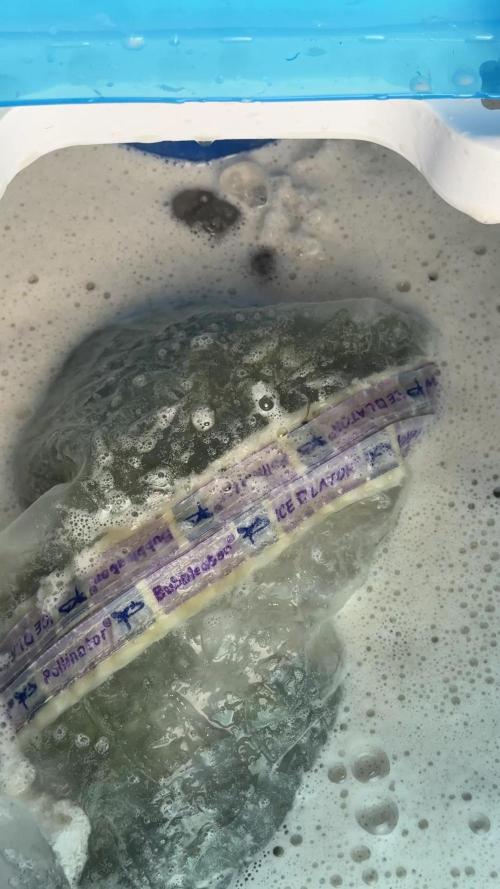
Others were fully broken down, every single flower removed from the branches, vacuum sealed into bags and immediately frozen for ice-water extraction work.
And this is where things start becoming really interesting.
Because this report is not only about harvesting flower.
It’s also about exploring different post-harvest directions and understanding why growers process material differently depending on their goals.
The flowers selected for traditional drying will continue their journey in Part 2, where we’ll focus much more deeply on drying conditions, moisture management, branch snapping, trimming and curing.
But for now…
let’s talk about the frozen material and ice-water extraction. ❄️
After harvesting, the flowers destined for washing were separated carefully and placed into vacuum bags before going into the freezer.
Freezing fresh material helps preserve volatile compounds, terpene expression and trichome integrity while preparing the flowers for ice-water extraction.
And no — this is not simply “throwing weed into ice.”
There’s actual science and technique behind this process.
Before washing, the frozen material is combined with ice and extremely cold water, ideally close to 0°C. The goal is to make the trichome heads brittle enough to detach cleanly while keeping unwanted plant contamination as low as possible.
At the same time, the flowers need time to fully soak and rehydrate slightly before agitation starts. This helps reduce excessive breakage of plant material during washing.
And then comes the wash itself.
The bubble washer machine agitates the mixture gently, allowing trichome heads to separate naturally from the plant material and suspend inside the cold water.
From there, the water passes through a series of filtration bags with different micron sizes.
25 micron.
45 micron.
73 micron.
90 micron.
120 micron.
160 micron.
220 micron.
Each size captures different grades and sizes of resin heads and contaminants.
We are not using every single bag configuration during this run, and we’ll go much deeper into grading, collection quality, drying and final results later in the series. But since this report already includes videos and photos of the process itself, I thought this was the perfect moment to explain what ice-water extraction actually is — and what it is not.
This process is not about adding anything.
It’s about separating what the plant already naturally created.
Water.
Ice.
Agitation.
Filtration.
Patience.
That’s it.
And honestly…
watching these resin-covered flowers moving inside ice water almost feels hypnotic.
The harvest itself may be finished…
but the real post-harvest journey is only beginning now.
This report will continue in the next update very soon because there is simply too much material, too many photos and too much information to fit properly into a single upload without risking GrowDiaries crashing or losing content again.
Part 2 will continue deeper into:
the drying process,
environmental control,
trimming,
flower handling,
and the continuation of both post-harvest paths.
And eventually, Part 3 will close the circle with curing, smoke review, flavors, extraction reflections, effects and final thoughts.
As always, thank you to everybody following this journey.
To Zamnesia for the genetics.
To Plagron for the nutrition.
To all the gear keeping this room alive day after day.
To GrowDiaries itself.
To the community.
To the longtime followers and OGs.
To the new people arriving every day.
To the curious ones.
To the silent supporters.
To the lovers.
To the skeptics.
To the haters.
To everyone who stopped by, even for a moment.
Thank you for being here. 🌱
Part 2 coming very soon. ✨
📡 DELETED @ 1K Please stay tuned.we never quit https://www.youtube.com/@TheDogDoctorOfficial NEW 🙏 Thank you for your patience and continued support.
FOR DISCOUNT CODES AND MORE JUST FOLLOW THE LINK https://website.beacons.ai/dogdoctorofficial
📲 Don’t forget to Subscribe and follow me on Instagram and YouTube @DogDoctorOfficial for exclusive content, real-time updates, and behind-the-scenes magic. We’ve got so much more coming, including transplanting and all the amazing techniques that go along with it. You won’t want to miss it.
GrowDiaries Journal: https://growdiaries.com/grower/dogdoctorofficial
Instagram: https://www.instagram.com/dogdoctorofficial/
YouTube: https://www.youtube.com/@dogdoctorofficial Deleted by Youtube - https://www.youtube.com/@TheDogDoctorOfficial NEW
Vimeo : https://vimeo.com/dogdoctorofficial Under construction stay tuned ⸻
Explore the Gear that Powers My Grow
If you’re curious about the tech I’m using, check out these links:
🔆 Lighting & Environmental Control
• Future of Grow — Advanced LED lighting technology
https://www.futureofgrow.com/
DISCOUNT CODE: DOG20
• Lumiflora — Under-canopy LED lighting
https://lumiflorade.com/
• TrollMaster — Environmental controllers and automation gear (past collaboration)
⸻
Genetics
• Zamnesia Seeds — Genetics used in this project
https://www.zamnesia.com/
⸻
🌱 Soil, Substrates, Boosters & Root Support
• Plagron — Substrates, bio mixes, and supportive products
https://plagron.com/en/
⸻
🎒 Storage, Curing & Preservation
• Grove Bags — Curing and storage solutions
https://grovebags.com/
⸻
📸 Photography Equipment & Tools
(Not sponsors, but part of my creative toolkit)
• Sony A6700
• Sony full-frame macro lens + few more
• Stacking photography workflow - learning
• iPhone (for behind-the-scenes shots)
We’ve got much more coming as we move through the grow cycles. Trust me, you won’t want to miss the next steps, let’s push the boundaries of indoor horticulture together!
As always, this is shared for educational purposes, aiming to spread understanding and appreciation for this plant. Let’s celebrate it responsibly and continue to learn and grow together.
With true love comes happiness. Always believe in yourself, and always do things expecting nothing and with an open heart. Be a giver, and the universe will give back in ways you could never imagine.
💚 Growers love to all 💚
📸 P.S. – The Eye Behind the Lens
All photos in this diary (for now — except for the ones showing the camera, which I took with an iPhone) are taken with a Sony A6700 paired with a Sony full-frame macro lens and a few more.
Photography is part of the story — it’s how we share the fine textures, the glow, and the quiet details that words can’t always capture.
I’ve also started experimenting with photo stacking — a technique where multiple images, each taken at a slightly different focus point, are layered together to create one perfectly sharp image from front to back.
It’s not digital enhancement or AI; it’s pure photography — a way to reveal the plant’s beauty in microscopic depth, from trichome to petal.
You’ll even see a few shots of "ghost me" capturing the shots — camera, lens, setup — because every grow deserves not just to be cultivated, but documented like art.
FOR DISCOUNT CODES AND MORE JUST FOLLOW THE LINK https://website.beacons.ai/dogdoctorofficial
NEW DISCORD - Official Server Invite Link : https://discord.gg/ksjAkA5T74
Likes
6
Share

@DutchBarnacle
Follow
Week 6!
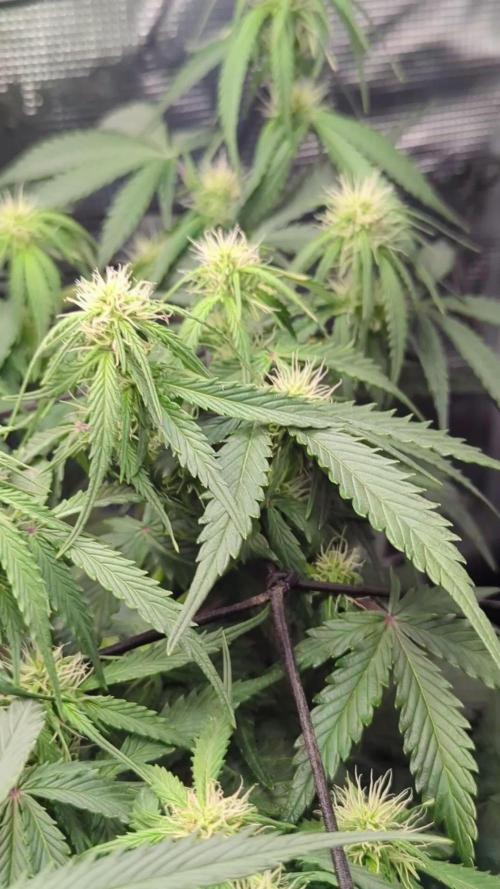
Well, even though she was restrained by the trellis net, the stretch was untamable. During two days on her own, she wrestled herself free and we had to reconsider our strategy. We opted for supercropping her and laying her down in a spiral.
..and still.. she's fiesty.
She's mostly flat now, and: wow, she takes first spot in the amount of viable bud sites. Most of these sites receive more than 500 PPFD on an 18/6 schedule while some of the escaped branches take in well over 900 PPFD.
Since she's not showing signs of any burn, we upped the nutrients once again! We also defoliated her bottom 3rd, as well as thinned out her center canopy.

Likes
69
Share


@Grow4Releaf
Follow
*Jan26th-#plant2 was ready to cut Tuesday she's In the dry tent goon for a few days then will jar up. *
Plant 1 is goin strong still. But they both are on a tap water diet till the end.
We're at week 14 from seed and 8th week flower so should be done growing and filling out from here on hopefully..
Just glad the tents set up fully now with exhaust and dehumidifier so no more crazy spikes (would get up to 80% rh and 55°f .. cold and humid had me freaking out lol. But that's all sorted)
All in all I'm happy with the lil test run on these, seeing how they did with minimal nutrients and light gives me hope for the next go.
Still debating on running these with growdots , my next set will be with ganja farmer seeds and growdots. Should be fun may throw in a plat jelly or two aswell. We shall see once the beans get here..
As always tho. Appreciate anyone thst may leave suggestions or feedback. Always like gearing what u see or don't see . Helps get better so its mainly why I'm here .
And thanks to anyone goin thru my rambles ,videos and photos.
Hope everyone's grows are doing well, I'll be skipping around checking out what is going on .! Till next update take care gang !

Likes
28
Share


@GanjaGecko
Follow
Der erste Outdoor Run wird mit dem Frühling eingeläutet💪🏻
Hoffentlich spielt das Wetter mit und lässt die Ladys gut wachsen.
3 von 4 Samen sind gekeimt. Der zweite StrawberryBanana der nicht gekeimt ist, wurde jetzt nochmal in ein Glas mit Wasser. Wenn der Samen nach 24h immernoch nicht keimt, kommt er weg. Aber diese Chance soll er noch bekommen💪🏻🍀.
Die GorillaAuto ist auch noch nicht ganz übern Berg, ich bin aber guter Dinge.
Als Ersatz für die StrawberryBanana wurde eine LemonCherryCookies nachgelegt. Drücken wir ihr die Daumen.
Die wird dann ein eigene Story
bekommen.
Die Ladys werden die ersten ca 2 Wochen in relativ kontrollierter Umgebung angezogen. Wenn es in die Endtöpfe geht, geht es für die Ladys nach draußen. Erst etwas im Sonne/Schatten Mix und wenn sie sich dann an die Sonne gewöhnt haben, sollen sie möglichst viel Sonne bekommen und werden minimal verstellt.
Zwischen 3 und 4 Tagen nach dem Setzen der Samen haben die Ladys das Licht der Welt erblickt.
Möge die erste Woche beginnen🍀💪🏻
Likes
3
Share


@AustinRon
Follow
Week 15 - Flower Week 11
Lemon Jeffrey by IRIE Genetics (14 Starts for 8 Finishers)
63-70 Days Flower (9 - 10 Weeks)
Weeks Observations:
- Our light leak on July 6th through July 31 ‘cost’ us ~ 21 Days. Extending Harvest to account for 21 day light leak. New Harvest Date 12 Sep 2023, Plant Day 121, Flower Day 86
Seeds Wet: Monday 14 May 2023
Harvest Date Range: [ 2023-08-11, 2024-08-21]
Start of week:
- Dates: [2023-08-27: LJ2Q 106:F:11:1,
2023-09-03: LJ2Q 112:F:11:7 ]
End of Week:
- Plant Height Range: [46, in]
- Water/Day/Plant: [935, ml]
EnvironmentalCurrent:
- Scotoperiod: [ 11, hrs] # 1900 - 0600 + 24
- LightIntensityPeak: [ 1000, µMol/m2/s ]
- DailyLightIntegral: [ 42.1, Mol/m2] # Target: < [ 40, Mol/m2/day]
- LightDistance: [ 6, in] # 3.5” LESS than Optimal for SP3000
- TempAvg: [79.1 , °F]
- RH: [ 68, %]
- VPD: [ 1.10, kPa]
- 230*4*11/8
- FeedwaterPerPlantPerDay: [ 1265, ml]
- Feedwater: [ 10.12, l]
- EC: [ 2.0, mS]
Environment NOTES:
- RULE
- CLOSE Room Airflow during LOW TEMP periods(2030 - 0700)
- OPEN during HIGH TEMP Period (0700 - 2030)
SOP:
- WEAR CLEAN GLOVES FOR ALL SEED OPERATIONS
- CLEAN All Instruments before use
- Light Strengthvegetation := 100 + (#nodes * 100)
- Light Strengthflower := [ 1000, 600, µMol/m2/s]
- Scotoperiodvegetation := [ 1300, 1900, 6, hr]
- Scotoperiodflower := [ 0600-1900, 13, hr]
Environment
- Late Flower (Week 10-14) (F5-F10)
- Temp: 78-80°F
- VPD: 1.2 ± 0.2
- Photoperiod: 11/13
- Light Strength: [930, 850, µMol/m2/s]
- EC: 2.3 # Week F5-F8
- EC: 1.8 # Week F9
- EC: 1.1 # Week F10
- Finish (Week 14) ( F10)
- Temp: 78°F
- VPD: 1.3 ± 0.2
PPFD: 750 peak
- Resin Bloom ONLY
- EC: 0.8
_______________________
Base Application for 10 Gal:
- [x] Primer A: [ 100, ml]
- [x] Primer B: [ 100, ml]
- [x] Silica Skin: [ 35, mll] # Reduce to reduce/eliminate Sediment
- [x] SLF-100 (Enzymatic Root Cleaner): [ 50, ml]
- [x] King Crab (Biology): [ 5, ml]
__________________________________________
- @ EC: 1.7 Supplement: [ Application Rate], [ Total Delivery for 2 Gal Solution]
- [ ] Primer A: [ 10, ml, gal], [ 12.5, ml]
- [ ] Primer B: [ 10, ml, gal], [ 12.5, ml]
- [ ] Silica Skin: [ 4, ml, gal], [ 5, ml]
- [ ] CalMag Fuel: [ 4, ml, gal], [ 5, ml]
- [ ] Peak Bloom: [ 4, ml, gal], [ 5, ml]
- [ ] Resin Bloom: [ 4, ml, gal], [ 5, ml]
- [ ] SLF-100: [ 5, ml, gal], [ 10, ml]
- [ ] King Crab: [ 0.5, ml, gal], [ 1, ml]
- [ ] EC: [ 1.7, mS]
85 ml/plant X 11, : 935 ml/plant/day, 2.4x of field capacity
Meaning ALL Fertigation through pot is Refreshed 2.4 times per day with this schedule.
____________________________________
Mon 28 Aug 2023 # End of Harvest ORIGINAL Window , before discovering light leak
LJ2Q 106:F:11:1
- [x] Will scope trichomes by hand, and set a chop date today.
- Some are ready today, Some look to need 10 - 14 days.
This has been an interesting grow - the extra stretch munged the SOG Strategy - with severe Chiropractics I still have >±12” of height per plant. We should be harvesting today . . .
- We could conceivably take the grow as far as Day 139, if we calculate a 4 week light leak forward. That would make LATEST DATE 24 SEPTEMBER -
- IF We go more than this week
- Week 15 Nutes (Mixed Daily)
- Mon - Wed: ONE SHOT, EC: 1.7
- Thus - Sun: ONE SHOT, EC: 1.4
- NEXT WEEK
- Mon: Resin Bloom: EC: 1.1
- Tuesday - Harvest: Resin Bloom: EC: 0.8
- ELSE if we take them down next Sunday:
- [ ] Been feeding The Rooted Leaf Hydro schedule, Base Nutes plus Silicon. Need to move to harvest nutes, potassium (+Resin Bloom/+Peak Bloom) at
- [ ] Monday:+Resin Bloom/+Peak Bloom: EC: 1.7
- [ ] Tuesday: EC: 1.4, (+Resin Bloom)
- [ ] Wednesday: EC: 1.1, (+Resin Bloom)
- [ ] Thursday EC: 0.8 (Resin Bloom Only)
- [ ] Friday EC: 0.8 (Resin Bloom Only)
- [ ] Saturday EC: 0.8 (Resin Bloom Only)
- [ ] Sunday - Harvest
Growtek Mod
- 170 ml/event per emitter -> 2 Gallons Input
-
___
EC: [ 2.0, mS]
Tue 29 Aug 2023
LJ2Q 107:F:11:2
EC 1.6+
- Defoliated (final) blocking and unviable fans. Looks better - clearer airflow
Wed 30 Aug 2023
LJ2Q 108:F:11:3
EC: 1.6
For 2 Gal (ml’s) RLA Minerals
14.0 Primer A
14.0 Primer B
7.0 Silica Skin
10.5 Peak Bloom
South Cascade Organics
- [x] SLF-100: [ 5, ml, gal], [ 10, ml]
___
Plant Success (Beneficial Bacteria, Crab ‘Frass’)
- [ ] Sunday - Harvest?
- [x] King Crab: [ 0.5, ml, gal], [ 1, ml]
Thu 31 Aug 2023
LJ2Q 109:F:11:4
EC 1.4
For 2 Gal (ml’s) RLA Minerals
12.3 Primer A
12.3 Primer B
9.2 Peak Bloom
Required 1 qt to bring down from 1.6 to 1.4
Friday 01 Sep Jul 2023
LJ2Q 110:F:11:5
EC 1.1
For 2 Gal (ml’s) RLA Minerals
7.6 Primer A
7.6 Primer B
5.7 Peak Bloom
Sat 02 Sep 2023
LJ2Q 111:F:11:6
EC: 1.4
Peak Bloom as Needed for Dilution
- [ ] Scope Trichomes Last Time
With a 21 day light leak, we’ll extend harvest to Day 118, Flower Day 90 - or 69 Unleaked Light Days . . .
Through End of Harvest, Daily
Daily Feed through Harvest Day -2
Per TWO Gallons: EC 1.4
- [x] Primer A: [ 12, ml, gal]
- [x] Primer B: [ 12, ml, gal]
- [x] CalMag Fuel: [ 4, ml, gal]
- [x] Silica Skin: [ 4, ml, gal]
- [x] Peak Bloom: [ 4, ml, gal]
- [x] Resin Bloom: [ 8, ml, gal]
- [x] King Crab: [ 0.5, ml, gal]
- [ ] SLF-100: [ 5, ml, gal]
- [ ] Reduce to EC 1.1 on Harvest Day -2
- [ ] Reduce to Resin Bloom Only, EC: 0.8 Pre Harvest Day
DECISION - We’ll take the girls down Flower Day 83, Nominal Day 62 assuming 21 Day push for light leak. It’s not in practice3 that long - we should be good, if not - latest day 90 (Nominal 69)
____
Sun 03 Sep 2023 # Flower Day 77
LJ2Q 112:F:11:7
EC 1.4
- [x] Dismantle And Clean Res, Pump, Chiller, Lines
- [x] Clean Res
- [x] Clean Pump
- [x] Load Res with a a gallon of HOT tap water, a cup of 30% Vinegar
- [x] Run Pump for :30
- [x] After 30: Reverse Lines
- [x] Run Pump for :30
- [x] Stop pump
- [x] remove tubing from pump and chiller
- [x] Remove pump, reclean
- [x] Clean Chiller Tubes
- [x] Rinse with 30% Vinegar
- [x] When Dry: Reassemble & Replace

Processing
Likes
4
Share


Likes
85
Share

@Tropicannibis_Todd
Follow
💩Holy Crap💩
That was so much fun , it's full on winter where I am and it kept me busy , and come on there's nothing like growing your own stuff. I had a blast as it's been at least over 10 years since my last indoor grow , and it was fun , I had used all of my old techniques and equipment and it worked out just fine , so I was glad I had a ruff idea of what to expect......
Final thoughts
Gonna be honest about that grow , it should me just how far Genetics have come, 10 plus years ago before I stopped growing indoors , all we had was like lowrider auto and greenomatic auto and maybe few others but they were horrible...... but this auto produced quite well as expected it should with the size of my medium and my soil base and very little nutrients, which is what I had hoped for from the start , cause I didn't really know where to start in terms of Genetics as I have been out the game for awhile but I'm super glad with the results and some gratitude needs to be sent to CanukSeeds , they came through as it always starts and ends with elite Genetics👌 ...........
I can't wait to start my next grow diary, so keep an eye out , there's gonna be more to come , I'm going to try some really interesting cultivars........
PS. Can anyone tell me this , back in the day like 2003-4-5-6 wasn't growdiaries.com just a private forum cause if memory serves me , I was among those lucky enough to find a community that did complete grow logs, fourm style, which is where I found my growmie and Mentor Franco Loga from Greenhouse seeds , RIP BUDDY 😃
CANT WAIT TO START MY NEXT GROW
👉I HAVE CREATED A PLACE FOR GROWMIES TO VISIT , SHOW OFF THERE GROWS , AND JUST HANG OUT .....👈
👉ALL YOU NEED IS TO JOIN THE GROWDIARIES DISCORD SERVER !!!!!!!!!!!👈
LINK IS 👉
https://discord.gg/zQmTHkbejs