





Likes
11
Share


Likes
69
Share


@nonick123
Follow
Día 37 (08/07) Ajustes de LST en todas las plantas! 🚀
Día 38 (09/07) Ajustes de LST en todas las plantas. Las ramas inferiores están creciendo como un cohete! 🚀😍
Riego con 250 ml H2O pH 6,5
Día 39 (10/07) Las plantas se muestran sedientas! Creo que el cepellón está lleno de raíces y piden el trasplante!
El crecimiento no se ha visto afectado de momento
Riego con 500 ml H20 pH 6,5
Día 40 (11/07) Paso a regar con 500 ml / día, ya que hace mucho calor (30 ºC) y efectivamente las plantas ya han copado la maceta de raíces
Riego con 500 ml H20 pH 6,5
Día 41 (12/07) Riego con 500 ml H20 pH 6,5
Clones! Mi experimento vuelve a demostrar que NO necesitas complejos productos de clonación ni sistemas para obtener clones!
Hace 15 días puse 2 clones con el tallo sumergido en miel durante 5 minutos en una maceta de 400 ml con PRO-MIX HP BACILLUS + MYCORRHIZAE
He mantenido la humedad alta con una cúpula de humedad casera hecha con una botella de agua PET de 5 litros cortada por la mitad y pulverizando a diario.
Han estado los 15 días en mi terraza con luz indirecta, y temperaturas que rondan los 30 - 32ºC durante las horas centrales del día
Hoy los he trasplantado a una maceta de 1 litro porque ya habían formado raíces y empezaban a formar nuevas hojas!
🐥🐥🚀🐥🐥
Día 42 (13/07) Riego con 500 ml H20 pH 6,5
Día 43 (14/07) Trasplante a maceta definitiva de 21 litros de ROOTPLUS Pot de GSKOREA GLOBAL!
Estas macetas son una maravilla!
Proceso de trasplante:
Se prepara con 17,85 Litros (85%) de sustrato PRO-MIX HP BACILLUS+MYCORRHIZAE + 1,05 Litros de Humus de Lombriz (5%) + 2,01 Litros de Insect Frass (10%) + 210 gramos de Earth Vibes Super Soil (10 g/L substrato)
Se llena la maceta de sustrato con las manos (limpias) y rompiendo los trozos más gruesos, para que el sustrato esté aireado y esponjoso, sin presionar
Se coloca una maceta vacía de 6,5L para que quede la forma perfecta de la maceta donde están actualmente
Se espolvorea la parte proporcional de la probeta de microorganismos sobre el agujero de trasplante
Se saca la planta de su maceta actual (bonitas raíces 😍) y se coloca en la maceta final
Se riega muy lentamente hasta percolación profunda con H2O EC 0,5 pH 6,5
Una vez asentada, complemento con un riego de 500 ml con 25 ml/L de Humus de Lombriz Liquido
Se coloca mulch (acolchado) de paja para evitar traspiración excesiva y cuidar a los microorganismos del suelo
A ver como reacciona al trasplante!
Aplicación foliar Kelp hidrolizado de Lurpe Solutions a 0.25 ml/l
Realizo ajustes de LST aprovechando el trasplante a la nueva maceta. De momento tienen una canopia muy bien formada!
💦Nutrients by Lurpe Solutions - www.lurpenaturalsolutions.com
🌱Substrate PRO-MIX HP BACILLUS + MYCORRHIZAE - www.pthorticulture.com/en/products/pro-mix-hp-biostimulant-plus-mycorrhizae
Processing
Likes
6
Share


@Smokwiri
Follow
Well, I've been comparing this with similar strains, untill now, i think she sugar kush is less profitable when using LST, but it works good, and the plant is nice and low

Likes
16
Share


@BongRip
Follow
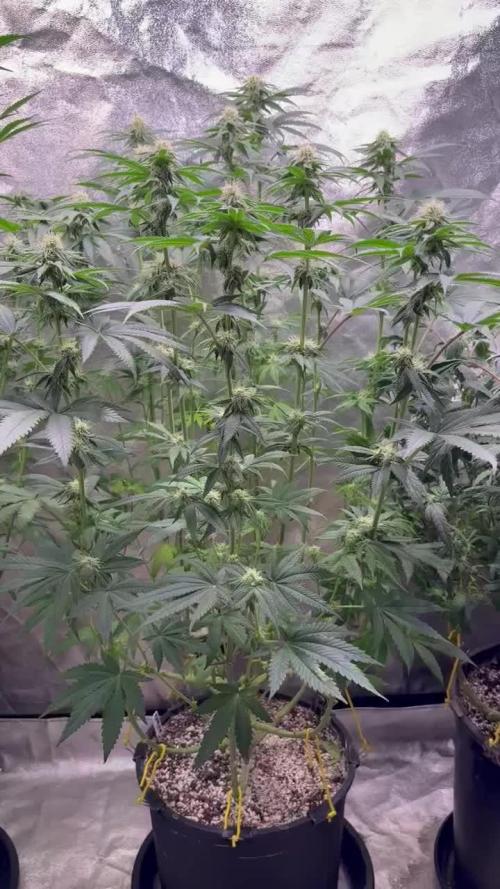
UPDATE AFTER A LONG TIME, i'll post more often.
I only recovered a few videos from last couple years to share.
Mango is dense, but doesn't give out much trichome as I expected. So, I took a risk and poke a hole in the stem to gave a lot of stress to the plant, so the plant gave out a lot of trichomes and the bud becomes a bit bigger.

Processing
Likes
13
Share


@ladyjane
Follow
7/4 - When I came into the tent this morning the ladies were praying! They looked very happy and I have to believe it was the worms. I did nothing else.
I watered all with Trinity and RO Water. They have nearly completely recovered from their minor deficiencies. Their leaves look great.
7/6 - Both Wonder Woman ladies are doing great. They were praying again when I checked on them earlier. Their leaves look healthy and happy. I watered them today with just RO water, CalMag, and Extreme Serene as they will get fed tomorrow. I also did a foliar spray of the Extreme Serene on all.
I will be vegging them out for another 2 weeks and then flipping them to flower.
7/10 - End of week 9 and both ladies are looking great. Watered with RO water and Molasses.

Likes
5
Share


@kandra
Follow
Main-Lining:
Malawi mit Draht
Passion Fruit mit Schnurr
Versuch mit etwas Luftbefeuchtung aber ohne Wirkung


Likes
3
Share


@PoshGrow
Follow
Welcome to GhostGrow Chapter One by PoshGrow!
🌳 Week #6
3rd week of flowering. Somehow didnt documented alot of this week and next one in vids or pics... Need to smoke less i guess 🤦♂️😆
Scrog works perfect, abit lose, but manageable.
If you wonder about my home made scrog net, its made from 18mm hot water pvc tube, some screws and rope 😅
Watering when needed, every other watering I used Fox Farm Big Bloom, Grow Big & Tiger Bloom.

Likes
4
Share


@The_Projexx
Follow
Welcome to week 8 of flower!! Things are really starting to get heavy and loaded in frost! I will be checking the trichomes this week to see what plants are nearing the end and which ones will still need a bit more time to mature and finish. To say the least Im very excited to get to the finish line with these ladies!
Huge shout outs go to @MarsHydroLED and Hidden Vault Genetics for their dedication on making stellar gear that making growing extra fun and really easy.
Huge HUGE shout outs go to all my followers and to the people who stop into the diary alike to show their support! Keep on inspiring to grow!
-The Projexx
Day#50F Some of the ladies are still putting on some mass!
Day#51F Pictures N/A. Macmelonz and Banana Smoothie #1 will deff need more time to finish then the rest of the ladies in this room!
Day#52F Started removing some leaves from the bottom , I will be looking to continue this until harvest day.
Day#53F I knew I should have installed the second net, Some of the flowers are leaning right over now haha. Going to get some stakes to add into the buckets for some support.
Day#54F Checked the trichomes looking like 6 of the 8 plants will be starting their flush while Macmelonz and Banana Smoothie #1 will continue to feed for a bit longer before starting to flush.
Day#55F Really digging trichome production on Creamy Cereal #2 , she's got a wild Lucky Charms aroma to her that's quite unique.
Likes
17
Share


@Le_Duc_Du_Bud
Follow
Salut amis cultivateurs 🍁
On es enfin en semaine 4 de floraison.
On peut voir que la GC et la SB on énormément évoluer et surtout gonfler.
Après avoir discuté énormément avec une personne sur le site, j'ai changé ma façon de faire sur les arrosage.
Et comment dire que je suis étonné de voir comment elle ont réagi 😱 super bien et pourtant je force je force .
Tous les jours je leurs donne 2L chacune et tout les jours et pompe au maximum ce que je leur file . Aucun problème d'humidité, ou carence ..
J'ai tout de même effectué une cure de calmag pour éventuellement contré ce fort apport en nutriments.
Et regarder par vous même ❤️ MAGNIFIQUE
FASTBUDS FAITE MOI CADEAU DE GRAINES ❤️ j'adore vos génétique propose et constante
Likes
2
Share

@IndigoMist8
Follow
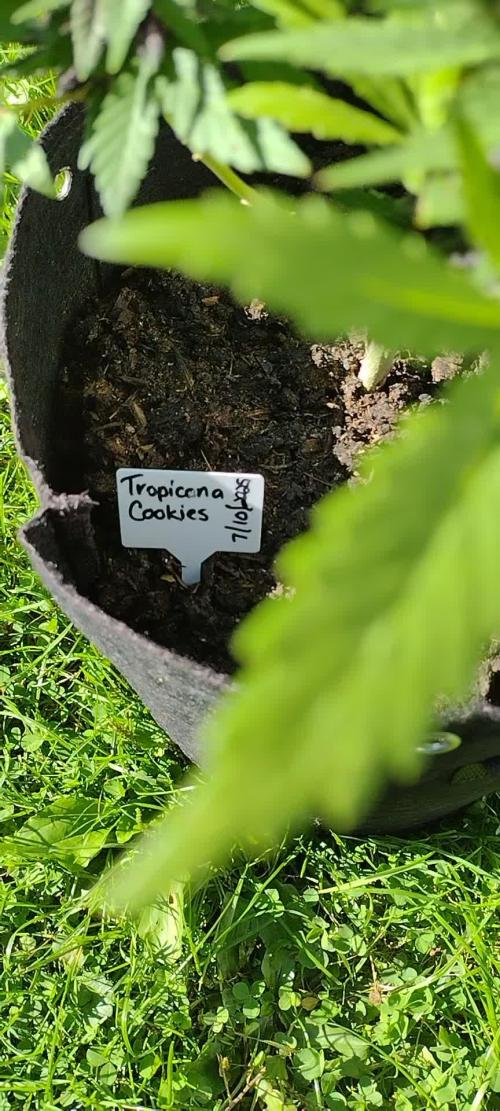
Absolutely stunning grow to watch! Smells like a bowl of sweet tropical fruit.
Likes
18
Share


@Pokan187
Follow
This week went by well, I will start checking the trichomes on the Runtz at the end of this week. It should be ready for harvest in the next 2 to 3 weeks
The G13 is still smelling like magic, looking majestic.
The GDP buds are starting to put on weight
Likes
25
Share


@Mr_ZAF_Budz
Follow
So Day 60 of 12/12 and the girls are ripening perfectly. Trichomes are mostly cloudy but I think they need a few more days for sunset sherbet and another week or 2 for the Plat. GSC. Obviously the amnesia haze will go for another 3-4 weeks.
Hope you guys enjoy the update ✌️🏼


Likes
Comments
Share


@Trichoma
Follow
@ 1.5 kPa
Plants are really thirsty right now already missed optimal watering windows because of that.

Likes
12
Share

@PrinceOfHerbs
Follow
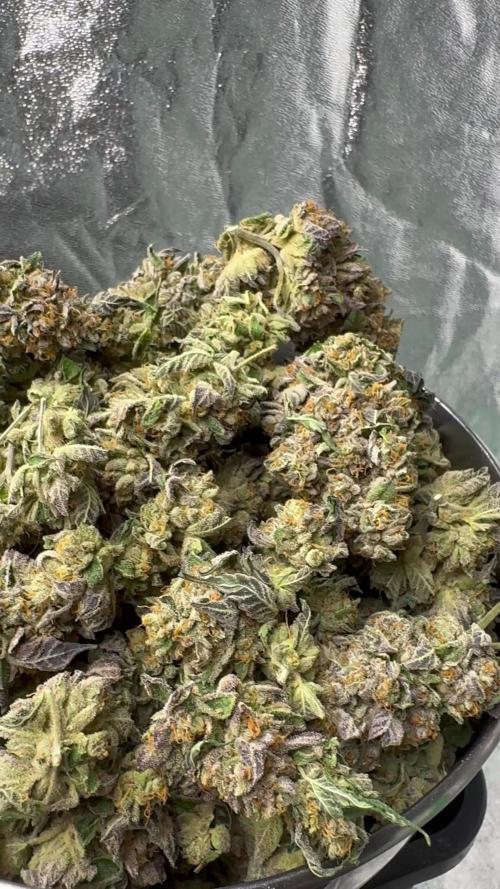
A complex blend of sweet, nutty, and sour notes – reminiscent of Amaretto, complemented by citrus and earthy undertones.
After testing, the following terpene profile was identified: Myrcene, Limonene, Caryophyllene, Linalool, and Humulene.
It delivers a balanced effect with an uplifting, creatively stimulating head high, followed by a relaxing body effect without heavy sedation – although it hit me so hard that after 2 hours of activity, I ended up sleeping on the floor for 4 hours. 😂
THC levels of 28% were recorded, and this single plant yielded 410 grams of fully cured flower.💚💚💚

Likes
30
Share


@coyote2thick
Follow
I hung dried for three days and then bagged them up in brown paper bags for two days due to the low temps and humidity before jaring them.


Likes
27
Share


@RDWCGrowing
Follow
5/23/2023
Week 7- Day 1 of Flower (Day 110 overall) (Day 49 of Flower)
There was a couple of small super small sucker buds on the lower stocks that needed to be cleaned off but that was it. Just watching them Flower!!
5/24/2023
Week 7- Day 2 of Flower (Day 111 overall)
Tucked a few fan leaves below lower buds but didn't see any blatant offenders that needed to be removed. I typically do start my checks in Week 8 but since this is a new strain I decided to go ahead and do a Trichome check just to see what was what.. Just as I thought nothing but clear glassy Trichomes. I will check again in one week....
5/25/2023
Week 7- Day 3 of Flower (Day 112 overall)
Just letting them grow today!! Smell is getting stronger I would say it is a hint of Pine and a heavier fruity smell.
5/26/2023
Week 7- Day 4 of Flower (Day 113 overall)
I did Nothing but took some pics and I enjoyed it!!!! It is nice to be able to just sit back and watch them on auto pilot.. :-) Tomorrow Water Change Day!!
5/27/2023
Week 7- Day 5 of Flower (Day 114 overall)
I admit it.. I had to defoliate a little bit.. I looked in while changing the water today and there were just a couple blatant offenders blocking the light from lower bud sites and those leaves they just had to go. Other than that I changed the water and this week is where I drop everything and start preparing them for this last phase of the grow. Loving a few of these buds they are starting to beef out very nicely.
I added 36 gallons
Mammoth Silica = .5Mil/Gal= 18Mil
Root DRIP = 1Mil/Gal= 36Mil
CalMag= .5Mil/Gal= 18Mil
FloraMicro = 3.8Mil/Gal= 137Mil
FloraGro= 2.8Mil/Gal= 100Mil
FLoraBloom= 4.6Mil/Gal= 166Mil
LiquidKoolBloom= 2.5Mil/Gal= 90Mil
TPS SIGNAL= 4.0Mil/Gal= 144Mil
ORCA = .5Mil/Gal= 18Mil
Water Temp= 70.1
Tent Temp= 76
Humidity =64 ** I have two dehumidifiers running on Ink bird controllers to try and keep the humidity down, In late in flower I like to keep the humidity above 45 but below 60.
5/28/2023
Week 7- Day 6 of Flower (Day 115 overall)
Opened the back of the tent today and boy did she need some defoliation love in the back. Other than that I took off a few little sucker buds trying to form. I did start to setup my Dry space as well as did a Trichome Check today and the brown tips are coming in nicely.
5/29/2023
Week 7- Day 7 of Flower (Day 116 overall)
Found a few baby sucker buds trying to form so I removed them. Other than that I am enjoying watching her mature.
I also started my Reverse of the Clone I took 6 weeks ago in Apr from #3. I am uploading footage of the reversing process for your viewing pleasure.

Likes
22
Share


@m0use
Follow
***Sponsored Grow*** = Medic || https://medicgrow.com || Grow = ***Sponsored Grow***
Not a whole lot is happening this week, still having some PH issues in the medium, I believe this is from the microbial mass I added a while back. A microbe product, PH going into the medium is around 6.5-6.8 and coming out is between 5.5-5.8, so something is acidifying it up. Also noticed the runoff last week was a bit higher at times. So lowered the feed down quite a bit, going in at 1.4EC vs 1.8 will bump it up to 1.5 and 1.6 in the next few weeks. I also added in a bit of a PK booster. nothing to crazy only 60ppm worth on a total allowance of 700PPM
Lights now running at 100% with V1 spectrum, decided to go with 100% now vs after stretch, will see how it works out.
Till next week.
***Sponsored Grow***
Official Website:
https://medicgrow.com/
+
https://www.kannabia.com/en
Facebook:
https://www.facebook.com/medicgrowled
+
https://www.facebook.com/kannabiaseed/
Twitter:
https://twitter.com/medicgrow
+
https://twitter.com/kannabiaseeds
Instagram:
https://www.instagram.com/medicgrow420/
+
https://www.instagram.com/kannabiaseedsint
YouTube:
https://www.youtube.com/channel/UCNmiY4F9z94u-8eGj7R1CSQ
+
https://www.youtube.com/c/KannabiaSeedCompany
Growdiaries:
https://growdiaries.com/grower/medicgrowled
https://growdiaries.com/grow-lights/medic-grow
+
https://growdiaries.com/grower/kannabia
https://growdiaries.com/seedbank/kannabia


