


Likes
Comments
Share


@gr3g4l
Follow
La lucha contra el frio continua y esta semana la iniciamos añadiendo un calefactor de más viendo que las temperaturas seguirian bajando.
En exterior las temperaturas bajaron hasta los menos -4ºC por lo que fue muy complicado mantener una buena temperatura en el interior.
Y no fueron suficientes los tres calefactores de 80W. para evitar que bajara tanto la temperatura.
Al tener el intractor y extractor 24h. se hace más complicado.
The fight against the cold continues, and this week we started by adding an extra heater, seeing that temperatures would keep dropping.
Outside, temperatures plummeted to -4°C, making it very difficult to maintain a comfortable temperature inside.
And the three 80W heaters weren't enough to prevent the temperature from dropping so low.
Having the intake and exhaust fans running 24/7 makes it even more challenging.


Likes
81
Share


@MrJones
Follow
I am very happy with the harvest @21% wet to dry that pretty strong for me, the buds were in the tent for 10 days, the long slow drying process has really paid off. The buds were solid and frosty, this strain was very easy to grow, and like I said Original Sensible Seeds do not disappoint, I have a few more strains by them and cant wait to get them started!


Likes
24
Share

@AsNoriu
Follow
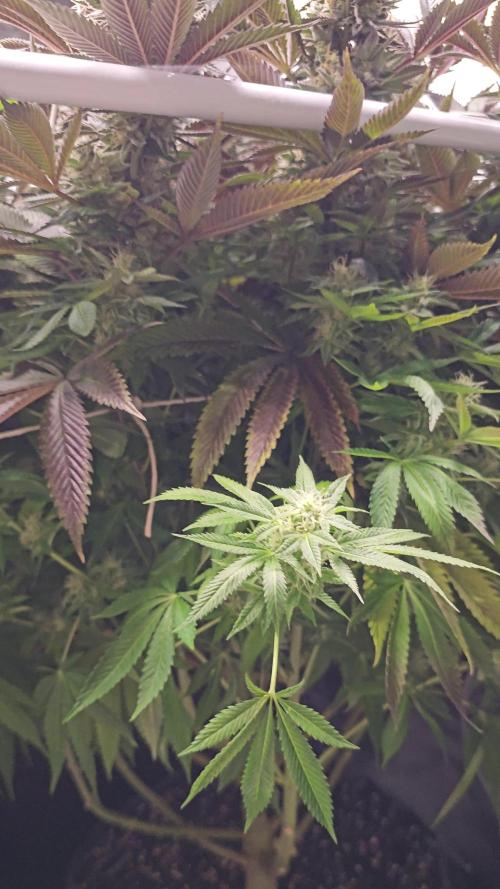
Day 129 since seed touched soil. Again troubles .... Came to check them and found tent dark. Normally theirs day was in the night, now one day we again had no electricity and everything moved 8 hours, so day is day now ....
Humidity spikes as hell. I dont want to make wounds, so no defoliation ... just too big of a risk to damage or bring infection in ....
Ground level 99% rh, canopy level - 85, lights level - 80 .... never grew in such hight, i did in 65-70 without problems, but this goes overboard ...
Drinking slowed down, will reduce volume by 20% next watering. One more feed left.
Keeping sticky pads as prevention and it helped to catch 50 or so bugs and maybe prevent infestation. Gnats mostly ....
10 days till chop !!! Hope no bud rot !!!
Happy Growing !!!

Likes
12
Share

@Hanibert
Follow
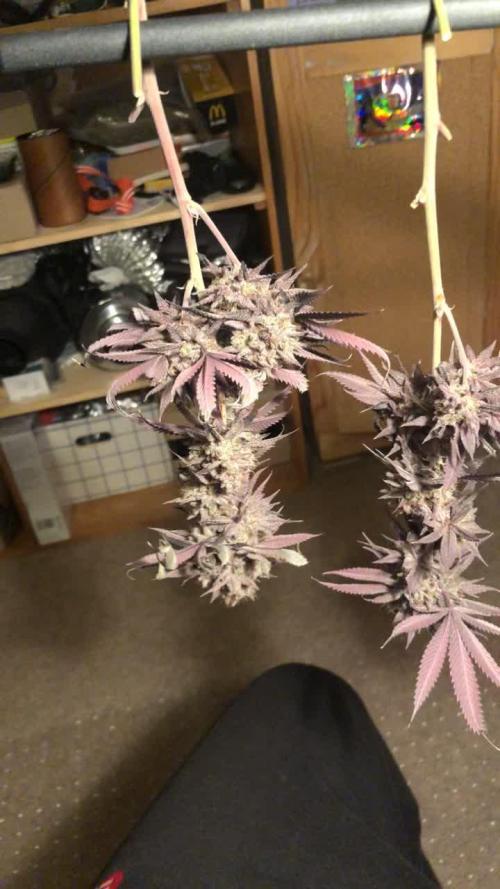
Sadly had a two moldy headbuds, but i think it was my bad. I didnt take my time watering slowly and the right way. I will still wash the rest, didnt see anymore mold, i checked very cautios. From the Too much GAK #3 i also saved three headbuds to try her as flower aswell
Pressed the 45-90u first at 75°C and a 2nd time at 80°C. First press was 5,65g and 2nd press was 0,5 which i dabbed right away and had some very nice candy fumez terps. Makes it a ~1,2% return on the lower quality, i am hoping for ~4g on the 90-160u which will be my premium quality.


Likes
93
Share


@DrJones
Follow
She seems happy.
It’s been another good week of growth.
I’m cutting out the bio-grow completely for next week. I might give her some later in the grow if she looks like she needs it.
Also, I’m gonna dial back the bio-bloom back to 2ml/L.
Her buds are increasing in size and the smell is getting stronger.
I feel like I might be about a week behind in terms of flower due to the stress from such heavy defoliation and losing most of her fan leaves, but overall I’m happy with how she’s coming along.
Thank you for the likes and support 🙌
Have a good week growers 🍻💥

Likes
33
Share


@Northern_Ent
Follow
June 7: she’s doing better but still not right after the frost a couple weeks ago.
Check out coyowolves howling on video.
June 8: removed frost damaged colas and composted immediately with coffee grounds, peat pot bottoms, some HP Pro-Mix from a couple of failed peat pots and LAB. Cannabis was assimilated almost immediately and it looked like good compost after about two days. This was my Coffee Canna Compost which was used for some autos.
June 10: gave it 2.5 mL/L of FPJ as a soil drench rather than just the usual 1 mL/L as a weekly foliar spray. Plant seemed to grow a lot in the next few days so maybe I should do that more often.
June 11: looking better since the frost damage setback. Not as strong in the cool weather as the two Quebec Cannabis Seed plants but as we move into summer this plant should be fine.
June 13: recovered the six inches of height lost when I removed the frost damaged colas.


Likes
23
Share


@Jackweed77
Follow
Le ragazze dopo la germinazione sono rimaste in una mini serra per circa una settimana e in seguito dono state spostate nella loro casa ddefinitiva...tutto procede senza problemi
Likes
10
Share


@Jofflepov
Follow
Solid growth. Two smallest plants live in an airpot. They have a much faster growth and were flowering before the ones in normal pots. They need more food and their leaves are more crispy, like lettuce.
The normally potted plants are taller and greener but significant slower.
This is what I learn. Airpots give faster blooming but stay smaller because vegetationtime is shorter.
Likes
41
Share


@KilgoreTrout
Follow
No complaints, no problems other than our current heat wave. Watering three times today's vs normal 2. Tricomes looking like they're getting real milky. I'd say two more weeks.
FYI growdiaries says im on week 9 but by my count I'm in week 8f - 56 days.
I'm thinking at least two more weeks based on tricomes. Starting to get milky buts nearly zero amber.


Likes
190
Share


@Herbalize
Follow
Hello Folks 😎
7th week of flowering,I'm really amazed by these girls !
They are very productive, the smell is powerful, and look at the size of these colas ! 💪
They drink 4/5 liters every 5/6 days, for the last watering with fertilizer, I reduced the dose about 650 ppm
my plan is to start the flush from day 50 until day 65 and from there, I'll see if I have to push a few more days while checking the color of the trichomes
I think I'm going to enjoy this strain, already like the smell a lot 😻
Follow, like and comment if you enjoy it
I also have a second diary with 2 Remo Chemo
Peace Love & Weed 😍👊

Likes
39
Share


@Theia
Follow
This plant is a beast.. she is massive and well into her stretch. Loads of bud sites and great spacing between nodes. I had to supercrop her as she was pushing twice the height of all othe girls in the room. She took it well and is fully recovered and just great.
Love this plant.
Very odd smell quite disgusting ATM tbh..
I started giving this girl a light misting with some fishmix and activera for a few days as she was looking like she was not getting enough food. 5 days on she is looking good
Thanks for stopping by.
Happy growing all🌿🌱
Stay safe😷😷😷

Likes
1
Share

@Organic473
Follow
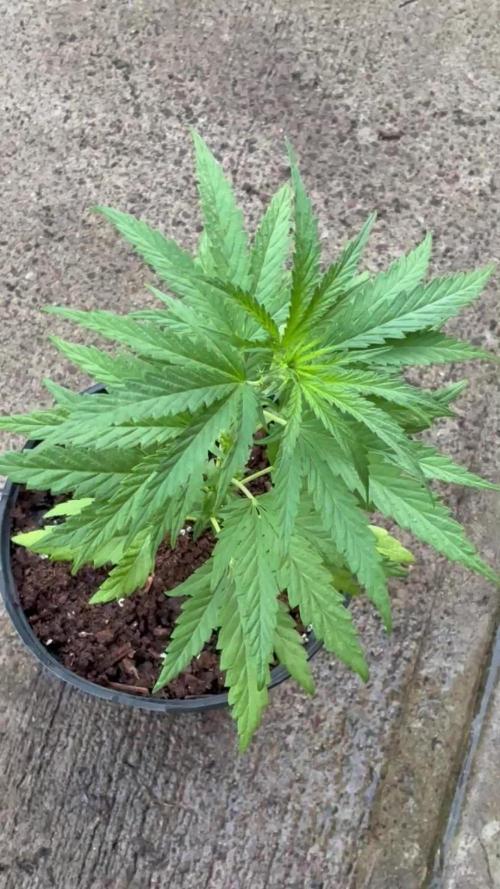
Her large leaves curl sometimes so I know she does not like too much moisture and with her being in a plastic pot makes it worse however once she gets the sun ☀️ life comes back…I will soon transfer her to a fabric pot.
Likes
28
Share


@Felloffthegrid420
Follow
So it’s been hot and dry storm came throw didn’t seem bother any of the feed some blood meal and bone mean and the same stuff I use lee do it smell o so sweet can’t wait

Processing
Likes
5
Share


Likes
17
Share


@NuttyYeti
Follow
This long journey is over, it's harvest time. Can't wait to taste the cheese. 💚🌱

Likes
14
Share


@Bread_n_Buds
Follow
Here we are, ready, after a week of truly fruitful germination we have 20 beautiful plants all marked with the Z of Zamnesia.
We have moved on to autoflowering, unlike many growers I have no prejudices about this type of plant, it is true that they are the easiest to make but it is also true that they have improved a lot in terms of flower quality and if once ease meant lower quality now even the most presumptuous old school flower children growers struggle to understand if a flower is autoflowering or a normal photoperiod plant. There are people who claim to recognize it by the flavor but then never succeed, it's funny how it works. I enjoy making them strip their heads with these magnificent new autoflowering. This one in particular is not brand new but it has always kept up with the times and has the strength of the name and the stability of the historic strains of Zamnesia this is nothing universal strains this is one of the spearheads of the house: Sticky Beast autoflowering. It's really a great plant already grown in the past by me and some of my friends have always loved it like crazy. I think it's the only one or one of the few to have won CUP from the Zamnesia catalog but we hope to find company for it very soon...
---- New Home - The young ladies have almost all been transplanted into 11-liter pots which is my favorite size to get the best ratio of presence of plants in the grow box / yield. Especially if you don't have to do exaggerated topping or you have to grow the plants straight with main cola like I do for catalog needs like I do, 11 liters guarantees you to make excellent plants. Topping with 11-liter pots is recommended up to a maximum of 16 tops (4 main crops) - The pots are square plastic and canvas branded Zamnesia - The soil used is Plagron Promix with peat and worm castings but not fertilized -
--- Start feeding program - A very serious feeding program branded Plagron has begun. We made our own custom table based on the chosen soil (Plagron Promix 100% organic) that you can all do at the link https://plagron.com/en/tools/grow-schedule-calculator and I started giving:
- Power Roots - 1ml/l
- Alga Grow - 2 ml/l
- Pure Zym - 1 ml/l
- Sugar Royal - 1ml/l
- Vita Race - 1 ml/l
- The 100% Organic pack by Plagron can be found on Zamnesia at the link:
https://www.zamnesia.io/it/11457-plagron-easy-pack-natural.html
We are giving a lot of humidity with a humidifier and we oscillate between 65% and 70%.
// Strain Description // What happens when three famous strains come together? Sticky Beast Automatic by Zamnesia Seeds is a pure autoflowering composed of some of the best strains. From this combination, where the delicious flavors of Bubble Gum meet the famous OG Kush and the productivity of Critical Auto, a real autoflowering is born that is extremely easy to grow!
// AWARD WINNING STRAIN // First Prize at Autoflowering Highlife CUP 2018 --
- Get a seed of this amazing strain --- https://www.zamnesia.io/it/3331-zamnesia-seeds-sticky-beast-automatic-femminizzato.html
- Soil and Fertilizers entirely organic --- https://plagron.com/en buy on www.zamnesia.io
- Growbox and air system --- https://www.secret jardin.com/
- Light — P2000 - https://www.viparspectra.com
- Music and sound --- I made my girls listen to 432hz frequencies and music from www.radionula.com
- Z --- You can find these seeds, much more from the world of cannabis, mushrooms and an incredible series of accessories and gadgets on the reference site not only mine but of many growers ---- https://www.zamnesia.io