Likes
Comments
Share

@MetallicaDave
Follow
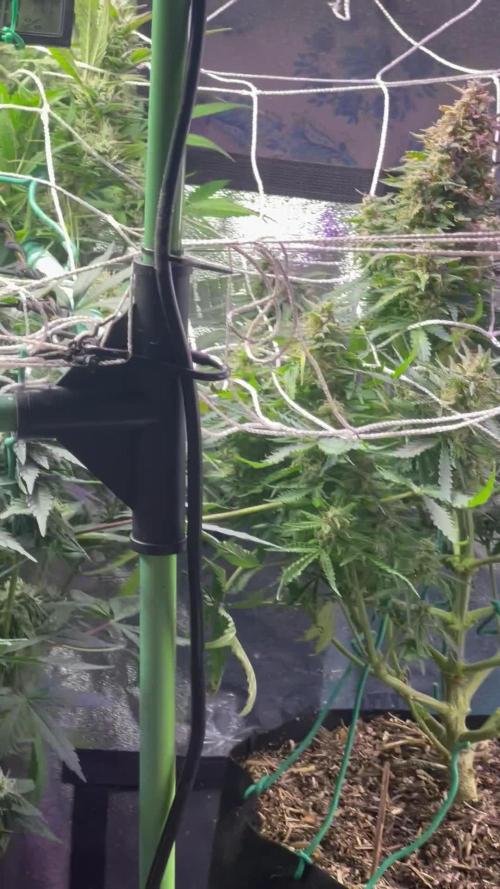
Welcome to my Diary, looks like week 10 2 full weeks to go I move the plants around put on a second net lowered the Blue Amnesia two Colas, my big oscillating fan is kicking ass I recommend everyone get one. Only water for 4 Plants some will call it flushing I call it watering the trichomes flavors I use dry amendments but tried to add a few PK boosters and silica and Cal Mag liquids but no more for the next 5 waterings all 4 days apart I’d rather flood to 10% wet dryvac sucking at the tray beneath the plants. The smallest looks like 2-3 oz per plant up to a 5 oz plant in the tent . I added Fox Farms granular into the 3 young plants to get them through the next month. The plain watering is getting 333 ppm I have 4 more waterings so it should be down to 125 by chopping day see ya smoke em if ya got em

Likes
73
Share


@Rando1314
Follow
Flushed HARDCORE this week!! Ladies are not looking well nor do they seem like they’re reacting to the flush well either!! Almost seems like they’re locked out but also having deficiencies! I could use some advice on this. 3/5 of the taller plants have yellowed out and the other 2 look great!! Pretty much all the same watering and neuts. I think the issue was that I’m using fabric pots and not allowing enough penetration to the bottom and it created a salt pocket. Correct me if I’m wrong
Updated a few more pics of the deficiency/lockout issues all the help is appreciated thanks to everyone whose chiming in and helping!! Y’all the real deal!!

Likes
14
Share


@eldruida_lamota
Follow
Que pasa familia, vamos con la segunda semana de floración de estas Gorilla Zkittlez Auto de FastBuds.
La tierra que utilizamos que está en la publicación anterior es top crop all mix, aparte alimentamos nuestras plantas con Agrobeta.
Por supuesto el ph se mide en cada riego y se mantiene en 6.2, regando cada 48/72 horas e intentando mantener la humedad un poco alta al principio.
Se ven bien sanas tienen buen color y tamaño bueno, seguirán creciendo estas semanas espero.
Las próximas semanas vamos viendo cómo avanzan.
Mars hydro:
Code discount: EL420
https://www.mars-hydro.com/
Agrobeta:
https://www.agrobeta.com/agrobetatiendaonline/36-abonos-canamo
Hasta aquí todo, Buenos humos 💨💨💨
Likes
21
Share


@Mr_Gezeta
Follow
06/05/21
-Riego todas las plantas con 1.8 litros de agua y los nutrientes.
-Los cogollos siguen engordando poco a poco, se nota sobre todo en los inferiores, que ahora están llenos de pelos.
-Algunas hojas están amarillas pero supongo que será debido a que no les da suficiente luz. Las que están peor son las que defolio, además de 1 o 2 hojas por planta que tapan algunos cogollos.
10/05/21
-Riego las plantas con 2 litros de agua cada una y los nutrientes.
-Se nota una pequeña quemadura en los cogollos de arriba de una de las plantas, quizás porque la luz estaba demasiado cerca. Estuve 4 días fuera y no lo pude corregir.
-Por lo general las plantas siguen fuertes y sin ningún problema
11/05/21
-No se qué ha pasado pero cuando hoy he abierto el armario tenía uno de los cogollos de CCXLA1 cubierto de moho. Me fijé porque 2 hojas parecían un poco podridas y al tocar el cogollo estaba muy blando. Me puse guantes, corté el cogollo con unas tijeras e inspeccioné la planta buscando otros posibles signos de moho. Parece que no hay más así que dejaré la planta por ahora. La he defoliado más para que tenga más flujo de aire.
-No entiendo cómo ha podido pasar esto ya que la humedad relativa del cultivo no supera nunca el 57% aprox y en general se mantiene al 50%.
-Ahora toca estar muy pendiente estas últimas semanas para ver si se forma más moho que pueda acabar con la cosecha. Fck

Likes
4
Share

@Gardens_of_Of
Follow
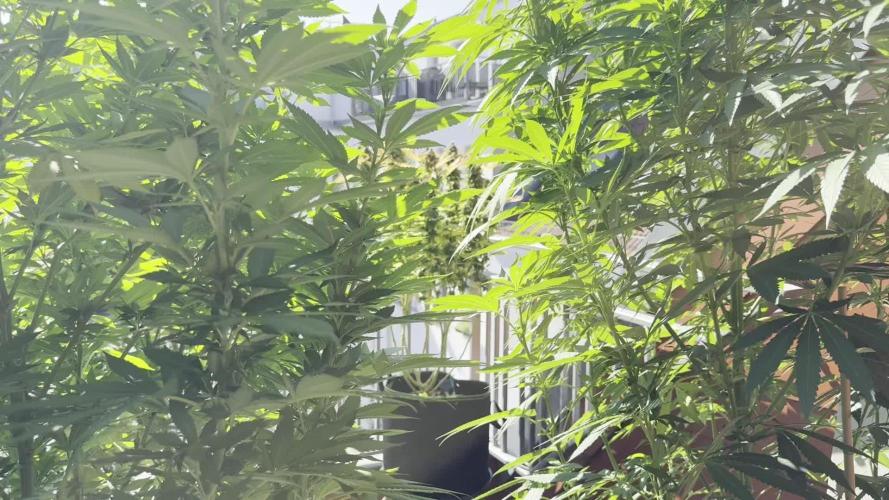
Flower Week 8 is over, and this seemed like it was going to be a pretty quiet week... until this morning.
Unfortunately, I noticed what looked like potential bud rot on a few of the colas. I’m not 100% sure that’s what it was, but at this stage of the grow, I’m not willing to take any chances. I removed all the affected colas immediately.
Visually, it definitely messed up my beautiful 8-tower structure a little, which is painful to see after spending the entire grow building and maintaining it. 😅 But in the end, we’re at the finish line, and protecting the rest of the flowers is far more important than keeping her looking pretty.
If it really was bud rot, I can only hope that it hasn’t spread any further. For now, I’m keeping a very close eye on everything.
Looking at the trichome development, she still seems like she could use another week or so. However, with several rainy days coming up, I’m seriously reconsidering my original plan of completing the full 9 weeks of flowering. At this point, pushing her through bad weather simply feels like an unnecessary risk.
Unless the Berlin weather changes, I’ll probably have to harvest her slightly earlier than originally planned.
Other than that, I’m just excited to see how this whole experiment turns out. We’ve made it this far, and regardless of the final result, I’ve already learned something important for the next run.
Next summer, I’ll induce flowering around 15 days earlier. The second half of August simply seems to put the final stage of flowering too deep into the danger zone when it comes to rain and humidity.
Eight weeks down. Now it’s just a matter of deciding exactly when to call it. 🌸✂️

Likes
12
Share


@GanjaGecko
Follow
WEEK4/1F
Die Guava befindet sich parallel zur Blütenbildung auch ordentlich im Stretch. In der Höhe hat die Guava gut um das doppelte zugelegt. Zur Stabilisierung und dem Schutz vor zu viel Wind hat die Guava eine kleine Stütze an ihre Seite bekommen. Mit der direkten Sonne ohne den Schutz vom Mini-Gewächshaus hat sich die Guava super arrangiert. Zum Ende der Woche war das Wetter recht durchwachsen und es gab leider etwas weniger Sonne und leider auch etwas Regen. Dafür soll es aber Dienstag/Mittwoch kommender Woche ordentlich Sonne geben💪🏼
Gegossen wird immer nur nach Bedarf. Bei dem Regen Ende der der woche brauchte natürlich nicht viel gegossen werden.
Likes
2
Share


@Altitonans_Fulmen
Follow
The thoughts shared in this journal are my own—a snapshot of personal understanding at the exact moment of writing. It is not intended as a reference of absolute fact, but rather as an exercise in ἐπίνοια (epinoia): an exploration of thought, intuition, and creative insight.
Epinoia(ἐπίνοια) is a Greek term meaning thought, intention, purpose, or conception, stemming from "mind" (nous) and "upon" (epi), representing the mind's reflective or creative process, used in philosophy (Aristotle, Gnosticism) and theology to discuss understanding and divine names, appearing once in the New Testament for the "intent of your heart" (Acts 8:22). It signifies the mind's operation to form ideas or designs, contrasting with raw data or innate perception, and in Gnosticism, it's an emanation of divine wisdom (Sophia).
"Φsis" is a stylized spelling of the Ancient Greek word φύσις (physis), which translates directly to "nature" or the intrinsic essence of a living thing.
Exploring the deep intersection of science, intuition, and creative insight often leads to breakthroughs that challenge our understanding of what is possible. When we approach high-performance cultivation not just as a hobby, but as an exercise in pushing a biological system to its absolute genetic ceiling, the results can transform from simple data points into profound proof of concept. Achieving a highly optimized environment requires a shift in mindset away from empty promises and directly toward verifiable proof, building true confidence through a detailed archive of past lessons and strategic adjustments.
This philosophy turns a standard space into a precise mass and energy balance equation, where every variable is managed to eliminate biological bottlenecks entirely. In a recent project four individual plants produced 344 grams, 280 grams, 445 grams, and 255 grams respectively, resulting in a total harvest of 1,324 grams, or 47.2 ounces, of dry product. Operating with a 600-watt light source inside a four-by-four footprint, this brings the final efficiency to an exceptional 2.21 grams per watt.
To put this in perspective, the standard traditional indoor benchmark has long been established at 1.0 grams per watt, while expert commercial operations target 1.5 grams per watt, and elite commercial systems push the envelope between 1.8 and 2.0 grams per watt. Reaching 2.21 grams per watt places the outcome squarely within the top 0.1 percent of global benchmarks, acting as a true statistical outlier that demonstrates what happens when flawless environmental parameters meet a cultivar pushed to its maximum potential. Reaching this level of mastery demands that we move past the common trap of the mirror fallacy, where the ego mistakes its own limited perspective for universal truth and views different ideas as personal threats. True progress requires curiosity and dismantling the illusion that our immediate viewpoint is the objective standard, shifting the focus instead toward how a system actually operates under the absolute laws of physics. In a high-performance setup, maximizing output is never about adding random additives or forcing growth, but rather about systematically removing the limitations that hold the organism back. By maintaining a perfect vapor pressure deficit, ideal root-zone oxygenation, and precise structural canopy training every single minute of the cycle, the plant is freed to express 100 percent of its DNA potential without any lingering genetic latency.
Managing a dense canopy inside a tight footprint presents the ultimate challenge of mitigating stagnant air and preventing moisture issues. Overcoming this bottleneck relies on a sophisticated synganic approach, which seamlessly marries the precise control of synthetic mineral inputs with the natural resilience of active organic living soil. This method transforms the room into a closed-loop system where the internal microclimate is entirely isolated from external weather fluctuations and pests. Rather than openly exhausting the atmosphere, the air is continuously recirculated, enriched, and scrubbed using 264-nanometer ultraviolet light.
The foundation of this thriving ecosystem is a comprehensive substrate composition designed to provide perfect aeration, structural integrity, and biological buffering. The primary media base integrates expanded clay aggregates, coir chunks, premium coco coir, sphagnum peat moss, horticultural perlite, vermiculite, pumice, and volcanic basalt rock. To continuously condition the soil and fine-tune mineral availability, the mixture is amended with agricultural gypsum, wollastonite, dolomitic limestone, basalt rock dust, micronutrient-rich volcanic ash, greensand, crushed seashells, biochar, and shungite. This mineral architecture creates an incredibly stable environment where active soil biology naturally prevents salt toxicity and ensures steady, reliable nutrition throughout the entire life cycle.
Living organisms within the substrate play a vital role in maintaining this delicate biological balance and breaking down organic material. Red wigglers continuously process organic matter into easily accessible plant nutrients while aerating the media; specialized predatory mites offer excellent biological control against common soil pests, and pillbugs excel at breaking down tough, woody elements. These biological components are further supported by a rich layer of organic amendments including high-phosphorus steamed bone meal, high-nitrogen dehydrated blood meal, fish bone meal, cold-processed kelp meal, dehydrated moringa powder, spirulina powder, and marine crustacean biomass rich in chitin. Combined with biological inoculants like mycorrhizal fungi, premium worm castings, and concentrated humic and fulvic acids, the entire system operates as a flawless biological transducer of light and energy.
Ultimately, shifting our perspective to view a grow space as a complete mass and energy balance equation changes the entire nature of agriculture. Success ceases to be a matter of luck or anecdotal habits and instead becomes the predictable result of meticulous design, patience, and the strategic elimination of failure. When science, biology, and engineering converge so harmoniously, we gain a deeper appreciation for the intricate natural systems that sustain life and growth. By sharing these detailed insights and refining our techniques, we can continue to unlock the absolute maximum potential hidden within the living world around us.
Comprehensive Substrate Composition:
1. Substrate Base & Aeration Media
Expanded Clay Aggregates (Hydroton Pebbles)
Coir Chunks & Horticultural Coco Coir
Sphagnum Peat Moss
Horticultural Perlite
Horticultural Vermiculite
Horticultural Pumice
Volcanic Basalt Rock
2. Mineral Amendments & Soil Conditioners
Agricultural Gypsum (Calcium Sulfate)
Wollastonite (Calcium Silicate)
Dolomitic Limestone (Calcium Magnesium Carbonate)
Basalt Rock Dust (Trace Mineralizer)
Azomite (Micronutrient-Rich Volcanic Ash)
Glauconite (Greensand)
Crushed Seashells (Calcium Carbonate Source)
Pyrolyzed Carbon Feedstocks (Biochar & Horticultural Charcoal)
Elite Shungite (Carbonaceous Mineraloid)
3. Organic Nutrient Amendments
Steamed Bone Meal (High Phosphorus)
Dehydrated Blood Meal (High Nitrogen)
Fish Bone Meal (Phosphorus & Trace Calcium)
Cold-Processed Kelp Meal (Ascophyllum nodosum)
Dehydrated Moringa Oleifera Powder (Botanical Nutrient)
Spirulina Powder (Arthrospira platensis / Cyanobacteria Nutrient)
Marine Crustacean Biomass (Shrimp & Crab Chitin)
4. Biological Inoculants & Organic Acids
Mycorrhizal Fungi Inoculant (Endomycorrhizae / Ectomycorrhizae)
Vermicompost (Premium Worm Castings)
Humic & Fulvic Acids (Concentrated Humates)
Human Body
65% Oxygen (in all liquids and tissues, bones, and proteins)
18% Carbon (everywhere)
10% Hydrogen (in all liquids and tissues, bones, proteins
3% Nitrogen (in all liquids and tissues, proteins
1,5% Calcium (lungs, kidney, liver, thyroid, brain, muscles, heart, bones)
1% Phosphorus (urine, bones, DNA)
0,35% Potassium (enzymes)
0,25% Sulphur (proteins)
0,15% Sodium (in all liquids and tissues) (in terms of salt)
0,05% Magnesium (lungs, kidney, liver, thyroid, brain, muscles, heart)
Plant
Mother-nutrients: Carbon 47%, Oxygen 43%, Hydrogen 4%.
Macro-nutrients: Nitrogen 3%, Phosphorus1%, Potassium1%, Calcium1%, Magnesium0.5%, Sulfur0.5%.
Micro-nutrients: All the rest combined 1%
More energy, more blueprint.
Although CO2 is a naturally occurring gas that both humans and plants use, it is invisible and odorless and can be fatal at high-levels. If you’re supplementing carbon dioxide in your grow room, ensure there are no leaks in any CO2 devices and always use a CO2 monitor and alarm.
0.02% Life unsustainable
0.03% Life OK
0.04% Current ambient atmospheric co2
0.04%-0.1% =400-1000ppm standard indoor co2.
0.1%-0.2% = 1000- 2000 ppm (prolonged exposure: drowsiness).
0.2%-0.4% = 2000-4000ppm (Headaches, fatigue, stagnation, stuffiness, poor concentration, loss of focus, increased heart rate, nausea).
1% is toxic
5% is quick death.
"Dabo vobis quod oculus non vidit, nec auris audivit, nec manus tetigit, quod in cor hominis non ascendit."
Likes
1
Share


@CheeRz
Follow
🌼 FLOWER WEEK 5: Bud Swelling & Trichome Production | AK-47 XL
🌿 FLOWERING PROGRESS
We have entered Week 5 of the flowering phase, and the AK-47 XL is fully focusing all its energy on bud development. The stretch has completely stopped, and the canopy is locked into a perfectly uniform structure across the Scrog net.
Looking at the development this week, those white puffballs from the previous weeks are rapidly transforming into solid, dense bud structures. The stacking is looking incredible, with nodes growing closer together to form long, continuous colas. A visible layer of frosty resin is starting to coat the sugar leaves and calyxes, and the bright white pistils are standing up thick and healthy. The overall foliage is a deep, rich green, proving that the nutrient uptake is absolutely on point with no signs of fade yet. 📈
💧 NUTRIENT FEEDING & WATERING
The feeding remains heavy and consistent to support the peak of flower development and the massive demand for phosphorus and potassium.
Current Feeding Schedule (per Liter):
Bio-Bloom: 2.0 ml/l
Top-Max: 1.0 ml/l
Bio-Grow: 1.0 ml/l
Bio-Heaven: 3.0 ml/l
Acti-Vera: 3.0 ml/l
Calmag: 1.0 ml/l
Parameters (Weekly Averages):
pH: 6.3
Relative Humidity (RH): 59.0%
Temperature: 30.0°C
CO2: 657 ppm
💭 GROWER'S NOTE
👀 Status Report: Everything is on cruise control. The plant is handling the summer heat of 30°C like a champ, pushing resin production while the bud swelling is becoming noticeable day by day. Every single top above the screen is receiving optimal light, and the structure is solid. This Divine Seeds pheno is a beast—can't wait to see them fatten up even more next week! 🚀

Likes
7
Share


@HylianGrass
Follow
Everything went smoothly, the weather down here is perfect hitting that sweet spot of 26 degrees at day and 24 at night with 35% ish humidity. Right at time for resin production and trichomes production. Flowers are stacking nicely and the smell is just amazing, a strong pungent smell kinda like black licorice but with a hint of blueberry in the back . This makes for a great stealth grow throw a bag of black licorce on the table and you’re in full ninja mode, if ninja were to grow weed... here i go spiraling aigain thanks to tha sativa weed i smoked 👍🏻✌️🏻
Likes
13
Share


@GrowGuy97
Follow
Flower day 5 for mainline - This lady is really stretching! Can’t wait to see what the buds look like on this!😍😍 thanks for following friends & happy growing!🌱✌️🏼

Likes
86
Share


@GreenAutoConsumo
Follow
Ya la he cultivado varias veces y siempre ofrece tremendos resultados en todos los aspectos del cultivo. Más que contento nuevamente!!!
Saludos!!



Likes
18
Share


@Ironblimp
Follow
I fed the plants 75% nutrients for it's very last feeding although 6 or more leaves are showing signs of nitrogen deficiency but the buds are still growing, all signs show that I think they need 2 more weeks. Most pistols are amber, and a few new pistols still grow from the tops or sides of each bud. New sugar leaf growth on the tops look more rounded.
The trichomes on the oldest sugar leaves have turned amber, less so on middle and top. Trichomes on the buds range from appearing clear, cloudy and milky, but not amber.
I want the trichomes on the buds to be anywhere between 10-30% amber.

Likes
40
Share


@Dingle
Follow
Week 8 flower 🌸
✅Final week before harvest.
Flushing with just ph’d water for the final week.
Everything looking good for harvest at the end of week 12.
Some amber trichomes starting to appear on almost all of the buds on both plants so lights out any day now.
Next update harvest 👨🌾🏻
✌️
Likes
57
Share


@DogDoctorOfficial
Follow
Si lets talk about my beautiful Medusa F1 from Royal Queen Seeds. This little lady is growing like a champ, and I've been giving her lots of love and care.
One of the techniques I've been using with my Medusa F1 is leaf bending as a form of training. It's been amazing to see how much she's responded to this technique. I gently bend and manipulate the stems and leaves to encourage horizontal growth and create an even canopy. This helps to promote more even light distribution and allows for better nutrient uptake. My Medusa F1 seems to be loving it, as she's growing strong and healthy with lots of new growth popping up all over the place.
In addition to leaf bending, I've been using Aptus Holland Nutri Spray as a foliar spray, and I can't say enough good things about it. This stuff is a game-changer! It's a high-quality nutrient-rich spray that I apply directly to the leaves of my Medusa F1. It's been absorbed quickly and efficiently, and I've noticed a significant improvement in the overall health and vitality of my plant. The leaves are looking lush and green, and the growth has been explosive!
I believe that giving my Medusa F1 the best nutrients and care is crucial for her growth and development, and Aptus Holland Nutri Spray has been a key part of my regimen. It's made with love, just like how I care for my plants, and I can see the results every day. I'm so excited to see what my Medusa F1 will become with continued use of this amazing foliar spray.
I highly recommend trying out leaf bending and incorporating Aptus Holland Nutri Spray into your routine. Your Girls will thank you with lush, vibrant growth, and you'll fall in love with the results, just like I have.
As always thank you all for stopping by and for supporting me on this journey, i am super passion about growing and fell blessed to have you all with me on this new journey <3 <3 <3
Genetics - RQS MEDUSA F1
Ligth - LUMATEK ZEUS 465 COMPACT PRO
Food - APTUS HOLLAND
All info and full product details can be find in can find @
https://www.royalqueenseeds.com
https://aptus-holland.com/
https://autopot.co.uk/
https://lumatek-lighting.com/
With true love comes happiness <3<3<3 Always believe in your self and always do things expecting nothing and with an open heart , be a giver and the universe will give back to you in ways you could not even imagine so <3<3<3
<3 <3 <3 Growers love to you all <3 <3 <3
Medusa F1
Medusa is a true F1 hybrid created from pure, inbred cannabis lines. She boasts uniform grow traits, mouthwatering aromas and flavours, and plenty of potency. If you're looking to bring stable, elongated plants into your room, tent, or garden, look no further. Mouthwatering Aromas, High Potency, and Mid-Size Plants
Though she won't turn you to stone like the mythical goddess after which she's named, Medusa F1 is bound to get you plenty stoned in her own special way. Combining genetics from inbred lines deriving from Sugar Magnolia, a thick and sweet indica, and American Beauty, a fast, fruity hybrid loved for its well-balanced, positive high, the result is an autoflowering F1 variety that produces fresh flavours, a unique cannabinoid profile, and large yields.
A very aromatic cultivar with a vibrant concentration of terpenes bearing notes of fresh mint alongside an upfront peppery kick, backed up by hints of fresh fruit, berries, and tangy fuel. Her thick, frosty flowers consistently produce high levels of THC and CBG, as well as high concentrations of myrcene, ocimene, farnesene, and caryophyllene. As a result, Medusa F1 has strong effects that relax and stone the body from head to toe (brought on by particularly high concentrations of myrcene and farnesene) while motivating the mind with an uplifting, creative, and motivating kick (thanks to high concentrations of ocimene).
Medusa F1 seeds produce elongated autoflowering plants with long, strong branches and well-spaced internodes. Plants regularly grow up to 80–85cm tall and boast a fast flowering time of just 42–45 days (72 days from germination to harvest). Thanks to her genetics, Medusa F1 produces plenty of thick flowers with big, swollen calyxes that make for very easy trimming. Medusa F1 is very stable, handling stress and unfavourable growing conditions with ease, though she is somewhat susceptible to Botrytis, so make sure to keep tabs on the humidity in your grow room/garden.
Likes
Comments
Share

@DogDoctorOfficial
Follow
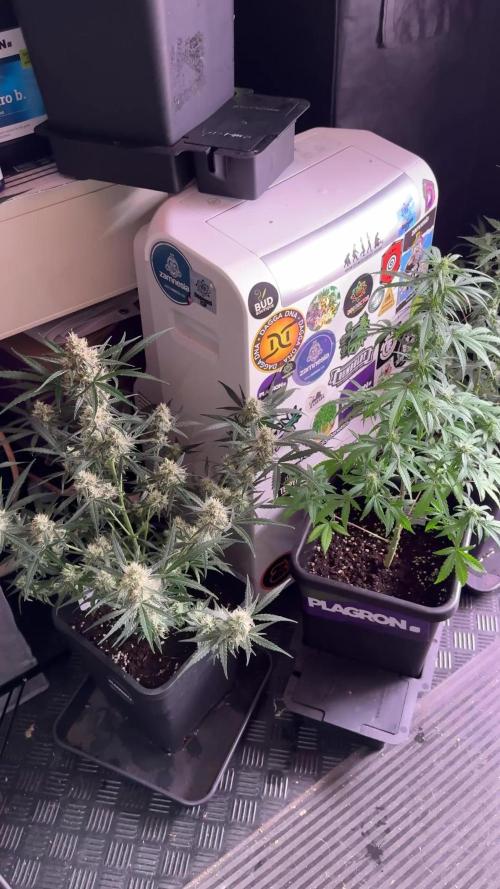
💜 Purple CousKush Auto by Zamnesia | Pheno A | Week 8 (Flower Week 5) 🌱
She Bent. She Bounced Back. And She Kept Building.
There are weeks in a grow where everything goes exactly according to plan.
And then there are weeks where life happens.
The room is busy.
The outside world keeps moving.
There are a thousand things happening at the same time...
And occasionally, one of the plants reminds you that even the best plans still require us to pay attention.
This week, Purple CousKush Pheno A taught me that lesson.
I underwatered her.
Nothing catastrophic.
Nothing that caused lasting damage.
But enough that when I looked at her, the leaves had completely dropped.
She was thirsty.
Very thirsty.
And this is actually an important distinction for anyone following the diary:
A controlled dry-back is not the same thing as allowing a flowering plant to become so dry that she starts wilting.
The first can be part of an irrigation strategy.
The second is simply me missing the watering window. 😂
So we corrected it.
She received her water.
We gave her time to recover.
And by the following day...
She was back.
And not only was she back...
She was ready for her next chapter.
💧 The Underwatering Lesson
When a plant becomes this thirsty, the first thing I look for isn't panic.
I look at the plant.
Leaves dropping dramatically from a lack of available water is usually a very different visual story from nutrient toxicity, heat stress or a root-zone problem.
In this case, the explanation was simple.
She needed water.
After watering, she recovered beautifully.
That quick recovery was reassuring and also a good reminder that plants can be remarkably resilient.
Still, during this stage of flowering, it's something I want to avoid repeating.
I personally prefer being slightly more conservative with irrigation rather than keeping the root zone constantly saturated.
But there's a difference between allowing a healthy dry-back and pushing the plant far enough that she has to start waving a little white flag.
This week, Purple CousKush definitely waved it.
Message received. 😂
I will do my best not to make her wave it again.
✂️ From Recovery Straight Into Defoliation
Perhaps the most impressive part was what happened next.
Once she had recovered and returned to normal posture, I gave her another day and then performed the flowering defoliation.
This was part of the broader room strategy we've been following.
The objective wasn't to strip her.
It wasn't because she suddenly looked unhealthy.
And it wasn't because every leaf needed to disappear.
The goal was simply to clean up the canopy and remove foliage that was no longer contributing much to the plant's structure.
Some of the interior and lower areas had become crowded, and selectively removing those leaves created more open space between the flowering sites.
More room for air.
More room for light.
More room for the plant to breathe.
And with the Lumiflora under-canopy lighting now part of the system, we're also able to observe which lower flowering sites are actually worth keeping.
The plant herself will tell us.
🌿 She Took It Like Nothing Happened
This is probably my favourite part of the entire week.
After being underwatered...
She recovered.
After being defoliated...
She didn't miss a beat.
She's standing there looking beautiful, healthy and completely ready to continue flowering.
No prolonged setback.
No dramatic reaction.
No hesitation.
Just...
Back to work.
And honestly, that's exactly what I love about this phenotype.
She has been one of the more energetic plants in this room from the beginning.
She stretched.
She branched.
She built an impressive framework.
She started stacking flowers.
And now she's moving deeper into the part of flowering where that structure needs to start paying for itself.
💜 Week 5 Flower – The Structure Is Paying Off
At approximately 125 cm, Purple CousKush Pheno A has become one of the taller and more distinctive plants in this room.
Her Christmas-tree-like architecture has become even more obvious.
A strong central leader rises through the canopy while numerous side branches form their own flowering towers around her.
And now, after defoliation, that architecture is even easier to see.
The plant has space.
The branches are separated.
The flowering sites have room around them.
And the entire structure feels much more open.
This is exactly what I want at this stage.
We're no longer trying to build the plant.
We're trying to help the plant finish what she already built.
🌸 Flowers Are Taking Over
The flowers continue developing along virtually every major branch.
Those bright pistils that were appearing last week are now becoming part of increasingly defined flowering clusters.
The buds are beginning to gain substance.
The calyxes are stacking.
And the first layer of frost that appeared earlier is becoming increasingly visible.
This is the beautiful transition where the plant starts looking less like a collection of flowering sites and more like an actual flowering plant.
She's not finished.
Not even close.
But the direction is very clear.
She's building.
And she's building everywhere.
💡 Photons, Air & Open Space
This is another reason I decided to clean her up.
Defoliation isn't about magically creating more light.
The photons are already there.
What we're trying to do is improve how effectively that light can travel through the canopy.
Every unnecessary leaf sitting directly above another flowering site can intercept some of that light.
Every dense pocket of foliage can also interfere with airflow.
By selectively removing some of those leaves, we create pathways.
Light can travel deeper.
Air can move more freely.
Humidity has fewer opportunities to become trapped between dense layers of foliage.
And the under-canopy lighting can interact with the lower structure more effectively.
It's a little like opening windows in a house.
We're not creating more air.
We're simply giving the air better places to go.
🌱 Same Genetics. Different Story.
One of the most rewarding things about this 8×8 Adventure continues to be the diversity happening inside one room.
Twelve different genetic expressions.
Same general environment.
Same cultivation philosophy.
Same room.
Yet every plant writes her own story.
Purple CousKush Pheno A has always been one of the plants that seems to have somewhere to go.
She's taller.
She's more energetic.
She keeps producing structure.
And even after a little reminder from me this week that she needed a drink...
she's right back there doing her thing.
That's genetics.
We can guide.
We can train.
We can manage the environment.
We can manage irrigation.
But ultimately, the plant decides what she's going to be.
💧 Feeding & Root Zone
The flowering feeding program continues with the Plagron lineup:
Terra Bloom — 2.2 ml/L
Pure Zym — 1 ml/L
Sugar Royal — 1 ml/L
Power Buds — 1 ml/L
Green Sensation — 1 ml/L
pH Plus / Lemon Kick — as required for pH adjustment
The target remains around:
pH: 5.8
EC: approximately 1.95 mS/cm
After this week's watering mistake, I'm particularly paying attention to irrigation timing.
Not because the plant is struggling.
Quite the opposite.
Because she's growing beautifully, and I don't want a preventable watering mistake interrupting that momentum again.
A healthy dry-back is part of irrigation management.
A wilted plant is my reminder to look at the clock. 😂
🌡️ Environment
The room continues providing a stable environment for the entire 8×8 Adventure:
Light schedule: 12/12
PPFD: approximately 850–1,000 across the canopy
Day temperature: 29°C
Night temperature: 25°C
Relative humidity: 60%
Solution temperature: 21°C
Root-zone temperature: 21°C
CO₂: approximately 639 ppm
The stability of this environment is what allows a mistake like underwatering to remain just that:
a mistake.
Not a disaster.
The plant was healthy before it happened.
The environment remained stable.
The root zone was given water.
And she recovered quickly.
That's one of the reasons I put so much importance on the entire ecosystem rather than chasing one individual number.
🔮 Looking Ahead
Now that the defoliation is complete and she's recovered, I'm expecting Purple CousKush to put her energy where we want it most.
Into the flowers.
The vertical stretch should continue slowing down.
Flower clusters should continue stacking along those long branches.
The calyxes should begin swelling more noticeably.
And resin production should become increasingly obvious as she moves deeper into bloom.
I'm particularly interested in watching how the cleaned canopy performs over the next couple of weeks.
More airflow.
Better light movement.
Less unnecessary foliage.
And hopefully...
no more thirsty ladies waving their leaves at me. 😂
💭 Final Thoughts – A Little Reminder From The Plant
This week wasn't perfect.
And I'm actually glad it wasn't.
Because growing isn't about pretending everything goes perfectly every day.
It's about learning to read the plants.
Purple CousKush told me she was thirsty.
I listened.
She recovered.
Then she let me clean her up.
And now she's standing there looking absolutely beautiful, waiting for the next chapter.
I still genuinely prefer a slightly cautious approach to watering rather than constantly keeping the root zone saturated. But there's a lesson here:
Dry-back can be intentional. Wilting is communication.
And this girl communicated very clearly. 😂
I'll do my best not to make her repeat herself.
For now, she's healthy.
She's recovering beautifully.
She's been defoliated.
She's producing flowers.
She's getting frosty.
And she's continuing to prove why she earned her place in this 8×8 Adventure.
Sometimes the plant teaches us through perfect growth.
Sometimes she teaches us by dropping every leaf in the room and saying:
"Hey, Doctor... I need a drink." 😂💜
A huge thank you once again to Zamnesia for these fantastic Purple CousKush genetics, Plagron for supporting the nutrition throughout this journey, Future of Grow for the incredible Black Series lighting, Lumiflora for bringing additional light beneath the canopy, TrolMaster for keeping the environment under control, and of course everyone following this crazy 8×8 Adventure here on GrowDiaries.
Every phenotype has a story.
Every week adds another chapter.
And Purple CousKush Pheno A?
She's still writing hers.
She bent.
She bounced back.
She got cleaned up.
And now she's shining again. 💜🌱
Until next week...
Growers Love and happy growing! 💚
Likes
13
Share


@FlavoursUk
Follow
Day 44 - The smell is divine, and the buds are looking very pretty. Beautiful fade going on in the leaves, almost like a purple/red/black. Planning to tapper down the nutrients as we are coming closer to Harvest.
Crucial to keep the pH in range during flowering and being away a few days, I wasn't able to correct it until I was back. So they were drinking more water than uptaking nutrients.. leaving a high EC in the system. Corrected the issue by adding plain RO water, treated with cleanse, no nutrients.
They are now on track and could do with a last defoliation, but I've been holding it off. Will get around to it over the next few days.
The buds are sticky, smell great and rock hard. Dehumidifier was added to the tent to try lower the humidity to a better range.
Can't wait to see the end results and product. Another 2 weeks an I think we will be good.

Likes
12
Share


@Marijuanaisland
Follow
Desculpe não atualizar antes mais muito trabalho neste fim de ano adoro as cores da Red Hot tive ao total 3 Red Hot mais só fiz o diário de uma três feno tipos diferentes todos reds aromas diferentes em todos doce, pungente, frutas tropicais, owwwwww good Nice, a sweet zkitllez está muito bem também tive outras que não fiz o diário. Obrigado a todos
Likes
66
Share


@Earthling37
Follow
34 Days have passed.
The colors are fading for some reason but i dont really care, theres obviously room for improvement on this grow.
Im just gonna let it go as far as i can and hopefuly the plants will mature before they die off.
It may have been because of over watering, thats my best bet so i will not water until they show small signs of underwatering, just so i can make sure.
Other than that, the buds are looking good and the smell is incredible.
---1st time growing with FLO - Florian Living Organics.---
They claim that there is no need to pH when watering and that their living fertilizer is the only thing that i will need throughout the whole grow so i only need to mix with soil and just water with plain water.
If this stuff works then it can simplify my future grows ALOT!
Happy growing. 😎

Likes
13
Share


@MotasKush
Follow
3 weeks of flowering behind us, the girls are growing up and two Strawberry Bananas have pulled out, but otherwise it works .. There's still something to catch, I just don't know why the tips and leaves of the young branches are twisting? He poured clear water here and the rest got a normal planned watering.