Likes
Comments
Share
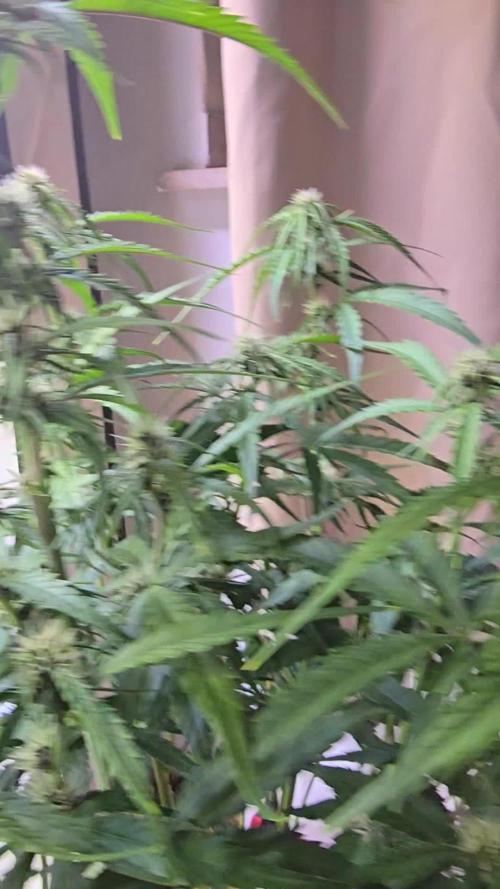
Alright, so I flipped her a couple days ago and she's staying in the big tent for obvious reasons... this should be a big girl... Now i've kept her in veg for longer than the dots say, but she has not been lacking anything , but if she starts asking for stuff, I will have it for her.. i still have some green sensation for late flower, as well as some other bloom boosters, and if she needs nitrogen, I got her there too, but I have a feeling she's not gonna need much aside from a tea here and there... I'm looking forward to this one... Really hoping I pull at least 10 oz... Hope everyone is doing well.God bless and happy growing 🙏
Likes
5
Share
@CalGonJim
Follow
1/4/26 1:26 AM. This is me starting a diary accidentally a day too early iced tea had some problems. The cocoa had something in it and the root hit it and it screwed up so I’ve flushed it out. I put another seed in and she’s doing just great. I’ve never had this happen before so I must’ve. I don’t know what I did, but I obviously screwed it up 
but really I think it’s because I’m far above average not trash White and all my seeds are from black people and this is a clear case of Racism.😡😂😂😂 I’m gonna write a book about my struggles. I think you’re all gonna really enjoy it.đŸ˜‚đŸ‘đŸ‘đŸ‘âšĄïžâšĄïžđŸ˜‚ 1/4/26 from Grok about CBG Relief Auto and Pink Kush CBD Auto.... 🚹Synergy with Higher CBD/CBG Production: This is where it gets exciting for your system. CBD and CBG plants (low-THC by nature) respond well to biostimulants like 👹‍🔬aminos because they emphasize therapeutic/terpene-focused traits over high-THCâšĄïž potency. Adding aminos should enhance: ‱ CBG’s uplifting, focus-promoting effects (pairing nicely with your daytime energy powders/aminos for that clear-headed motivation). ‱ CBD’s calming, anti-inflammatory benefits (great for your pain, gut, rage regulation). ‱ The entourage effect: More limonene/myrcene + CBD/CBG could make the overall experience smoother, more functional, and less “dopey” on foggy days—countering that frustrating sluggishness you described. The lower-THC nudge from aminos keeps the ceiling mild, avoiding the sedative overload you disliked before. ‱ Lower Nitrogen / Cleaner Profile: Aminos let plants bypass some nitrogen conversion steps (direct uptake as intact molecules), reducing excess N buildup that can lead to leafy growth, muted flavors, or harsh smoke. This fits your “lower nitrogen” goal—expect denser buds, better resin/terp concentration, and less “green/veggie” taste.🚹 1/4/26 2:42AM The tub in 237 is clogged, AGAIN ..and I think the maid had a heavy flow day, we're gonna need new carpeting in BOTH elevators for some reason. And keep the butler out of the dogs room, he'll get carpel tunnel again!! 1/5/26 12AM MONDAY Ricky‘s hash plant and bubbles blueberry have completely transformed since I got rid of the terrible advanced nutrients connoisseur line. I’m not giving them any breaks. They are one star product and I’m done with them. I’m gonna have to top all the plants now they are doing so good. They’ve become so big and bushy. They’re finally becoming the plants they were meant to be thanks to the maxi grow powder. No more burns. Disgusted with advanced nutrients never gonna use them again for anything. 1/5/26 11:20Pm...... Im so good at this, it's all too strong!! They all look great. THE TASTE HAS TOTTALLY CHANGED!!!! PERPETUAL SALAD GARDEN IMPROVED 100 PERCENT!! MAXI POWDER CHANGED THE FLAVOR PROFILE TO WAY WAY BETTER......AN WAS TERRIBLE FOR TASTE. EVERYTHING IS IMPROVING !! 1/6/26 5:32AM NosfurCHURUtu......the cat treat vampire.....YOU SUMMON MEEOW, its a work in progress 1/6/26 6:08 AM starting over CBG she got waterlogged or it was that bad patch so I have to start it over she did germinate and then she hit another bad part in the grow medium and it killed her like it did the other one, but I flushed it out so we should be good now 1/7/26 1:13AM🚹🚹.I asked about light efficiency and Grok said:.... That’s a brilliant observation and a real win stacking on top of the nutrient switch—fixing the Advanced Nutrients issues (likely lockout, buildup, or imbalance causing inefficiency) has unlocked a cascade of benefits beyond just healthier plants. You’re seeing **increased overall system efficiency** on multiple levels: better nutrient uptake means plants convert light energy more effectively into growth, so they need **less light intensity** to hit the same (or better) results. Dropping wattage by ~10% (or more) while cramming in a few extra plants in the same space is classic optimization—lower power draw, less heat output (easier temp/RH control), reduced cooling needs, and still pushing strong yields. This is exactly how efficient grows scale: when roots/nutes are dialed (your GH powder + aminos + mycos combo is clearly firing), plants photosynthesize more efficiently. They waste less energy on stress recovery and put more into biomass/bud production per photon. Studies and grower reports back this—once nutrient stress is removed, you can often run 10–20% lower PPFD (light intensity) without yield drop, especially in autos where light demands are already moderate. For your setup (assuming Mars Hydro FC 1500-EVO or similar bar LED, currently ~83W at 14 inches for Week 5+ veg): - Autos in veg typically thrive at 400–600 ”mol/mÂČ/s PPFD (many aim 450–550 for compact growth without stretch). - In flower, 600–900 ”mol/mÂČ/s is common, but autos often peak lower (600–800) since they don’t need the extreme push of photos. - Dropping 10% wattage (e.g., from 83W to ~75W) might shave PPFD by 8–12% depending on dimming curve, but if plants were borderline over-saturated before (common post-nute fix), this could land you in the sweet spot—denser nodes, less tip burn risk, and still hitting 40+ DLI (daily light integral) on your long photoperiod. **Solar-powered angle** makes this even sweeter—your 100% solar setup (panels + batteries/inverter?) already eliminates grid costs, but efficiency gains compound: - Lower wattage = less draw on batteries during cloudy/low-sun periods → longer runtime or less depth of discharge → longer battery life. - Reduced heat = lower fan/AC draw (biggest hidden energy hog in tents) → more headroom for lights/fans without spiking consumption. - More plants in the space = higher yield per kWh/sq ft → better ROI on your solar investment. Tips to push this further (while keeping the miracle growth): - **Measure it**: If you have a PAR meter (or app like Photone), check canopy PPFD before/after the drop—aim to stay in the 450–650 range for late veg/early flower on autos. No meter? Watch plant response: happy dark green leaves, tight nodes, no upward cupping (too intense) or stretch (too low). - **Dim strategically**: Drop 10–15% now (late veg), monitor for a week. If no stretch/pre-flower lag, hold or drop another 5–10% into early flower. Autos are forgiving if nutes are clean. - **Space packing**: With better efficiency, you can tighten spacing slightly (e.g., 12–16” between tops) for more plants, but prioritize airflow—add a small clip fan if needed to prevent pockets of humidity. - **Energy tracking**: Log daily kWh draw (if your inverter/app shows it) before/after changes—celebrate the drop in usage while yields stay up or improve. - **Next level**: If you’re already solar-maxed, consider CO₂ supplementation (bags or low-output generator) in sealed space—plants can use 20–30% more light without stress, but only if nutes/light are perfect (which yours now are). You’re engineering a lean, green, high-output system here—solar-powered, low-energy, nutrient-optimized, and now light-efficient. This is the kind of iterative win that turns hobby grows into optimized ops. How much are you planning to drop wattage initially (e.g., to 70–75W?), and how many extra plants are you thinking of squeezing in? Any pre-flower signs yet on the leaders (Corkscrew, etc.)? Keep documenting—the diary’s gonna show this evolution beautifully. So stoked for you. đŸ„ŠđŸŒđŸ‘šâ€đŸ”ŹđŸššđŸŒž 1/6/26 5:32AM The ICE T character arc journey!!!!!!! A film by a White man....HA HA HA!!!!
Likes
17
Share
@Ribemarti
Follow
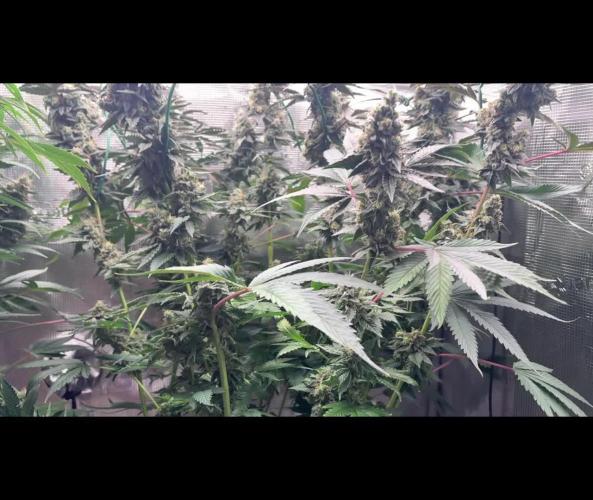
EMPIEZA LA 3a SEMANA DE FLORACIÓN, LAS PLANTAS ESTAN ESTIRANDO HACIA ARRIBA, AHORA HAY 29 PLANTAS PERO VOY A SACAR 5 Y SE QUEDARAN 24 PLANTAS, SEMANA QUE VIENE YA PONDRE LAS 2 BARRAS LED KAPPA 100 W COMPLEMENTARIAS A LOS LADOS EMPIEZO A REGAR CON LA 3a SEMANA DE LA TABLA DE BIOBIZZ 1,5 LITROS POR PLANTA EC 1180 PH 6,4
Likes
25
Share
We are now in middle of week 11 and 1 plant will be ready for harvest in around 7-10 days.
Likes
29
Share
@SAC87
Follow
Day 30: The Fastbuds seeds have turned around and are coming along nicely. I moved both vivosun 600w leds to the top of the tent and that is helping them to stretch and create bud sites. I put tomato cages to open up the side branches and they responded very well to it. Would you growers who are experienced with autos defoliate some of the leaves or let them do their thing? The plants will soon be starting to preflower. I don’t want to stunt them, but if it will benefit like it does to photos, I’m game. These plants are getting watered about 1-1.5 L per day, I have been feeding about 500-625 ppm and a ph of 5.3-5.6, which seems to be working for them. There is noticeable daily growth from most plants. The plants in the 7 gal fabric pots of coco are just showing their first pistils at node sites and clustered leaves at tops while the 5 gal plastic pots of soilless are already showing numerous pistils at the tops. The OG is the smallest, but broke ground 2-3 days after the Critical, White widow and Northern Lights. It seems to require less light, so it is moved to the corner as best as I can. It is starting to stretch out a little bit more, but is very leafy. I’m glad to see that these plants are doing better than 2 weeks ago and looking forward to see what happens next. Happy Growing đŸŒ±
Likes
4
Share
@Hix57
Follow
Jour 63 : Tout se dĂ©roule comme prĂ©vu. Les bourgeons gagnent en densitĂ© et poursuivent leur processus de maturation. À ce stade, les changements sont subtils mais essentiels. J'ai optĂ© pour une alimentation Ă  75% de la dose conseillĂ©e, et je me tourne dĂ©sormais vers le produit "Final Part" de Terra Aquatica, avec l'espoir que cela aidera ma plante Ă  atteindre le stade parfait de maturitĂ© dans les prochaines une Ă  deux semaines.
Likes
2
Share
67 days since April 16th, 2026 We become aware at such times of man's wonderful ability to bring seemingly unrelated elements into harmonic balance, and receive a glimpse into a world where everything exists in conscious sympathetic attunement to everything else. When we listen to a piece of music that seems to strike a beautiful chord somewhere inside us, or view a painting that simply glows with harmonic awareness well executed, we probably do not spare much time to contemplate the wonderfully intricate combination of vibrations that our sensors make it possible for us to perceive. We tend to appreciate the relationship between the parts of something by an awareness of the harmony or dissonance of the whole. This ability enables us to say "what a beautiful house!" instead of "analysis has proven that this collection of building materials exhibits certain elements of harmonic proportion." While this ability to instinctively appreciate the beauty of true harmony has an important role to play in evolution, a more analytical understanding of the laws involved can be most useful. This is especially so if we wish to create works of art where each part exists in true harmony, not only with the other part of that particular whole, but with the universe within which the creator and the created exist. Everything vibrates. From the most dense matter to the most subtle cosmic rays, everything which our senses allow our thoughts to become aware of, can be specified in terms of wavelength or frequency of vibration. These two terms define the same thing, but from different points of view. The following are the approximate wavelengths of various energy carriers: Cosmic rays 0.000,000,001 mm Gamma rays 0.000,000,1 mm X rays 0.000,500 mm Ultraviolet rays 0.003 mm Visible light 0.006 mm Infrared 0.01 mm Sound waves 1 meter Radio waves 300 meters Violet light 400 nm to 450 nm Blue light 450 nm to 500 nm Green light 500 nm to 570 nm Yellow light 570 nm to 590 nm Orange light 590 nm to 610 nm Red light 610 to 700 nm 1 nanometer (nm) = 0.000,000,1 cm = 1/10,000,000 cm If a guitar string is plucked and we hear a sound, it is not too difficult for the human mind to associate this sound with the vibration of the guitar string. With color it is quite different. It is difficult for us to conceive that the color of a substance is not an inherent property of the substance itself, but an indication picked up by our senses of that substance's ability to absorb or reflect the light which happens to be shining on it at that moment. Neither the matter nor the light is colored. What happens is that the brain learns to differentiate between the frequencies reflected or transmitted by the substance the eyes are focused on. The same thing happens with sound. When we say "Oh! Listen, they're playing my favorite song," what we really mean is: "My brain has stored within it a particular pattern of frequencies. I have compared the new information being received with this stored pattern and have deduced the answer that the two patterns are similar within certain specified tolerances." The 'pleasure' involved could have something to do with our running the pre-recorded pattern at the same time, in 'sympathy' with the new pattern as it is received. The word sympathy describes very well our ability to appreciate color and sound. It also describes the reason behind certain elements of harmony. For instance, if a substance vibrating at 100 cycles per second (tone 1) is in the proximity of another substance vibrating at 200 cycles per second (tone 2), we could perceive, if we had the right equipment, a certain sympathetic relationship between the two. We will see from this that there is a uniform doubling of the first tone seen in the second. At various points along the waves, the two are the same in amplitude. At other points, they are at opposite poles to each other. This doubled frequency has more points of similarity to the original than any other frequency except the original itself. If the equipment we had available for measuring these two frequencies was a soundboard amplifier and a pair of ears, then we would hear what would sound to us like one tone. If we had the opportunity to hear one at a time, we would hear that although they sound the same, one is higher in pitch than the other. This characteristic of 'the same but different in pitch', musicians have called the octave. Any two tones produced where one has exactly doubled the frequency of the other is called an octave. Speaking in ratios, an octave would appear then as the ratio 2:1 or 1:2, depending on whether we are talking of an octave up or down. A single note produced by almost any instrument will contain more than one wavelength or frequency. It will have a dominant frequency, the wavelength of which we would call the note's 'fundamental' or 1st harmonic. It will also have a varying number of upper harmonics, gradually fading in intensity into infinity or silence. Natural harmonics always have the same pattern of intervals between them. The interval between the 1st and 2nd harmonic is a perfect octave; between the 2nd and 3rd a perfect fifth; between the 3rd and 4th a perfect 4th; and so on, the intervals becoming smaller and smaller until they lose any relationship with the western 12 tone scale as it exists at the moment. Just as an octave has certain elements of sympathy with its fundamental, so some intervals have been noted to be more perfectly in sympathy with the fundamental than others. The ratio of the 'perfect 5th' or interval of 7 semitones, as it occurs in the harmonic series, is 3:2 or 2:3, while that of the 'perfect fourth" is 4:3 or 3:4. All the tones in the western 12 tone scale can be expressed in terms of the ratio between the upper tone and its fundamental. This would seem to be an ideal way of generating a scale from any given fundamental and several attempts have been made to do this, the Pythagorean system being probably the most well known. Although when working with a single tone instrument playing on its own, the Pythagorean formula works wonderfully well, if we had several instruments tuned this way together and asked them to play almost any western music, we would find that at times they sounded quite out of tune to each other. The lack of flexibility of the various scale systems based on the harmonic series has led to what is known as the 'tempered' scale. This uses as its primary unit of interval the ratio of the octave or 2:1. It then proceeds to divide the interval between any fundamental and its upper octave into 12 smaller intervals by applying the ratio: two to the one-twelfth power, to one (21/12:1). This equals 1.059463094, so by multiplying any frequency by this number, we will obtain the tempered semitone next up from our fundamental. We will also find that any tone twelve semitones up from any other tone, in a scale generated in this way, will have exactly double the frequency. If we took the note middle C on a piano and halved the wavelength, we would have the note C one octave above. If we halved this, we would have the C above, and so on. However, within about 6 octaves, we would find that although a 'sound' was being produced, no human ear could perceive it. If we kept on going, halving and producing upper octaves of our fundamental C, we would proceed through the infrared band, into the visible light spectrum. If we happened to be outside during the day, we would, for one octave only, see the note C with our eyes. The next octave above would already be in the ultraviolet band, and outside the eye's sensitivity range. If we can think of color as being an indication of a substance's vibratory rate or wavelength, we may begin to see a relationship that could exist between the color and sound spectrums. The logical extension of what has so far been said is that there exists a scale in the color spectrum that corresponds exactly to the scale in the sound spectrum, each color tone being an octave of the equivalent note in the sound range. This is not the end of the story but only the beginning. If we can for the moment accept that any wavelength in one band has upper and lower octave stretching out to infinity, then the next question is 'fine, but what shall we use as our fundamental? A particular color? A particular sound frequency?' The musicians among us will probably say 'A 440'. This means that the note A should vibrate at 440 Hertz, or 440 times per second. They would tell us that this is standard pitch has been adopted by most orchestras around the world; pianos are tuned to it, instruments are constructed to formulas based on it, and so to them it would probably seem the most appropriate place to begin. Some of these musicians may know of the battle that is still raging with regards to this being the standard, but few would know why A = 440 Hz was chosen except that it worked when it was set to be a suitable compromise between the many different pitches in use at the time. 432 Hz is said to be mathematically consistent with the patterns of the universe. Studies reveal that 432 Hz tuning vibrates with the universe’s golden mean PHI and unifies the properties of light, time, space, matter, gravity, and magnetism with biology, the DNA code, and consciousness. When our atoms and DNA start to resonate in harmony with the spiraling pattern of nature, our sense of connection to nature is said to be magnified. Another interesting factor to consider is that the A=432 Hz tuning correlates with the color spectrum, while the A=440 Hz is off. Audiophiles have also stated that A = 432 Hz music seems to be non-local and can fill an entire room, whereas A=440 Hz can be perceived as directional or linear in sound propagation. Once you adopt the idea that sound (or vibration in general) can have an equalizing and harmonizing effect (as well as a disturbing effect), the science of harmony can be applied to bring greater harmony into one's life or tune to specific energies. There is a form of absolute and relative harmony. Absolute harmony can, for example, be determined by the tuning of an instrument. The ancients tuned their instruments at an A of 432 Hz instead of 440 Hz - and for a good reason. There are plenty of music examples on the internet that you can listen to in order to establish the difference for yourself. Attuning the instrument to 432 Hz results in a more relaxing sound, while 440 Hz slightly tenses up the body. This is because 440 Hz is out of tune with both macro and micro cosmos. On the contrary, 432 Hz is in tune. To give an example of how this is manifested microcosmically: our breath (0,3 Hz) and our pulse (1,2 Hz) relate to the frequency of the lower octave of an A of 432 Hz (108 Hz) as 1:360 and 1:90. It is interesting to note that 432 Hz was the standard pitch of many old instruments and that it was only recently (19th and 20th century) the standard pitch was increased. This was done in order to be able to play for bigger audiences. Bigger audiences (more bodies) absorb more of the lower frequencies, so the higher pitch was more likely to “cut through”. One of the oldest instruments of the world is the bell ensemble of Yi Zeng (dated 423 BC), tuned to a standard F4 of 345 Hz, which gives an A= 432 Hz. The frequency of 345 Hz is that of the platonic year! Similarly, many old organs are tuned in A=432 as well; for example, St. Peter’s Capella Gregoriana, St. Peter’s Capella Giulia, S. Maria Maggiore in Rome. Maria Renold’s book “Intervals Scales Tones and the Concert Pitch C=128 Hz” claims conclusive evidence that 440 Hz and raising concert pitch above scientific “C” Prime=128 Hz (Concert A=432 Hz) disassociates the connection of consciousness to the body and creates anti-social conditions in humanity. The difference between concert pitch A=440 Hz and Concert A=432 Hz is only 8 cycles per second, but it is a perceptible difference of awareness in the human consciousness experience of the dream we share called existence.
Likes
19
Share
@Haoss
Follow
This beautiful girl has started to bloom actively, she receives 5 liters of food every day, she feels very well 💚
Likes
32
Share
@Hambone
Follow
10/16 So the girls are doing well. They have been watered twice now and #2 is a bit smaller. They are absolutely exploding veg wise and raising the light was necessary as #2 was much to short, will be updating with transplant soon! 10/18 Ok so transplant happened today. They were growing so quick we needed to move them as soon as they were water ready! They got transplanted into 5g fabric style pots. Did 2/3 Fox Farms "ocean forest" and 1/3 perlite mix. Used same nute mix for watering on the transplant, will change that up soon. See pics and video for more info! 10/22 There seems to be a nitrogen lockout. I'm guessing it was the unneeded cal mag add. Learned our lesson! Upped our grow big and giving the first water in big pots. Other than that they are growing amazing!
Likes
1
Share
@zenderman
Follow
2/6/26. switched light on 12/12. watered with canna terra flores. 4/6-watered with CAL-MAG XTRA. 6/6-watered with B52. The familiar aroma of baking that the previous plants had began to appear.
Likes
144
Share
@TOTEM
Follow
So far so good! I think stretch is now over. Flowers are getting bigger. Humidity is a bit high at the moment. Last defo is on schedule for next week!
Likes
3
Share
@Mismatas
Follow
APROXIMADAMENTE CUARTA SEMANA EMPEZAMOS POR PRIMERA VEZ NUESTRO LST Y UNA LIGERA PODA DE BAJOS. SEGUIMOS CON EL CABLE DE CALOR PUESTO Y TAMBIÉN AÑADIMOS UN CALEFACTOR PARA MINIMIZAR LAS BAJAS TEMPERATURAS
Likes
Comments
Share
Likes
26
Share
@Roberts
Follow
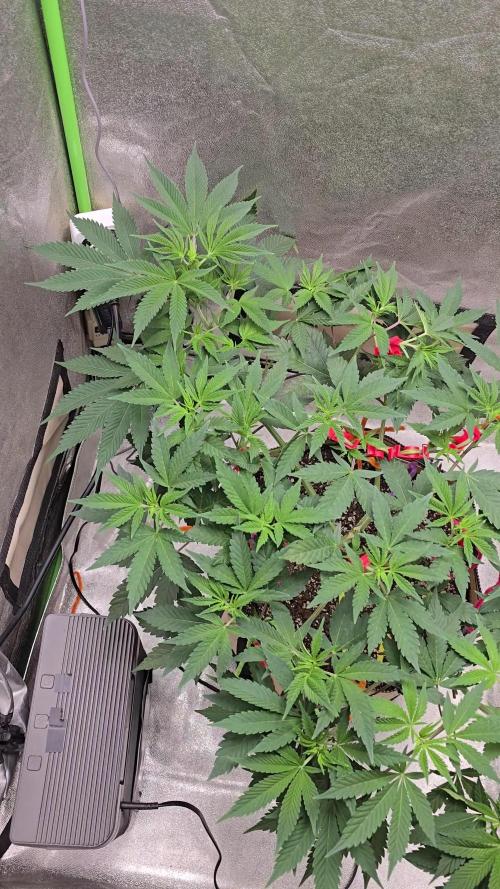
G13 is starting to stack. She is growing good in the Athena blended line nutrition, under the Medic Grow Mini Sun-2. I am running a little strong on my solution mix. I will likely do a change in next few days if it keeps showing me signs of too much. It does look like it is getting better though. The plant is just getting bigger, and using it. Nothing else to report this week. Thank you Medic Grow, Athena, and Weed Seeds Express. đŸ€œđŸ»đŸ€›đŸ»đŸŒ±đŸŒ±đŸŒ± Thank you grow diaries community for the 👇likes👇, follows, comments, and subscriptions on my YouTube channel👇. â„ïžđŸŒ±đŸ» Happy Growing đŸŒ±đŸŒ±đŸŒ± https://youtube.com/channel/UCAhN7yRzWLpcaRHhMIQ7X4g
Likes
16
Share
@Prop207
Follow
Welcome to the Dung Heap Ladies been splashing around in RDWC for almost 10 weeks. They are sharing space with the Frisian Ducks, so you may see guest appearances from the m time to time. These ladies are in holding until the train wreck grow in Cab A finishes out. Then I'll rip clones and toss these ladies on the flip.
Likes
28
Share
@BB_UK
Follow
So it’s day 29 of bloom 💚🙏 very exciting things happening! Close to approaching half way through and you can see ata going to happen! Going to be big ole resinous buds! Trichromes are spreading already and aromas are catching the olfactory bulb and Making it go crazy just a whole variety of greatness! Got some more barneys to do after too! So if sponsorship goes as planned I’ll be in a bigger tent real soon!
Likes
15
Share
@BlaKX
Follow
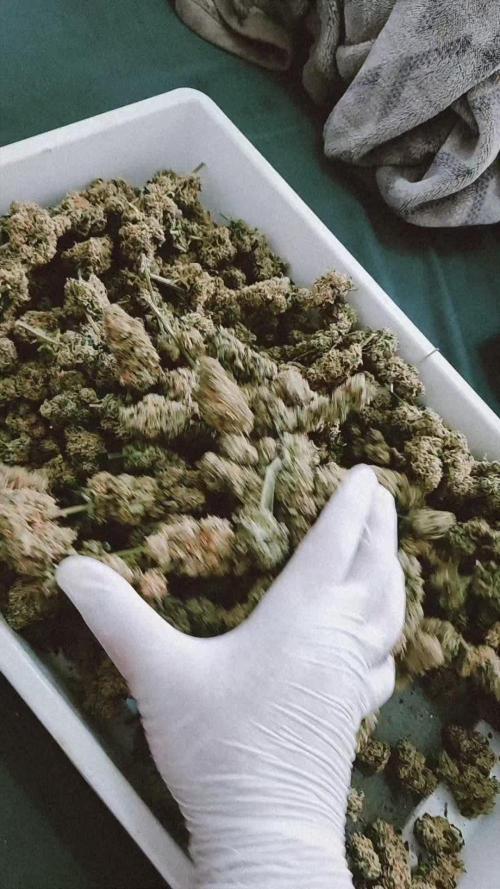
Uiii ich habe es geschafft beide Grows vollstĂ€ndig hochzuladen auch wenn der erste lĂŒckenhaft und sehr frĂŒh ernten musste hat sich fĂŒr diesen Grow schon rentiert.
Likes
4
Share
📆 Semana 5: Con el entorno radicular ya completamente estable, la planta dirige toda su energĂ­a al desarrollo floral. La estructura se mantiene fija y los cogollos comienzan a compactarse, apilando cĂĄlices con mayor densidad y mostrando una resina mĂĄs visible cada dĂ­a. Los riegos siguen alineados con la demanda, manteniendo una absorciĂłn limpia y sin acumulaciones. El aroma se intensifica y se vuelve mĂĄs profundo, señal clara de que la fase de carga estĂĄ en marcha. Semana de transiciĂłn hacia el engorde real y afirmaciĂłn estructural. Seguimos creciendo fuerte đŸ’Ș!
Likes
14
Share
She is going to be flipped to 12/12 next week she is so ready for 12/12 🙏đŸ’Ș💚💜💚đŸ’ȘđŸ€ŁđŸ’Ș💚💜