Likes
Comments
Share
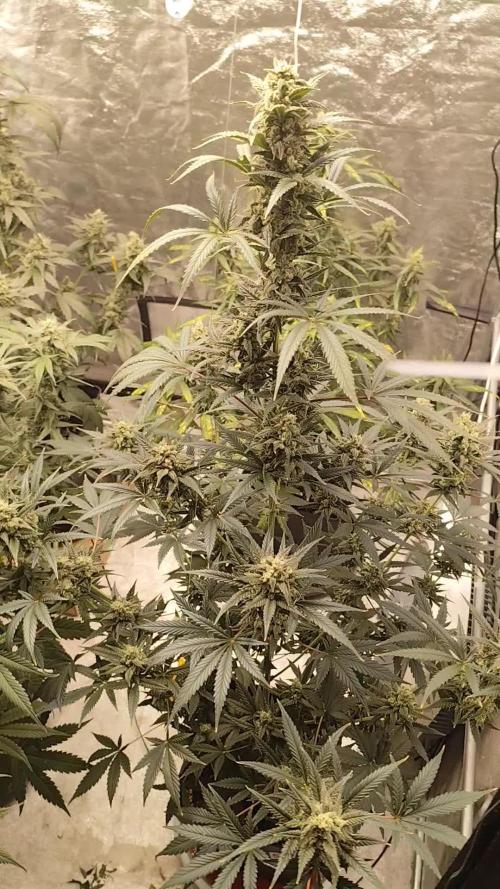
Buenas noches familia, después del revuelo del Covid y todas estas miradas volvemos unos actualizamos la semana estas green ak de zambezaseeds están ya fenómeno, un ejemplar está repleto de truco más y el otro ahí anda flotando todavía. Ph regulado y temperatura/humedad dentro de los parámetros. Os dejo las fotos para que apreciéis bien y espero estar la semana que viene por aquí, saludos familia
Likes
34
Share
Yellow butterfly came to see me the other day; that was nice. Starting to show signs of stress on the odd leaf, localized isolated blips, blemishes, who said growing up was going to be easy! Smaller leaves have less surface area for stomata to occupy, so the stomata are packed more densely to maintain adequate gas exchange. Smaller leaves might have higher stomatal density to compensate for their smaller size, potentially maximizing carbon uptake and minimizing water loss. Environmental conditions like light intensity and water availability can influence stomatal density, and these factors can affect leaf size as well. Leaf development involves cell division and expansion, and stomatal differentiation is sensitive to these processes. In essence, the smaller leaf size can lead to a higher stomatal density due to the constraints of available space and the need to optimize gas exchange for photosynthesis and transpiration. In the long term, UV-B radiation can lead to more complex changes in stomatal morphology, including effects on both stomatal density and size, potentially impacting carbon sequestration and water use. In essence, UV-B can be a double-edged sword for stomata: It can induce stomatal closure and potentially reduce stomatal size, but it may also trigger an increase in stomatal density as a compensatory mechanism. It is generally more efficient for gas exchange to have smaller leaves with a higher stomatal density, rather than large leaves with lower stomatal density. This is because smaller stomata can facilitate faster gas exchange due to shorter diffusion pathways, even though they may have the same total pore area as fewer, larger stomata. Leaf size tends to decrease in colder climates to reduce heat loss, while larger leaves are more common in warmer, humid environments. Plants in arid regions often develop smaller leaves with a thicker cuticle and/or hairs to minimize water loss through transpiration. Conversely, plants in wet environments may have larger leaves and drip tips to facilitate water runoff. Leaf size and shape can vary based on light availability. For example, leaves in shaded areas may be larger and thinner to maximize light absorption. Leaf mass per area (LMA) can be higher in stressful environments with limited nutrients, indicating a greater investment in structural components for protection and critical resource conservation. Wind speed, humidity, and soil conditions can also influence leaf morphology, leading to variations in leaf shape, size, and surface characteristics. Small leaves: Reduce water loss in arid or cold climates. Environmental conditions significantly affect gene expression in plants. Plants are sessile organisms, meaning they cannot move to escape unfavorable conditions, so they rely on gene expression to adapt to their surroundings. Environmental factors like light, temperature, water, and nutrient availability can trigger changes in gene expression, allowing plants to respond to and survive in diverse environments. Depending on the environment a young seedling encounters, the developmental program following seed germination could be skotomorphogenesis in the dark or photomorphogenesis in the light. Light signals are interpreted by a repertoire of photoreceptors followed by sophisticated gene expression networks, eventually resulting in developmental changes. The expression and functions of photoreceptors and key signaling molecules are highly coordinated and regulated at multiple levels of the central dogma in molecular biology. Light activates gene expression through the actions of positive transcriptional regulators and the relaxation of chromatin by histone acetylation. Small regulatory RNAs help attenuate the expression of light-responsive genes. Alternative splicing, protein phosphorylation/dephosphorylation, the formation of diverse transcriptional complexes, and selective protein degradation all contribute to proteome diversity and change the functions of individual proteins. Photomorphogenesis, the light-driven developmental changes in plants, significantly impacts gene expression. It involves a cascade of events where light signals, perceived by photoreceptors, trigger changes in gene expression patterns, ultimately leading to the development of a plant in response to its light environment. Genes are expressed, not dictated! While having the potential to encode proteins, genes are not automatically and constantly active. Instead, their expression (the process of turning them into proteins) is carefully regulated by the cell, responding to internal and external signals. This means that genes can be "turned on" or "turned off," and the level of expression can be adjusted, depending on the cell's needs and the surrounding environment. In plants, genes are not simply "on" or "off" but rather their expression is carefully regulated based on various factors, including the cell type, developmental stage, and environmental conditions. This means that while all cells in a plant contain the same genetic information (the same genes), different cells will express different subsets of those genes at different times. This regulation is crucial for the proper functioning and development of the plant. When a green plant is exposed to red light, much of the red light is absorbed, but some is also reflected back. The reflected red light, along with any blue light reflected from other parts of the plant, can be perceived by our eyes as purple. Carotenoids absorb light in blue-green region of the visible spectrum, complementing chlorophyll's absorption in the red region. They safeguard the photosynthetic machinery from excessive light by activating singlet oxygen, an oxidant formed during photosynthesis. Carotenoids also quench triplet chlorophyll, which can negatively affect photosynthesis, and scavenge reactive oxygen species (ROS) that can damage cellular proteins. Additionally, carotenoid derivatives signal plant development and responses to environmental cues. They serve as precursors for the biosynthesis of phytohormones such as abscisic acid () and strigolactones (SLs). These pigments are responsible for the orange, red, and yellow hues of fruits and vegetables, while acting as free scavengers to protect plants during photosynthesis. Singlet oxygen (¹O₂) is an electronically excited state of molecular oxygen (O₂). Singlet oxygen is produced as a byproduct during photosynthesis, primarily within the photosystem II (PSII) reaction center and light-harvesting antenna complex. This occurs when excess energy from excited chlorophyll molecules is transferred to molecular oxygen. While singlet oxygen can cause oxidative damage, plants have mechanisms to manage its production and mitigate its harmful effects. Singlet oxygen (¹O₂) is considered a reactive oxygen species (ROS). It's a form of oxygen with higher energy and reactivity compared to the more common triplet oxygen found in its ground state. Singlet oxygen is generated both in biological systems, such as during photosynthesis in plants, and in cellular processes, and through chemical and photochemical reactions. While singlet oxygen is a ROS, it's important to note that it differs from other ROS like superoxide (O₂⁻), hydrogen peroxide (H₂O₂), and hydroxyl radicals (OH) in its formation, reactivity, and specific biological roles. Non-photochemical quenching (NPQ) protects plants from damage caused by reactive oxygen species (ROS) by dissipating excess light energy as heat. This process reduces the overexcitation of photosynthetic pigments, which can lead to the production of ROS, thus mitigating the potential for photodamage. Zeaxanthin, a carotenoid pigment, plays a crucial role in photoprotection in plants by both enhancing non-photochemical quenching (NPQ) and scavenging reactive oxygen species (ROS). In high-light conditions, zeaxanthin is synthesized from violaxanthin through the xanthophyll cycle, and this zeaxanthin then facilitates heat dissipation of excess light energy (NPQ) and quenches harmful ROS. The Issue of Singlet Oxygen!! ROS Formation: Blue light, with its higher energy photons, can promote the formation of reactive oxygen species (ROS), including singlet oxygen, within the plant. Potential Damage: High levels of ROS can damage cellular components, including proteins, lipids, and DNA, potentially impacting plant health and productivity. Balancing Act: A balanced spectrum of light, including both blue and red light, is crucial for mitigating the harmful effects of excessive blue light and promoting optimal plant growth and stress tolerance. The Importance of Red Light: Red light (especially far-red) can help to mitigate the negative effects of excessive blue light by: Balancing the Photoreceptor Response: Red light can influence the activity of photoreceptors like phytochrome, which are involved in regulating plant responses to different light wavelengths. Enhancing Antioxidant Production: Red and blue light can stimulate the production of antioxidants, which help to neutralize ROS and protect the plant from oxidative damage. Optimizing Photosynthesis: Red light is efficiently used in photosynthesis, and its combination with blue light can lead to increased photosynthetic efficiency and biomass production. In controlled environments like greenhouses and vertical farms, optimizing the ratio of blue and red light is a key strategy for promoting healthy plant growth and yield. Understanding the interplay between blue light signaling, ROS production, and antioxidant defense mechanisms can inform breeding programs and biotechnological interventions aimed at improving plant stress resistance. In summary, while blue light is essential for plant development and photosynthesis, it's crucial to balance it with other light wavelengths, particularly red light, to prevent excessive ROS formation and promote overall plant health. Oxidative damage in plants occurs when there's an imbalance between the production of reactive oxygen species (ROS) and the plant's ability to neutralize them, leading to cellular damage. This imbalance, known as oxidative stress, can result from various environmental stressors, affecting plant growth, development, and overall productivity. Causes of Oxidative Damage: Abiotic stresses: These include extreme temperatures (heat and cold), drought, salinity, heavy metal toxicity, and excessive light. Biotic stresses: Pathogen attacks and insect infestations can also trigger oxidative stress. Metabolic processes: Normal cellular activities, particularly in chloroplasts, mitochondria, and peroxisomes, can generate ROS as byproducts. Certain chlorophyll biosynthesis intermediates can produce singlet oxygen (1O2), a potent ROS, leading to oxidative damage. ROS can damage lipids (lipid peroxidation), proteins, carbohydrates, and nucleic acids (DNA). Oxidative stress can compromise the integrity of cell membranes, affecting their function and permeability. Oxidative damage can interfere with essential cellular functions, including photosynthesis, respiration, and signal transduction. In severe cases, oxidative stress can trigger programmed cell death (apoptosis). Oxidative damage can lead to stunted growth, reduced biomass, and lower crop yields. Plants have evolved intricate antioxidant defense systems to counteract oxidative stress. These include: Enzymes like superoxide dismutase (SOD), catalase (CAT), and various peroxidases scavenge ROS and neutralize their damaging effects. Antioxidant molecules like glutathione, ascorbic acid (vitamin C), C60 fullerene, and carotenoids directly neutralize ROS. Developing plant varieties with gene expression focused on enhanced antioxidant capacity and stress tolerance is crucial. Optimizing irrigation, fertilization, and other management practices can help minimize stress and oxidative damage. Applying antioxidant compounds or elicitors can help plants cope with oxidative stress. Introducing genes for enhanced antioxidant enzymes or stress-related proteins over generations. Phytohormones, also known as plant hormones, are a group of naturally occurring organic compounds that regulate plant growth, development, and various physiological processes. The five major classes of phytohormones are: auxins, gibberellins, cytokinins, ethylene, and abscisic acid. In addition to these, other phytohormones like brassinosteroids, jasmonates, and salicylates also play significant roles. Here's a breakdown of the key phytohormones: Auxins: Primarily involved in cell elongation, root initiation, and apical dominance. Gibberellins: Promote stem elongation, seed germination, and flowering. Cytokinins: Stimulate cell division and differentiation, and delay leaf senescence. Ethylene: Regulates fruit ripening, leaf abscission, and senescence. Abscisic acid (ABA): Plays a role in seed dormancy, stomatal closure, and stress responses. Brassinosteroids: Involved in cell elongation, division, and stress responses. Jasmonates: Regulate plant defense against pathogens and herbivores, as well as other processes. Salicylic acid: Plays a role in plant defense against pathogens. 1. Red and Far-Red Light (Phytochromes): Red light: Primarily activates the phytochrome system, converting it to its active form (Pfr), which promotes processes like stem elongation and flowering. Far-red light: Inhibits the phytochrome system by converting the active Pfr form back to the inactive Pr form. This can trigger shade avoidance responses and inhibit germination. Phytohormones: Red and far-red light regulate phytohormones like auxin and gibberellins, which are involved in stem elongation and other growth processes. 2. Blue Light (Cryptochromes and Phototropins): Blue light: Activates cryptochromes and phototropins, which are involved in various processes like stomatal opening, seedling de-etiolation, and phototropism (growth towards light). Phytohormones: Blue light affects auxin levels, influencing stem growth, and also impacts other phytohormones involved in these processes. Example: Blue light can promote vegetative growth and can interact with red light to promote flowering. 3. UV-B Light (UV-B Receptors): UV-B light: Perceived by UVR8 receptors, it can affect plant growth and development and has roles in stress responses, like UV protection. Phytohormones: UV-B light can influence phytohormones involved in stress responses, potentially affecting growth and development. 4. Other Colors: Green light: Plants are generally less sensitive to green light, as chlorophyll reflects it. Other wavelengths: While less studied, other wavelengths can also influence plant growth and development through interactions with different photoreceptors and phytohormones. Key Points: Cross-Signaling: Plants often experience a mix of light wavelengths, leading to complex interactions between different photoreceptors and phytohormones. Species Variability: The precise effects of light color on phytohormones can vary between different plant species. Hormonal Interactions: Phytohormones don't act in isolation; their interactions and interplay with other phytohormones and environmental signals are critical for plant responses. The spectral ratio of light (the composition of different colors of light) significantly influences a plant's hormonal balance. Different wavelengths of light are perceived by specific photoreceptors in plants, which in turn regulate the production and activity of various plant hormones (phytohormones). These hormones then control a wide range of developmental processes.
Likes
Comments
Share
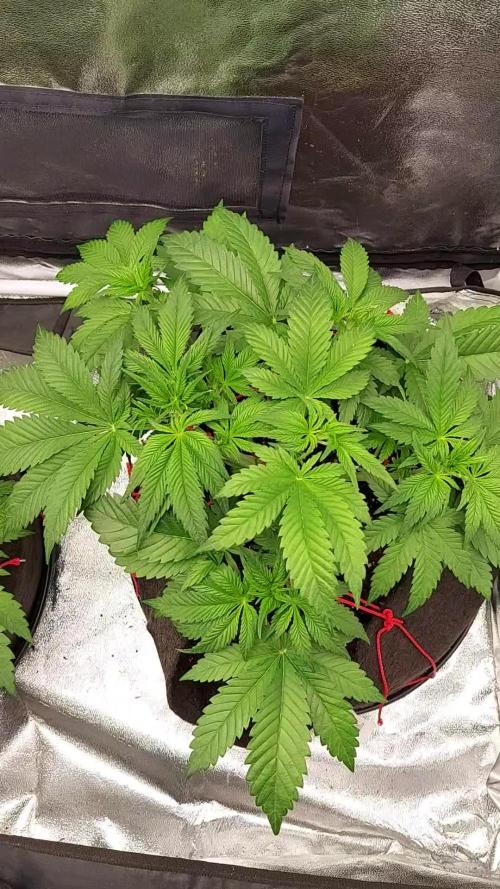
This week I continued the same regiment as the last week only this week I upped their water intake slightly. I went from 250mL to 500mL at a time daily. Then I had to slightly defoliate due to the main stem fan leaves totally blocking all growth from the plant all the way around but once I defoliated the l main stems fan leaves the lower section of the plant was able to retrieve light and air circulation. You can tell that it was desperately needed and much needed! Now the plant will grow better! All and all this week went quickly and I'm happy with the results?
Likes
89
Share
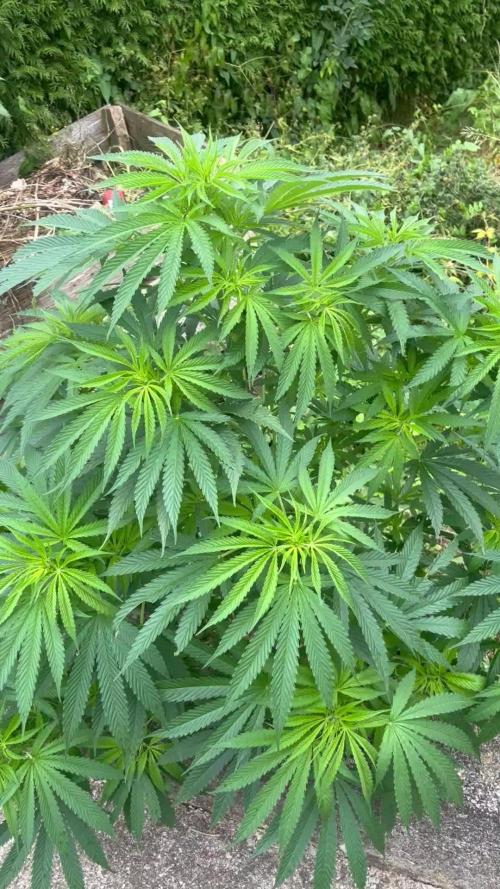
2020-07-24 (Day 129) This girl and her Bruce Banner sister have cow manure mixed in and this is the first week I’ve added nutes. Leaves weren’t yellowing but I felt that overall the plants were pale throughout, especially compared to her clone. From here on out I’m more or less letting her do her thing. I’ll likely have to add supports once she starts bulking up with flowers. I’ll also have to move her and her BB3 sister in my yard once flowering initiates as the sun will be blocked more by my hedges come that time. I’ve added a picture of her beside her untrained clone in a two gallon pot. This clone leads me to believe that left untrained this thing would grow into a massive tree! It’s been sunny and warm with little rain, so far knock on wood an amazing summer for growing outdoor. Stay tuned, flowering is just around the corner!
Likes
71
Share
The Hobbit Hole Outdoor Grow 2026 Woche 4 – Der Sommer ist angekommen… und die Natur zeigt ihre Zähne. Diese Woche fühlte sich an wie der eigentliche Beginn des Hobbit Hole. Nach den regnerischen und kühlen Tagen der vergangenen Wochen zeigte sich endlich der Sommer. Drei Tage Sonne am Stück reichten aus, um den kleinen Autos einen sichtbaren Wachstumsschub zu verpassen. Fast so, als hätten sie nur darauf gewartet, endlich loslegen zu dürfen. Besonders auffällig war die Entwicklung der Blätter. Alle vier Pflanzen bildeten inzwischen ihre ersten fünffingrigen Blätter – für mich immer einer der schönsten Momente im frühen Wachstum. Ab diesem Punkt wirken sie nicht mehr wie kleine Sämlinge, sondern wie richtige Cannabispflanzen. Natürlich blieb das Hobbit Hole auch diese Woche nicht völlig verschont. Wie gewohnt bekamen alle Pflanzen vorsorglich eine Behandlung mit Neem, um Schädlingen möglichst früh den Appetit zu verderben. Die Kupferringe verrichteten weiterhin zuverlässig ihren Dienst – zumindest dachte ich das. Dann kam der Rückschlag. Die Guava Runtz, die bis dahin sogar zu den stärksten Pflanzen gehörte, wurde komplett von einer Schnecke erwischt. Vermutlich nutzte sie genau die Stelle aus, an der ein Wühltier zuvor den Kupferschutz beschädigt hatte. Der Stängel wurde einfach durchgeknabbert und der Rest lag dann daneben😓 Genau solche Momente gehören leider zu einem echten Outdoor-Grow dazu. Ärgerlich? Absolut. Aber genau deshalb dokumentiere ich auch solche Rückschläge. Nicht jeder Grow verläuft perfekt, und die Natur schreibt ihre eigenen Regeln. Als direkte Konsequenz bekam die Cinderella sofort einen zweiten Kupferring als zusätzliche Absicherung. Lieber einmal zu vorsichtig als eine weitere Pflanze zu verlieren. Der kleine Zwischenfall hat gleichzeitig das Feld neu sortiert. Die Gelato übernimmt inzwischen die Führung und entwickelt sich aktuell am kräftigsten. Direkt dahinter folgt die Cinderella, die weiterhin ihren Ruf als schnelle und vitale Sorte bestätigt. Auch die Purple Punch hat sich nach ihrem missglückten Start erstaunlich gut erholt und holt langsam auf. Mit jeder Woche wird deutlicher, dass die eigentliche Arbeit unter der Erde längst erledigt wurde. Die Wurzeln scheinen sich inzwischen fest im Boden etabliert zu haben und das oberirdische Wachstum zieht nun sichtbar nach. Outdoor bedeutet eben nicht, jede Situation kontrollieren zu können. Man arbeitet mit dem Wetter, mit Insekten, mit Schnecken, mit Tieren und manchmal auch gegen sie. Genau das macht dieses Projekt für mich so spannend. Drei Hobbits stehen noch im Hobbit Hole. Und jetzt beginnt der eigentliche Kampf.
Likes
11
Share
@TechDCo
Follow
Happy Xmas 😊 No better day to lay them down! "We're Off to the races" 🏁 Greyhound's at the ready! "I feel like; we're in for a speed run Martina" •HydroSol Grow + H202• #Peanut Butter OGKB - Sensible Seeds #Peyote Wi-Fi CBD - Seedsman. #Monkey SlapZ - PreyBird Farms. #The Future - DC Seeds "Sprayed SEEDS with weak 3% solution of hydrogen peroxide foodgrade. Placed on mineral wool inside of a glass food container in a propagandist! 😉 on a heat mat at 24c. 26/12/2024 Peanut Butter OGKB has sprouted her tap! 27/12/2024 Peyote Wi-Fi CBD (PW) is ready for the light as well with The Future (TF) 28/11/2024 All have germinated! Peeled back the shell 🐚 on peanut butter OGKB (PB) being a good Santa's little helper. Will introduce HydroSol water soluble feed in the morning. They should have enough in there tap root until morning. "Its only been 3days since I laid them down 👀 and it's been 1 day from seed sprouting tap root" mathematical genius i am. Midday: Apllied a very weak feed of HydroSol at ratio of 1ml/L. DLI: 20 (c) Little above average! Lights Off! Sprayed propagator with HP 6% all round avoiding direct touch! About week 3 will up the dose spray to 12% "avoiding direct touch" this is bleach strength. But hopefully being introduced early will stop the micro-organisms "ever" building up in the plants cells ever. May have to do a laboratory grow next to get the results i want that are projected in my minds eye! If the hydrogen keeps reacting with micro organisms; it could by the very definition rip atoms and form mutations of its own kind! Hence these are "Experiments" Because i think every grow is an experiment (leave it to the professionals: I hear you! Would; could; should but the world is full of lies and deceptions; from knowledge; technology; history and Morden-day! Well Morden day academics 'to me. Personally is all bs! Take it as it is, just my opinions and a cloud of thought sprawling and spiraling out over these digital diaries. I hwar ya too. A huge still box would be needed or properly designing a room for a labradory grow. I don't know! I would need zero interferences from "out of space" where the nasties come from in our world. The space between me and you; consists of everything we know in that "gap" for we are forever shinning from our own island! Hard to explain. Lights Off: 147watts wall draw with DLI at 20! Light Shedule: 3-9pm Monkey SlapZ (MS) hasnt cracked her shell yet. I may have to do it tomorrow morning (may die otherwise) 29/11/2024 Lights On! (MS removed shell and accidently snapped its tap toot) PW tap as got snap accidentally as well as I re perisione it. This happened before and MS recovered from the snapped tap root. I made the MS joke 😃 Anyways...let it be! 30/12/2024 I'll update agai😗n next week: i think this talk for the first few days has set the pace for myself! Enter.the.Void.2009.DC.1080p.BluRay.DDP5.1.x265.10bit-GalaxyRG265 Just finshed watching it! for real i thought it was me! mint film to watch stoned 31/11/2024 Increased light: 293watts DLi 35 ***Happy New Years 2025*** How did you smoke yaself in? Me; diy chemistry kit lol "All the best brothers" ❤️ 💪 Keep it strong! I can only hope this diary can bring HydroSol some limes 🍋 🙏 in the sunshine 🌞 water soluble feed. Zero residues "allegedly". All I have heard is positive things about HydroSol water soluble feed. I had a thot, " The HP 12% i am using for cosmetic reasons is basically "water" with an extra molecule. H202 is basically water and is can be soluble with HydroSol feed. I'll explain more on from my pervious grow diary by Segwaying in and out of this diary with quotations from It and continuing on. 02/01/2025 Dimmed light: 188 25DLi Will update next week, these puppies need to stretch their roots. Nothing much happening! Loads happening really. You know what i mean lol " My little rusties i call them" Free radicals have caused the leafs to have a faint ginger tint when it stole the Oxygen Atom, which released free radicals. Not to worry this will boost growth in the next two week. 04/01/2025 All seems okay. Monkey SlapZ lost a leaf 🍃 😳 but looks like shes recovering fine. I introduced HydroSol way too early. Never mind you live and learn. They are all back in the propagator and I put some fresh seeds down to germinate/same strains. 11/01/2024 All fresh new seeds have sprouted. MS is showing new baby leafs 🍃 recovering from losing a leaf and top. Fresh baby growth is now showing! 13/01/2024 MS n TF has sprouted! Old MS recovered God burnt down Mel Gibsons house for making passion of the christ lol 18/01/2025 Its felt like a long start; experimenting with H202. The 2nd load of seeds i introduced h202 2days after tap root sprouted and HydroSol on day 3. This seems to of worked 20/01/2024 21/01/2024 TF and MS repotted into 5L jerry starter cans with 1.25ml/l 22/01/2024 All looks okay, will slowly 🐌 increase lights over the next week as they creep out of germination. PW hasn't germinated yet, ive placed another PW seed down! Midday Check ✔️ DLI: 28 Watts: 270 Canopy distance est: 35-40inches MS is 3days old after sprouting! Maybe it's just me but she looks older and her colours and texture looks different! Could it be the #HydroSol #H202? Who knows? Will have to replicate the protocols to verify these results on indeed because of HydroSol + H202 (1.5ml/l) 23/07/2025 I put down to germinate Freaky Pablo TerpYz and Magic MarkerxZZTOP 26/07/2025 Lights Rapid Growth has slowed 🐌 down. #The HydroSol feed 6.5ml/5litre of water for germinating....1ml of 12% HP. I think this is the ratio I am after. Being water soluble feed it looks like just water ; well it is 98% water i suppose. 26/07/2025 Midday It seems the HydroSol is working perfectly. It's been a rough sturdy journey to start off with but I've found a steady road to the right ratios. 1ml 12%HP to 5L 6.5ml HydroSol Feed for germinating. Vegging I will slowly increase to double the amount as she 👀 sees fit. It seems the HydroSol is working perfectly. It's been a rough sturdy journey to start off with but I've found a steady road to the right ratios. 1ml 12%HP to 5L 6.5ml HydroSol Feed for germinating. Vegging I will slowly increase to double the amount as she 👀 sees fit. Vegging begins tomorrow. It's been 2wks since TF & MS sprouted from seed. Others are still germinating in the propagator. 2 in this tent. 1 in loft tent 1 in Sativa tent (loft) thats the plan. Midday: light increased to 310watts DLi (c): 32
Likes
9
Share
This is where I'm at so far with them 5weeks into flower, they've had lst plus supercropping (I'm still not too sure about this so didn't do a lot of it) and at week 3 of flower I stripped both plants of all their large fan leaves they looked pretty bare but seems to have done the job
Likes
2
Share
@zenderman
Follow
29/11.day 36 of flowering,starting week 6.
Likes
18
Share
@Hashy
Follow
Week 7 Light cycle=12/12 Light Power=196w Extractor controller settings High temp= 25c Low temp= c Temp step=0c High Rh= 56% Low Rh= % Rh step=0% Speed max=10 Speed min=2 Fri 2/2/24 #3 (Day 43)(Day 5 flower) 📋 raised camera, nearly touching the roof. Sat 3/2/24 #3 (Day 44)(Day 6 flower) 📋 Defoliate a lot of lower leaves. Sun 4/2/24 💧💧💧💧💧💧💧💧💧💧💧💧💧💧💧💧 Method= automatic Feed=bloom nutes. Neutralise=0.1ml/L Silicon=1.0ml/L Calmag=1.0ml/L Terra Bloom=4.0ml/L Sumo Boost=1.0ml/L Roots=0.2ml/L Easy Ph down=0.115ml/L Ec=1.9 PH=6.1/6.5 Time start=12.00pm Finish time=13.45pm (11×5 minute runs with 5 minute gaps) Total flow rate=190ml/min Flow rate per plant=47ml/min. Total volume made=13L Total volume left=2.5L Total volume used=10.5L Volume per plant=2.62L (Est) Runoff. Total runoff=1.75L Ec=2.4PH=5.9/6.2 💧💧💧💧💧💧💧💧💧💧💧💧💧💧💧💧 #3 (Day 45)(Day 7 flower) 📋 Mon 5/2/24 #3 (Day 46)(Day 8 flower) 📋 H=49cm D=50cm DLI=33.0 Raised the pot a little. H=49cm D=43cm DLI=35.5 Tue 6/2/24 #3 (Day 47)(Day 9 flower) 📋 Looks like the weather is turning cold again over the next few days. Wed 7/2/24 💧💧💧💧💧💧💧💧💧💧💧💧💧💧💧💧 Method= automatic Feed=water Neutralise=0.1ml/L Roots=0.2ml/L Easy Ph down=0.ml/L Ec=0.2 PH=6.6/6.5 Time start=12.00pm Finish time=13.45pm (11×5 minute runs with 5 minute gaps) Total flow rate=190ml/min Flow rate per plant=47ml/min. Total volume made=13L Total volume left=2.5L Total volume used=10.5L Volume per plant=2.6L (Est) Runoff. Total runoff=1.5L Ec=1.74 PH=6.6/ 💧💧💧💧💧💧💧💧💧💧💧💧💧💧💧💧 #3 (Day 48)(Day 10 flower) 📋 H=53cm D=39cm DLI=42.0 Thur 8/2/24 #3 (Day 49)(Day 11 flower) 📋 H=55cm D=37cm DLI=45.0 Raised light 5cm. Lowered power from 200w to 180w H=55cm D=42cm DLI=37.0 This one is progressing OK. A little bit smaller then the others in the tent by about 20cm. She has lost the battle for space and is the runt of the grow at this moment in time. Back soon. Take it easy.
Likes
8
Share
@n1mbu5
Follow
Ok guys here they are, just over 1 week of life Fed them and watered today 09.11 400ml per plant PPM - 397 EC - 0.7 Ph 6
Likes
115
Share
Week 10 Marvel: Cherry Cola's Pruned Elegance and Floral Splendor Greetings, fellow cultivators! We've reached the remarkable milestone of Week 10 in the Cherry Cola Auto journey, and the tent is a painting of botanical wonders. Week 5 of the flowering stage has unveiled a need for a strategic defoliation, and our green queen has undergone a meticulous pruning process. Let's delve into the details of this transformative week. As we navigate through Week 5 of the flowering stage, the Cherry Cola Auto is a testament to the magic of autoflower cultivation. The buds are evolving, and the tent is permeated with the tantalizing aroma of a promising harvest. The journey thus far has been a delight, and the best is yet to come. In response to the flourishing canopy and to optimize light penetration, a strategic defoliation became imperative. The decision to remove excess foliage was not only about enhancing light exposure to critical bud sites but also promoting better airflow and reducing the risk of potential mold or pest issues. The defoliation process involved removing larger fan leaves, allowing the lower branches to receive their fair share of light. In addition to defoliation, a meticulous bottom cleaning ritual took place. Removing the lower, less productive growth not only redirects energy to more crucial upper buds but also eliminates potential sites for moisture retention and pest harborage. This step is crucial in maintaining a healthy, well-ventilated environment as we approach the final weeks of flowering. The defoliation and bottom cleaning were conducted with surgical precision. It's not just about removing leaves; it's a delicate dance of preserving the plant's natural grace while maximizing its potential. The result is a pruned elegance that showcases the structural beauty of Cherry Cola's budding architecture. Our nutrient regimen, with P-Boost, Topbooster, and the strategic addition of Potassium (K), continues to be the backbone of this flourishing spectacle. The phosphorus boost and organic grace provided by Topbooster, combined with the potassium magic, are orchestrating a symphony of blooming processes that bode well for the upcoming harvest. The TDS reading, now at 550, reflects the balanced nutrient environment, ensuring the plant's nutritional needs are met. Maintaining an ideal pH balance of 6.4 ensures that the nutrients are readily available to the plant. This harmony in pH contributes to optimal nutrient absorption and supports the overall health and vigor of our Cherry Cola Auto. As we prune and nurture, the tent is filled with an aroma extravaganza. Cherry Cola's terpene profile is becoming more pronounced, promising a sensory delight in the final product. The olfactory journey is a precursor to the flavors and effects that await. As Week 10 unfolds, Cherry Cola Auto stands as a pruned prelude to harvest, a testament to the meticulous care and strategic decisions throughout the journey. The mood is set for the final act, and we eagerly anticipate the culmination of this horticultural odyssey. Stay tuned, fellow enthusiasts, as the Cherry Cola Chronicles approach their grand finale! Nutrition: @aptusholland @aptus_world @aptus_ Love, Care, and Attention: @dogdoctorofficial As always, thank you all for joining me on this journey, for your love, and for it all. My horticultural odyssey would never be the same without you. Your love and support are cherished, and I feel both honored and blessed to have you in my life Friendly reminder all you see here is pure research and for educational purposes only Growers Love To you All 💚 💚 💚
Likes
35
Share
Likes
Comments
Share
Day 56-63 We see her stretching very very much. The Left one goes the craziest. Probably the biggest sativa pheno. The middle one at least and the right one stretches a lot but controllable. I had problems setting my light more up cuz there was not much more space. Very much sativa light genes. The pictures always start at the beginning of the days til the end of the week! Just to let u know! Also lollipopped again at day 20 of bloom!
Likes
39
Share
Das Blatt Blüte Verhältnis war sehr sehr gut! 👌 Ich habe die Pflanzen dieses Mal nicht komplett getrimmt, sondern mit Zucker Blätter aufgehangen um ein schonenderen trocken prozess zu bekommen und ich Maniküre die Pflanze dieses Mal erst wenn sie trocken ist das verhindert Verletzungen der Pflanze die ein zu schnelles austrocknen zu Folge haben! Es ist mehr Arbeit weil man die Pflanzen Doppelt und dreifach in der Hand hat aber es lohnt sich, ich habe die komplette ernte fertig getrimmt in ein Cvault 21L für 2 Wochen Fermentiert mit einem 62 Prozent boveda, ich habe jeden Tag gelüftet und jeden zweiten Tag muss man es wenden vorsichtig! 👌 😊 Und raus kam richtig Premium gras ♥️♥️♥️😁 The leaf to flower ratio was very, very good! 👌 This time I didn't trim the plants completely, but instead hung leaves with sugar to get a gentler drying process and this time I only manicure the plant when it is dry, which prevents injuries to the plant that would result in it drying out too quickly! It's more work because you have the plants twice or three times in your hand but it's worth it, I finished trimming the entire harvest in a Cvault 21L for 2 weeks. Fermented with a 62 percent boveda, I aired it every day and every other day you have to turn it carefully! 👌 😊 And out came really premium grass ♥️♥️♥️😁
Likes
57
Share
@AsNoriu
Follow
Day 85 since seed touched soil. Trim jail !!! 2.40 cm of hanging buds !!! Happy Growing !!!
Likes
12
Share
@NONSENSE
Follow
Good afternoon everyone! One more week is gone of the flowering. the plant looks beautiful, the buds become heavier every day. I still only use Hesi sponsored nutrients with every watering. I don't overdose on nutrients and follow the weekchart I got from Hesi. genetics is good old school from Neville's seed bank. It is also a normal seed, not femenized. The light schedule is 12/12 , feeding every day( I try to handle the cocos always wet) next week is the last flowering, after that I will clean the plant and will harvest it. Good luck, everyone
Likes
44
Share
22 Aug 2021 Today I’m starting to give some nutrients to assist my ladies in their development. I have been using plain pH’ed water to use the nutrients in the soil before giving anything extra. My girls are looking bleached out and weak. Maybe trying to reduce the nutrients by using the soil for the first week or so in their new homes isn’t paying off. I was hoping to see them flourish, but they aren’t. Growing is all about trial and error, and I’m hoping that my error isn’t going to hurt them in the long run! I’m starting the “Late Growth, stage 4” on my Flora-Trio 6 part feeding chart, but in the beginning I’m going to give them only half of the recommended amount to hopefully prevent any nutrient burn that they might experience. If there are no negative impacts seen, then I’ll adjust the amount as necessary. Today I’m giving them a half gallon of water with the following nutrients: CALiMAGic 2ml, FloraMicro 3.8ml, FloraGro 4.5ml, FloraBloom 2.5ml, and Floralicious Plus 1ml. The initial pH was as follows: C1 - 6.4, C2 - 6.3, C3 - 6.3. I did not need to adjust it, so I didn’t. The TDS going in was: C1 - 636 ppm, C2 - 634 ppm, C3 - 653 ppm. I was originally planning on giving each plant a gallon of water, but I received enough runoff after only half a gallon. I guess they still haven’t developed an extensive root system enough to require the additional water. It just made it to where I don’t have to worry about making more to give them in a couple of days. The runoff pH and TDS were as follows: C1 - pH 5.7, TDS 498 ppm; C2 - pH 6.0, TDS 562 ppm; C3 - pH 5.7, TDS 707 ppm. It’s always funny to see how plants in the same type of soil, and given nearly the same solution still have such varying pH and TDS runoff levels. 🤷‍♂️ That’s all I have to say. It’s a mystery, but not an overly important one as long as they’re healthy. The heat in the tent today was somewhat warm, but not as bad as it has been lately. The temperature was 81F, and the humidity was 56%. I’m hopeful that adding nutrients today will improve their color and get them to start developing their branches some more so I can flip them to flower in a little bit. We’ll have to see how it goes. 25 Aug 2021 Today I gave my ladies the second half of the gallon that I prepared a few days ago. They received the first half gallon on the 22nd, so I’m not going to repeat everything here again. To see what they were given read the note above. I am going to note the runoff levels and the temperature and humidity because they are important to note. Runoff was as follows: C1 - pH 6.0, TDS 610 ppm C2 - pH 6.1, TDS 546 ppm C3 - pH 6.0, TDS 765 ppm Again, it just weird seeing plants with different pH and TDS levels when they’re given nearly the exact same solution. 🤷‍♂️ The temperature in the tent was 81F, and humidity 62%. Overall, my little ladies are looking better since starting the nutrients. They no longer look bleached out, and the green is returning to her leaves quite well. I decided to measure them today as well to document their growth. C1 is now 16 inches tall, and C2 is 15 inches, and C3 is 16 inches. C1 and C2’s lights were adjusted to be 19 inches away, and C3’s light is at 18 inches to keep the light canopy level. The difference in the light and size is due to the size of the pot C3 is in. She stands taller because her pot is half a gallon larger, but also because the pot has small legs on which it stands on so it sits higher. They’re looking better, so that’s all that I care about in reality. Good luck, and happy growing everyone!!
Likes
22
Share
news // 1st Prize - Best New Strain Autoflower World Cup - 2025 Barcelona. Our two Green Cure F1 Hybrids of course by Zamnesia Seeds inaugurate a new photographic era for my studio: a magnificent immense, curved and perfect background has truly materialized in my farm, all in the name of Zammi. The graphics drive me crazy and the Zs in the background like Tetris are a gem of the very talented content creator of Zammi who gave me this gift. There are so many possibilities this is only the first time I've used it... Let's get to the plants because I'm really overexcited for this super top background and I could talk about it for hours... As said several times but it is worth repeating when harvesting, this time we followed the logic of comparing 2 plants: the first left to grow freely with just a little cleaning and the second with the application of techniques, a mainlining to be precise. Speed: The good news is that they practically matured together, the one without techniques is perhaps a little more mature but really just a little. Both ready in 10 weeks. Resin/scents/taste: Truly an excellent level of resin and a fantastic coffee/chocolate scent that develops from the trichomes, it wouldn't be easy to say that it's CBD if I didn't know, delicious already in the dry room ready for 15-20 days of treatment and then off to the Autoflower World Cup, they definitely go in the CBD category. Production: The amount of grass is not bad at all, considering that they grew in full winter in vegetative mode, that they are in an 11-liter pot, in my opinion we are around 100 grams both maybe a little less. Let's remember 10 weeks guys now the plants go very fast without losing quality.... At least those of Zamnesia... I'm very happy to have some CBD to consume, I recently ran out of oil and I miss it a bit. Look at the photos there are many, comparative, alone and also on a black background, I'm working on the trichomes now and will upload them soon. The F1 Hybrids from Zamnesia are truly spectacular...think about them. Remember that we used Soil + Fertilizers + Additives 100% organic from Plagron, we love the taste of organic grass, you can notice the difference when I taste mineral and then hydroponics let's not talk about it.. Better a little less grass but more in line with mother nature at BreadandBuds. Choose your ideal soil and fertilizers accordingly on the Plagron website with a fantastic auto-calculation sheet and get the fertilizers on the Zamnesia website. ---- https://plagron.com/en Try a seed of this variety that drives us crazy.. ---- https://www.zamnesia.io/en/10672-zamnesia-seeds-green-cure-cbd-f1-automatic.html Description Zamnesia // Zamnesia's breeding team has harnessed F1 genetics to bring you Green Cure CBD F1 Automatic. This autoflowering cultivar is easy to grow, accessible and reliable for all levels of experience. Ready in just 11 weeks, growers can expect impressive yields of tasty buds with a clear-headed effect that's ideal for meditative moments. All of this is provided in a place that, according to its own words, offers "all the best that nature has to offer", in fact. ---- www.zamnesia.com ------- Curiosity -------- My plants listen to Black music by ---- www.radionula.com alternating with 432Hz Stimulants very easy to find online try doing a search on youtube and pushing music for your girls. It's very effective from my point of view. Try it!