


Likes
Comments
Share

@CloudBlower
Follow
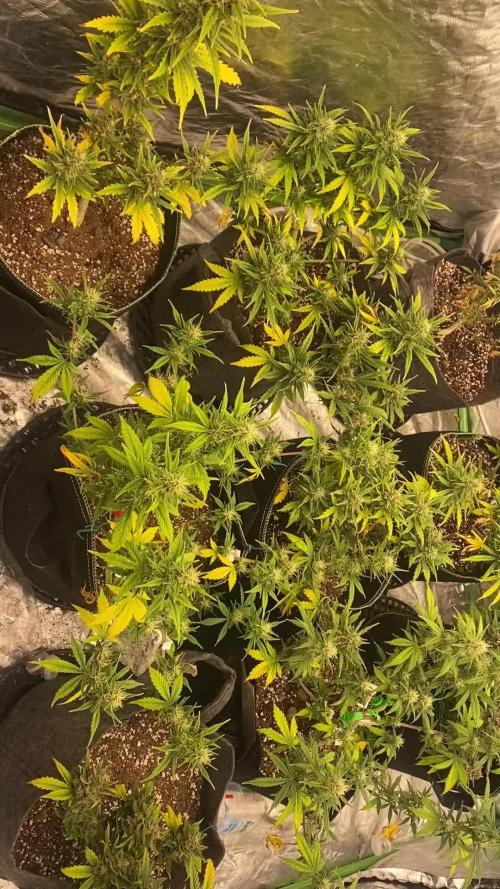
Seems like nutrient lockout deficiencies, we’ll see how it improves

Likes
42
Share


@Ultraviolet
Follow
Thank you. Gave her a cocktail to help with stress. Added 1st net for lateral support, not so much now, but for later. Blue light is absorbed by photoreceptor proteins called phototropins, which trigger a hormonal response that causes cells on the shaded side to elongate, making the plant bend toward the light. Try and fill this side a little. She is quite big already, just needs to find her stride again after the undue torture.
5 apex stems with 20-30 mini cola, let them develop a little, with the apical dominance shattered, all those 20-30 will all compete with each other as soon as that stretch is initiated. Key to a good stretch is making sure the plant is cycling efficiently, with large ATP conversions occurring lights out.
For now, I'm keeping light intensity high. A plant will slow its vertical growth in very high light intensities, leading to a more compact form with thicker stems and leaves. This response is a protective mechanism against light stress, which can damage the photosynthetic apparatus and lead to symptoms like leaf scorching, yellowing, and brittleness. Instead of growing taller, the plant invests its energy into creating a more robust, stress-tolerant structure.
Providing plants with necessary antioxidants helps protect the photosynthetic apparatus by scavenging reactive oxygen species (ROS) that cause damage from excess light.
UV light exposure can impact the xanthophyll cycle by either enhancing its photoprotective role or causing damage, depending on the intensity and type of UV radiation. UV exposure can trigger the synthesis of more xanthophyll cycle pigments to increase the plant's capacity to dissipate excess energy, but it can also cause direct damage, particularly to Photosystem II, and may lead to a decrease in the de-epoxidation state (DEPS ratio) which indicates a reduced capacity to dissipate excess energy.
Plants can respond to UV stress by increasing the synthesis of xanthophyll cycle pigments, such as violaxanthin and zeaxanthin, to improve their photoprotective capacity. UV-induced changes in xanthophyll cycle pigments can be linked to a plant's overall tolerance to high radiation stress. The xanthophyll cycle helps protect against photoinhibition, which is especially important when the plant is exposed to high levels of both UV and visible light. High doses of UV radiation can directly damage photosynthetic components, including the proteins, lipids, and pigments in the thylakoid membranes. Exposure to UV radiation can have a mixed effect on the de-epoxidation state (DEPS ratio) of the xanthophyll cycle pigments. In some cases, UV can inhibit the conversion of violaxanthin to zeaxanthin, resulting in a lower DEPS ratio and a reduced capacity for energy dissipation. However, the total pool of xanthophyll cycle pigments may increase, and this enhanced pool size could provide a greater potential for photoprotection despite a lower DEPS ratio.
The xanthophyll cycle works alongside other mechanisms, such as the accumulation of flavonoids (UV screens), to protect the plant from UV-induced damage.
Blue light repairs 100% UV-induced damage in plants through a process called photoreactivation, which uses a light-dependent enzyme called photolyase. This enzyme uses energy from blue and UV-A light to directly reverse the damaging pyrimidine dimers in the DNA caused by UV-B radiation, a key mechanism for maintaining the plant's genetic integrity.
After carbon, light, water, temperature, and nutrients, the limiting factor of a plant's growth is often its own internal factors or the amount of a key ingredient. Chlorophyll concentration is one such factor, as the amount of this pigment limits how much light can be captured for photosynthesis. Other factors include chloroplast number, respiration rate, and the concentration of carbon dioxide in the atmosphere, as plants are often in a CO2-deficient condition.
60x60x18=64800seconds x 700 = 45,360,000moles. 45DLI
Exposure to 165 µW/cm² of ultraviolet-B (UV-B) light for 3600 seconds = 1 hour, a extremely high, acute dose triggering stress responses and protective mechanisms.
.
The plant's photoreceptor protein, UVR8, senses the UV-B radiation. This triggers a signaling cascade that activates specific genes to protect the plant from damage. In response to the UV-B signal, the plant ramps up the biosynthesis of protective compounds like flavonoids, phenolic acids, and anthocyanins. These compounds absorb UV radiation and accumulate in the epidermal layers of leaves to shield inner photosynthetic tissues. The plant may increase leaf thickness or deposit more cuticular wax, creating a physical barrier to the radiation. The plant will produce more enzymatic and non-enzymatic antioxidants to neutralize the reactive oxygen species (ROS) produced by the UV-B radiation. The plant activates enzymes, including photolyases, to repair DNA damage caused by the UV-B. These repair mechanisms are critical for preventing permanent genetic mutations.
While protective measures are activated, a high dose delivered over a short period can cause stress that overwhelms the plant's defenses.
Photosynthesis is highly sensitive to UV-B. A high dose can inactivate Photosystem II (PSII), damage thylakoid membranes within the chloroplasts, and reduce chlorophyll content, which lowers the plant's overall photosynthetic capacity. Despite repair mechanisms, high UV-B doses can inflict persistent damage on the plant's DNA. The overproduction of reactive oxygen species can cause oxidative stress, leading to the oxidation of lipids and proteins and disrupting cellular function.
Likes
2
Share


@htd420
Follow
Buen cultivo, pero serà mejor el proximo ya que siempre hay cosas que mejorar y pulir.
Likes
44
Share

@Ultraviolet
Follow
144v
Lux in tenebris lucet.
The video on this channel/diary is for inspirational and entertainment purposes only. The ideas shared are not a substitute for professional advice. All materials are used under the principles of fair use, and no copyright infringement is intended. I aim to share timeless wisdom in a respectful manner.
Aristotle said "It is the mark of an educated mind to be able to entertain a thought without accepting it." Those who are able to refrain from judgement long enough to genuinely research and weigh the evidence from all sides of a given subject are those most likely to arrive at the truth. Those who instantly resort to knee-jerk ridicule and continue to believe whatever they were first taught are those most easily deceived.
Raised UVB light to final position. (No more very high intensity UV-B inhibiting hypocotyl elongation, including the regulation of growth-inhibiting hormone gibberellin GA). We want LOTS of gibbereeeeelin!
Very high light intensity can slow vertical growth, which I call releasing the kraken. She just doesn't want to grow vertically for 18 hours any longer; once the flower is initiated, that goes right out the window. Apical dominance is shattered; you now have every single stem fighting for survival against each other, with none given particular precedence. That is some stretch for a week, explosion. Doesn't matter if they are crowded now; there is space up ahead, and plant perception will fill every inch of available space. The divine intelligence that drives plant growth is far more efficient than any canopy I could make or spread myself. No defoliation. Sometimes you just need to give her what she needs to fill the space herself. All I do is guide the initial framework into the desired outcome, keep everything else flowing and in optimal parameters.
Fast-growing leaves to have a lighter green color, sometimes appearing almost yellowish-green, because they haven't had time to produce much chlorophyll yet. New leaves are soft and pale, but they will gradually darken and become a deeper green as they mature and are exposed to light. Every morning, new lime green, with the micros supercharged, may be immobilizing nitrogen in the medium, magnesium was creeping in earlier, so I'll try to hold the line and see what progresses.
The ratio of sugar leaves to buds is determined by a combination of hormonal signaling, nutrient availability, and genetics. Sugar levels act as a key signaling molecule, with high sugar availability influencing hormones like auxins and cytokinins to promote bud outgrowth, while nutrient deficiencies can limit development. Specific genes also play a critical role in leaf and bud initiation, expansion, and the overall balance of growth.
Buds are like balloons! Need lots of pressure to blow up lots of balloons! Sugar balloons! Plant transpiration and turgor pressure are crucial for bud development because turgor pressure provides the cell expansion needed for growth, while transpiration creates a "pull" that draws water and nutrients up through the plant to fuel this process. High turgor pressure is essential for cells to grow and expand, allowing buds to open and young leaves to unfurl. Transpiration maintains this necessary turgor by driving a continuous flow of water from the soil up to the leaves, where it evaporates. No holding back, this is it, 4-5 weeks of all-out war! What we develop now will be all we have for the final 4-5 weeks.
The carbon to nitrogen (C:N) ratio indicates how much carbon is in a substance relative to its nitrogen, affecting nitrogen availability in soil through microbial activity. A high C:N ratio (like in straw or corn residue) requires soil microbes to use a significant amount of nitrogen for decomposition, temporarily tying it up and making it unavailable to plants. A low C:N ratio results in a more rapid release of nitrogen for plant use.
The carbon-to-sulfur C:S ratio in plant residue determines whether soil microbes will immobilize or mineralize sulfur (S) during decomposition. This affects the availability of sulfate SO42, the primary form of S that plants can absorb. Mineralization is the process by which microbes decompose organic matter and release excess nutrients, like sulfate, into the soil in an inorganic, plant-available form. Immobilization is the reverse process, where microbes absorb inorganic sulfate from the soil to meet their own nutritional needs, making it unavailable to plants.
Glucose typically uses more oxygen than sucrose in a medium because it can be metabolized more directly, while sucrose must first be broken down into glucose and fructose, which can involve additional energy costs and a slower overall process. However, the efficiency of oxygen use can vary depending on the specific organism and conditions, as some bacteria, for instance, can use sucrose for a growth advantage under certain circumstances by producing exopolysaccharides that are more efficient at oxygen extrusion.
Why glucose is generally more oxygen-efficient:
•Glucose is a monosaccharide and can be used directly by many organisms in cellular respiration.
•It does not require an initial enzymatic step to break it down before entering the metabolic pathway, unlike sucrose.
•Due to its direct use, glucose can lead to a faster rate of oxygen consumption and carbon dioxide production in comparison to sucrose under typical aerobic conditions.
Why sucrose might seem to use more oxygen in certain contexts:
•When sucrose is metabolized, it is first broken down into glucose and fructose. This initial hydrolysis is an extra step that requires enzymes.
•The fructose component is metabolized differently from glucose, and its specific metabolic pathway can affect the overall oxygen demand.
•Some organisms may have regulatory mechanisms that lead to a higher initial oxygen demand when switching from glucose to sucrose, especially if the organisms have specific metabolic pathways that are optimized for sucrose.
•While glucose may be used faster, sucrose might provide a growth advantage under certain oxygen-limited conditions due to the specific metabolic pathways and products it can generate.
Seems my initial concept of sucrose was inaccurate. Really need to study up on all of this in the coming months. Take care.
“A cat has 9 lives”
“On cloud 9”
“Dressed to the nines”
To go “the whole nine yards”
“A stitch in time saves nine”
“Nine-ness” seems to be synonymous with the maximum, with the furthest extent of what’s possible. With fullness, completion, and when every effort has been exhausted.
In the ancient world (which is, let’s face it, is where numbers and their spiritual power were understood SO much more than they are today) the number 9 resonated with sacred structure and the furthest limitations of this world before human experience meets the Divine. Perhaps more than any other, the number nine had an extra special significance, which spread far and wide. It features across pretty much all cultures, worldwide, rippling through culture, mythology, history, law and time.
Nine is the central number in the ancient Celtic tradition.
Nine expresses through the triple Goddess (see Number 3) and in myths of the nine Celtic maidens or sorceresses. In fact, stories of nine mystical women presiding over nature spread from England, Ireland and Wales to Scandinavia, Iceland, and even as far as Kenya. Even today, it’s tradition for nine groups of nine men to dance around Beltane fires. The limit of winter (which is what Beltane
Almost all of the mythological tales from around the world have patterns of the number 9 weaving throughout.
The Northern European sagas tell of Odin, who rules over the nine Norse worlds. His trial to win the secrets of wisdom for mankind was to hang on the Yggdrasil tree for nine days.
Demeter, the Greek Goddess of the Earth searched for nine days for her daughter Persephone (who was in the underworld with Hades). Demeter is often depicted holding nine pieces of corn. Once recovered, Persephone was obliged to spend three months per year below the ground, and nine months above.
Native American, Mayan and Aztec myths tell of a total of nine cosmic levels (and many of the temples comprise 9 stories).
And in ancient China, nine was the most auspicious number of divine power: the Chinese had nine sacred rites, nine social laws, nine classes of officials in the government and built nine-story pagodas.
In astrology, the planet Mars vibrates to the frequency of the nine.
The ninth sign of the Zodiac is Sagittarius (where the Sun sails from November 22nd – December 21st)
InTarot, card number nine is the Hermit.
In Hinduism, nine is the number of Brahma.
In the Greek Sagas, the city of Troy was under siege for nine years.
9
Likes
10
Share

@carlitoshaze44
Follow
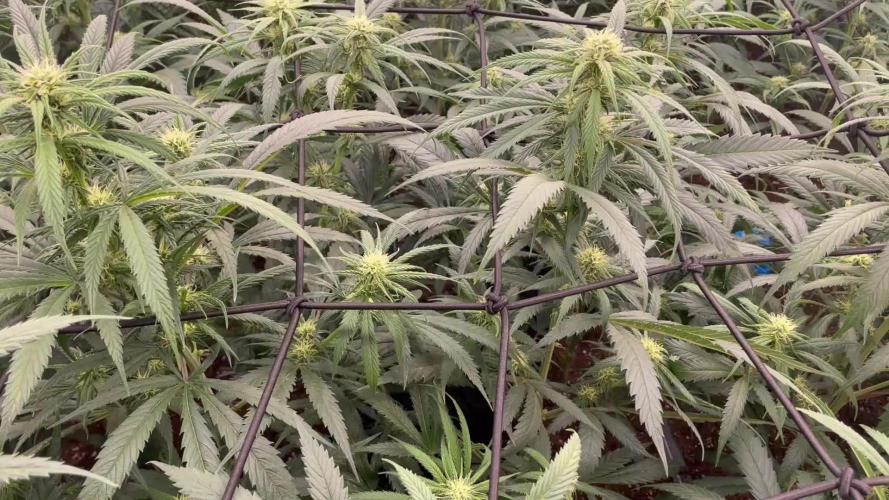
Otra semana más
Creo esta semana hoy día 27
Anunciando así el próximo día 28 inicio de esta quinta semana de floración del calendario de mis niñas,semana en la que comienzo subiendo la cantidad de comida y con ello de agua para mis niñas.
En los últimos riegos de la cuarta semana fui subiendo hasta alcanzar los 1700.
Las plantas mayoritariamente lo aceptaron,así que con ello subiré esta semana hasta alcanzar los 2000.
No defoliaré ninguna planta
Hoy ajuste la luminaria a una altura de 30cm con respecto a los 45 de la anterior semana.
Esta semana pegarán un buen apretón con la subida de PK,y la ayuda de los azúcares.
Seguimos con muchas lluvias y una humedad muy alta que dentro del armario se combate entre ventiladores extractor y desumificadores pasivos de sales de silicio.
Que me mantienen un 35% menos de la que tengo en el exterior llegando muchos días a los 45/50% de humedad.
Tengo que añadir que vivo a un kilómetro de la playa.

Likes
15
Share


@B4nkz
Follow
As you can see today I heavily defoliated the plant and adjusted the ties to gave her the desired shape.
I‘m watering every 3 days

Likes
116
Share


@AsNoriu
Follow
Day 65 since seed touched soil. Big disaster in garden !!! I added epsom salt and didnt phed , was in a rush to overtime, they dranked in 3 days , that was unexpected ....
Twins got all those nice new roots dead now. See no big damage in canopy, but notice discoloration, leaves went to darker blue green shade , were way more healthy bright green. Beeing so close to light it could be only feeding factor influence ...
Running out of space. Mars Hydro TSL2000 is doing great job, two plants are like 5 cm away , still no signs of burn.
Try to keep humidity in 65-70 % range, temps around 22, nights 20. All works.
Will top up this week with next watering, want to give one plain.
Wrong Ph led to slow uptake, twins are in limbo, behind couple days by weight, if troubles are bigger than i see now - maybe even 3-4. So sad .... One time wrong ph and you can damage garden heavily ...
Close up bud photos were taken under max light, so colours are false.
Day 66. Damage done, i see many pistils shrinked. Some roots recovering, see new whites again. Leaf colour fades into patches, far from best ... At least drinking ... Watered yesterday, 5 liters in. Hope to do top up and watering on Friday.
Day 68. They drink fast, 3 days were needed only. Loaded 5 liters again. Made top up. See bleaching, raised lights , have 10 cm left.
Top up was dosed, mixed well and laid on top, then i rough and mix top lair of soil with top up and only then i water.
All pots are 30 litres ( grams and ml , have in mind ) :
Plant Success - Great White - 5 ml / pot
Ecothrive - Biosys - 5 ml / pot
Ecotrive - Charge - 120 ml / pot
Ecothrive - Life Cycle - 60 g. / pot
Ecothrive - Bio Blend - 200 ml / pot.
Happy Growing !!!

Likes
5
Share


@MadeInGermany
Follow
Flowering day 65
since clock change
to 12/12
Hey guys :-) .
It's so far, the lady is ripe and will be cut at the bottom end in the coming days and hung upside down in the drying tent :-) .
Next week there will be an extra update on how they are hanging.
Watering would be done twice this week with 1 l each (nutrients see table above)
Otherwise it was checked and everything was cleaned.
Have fun and stay healthy 💚🙏🏻
👇🏼👇🏼👇🏼👇🏼👇🏼👇🏼👇🏼👇🏼👇🏼👇🏼👇🏼👇🏼
You can buy this Nutrients at :
https://greenbuzzliquids.com/en/shop/
With the discount code: Made_in_Germany you get a discount of 15% on all products from an order value of 100 euros.
👇🏼👇🏼👇🏼👇🏼👇🏼👇🏼👇🏼👇🏼👇🏼👇🏼👇🏼👇🏼
You can buy this strain at :
https://gardenofgreenseedbank.com/candyland/
Water 💧 💧💧
Osmosis water mixed with normal water (24 hours stale that the chlorine evaporates) to 0.2 EC. Add Cal / Mag to 0.4 Ec Ph with Organic Ph - to 5.8 - 6.5
MadeInGermany

Processing
Likes
2
Share


@Firepharmer
Follow
Day 43 ,
6 and a half weeks . She started to cloud up and has a few amber trichomes . Buds as starting to really full out now
Processing
Likes
1
Share


@BloodBath
Follow
Sour wiz came out amazing. Not many problems during her grow. Each pheno came out really different but that’s from my doing. I trained each plant differently to see what the difference would be. Responds really well to stress and training. I can’t tell you in words how great the flowers are. They’re literally coated in trichomes and smell and taste so damn good. Fruity sweet gasoline. Enjoy and thanks everyone who looks and follows.0
Likes
9
Share


@GYOweed
Follow
This was the squatest clone and grows thick heavy glowing marshmallow colas. Smells so sweet too soon to tell final taste.

Likes
34
Share


@Maggie_de_Block
Follow
Didn't water enough a few times over the past two weeks because i was busy with other stuff, but i dont think she suffered too much, she alwasy bounced right back from being droopy after a good watering
really starting to smell and buds are filling up, cant wait to smoke her
defoliated some big fan leaves blocking/touching bud sites
Likes
3
Share


@BetterBud
Follow
Should have trained this one, but at this point just letting it grow. It's near 4 feet tall, going to have a massive main cola
Likes
11
Share


@julian100614
Follow
Empezamos con esta Amnesia Haze Automatic de Royal Queen Seeds de las cuales tengo muy buenas referencias 👌
La germinación fué sin problemas y bastante rapida 🔥
Hemos metido la raiz en un sustrato de Bloom mix y hemos apñicado Atami Root-C para un sistema radicular rapido y fuerte 💪
Likes
25
Share


@Kakui
Follow
Veg36, están creciendo bastante bien, a esperar unos días para un próximo riego.
Veg38, ya hay que revisar amarras y ver si hay hojas abanico tapando algún brazo, siguiente riego era en 1 o 2 días más.
Veg40, se regó con EC 2.5 y pH 6.0, se cortaron un par de hojas, hay que seguir haciendo LST para lograr una altura uniforme.
Veg41, algunas hojas están mostrando quemadura en la puntas por exceso de nutrientes, los siguientes riegos tendrán que ser más suaves.

Likes
29
Share


@Hashy
Follow
Most of this week I was away so the tent was on autopilot.
When i got back i was pleased to see all 4 strains where still around the same on development, with this one possibly being the farthest behind but not by much. The wedding cheesecake is the taller of the 2 fastbuds autos. She is starting to throw out some nice colours now. I'm quite confident this one is going to hit my 13 weeks scheduled for it, so not long left.
Notes
Day 64 nothing away
Day 65 autofeed last weeks nutes
Day 66 Got back, everything's fine
Day 67 manually water
Day 68 light strength from 75% to 87%
PPFD was 599 Dli was 38.8 now its 692Ppfd 44.8Dli.
Day 69 autofeed this weeks nutes
Day 70 622Ppfd 40.3Dli
Back in a week
Take it easy.
Likes
6
Share


@Yessi_squeeze
Follow
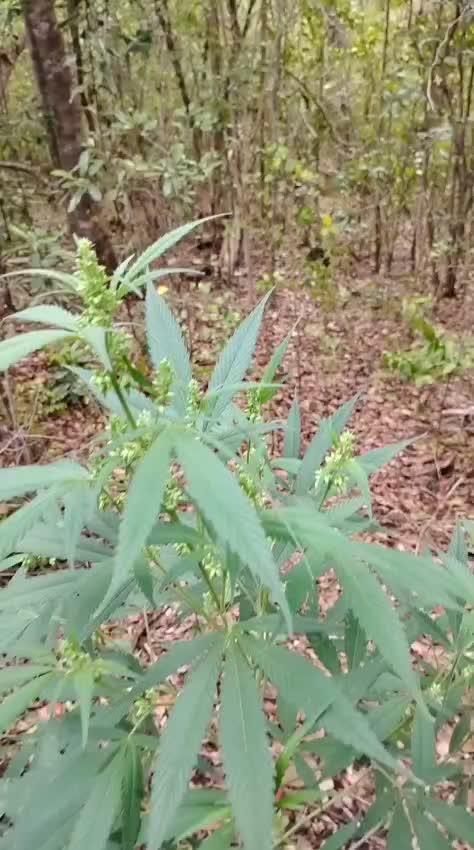
Purple lemonade just started flowering and will be switched to 12 /12 this week. She’s smaller than we thought she would be but we are making the most of her by LST her


Likes
21
Share


@GrowBro503
Follow
Playing with the set up. Week 4 is gonna be awesome!
* I water 1 gallon a week.


