


Likes
Comments
Share

@burnout
Follow
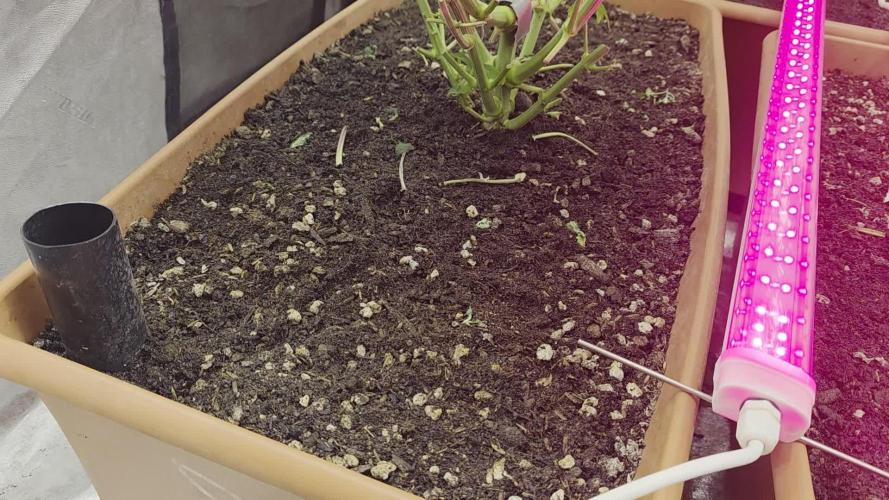
Start of day 21 of flower, cleared out the growth under the trellis and removed a lot of fan leaves on the canopy to make some more room for smaller budding sites and for airflow.
Going to get another set of the SpiderFarmer GrowR 80 red light strips for better coverage.

Processing
Likes
4
Share


@Squaregrouper
Follow
Red dragon had a fruitful week with the extreme temperatures around the hundred range with heat index over a hundred twenty degrees Fahrenheit.. I really like this plant reminds me of the old sativas..

Likes
7
Share


@HegauHillsFarmers_M11
Follow
Tag 56 - Beginn der 9 Woche.
Die Blüten entwickeln sich weiterhin gut, sie sind schön frostig und duften stark und süßlich. Leider wurden die Blätter immer gelber und fallen teilweise ab. Für mich ist das anhand der Symptome diese Woche eindeutig geworden, dass die Pflanze hier mit zu viel Licht und Hitze zu kämpfen hat. Leider kann ich die Lampe nicht weiter hoch stellen ohne das es die andere Pflanze beeinflussen würde. Deshalb habe ich das Düngeschema nicht geändert und weiterhin Cal-Mag dazu gegeben damit sich die Pflanze vor der Lichtintensität und der Hitze besser schützen kann.
Gedüngt wurde an Tag 51 der letzten Woche.
Nährstofflösung:
1 ml/l - Sensi Cal-Mag Xtra Advanced Nutrients.
1 ml/l - Big Bud Advanced Nutrients
1 ml/l - Bud Candy Advanced Nutrients.
1 ml/l - B-52 Advanced Nutrients.
2 ml/l - pH Perfect Sensi Bloom Part A.
2 ml/l - pH Perfect Sensi Bloom Part B.

Likes
10
Share


Likes
11
Share


Likes
2
Share

@MrIssa3buy3
Follow
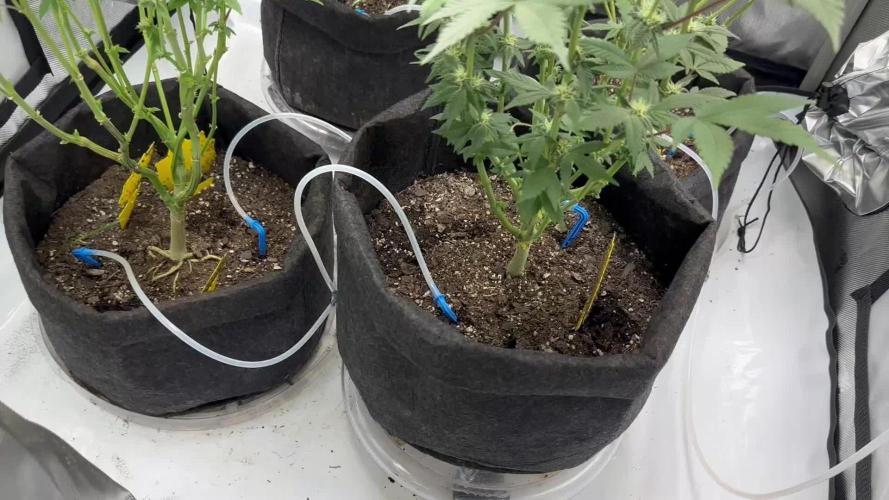
Day 28. Girls are looking good. Definitely got a good gnat population I’m dealing with. Girls are getting dripped for 2 mins every 2 hours. Pots are definitely on the lighter side so plants are drinking normal. Back left plant is fading pretty good already so been going a little harder on the Cronk but still no complaints. Keeping an eye out for anymore sacs. The frost is coming in EVERYWHERE so we’ll see 🤞🏾. Other than that they’re rollin!

Likes
27
Share


@adam_pawloski87
Follow
Today is Day 50 !! We have started flower an they are just looking amazing! We have switched up the nutrients for flower, instead of 1 tsp bloom and 3 tsp of veg , we just swap 3 tsp of bloom and 1 tsp of veg !! Can’t wait to see what these laddies do this week!!
Likes
23
Share


@WolverineGreens
Follow
Weather aint gone let me flush like i wanted so i went with florakleen. Will rain overnight and will finish it off for me. Tryin to b patient and wait 2 more days to harvest but i dont know if i will make it...
Hopefully i finish this harvest and will b ready before the last 9 finish. Good problems are still problems growmies.😵😵😵
At the last second i realized i had to atleast cover the ones that wasnt bein harvested in the next few days...I hate michigan


Likes
8
Share


@GREENPHOENIX6262
Follow
03/22 - Night/Daytime shots - Both have grown about an inch since last week and are thriving - I will be running drip lines on them probably by the end of the week for consistency with feeds.
03/23 - They got a little funky on me last week so I fed them both to run off and realized their PPMS/PH where insane!! - Flushed them out hard last night and in less then 24hrs they are already bouncing back - Will stick to just clean water feeds for now - They will begin a low-dosage nutrient feed (Micro-dosing) in about a week.😎😎😎😎😎😎😎

Likes
7
Share


@HardNuggGrow
Follow
Things have kinda been on cruise control pulled maybe 3 dead leaves. No major issues this week. One more week of nutes then I’m giving her a flush.

Likes
7
Share


@OwlGang_Uk
Follow
Week 9 - Week 9 And Plants Are Looking Fine - Plants are healthy and they have a very nice structure of branches. Looking forward to seeing the bud development.
Likes
3
Share


@TS_Greens23
Follow
I have to say,,at the beginning of the Apricot Autos journey,,she had multiple tops,,and jumped out of the barriers like lightning,,,my sexy fingers,,managed to snap the top off what appeared to be the leader,,,and she instantly started flowering,,and didn’t stretch out like I thought she might have,,,,so to cut my losses,,I put her in the outdoor garden to finish up
Likes
13
Share

@StonedSteve
Follow
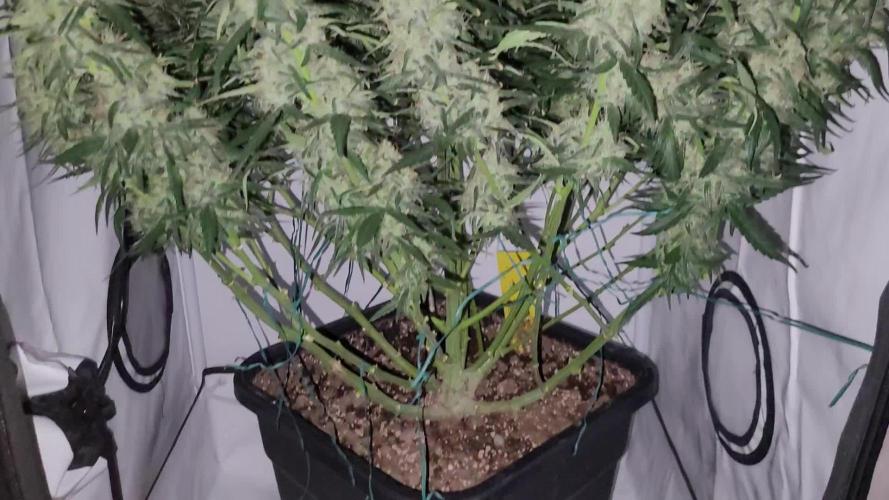
Zdarec✋ týden je pryč.
Po shlednutí diářů jsem okamžitě na rady Hombreho flipnul zálivku zpět pořád 7L, ale spíš hnojky šli zpátky hlavně CalMag jsem mu nasolil 4ml na L.
Žádná sekera se konat nebude.
Hombré děkuju✊
Trpělivost růže přináší😂
Přikládám pár fotek a jedno videjko s aktuální formou😎
Likes
161
Share


@DogDoctorOfficial
Follow
Pow Pow Pow what can i say, i mean even the frogs here were hypnotized with this monstrosity size Mama she is all one can ask and so much more, wen harvesting these cutie pie beast Lady i felt the need to break her in small peaces , or smaller that the them baseball bats collas hihihi OMG them colas OMG .
She rested for 2 weeks in the rack with temps and RH at 60/60% and she was ready for trimming, trimming her was super easy since her frutes are compact and dense , end up with great trim that i will do extractions asap, have the felling she will give me great returns <3 <3 <3
A true pleasure and delight all the way from seed to harvest , now will came the big and final test and with it the smoke review hehehe, thank you SSSC for the opportunity and for everything and also big shout out to GD without the platform nothing of this wold have been possible <3 <3 <3
l
As always thank you all for stopping by, for the love and for it all , this journey of mine wold just not be the same without you guys, the love and support is very much appreciated and i fell honored and blessed with you all in my life <3 <3 <3
#aptus #aptusplanttech #aptusgang #aptusfamily #aptustrueplantscience #inbalancewithnature #trueplantscience #sssc #monstergirl #dogdoctorofficial #growerslove
With true love comes happiness <3 <3 <3 Always believe in your self and always do things expecting nothing and with an open heart , be a giver and the universe will give back to you in ways you could not even imagine so <3 <3 <3
Friendly reminder all you see here is pure research and for educational purposes only
<3 <3 <3 Growers Love To you All <3 <3 <3
Strain info :
About Auto Purple OG Punch cannabis seeds
To create Auto Purple OG Punch we crossed our feminized Purple Punch with an autoflower OG Kush. The original Purple Punch is a cross between Larry OG and Grandaddy Purple, illustrious and stable indica dominant THC-rich heavyweights!
The total grow cycle from autoflower seed to harvest is a short 9 weeks. You will be rewarded with a large yield of sticky resinous buds, up to 600g/m2 indoors. If you’re looking to grow a high quality indica auto made with cannabis cup winning genetics you will love Auto Purple OG Punch. THC content is always up-to/around 20%. Auto Purple OG Punch effects are intense, euphoric and relaxed. She also contains around 1% CDB which contributes to the very smooth, chilled smoke. Expect a mouthwatering blend of sweet tasting candy, dark fruit and hints of spice. A real connoisseur cocktail with powerful effects!
She normally reaches around 1m tall. But in optimized conditions with LED grow lights you can see occasional monster plants up to 2m tall with XXL yields. Auto Purple OG Punch is easy, potent and heavy yielding indoors. She also delivers well outdoors - such as the balcony or garden.
Auto Purple OG Punch is a perfect, powerful strain for a quiet relaxed day. The calming indica body effect is very satisfying and de-stressing

Likes
7
Share


@Naujas
Follow
well, it's exactly 12 weeks :) and my house is full of lemon aroma :) the girl endured really difficult growth, but she coped with everything perfectly :) who followed the growth, you saw that she grew on the balcony for 10 weeks, and she spent the last 2 in the grow tent :) 500 gr wet weight !!!!:) , before putting it in the ground I expected less than 10 g dry yield :D then this growth turned out super well, if it wasn't for my vacation I would have let it grow for about 2 weeks I think. but everything is still very good, I'll go home, fix it and do a smoke review :).

Likes
7
Share


@hooolian
Follow
15/01/22: Everything is looking good and as it should - the plants are really showing their sativa genes super tall for the 10liter pots. the largest is 43 inches high with the rest of them an average of 36 inches high. Defoliated a few days ago with the lower fan leaves to promote concentration on the buds. the sites are very bright green and showing good signs of pistils developing.


Processing
Likes
16
Share


@HisHope
Follow
3/4 Day 16 Flower
Changing PK to KoolBloom as the Peak has run out.
Will work up the CT nuets to @10ml/gal or so as the burnt tips have proven kind of a red herring.
Loving the dual light sources, makes things so much easier.
3/5 Day 17
Nuets to 925ppm unadjusted added Fish Sh!T and the terps just explode 😄
Last defoliation of loofy branches
New pics
3/6 Day 18
Pics last of the week most likely
Nice little present the girls gave me in the pics 😍
Little touch up today, last of the grow
Nuets as is for the week
She is doing well see what the next weeks bring
3/9 Day 21 Flower - Halfway home
New Video and nuets

Likes
19
Share


@Tommy716
Follow
Well my lovely ladies grew wonderfully it was my first grow with LED. Definitely a little learning curve still. I ended up with about 700 g out of eight plants not too bad for the size girl over my head. The smoke is amazing smooth with a henna citrus then knock you on your butt I did harvest plants at different time so I do have different outcomes some is a little more of the knock you down while others are a little more energetic. Great girl have lots to learn will continue to post in here love you guys.
Likes
8
Share


@Dendegrow
Follow
👹 MonsterMarker – Week 7 | Flowering Start 🌸
This one is a real beast! 🚀 The roots are the most explosive of all my plants – absolutely insane growth underground 🌱. On top, she’s very stocky and strong, which makes me think there’s a lot of Indica genetics in her 🍃💪.
The smell is already super nice – deep, rich, and very promising 🌿💨. She feels like she’s building the foundation for some serious flowers.
Can’t wait to see how this monster evolves – follow along, it’s going to be fun 👹🔥.
---
👹 MonsterMarker – Woche 7 | Blütebeginn 🌸
Das hier ist echt ein Biest! 🚀 Die Wurzeln sind von allen Pflanzen am krassesten gewachsen – richtig verrücktes Wachstum unter der Erde 🌱. Oben ist sie dagegen sehr stämmig und kompakt, was stark nach einem hohen Indica-Anteil aussieht 🍃💪.
Der Geruch ist schon jetzt richtig gut – tief, reichhaltig und sehr vielversprechend 🌿💨. Man merkt, dass sie gerade die Basis für dicke Blüten aufbaut.
Bin gespannt, wie sich dieses Monster entwickelt – bleibt dran, das wird spannend 👹🔥.

Likes
8
Share

@Samsationalseeds
Follow
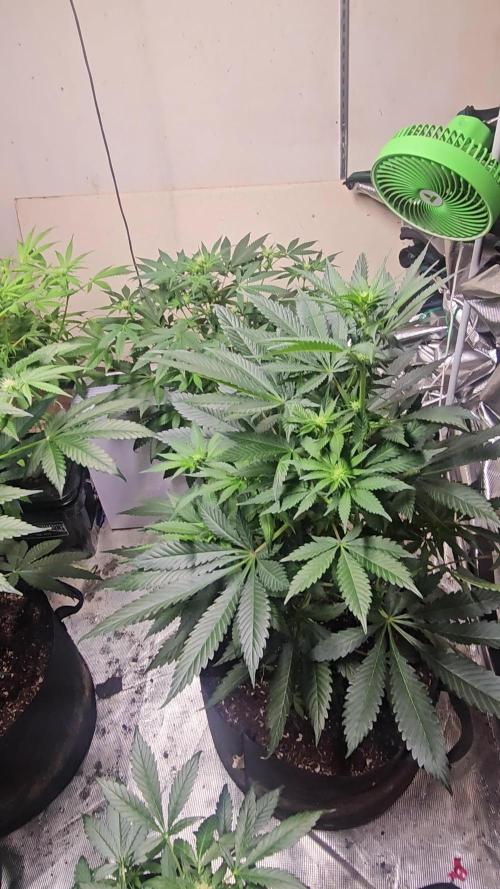
This is longer video talking end up about the new nutrients than I'm using one for vegg. Is 855 and pkk values? And the one I'm using for Bloom is 347NPK values. II decided to decided to get something of nitrogen as well because I don't want to add a little bit of the veg for the stretch part of Bloom. I'd rather, the bloom component, have a nitrogen part. In theory, I expect to use the same amount of vege to bloom, and it seems to have worked